
2027 Fastest Way To Become a Counselor in Virginia

Co-Founder and Chief Data Scientist
Becoming a counselor in Virginia is a regulated process, not just a degree choice. You need to understand which counseling role you want, which credential applies, how supervised hours work, and whether a faster program will actually move you toward licensure instead of creating delays later.
This guide explains the fastest practical route to becoming a counselor in Virginia for 2027, including the education requirements, supervised residency steps, online and accelerated program options, bachelor-level alternatives, salary expectations, demand, affordability, and common mistakes that slow applicants down. It is designed for students, career changers, and working adults who want a realistic plan rather than a vague overview.
Quick answer: the fastest realistic path to counseling licensure in Virginia
The quickest route to full licensed professional counselor status in Virginia is to complete a qualifying master’s degree in counseling, apply promptly for Resident in Counseling status, complete the required supervised residency, pass the National Clinical Mental Health Counseling Exam, and keep documentation organized from the beginning. There is no legitimate shortcut around the state’s education, supervision, and examination requirements.
- Virginia has 29,460 employed counselors, according to the U.S. Bureau of Labor Statistics (BLS), which reflects a large counseling workforce across clinical, school, substance abuse, and related settings.
- Many counselor salaries in Virginia fall around $50,000 to $60,000, while pay varies by license level, specialty, employer, and location.
- Fast-track and online programs can save time, but only if they meet Virginia licensure expectations and provide access to approved practicum, internship, and supervision arrangements.
- Bachelor’s degree holders can work in support roles, but independent clinical counseling in Virginia generally requires graduate education and licensure.
- Fastest path to becoming a licensed counselor in Virginia
- Counseling-related jobs available with a bachelor’s degree
- Accelerated counseling degree options in Virginia
- Online versus campus counseling programs
- Challenges of fast-track counseling programs
- How Virginia employers evaluate accelerated-route candidates
- Substance abuse counseling specialization in Virginia
- Cost and affordability of online and accelerated programs
- Continuing education and license maintenance
- Counseling versus social work in Virginia
- Counselor demand in Virginia
- Counselor salaries in Virginia
- Whether the fast route is worth it
What is the fastest way to become a licensed counselor in Virginia?
The fastest dependable route is to plan backward from Virginia’s licensure requirements. A quicker program does not help if the coursework, practicum, internship, or supervised experience does not satisfy the Virginia Board of Counseling’s expectations.
For most aspiring licensed professional counselors, the path includes graduate education, a supervised post-master’s residency, examination, and final licensure review. The key is to prevent avoidable gaps between each stage.
| Step | What to do | How to avoid delays |
| Choose the correct graduate program | Earn a master’s degree in counseling that aligns with Virginia licensure requirements. | Confirm required coursework, practicum, internship, and accreditation details before enrolling. |
| Apply for Resident in Counseling status | Submit the temporary licensure application as soon as you are eligible so supervised hours can count properly. | Do not start assuming hours will count unless the resident credential and supervision arrangement are in place. |
| Complete supervised residency | Finish 3,400 hours of supervised residency, including at least 2,000 hours of direct client contact and at least 200 hours of face-to-face supervision. | Use a tracking system for hours, client contact, supervision meetings, and supervisor credentials. |
| Select high-volume clinical settings carefully | Community mental health centers and similar settings may help residents accumulate direct client hours efficiently. | Balance speed with quality supervision, ethical workload expectations, and exposure to appropriate client populations. |
| Pass the required exam | Prepare for and pass the National Clinical Mental Health Counseling Exam (NCMHCE). | Use structured study resources and give yourself enough time to retest if necessary. |
| Submit complete licensure documentation | Provide education, supervision, exam, and application materials for review. | Keep supervisor license verifications and residency records ready instead of reconstructing them later. |
Students who want the fastest route should also think strategically about specialty demand. Reviewing high-demand counseling career paths can help you choose placements, electives, and supervised experiences that support long-term employment goals.
What counseling careers can you pursue in Virginia with only a bachelor’s degree?
A bachelor’s degree can get you into behavioral health and human services work in Virginia, but it usually will not qualify you for independent clinical counseling. These roles are best viewed as entry points that build experience, clarify your specialty interests, and strengthen a future graduate school or licensure plan.
| Role | Typical setting | What the work involves | Best fit for |
| Substance Abuse Counselor Assistant | Community agencies, treatment centers, recovery programs | Provides supervised support for clients in recovery, helps with group programming, and assists licensed or certified professionals. | Students interested in addiction treatment or a future substance abuse counseling credential. |
| Behavioral Health Technician or Interventionist | Schools, nonprofits, residential programs, behavioral health providers | Supports treatment plans, documents client behavior, and helps implement strategies developed by licensed clinicians. | People who want direct client experience before entering graduate counseling study. |
| Case Manager or Case Worker | Social service agencies, correctional settings, community organizations | Connects clients with services, coordinates care, tracks progress, and helps clients navigate complex systems. | Candidates who enjoy advocacy, resource coordination, and community-based support. |
Credentials such as the Certified Substance Abuse Counselor Assistant (CSAC-A), supervised experience, and strong references can improve access to bachelor-level opportunities. These roles also help you test whether counseling work fits your temperament before committing to a master’s degree.
If your goal is eventual licensure, bachelor-level work should be part of a larger plan. For a broader overview of accelerated education strategies, review this guide to the fastest way to earn counseling credentials.
Are there accelerated counseling degree programs in Virginia?
Yes, but accelerated counseling options in Virginia are limited, and not every flexible program is truly accelerated. The most useful programs shorten the time to degree without weakening licensure preparation, supervised training, or specialty alignment.
| Program or school | Format and timeline details | Important considerations |
| Virginia Commonwealth University (VCU) | VCU offers an Accelerated B.S. in Psychology to M.Ed. in Counselor Education pathway that allows students to complete both degrees in six years instead of seven. | Students may take up to 12 graduate credits during the senior undergraduate year, reducing total required credits from 180 to 168. The M.Ed. includes concentrations in college counseling and student affairs, couples and family counseling, and school counseling. Tuition generally follows VCU graduate education rates. |
| College of William & Mary | The school offers a CACREP-accredited M.Ed. in Clinical Mental Health Counseling with online and in-person flexibility. | This is a traditional timeline rather than an accelerated program. Tuition is $5,452.50 per semester for residents, with an online per-credit option at $725. |
| Divine Mercy University | Divine Mercy University offers a fully online 66-credit M.S. in Counseling. | The program costs $925 per credit hour and provides flexibility, but it is not specifically structured as an accelerated track. |
Before choosing a fast-track option, ask whether the program satisfies Virginia licensure coursework, how practicum and internship placements are arranged, and whether graduates commonly become Residents in Counseling without extra coursework. Certificate study can also support specialization; compare options through this guide to online graduate counseling certificate programs.
Are online counseling programs in Virginia faster than traditional ones?
Online counseling programs can be faster, but they are not automatically shorter. The real advantages are scheduling flexibility, year-round enrollment options, and the ability to keep working while completing coursework. The real risk is choosing a program that is convenient but poorly aligned with Virginia licensure rules.
| Factor | Online counseling program | Campus counseling program | Decision point |
| Scheduling | May include asynchronous coursework and more control over weekly study time. | Often requires set class meeting times and commuting. | Online study helps most when you are organized and can protect study hours. |
| Pace | Some programs offer continuous enrollment or shorter terms. | Many follow a traditional semester calendar. | A faster calendar matters only if required courses are available when you need them. |
| Clinical placement | May require students to secure local practicum or internship sites. | May have stronger local placement networks near campus. | Ask who is responsible for finding placements in Virginia. |
| Licensure fit | Can work well if the curriculum meets Virginia requirements. | May be easier to verify for Virginia-based programs. | Do not enroll until you confirm licensure alignment in writing. |
| Cost control | Can reduce commuting, relocation, and schedule disruption costs. | May offer campus assistantships or local networking advantages. | Compare total cost, not tuition alone. |
Online learning works best for students who can manage deadlines, communicate proactively with faculty and supervisors, and arrange clinical experiences early. It is less ideal for students who need frequent in-person structure or who have difficulty finding approved local placements.
What challenges do fast-track counseling students face?
Fast-track counseling study can reduce calendar time, but it compresses academic, clinical, emotional, and administrative demands. Students who underestimate the workload may finish classes quickly but struggle with practicum readiness, supervision requirements, or burnout.
| Challenge | Why it matters | Better approach |
| Heavy academic load | Accelerated courses leave less time to absorb counseling theory, ethics, assessment, diagnosis, and intervention skills. | Limit outside commitments during intensive terms and use faculty office hours early. |
| Supervised experience requirements | Students may still need substantial practical hours, including 1,500 for QMHP certification and 3,400 post-master’s hours for LPC licensure. | Map required hours before choosing jobs, placements, or supervision arrangements. |
| Changing regulatory expectations | Licensure rules, forms, supervision standards, and documentation expectations can change. | Check official guidance regularly and keep copies of communications and approvals. |
| Limited recovery time | Compressed programs can reduce time for self-care, reflection, and specialty exploration. | Build a realistic weekly schedule and treat rest as part of professional preparation. |
| Reduced clinical reflection | Counseling competence depends on supervision, feedback, and integration, not just finishing credits. | Choose placements with strong supervision rather than the first available site. |
The safest fast-track plan is not the most aggressive one. It is the one that gets you through degree completion, supervised practice, examination, and licensure with complete records and adequate clinical preparation.
How do employers in Virginia view fast-track counselors?
Virginia employers generally care less about whether a candidate chose an accelerated route and more about whether the candidate is clinically prepared, properly supervised, ethical, and eligible for the role. A fast program can be acceptable when the applicant’s training quality is clear.
| Employer concern or priority | What it means for applicants | How to strengthen your candidacy |
| Clinical depth | Some hiring managers worry that condensed programs may provide less exposure to complex cases or diverse populations. | Document practicum, internship, and residency experiences clearly, including populations served and supervision received. |
| Workforce need | Employers in high-need areas may value candidates who can enter supervised roles quickly. | Show readiness for the specific setting, such as community mental health, school-based services, or substance abuse treatment. |
| Prior professional experience | Career changers from education, nursing, social services, or related fields may bring useful client-facing skills. | Translate previous experience into counseling-relevant strengths, such as crisis response, documentation, collaboration, or advocacy. |
| Adaptability | Fast-track students often need strong time management and resilience. | Use interviews to explain how you handled intensive coursework and clinical responsibilities responsibly. |
| Competence over program label | The program format matters less than licensure fit, supervision quality, and real-world performance. | Prepare references, supervision records, and examples of ethical decision-making. |
A fast-track credential is strongest when paired with strong supervision, relevant field experience, and transparent documentation. Employers are unlikely to reward speed alone.
How can I specialize in substance abuse counseling in Virginia?
Substance abuse counseling requires focused preparation in addiction assessment, treatment planning, relapse prevention, group counseling, co-occurring disorders, ethics, and evidence-based interventions. In Virginia, the right route depends on whether you want an assistant-level role, a certified substance abuse credential, or full professional counseling licensure with an addiction-focused practice.
Students interested in this specialty should choose field placements and coursework that directly involve substance use treatment. They should also verify supervision standards before counting experience toward a credential. For a detailed state-specific path, use this guide on becoming a substance abuse counselor in Virginia.
Are fast-track and online counseling programs in Virginia more affordable?
They can be more affordable, but the answer depends on total cost rather than tuition alone. A program that costs less per semester may become expensive if it delays licensure, requires extra coursework, or makes clinical placement difficult.
| Cost factor | How fast-track or online study may help | What to verify |
| Time in school | Accelerated formats may reduce the number of semesters and related fees. | Confirm that required courses are offered frequently enough to finish on schedule. |
| Employment while studying | Flexible online formats may allow students to keep full-time or part-time jobs. | Be realistic about whether work hours will interfere with practicum, internship, or coursework. |
| Commuting and relocation | Online coursework can reduce transportation, parking, housing, and relocation expenses. | Check whether any residencies, labs, campus visits, or local placements are required. |
| Tuition structure | Some online programs use in-state or flat-rate tuition models. | Compare published tuition, fees, technology charges, clinical fees, and books. |
| Financial aid | Online students may still qualify for scholarships, assistantships, and other aid. | Ask whether aid differs by enrollment status, campus, or program format. |
Students trying to reduce debt should compare multiple options, including public universities, CACREP-aligned programs, transfer policies, employer tuition benefits, and scholarships. A useful starting point is this list of affordable online counseling degree options.
What are the ongoing professional development and licensure maintenance requirements in Virginia?
Licensure is not a one-time milestone. Virginia counselors must maintain professional competence after licensure through continuing education, ethical practice, documentation, and compliance with renewal requirements. The exact requirements can depend on credential type and current state rules, so counselors should rely on official licensure guidance rather than informal advice.
Good habits start during residency: save certificates, supervision records, training descriptions, and renewal-related documents in one place. For a focused explanation of state expectations, review the Virginia LPC licensure requirements.
What distinguishes counseling from social work paths in Virginia?
Counseling and social work both serve people facing mental health, family, community, and life challenges, but the training models are not identical. Counseling programs usually emphasize therapeutic relationships, diagnosis, counseling theories, assessment, and clinical intervention. Social work education often combines clinical skills with systems navigation, case management, community resources, policy, and advocacy.
| Factor | Counseling path | Social work path |
| Primary emphasis | Direct counseling, therapeutic techniques, mental health assessment, and treatment planning. | Client support across individual, family, community, organizational, and policy systems. |
| Common settings | Private practice, community mental health, schools, colleges, hospitals, outpatient programs. | Hospitals, social service agencies, schools, nonprofits, government programs, clinical practices. |
| Best fit | Students who want a therapy-centered professional identity. | Students who want clinical options plus broader systems and resource coordination work. |
| Decision question | Do you want your training centered primarily on counseling practice? | Do you want a broader social services and systems-change framework? |
If you are still comparing both routes, review the education requirements for Virginia social workers before choosing a graduate program.
Is there a demand for counselors in Virginia?
Yes. Virginia’s need for counselors is supported by mental health awareness, expanded behavioral health services, school-based support needs, substance abuse treatment demand, and shortages in rural and underserved communities. The BLS reports 29,460 employed counselors in Virginia, showing that counseling is already a significant part of the state’s workforce.
Demand differs by specialty and region. Substance abuse, behavioral disorder, and mental health counseling are tied to continuing behavioral health needs, while school and career counselors support academic planning, student wellness, and crisis response in educational settings. Marriage and family therapy and substance abuse counseling may also offer strong prospects for candidates who complete the appropriate training and supervision.
Job demand should not be interpreted as guaranteed employment. Hiring still depends on license status, supervision eligibility, specialty, employer funding, location, and clinical readiness. Students who want a quicker route into the field should choose programs and placements that match real workforce needs rather than selecting the shortest degree option in isolation.
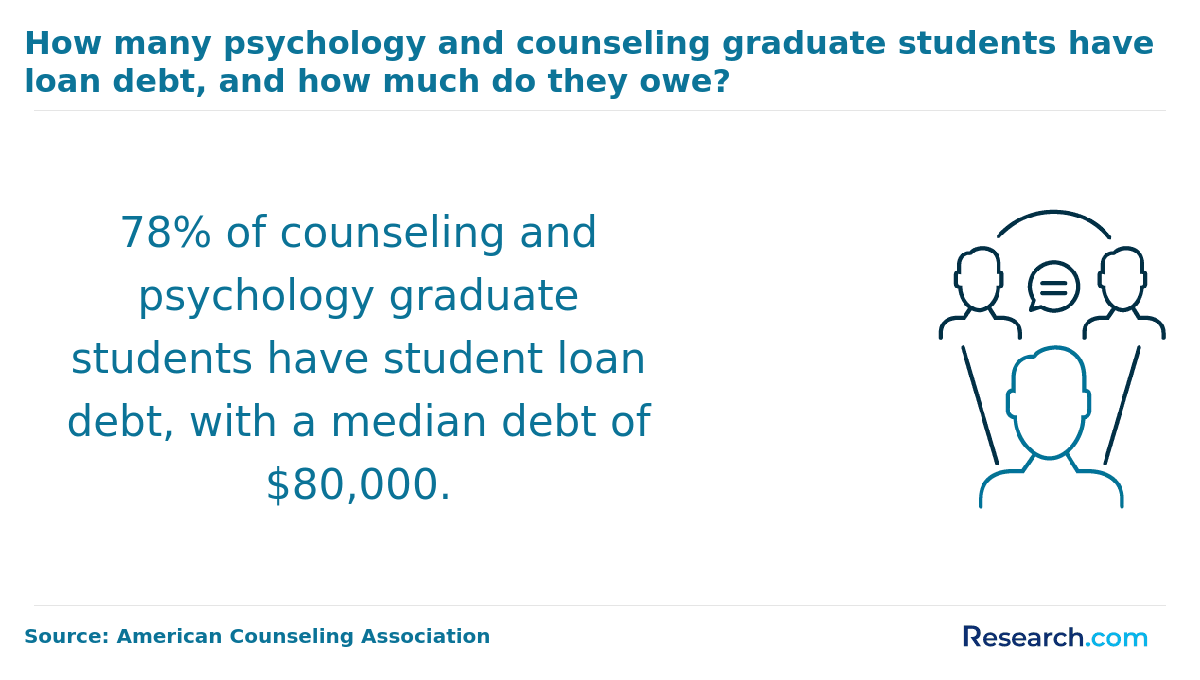
Cost also matters because debt can affect career flexibility. Compare programs carefully, including this resource on the most affordable online colleges for counseling degrees.
How much do counselors get paid in Virginia?
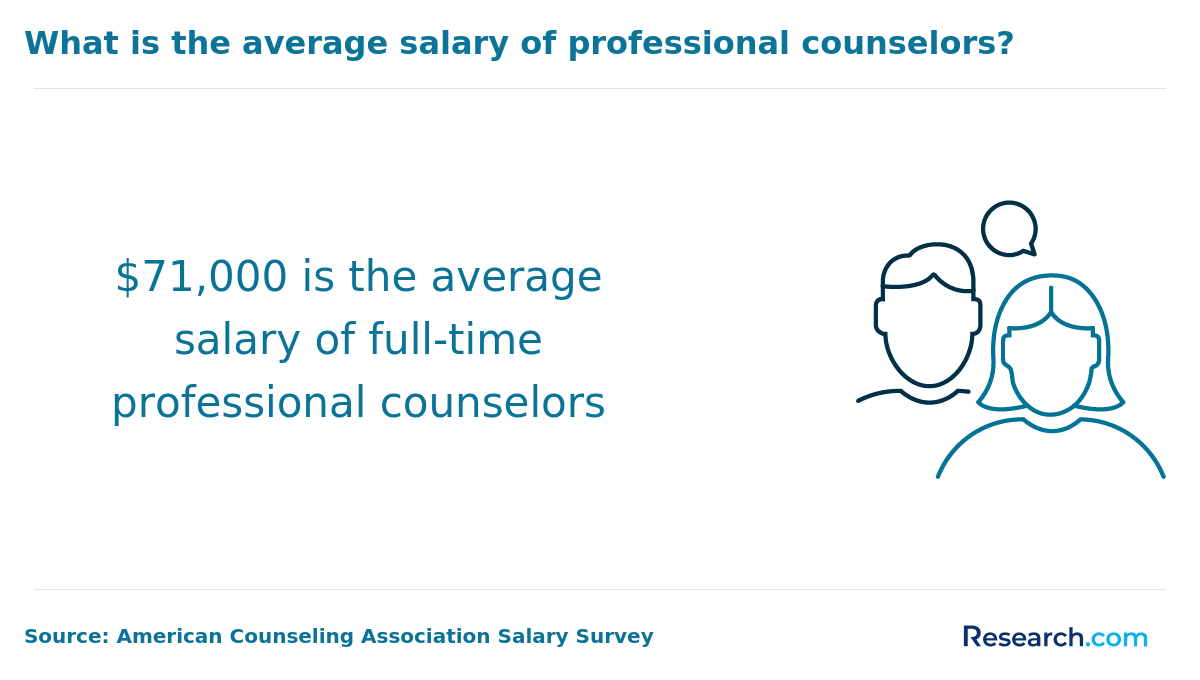
The average annual salary for a counselor in Virginia is around $61,141, with many professionals earning between $53,532 and $69,481. Entry-level counselors and supervised residents may earn less, while experienced clinicians, specialized counselors, and those in higher-paying settings may earn more.
| Counseling role or setting | Salary information stated | What affects pay |
| General counselor roles in Virginia | Average annual salary is around $61,141, with most professionals earning between $53,532 and $69,481. | Experience, work setting, location, credential level, and specialty. |
| Licensed professional counselors | LPCs average about $66,408 yearly, with top earners making up to $85,100. | Full licensure, clinical specialization, supervision experience, and employer type. |
| School counselors and mental health counselors | Often fall within the average salary range, while some in private practice, healthcare, or outpatient settings may earn up to $100,000. | Employer funding, region, caseload, credentials, and experience. |
| Substance abuse counselors | Often earn slightly less than some other counseling specialties. | Treatment center budgets, nonprofit funding, certification level, and clinical responsibility. |
Salary research should be part of your program decision. Compare the cost of the degree, expected time in supervised practice, local job openings, and the credential required for your preferred role. If graduate tuition is your main concern, start with this guide to affordable online master’s in counseling programs.
Is taking the fast route to become a counselor in Virginia worth it?
A faster route can be worth it if it shortens unnecessary waiting time without weakening clinical preparation. The strongest fast-track strategy is not about skipping requirements; it is about sequencing them efficiently.
Applying early for the Resident in Counseling credential can help candidates begin accumulating the 3,400 required supervised hours sooner. Virginia also allows some graduate internship experiences to count in certain circumstances, and students in CACREP-accredited doctoral programs may be able to count up to 900 hours. These details can make planning valuable, but they also require careful documentation.
| The fast route may be worth it if... | A slower or more traditional route may be better if... |
| You already know you want clinical counseling and have the time to handle an intensive program. | You are still deciding between counseling, social work, psychology, education, or human services. |
| The program clearly aligns with Virginia licensure requirements. | The program is short but unclear about practicum, internship, supervision, or coursework fit. |
| You can secure quality supervision and direct client contact. | You may struggle to find approved placements near you. |
| You need to keep working and can manage online or accelerated study responsibly. | You learn better with more time, in-person structure, and gradual clinical exposure. |
| You are willing to track every hour and document every requirement carefully. | You are likely to fall behind on paperwork, supervision logs, or application deadlines. |
The fast route is most valuable when it reduces idle time between degree completion, residency approval, supervised practice, examination, and final licensure. It is risky when speed becomes more important than program quality, ethical training, or licensure compatibility.
What are the specific requirements for school counselors in Virginia?
School counseling follows a different route from licensed professional counseling. Virginia school counselors generally need preparation tied to educational settings, including a school counseling program, supervised internship experience, and any applicable state endorsement or examination requirements.
This path is best for people who want to work with students on academic development, social-emotional growth, crisis response, college and career planning, and family-school coordination. If your goal is to work in K-12 education, use this state-focused guide on how to become a school counselor in Virginia.
Common mistakes to avoid when choosing a counseling path in Virginia
Many delays in becoming a counselor are preventable. The biggest problems usually come from choosing a program too quickly, misunderstanding licensure requirements, or assuming that online and accelerated formats are automatically accepted for every credential.
- Choosing a program before checking licensure fit: Always verify that the curriculum, practicum, internship, and supervision preparation match Virginia requirements.
- Focusing only on tuition: Compare fees, commuting, books, lost income, placement costs, exam costs, and the financial impact of any extra coursework.
- Assuming bachelor-level counseling jobs equal licensure: Entry-level behavioral health roles can be valuable, but they do not replace graduate education for independent clinical counseling.
- Waiting too long to arrange supervision: Residency hours must be properly supervised and documented to count.
- Ignoring specialty requirements: School counseling, substance abuse counseling, LPC licensure, and social work have different rules and employment pathways.
- Relying only on rankings or marketing language: “Fast,” “flexible,” and “online” are not enough. Ask for licensure outcomes, placement support, and written requirement alignment.
Questions to ask before enrolling in a Virginia counseling program
- Does this program meet Virginia’s educational requirements for my intended credential?
- Is the program CACREP-accredited or otherwise clearly aligned with Virginia licensure expectations?
- Who helps students secure practicum and internship placements in Virginia?
- Can online students complete all clinical requirements near where they live?
- How many terms are required, and are courses offered year-round?
- What is the total cost, including tuition, fees, books, travel, technology, and clinical placement expenses?
- What percentage of students complete the program on the advertised timeline?
- What support is available for Resident in Counseling applications, supervision documentation, and NCMHCE preparation?
- Do graduates pursue LPC licensure, school counseling credentials, substance abuse counseling credentials, or another path?
- Will the program still work if you move, change jobs, or need to study part time?
Related Articles for Nearby States
- 2027 Fastest Way To Become a Counselor in West Virginia
- 2027 Fastest Way To Become a Counselor in Maryland
- 2027 Fastest Way To Become a Counselor in North Carolina
- 2027 Fastest Way To Become a Counselor in Tennessee
- 2027 Fastest Way to Become a Counselor in Kentucky
- 2027 Fastest Way To Become a Counselor in Pennsylvania
- 2027 Fastest Way To Become a Counselor in South Carolina
- 2027 Fastest Way To Become a Counselor in Ohio
- 2027 Fastest Way To Become a Counselor in Delaware
- 2027 Fastest Way To Become a Counselor in New Jersey
References:
- BLS. (2025). Occupational Employment and Wage Statistics: Virginia. BLS.
- BuCher, A. (2025, May 22). 16+ Virginia Masters in Counseling Programs (CACREP Accred.). Online MFT Programs. onlinemftprograms.com.
- Careerherd.com. (2025, February 7). Accredited Online Masters in Counseling in Virginia [2025] - Best Counseling Degrees and LPC programs in Virginia. careerherd.com.
- On Board Virginia. (2025, June 22). A guide to In-Demand Behavioral Health careers in Virginia. On Board Virginia. onboardvirginia.com.
- onlinecounselingprograms.com. (2025, January 2). How to become a Licensed Counselor (LPC) in Virginia. onlinecounselingprograms.com.
- Salvia, B. K. G. V. (2025, January 16). Become a counselor in Virginia (VA): state licensing & schools. Counseling Schools. counselingschools.com.
- VCU. (n.d.). LPC Requirements — VCU College of Health Professions. rehab.chp.vcu.edu.
- VHWDA. (n.d.). Counselor. vhwda.org.
- William & Mary Education. (n.d.). Becoming a Licensed Counselor | Licensure Resources. counseling.education.wm.edu.
Key Insights
- The fastest legitimate route to becoming a licensed counselor in Virginia still requires a qualifying master’s degree, Resident in Counseling approval, 3,400 supervised residency hours, direct client contact, face-to-face supervision, and the NCMHCE.
- Online and accelerated programs can save time, but only when they meet Virginia licensure expectations and provide workable clinical placement options.
- Bachelor’s degree holders can enter behavioral health through roles such as case manager, behavioral health technician, or substance abuse counselor assistant, but these jobs are not the same as independent clinical counseling licensure.
- Virginia counselor pay varies by credential, specialty, setting, and region. The average annual salary is around $61,141, while LPCs average about $66,408 yearly and top earners may make up to $85,100.
- The best fast-track plan is not simply the shortest program. It is the path that minimizes administrative delays, protects clinical training quality, controls cost, and keeps you eligible for the exact counseling role you want.
Other Things You Should Know About the Fastest Way to Become a Counselor in Virginia
Yes, to become a counselor in Virginia, you'll need a Master’s degree in Counseling or a related field. Ensure the program is accredited by the Council for Accreditation of Counseling & Related Educational Programs (CACREP) for eligibility as per 2027 requirements.
The Virginia Board of Counseling licenses professional counselors in Virginia. It also approves education, supervised experience, and exam requirements for licensure, including the LPC and LPC Resident credentials. Applicants must follow the board’s rules in the Virginia Department of Health Professions.


