
2027 How to Become a School Counselor in Virginia

Co-Founder and Chief Data Scientist
Becoming a school counselor in Virginia requires more than choosing a counseling graduate program. You need the right master’s degree, state-approved field experience, required assessments, licensure paperwork, and a realistic plan for entering a K-12 school setting. The process matters because Virginia’s public schools employ over 2,000 counselors, yet the student-to-counselor ratio remains above the national recommendation of 250:1, which points to an ongoing need for qualified professionals who can support students academically, socially, emotionally, and in career planning.
This guide is for prospective graduate students, career changers, current educators, and counseling professionals who want to understand how to become a school counselor in Virginia. It explains the degree requirements, certification steps, timelines, salary expectations, license renewal rules, alternative pathways, career growth options, and practical mistakes to avoid before committing to a program.
Quick answer: How do you become a school counselor in Virginia?
To become a school counselor in Virginia, you generally need to complete a master’s degree in school counseling through a Virginia Board of Education-approved preparation program, finish supervised practicum and internship experiences in K-12 settings, pass the required assessments, and apply for the Pupil Personnel Services License with a School Counseling endorsement through the Virginia Department of Education.
| Requirement | What it means for candidates |
| Graduate education | Earn a master’s degree in school counseling from a regionally accredited institution and state-approved preparation program. |
| Field experience | Complete supervised practicum and internship work, including experience with both elementary and secondary students. |
| Assessments | Pass required exams such as the Virginia Communication and Literacy Assessment and the Praxis School Guidance and Counseling exam, when applicable. |
| State credential | Apply for Virginia’s Pupil Personnel Services License with the School Counseling endorsement. |
| Ongoing renewal | Renew the license every five years and complete required professional development and statutory training. |
Key things to know before you start
- The degree choice matters. A general counseling degree may not be enough unless it includes the school counseling coursework, fieldwork, and state-approved preparation required for Virginia licensure.
- Field placement planning is essential. Candidates must complete supervised practicum and internship hours in school settings, typically totaling around 600 in many graduate programs, and should confirm how each program arranges placements.
- Licensure is separate from graduation. Finishing a master’s degree does not automatically authorize you to work as a public school counselor; you still need to meet Virginia Department of Education requirements.
- What degree do you need to become a school counselor in Virginia?
- What school counseling focus areas are available in Virginia?
- How long does the school counseling pathway take in Virginia?
- What certification is required for Virginia school counselors?
- Can you use a Virginia school counseling license in another state?
- How does Virginia school counselor license renewal work?
- Are there alternative routes into school counseling in Virginia?
- How much do school counselors earn in Virginia?
- What is the job outlook for school counselors in Virginia?
- What legal and ethical rules apply to Virginia school counselors?
- How can school counselors advance their careers in Virginia?
- What challenges should Virginia school counselors expect?
- Can school counselors move into school psychology?Additional guidanceReferences
What degree do I need to become a school counselor in Virginia?
Virginia’s standard pathway into public school counseling starts with graduate-level preparation. The degree must prepare you specifically for PK-12 school counseling, not only for general counseling, therapy, student affairs, or mental health support. Before enrolling, confirm that the program is designed to meet Virginia Department of Education licensure expectations.
- Master’s degree in school counseling: Candidates must complete a master’s degree from a regionally accredited institution through a state-approved school counselor preparation program for PK-12 practice.
- Approved school counseling preparation: The program must include internship and practicum experiences across preK-6 and grades 7-12 settings, giving candidates exposure to different developmental stages and school environments.
- Graduate credit expectations: Many Virginia school counseling programs, including the M.Ed. in School Counseling at Virginia Commonwealth University, require a minimum of 60 graduate credit hours.
- Accreditation considerations: Programs accredited by recognized bodies such as CACREP can provide an added quality signal and may help students verify that the curriculum aligns with professional counseling standards.
- Supervised practice: Candidates should expect documented, supervised fieldwork in both elementary and secondary schools. Virginia-related program information commonly references at least 200 supervised clock hours divided across these levels, while many full graduate programs build in additional hours.
If you are comparing school counseling with clinical counseling, it is important to understand that the pathway is different from how to become a licensed therapist. School counselors work within educational systems and must meet school-based licensure requirements, while therapists usually pursue separate clinical licensure rules.
| Degree option | Best fit | Important caution |
| Master’s in school counseling | Students who want to work as PK-12 public school counselors in Virginia. | Confirm the program is state-approved for school counseling licensure. |
| Master’s in clinical mental health counseling | Students aiming for therapy, agency counseling, or LPC-related roles. | It may not meet school counseling endorsement requirements unless additional school counseling coursework and fieldwork are completed. |
| Post-master’s certificate in school counseling | Professionals who already hold a graduate degree in a related field. | Course and field placement requirements vary, so candidates should request a written licensure evaluation. |
Are there school counseling specializations in Virginia?
School counseling programs in Virginia usually prepare students for broad PK-12 practice rather than narrow licensure tracks. However, many programs allow students to build strengths in areas that match common school needs, such as career planning, multicultural counseling, program development, family systems, group counseling, and student mental health support.
These focus areas can influence the types of schools, student populations, and leadership roles you pursue after licensure. They can also help you decide whether school counseling is the right fit or whether another counseling path would better match your goals.
- PK-12 school counseling: Prepares counselors to support students from preschool through high school with academic planning, social-emotional development, family communication, and career readiness.
- Comprehensive school counseling program development: Focuses on building, evaluating, and improving counseling programs using evidence-based and data-informed practices.
- Multicultural counseling: Strengthens cultural awareness, equity-focused advocacy, and counseling strategies for students from varied racial, ethnic, linguistic, socioeconomic, and family backgrounds.
- Career counseling and exploration: Helps counselors guide students through career interests, course planning, postsecondary options, and vocational decision-making.
- Addictions and mental health counseling electives: Adds exposure to substance use, behavioral health, and intervention topics that may be useful for counselors considering additional Licensed Professional Counselor goals.
- Family, marriage, and group counseling electives: Builds skills for working with families, peer groups, classroom-based interventions, and collaborative student support teams.
If your priority is entering the field as quickly as possible, compare specialization requirements carefully with the quickest way to become a counselor. A concentration can be valuable, but extra coursework should support your actual career plan rather than extend your timeline without a clear benefit. The chart below also shows the range of employers that hire school counselors across the United States, including settings relevant to Virginia.
How long does it take to complete a school counseling degree in Virginia?
A full-time master’s degree in school counseling in Virginia commonly takes about two years and often includes a 60-credit-hour curriculum. Programs at institutions such as Virginia Commonwealth University and the College of William & Mary are structured around this type of timeline, with some coursework and field experience extending into summer terms.
Part-time students should plan for a longer route, often three years or more depending on course load, internship scheduling, and whether they can complete field hours while working. The academic calendar is only one part of the timeline; licensure processing, exams, employment requirements, and field placement availability can also affect how quickly you move into a full school counselor role.
| Stage | Typical planning issue | Why it matters |
| Program admission | Application deadlines, prerequisites, recommendations, and interviews. | Missing one admissions cycle can delay your start by a term or more. |
| Graduate coursework | Full-time students often complete the academic portion in about two years; part-time study can take longer. | Your course sequence may control when you become eligible for practicum and internship. |
| Practicum and internship | Virginia requires supervised experience in elementary and secondary settings, and programs may structure additional hours. | Field placements must align with school calendars, supervisor availability, and program rules. |
| Testing and licensure application | Candidates must complete required assessments and submit documentation to the state. | Delays in test scheduling, transcripts, or background checks can slow final approval. |
| Provisional period, when applicable | Graduates without two years of prior teaching or counseling experience may need a two-year provisional license period working full time as a school counselor before full licensure is granted. | This can extend the total path beyond the graduate program itself. |
Several Virginia-specific requirements can shape your timeline:
- Fieldwork across grade levels: Candidates must plan for supervised experience in both elementary and secondary school environments, including at least 100 clock hours of supervised experience in both settings as described in Virginia-related program guidance.
- Additional certification requirements: Emergency first aid, CPR, and AED training may be required, and applicants must submit a social security number during the certification process.
- Prior experience considerations: Candidates who do not already have two years of full-time teaching or counseling experience may need to complete a provisional licensure period before receiving full licensure.
Before enrolling, ask each program for a term-by-term plan that shows when field placements begin, whether students can complete placements near their home district, and how the program supports licensure paperwork with the Virginia Department of Education.
What certification is required to work as a school counselor in Virginia?
Virginia public school counselors need the Pupil Personnel Services License with a School Counseling endorsement. This credential verifies that the candidate has completed the required graduate preparation, fieldwork, assessments, and state documentation needed to serve students in a K-12 public school setting.
The certification process typically includes the following steps:
- Complete the required graduate program: Finish a state-approved school counseling preparation program and obtain official transcripts.
- Document supervised field experience: Submit proof of the practicum and internship experiences required through the approved program.
- Pass required examinations: Candidates may need to pass the Praxis Professional School Counselor exam, Test Code 5421 or the current equivalent, along with other required assessments such as the Virginia Communication and Literacy Assessment.
- Apply through the Virginia Department of Education: Provide transcripts, test scores, fieldwork verification, training documentation, and the required application materials.
- Complete safety and eligibility checks: A criminal background check, fingerprinting, and proof of U.S. citizenship or legal authorization to work are part of the process.
- Meet additional training requirements: Candidates should verify current requirements for emergency first aid, CPR, AED training, and any mandated state training.
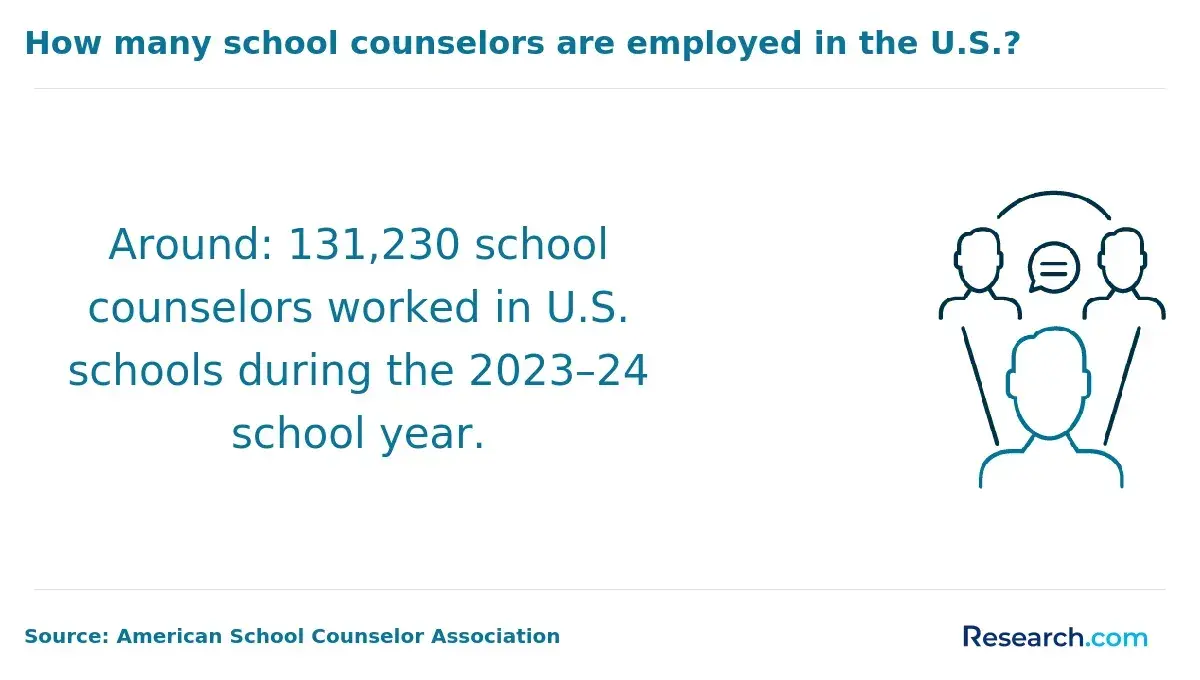
The purpose of this process is not simply administrative. School counselors work with minors, confidential student information, crisis situations, families, educators, and community agencies, so Virginia requires both professional preparation and legal safeguards. The image below provides national context for the size of the school counselor workforce.
Can I transfer my Virginia school counseling license between states?
A Virginia school counseling license does not automatically transfer to every other state. Virginia does not participate in a simple, universal interstate reciprocity process for school counseling licenses. If you move, the new state will usually evaluate your education, field experience, testing history, current license, and professional background before deciding whether you qualify for endorsement, provisional approval, or additional requirements.
Common steps for licensed Virginia school counselors moving to another state include:
- Applying for licensure by endorsement or as an out-of-state candidate through the new state’s education department or licensing agency.
- Providing verification of your Virginia license, official graduate transcripts, and documentation of practicum and internship hours.
- Showing relevant professional experience, including the experience Virginia uses in its own licensure process.
- Completing state-specific exams, ethics modules, or jurisprudence requirements if the new state requires them.
- Taking additional coursework when your prior program does not fully match the receiving state’s standards.
- Completing a new background check and fingerprinting process.
- Submitting professional references, employment verification, or proof of good standing when requested.
- Working under provisional licensure while finishing any missing requirements, if the receiving state allows that option.
The best strategy is to save detailed records before you move: syllabi, program handbooks, field placement logs, supervisor evaluations, test score reports, license records, and employment verification letters. These documents can reduce delays when another state reviews your file.
-
: "
A Virginia-trained counselor who relocated described the process as manageable but document-heavy: transcripts, internship records, and an additional ethics exam were all required before she could finalize her new credential. Her main advice was to keep every licensure document organized from the beginning.
"
How often do Virginia school counselors need to renew their credentials?
Virginia school counselors must renew their professional credentials every five years. Renewal keeps the license active and confirms that counselors have completed ongoing professional learning and required statutory training.
- Five-year renewal cycle: School counselors must renew their license at the end of each five-year period.
- Professional development points: Counselors need 180 professional development points from approved activities such as workshops, conferences, college coursework, and other eligible learning experiences.
- Mandatory statutory training: Requirements such as child abuse recognition and intervention training must be completed as directed by Virginia rules.
- Renewal application: Counselors submit renewal materials through the Virginia Department of Education or the appropriate district licensure office.
- Recordkeeping: Counselors should keep certificates, transcripts, agendas, and verification forms in case documentation is reviewed.
- Renewal fee: As of 2025, the standard renewal fee is $50, though districts or the state may update the amount.
- Background check considerations: Counselors with employment gaps may need a new background check before renewal.
- Employment verification: Some districts may request proof of current employment as part of the renewal process.
| Renewal task | Practical tip |
| Track professional development points | Update a renewal folder after every approved training instead of waiting until the fifth year. |
| Complete required training | Check district and Virginia Department of Education updates annually because statutory requirements can change. |
| Confirm fee and deadlines | Do not rely on old fee information; verify the current process before submitting. |
| Maintain documentation | Keep both digital and paper copies of certificates, transcripts, and employment verification. |
Renewal is also an opportunity to choose professional learning strategically. Counselors can use the cycle to deepen skills in crisis response, college and career readiness, trauma-informed practice, data use, family engagement, or leadership. The chart below gives additional context for school counselor staffing.
What are the alternative pathways to become a school counselor in Virginia?
Virginia’s most direct route is a state-approved master’s degree in school counseling, but not every candidate starts from the same place. Teachers, mental health professionals, and graduate degree holders in related fields may be able to use alternative or adjusted pathways if they still meet Virginia’s coursework, fieldwork, testing, and licensure requirements.
- Post-master’s certificate programs: Candidates who already hold a master’s degree may complete missing school counseling coursework and field experiences through a certificate route, often taking one to two years depending on prior preparation.
- Provisional licensure: A school division may employ a candidate under supervision while the candidate completes remaining licensure requirements. This option is generally limited and may be valid for up to three years.
- Career-changer graduate coursework: Working adults may choose flexible or accelerated graduate programs, sometimes beginning with prerequisite or non-degree coursework before formal admission.
- Evaluation of related experience: Prior work in education, youth services, or mental health may help inform an individualized plan, but candidates should not assume experience replaces required coursework or supervised school fieldwork.
| Pathway | Who should consider it | Question to ask before choosing it |
| Traditional master’s in school counseling | Students who do not already have a related graduate degree. | Is the program approved for Virginia school counseling licensure? |
| Post-master’s certificate | Graduate degree holders who need school counseling-specific requirements. | Will the certificate fully close my licensure gaps? |
| Provisional licensure | Candidates already connected to a hiring school division. | What requirements must I finish before the provisional period ends? |
| Related counseling degree plus added coursework | Career changers from mental health, student services, or education. | Which credits transfer, and which field placements are still required? |
If you are still deciding which counseling credential fits your goals, review the main types of counseling degrees before committing to a school counseling program.
What is the average salary of school counselors in Virginia?
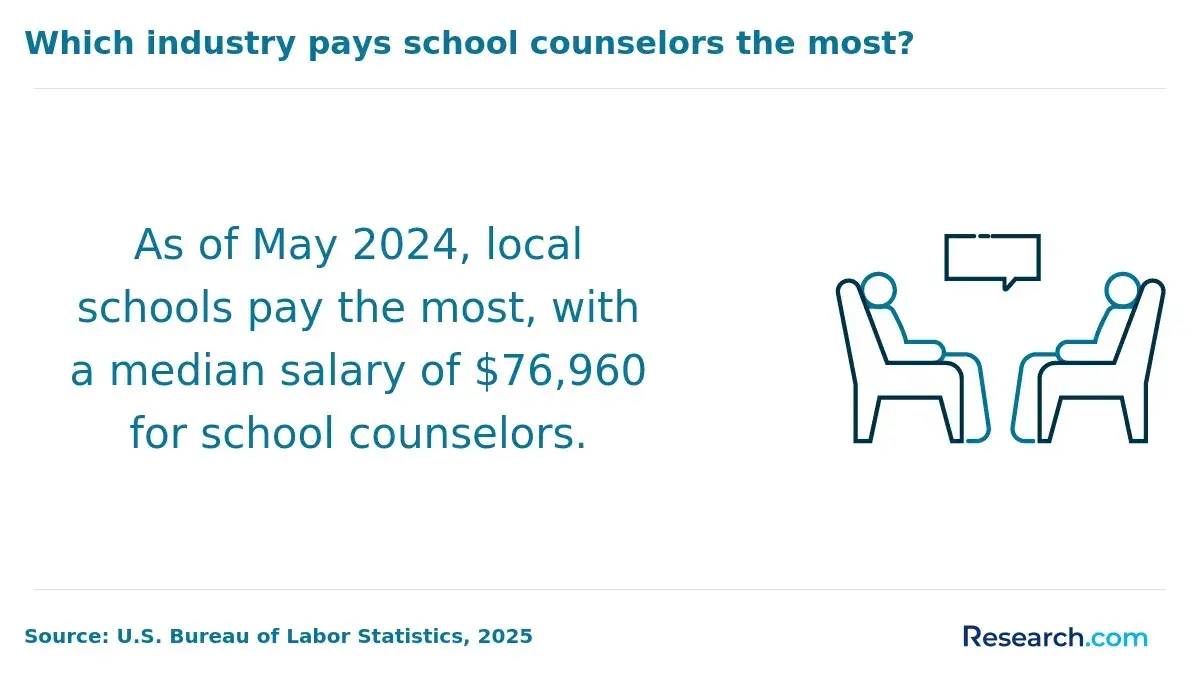
The average salary for school counselors in Virginia is about $62,540 annually. Pay can vary widely by district, years of experience, contract length, education level, supplemental duties, and local funding. Candidates should treat statewide averages as a reference point, not a guarantee of starting pay.
- District location: Urban, suburban, and higher-funded districts may offer different salary schedules than rural or smaller divisions.
- Experience level: Counselors typically move up salary scales as they gain years of service.
- Education and credentials: Additional graduate credits, advanced degrees, or specialized training can affect placement on some district pay schedules.
- School district budgets: Local funding influences salary competitiveness, benefits, stipends, and available support positions.
- Expanded responsibilities: Department chair duties, testing coordination, crisis response leadership, or college readiness initiatives may come with additional compensation in some districts.
- Local demand: Districts facing staffing shortages may use incentives or higher offers to recruit qualified counselors.
| Salary factor | How to evaluate it before accepting a job |
| Base salary schedule | Ask where your degree, credits, and experience place you on the district’s published scale. |
| Contract length | Confirm whether the role is based on a standard school-year contract or includes additional workdays. |
| Benefits | Compare health insurance, retirement contributions, leave policies, and tuition support, not just salary. |
| Caseload and duties | Higher pay may come with heavier administrative responsibilities or larger student caseloads. |
| Advancement options | Ask whether the district supports lead counselor roles, stipends, or professional development funding. |
-
: "
One Virginia school counselor described early pay as modest but predictable. Over time, additional certifications, district movement, and leadership responsibilities helped improve compensation while keeping the work aligned with student support.
"
What is the job outlook for school counselors in Virginia?
The employment outlook for school counselors in Virginia is positive compared with many education roles. The U.S. Bureau of Labor Statistics projects a 4% increase in school and career counselor jobs nationally from 2023 to 2033, while Virginia anticipates a 10.1% expansion in related employment opportunities by 2026. Nationwide, around 29,100 openings for school and career counselors are expected annually, largely because of retirements and career changes.
Several forces support demand for school counselors in Virginia:
- Student support needs: Schools increasingly rely on counselors to help with academic progress, attendance concerns, social-emotional development, and postsecondary planning.
- Mental health awareness: Greater attention to student anxiety, crisis response, and well-being has made school counseling more central to student support systems.
- Enrollment and staffing patterns: K-12 enrollment needs and retirements can create openings across districts.
- Policy focus on student services: Efforts to improve student well-being often include attention to counselor staffing and service delivery.
- Professional support: Organizations such as the Virginia School Counselor Association provide advocacy, networking, and professional development.
- Compensation growth potential: Virginia salary figures vary by source and location, with average annual salaries for school counselors hovering near $59,891 in some employment data and around $62,540 in other salary discussions.
For students comparing counseling career outcomes, a school counseling role is one possible direction among several career options with a masters in counseling. The right choice depends on whether you prefer school-based student development work or a more clinical counseling environment.
What legal and ethical considerations must Virginia school counselors adhere to?
Virginia school counselors work within a legal and ethical framework that protects students, families, schools, and the counselor’s professional standing. Core responsibilities include maintaining appropriate confidentiality, knowing when confidentiality must be limited for safety reasons, documenting services accurately, following mandatory reporting laws, respecting professional boundaries, and practicing within the scope of school counseling preparation.
Key ethical and legal responsibilities include:
- Confidentiality: Protect student information while explaining limits clearly, especially when safety, abuse, neglect, or legal requirements are involved.
- Mandatory reporting: Follow state and district procedures when abuse, neglect, self-harm risk, threats, or other reportable concerns arise.
- Informed communication: Work appropriately with students, parents or guardians, teachers, administrators, and outside agencies.
- Equity and access: Provide fair support to students regardless of background, disability, language, family structure, race, ethnicity, gender, or economic status.
- Professional boundaries: Avoid dual relationships, conflicts of interest, and practices outside the counselor’s training or school role.
- Documentation: Keep records that are accurate, timely, secure, and consistent with school division policy.
School counselors who want to expand into clinical counseling should carefully review additional requirements, supervision rules, and scope-of-practice limits. For clinical credentialing details, see LPC licensure requirements in Virginia.
What are the career advancement opportunities for school counselors in Virginia?
School counseling can lead to leadership, specialization, district-level work, and higher education roles. Advancement usually depends on experience, strong performance, additional training, professional reputation, and sometimes additional licensure or doctoral study.
- Lead or head school counselor: Coordinates counseling services, supports other counselors, and helps manage schoolwide counseling initiatives.
- School counseling program coordinator or director: Oversees counseling programs at the district level, contributes to policy, and supports program evaluation.
- Assistant principal or principal: Moves into broader school leadership after completing administration preparation and required licensure.
- College and career readiness specialist: Focuses on course planning, postsecondary applications, workforce pathways, scholarships, and transition planning.
- Mental health or student support coordinator: Helps coordinate school-based mental health supports, crisis protocols, and community partnerships.
- Professional development facilitator: Trains other counselors or educators on topics such as trauma-informed practice, data use, ethics, or career readiness.
- Professional association leadership: Builds advocacy, policy, and networking experience through groups such as VSCA.
- Counselor educator or higher education faculty member: Teaches future counselors, typically requiring doctoral credentials and significant counseling experience.
If cost is a major concern while preparing for advancement, comparing the most affordable online school counseling degrees can help you evaluate flexible programs, but always verify state approval and licensure alignment before enrolling.
| Advancement goal | Helpful preparation |
| Lead counselor | Strong school counseling experience, program coordination skills, and documented results. |
| District director | Leadership training, data analysis skills, policy knowledge, and experience across multiple schools. |
| School administrator | Administrative licensure preparation and experience with school operations beyond counseling. |
| Specialist role | Focused training in college access, crisis response, mental health coordination, or career readiness. |
| Faculty or counselor educator | Doctoral study, research experience, teaching ability, and professional counseling background. |
What do school counselors in Virginia say about their career?
- Dianne: After completing a school counseling program at James Madison University, she found that local school-based practice helped connect academic training with daily student needs. She describes the work as stable, meaningful, and strongly tied to student development.
- Bryan: A Virginia Commonwealth University graduate, he values the opportunity to address both academic concerns and social-emotional needs. He notes that Virginia’s diverse communities require counselors to build strong cultural awareness and relationship-building skills.
- Mika: Since beginning work in a Virginia school, she has used professional development to strengthen skills in crisis intervention and college readiness. She views the role as demanding but deeply worthwhile because of its direct impact on students’ futures.
What challenges do school counselors in Virginia encounter?
School counseling is rewarding, but candidates should enter the field with realistic expectations. Virginia school counselors may manage large caseloads, urgent student needs, family communication, testing-related duties, documentation, crisis response, and administrative tasks that compete with direct counseling time.
- High caseloads: When student-to-counselor ratios are high, counselors must prioritize urgent needs while still trying to deliver preventive services.
- Administrative demands: Scheduling, testing support, meetings, documentation, and reporting can reduce time available for direct student counseling.
- Student mental health concerns: Counselors are often involved in crisis response, referrals, safety planning, and coordination with outside providers.
- Role confusion: Some schools may assign duties that do not fully align with a comprehensive school counseling model.
- Changing requirements: Counselors must stay current with state rules, district policies, ethics guidance, and best practices.
- Resource limitations: Rural, underfunded, or high-need schools may have fewer community referral options and support staff.
Students who want a faster preparation route should still avoid shortcuts that create licensure problems later. A guide to the fastest way to become a counselor in Virginia can be useful, but the fastest option must still meet the state’s school counseling requirements.
Common mistakes to avoid when choosing a Virginia school counseling pathway
| Mistake | Why it can hurt you | Better approach |
| Choosing a counseling program without verifying state approval | You may graduate without meeting Virginia school counseling endorsement requirements. | Ask the program and the Virginia Department of Education how the degree aligns with licensure. |
| Assuming online automatically means licensure-ready | Some online programs may not arrange Virginia-approved school placements or meet state-specific rules. | Request written confirmation about Virginia eligibility, practicum, internship, and exams. |
| Focusing only on tuition | Fees, travel for fieldwork, exam costs, lost work time, and delayed licensure can affect total cost. | Compare total attendance cost, placement support, completion timeline, and licensure outcomes. |
| Ignoring field placement logistics | Internship scheduling can be difficult if you work full time or live far from approved schools. | Ask who secures placements, where students are placed, and whether evening or flexible options exist. |
| Assuming salaries are guaranteed | Pay differs by district, experience, contract length, and salary scale placement. | Review district salary schedules before applying and ask how your credits and experience are evaluated. |
| Waiting until graduation to study licensure rules | Missing tests, trainings, or paperwork can delay employment. | Create a licensure checklist during your first semester and update it every term. |
Questions to ask before enrolling in a Virginia school counseling program
- Is the program approved for Virginia school counseling licensure?
- Does the curriculum prepare students for PK-12 practice, including both elementary and secondary placements?
- How many practicum and internship hours are required, and who arranges the school placements?
- What exams do graduates need to pass before licensure?
- Can working adults complete the program part time without delaying fieldwork too much?
- What percentage of students complete the program on time, if the school publishes that information?
- Does the program help with Virginia Department of Education licensure paperwork?
- Are online students eligible for the same licensure pathway as campus students?
- What additional costs should students expect beyond tuition?
- How does the program support career placement in Virginia school divisions?
Can I transition from school counseling to school psychology?
Yes, but school counseling and school psychology are different professions with different preparation requirements. School counselors focus on academic development, social-emotional support, career planning, student advocacy, family communication, and schoolwide counseling programs. School psychologists receive deeper preparation in psychological assessment, evaluation, intervention, consultation, and special education-related services.
A school counselor who wants to become a school psychologist will usually need additional graduate training, supervised field experience, and a separate credentialing process. Before making the transition, compare the day-to-day responsibilities, assessment duties, licensure expectations, and program length. For a detailed route, review how to become a school psychologist in Virginia.
Related Articles for Nearby States
- 2027 How to Become a School Counselor in West Virginia
- 2027 How to Become a School Counselor in Maryland
- 2027 How to Become a School Counselor in North Carolina
- 2027 How to Become a School Counselor in Tennessee
- 2027 How to Become a School Counselor in Kentucky
- 2027 How to Become a School Counselor in Pennsylvania
- 2027 How to Become a School Counselor in South Carolina
- 2027 How to Become a School Counselor in Ohio
- 2027 How to Become a School Counselor in Delaware
- 2027 How to Become a School Counselor in New Jersey
References:
- Bell, E. and Meyer, K. (2023). The school counselor staffing landscape: Policies and practice. Brookings Institution analysis of school counselor staffing
- CareerHerd. (2025). Becoming a School Counselor in Virginia [2025 Certification Guide]. CareerHerd Virginia certification guide
- Duquesne University. (n.d.). School Counseling, M.S.Ed. Duquesne University school counseling program
- James Madison University. (n.d.). School Counseling. James Madison University school counseling information
- The Graduate School of Education and Human Development. (n.d.). Master's in School Counseling. George Washington University master’s in school counseling Additional Virginia school counselor certification source
- University of Lynchburg. (2025). Master of Science in School Counseling. University of Lynchburg school counseling program
- University of Virginia. (2025). Counselor Education: M.Ed. - Master of Education. University of Virginia counselor education program
- Virginia Commonwealth University School of Education. (2025). M.Ed in Counselor Education. VCU school counseling concentration
- Virginia State University. (n.d.). Counselor Education Program M.Ed. and M.S. Curriculum Sheet. Virginia State University counselor education curriculum
- Virginia Tech College of Liberal Arts and Humanities. (2025). School Counseling. Virginia Tech school counseling program
- William and Mary School of Education. (n.d.). School Counseling. William & Mary school counseling program Virginia Tech program reference
- Zippia. (2025). School counselor demographics and statistics in the US. Zippia school counselor workforce data Brookings staffing policy source
Key Insights
- Virginia school counselors generally need a state-approved master’s degree in school counseling, supervised K-12 field experience, required exams, and the Pupil Personnel Services License with a School Counseling endorsement.
- The fastest pathway is not always the safest pathway. Before enrolling, verify state approval, field placement support, exam requirements, and whether the program prepares you for Virginia licensure.
- Full-time students often complete a school counseling master’s program in about two years, but part-time study, field placements, testing, and provisional licensure requirements can extend the total timeline.
- Virginia school counselors renew their credentials every five years and must complete 180 professional development points plus required statutory training.
- Salary depends heavily on district salary schedules, experience, contract length, responsibilities, and benefits. Treat averages such as $62,540 as planning references, not guaranteed offers.
- The job outlook is supported by student mental health needs, school staffing demand, and projected growth, including Virginia’s anticipated 10.1% expansion in related employment opportunities by 2026.
- Licensure portability is limited. If you plan to move states, keep detailed records of coursework, field hours, exams, licenses, and employment from the beginning.
- The best program choice is the one that aligns with your licensure goal, budget, schedule, field placement needs, and preferred student population—not simply the cheapest, fastest, or highest-ranked option.
Other Things You Need to Know About Becoming a School Counselor in Virginia
The Virginia Department of Education issues the Pupil Personnel Services license for school counselors. Candidates must meet state education, internship, and testing requirements before applying through Virginia’s licensure process.
To become a school counselor in Virginia in 2027, you need a master’s degree in school counseling, meeting the state's program requirements. This typically includes 48-60 semester hours and a 100-hour practicum or a 600-hour internship in a Virginia public school setting.





