
2027 How to Become a School Counselor in South Carolina

Co-Founder and Chief Data Scientist
Becoming a school counselor in South Carolina is a graduate-level licensure path for people who want to support K-12 students with academic planning, career readiness, social-emotional development, crisis response, and family-school coordination. The need is practical, not abstract: many South Carolina districts report student-to-counselor ratios above the national recommendation of 250:1, which can limit how much individual support students receive.
This guide explains the degree, certification, supervised experience, renewal, salary, job outlook, alternative pathways, and career options for future school counselors in South Carolina. It is designed for career changers, undergraduate students, current educators, and counseling graduate students who want a clear map of what to do next and what to verify before choosing a program.
Key Insights
- South Carolina school counseling is a graduate-level, state-certified profession; a bachelor’s degree alone is not enough for K-12 school counselor certification.
- The most direct route is a state-approved master’s degree in school counseling, though related graduate degrees may qualify only when they include the required school counseling preparation.
- Plan for six to seven years of education overall, including a four-year bachelor’s degree and a two to three year full-time graduate program with 60 to 66 credit hours.
- Field experience matters. South Carolina candidates complete at least 100 practicum hours and 600 internship hours in school settings.
- Certification requires more than graduation: candidates must pass the Praxis II: Professional School Counselor exam, complete a background check, submit documentation, and follow induction and upgrade requirements.
- Credentials renew every five years, and counselors must complete 120 renewal credits to keep their professional certificate active.
- Salary planning should be realistic. The average salary is approximately $56,000 per year, while another statewide figure lists an average annual salary of $53,410; district salary schedules provide the clearest estimate for a specific job.
- Job prospects are supported by a projected 8.8% employment growth rate from 2018 to 2028, but openings still vary by district, budget, location, and replacement needs.
- Before enrolling, verify program approval, supervised placement support, total cost, Praxis preparation, online flexibility, and whether the credential will support your long-term career goals.
Quick answer: how do you become a school counselor in South Carolina?
To become a school counselor in South Carolina, you generally need a state-approved graduate degree in school counseling or a closely related counseling field with the required school counseling preparation, supervised field experience, a passing score on the required Praxis II school counselor exam, a background check, and South Carolina educator certification. Most candidates complete a bachelor’s degree first, then a 60 to 66 credit hour graduate program with practicum and internship requirements before applying for certification.
| Requirement | What it usually means for candidates |
| Graduate education | A master’s, Ed.S., or approved graduate-level school counseling program aligned with South Carolina certification requirements. |
| Field experience | At least 100 practicum hours and 600 internship hours in school settings. |
| Exam | Passing the Praxis II: Professional School Counselor exam. |
| Background check | Fingerprint-based criminal history review through SLED and the FBI. |
| Certification maintenance | Renewal every five years with 120 renewal credits and required documentation. |
Key facts about becoming a school counselor in South Carolina
- The employment growth rate for school counselors in South Carolina is projected at 8.8% from 2018 to 2028.
- Candidates complete 600 hours of supervised practicum and internship experience to build applied skills for supporting students with varied academic, social, emotional, and career needs.
- The average salary for a school counselor in South Carolina is approximately $56,000 per year, which is below the national median of about $62,000.
- Degree requirements for South Carolina school counselors
- School counseling specializations available in South Carolina
- Typical timeline to complete a school counseling degree
- Certification required to work as a school counselor
- License transfer and reciprocity considerations
- Credential renewal requirements
- Alternative routes into school counseling
- Average salary for school counselors in South Carolina
- Emerging trends affecting South Carolina school counseling
- Additional licensure options for school counselors
- Job outlook for school counselors in South Carolina
- Career advancement opportunities
- Legal and ethical requirements and related sections: career growth, additional licensure notes, and references
What degree do I need to become a school counselor in South Carolina?
South Carolina school counselor certification is built around graduate-level counselor preparation. A general bachelor’s degree is not enough on its own. Candidates need an approved graduate program that prepares them for K-12 counseling responsibilities, including individual and group counseling, student assessment, college and career planning, consultation with families and teachers, crisis response, and ethical practice.
The most direct option is a graduate degree specifically in school counseling. However, some related counseling or educational psychology degrees may qualify if they include a school counseling concentration and meet South Carolina State Board of Education requirements.
| Degree or preparation route | When it may make sense | Important caution |
| Master’s Degree in School Counseling | Best fit for candidates who know they want to work in K-12 schools and want the clearest route to certification. | Confirm that the program is approved for South Carolina school counselor certification before enrolling. |
| Master’s Degree in a Related Field with a School Counseling Track | May work for students interested in counseling psychology, educational psychology, or a related area that includes a school counseling concentration. | A related degree alone may not qualify unless the program includes the required school counseling preparation. |
| Bachelor’s and Master’s Degrees plus an Approved School Counseling Program | Useful for career changers or graduates whose previous degrees were in another field. | You may need additional graduate coursework, fieldwork, or documentation to meet state certification standards. |
| Education Specialist (Ed.S.) in Counselor Education with a School Counseling Concentration | Appropriate for candidates seeking advanced preparation beyond the master’s level or those planning for leadership, supervision, or specialized counseling roles. | Verify that the concentration specifically supports school counseling certification. |
When comparing master’s degree in school counseling in South Carolina programs, focus first on certification eligibility, supervised placement support, and exam preparation rather than name recognition alone. Students considering broader counseling fields can also review counseling psychology career paths to understand how school counseling differs from other counseling roles.
Are there school counseling specializations in South Carolina?
Yes. South Carolina school counseling programs may prepare candidates for broad K-12 practice or offer focused coursework for specific student populations and professional goals. The right specialization depends on the age group you want to serve, the student needs you want to address, and whether you plan to stay in schools or eventually move into leadership, clinical counseling, or higher education.
| Specialization | Primary focus | Best for |
| Elementary School Counseling | Early academic support, developmental counseling, family collaboration, behavior support, and social-emotional learning for younger children. | Candidates who want to work with early learners and intervene before academic or emotional issues become more serious. |
| Secondary School Counseling | Adolescent development, course planning, graduation progress, college and career readiness, crisis response, and transition planning. | Future middle school or high school counselors who want to help students make academic, career, and postsecondary decisions. |
| K-12 Comprehensive School Counseling | Preparation across all grade levels, including developmental counseling, data-informed programming, classroom lessons, consultation, and prevention. | Candidates who want flexibility to work in elementary, middle, or high school settings. |
| Addiction & Trauma Counseling Graduate Certificate | Student substance use concerns, trauma-informed support, and intervention strategies, often in an online format for working professionals. | School counselors who want deeper preparation for complex student mental health concerns. |
| Counselor Education Ed.S. and PhD Concentrations | Leadership, supervision, research, counselor training, and program development. | Professionals who may want to become supervisors, faculty members, district leaders, or researchers. |
Specialization should not replace licensure fit. A program can sound appealing but still fail to meet certification requirements if it lacks the right school counseling coursework or supervised school placements. Candidates who are comparing school counseling with therapy careers can use Research.com’s guide on how to become a therapist to understand where the pathways overlap and where they diverge.
CACREP (2025) data shows that Texas dominates in the number of CACREP-accredited institutions, with 32, surpassing the second-ranked state, Pennsylvania, by seven schools. The top five states—Texas, Pennsylvania, Illinois, New York, and Ohio—collectively account for 125 accredited institutions, representing a significant concentration of counselor education programs.
How long does it take to complete a school counseling degree in South Carolina?
The full preparation path usually takes six to seven years: a four-year bachelor’s degree followed by a graduate school counseling program that typically takes two to three years full-time. South Carolina graduate programs commonly require 60 to 66 credit hours, along with supervised practicum and internship experiences in school settings.
Part-time students should plan for a longer timeline. Evening, hybrid, and online coursework can make graduate study more manageable, but field placements still require time in approved school environments, often during regular school hours.
| Stage | Typical time involved | What to plan for |
| Bachelor’s degree | Four years | Your major may vary, but psychology, education, human services, or related fields can provide useful preparation. |
| Graduate school counseling program | Two to three years full-time | Expect 60 to 66 credit hours plus school-based field experiences. |
| Practicum and internship | Often spread across multiple semesters | South Carolina requires at least 100 practicum hours and 600 internship hours in school settings. |
| Exam and certification application | May add weeks or months | Build in time to prepare for the Praxis II exam, gather documentation, complete background checks, and submit certification materials. |
Three factors most often affect completion time:
- Field placement scheduling: Practicum and internship hours are not just boxes to check. They require site approval, supervision, and availability in schools.
- Enrollment pace: Students taking fewer courses per term usually extend the graduate timeline beyond three years.
- Certification processing: Graduation does not automatically authorize practice. Candidates still need to meet exam, application, and documentation requirements.
Before enrolling, ask the program how it helps students secure school placements, how often required courses are offered, and whether working adults can complete field hours without leaving their jobs.
What certification is required to work as a school counselor in South Carolina?
South Carolina school counselors need educator certification for school counseling. The process verifies that candidates have the required graduate preparation, supervised school experience, exam results, background clearance, and professional readiness to work with K-12 students.
| Certification step | What it confirms | Why it matters |
| Complete an approved graduate preparation program | Your coursework and field experiences align with South Carolina school counseling standards. | Without the right program approval, you may need extra coursework before certification. |
| Pass the Praxis II: Professional School Counselor exam | You understand counseling theory, ethical practice, consultation, student services, and school-based counseling responsibilities. | The exam is a key state credentialing requirement. |
| Complete a background check | Your criminal history has been reviewed through fingerprinting via SLED and the FBI. | Schools must protect student safety and maintain public trust. |
| Submit the initial certification application | Your transcripts, program completion records, exam results, and required forms are on file. | Incomplete documentation can delay employment eligibility. |
| Complete induction requirements | You have received early-career mentorship and professional support in a school setting. | Induction helps new counselors move from graduate training into daily school practice. |
| Upgrade to a Professional Certificate | After one year of full-time work and successful induction, you meet the next credential level. | This step is necessary to maintain long-term employment eligibility. |
| Renew certification | You continue professional growth through approved learning activities every five years. | Renewal keeps your credential active and aligned with current practice expectations. |
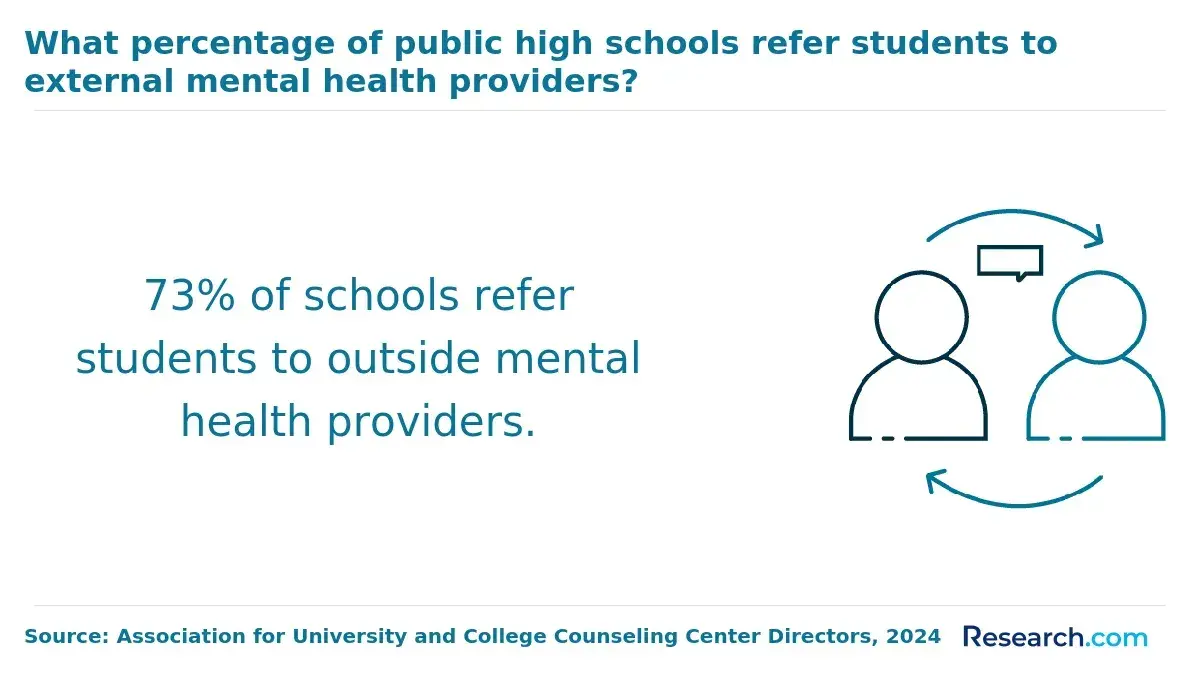
The image below shows how many public schools refer students to mental health providers outside the school, an important reminder that school counselors often coordinate support across school and community systems.
Can I transfer my South Carolina school counseling license between states?
A South Carolina school counseling license does not automatically transfer to every other state. School counselor licensure is state-regulated, so moving to another state usually means applying through that state’s endorsement, reciprocity, or out-of-state applicant process.
In practice, another state may recognize part of your South Carolina preparation but still require additional documents, exams, coursework, or supervised experience. Requirements can also differ depending on whether the credential is issued through an education department, a professional counseling board, or both.
Common steps when moving a South Carolina school counseling credential to another state
- Provide verification of your active South Carolina license and good standing.
- Submit the destination state’s application and required fees.
- Document your graduate education, typically including a master’s degree in school counseling or a related field.
- Verify school counseling employment or supervised experience if required.
- Pass a jurisprudence, ethics, or state-specific exam when the new state requires one.
- Complete a new criminal background check.
- Submit references, character documentation, or employer forms if requested.
- Complete additional coursework if your preparation does not fully match the new state’s standards.
- Apply for a provisional or temporary license if the state allows you to work while finishing remaining requirements.
The safest approach is to check the destination state’s official licensing agency before accepting a job or moving. Ask whether South Carolina certification qualifies for endorsement, whether a temporary credential is available, and whether your graduate program meets that state’s school counseling coursework requirements.
-
: "
A South Carolina-trained counselor who later moved to North Carolina described the process as demanding but useful: the extra documentation, exams, and reviews felt frustrating at first, yet they also clarified what the new state expected from school counselors and helped her adjust to a different education system.
"
How often do South Carolina school counselors need to renew their credentials?
South Carolina school counselors renew their professional certificates every five years. Certificates expire on June 30, so counselors should track renewal deadlines early rather than waiting until the end of the cycle.
| Renewal requirement | What school counselors should know |
| Renewal cycle | Professional certificates are renewed every five years and expire on June 30. |
| Continuing education | Counselors must complete 120 renewal credits through approved professional development, coursework, workshops, or other qualifying activities. |
| Documentation | Keep proof of completed credits. Districts may help track renewal activity, but counselors remain responsible for meeting requirements. |
| Evaluation | Employed counselors may need a comprehensive evaluation, such as the ADEPT summative evaluation, at least once per cycle. |
| Online application | Renewal is submitted through the Department of Education’s online portal with required documentation. |
| Fee | A renewal fee applies, and the amount may change according to state guidance. |
| Background check | A new fingerprint-based background check may be needed after a break in service or a lapsed certificate. |
| Expired certificate | Counselors with expired credentials must meet renewal requirements and complete the required credits within five years prior to renewal. |
According to the Brookings Institution (2023), most U.S. schools have counseling staff—92% overall, with 81% employing a full-time equivalent counselor. Yet, only one-third (34%) meet ASCA’s student-to-counselor ratio standards. This indicates that expanding staffing or redistributing resources may be necessary to ensure equitable and effective counseling support nationwide.
What are the alternative pathways to become a school counselor in South Carolina?
South Carolina offers several routes for people who did not start in a traditional school counseling degree pathway. These options can help career changers, educators, and professionals from related fields move toward certification, but they still require graduate-level preparation, supervised experience, exam completion, and state approval.
| Alternative pathway | Who it may help | What to verify before choosing it |
| Program of Alternative Certification for Educators (PACE) | Individuals with a bachelor’s degree who want to work in schools while completing certification requirements over three years. | Confirm whether your target school counseling role is eligible and what graduate coursework, mentoring, and assessments are required. |
| Post-Baccalaureate Certificate Programs | Degree holders from other fields who need graduate counseling coursework and supervised clinical or school-based experience. | Make sure the certificate leads to South Carolina school counseling certification, not only general counseling preparation. |
| Provisional or Conditional Licensure | Candidates who are close to completing requirements and have district support for supervised employment. | Ask the district and state what must be finished before the credential expires or converts. |
| Relevant Work Experience Route | Professionals whose work background may support certain Career and Technology Education certification options. | School counseling certification still has specific counseling education and assessment requirements. |
| Alternative Preparation Programs | Candidates seeking flexible, competency-based options such as NetAPT and CarolinaCAP with mentoring and hybrid coursework. | Check state recognition, timeline, cost, supervision, and whether the pathway matches your intended counseling role. |
Alternative routes can reduce barriers, but they are not shortcuts around licensure standards. If you already have a bachelor’s degree and need targeted graduate coursework, reviewing online graduate counseling certificate programs may help you compare flexible options before committing to a full degree or certification pathway.
What is the average salary of school counselors in South Carolina?
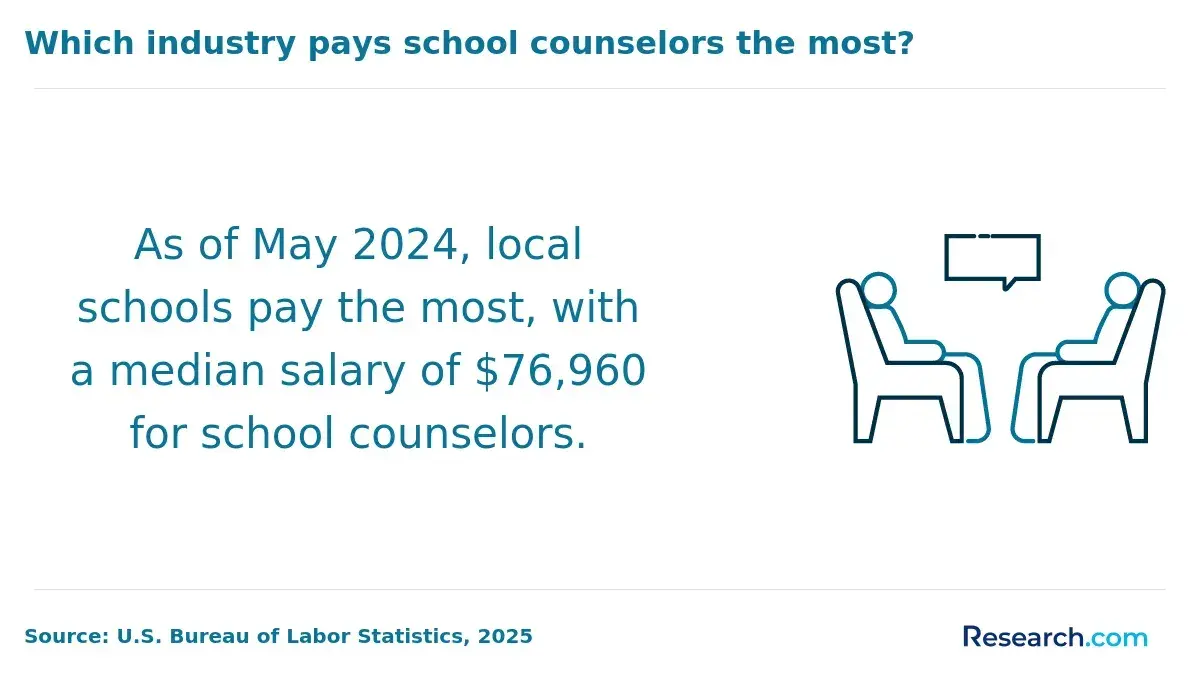
The average salary for a school counselor in South Carolina is approximately $56,000 per year, which is below the national median of about $62,000. Salary figures can vary by source, job title, district, contract length, experience level, education level, and whether the role includes extra responsibilities.
Later in the labor market section, another reported figure lists an average annual salary of $53,410 for counselors statewide. Prospective counselors should treat these figures as planning benchmarks rather than guarantees and should review district salary schedules before accepting an offer.
| Salary factor | How it can affect earnings |
| Experience | District salary schedules often reward years of service, so earnings may rise gradually over time. |
| Education level | Advanced degrees, graduate credits, or additional certifications may place counselors on a higher pay lane where district policies allow it. |
| Location | Urban areas such as Columbia may offer different pay levels than rural districts because of budget, staffing, and cost-of-living differences. |
| School type | Public, private, and charter schools may use different compensation structures. |
| Additional duties | Leadership assignments, extended-year responsibilities, or specialized programming may come with stipends or salary adjustments. |
| Local demand | District staffing needs can influence hiring conditions, though high need does not automatically mean higher pay. |
-
: "
A South Carolina school counselor described the early-career salary as modest but manageable with careful budgeting. Over time, additional responsibilities and continuing education helped improve his earnings, though he emphasized that the daily student impact remained a major reason he stayed in the profession.
"
What are the emerging trends shaping school counseling in South Carolina?
School counseling in South Carolina is being shaped by stronger attention to student mental health, trauma-informed support, data-informed counseling programs, virtual communication tools, and closer collaboration among counselors, teachers, administrators, families, and community mental health providers. These trends are changing the job from a primarily scheduling-focused role into a broader student support and prevention role.
Trends candidates should prepare for
- More visible student mental health needs: Counselors are increasingly expected to recognize warning signs, coordinate referrals, support crisis response, and help schools build prevention systems.
- Technology-supported counseling services: Digital scheduling tools, virtual meetings, data dashboards, and online resources can improve access, but counselors must still protect privacy and follow school policy.
- Trauma-informed practice: Schools need counselors who understand how trauma can affect attendance, behavior, learning, and relationships.
- Career readiness and postsecondary planning: Counselors play a key role in helping students connect coursework, graduation requirements, college options, technical training, and workforce pathways.
- Interdisciplinary collaboration: School counselors often work alongside school psychologists, social workers, nurses, administrators, and outside providers. Students interested in related roles can compare this path with how to become a school psychologist in South Carolina.
What are the additional licensure pathways available for school counselors in South Carolina?
Some school counselors later pursue credentials outside the traditional K-12 educator certification system, especially if they want to provide clinical counseling, work in private practice, supervise counselors, or serve clients beyond school settings. These pathways usually require additional coursework, supervised clinical experience, state board approval, and licensing exams.
The most relevant option for many school counselors is Licensed Professional Counselor preparation. This is not the same as school counselor certification, and the requirements should be reviewed separately. Counselors who want to broaden their practice should study the LPC licensure requirements in South Carolina before assuming that school counseling experience will automatically count toward clinical licensure.
| Career goal | Credential direction to investigate | Decision point |
| Remain in K-12 schools | Maintain South Carolina school counselor educator certification. | Focus on renewal credits, school counseling professional development, and district leadership opportunities. |
| Provide clinical counseling outside schools | Explore LPC requirements. | Confirm required clinical coursework, supervision hours, exams, and board rules. |
| Move into counselor education or supervision | Consider Ed.S. or doctoral study. | Assess whether the additional time and cost align with your career goals. |
| Specialize in trauma, addiction, or family systems | Consider graduate certificates or additional licensure pathways. | Verify whether the credential changes your legal scope of practice or simply adds training. |
What is the job outlook for school counselors in South Carolina?
The employment growth rate for school counselors in South Carolina is projected at 8.8% from 2018 to 2028, more than double the national average of 4% for school and career counselors between 2023 and 2033. The state has over 5,220 counselors currently employed statewide and an average annual salary of $53,410.
Several forces support demand for qualified school counselors, but job availability still depends on district budgets, retirements, enrollment patterns, and local staffing priorities.
- Student enrollment needs: Districts need counselors who can support academic achievement, attendance, graduation planning, and student transitions.
- Mental health priorities: Schools are paying closer attention to anxiety, depression, trauma, family stress, and crisis response.
- College and career readiness: State and district initiatives focused on future planning increase the need for counselors who understand academic pathways and workforce preparation.
- Replacement openings: Retirements and turnover contribute to hiring needs. Around 29,100 annual openings are projected for school and career counselors nationwide.
- Regional variation: Rural, suburban, and urban districts may differ in openings, caseloads, resources, and compensation.
If you are choosing a graduate program with employment in mind, prioritize state approval, school placement support, licensure exam preparation, and recognized accreditation. Comparing CACREP accredited masters programs can help you understand how program accreditation may affect portability, quality review, and future counseling options.
What are the career advancement opportunities for school counselors in South Carolina?
School counseling can lead to several advancement paths in South Carolina. Some counselors stay close to students and take on leadership within a school, while others move into district administration, higher education, clinical counseling, or counselor education.
| Advancement path | Typical responsibilities | Preparation that may help |
| Lead School Counselor or Department Chair | Coordinate counseling services, mentor counselors, manage calendars, lead student support initiatives, and communicate with administrators. | Strong school counseling experience, leadership skills, and evidence of effective program management. |
| Career Center Director | Oversee career readiness, work-based learning, college planning, and technical education coordination. | A master’s degree, counseling experience, and possibly administrative certification depending on the role. |
| District-Level Counseling Coordinator | Guide counseling policy, train school counselors, review data, and align services across multiple schools. | Advanced education, leadership experience, and district-level systems knowledge. |
| Licensed Professional Counselor | Provide clinical counseling services outside or beyond the K-12 school role. | Additional clinical requirements, supervised experience, and licensure steps. |
| Postsecondary Counselor or Academic Advisor | Support college students with academic planning, retention, career preparation, and personal challenges. | Higher education experience and, for some roles, advanced graduate training. |
| Counselor Educator or University Faculty | Teach future counselors, conduct research, supervise trainees, and contribute to counselor education programs. | Doctoral study, research experience, teaching ability, and supervision experience. |
| Specialist Roles such as Mental Health Counselor | Focus on specific student or client needs, including mental health, trauma, family systems, or prevention programming. | Targeted coursework, certificates, and applicable licensure. |
Advancement usually depends on more than years of service. Counselors should build a record of measurable program outcomes, ethical practice, continuing education, collaboration, and leadership. Those interested in family-systems practice can compare counseling pathways with short online MFT program options, while remembering that marriage and family therapy has different licensure requirements from school counseling.
What are the legal and ethical requirements for school counselors in South Carolina?
South Carolina school counselors work under legal, ethical, district, and professional standards that protect students and guide counseling practice. The job often involves sensitive information, family concerns, safety issues, academic records, and mandated reporting responsibilities, so ethical decision-making is central to the role.
Core legal and ethical responsibilities
- Confidentiality: Counselors must protect student information while also explaining the limits of confidentiality when safety, abuse, or legal requirements are involved.
- Mandatory reporting: Counselors must follow state law and school policy when they suspect abuse, neglect, self-harm risk, threats, or other safety concerns.
- Student privacy: Academic, behavioral, and counseling records must be handled carefully and shared only with appropriate parties.
- Professional boundaries: Counselors must maintain appropriate relationships with students, families, colleagues, and community providers.
- Equitable access: Counseling services should support students across backgrounds, abilities, identities, and academic levels.
- Competence: Counselors should seek supervision, consultation, or referral when student needs exceed their training or school role.
- Ongoing professional development: Ethical practice requires staying current on laws, school policies, counseling standards, and student support practices.
For readers comparing counselor roles and faster entry points into the broader counseling field, Research.com’s guide to the fastest way to become a counselor in South Carolina can help distinguish school certification from other counseling routes.
What do school counselors in South Carolina say about their career?
School counselors often describe the work as demanding, relational, and highly community-centered. Their experiences also show why program fit, supervised placements, and local school context matter when preparing for this profession.
- After completing a school counseling program at Charleston Southern University, I felt prepared for the real challenges of working with students and families in a South Carolina school. The role gave me a stable career and a direct way to serve my community, especially by helping students grow academically and personally. Andre
- I chose school counseling because I wanted to support young people during difficult moments. Clemson University gave me strong professional preparation, and my first school role showed me how issues such as rural access to services affect students every day. The work has strengthened my empathy and resilience. Jackie
- Beginning my career after studying at the University of South Carolina exposed me to a wide range of student needs across urban, coastal, and other local communities. Collaboration with educators has been one of the most valuable parts of the job, and the career growth options keep me invested in the field. Matteo
How to choose the right South Carolina school counseling program
The best program is not always the cheapest, fastest, or most familiar. Choose a program that protects your eligibility for certification and gives you realistic support through fieldwork, exam preparation, and job entry.
Questions to ask before enrolling
- Is the program approved for South Carolina school counselor certification?
- Does the program require 60 to 66 credit hours, and how are those credits structured?
- How does the program place students for the required 100 practicum hours and 600 internship hours?
- Are field placements available near where I live or work?
- Does the program prepare students for the Praxis II: Professional School Counselor exam?
- Can working adults complete the program part-time, and how long does that usually take?
- What are the total costs, including tuition, fees, books, background checks, exam fees, and travel to placement sites?
- What percentage of graduates obtain school counseling positions in South Carolina?
- Will the program support me if I later move to another state?
- Does the curriculum include trauma-informed practice, crisis response, college and career readiness, and data-informed counseling?
Common mistakes to avoid
| Mistake | Why it can hurt you | Better approach |
| Choosing a counseling program without checking state approval | You may graduate without meeting South Carolina school counselor certification requirements. | Get written confirmation that the program leads to South Carolina school counseling certification. |
| Focusing only on tuition | Low tuition may not offset weak field placement support, poor advising, or extra coursework later. | Compare total cost, licensure fit, placement assistance, and completion timeline together. |
| Assuming online means fully flexible | School-based practicum and internship hours may require daytime availability. | Ask how online students complete supervised school placements. |
| Ignoring reciprocity rules | A South Carolina credential may not automatically qualify you in another state. | Check the destination state’s licensing requirements before relocating. |
| Assuming salary averages are guaranteed | Actual pay depends on district schedules, experience, education, and contract terms. | Review posted district salary schedules and ask about stipends or extra-duty pay. |
| Waiting until the final year to plan for certification | Exam scheduling, background checks, and documentation can delay hiring. | Create a certification checklist early in the graduate program. |
Related Articles for Nearby States
- 2027 How to Become a School Counselor in Georgia
- 2027 How to Become a School Counselor in North Carolina
- 2027 How to Become a School Counselor in Florida
- 2027 How to Become a School Counselor in Tennessee
- 2027 How to Become a School Counselor in Alabama
- 2027 How to Become a School Counselor in Virginia
- 2027 How to Become a School Counselor in Kentucky
- 2027 How to Become a School Counselor in Mississippi
- 2027 How to Become a School Counselor in West Virginia
- 2027 How to Become a School Counselor in Louisiana
References:
- Counselor Education. (n.d.). South Carolina State University. https://scsu.edu/academics/programs/med-in-counselor-education.php
- Counselor Education, Ed.S. (School Counseling) - College of Education. (n.d.). University of South Carolina. https://sc.edu/study/colleges_schools/education/study/areas/counseling/school_counseling_eds/
- Counselor Education, M.Ed. - Counselor Education. (n.d.). The Citadel. https://www.citadel.edu/counselor-education/graduate-programs/med-counselor-education/
- Counselor Education Master’s Degree or Education Specialist from the Clemson University College of Education. (n.d.). Clemson University. https://www.clemson.edu/education/academics/masters/counselor-education.html
- How to Become a School Counselor in South Carolina [2025] - Becoming a Certified School Counselor in SC. (2025). Career Herd. https://www.careerherd.com/becoming-a-school-counselor-in-south-carolina/
Other Things You Need to Know About Becoming a School Counselor in South Carolina
The South Carolina Department of Education approves and issues school counselor credentials through its Office of Educator Services. Applicants must meet state certification rules, submit official transcripts, and provide verification of program completion before receiving the appropriate school counselor license in 2027.
In 2027, South Carolina school counselors must complete 120 renewal credits every five years to maintain their certification. These credits can include workshops, college courses, and professional development activities approved by the South Carolina Department of Education.


