
2027 How to Become a Mental Health Counselor in Massachusetts

Co-Founder and Chief Data Scientist
Becoming a mental health counselor in Massachusetts is a serious professional commitment: you need graduate education, supervised clinical training, examination, and state licensure before you can practice independently. It can also be a meaningful career path in a state where many residents continue to report anxiety, depression, substance use concerns, family stress, trauma, and barriers to care.
This guide is for students, career changers, and counseling graduates who want a practical roadmap to becoming a licensed mental health counselor in Massachusetts. It explains what the job involves, how the licensing path works, how to choose a program, what specializations may strengthen your career, what salary and demand data suggest, and which mistakes to avoid before investing time and money in a counseling degree.
Quick Answer: How Do You Become a Mental Health Counselor in Massachusetts?
To become a licensed mental health counselor in Massachusetts, you generally need to earn a bachelor’s degree, complete a qualifying master’s degree in counseling or a closely related field, finish supervised clinical experience, pass the required licensing examination, and apply through the Massachusetts Board of Registration of Allied Mental Health and Human Services Professionals. Many people search for this pathway as “LPC,” but Massachusetts commonly uses the Licensed Mental Health Counselor pathway, so applicants should verify current requirements directly with the state board before enrolling in a program or applying for licensure.
Key Facts to Know Before You Start
- Between February 1 and 13, 2023, 32.3% of adults in the US reported symptoms of anxiety and/or depressive disorder; in Massachusetts, the figure was 30.8% during the same period (Kaiser Family Foundation, 2024).
- In February 2021, 42.1% of adult residents in Massachusetts reported anxiety or depression symptoms, and 21.9% were not able to receive needed treatment (National Alliance on Mental Illness, 2023).
- Across the US, employment for substance abuse, behavioral disorder, and mental health counselors has been projected to grow by 18% between 2022 and 2032 [US Bureau of Labor Statistics (BLS), 2024].
- Massachusetts substance abuse, behavioral disorder, and mental health counselors had a median hourly wage of $26.40 in May 2023 (US BLS, 2024), equal to an estimated $50,688 annual wage.
- A single adult resident without children in Massachusetts can live comfortably with a gross annual income of $58,009 (Glasmeier & Massachusetts Institute of Technology, 2024).
- To become a licensed professional counselor (LPC), candidates must complete a master's degree in a related field, undergo supervised clinical experience, and pass the National Counselor Examination (NCE).
- What does a mental health counselor do in Massachusetts?
- What steps are required to become a mental health counselor in Massachusetts?
- How should Massachusetts students prepare for counseling careers?
- Why does practicum and internship experience matter?
- Which counseling specializations are available in Massachusetts?
- Is Massachusetts a strong state for mental health counselors?
- How strong is demand for mental health counselors in Massachusetts?
- Why add substance abuse counseling skills to a mental health practice?
- Can teletherapy work as a counseling practice model in Massachusetts?
- What jobs can mental health counseling graduates pursue?
- What challenges should Massachusetts counselors expect?
- Can school psychology create additional opportunities?
- How can mental health counselors advance their careers?
- Where can counselors find continuing education and networking?
- What financial assistance options may help counseling students?
- What job market trends affect mental health counselors?
- Which specialized licenses can counselors consider?
- Which educational programs should aspiring counselors compare?
- What education is required for marriage counseling in Massachusetts?
- How should you choose an advanced licensure pathway?
- How do ethics and regulation shape counseling practice?
What does a mental health counselor do in Massachusetts?
Mental health counselors help clients understand emotional, behavioral, relational, and psychological problems and develop strategies for managing them. In Massachusetts, this work may involve supporting clients with anxiety, depression, trauma, substance use, grief, workplace stress, family conflict, or major life transitions.
The need for care is clear. In Massachusetts, 30.8% of adults reported symptoms of anxiety and/or depressive disorder between February 1 and 13, 2023, compared with 32.3% of adults across the US during the same period (Kaiser Family Foundation, 2024). Counselors are part of the response to that need, but their work is not limited to “talking through problems.” They assess client concerns, build treatment plans, track progress, document care, coordinate referrals, and practice within ethical and legal standards.
Common Responsibilities
| Responsibility | What it means in practice | Why it matters |
| Clinical assessment | Gathering client history, identifying symptoms, and determining the level of care a client may need | Accurate assessment guides treatment planning and referral decisions. |
| Individual counseling | Providing structured therapy sessions focused on coping skills, insight, behavior change, and emotional regulation | Many clients need ongoing support to manage mental health symptoms and life stressors. |
| Group or family work | Facilitating therapeutic conversations with couples, families, or groups when appropriate | Many mental health concerns are affected by relationships, family systems, and social support. |
| Treatment planning | Setting goals, selecting interventions, documenting progress, and adjusting care as needed | Clear plans help counselors provide ethical, measurable, and coordinated care. |
| Referral and collaboration | Connecting clients with psychiatrists, social workers, physicians, schools, community agencies, or higher levels of care | Clients often need support beyond one counselor’s scope of practice. |
| Ethical documentation | Maintaining confidential records, informed consent, and risk-management notes | Documentation protects clients, counselors, and organizations. |
Massachusetts counselors also need cultural awareness. The state includes dense urban communities, college towns, suburban areas, rural regions, immigrant communities, and medically underserved populations. Effective counseling depends on understanding how culture, language, income, insurance access, housing, education, family expectations, and stigma shape a client’s ability to seek and continue care.
- : "A Massachusetts counseling career can be both emotionally demanding and deeply meaningful. Counselors often work with people during difficult periods, but they also witness recovery, improved relationships, better coping, and renewed stability."
What steps are required to become a mental health counselor in Massachusetts?
If you are researching how to become a counselor in Massachusetts, think of the process as a sequence: undergraduate preparation, graduate training, supervised practice, examination, and licensure. The details matter because not every counseling-related degree automatically satisfies state licensing requirements.
| Step | What to do | Decision point |
| 1. Earn a bachelor’s degree | Complete a 4-year undergraduate degree, often in psychology, human services, social work, sociology, education, or a related field. | You do not always need a counseling major, but you should build a strong foundation in human behavior, research, ethics, and communication. |
| 2. Choose a qualifying master’s program | Enroll in a master’s degree in counseling, clinical mental health counseling, or a closely related field that aligns with Massachusetts licensing rules. | Before applying, ask the program whether its curriculum is designed to meet Massachusetts licensure requirements. |
| 3. Complete practicum and internship training | Gain supervised client-facing experience through field placements approved by your graduate program. | Strong placements can help you build skills, references, and post-graduation employment leads. |
| 4. Finish post-degree supervised clinical experience | Work under approved supervision until you satisfy the state’s clinical experience requirements. | Choose supervisors and employers who understand Massachusetts documentation rules. |
| 5. Pass the required examination | Massachusetts recognizes the National Clinical Mental Health Counselor Examination (NCMHCE) as a pathway to becoming a licensed mental health counselor (LMHC). Aspiring rehabilitation counselors must take the Rehabilitation Counselor examination to become certified by the Commission for Rehabilitation Counselor Certification (CRCC). | Confirm the current accepted exam with the state board before registering. |
| 6. Apply for licensure | Submit the application, education records, supervision documentation, exam results, and any required background or state-specific materials to the Massachusetts Board of Registration of Allied Mental Health and Human Services Professionals. | Keep copies of every form, transcript, supervision log, and approval notice. |
Typical Pathway at a Glance
- Bachelor’s degree: Build academic preparation and relevant volunteer, research, or human-service experience.
- Master’s degree: Complete the graduate coursework and fieldwork needed for clinical counseling preparation.
- Supervised experience: Practice under qualified supervision while developing independent clinical judgment.
- Licensing exam: Pass the state-approved examination for your intended credential.
- Board application: Apply only after confirming that your education, supervision, and exam records meet current Massachusetts requirements.
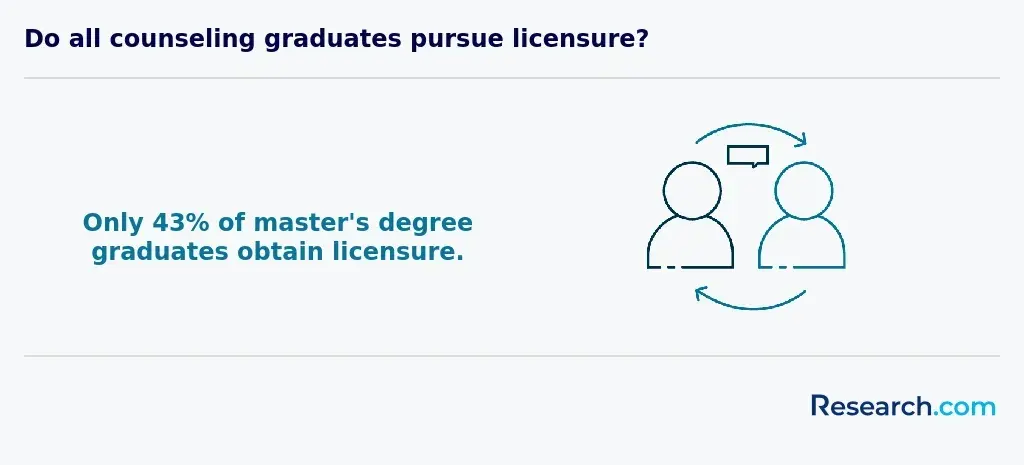
The most important practical advice is simple: do not wait until graduation to check licensing rules. Ask programs early whether their degree is intended for Massachusetts LMHC eligibility, how field placements are arranged, and what documentation graduates receive for board review.
How should Massachusetts students prepare for counseling careers?
Strong preparation begins before graduate school. Students who plan carefully can reduce avoidable delays, choose better field placements, and enter the job market with a clearer professional direction.
How to Choose a Counseling Program
Massachusetts has well-known universities with counseling-related programs, including Boston College and Northeastern University. Reputation can be useful, but it should not be your only criterion. For licensure-focused students, program fit is more important than name recognition.
| What to check | Why it matters | Questions to ask |
| Accreditation and licensure alignment | Accreditation signals that a program follows recognized academic standards, and licensure alignment helps prevent problems after graduation. | Is the program accredited by CACREP, APA, or another recognized body? Is it designed to meet Massachusetts counseling licensure requirements? |
| Clinical training model | Counseling is a practice-based profession, so fieldwork quality matters as much as coursework. | Who finds practicum sites? What types of agencies commonly accept students? How is supervision handled? |
| Curriculum coverage | Licensure boards often expect coursework in core areas such as ethics, assessment, diagnosis, counseling theory, group work, and human development. | Can the school map its courses to Massachusetts requirements? |
| Online, hybrid, or campus format | Flexible formats can help working adults, but field placement and licensure rules still apply. | How are local placements approved for online students living in Massachusetts? |
| Graduate outcomes | Career results vary by placement quality, local hiring demand, licensure progress, and networking. | Where do recent graduates work? What percentage pursue licensure? What support is available after graduation? |
| Total cost | Tuition is only one part of the cost; fees, books, commuting, lost work hours, and unpaid fieldwork also matter. | What is the full estimated cost through graduation, and what aid is available? |
Students comparing graduate options can start with Research.com’s overview of master's in counseling programs, then narrow the list based on Massachusetts licensure alignment, field placement support, cost, and schedule.
Preparation Before Graduate School
- Get exposure to helping roles. Volunteer or work in crisis lines, youth programs, shelters, peer support, behavioral health agencies, hospitals, schools, or community organizations when appropriate.
- Build writing and documentation skills. Counselors write progress notes, assessments, treatment plans, referral summaries, and risk-related documentation.
- Develop cultural humility. Massachusetts counselors serve clients across many identities, languages, communities, and socioeconomic backgrounds.
- Learn basic research literacy. Evidence-based care requires the ability to read, evaluate, and apply clinical research responsibly.
- Talk with licensed professionals. Informational interviews can help you understand agency work, private practice, supervision, teletherapy, and burnout risks.
Students should also review the counselor skills needed in clinical and community settings. Empathy matters, but effective counseling also requires boundaries, case conceptualization, ethical judgment, accurate documentation, and the ability to respond calmly to risk.
Why does practicum and internship experience matter?
Practicum and internship placements are where counseling students begin turning classroom knowledge into clinical skill. Massachusetts candidates should treat these placements as a major career decision, not merely a graduation requirement.
Supervised field experience helps students learn how to listen therapeutically, conduct intake conversations, manage difficult emotions in session, apply ethical rules, document care, and recognize when a client needs a higher level of support. It also gives supervisors a chance to evaluate readiness for more independent clinical work.
What a Strong Field Placement Should Provide
- Appropriate supervision: Students need regular feedback from qualified professionals who understand counseling ethics, client safety, and licensure documentation.
- Relevant client contact: A placement should expose students to real counseling tasks aligned with their career goals.
- Ethical onboarding: Students should receive training in confidentiality, mandated reporting, informed consent, crisis procedures, and agency policies.
- Documentation practice: Learning to write clear clinical notes is essential for agency work, insurance-based care, and risk management.
- Professional references: A strong practicum can lead to mentorship, recommendations, and sometimes employment.
| Placement type | Best fit for students interested in | Potential trade-offs |
| Community mental health center | High-need populations, broad clinical exposure, interdisciplinary care | Caseload complexity and administrative demands can be high. |
| College counseling center | Young adult mental health, adjustment issues, anxiety, depression, identity development | Placements may be competitive and tied to academic calendars. |
| Substance use treatment program | Addiction counseling, recovery support, co-occurring disorders | Students may need specialized training and comfort with relapse-prevention work. |
| School or youth-focused agency | Child and adolescent counseling, family collaboration, early intervention | Work may require coordination with parents, teachers, and school systems. |
| Hospital or integrated care setting | Medical-behavioral health collaboration, crisis response, short-term intervention | Fast-paced environments may be challenging for students new to clinical work. |
Practicum is also a networking bridge. Many graduates find their first roles through supervisors, agency contacts, or professional relationships formed during training. A placement that is demanding but well-supervised can be more valuable than an easy placement with limited client contact.
Which counseling specializations are available in Massachusetts?
Specialization can help counselors serve specific client groups, compete for targeted roles, and build a clearer professional identity. The right specialization depends on your interests, temperament, preferred setting, and willingness to complete additional training or licensure steps.
| Specialization | Clients or concerns served | When it may be a good fit |
| Substance abuse counseling | Clients with substance use disorders, relapse risk, recovery needs, and co-occurring mental health concerns | You are interested in addiction treatment, recovery systems, motivational interviewing, and integrated behavioral health. |
| Child and adolescent counseling | Youth experiencing anxiety, depression, behavioral concerns, trauma, school stress, or family conflict | You enjoy working with families, schools, developmental issues, and early intervention. |
| Trauma-informed counseling | Clients affected by abuse, violence, grief, accidents, community trauma, or long-term stress exposure | You want to learn stabilization, safety planning, emotional regulation, and evidence-informed trauma approaches. |
| Marriage and family therapy | Couples, families, and relational systems experiencing conflict, communication problems, or transition stress | You prefer systems-based work and may want to pursue a marriage and family therapy pathway. |
| Geriatric counseling | Older adults coping with aging, loss, health changes, isolation, caregiving stress, or life review | You are drawn to work in senior centers, healthcare settings, long-term care, or community aging services. |
| Employee assistance counseling | Workers dealing with stress, workplace conflict, burnout, personal crises, or referrals for longer-term care | You are interested in workplace mental health and short-term support models. |
Specialization should be strategic. For example, addiction training can make sense for counselors who want to work in community health, residential programs, outpatient treatment, or dual-diagnosis care. Family therapy training may be more relevant for those who want to focus on couples, parenting, and relational conflict. Students who are comparing requirements in other states for broader context can review resources such as Kansas LPC training programs, but Massachusetts applicants should rely on Massachusetts rules for final decisions.
The chart below provides a visualization of the median annual wage of mental health professionals in the US in 2023, according to 2024 data from the US BLS.
Is Massachusetts a strong state for mental health counselors?
Massachusetts can be a strong place to build a counseling career, but it is not automatically an easy market. The state has substantial need for mental health services, respected healthcare and higher education institutions, and opportunities in community agencies, hospitals, schools, substance use programs, private practices, and telehealth. At the same time, cost of living, licensing complexity, heavy caseloads, and administrative pressure can affect job satisfaction.
Massachusetts Counseling Career: Pros and Cons
| Potential advantage | Why it matters | What to watch |
| High need for services | Many residents report mental health symptoms, and shortage data indicate unmet need. | High need can also mean high caseloads in under-resourced settings. |
| Diverse employment settings | Counselors may find roles in community health, hospitals, schools, college counseling, addiction treatment, and private practice. | Settings vary widely in pay, supervision quality, benefits, and workload. |
| Strong education and healthcare ecosystem | The state has many institutions connected to psychology, counseling, medicine, and human services. | Competitive job markets may favor candidates with specialized experience. |
| Teletherapy opportunities | Remote care can improve access and support flexible service models. | Counselors must follow state rules, confidentiality requirements, and secure technology practices. |
| Cost-of-living pressure | Massachusetts substance abuse, behavioral disorder, and mental health counselors had a median hourly wage of $26.40 in May 2023, equal to an estimated $50,688 annual wage. | A single adult resident without children in Massachusetts can live comfortably with a gross annual income of $58,009, so compensation and location matter. |
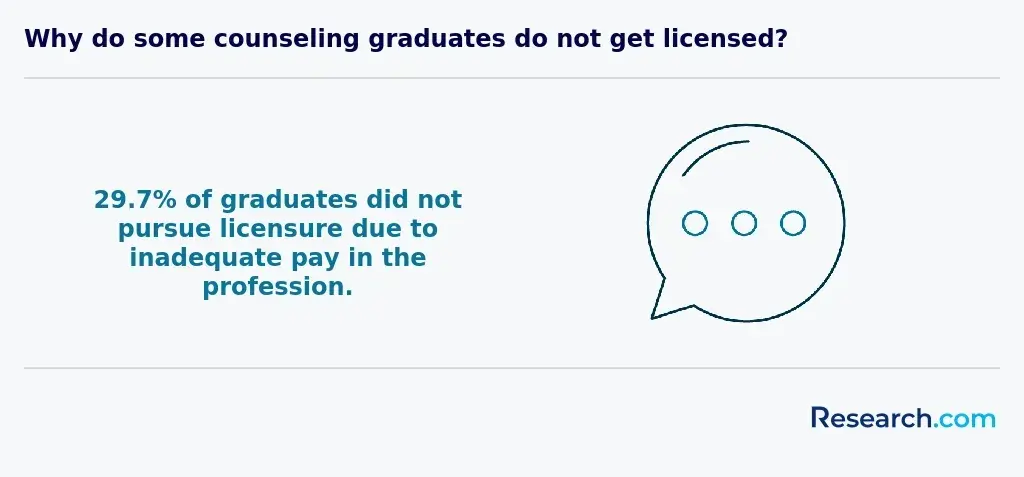
The salary and living-cost comparison deserves careful attention. A median hourly wage of $26.40 in May 2023 is not the same as a guaranteed salary for every counselor. Pay can vary by employer, licensure status, experience, caseload, setting, benefits, and geographic area. Candidates should evaluate the whole compensation package, including supervision support, health insurance, retirement benefits, paid time off, productivity expectations, and opportunities for advancement.
Massachusetts may also provide some flexibility for counselors licensed in other states, but reciprocity and endorsement rules are not automatic. Relocating counselors should confirm whether their degree, supervised hours, examination, and license history satisfy Massachusetts requirements before accepting a job that requires independent practice authority.
How strong is demand for mental health counselors in Massachusetts?
Demand for counseling services is supported by both national employment projections and Massachusetts shortage indicators. Across the US, employment for substance abuse, behavioral disorder, and mental health counselors has been projected to grow by 18% between 2022 and 2032 (US BLS, 2024). In Massachusetts, only 35.3% of the need for mental health professionals had been met as of April 1, 2024, with 49 mental health care Health Professional Shortage Areas (HPSA) designations in the Bay State (Bureau of Health Workforce, 2024).
These figures suggest real need, but students should interpret demand responsibly. A strong labor market does not guarantee a specific job, salary, schedule, or work environment. Employers may prefer candidates who have licensure progress, bilingual ability, substance use training, trauma experience, experience with specific populations, or comfort with electronic health records and telehealth platforms.
Where Demand May Translate Into Job Opportunities
- Community mental health agencies: Often serve clients with high needs and may hire pre-licensed clinicians under supervision.
- Substance use treatment providers: Need counselors prepared for addiction, relapse prevention, and co-occurring disorders.
- Schools and youth programs: Support children, adolescents, families, and prevention-focused services.
- Hospitals and integrated care settings: May use counselors in behavioral health teams, crisis services, or outpatient programs.
- College and university counseling centers: Serve students facing stress, anxiety, depression, adjustment, and identity-related concerns.
- Teletherapy and hybrid practices: Can expand access when delivered within legal, ethical, and privacy standards.
Students in nearby states or those comparing regional licensure routes may also find it useful to review Rhode Island LPC career advice, while remembering that Massachusetts licensing decisions should be based on Massachusetts board rules.
Why add substance abuse counseling skills to a mental health practice?
Substance use and mental health concerns often overlap, so counselors who understand addiction treatment can be better prepared to serve clients with complex needs. Integrating substance abuse counseling skills may help clinicians recognize co-occurring symptoms, coordinate care with recovery programs, support relapse-prevention planning, and communicate more effectively with multidisciplinary teams.
This path is especially relevant for counselors interested in community mental health, residential treatment, outpatient addiction programs, correctional reentry services, crisis stabilization, or integrated care. It may require focused coursework, supervised experience, and additional credential review depending on the role and employer. Students considering this direction can use Research.com’s guide on how to become a substance abuse counselor in Massachusetts to compare requirements and career options.
Can teletherapy work as a counseling practice model in Massachusetts?
Teletherapy can be a practical service model for Massachusetts counselors, particularly when clients face transportation barriers, scheduling conflicts, mobility limitations, or limited local provider availability. It can also support hybrid practices that combine in-person and remote care.
However, teletherapy is not simply video calling with clients. Counselors must use secure systems, protect confidentiality, follow informed consent procedures, understand emergency planning for remote clients, and comply with applicable state and professional rules. They also need to consider whether teletherapy is clinically appropriate for each client’s symptoms, risk level, privacy at home, technology access, and treatment goals.
| Teletherapy factor | Why it matters | Question to ask before offering remote care |
| Privacy and platform security | Client information must be protected. | Is the platform secure and appropriate for healthcare use? |
| Client location | Licensure rules can depend on where the client is located during services. | Am I authorized to treat this client in their location? |
| Crisis planning | Remote care requires clear procedures if a client becomes unsafe. | Do I know the client’s local emergency resources and backup contact procedures? |
| Clinical fit | Some clients may need in-person care, intensive services, or a higher level of support. | Is teletherapy appropriate for this client’s needs and risk level? |
| Specialized training | Remote care changes rapport-building, assessment, documentation, and risk management. | Have I been trained in ethical and effective teletherapy? |
Counselors interested in addiction-focused remote work may also compare education options such as an online addiction counseling degree, especially when planning early academic preparation. Graduate-level licensure requirements should still be verified separately.
What jobs can mental health counseling graduates pursue?
A clinical mental health counseling background can lead to several roles, although job titles, scope of practice, and independence depend on licensure, supervision status, employer requirements, and additional credentials. Graduates should read job postings carefully because the same title can mean different duties in different organizations.
| Career option | Typical setting | What the work may involve | Licensure considerations |
| Mental health counselor | Community agencies, outpatient clinics, hospitals, private practices, telehealth providers | Assessment, counseling, treatment planning, documentation, and referral coordination | Independent practice generally requires meeting state licensure requirements. |
| Social worker | Hospitals, schools, community organizations, government agencies, human-service nonprofits | Resource connection, case management, advocacy, counseling when properly licensed, and systems support | Social work licensure is separate from counseling licensure. |
| Substance abuse counselor | Treatment centers, recovery programs, community health organizations, correctional settings | Addiction assessment, relapse-prevention support, group work, recovery planning, and care coordination | Employers may require specialized addiction credentials or supervised experience. |
| Geriatric counselor | Senior centers, nursing homes, healthcare organizations, community aging programs | Support for grief, isolation, caregiving stress, cognitive changes, chronic illness, and life transitions | Additional training in aging, grief, and healthcare collaboration can be valuable. |
| Employee Assistance Program counselor | Workplace-support vendors, healthcare networks, organizational wellness programs | Short-term counseling, workplace stress support, referrals, crisis response, and consultation | Employers may prefer licensed clinicians with broad assessment and referral skills. |
| School-adjacent mental health clinician | Schools, youth agencies, community partnerships, after-school programs | Youth counseling, family coordination, behavioral support, and referral planning | School counselor or school psychologist credentials are separate pathways. |
Students should distinguish between counseling, social work, psychology, school counseling, and marriage and family therapy. These fields overlap in client service but differ in education, licensure, scope, supervision, and professional identity.
What challenges should Massachusetts counselors expect?
Mental health counseling can be fulfilling, but it is not a low-stress career. Massachusetts counselors may encounter systemic, financial, administrative, and emotional challenges that affect both client care and clinician well-being.
Common Challenges and Better Ways to Prepare
| Challenge | How it can show up | How to prepare |
| Access barriers | Clients may face cost, insurance, provider shortages, transportation problems, language barriers, or long wait times. | Learn local referral networks, sliding-scale resources, crisis contacts, and community support options. |
| Licensing complexity | Applicants may struggle with documentation, changing requirements, supervision records, or exam timing. | Track requirements from the start of graduate school and keep organized supervision records. |
| Cost of living | Early-career pay may feel tight in high-cost parts of Massachusetts. | Compare total compensation, not just salary; ask about supervision, benefits, workload, and advancement. |
| Stigma | Some clients delay care because they fear judgment, family rejection, workplace consequences, or cultural misunderstanding. | Use culturally responsive engagement, normalize help-seeking, and protect confidentiality carefully. |
| Burnout and compassion fatigue | Heavy caseloads, crisis work, administrative pressure, and emotional intensity can accumulate. | Seek quality supervision, set boundaries, monitor workload, and choose employers with sustainable practices. |
| Administrative burden | Documentation, billing requirements, treatment plans, and compliance tasks can reduce direct client time. | Develop efficient note-writing habits and learn employer documentation expectations early. |
Common Mistakes to Avoid
- Choosing a program without checking licensure alignment. A counseling-related degree is not useful for licensure if it does not satisfy board requirements.
- Focusing only on tuition. Include fees, transportation, books, technology, unpaid fieldwork time, and lost income in your cost estimate.
- Assuming online programs automatically qualify. Online or hybrid study can be legitimate, but students must confirm field placement rules and Massachusetts licensure fit.
- Ignoring supervision quality. Poor supervision can slow skill development and create documentation problems.
- Relying only on rankings. Rankings may help with discovery, but licensure alignment, practicum support, affordability, and outcomes matter more.
- Assuming salary outcomes are guaranteed. Wage data describe broad labor-market patterns, not individual offers.
- Waiting too long to specialize. You do not need to decide everything immediately, but targeted practicum choices can strengthen your resume.
The chart below provides a visualization of the education attainment of mental health counselors in the US by gender, according to 2022 data from Data USA.
Can school psychology create additional opportunities?
Some mental health counselors become interested in school-based assessment, prevention, early intervention, and student support. School psychology can expand professional options for those who want to work more directly with educational systems, behavioral assessment, learning needs, and collaboration with teachers and families.
This is not a simple lateral move, because school psychology has its own training, credentialing, and role expectations. Counselors considering the transition should compare the scope of practice, required education, fieldwork timeline, and daily responsibilities before committing. For a closer look at the time involved, review How long does it take to become a school psychologist in Massachusetts?.
How can mental health counselors advance their careers?
Career advancement in counseling usually comes from a combination of licensure progress, clinical depth, specialization, supervision experience, leadership ability, and professional reputation. Advancement does not always mean leaving client care; some counselors grow by becoming senior clinicians, supervisors, program directors, trainers, consultants, or private practitioners.
Career Growth Options
- Clinical specialization: Build expertise in trauma, addiction, youth counseling, family systems, grief, gerontology, or another defined area.
- Supervision and training: Experienced clinicians may supervise interns or pre-licensed counselors when qualified.
- Program leadership: Counselors can move into roles that manage clinical programs, teams, grants, quality improvement, or community partnerships.
- Private practice: Licensed clinicians may pursue independent or group practice models, subject to legal, ethical, insurance, and business requirements.
- Interdisciplinary care: Learning how related fields operate can improve collaboration with social workers, psychologists, physicians, school staff, and case managers.
Counselors who want a broader view of human-service career paths may compare social worker education requirements in Massachusetts. Social work and counseling are distinct professions, but understanding both can help clinicians navigate integrated care environments.
Where can counselors find continuing education and networking?
Continuing education helps counselors maintain competence, stay current with ethical standards, improve clinical techniques, and meet license renewal expectations. Networking also matters because many counseling opportunities emerge through supervisors, professional associations, training events, alumni networks, and community partnerships.
Useful Professional Development Sources
- State-approved continuing education providers: Look for courses that clearly state whether they meet renewal or professional requirements.
- Graduate school alumni networks: Alumni groups can provide referrals, job leads, mentorship, and supervision contacts.
- Professional associations: Associations may offer conferences, ethics workshops, specialty trainings, and policy updates.
- Healthcare and community organizations: Hospitals, nonprofits, and agencies often host training on trauma, substance use, crisis care, cultural responsiveness, and integrated services.
- University-based programs: Comparing institutions such as the best psychology schools in Massachusetts can help students identify academic communities, faculty interests, and training ecosystems.
Before paying for a course, confirm whether it is accepted for your credential, whether it provides documentation, and whether it matches your practice area. A popular workshop is not always the best use of your time if it does not support licensure, renewal, or clinical competence.
What financial assistance options may help counseling students?
Counseling education can be expensive, especially when graduate fieldwork limits the number of hours a student can work. Massachusetts students should build a funding plan before enrolling rather than assuming loans will cover every stage comfortably.
Funding Sources to Compare
| Option | How it may help | What to verify |
| Federal student aid | May provide loans or aid access for eligible students in qualifying programs. | Confirm school eligibility, borrowing limits, interest terms, and repayment obligations. |
| University scholarships | Can reduce tuition costs for students who meet academic, need-based, service, or program-specific criteria. | Ask whether awards are renewable and whether they apply to all semesters. |
| Assistantships or campus employment | May provide income, experience, or partial tuition support depending on the institution. | Check workload, eligibility, and whether the role conflicts with practicum hours. |
| Employer tuition benefits | Some human-service, healthcare, or education employers may support graduate study. | Review service commitments, grade requirements, reimbursement timing, and eligible programs. |
| Loan forgiveness or service programs | Some health care professionals may qualify for repayment support depending on employer, location, service, and program rules. | Never assume eligibility; confirm requirements before relying on this strategy. |
Students trying to reduce time and cost should compare program formats, transfer policies, prerequisite requirements, and fieldwork scheduling. Research.com’s guide to the quickest path to becoming a counselor in Massachusetts can help readers think through efficient routes while still respecting licensure requirements.
What job market trends affect mental health counselors?
Several trends are shaping counseling work in Massachusetts. The strongest are not abstract: unmet mental health need, workforce shortages, teletherapy adoption, integrated behavioral health, substance use treatment demand, and employer preference for clinicians who can document care, manage risk, and work across systems.
Current Trends to Watch
- Integrated care: Counselors increasingly collaborate with primary care, psychiatry, social work, schools, and community services.
- Teletherapy and hybrid care: Remote sessions can improve access but require careful attention to privacy, emergency planning, and licensure rules.
- Demand for specialty skills: Addiction, trauma, youth mental health, family systems, and culturally responsive care can strengthen employability.
- Administrative and documentation expectations: Employers need clinicians who can provide ethical care and complete accurate records.
- School-based mental health interest: Students who like educational settings may also explore how to become a school counselor in Massachusetts, a related but distinct credential route.
These trends do not remove the need for strong foundational counseling skills. Technology, remote care, and interdisciplinary models are tools; they do not replace ethical judgment, therapeutic alliance, cultural humility, and clinical competence.
Which specialized licenses can counselors consider?
After or alongside the mental health counseling pathway, some professionals explore additional credentials that better match their long-term goals. Specialized licensure can change the populations you serve, the settings where you work, and how employers evaluate your qualifications.
| Pathway | Best for professionals interested in | Key consideration |
| Mental health counseling | Individual and group counseling for emotional, behavioral, and mental health concerns | Confirm graduate coursework, supervised experience, and exam requirements with the Massachusetts board. |
| Marriage and family therapy | Couples, family systems, relationship conflict, parenting concerns, and relational patterns | Requirements differ from mental health counseling; review the pathway before choosing a degree. |
| Social work | Clinical care, case management, advocacy, systems navigation, and community services | Social work licensure requires social work education and separate licensing steps. |
| School counseling or school psychology | Student support, educational systems, prevention, assessment, and school collaboration | School-based credentials follow education-sector rules and may not be interchangeable with clinical counseling licensure. |
| Substance abuse counseling | Addiction treatment, recovery support, relapse prevention, and co-occurring disorders | Specialized addiction roles may require dedicated training or credentials. |
Readers interested in relationship-focused clinical work can review how to become a marriage and family therapist in Massachusetts to understand how that path differs from mental health counseling.
Which educational programs should aspiring counselors compare?
For most aspiring licensed mental health counselors in Massachusetts, the central academic requirement is a master’s degree in counseling, clinical mental health counseling, or a closely related field that satisfies state expectations. The best program is not necessarily the cheapest or most famous; it is the one that prepares you for licensure, gives you strong supervised practice, fits your schedule, and is financially realistic.
Prospective students should review accreditation carefully. Many applicants look for programs accredited by the Council for Accreditation of Counseling and Related Educational Programs (CACREP), while some related programs may reference the American Psychological Association (APA). Accreditation can signal quality, but students should still ask the school to explain exactly how its curriculum aligns with Massachusetts licensing requirements.
Courses Commonly Found in Counseling Programs
- Psychopathology
- Counseling Techniques
- Counseling Ethics
- Group Counseling
- Human development
- Assessment and diagnosis
- Multicultural counseling
- Research and program evaluation
- Practicum or internship seminars
Students should request a licensure worksheet or curriculum map from each program. This document should show how required courses, practicum, and internship experiences support eligibility for Massachusetts licensure. For a more detailed licensing overview, see Research.com’s guide on how to become a therapist in Massachusetts.
Questions to Ask Admissions Advisors
- Is this program designed for students seeking Massachusetts mental health counseling licensure?
- What accreditation does the program hold, and how does that accreditation affect licensure preparation?
- How are practicum and internship sites selected and approved?
- Can working adults complete the program part time?
- Are any fieldwork hours unpaid, and how should students plan financially for that period?
- What support is available for licensing exam preparation?
- Where do recent graduates work?
- Does the program help students find post-graduate supervision?
What education is required for marriage counseling in Massachusetts?
Marriage counseling and mental health counseling overlap in their concern for client well-being, but they are not identical licensure routes. Prospective marriage counselors in Massachusetts typically need an accredited program with coursework in family systems, couples therapy, human development, ethics, assessment, and evidence-based interventions, along with supervised clinical training focused on relational work.
Students interested in this path should verify that the curriculum is designed for marriage and family therapy licensure rather than general counseling licensure. The required practicum or internship should also provide direct experience with couples, families, and relational case conceptualization. For a focused explanation of this pathway, review marriage counselor education requirements in Massachusetts.
How should you choose an advanced licensure pathway?
Choosing between counseling, marriage and family therapy, social work, school counseling, school psychology, or addiction-focused credentials should start with the work you actually want to do. Do not choose a pathway only because it sounds flexible or because someone told you it has “better jobs.” Scope of practice, training model, supervision rules, reimbursement, employer demand, and client population all matter.
| Decision factor | Why it matters | Best next step |
| Preferred clients | Adults, children, couples, families, students, and substance use clients may require different training emphases. | Shadow or interview professionals in each area before applying. |
| Practice setting | Schools, hospitals, agencies, private practices, and community programs hire for different credentials. | Read job postings in Massachusetts and note required licenses. |
| Scope of practice | Licenses define what you are trained and authorized to do. | Compare board rules and professional standards. |
| Training timeline | Some routes require different degrees, internships, supervised hours, or exams. | Create a timeline from enrollment through independent practice. |
| Financial return | Cost, unpaid fieldwork, salary, benefits, and advancement affect long-term value. | Compare total program cost with realistic early-career compensation. |
Professionals weighing family therapy and social work options can start by reviewing the differences between LMFT vs LCSW. That comparison can help clarify how different licenses lead to different scopes, settings, and career trajectories.
How do ethics and regulation shape counseling practice?
Ethical and regulatory standards are not administrative details; they define safe counseling practice. Massachusetts counselors must protect confidentiality, obtain informed consent, maintain appropriate boundaries, document care accurately, manage risk, and practice only within their competence and authorization.
Regulation also affects teletherapy, supervision, advertising, recordkeeping, mandated reporting, referrals, and license renewal. Counselors who treat ethics as a daily practice rather than a one-time course are better prepared to protect clients and sustain their careers.
Ethical Questions Counselors Should Ask Regularly
- Is the client fully informed about the nature, limits, risks, and alternatives of counseling?
- Am I practicing within my training and scope?
- Have I documented clinically relevant decisions clearly and promptly?
- Does this client need a referral, consultation, or higher level of care?
- Are boundaries, confidentiality, and dual-relationship risks being managed appropriately?
- If providing teletherapy, have I planned for privacy, emergencies, and client location issues?
For a deeper look at formal state expectations, review Research.com’s guide to LPC license requirements in Massachusetts.
Key Insights
- Massachusetts has a clear need for mental health professionals, with 30.8% of adults reporting anxiety and/or depressive disorder symptoms between February 1 and 13, 2023, and only 35.3% of mental health professional need met as of April 1, 2024.
- The counseling pathway requires more than a degree. Students should plan for graduate education, supervised clinical experience, examination, documentation, and board review.
- Program choice is one of the highest-stakes decisions. Verify accreditation, Massachusetts licensure alignment, practicum support, total cost, and graduate outcomes before enrolling.
- Salary should be evaluated against cost of living. Massachusetts counselors had a median hourly wage of $26.40 in May 2023, equal to an estimated $50,688 annual wage, while a single adult without children can live comfortably with a gross annual income of $58,009.
- Specialization can improve career direction. Substance abuse counseling, trauma-informed care, child and adolescent counseling, marriage and family therapy, geriatric counseling, and teletherapy skills may fit different goals.
- Demand does not eliminate trade-offs. Counselors may face high caseloads, administrative work, access barriers, licensing complexity, and burnout risks.
- The best next step is to compare programs against your intended license and preferred work setting, then speak with admissions advisors, current students, licensed counselors, and potential supervisors before committing.
Related Articles for Nearby States
- 2027 How to Become a Mental Health Counselor in Ohio
- 2027 How to Become a Mental Health Counselor in Indiana
- 2027 How to Become a Mental Health Counselor in Wisconsin
- 2027 How to Become a Mental Health Counselor in Illinois
- 2027 How to Become a Mental Health Counselor in Minnesota
- 2027 How to Become a Mental Health Counselor in Pennsylvania
- 2027 How to Become a Mental Health Counselor in Kentucky
- 2027 How to Become a Mental Health Counselor in West Virginia
- 2027 How to Become a Mental Health Counselor in Iowa
- 2027 How to Become a Mental Health Counselor in Missouri
References:
- bouve.northeastern.edu. (2023, May 28). What do Mental Health Counselors Do? Role & Responsibilities. https://bouve.northeastern.edu/news/what-do-mental-health-counselors-do-role-responsibilities
- Bureau of Health Workforce. (2024). Health Workforce Shortage Areas. https://data.hrsa.gov/topics/health-workforce/shortage-areas
- careervillage.org. (2024, May 22). How can I best prepare myself for working in the world of counseling? https://www.careervillage.org/questions/913920/how-can-i-best-prepare-myself-for-working-in-the-world-of-counseling
- The Chicago School. (2019, March 26). Careers You Can Pursue with a Master’s Degree in Clinical Mental Health Counseling. https://www.thechicagoschool.edu/insight/career-development/careers-with-masters-degree-clinical-mental-health-counseling
- counseling.education.wm.edu. (2023, October 24). The Different Types of Counseling Careers and Their Challenges. https://counseling.education.wm.edu/blog/opportunities-and-challenges-in-the-counseling-field
- Grey, S. (2024, February 21). How To Become A Mental Health Counselor: Salary, Education Requirements And Job Growth. Forbes. https://www.forbes.com/advisor/education/psychology-and-counseling/become-a-mental-health-counselor
- Glasmeier, A. K. & Massachusetts Institute of Technology. (2024). Living Wage Calculation for Massachusetts. https://livingwage.mit.edu/states/25
- Kaiser Family Foundation. (2024). Mental Health in Massachusetts. https://www.kff.org/statedata/mental-health-and-substance-use-state-fact-sheets/massachusetts
- National Alliance on Mental Illness. (2023). Mental Health in Massachusetts. https://www.nami.org/wp-content/uploads/2023/07/MassachusettsStateFactSheet.pdf
- ncsbn.org. (n.d.). Licensure. https://www.ncsbn.org/nursing-regulation/licensure.page
- onetonline.org. (2024, August 06). Massachusetts Employment Trends. https://www.onetonline.org/link/localtrends/21-1014.00?st=MA
- online.walsh.edu. (2022, January 25). How to Become a Clinical Mental Health Counselor in Ohio. https://online.walsh.edu/news/how-to-become-a-clinical-health-counselor-in-ohio
- US Bureau of Labor Statistics. (2024, April 3). May 2023 State Occupational Employment and Wage Estimates: Massachusetts. Occupational Employment and Wage Statistics. https://www.bls.gov/oes/2023/may/oes_ma.htm
Other Things You Should Know About Mental Health Counseling in Massachusetts
To become a licensed mental health counselor in Massachusetts in 2027, complete a master's in counseling, gain 3,360 hours of supervised experience, pass the National Clinical Mental Health Counseling Examination, and apply for licensure through the Massachusetts Board of Registration of Allied Mental Health and Human Services Professionals.
To become a mental health counselor in Massachusetts in 2027, you need a master’s degree in counseling or a related field from an accredited institution. Additionally, specific coursework requirements must be fulfilled, including supervised clinical experience during your studies.
In Massachusetts, 2027 requirements to become a mental health counselor include obtaining a master's degree in counseling or a related field and passing the National Clinical Mental Health Counseling Examination (NCMHCE). Applicants must also complete supervised postgraduate clinical practice and obtain licensure through the Board of Registration of Allied Mental Health and Human Services Professions.


