
2027 How to Become a Licensed Therapist (LPC) in Louisville, KY

Co-Founder and Chief Data Scientist
Becoming a Licensed Professional Counselor in Louisville is a multi-step professional path, not a single application. You need the right graduate education, supervised clinical experience, an approved licensing exam, accurate documentation, and a plan for where you want to practice after licensure. The hardest part for many candidates is not the coursework—it is keeping Kentucky’s licensing requirements, supervision records, exam timing, and employer expectations organized from the beginning.
This guide is for students, career changers, recent counseling graduates, and associate-level clinicians who want to understand how LPC licensure works in Louisville. You will learn what degree to pursue, which local programs may fit your goals, how supervision works, where students can find practicum experience, what LPCs earn locally, and how to avoid delays that can slow your path to independent practice.
Quick Answer: Becoming an LPC in Louisville
- To become an LPC in Louisville, you generally need a relevant accredited master’s degree, supervised clinical experience, board-approved documentation, a passing score on the National Counselor Examination or accepted equivalent, and compliance with Kentucky licensing rules.
- Louisville can be a practical market for counselors because mental health awareness, community-based services, hospital systems, schools, and nonprofit providers all create counseling opportunities.
- Licensed Professional Counselors in Louisville typically earn about $31,000 to $70,000 annually, depending on setting, experience, specialization, and whether they work in community care, healthcare, schools, or private practice.
- Major local and regional employers connected to counseling and behavioral health include Norton Healthcare, KentuckyOne Health, the Louisville Metro Department of Public Health and Wellness, Seven Counties Services, and nonprofit mental health organizations.
- The University of Louisville reports a 100% pass rate on clinical and school counseling licensure exams, which is a useful indicator for students comparing local program outcomes.
- Education needed for LPC licensure in Louisville
- How the Kentucky counseling licensure application works
- Louisville-area schools for future LPCs
- Internship and practicum options in Louisville
- LPC salary expectations in Louisville
- Supervised clinical experience requirements
- Substance abuse counseling specialization optionsSupervision details to verify
- Marriage and family therapy as a related path
- Complementary credentials for LPCs
- Common licensing challenges in Louisville
- Behavior analysis certification and LPC practice
- Whether Louisville is a strong LPC market
- How competitive the LPC job market is
- Professional counseling associations
- Common employers for LPCs in LouisvilleAdditional employer considerations
What are the educational requirements to become an LPC in Louisville?
Louisville candidates follow Kentucky licensing rules, so the degree you choose must prepare you for state board review, supervised practice, and the licensing exam. The safest approach is to choose a graduate counseling program that clearly maps its curriculum, practicum, internship, and faculty qualifications to Kentucky LPC expectations.
- Earn a master’s degree in counseling, psychology, or a closely related discipline from an accredited institution.
- Complete graduate coursework in core counseling areas such as human growth and development, counseling theories, assessment, diagnosis, ethics, group work, multicultural counseling, and research-informed practice.
- Choose a program with supervised clinical training built into the curriculum rather than treating practicum and internship as afterthoughts.
- Complete practicum or internship placements that support Kentucky’s supervised experience expectations and give you direct experience with clients in approved settings.
- Consider Louisville-area institutions such as Bellarmine University and Spalding University if you want local faculty relationships, regional placement connections, and a curriculum designed around Kentucky counseling practice.
- Review other accredited options, including the University of Kentucky in Lexington, if you are willing to study outside Louisville or need a different program format.
| Education factor | Why it matters for LPC licensure | What to ask before enrolling |
| Accreditation | The board must be able to verify that your degree meets professional and academic standards. | Is the institution accredited, and does the counseling program align with Kentucky LPC requirements? |
| Clinical coursework | Licensure depends on more than earning credits; the curriculum must cover counseling competencies used in supervised practice. | Which courses satisfy ethics, assessment, counseling theory, diagnosis, and human development expectations? |
| Practicum and internship | Hands-on training helps you enter post-master’s supervision with client contact experience and basic clinical documentation skills. | Does the program help students secure placements in Louisville, or must students find sites independently? |
| Exam preparation | The National Counselor Examination or accepted equivalent is a major licensure milestone. | What pass-rate information, exam preparation support, and remediation resources does the program provide? |
| Local placement network | Louisville-based field sites can help you build employer contacts before graduation. | Which hospitals, schools, nonprofits, clinics, and community agencies regularly accept students from the program? |
How do you apply for licensure as a counselor in Louisville?
Licensure is handled through the Kentucky Board of Licensed Professional Counselors, not by the City of Louisville. That means Louisville applicants must follow Kentucky’s statewide rules for education, supervised experience, examination, background screening, and renewal.
A typical applicant submits a board application with the required fees, official education records, supervision documentation, and other materials requested by the state. Candidates are commonly expected to complete 3,000 hours of supervised clinical experience after the master’s degree, including required direct client contact and supervised practice. Because licensing rules and board forms control the final decision, applicants should always verify current instructions directly with the Kentucky board before counting hours or scheduling an exam.
After the supervised experience requirement is satisfied, candidates must pass the National Counselor Examination or another exam accepted by the Kentucky licensing board. The exam is designed to test the counseling knowledge, ethical judgment, and professional competencies needed for safe practice.
Kentucky also requires applicants to complete background checks, including fingerprinting, as part of the licensing review. After licensure, counselors must keep the credential active through renewal and continuing education. If you are still comparing counseling roles, Research.com’s overview of counseling and mental health career paths can help you see how LPC practice fits into the wider field.
The core application sequence usually looks like this:
- Finish a qualifying graduate degree in counseling or a related field.
- Submit the required application materials and fees to the Kentucky Board of Licensed Professional Counselors.
- Complete 3,000 hours of supervised clinical experience after the master’s degree, including the required direct client contact component.
- Pass the National Counselor Examination or a board-approved equivalent.
- Provide accurate supervision records, professional references, transcripts, and other documentation requested by the board.
- Complete Kentucky’s background check and fingerprinting requirements.
- Renew the license on schedule and meet continuing education requirements to remain in good standing.
The chart below lists the top-paying industries for therapists, as reported by the BLS.
Which schools in Louisville offer programs for aspiring LPCs?
Louisville students have several graduate counseling options. The best choice depends on whether you prioritize CACREP accreditation, local placement access, faculty fit, schedule flexibility, cost, or a specific counseling specialization.
| School | Program details from the available information | Best fit for students who want |
| University of Louisville | Offers a CACREP-accredited Master of Arts in Counseling with preparation in clinical mental health counseling, assessment, diagnosis, and therapeutic methods. | A public university option with documented licensure exam outcomes and counseling training tied to local professional networks. |
| Spalding University | Provides a CACREP-accredited Master of Arts in Clinical Mental Health Counseling with emphasis on evidence-based counseling, ethical practice, and internship preparation. | A program that combines professional counseling coursework with structured field training aligned with Kentucky licensure expectations. |
| Bellarmine University | Offers a clinical mental health counseling master’s degree approved by the Kentucky Board of Licensed Professional Counselors, though it is not CACREP-accredited. | A Louisville-based option for students who want board-approved training and should carefully confirm how the program fits their long-term licensure goals. |
Students interested in addiction treatment, recovery services, or co-occurring disorders may also want to compare broader options related to addiction counseling degree careers. A specialized program is not always required to work with substance use concerns, but targeted coursework and clinical placements can make you more competitive for those roles.
Are there internship or practicum opportunities for counseling students in Louisville?
Yes. Louisville offers practicum and internship opportunities through community agencies, nonprofit organizations, healthcare-connected programs, and family service providers. These placements matter because they help students build clinical judgment, documentation habits, crisis-response skills, and supervisor relationships before they begin post-master’s licensure hours.
- Center for Women and Families — Students may gain exposure to trauma-informed services, crisis intervention, intake work, safety planning, and support group facilitation.
- Family & Children’s Place — Placements may involve children, caregivers, family systems, case coordination, and community education connected to abuse prevention.
- Jewish Family & Career Services — Students may work around mental health counseling, career support, refugee and immigrant services, and resource coordination.
Before accepting a placement, confirm that the site, supervisor, client contact opportunities, documentation process, and university approval process all match your program’s requirements. A placement that is emotionally meaningful but poorly documented can create problems later when you need proof of training or experience.
-
: "
One Louisville therapist described internship as the point where classroom learning became real clinical responsibility: “The hardest part was learning to manage client needs, notes, supervision feedback, and deadlines at the same time. Regular mentorship made the difference because it helped me turn early uncertainty into clinical confidence.”
"
How much do LPCs make in Louisville?
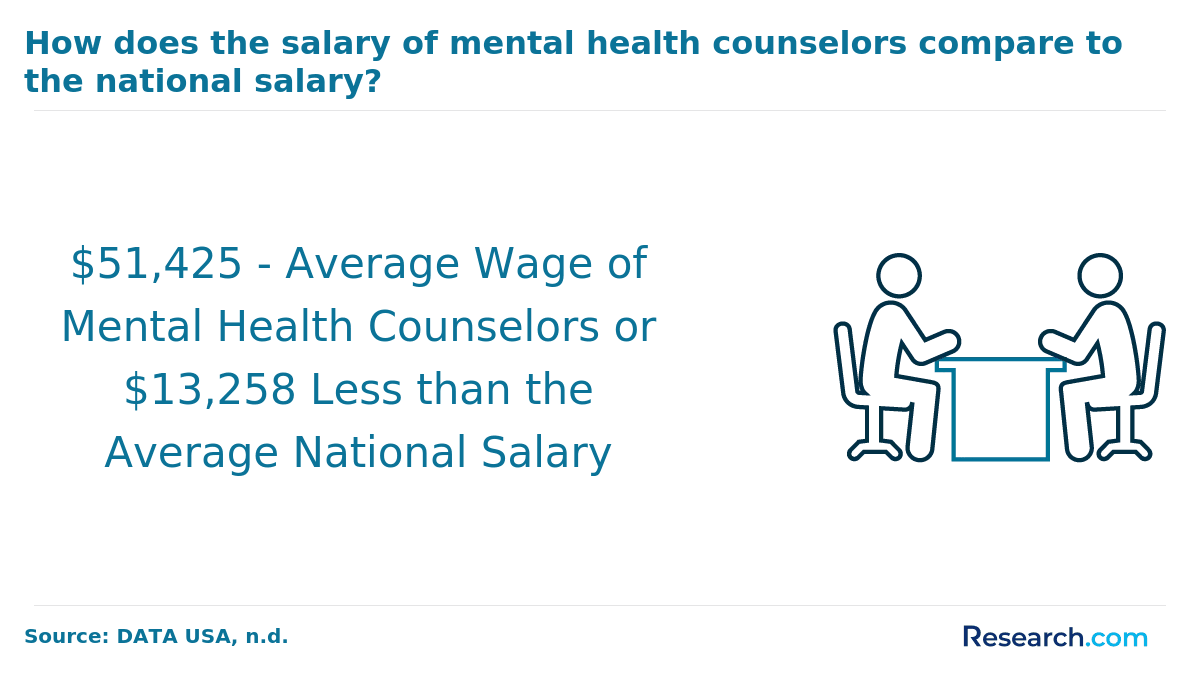
Licensed Professional Counselor pay in Louisville usually falls between $31,000 and $70,000 annually. The lower end is more common for early-career clinicians, smaller nonprofit programs, or community clinics with limited funding. The upper end is more likely for experienced counselors, hospital-based roles, larger behavioral health organizations, private practice clinicians, and specialists working with high-need populations.
Salary comparisons can be misleading if you look only at base pay. Benefits, supervision support, caseload expectations, paid documentation time, insurance reimbursement, evening hours, and opportunities for advancement can change the real value of a position. LPCs may earn less than some psychologists or other advanced mental health professionals, but licensure still improves employability compared with unlicensed counseling roles.
Education can also affect long-term opportunities. If you are comparing flexible graduate options, Research.com’s guide to the best online master’s programs in mental health counseling can help you evaluate programs beyond Louisville while keeping licensure requirements in mind.
| Salary factor | How it can affect LPC income in Louisville | What to evaluate |
| Experience level | New counselors often start near the lower end of the $31,000 to $70,000 range, while seasoned clinicians may qualify for higher-responsibility roles. | Ask how pay changes after full licensure, added responsibilities, or years of service. |
| Employer type | Hospitals, private practices, schools, nonprofits, and public agencies may use very different compensation models. | Compare salary, benefits, productivity expectations, and administrative support together. |
| Specialization | Areas such as trauma, substance abuse counseling, crisis care, and integrated behavioral health may improve marketability. | Check whether the employer pays more for specialized training or simply expects it. |
| Work setting | Urban Louisville may offer more openings and stronger clinical networks than rural areas, but competition can be higher in established systems. | Consider commute, caseload intensity, supervision access, and client population. |
What are the supervision requirements for LPCs in Louisville?
Supervision is the bridge between graduate education and independent counseling practice. Applicants are often told to expect a minimum of 4,000 hours of supervised clinical experience, typically completed across two to three years after earning a qualifying counseling or psychology degree. Other application guidance also references 3,000 hours of supervised clinical experience after the master’s degree. Because these figures appear in licensing discussions, candidates should confirm the current requirement directly with the Kentucky Board of Licensed Professional Counselors before starting, counting, or submitting hours.
Supervision must be provided by an approved professional, such as an LPC or another qualified clinician recognized by the Kentucky board. Approved settings may include community mental health centers, private practices, hospitals, schools, and other clinical environments where counseling services are delivered under professional oversight.
During supervision, candidates typically provide direct counseling, complete assessments and treatment plans, manage documentation, consult on ethical issues, and receive feedback on clinical decision-making. Accurate records are essential. If hours, supervisor credentials, dates, or client contact categories are recorded incorrectly, the licensure process can be delayed.
| Supervision item | Why it matters | Common mistake to avoid |
| Approved supervisor | The board must recognize the supervisor’s qualifications for your hours to count. | Starting hours before verifying the supervisor’s approval status. |
| Clinical setting | The setting must provide appropriate counseling duties and oversight. | Assuming any mental health job automatically qualifies as supervised counseling experience. |
| Direct client contact | Licensure requires evidence that you have provided actual counseling services, not only administrative support. | Failing to separate direct service hours from meetings, paperwork, and training. |
| Documentation | The board reviews records to confirm the quantity and quality of supervised experience. | Reconstructing hours months later instead of tracking them consistently. |
| Exam timing | Eligibility for the National Counselor Examination may depend on completion of specific steps. | Scheduling the exam without checking board approval and deadlines. |
Can LPCs specialize in substance abuse counseling in Louisville?
Yes. LPCs in Louisville can build a practice focus in substance abuse counseling through relevant coursework, supervised clinical experience, continuing education, and, when appropriate, additional credentials. This can be a strong fit for counselors who want to work in recovery programs, community behavioral health, hospitals, crisis services, or agencies serving clients with co-occurring mental health and substance use concerns.
Specialization should be strategic. Before paying for extra training, check whether local employers require it, prefer it, or merely view it as a bonus. If substance use treatment is your main career goal, Research.com’s guide on how to become a substance abuse counselor in Louisville can help you compare that pathway with standard LPC preparation.
Could Specializing in Marriage and Family Therapy Enhance My Counseling Career?
Marriage and family therapy training can strengthen an LPC’s ability to work with couples, families, parenting concerns, relationship conflict, and systemic issues. It may be useful if your ideal caseload involves family dynamics rather than primarily individual counseling.
This path is not automatically necessary for every LPC. It makes the most sense if your target employers serve families, schools, youth programs, domestic violence survivors, or relationship-focused client populations. If you are considering a separate or additional credential, review Research.com’s resource on how to become a marriage and family therapist in Louisville before committing time and money.
Could Complementary Credentials Enhance My LPC Career?
Additional credentials can help an LPC move into specialized, interdisciplinary, or education-related roles, but they should be chosen for a clear reason. A credential that does not change your scope of practice, employer eligibility, reimbursement options, or client population may not justify the cost.
For example, a teaching credential could support work in school-adjacent programs, psychoeducation, community training, or a longer-term transition into educational settings. Counselors comparing that option can review the lowest-cost ways to earn a teaching credential in Louisville while deciding whether the credential supports their counseling goals.
| Credential or specialization | When it may help | When it may not be worth it |
| Substance abuse counseling | You want to work in recovery services, crisis care, co-occurring disorders, or community behavioral health. | You do not plan to serve clients with substance use needs or your employer does not value the added training. |
| Marriage and family therapy training | You want a caseload focused on couples, families, children, or relational systems. | Your work is primarily individual adult counseling and family systems training will rarely be used. |
| Teaching credential | You want to add education-related work, training, school programs, or career flexibility. | You are seeking a direct clinical salary increase and employers do not require teaching credentials. |
| Behavior analysis certification | You work with behavioral interventions, developmental needs, or interdisciplinary treatment teams. | Your practice does not involve behavior-focused treatment planning or populations served by behavior analysts. |
What challenges may I encounter during LPC licensure in Louisville?
The most common LPC licensure problems are preventable. Candidates often lose time because they misunderstand supervision rules, submit incomplete forms, select a supervisor too quickly, or assume their program automatically satisfies every board requirement. Others run into delays because they wait until graduation to learn how the application process works.
- Documentation gaps — Missing dates, signatures, hour categories, or supervisor details can slow board review.
- Supervisor availability — Qualified supervisors may have limited capacity, especially in high-demand clinical settings.
- Exam timing confusion — Candidates may misjudge when they are eligible to sit for the National Counselor Examination or accepted equivalent.
- Placement mismatch — A job or internship may be valuable professionally but may not satisfy the exact requirements needed for licensure.
- Administrative delays — Background checks, transcripts, fees, and board processing can take longer than expected.
A practical way to reduce risk is to build a licensure file early. Keep copies of syllabi, transcripts, practicum approvals, supervision agreements, hour logs, evaluations, exam records, background check confirmations, and board correspondence. For a broader career view, Research.com’s guide to becoming a mental health counselor in Louisville can help you compare licensure steps with related mental health roles.
Can I Enhance My LPC Practice with Additional Behavior Analysis Certification in Louisville?
Behavior analysis training can complement LPC practice when a counselor works with behavioral interventions, developmental concerns, treatment teams, or clients who benefit from structured behavior-change planning. It can also help clinicians communicate more effectively with behavior analysts, educators, physicians, and caregivers.
However, additional certification should not be treated as a shortcut to better pay or broader practice authority. Review the scope, cost, supervision expectations, and employer demand first. If this path aligns with your goals, Research.com’s guide to BCBA certification requirements in Louisville explains the separate credentialing route.
Is Louisville a good place to work as an LPC?
Louisville can be a solid place to build an LPC career, especially for counselors interested in urban community mental health, integrated care, trauma services, substance use treatment, schools, and nonprofit work. The city has a larger service network than many parts of Kentucky, but it also reflects the funding limits and access challenges common in behavioral health.
- Growing public attention to mental health — More community awareness can support counseling demand in clinics, schools, public health programs, and nonprofit organizations.
- High-need communities — Economic hardship and racial inequality create significant need for affordable counseling, but these same conditions can limit agency funding and clinician compensation.
- State licensing structure — Kentucky’s LPC process gives applicants a defined path to practice, but insurance reimbursement and Medicaid payment realities can influence income.
- Urban access within a largely rural state — Louisville offers a broad client base and professional network, while outreach beyond the city can be harder because rural areas may have fewer services and transportation options.
-
: "
A Louisville clinician summarized the trade-off this way: “Working in underserved communities takes persistence because funding is rarely simple. Still, the work matters. Kentucky’s licensing process gave me a clear route into practice, but reimbursement and cost-of-living decisions are always part of career planning.”
"
How competitive is the job market for LPCs in Louisville?
The Louisville LPC market is competitive enough that credentials, supervised experience, and specialization matter, but it is not as saturated as some larger metropolitan markets. Demand is supported by mental health awareness, insurance coverage for behavioral health services, public and nonprofit programs, and local needs related to trauma, substance use, and community-based care.
Licensed counselors generally have stronger job prospects than unlicensed applicants because they can meet more employer, payer, and clinical responsibility requirements. Competition is usually stronger in established healthcare systems and desirable specialty roles, so candidates should build a focused resume before graduation or before completing supervision.
If you are still choosing a graduate program and want to control education costs, Research.com’s list of affordable CACREP-accredited online counseling programs can help you compare options that may support licensure preparation.
- Louisville offers steady LPC opportunities across healthcare, nonprofit, school, and community mental health settings.
- Full licensure usually improves employability compared with unlicensed counseling roles.
- The market may be less saturated than larger cities, but top healthcare and specialty positions can still be selective.
- Training in trauma, substance abuse counseling, crisis work, or integrated care can help candidates stand out.
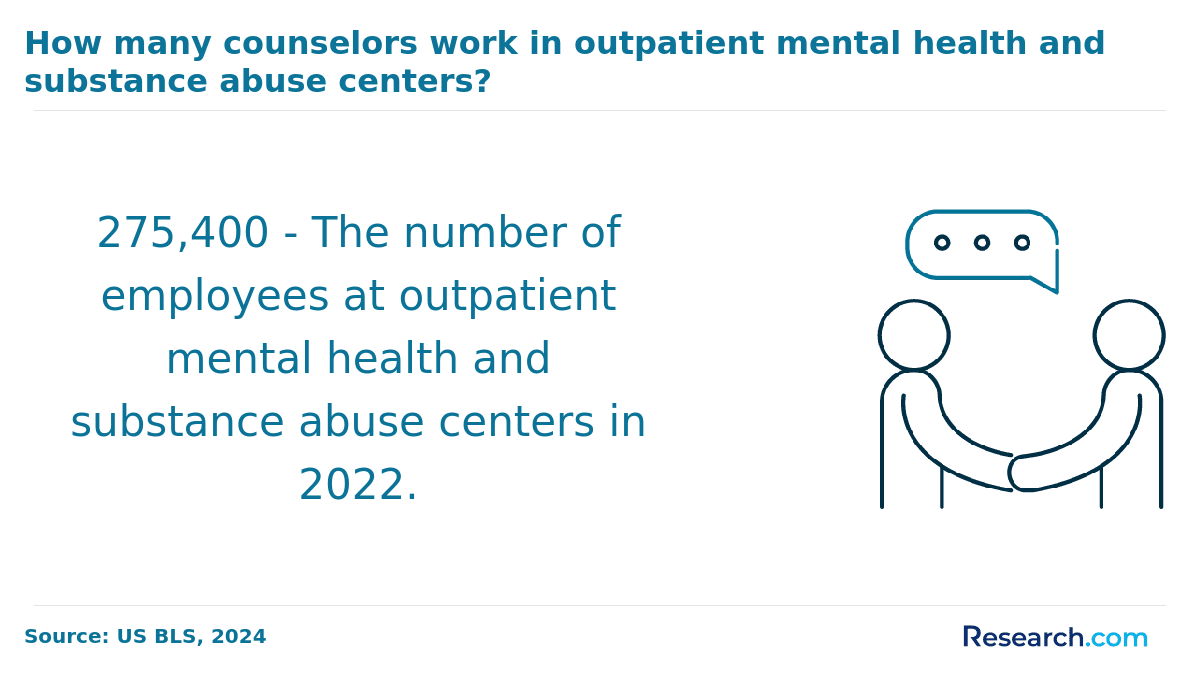
The chart below illustrates the average growth in employment of mental health professionals in the US, as reported by the BLS in 2024.
Are there counseling associations in Louisville?
Professional associations can help Louisville counselors find continuing education, understand legislative changes, meet supervisors, locate referral partners, and stay connected to ethical and clinical updates. They are especially useful for students and early-career clinicians who need guidance outside the classroom.
- Kentucky Counseling Association — As the state branch connected to the American Counseling Association, this organization supports professional counselors through continuing education, advocacy, conferences, and networking.
- Louisville Psychological Association — Although it primarily serves psychologists and other mental health professionals, its workshops and local events may be useful for LPCs seeking interdisciplinary connections.
- American Association for Marriage and Family Therapy — This national organization can be relevant for LPCs who focus on couples, families, and relationship-based counseling models.
Association membership is not a substitute for licensure, but it can strengthen your professional network and help you keep up with practice expectations. Counselors planning to focus on recovery services may also want to learn how an addiction counseling degree connects with clinical roles and specialized training.
Which are the most popular employers of LPCs in Louisville?
LPCs in Louisville work in hospitals, behavioral health agencies, crisis programs, schools, private practices, public health organizations, and nonprofits. The best employer depends on whether you want intensive clinical experience, predictable hours, a specialized caseload, supervision support, or private-practice preparation.
- The Center for Women and Families — LPCs may provide individual and group counseling, crisis support, trauma-informed services, safety planning, and emotional recovery support for survivors of domestic violence and trauma.
- Seven Counties Services — Counselors may work in outpatient therapy, substance abuse treatment, case coordination, assessment, treatment planning, and care for co-occurring mental health conditions.
- Norton Healthcare Behavioral Health Services — LPCs in hospital-connected settings often collaborate with multidisciplinary teams on assessment, therapy, discharge planning, crisis needs, and transitions back to community care.
- KentuckyOne Health — Behavioral health and integrated care roles may appeal to counselors who want healthcare-connected practice environments.
- Louisville Metro Department of Public Health and Wellness — Public health settings may fit counselors interested in community-level services, prevention, access, and coordinated care.
| Employer setting | Possible advantages | Questions to ask before accepting a role |
| Hospital or healthcare system | Team-based care, structured procedures, and exposure to complex cases. | How are caseloads assigned, and is documentation time built into the schedule? |
| Community mental health agency | Broad clinical experience and access to high-need populations. | What supervision, crisis support, and productivity expectations are in place? |
| Nonprofit provider | Mission-driven work with specialized communities or trauma-related services. | How stable is funding, and what benefits or advancement options are available? |
| School or youth-focused setting | Work with children, families, prevention programs, and multidisciplinary teams. | Does the role require additional school-related credentials or specialized experience? |
| Private practice | More control over schedule, niche, and long-term professional direction. | Who handles billing, referrals, insurance panels, liability coverage, and supervision? |
What LPCs in Louisville Say About Their Careers
-
: "
Louisville has given me the chance to work with clients from many backgrounds and see real change over time. My training at the University of Louisville helped me build the clinical foundation I needed, and nonprofit work has shown me how deeply counseling connects with community life here. – Jill
"
-
: "
I came to Louisville after completing my degree at Bellarmine University, and the city’s mix of urban needs and regional culture has pushed me to grow quickly. Integrated care opportunities have helped me collaborate with other providers in ways that expanded my clinical perspective. – Menard
"
-
: "
Working in a Louisville school setting has been a good long-term fit for me. The city offers professional stability, continuing education access, and a cost of living that supports my family while I continue developing as a counselor. – Lally
"
Common Mistakes to Avoid When Pursuing LPC Licensure in Louisville
| Mistake | Why it can hurt your timeline | Better approach |
| Choosing a program without checking licensure alignment | A degree may be reputable but still create extra steps if it does not meet Kentucky’s counseling requirements. | Ask the program to show exactly how its curriculum maps to Kentucky LPC rules. |
| Focusing only on tuition | A cheaper program may cost more later if it lacks placement support, exam preparation, or clear licensure advising. | Compare total value, including practicum support, graduation outcomes, and supervision connections. |
| Assuming online programs automatically qualify | Online delivery does not guarantee that coursework, practicum, or internship requirements match Kentucky standards. | Confirm accreditation, state authorization, field placement rules, and board eligibility before enrolling. |
| Waiting too long to find a supervisor | Supervisor availability can delay the start of post-master’s hours. | Begin networking with approved supervisors before graduation or early in your final year. |
| Keeping informal supervision records | The board needs organized, verifiable documentation. | Use a consistent tracking system and get signatures or confirmations on schedule. |
| Relying only on rankings | Rankings may not reflect your licensure needs, clinical interests, budget, or placement location. | Use rankings as one input, then verify accreditation, outcomes, cost, and field training fit. |
| Assuming salary outcomes are guaranteed | Pay varies by employer, specialization, licensure level, and workload. | Compare written offers, benefits, supervision support, caseload expectations, and advancement paths. |
Practical Steps for Planning Your LPC Path in Louisville
- Decide whether you want clinical mental health counseling, school-related counseling, substance use treatment, family-focused work, trauma services, or integrated healthcare.
- Shortlist programs that meet Kentucky counseling education requirements and ask each program for licensure outcome information.
- Confirm whether the program is CACREP-accredited, board-approved, or otherwise accepted for your intended licensure route.
- Ask about practicum and internship placement support in Louisville before enrolling.
- Create a licensure folder for transcripts, syllabi, supervisor agreements, hour logs, evaluations, exam records, and board communications.
- Network with local counseling associations, supervisors, and employers before graduation.
- Verify current Kentucky board requirements before starting supervised hours, applying for the exam, or changing jobs.
- Compare employer offers by supervision quality, caseload, benefits, documentation time, and advancement—not salary alone.
Related Articles for Nearby Cities
- 2027 How to Become a Licensed Therapist (LPC) in Lexington, KY
- 2027 How to Become a Licensed Therapist (LPC) in Cincinnati, OH
- 2027 How to Become a Licensed Therapist (LPC) in Indianapolis, IN
- 2027 How to Become a Licensed Therapist (LPC) in Nashville, TN
- 2027 How to Become a Licensed Therapist (LPC) in Columbus, OH
- 2027 How to Become a Licensed Therapist (LPC) in Fort Wayne, IN
- 2027 How to Become a Licensed Therapist (LPC) in St. Louis, MO
- 2027 How to Become a Licensed Therpist (LPC) in Huntsville, AL: Counselor License Requirements
- 2027 How to Become a Licensed Therapist (LPC) in Toledo, OH
- 2027 How to Become a Licensed Therapist (LPC) in Chicago, IL
References:
- Agents of Change Continuing Education. (2024). Kentucky counselor and therapist renewal timing and continuing education overview. Agents of Change Continuing Education.
- American Counseling Association (ACA). (n.d.). State counseling licensure information and requirement resources. ACA.
- Bureau of Labor Statistics (BLS). (2023). Occupational Employment and Wages, May 2023: 29-1129 Therapists, All Other. BLS.
- Bureau of Labor Statistics (BLS). (2024). Strong growth projected in mental health-related employment. BLS.
- Bureau of Labor Statistics (BLS). (2025). Area: Louisville/Jefferson County, KY-IN, Occupational Employment and Wage Statistics Query System. BLS.
- Human Services Edu. (n.d.). Kentucky professional counseling licensure overview. Human Services Edu.
- Kentucky General Assembly. (n.d.). Title 201, Chapter 036, Regulation 060. Kentucky General Assembly.
- Mojozy. (n.d.). Louisville professional counseling internship, practicum, and supervision placement information. Mojozy.
- Online Counseling Programs. (2022). Guide to becoming a counselor in Kentucky. Online Counseling Programs.
- Public Health Online. (n.d.). Kentucky counseling license requirements and LPCC/LPCA resources. Public Health Online.
- Salvia, V. (2024). Counseling degrees and licenses in Kentucky. Counseling Schools.
- University of Louisville. (2024). CACREP Vital Statistics Report (2023-2024). University of Louisville.
- University of Louisville. (n.d.). Counseling graduate assistantships, practicum placements, and internship information. University of Louisville.
- Western Kentucky University. (n.d.). Counseling state licensure guidance. WKU.
Key Insights
- Becoming an LPC in Louisville requires more than a counseling degree; you need a licensure-ready graduate program, approved supervision, exam completion, accurate records, and renewal planning.
- Program choice matters. CACREP accreditation, Kentucky board alignment, practicum support, local placement relationships, and exam preparation can all affect your timeline.
- Supervision is often the biggest source of delays. Verify your supervisor, setting, hour categories, and board rules before you begin counting experience.
- LPC salaries in Louisville commonly range from $31,000 to $70,000 annually, but the best job offer is not always the one with the highest base pay. Benefits, supervision, caseload, documentation time, and advancement matter.
- Louisville offers meaningful opportunities in hospitals, nonprofits, public health, community mental health, crisis services, substance use treatment, and school-related settings.
- Specializations such as substance abuse counseling, trauma work, family therapy, or behavior analysis can improve fit for certain roles, but only pursue extra credentials when they support a clear career goal.
- The safest strategy is to plan backward: identify your target role, confirm Kentucky licensure requirements, choose a qualifying program, secure strong field placements, document every supervised hour, and stay connected to local professional networks.
Other Things You Should Know About Becoming a Licensed Therapist (LPC) in Louisville KY
The Kentucky Board of Licensed Professional Counselors issues LPC licenses for counselors in Louisville and across the state. Applicants must apply through the board, meet Kentucky education and supervision rules, and receive board approval before using the LPC title in practice.
In 2027, LPC candidates in Louisville, KY must complete 4,000 hours of supervised clinical experience. This must include at least 1,600 hours providing direct client services. Supervision must be conducted by a board-approved supervisor to qualify for licensure.
Yes, candidates must pass the National Counselor Examination (NCE) to obtain LPC licensure in Louisville, KY in 2027. This exam assesses the knowledge and skills needed for effective counseling practice and is administered by the National Board for Certified Counselors (NBCC).


