
2027 Fastest Way To Become a Counselor in New York

Co-Founder and Chief Data Scientist
Becoming a counselor in New York is not just a career choice; it is a licensing, education, cost, and timeline decision. The state needs qualified mental health professionals in schools, clinics, community agencies, addiction treatment programs, and private practice settings, but the path to independent counseling practice is structured and cannot be skipped.
This guide is for students, career changers, and bachelor’s degree holders who want the fastest realistic route into counseling in New York. You will learn what degree you need, which entry-level roles are available before licensure, how accelerated and online programs compare, what New York employers look for, what salary ranges to expect, and how to avoid delays that can add months or years to your career plan.
Quick Answer: Fastest Way to Become a Counselor in New York
The fastest route to becoming a licensed counselor in New York is to complete a license-eligible graduate program in mental health counseling, submit your licensure application and education verification promptly, complete the required 3,000 post-degree supervised hours with at least 1,500 direct client contact hours, and pass the National Clinical Mental Health Counselor Examination. A bachelor’s degree can help you enter support roles sooner, but independent counseling practice in New York requires graduate-level education and state licensure.
Key Benefits of Becoming a Counselor in New York
- Strong workforce need: New York continues to need trained counselors across mental health, school, addiction, family, and community-based settings.
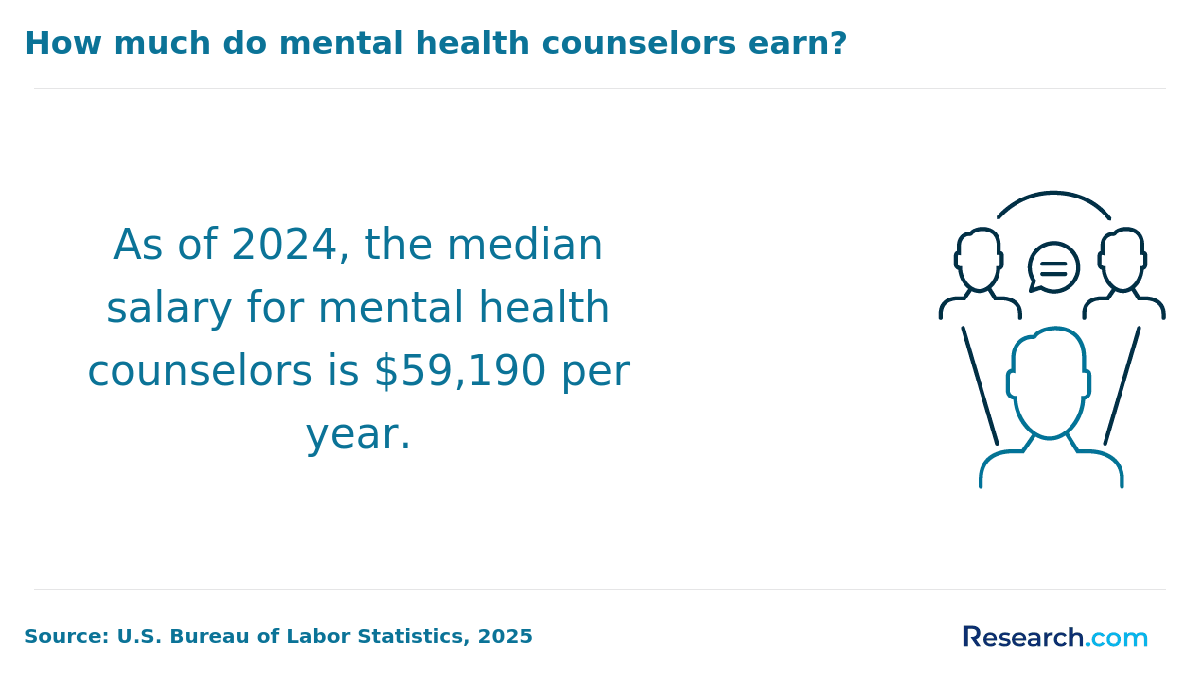
- Competitive earnings: Counselors in New York can build toward stable income, with one commonly cited average near $60,000 annually and higher figures reported for some roles and regions.
- Diverse career settings: The state’s mix of large cities, rural communities, schools, hospitals, nonprofits, and private practices gives counselors many ways to specialize.
- Clear professional ladder: Students can start in bachelor’s-level support roles, move into graduate training, complete supervised clinical work, and later pursue advanced certifications or private practice.
- Fastest path to counseling licensure in New York
- Counseling-related jobs with only a bachelor’s degree
- Accelerated counseling degree options in New York
- Online vs. traditional counseling programs
- Challenges of fast-track counseling programs
- How New York employers evaluate accelerated credentials
- Cost factors for fast-track and online programs
- Specializing in substance abuse counseling
- Long-term career growth for New York counselors
- Core LPC and counseling license requirements
- Counseling vs. social work careers in New York
- Counselor demand in New York
- Counselor salaries in New York
- Is the fast route worth it?
What is the fastest way to become a licensed counselor in New York?
The shortest practical route is not the same as cutting corners. New York requires counselors to meet education, supervised experience, examination, and application standards before they can practice independently. The fastest students are usually the ones who choose a license-eligible program from the beginning, track paperwork carefully, and plan supervised hours before graduation.
Use this sequence to reduce avoidable delays:
- Choose a New York license-eligible graduate program: A master’s or doctoral program designed for New York mental health counseling licensure can prevent slow equivalency reviews after graduation.
- File Form 1 as early as appropriate: Submit the Application for Licensure, Form 1, with the $371 fee to the New York State Education Department so your file can be opened while other requirements are being completed.
- Confirm Form 2 submission with your school: Your institution must verify your education directly. Do not assume this happens automatically; check with the registrar or credentialing office.
- Start supervised experience in an approved setting: New York requires 3,000 post-degree supervised hours, including at least 1,500 hours of direct client contact. Keep organized documentation from the start.
- Prepare for the required exam: New York uses the National Clinical Mental Health Counselor Examination, commonly known as the NCMHCE. Study materials from the National Board for Certified Counselors and support from groups such as the New York Mental Health Counselors Association can help candidates prepare.
| Step | Why it matters | Common delay to avoid |
| License-eligible graduate degree | Meets the education foundation for New York counseling licensure | Enrolling in a program that does not clearly align with state requirements |
| Form 1 and $371 fee | Starts the official licensure application process | Waiting until all supervised hours are finished before opening a file |
| Form 2 education verification | Confirms that your degree meets state standards | Not following up with your school after graduation |
| 3,000 supervised hours | Builds the clinical experience required for independent practice | Poor tracking of direct client contact hours |
| NCMHCE | Required examination for New York mental health counselor licensure | Taking the exam without targeted preparation |
If your long-term interest is more aligned with psychology than counseling, compare this pathway with the steps in how to become a counseling psychologist, because psychology licensure and counseling licensure are not the same career track.
What counseling careers can you pursue in New York with only a bachelor’s degree?
A bachelor’s degree does not qualify you for independent mental health counseling practice in New York. However, it can help you enter counseling-adjacent roles where you support clients, coordinate services, gain field experience, and decide whether graduate counseling training is the right investment.
Common bachelor’s-level options include:
- Substance abuse counselor assistant: Work under licensed or credentialed professionals while supporting clients in addiction treatment settings. Some workers later pursue credentials such as the CASAC-T.
- Behavioral health technician or intervention specialist: Provide direct support in clinical, residential, school, or community programs for clients with behavioral or emotional needs.
- Case manager or case management aide: Help clients navigate healthcare, housing, social services, benefits, and treatment referrals.
- Academic advisor or college admissions counselor: Support students with educational planning, enrollment decisions, and academic progress, usually outside clinical mental health practice.
- Early intervention therapist: Work with young children and families in developmental support settings, depending on employer requirements and supervision rules.
- Community agency or nonprofit support staff: Serve clients in rehabilitation programs, youth services, crisis support organizations, shelters, or advocacy agencies.
| Career option | Typical setting | Best for students who want to |
| Substance abuse counselor assistant | Addiction treatment programs, recovery centers, community agencies | Build experience before specializing in addiction counseling |
| Behavioral health technician | Clinics, residential programs, schools, hospitals | Gain direct client exposure in supervised environments |
| Case manager | Nonprofits, healthcare systems, social service agencies | Coordinate care and learn the broader support network |
| Academic advisor | Colleges, schools, admissions offices | Work with students without becoming a clinical counselor |
| Community support worker | Rehabilitation centers, youth programs, advocacy organizations | Serve high-need populations while exploring graduate study |
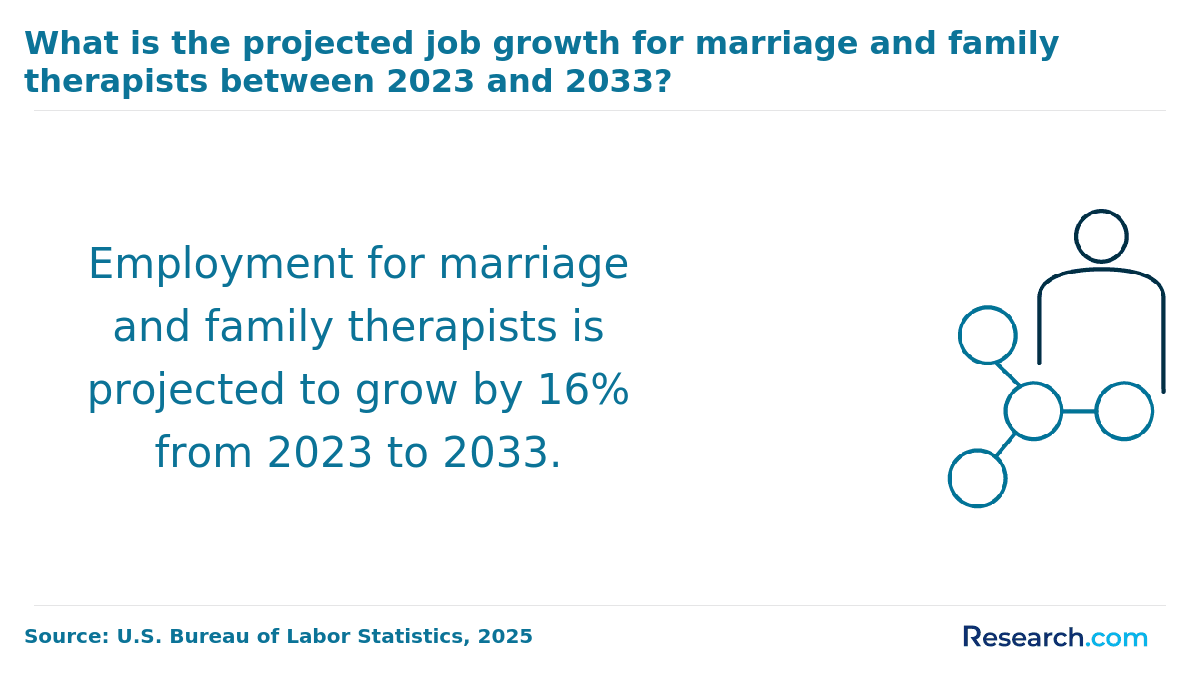
These roles can make your graduate school application stronger and clarify which population you want to serve. If your target is full clinical practice, review the fastest way to become a mental health counselor so you understand the graduate-level requirements before committing to a program. If marriage and family therapy interests you, the projected job growth for MFTs in the chart below may also help you compare specialization options.
Are there accelerated counseling degree programs in New York?
Yes. Some New York institutions offer accelerated pathways that combine undergraduate and graduate study or allow qualified students to begin graduate coursework early. These options can shorten the overall timeline, but they still must provide the coursework and clinical preparation needed for licensure.
- Manhattan College: The Accelerated B.A./M.S. in Psychology and Mental Health Counseling allows committed psychology majors to complete both degrees within five and a half years.
- SUNY Brockport: Students in addictions and behavioral health may complete up to 12 graduate credits at the undergraduate tuition rate before moving into the M.S. in Mental Health Counseling program.
- Hofstra University: The accelerated B.A./M.A. in Psychology and Mental Health Counseling takes five and a half years and includes clinically focused preparation aligned with New York licensure expectations. Students may also prepare for credentials such as CASAC.
| Program type | Main advantage | What to verify before enrolling |
| Combined bachelor’s/master’s pathway | Reduces the time between undergraduate study and graduate training | Whether the graduate portion is license-eligible in New York |
| Early graduate credit option | Can lower cost if credits are charged at undergraduate tuition | How many credits apply to the counseling master’s degree |
| Accelerated clinical counseling track | Moves students into supervised preparation sooner | Practicum, internship, and state licensure alignment |
Before choosing any accelerated pathway, compare its curriculum against New York requirements, practicum expectations, faculty support, field placement process, and total cost. For a broader look at program types and specialization choices, see this guide to counseling degree requirements.
Walden University, Capella University, and Grand Canyon University were the leading institutions in awarding degrees in mental health counseling in 2023, as shown in the chart below. That degree production matters because the counseling workforce depends on a steady pipeline of properly trained graduates.
Are online counseling programs in New York faster than traditional ones?
Online counseling programs can be faster for some New York students, but not because they remove licensure requirements. They may save time through flexible scheduling, year-round course availability, and reduced commuting. The clinical requirements, supervised experience, and exam obligations still apply.
| Factor | Online or hybrid programs | Campus-based programs |
| Course scheduling | May offer asynchronous, evening, or year-round options | Often follows fixed class times and semester schedules |
| Commute time | Usually reduced or eliminated for didactic coursework | Can add weekly travel time, especially in high-traffic regions |
| Clinical placements | Still required and may need local site approval | Often supported through established regional partnerships |
| Peer networking | Depends on virtual engagement and residency requirements | More face-to-face interaction with classmates and faculty |
| Best fit | Working adults, parents, career changers, students outside major metro areas | Students who prefer structured in-person learning and campus resources |
Online formats may help students move efficiently because they can:
- Fit coursework around work and caregiving: Flexible schedules can make continuous enrollment easier.
- Use asynchronous learning: Some courses allow students to complete weekly work without attending at a fixed time.
- Coordinate internships more strategically: Evening or late-afternoon coursework can leave daytime hours for field placement.
- Avoid commuting barriers: Saving travel time can make the workload more manageable.
- Take advantage of frequent course offerings: Programs that run classes throughout the year may reduce waiting time for required courses.
The key question is not whether a program is online. The better question is whether the program is license-eligible, provides reliable placement support, prepares students for the NCMHCE, and has a realistic plan for completing practicum and internship requirements in New York.
What challenges do fast-track counseling students face?
Accelerated counseling programs can save time, but they are demanding. Students must absorb theory, ethics, assessment, diagnosis, counseling techniques, multicultural practice, and fieldwork expectations in a compressed schedule. That pace can be especially difficult for students who are also working or caring for family members.
- Compressed academic workload: Shorter timelines often mean heavier reading, writing, skills practice, and exam preparation.
- Less time for reflection: Counseling training requires self-awareness, feedback, and emotional processing; rushing can make that harder.
- High-stakes licensure planning: Missing a required course, practicum component, or supervision rule can delay eligibility even if you finish quickly.
- Field placement pressure: Students may need to secure appropriate sites while maintaining academic performance.
- Burnout risk: Counseling students learn to support others, but they also need time for self-care and supervision.
| Common mistake | Why it causes problems | Better approach |
| Choosing the fastest advertised program | Speed does not guarantee licensure alignment | Confirm New York license eligibility before applying |
| Ignoring field placement logistics | Clinical sites may be limited or competitive | Ask how placements are approved and supported |
| Taking too many responsibilities at once | Overload can hurt performance and well-being | Build a weekly schedule before classes begin |
| Waiting to track supervision hours | Incomplete records can slow licensure review | Document hours consistently from the first approved experience |
| Assuming online means easier | Online counseling programs still require rigorous clinical training | Evaluate workload, faculty access, and practicum expectations |
How do employers in New York view fast-track counselors?
New York employers may consider graduates from accelerated or online pathways, but they usually focus less on the label “fast-track” and more on clinical readiness. A candidate who completed an accredited or license-eligible program, earned strong supervision evaluations, understands ethical practice, and has relevant client-facing experience can be competitive.
Some hiring managers may look closely at whether an accelerated program included enough supervised practice, documentation, crisis training, and exposure to diverse populations. Others may value fast-track students because they often bring strong motivation, previous experience in education, healthcare, social services, or nonprofit work, and the discipline needed to finish a demanding program quickly.
To strengthen your employability, keep a portfolio of supervised experiences, populations served, counseling modalities studied, trainings completed, and letters from supervisors. Employers want proof that you can work safely, ethically, and professionally—not just proof that you finished quickly.
Are fast-track and online counseling programs in New York more affordable?
They can be, but affordability depends on tuition, fees, transfer credits, program length, financial aid, field placement costs, and whether you can keep working while enrolled. A shorter program is not automatically cheaper if the per-credit cost is high or if clinical placement delays extend your timeline.
- Tuition differences: Public options such as CUNY Lehman College may offer lower tuition than many private programs, and some online master’s programs cost less than $20,000 in total.
- Shorter completion time: Fast-track programs may allow students to finish in about two years instead of three, which can reduce the number of enrolled terms.
- Work-friendly scheduling: Evening or asynchronous classes can help students maintain income while studying.
- Lower travel and housing costs: Online and hybrid formats may reduce commuting and campus housing expenses, which can matter in New York’s high-cost housing market.
- Financial aid access: Online and in-state students may still qualify for scholarships, grants, and other financial aid, depending on the school and enrollment status.
| Cost factor | Question to ask | Why it matters |
| Tuition and fees | What is the full program cost, not just per-credit tuition? | Fees can materially change affordability |
| Transfer or shared credits | Can undergraduate credits apply to graduate requirements? | Approved credits may reduce total cost and time |
| Program length | Can students realistically finish in about two years? | Advertised timelines may assume full-time enrollment |
| Clinical placement costs | Are there travel, background check, insurance, or site fees? | Fieldwork can create expenses beyond tuition |
| Work compatibility | Can I maintain employment while enrolled? | Lost income is part of the real cost of graduate school |
How can I specialize in substance abuse counseling in New York?
Substance abuse counseling is a strong specialization for students who want to work with addiction, recovery, relapse prevention, co-occurring mental health concerns, and family systems affected by substance use. In New York, the route may include targeted coursework, supervised addiction-focused experience, and credentials such as CASAC-T, depending on your role and employer requirements.
This specialization can be a good fit if you are comfortable working in community agencies, outpatient programs, residential treatment, hospitals, correctional settings, or integrated behavioral health teams. For a focused career guide, review how to become a substance abuse counselor in New York.
How can counselors sustain long-term career growth in New York?
Long-term growth in counseling usually comes from three things: licensure progress, specialization, and continued professional development. After entering the field, counselors can build expertise in areas such as school counseling, trauma, addiction, family systems, telehealth, crisis response, or working with specific age groups and communities.
Professional associations, supervision, mentorship, continuing education, and advanced credentials can help counselors stay current with ethical standards, technology use, documentation expectations, and changing client needs. If your goal is to work in schools, compare the clinical counseling path with how to become a school counselor in New York, because school-based roles may involve different credentialing expectations.
What are the key LPC license requirements to practice counseling in New York?
New York’s counseling credential is commonly discussed alongside LPC requirements, but candidates should pay close attention to the state’s specific terminology and rules. In general, prospective counselors need graduate education in mental health counseling, supervised clinical experience, and successful completion of the state-required examination process before they can practice independently.
The main requirements include an eligible graduate program, documented supervised hours, direct client contact, application materials, fees, and the NCMHCE. Because licensing rules can be detailed, students should review the current state guidance and program disclosures before enrolling. For a deeper overview, see LPC license requirements in New York.
How do counseling and social work career paths differ in New York?
Counseling and social work both serve people with mental health, family, community, and life adjustment needs, but the training emphasis is different. Counselors typically focus on assessment, diagnosis, treatment planning, talk therapy, and structured clinical interventions. Social workers often combine clinical support with systems-level work, case management, advocacy, resource navigation, and attention to social conditions affecting clients.
| Path | Primary focus | Good fit for students who want to |
| Counseling | Therapeutic support, mental health treatment, client change processes | Provide counseling sessions and specialize in clinical intervention |
| Social work | Client support plus systems, resources, advocacy, and community context | Address mental health needs alongside housing, benefits, healthcare, and family systems |
If you are deciding between these fields, compare coursework, licensure steps, supervised experience requirements, preferred work settings, and the type of client impact you want to have. For the social work route, review New York social worker educational requirements.
Is there a demand for counselors in New York?
Yes. New York has substantial need for mental health professionals across multiple settings, and that demand affects both large urban systems and underserved rural areas. Workforce shortages, unmet behavioral health needs, school-based demand, addiction treatment needs, and community mental health initiatives all create opportunities for trained counselors.
- Provider shortage: New York is short more than 6,000 qualified mental health providers needed to meet community needs, including in Health Professional Shortage Areas.
- Unmet child behavioral health needs: About 75% of children who need outpatient behavioral health services are not receiving care.
- Need for specialized providers: Substance abuse counseling and marriage and family therapy continue to be important areas as communities seek more comprehensive care.
- Workforce incentives: Shortages may support job stability, loan forgiveness opportunities, and hiring incentives, particularly for professionals serving underserved communities.
- Public attention to the shortage: The Mayor’s Office of Community Mental Health has described the situation as a “critical behavioral health workforce shortage crisis,” supporting policy and funding efforts to expand the workforce.
Demand alone should not be the only reason to choose counseling. The work can be emotionally demanding, documentation-heavy, and highly regulated. Still, for students who want direct client impact and are willing to complete the licensure process, New York offers many possible entry points.
If you are weighing graduate school against career outcomes, this discussion of careers with a masters in counseling can help you evaluate whether the degree aligns with your goals.
The chart below shows the current composition of the mental health services workforce, where mental health counselors represent a major share. Even with a sizable existing workforce, rising behavioral health needs may continue to place pressure on service capacity.
How much do counselors get paid in New York?
Counselor pay in New York varies by specialization, region, employer, licensure status, years of experience, and whether the role is in a school, agency, hospital, nonprofit, private practice, or government setting. One reported average for counselors in New York is about $71,109 annually, with many salaries ranging from $62,708 to $80,788 and top professionals reaching up to $89,600.
- School counselors: Many earn between $60,000 and $80,000 per year, with compensation often influenced by district, location, union contracts, and experience.
- Mental health and substance abuse counselors: In New York City, these roles may exceed $86,000 annually, and some therapists may reach total compensation above $108,000.
- Entry-level counselors: New professionals may start around $57,000 per year, with hourly wages near $27.54.
- Factors that can raise pay: Advanced education, specialized credentials, full licensure, metropolitan employment, supervisory duties, and high-demand clinical specialties can influence earnings.
| Role or salary factor | Reported figure or range | What affects the number |
| Overall counselor average in New York | About $71,109 annually | Role type, location, experience, and employer |
| Common salary range | $62,708 to $80,788 | Licensure level, specialization, and setting |
| Top professionals | Up to $89,600 | Experience, credentials, and advanced responsibilities |
| School counselors | $60,000 to $80,000 per year | District, region, and years of service |
| New York City mental health and substance abuse counselors | More than $86,000 annually | Employer, demand, specialization, and compensation structure |
| Entry-level counselors | Around $57,000 annually; near $27.54 hourly | Starting role, supervision status, and workplace |
Because New York’s cost of living can be high, students should compare salary expectations with tuition, debt, commuting, unpaid fieldwork, and time to licensure. If school counseling is your preferred specialization, comparing affordable programs such as the cheapest masters in school counseling can help you manage the cost side of the decision.
Is taking the fast route to become a counselor in New York worth it?
A fast-track route can be worth it if the program is legitimate, license-aligned, financially manageable, and realistic for your schedule. It is not worth it if speed causes you to choose a weak program, miss licensure requirements, take on unaffordable debt, or burn out before supervised practice begins.
- Worth considering if: You already have a strong academic record, can handle intensive coursework, have support for work and family responsibilities, and want to enter supervised clinical work sooner.
- Be cautious if: You need extensive schedule flexibility, are unsure about clinical counseling, cannot verify licensure alignment, or would need to borrow heavily without a clear repayment plan.
- Best outcome: You finish graduate training efficiently, begin supervised hours earlier, and move toward full licensure without sacrificing clinical quality.
- Worst outcome: You complete a program quickly but discover missing requirements, weak field placement support, or limited employer confidence.
| Decision question | Choose fast-track if... | Consider a slower route if... |
| Can you manage the workload? | You can study consistently and handle compressed deadlines | You need more time for work, caregiving, or health needs |
| Is the program license-aligned? | The school clearly documents New York licensure preparation | The program gives vague answers about state requirements |
| Can you afford it? | The total cost fits your budget and aid plan | The tuition savings are unclear or debt would be high |
| Will you get clinical support? | The program has strong practicum and internship guidance | You must find placements with little school assistance |
| Are you certain about counseling? | You have related experience and understand the role | You have not worked in a helping profession before |
What Counselors in New York Say About Their Careers
- Moving through an accelerated counseling pathway helped me enter the field sooner, but what mattered most was strong supervision. The demand in New York is real, and the work feels stable, but the responsibility is also serious. – Jane
- New York exposes counselors to an extraordinary range of client experiences. Fast-tracking my education helped me start earlier, but every week on the job reminds me that cultural humility and clinical growth never stop. – Earl
- Finishing quickly gave me momentum, yet my career has advanced because I kept investing in workshops, consultation, and professional relationships. In this state, continuous learning is part of staying effective. – Addie
Related Articles for Nearby States
- 2027 Fastest Way To Become a Counselor in New Jersey
- 2027 Fastest Way To Become a Counselor in Pennsylvania
- 2027 Fastest Way To Become a Counselor in Connecticut
- 2027 Fastest Way To Become a Counselor in Massachusetts
- 2027 Fastest Way To Become a Counselor in Vermont
- 2027 Fastest Way To Become a Counselor in Rhode Island
- 2027 Fastest Way To Become a Counselor in Delaware
- 2027 Fastest Way To Become a Counselor in Maryland
- 2027 Fastest Way To Become a Counselor in New Hampshire
- 2027 Fastest Way To Become a Counselor in Ohio
References:
- CareerExplorer. (n.d.). School counselor salary in New York. https://www.careerexplorer.com/careers/school-counselor/salary/new-york/
- International Journal of Research and Innovation in Social Science. (n.d.). Exploring the challenges faced by Bachelor of Education with Guidance and Counselling students during practicum. https://rsisinternational.org/journals/ijriss/articles/exploring-the-challenges-faced-by-bachelor-of-education-with-guidance-and-counselling-students-during-practicum/
- Marquette University. (n.d.). Advancements and challenges in counseling practices. https://online.marquette.edu/education/blog/advancements-challenges-counseling-practice
- Master of Social Work Degrees. (n.d.). Fastest online counseling master's degrees for 2025–2026. https://www.mswdegrees.org/degrees/online/fastest-online-counseling-programs/
- Springer. (2024). Fast Track intervention effects and mechanisms of action through established adulthood. Prevention Science. https://link.springer.com/article/10.1007/s11121-024-01736-0
Key Insights
- The fastest legitimate path to independent counseling practice in New York still requires a license-eligible graduate degree, 3,000 supervised hours, at least 1,500 direct client contact hours, and the NCMHCE.
- A bachelor’s degree can lead to useful support roles in behavioral health, case management, addiction services, advising, and nonprofits, but it does not qualify you for independent clinical counseling.
- Accelerated and online programs can save time and sometimes reduce costs, but only if they meet New York licensure expectations and provide strong clinical placement support.
- Do not choose a program based only on speed or tuition. Verify licensure alignment, total cost, fieldwork requirements, financial aid, supervision support, and employer reputation.
- New York’s counseling workforce need is substantial, but career success depends on clinical competence, ethical practice, documentation habits, cultural responsiveness, and continued professional development.
Other Things to Know About Becoming a Counselor in New York
The New York State Education Department’s Office of the Professions, through the Board of Mental Health Practitioners, oversees counseling licensure. Applicants must meet education, supervised experience, and examination rules set in the state regulations before the license is issued.
In 2027, to practice as a counselor in New York, you need a Licensed Mental Health Counselor (LMHC) license. This requires a master’s or doctoral degree in counseling, supervised clinical hours, and passing the National Clinical Mental Health Counseling Examination (NCMHCE).
Yes, New York requires supervised experience for counseling licensure. Applicants must complete 3,000 hours of post-master's supervised experience over at least two years, under the supervision of a qualified mental health professional, to be eligible for licensure in 2027.


