2027 How to Become a Mental Health Counselor in Oregon

Co-Founder and Chief Data Scientist
Becoming a mental health counselor in Oregon is a long-term professional path that requires graduate education, supervised clinical experience, and state licensure—but the need for qualified providers is clear. As of April 1, 2024, Oregon had 129 mental healthcare Health Professional Shortage Area (HPSA) designations, and only 31.1% of the state’s need for mental health professionals had been met (Bureau of Health Workforce, 2024). For students, career changers, and helping professionals, this creates both opportunity and responsibility.
This guide explains how to become a mental health counselor in Oregon, what the job involves, which education and licensure steps matter most, how to evaluate whether the career is financially realistic, and what alternatives you may want to compare before committing to this path.
Quick Answer: How Do You Become a Mental Health Counselor in Oregon?
To become a licensed mental health counselor in Oregon, you generally need a master’s degree in counseling or a related field, 36 months of eligible supervised clinical experience, at least 1,900 hours of supervised direct client contact of counseling, and a passing score on an accepted national exam such as the National Counselor Examination (NCE), the National Clinical Mental Health Counseling Examination (NCMHCE), or the Certified Rehabilitation Counselor Examination (CRC). After meeting these requirements, you apply through the Oregon Board of Licensed Professional Counselors and Therapists and maintain your license through continuing education.
Key Things You Should Know About Becoming a Mental Health Counselor in Oregon
- Oregon’s mental health needs are substantial. Between February 1 and 13, 2023, 35.3% of adults in Oregon reported symptoms of anxiety and/or depressive disorder, compared with 32.3% of adults across the United States (Kaiser Family Foundation, 2024).
- National employment for substance abuse, behavioral disorder, and mental health counselors is projected to grow by 18% between 2022 and 2032 [US Bureau of Labor Statistics (BLS), 2024].
- Substance abuse, behavioral disorder, and mental health counselors in Oregon earned a median hourly wage of $29.84 in May 2023 (US BLS, 2024), equal to an estimated $57,292.8 annual wage.
- A single adult without children in Oregon can live comfortably on a gross annual income of $50,553 (Glasmeier & Massachusetts Institute of Technology, 2024), which makes salary, location, debt, and benefits important factors when comparing job offers.
- Licensure is not optional for independent clinical practice. Oregon requires graduate-level education, supervised experience, and a qualifying national exam before a counselor can become fully licensed.
- What is the role of a mental health counselor in Oregon?
- What are the steps to pursue mental health counseling in Oregon?
- How can students in Oregon prepare for a career in mental health counseling?
- How important is practicum experience for mental health counselors in Oregon?
- What specializations can mental health counselors in Oregon pursue?
- What educational resources support aspiring mental health counselors in Oregon?
- Is Oregon a good place to work as a mental health counselor?
- What is the demand for mental health counselors in Oregon?
- Can a Master’s in Social Work degree expand my mental health career opportunities in Oregon?
- What are the marriage counseling education and certification requirements in Oregon?
- How Can I Stay Updated on Oregon’s Licensing and Certification Standards?
- Can mental health counselors transition to school psychology in Oregon?
- Can mental health counselors transition to social work in Oregon?
- What future trends are shaping mental health counseling in Oregon?
- What is the quickest way to launch my mental health counseling career in Oregon?
- Could transitioning to school counseling multiply career opportunities in Oregon?
- What are the licensure prerequisites for mental health counselors in Oregon?
- What other mental health careers can I pursue in Oregon?
- What careers are available to Mental Health Counseling Graduates in Oregon?
- How can I further my expertise and boost my career in Oregon?
- What challenges do mental health counselors face in Oregon?
What is the role of a mental health counselor in Oregon?
Mental health counselors in Oregon help people understand, manage, and recover from emotional, behavioral, and psychological challenges. Their work may involve assessment, treatment planning, individual counseling, group counseling, crisis support, referrals, and coordination with other healthcare or social service professionals.
The role matters because Oregon’s need for behavioral health services remains significant. Between February 1 and 13, 2023, 35.3% of adults in Oregon reported symptoms of anxiety and/or depressive disorder, compared with 32.3% of adults nationwide (Kaiser Family Foundation, 2024). Counselors are part of the workforce that responds to this need in clinical, educational, community, and private settings.
Typical counseling responsibilities in Oregon may include:
- Conducting intake assessments: Counselors gather information about a client’s symptoms, history, risks, goals, support systems, and treatment needs.
- Creating treatment plans: They identify therapeutic goals and select appropriate interventions based on the client’s concerns and level of care.
- Providing counseling sessions: Counselors work with clients dealing with anxiety, depression, trauma, substance use, relationship stress, grief, life transitions, and behavioral concerns.
- Documenting care: Clinical notes, treatment updates, consent forms, referrals, and safety planning are part of ethical and compliant practice.
- Coordinating referrals: Counselors may connect clients to psychiatrists, primary care providers, social workers, crisis services, housing supports, or substance use programs.
- Supporting culturally responsive care: Oregon counselors often serve clients from different cultural, geographic, economic, and family backgrounds, making cultural humility and local resource knowledge essential.
Oregon mental health counselors may work in several practice environments:
| Work Setting | What Counselors Usually Do There | Who It May Fit Best |
| Schools | Support student well-being, provide short-term counseling, coordinate with families and educators, and help students manage emotional or behavioral concerns. | People who enjoy youth development, prevention work, and collaboration with educational teams. |
| Community health centers | Serve clients who may face barriers related to income, insurance, transportation, housing, or access to specialty care. | Counselors who want mission-driven work and exposure to complex community needs. |
| Private practice | Provide therapy to individuals, couples, families, or groups, often with more control over schedule, client focus, and business model. | Licensed professionals who are prepared for clinical independence and business responsibilities. |
| Hospitals and integrated care settings | Work alongside medical teams, support behavioral health screening, crisis intervention, discharge planning, and care coordination. | Counselors comfortable with fast-paced, interdisciplinary care. |
| Nonprofit and public agencies | Offer counseling, case coordination, outreach, prevention services, or specialized programs for targeted populations. | Professionals interested in community impact, advocacy, and public service systems. |
One Oregon counselor described the work this way: “After graduating with a counseling degree and passing the licensure exam, I moved to Portland to start my practice. The city is vibrant, but it also has its share of mental health challenges.” She added, “Every day, I see the impact of my work. Helping someone navigate their anxiety or depression is incredibly fulfilling.” She also noted the pressure of the role: “The demand can be overwhelming. But knowing that I can make a difference keeps me motivated.”
Her experience captures the balance many counselors face in Oregon: meaningful work, visible community need, and a workload that requires strong boundaries and professional support.
What are the steps to pursue mental health counseling in Oregon?
The path to becoming a mental health counselor in Oregon is sequential. You need to plan your undergraduate education, choose an appropriate graduate program, complete clinical training, pass an accepted exam, and apply for licensure. Skipping one requirement or choosing the wrong program can delay your timeline.
Step-by-Step Path to Becoming a Mental Health Counselor in Oregon
| Step | What You Need to Do | Decision Tip |
| 1. Earn a bachelor’s degree | Complete a 4-year undergraduate degree, commonly in psychology, counseling, human services, social sciences, or a related field. | Use electives, internships, and volunteer work to confirm that counseling is the right fit before committing to graduate school. |
| 2. Complete a master’s degree | Enroll in a graduate program in counseling or a related field. Master’s programs commonly take 2 to 3 years. | Confirm that the curriculum aligns with Oregon licensure expectations before you apply. |
| 3. Gain supervised clinical experience | Complete 36 months of eligible supervised clinical experience, including at least 1,900 hours of supervised direct client contact of counseling. Applicants may include up to 400 pre-degree hours. | Ask prospective programs and supervisors how hours are tracked, approved, and documented. |
| 4. Pass an accepted examination | Take and pass the National Counselor Examination (NCE), National Clinical Mental Health Counseling Examination (NCMHCE), or Certified Rehabilitation Counselor Examination (CRC). | Choose the exam that best matches your training, career goals, and Oregon Board requirements. |
| 5. Apply for Oregon licensure | Submit documentation of education, supervised experience, and exam results to the Oregon Board of Licensed Professional Counselors and Therapists. | Keep copies of syllabi, transcripts, supervision forms, and hour logs throughout your training. |
| 6. Maintain your license | Complete continuing education requirements and monitor updates from the licensing board. | Treat continuing education as career development, not just compliance. |
Students often begin with a bachelor’s degree in psychology, counseling, or a related field. This does not make you a licensed counselor, but it gives you the foundation for graduate study and helps you build early experience through research, crisis lines, peer support, advocacy programs, or human services work.
The master’s degree is the key academic credential for licensure. Oregon institutions such as Portland State University and the University of Oregon offer graduate training that may include counseling theory, ethics, assessment, multicultural counseling, human development, and supervised clinical practice. Before enrolling, verify that the program satisfies current Oregon licensure standards.
After graduate coursework, supervised clinical experience becomes the central requirement. Oregon requires 36 months of eligible supervised clinical experience, with a minimum of 1,900 hours of supervised direct client contact of counseling. Because applicants are allowed to include a maximum of 400 pre-degree hours, students should ask early how practicum and internship hours may count.
If you are comparing counseling licensure across states, requirements can differ. For example, students researching how to become a licensed counselor in Alaska should review Alaska-specific education, supervision, and employment rules rather than assuming Oregon’s process applies elsewhere.
How can students in Oregon prepare for a career in mental health counseling?
The strongest preparation starts before graduate school. Students should use their undergraduate years to test their interest in counseling, build relevant experience, understand licensure expectations, and compare graduate programs carefully.
How to Prepare Before Applying to Graduate School
- Take relevant coursework: Prioritize classes in psychology, abnormal psychology, human development, research methods, statistics, ethics, family systems, trauma, addiction, and social services when available.
- Gain direct exposure to helping roles: Look for volunteer or entry-level work in crisis support, peer mentoring, residential programs, community nonprofits, behavioral health clinics, youth programs, or advocacy organizations.
- Develop communication skills: Counseling depends on listening, reflection, boundary-setting, documentation, cultural awareness, and emotional regulation.
- Research licensure early: Oregon’s requirements should shape your graduate school selection, practicum planning, and post-degree supervision strategy.
- Compare programs by outcomes, not reputation alone: Ask about practicum placement support, exam preparation, faculty clinical experience, alumni employment, and licensure alignment.
Questions to Ask Oregon Counseling Programs
| Question | Why It Matters |
| Does the program meet Oregon licensure education requirements? | A program that does not align with state standards may create delays or require additional coursework. |
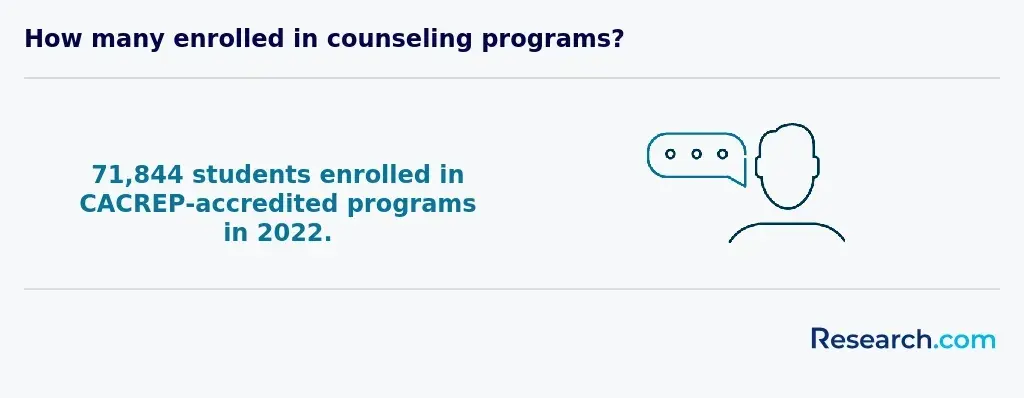
| Is the program accredited by the Council for Accreditation of Counseling and Related Educational Programs (CACREP)? | CACREP accreditation can be important for licensure preparation and employer confidence, depending on the specific path. |
| How are practicum and internship placements arranged? | Clinical placement quality affects your skill development, networking, and ability to complete required hours. |
| What support is available for licensure exams? | Structured exam preparation can help students move more efficiently from graduation to licensure eligibility. |
| Can working adults complete the program part time? | Program format affects cost, income, family responsibilities, and time to completion. |
| How does the program prepare students for telehealth, documentation, ethics, and culturally responsive care? | Modern counseling practice requires more than face-to-face therapy skills. |
Oregon students may consider institutions such as Portland State University, the University of Oregon, and Oregon State University, but the right choice depends on licensure alignment, cost, faculty expertise, clinical placement support, and whether the program fits your schedule. Professional groups such as the Oregon Counseling Association can also help students build networks and understand current practice issues.
If you are comparing Oregon with other states, remember that state boards set different rules. Students evaluating the benefits of an LPC career in Wisconsin should separately check Wisconsin’s academic, exam, and supervised experience expectations.
How important is practicum experience for mental health counselors in Oregon?
Practicum and supervised clinical experience are essential because counseling is not learned through coursework alone. In Oregon, candidates must complete 36 months of eligible supervised clinical experience, including at least 1,900 hours of supervised direct client contact of counseling. These requirements are designed to help future counselors develop clinical judgment, ethical decision-making, case conceptualization, and practical therapy skills.
Good practicum placements do more than satisfy a requirement. They help students learn how to sit with distress, respond to risk, document accurately, collaborate with supervisors, and adapt theory to real clients. They also help students decide which populations and settings fit them best.
What to Look for in a Strong Practicum or Internship Site
- Qualified supervision: Your supervisor should understand Oregon’s licensure rules and provide regular, substantive feedback.
- Appropriate client exposure: A strong placement offers meaningful direct client contact without overwhelming trainees beyond their competence.
- Ethical documentation systems: Students should learn accurate note-taking, treatment planning, informed consent, confidentiality, and mandated reporting procedures.
- Population fit: Placements in schools, community clinics, substance use programs, private practices, or integrated care settings can lead to very different career paths.
- Clear hour tracking: Students should know exactly which hours count, who signs off, and what documentation will be needed later.
- Employment potential: Some placements become post-graduation jobs or supervision opportunities.
One Oregon counselor described his practicum as a turning point: “Completing my practicum was both challenging and rewarding. I remember feeling overwhelmed at first, but the support from my supervisor made all the difference. I learned to handle real cases, which prepared me for the complexities of mental health work in a bustling city. The connections I made during my practicum led to my first job, and I still collaborate with some of those professionals today. It was a pivotal experience that shaped my career.”
What specializations can mental health counselors in Oregon pursue?
Mental health counseling is a broad profession, and specialization can shape your coursework, practicum choices, supervision, job search, continuing education, and long-term income potential. In Oregon, counselors may focus on specific populations, conditions, or settings after building a strong general clinical foundation.
| Specialization | Primary Focus | Best Fit For |
| Substance abuse counseling | Supports clients dealing with alcohol, drug, or other substance use concerns through assessment, treatment planning, relapse prevention, and recovery support. | Counselors interested in addiction treatment, recovery systems, and co-occurring mental health concerns. |
| Behavior disorder counseling | Helps clients manage behavioral concerns such as ADHD, oppositional defiant disorder, conduct disorder, impulse control issues, and related family or school challenges. | Professionals who want to work with children, adolescents, families, or behavioral intervention teams. |
| Licensed Mental Health Counseling (LMHC) | Provides therapy and treatment planning for a wide range of emotional and psychological concerns. | Counselors seeking broad clinical practice in agencies, clinics, or private settings. |
| Licensed Professional Counseling (LPC) | May include clinical mental health counseling as well as rehabilitation, career, or broader wellness-focused counseling depending on training and scope. | Professionals who want a flexible counseling identity across different service environments. |
| Licensed Clinical Mental Health Counseling (LCMHC) | Often associated with advanced clinical practice, group work, complex cases, and possible supervisory responsibilities. | Experienced counselors who want deeper clinical specialization or leadership responsibilities. |
Specialization should be chosen strategically. A student who wants to work in community addiction treatment should seek practicum placements and continuing education in substance use and co-occurring disorders. A counselor interested in youth services should look for supervised experience in schools, family systems, or child and adolescent mental health.
State requirements differ for counselor titles and scopes of practice. If you are comparing Oregon with Mississippi, review Mississippi LPC qualifications rather than assuming one state’s requirements transfer automatically.
What educational resources support aspiring mental health counselors in Oregon?
Aspiring Oregon counselors should rely on three categories of resources: accredited academic programs, state licensing information, and professional organizations. Together, these resources help students avoid missteps that can slow down licensure.
Oregon State University, University of Oregon, and Portland State University are examples of institutions students may investigate when comparing graduate counseling options. The right program should combine counseling theory, ethical practice, assessment, multicultural competence, supervised clinical training, and preparation for Oregon’s licensure process.
Professional organizations can also strengthen a student’s path. The Oregon Counseling Association (ORCA) and the National Alliance on Mental Illness (NAMI) Oregon may offer networking, workshops, advocacy updates, and exposure to current issues in behavioral health. These connections can be especially useful for students who are trying to choose a specialization or locate practicum opportunities.
Because licensure requirements are detailed, students should supplement school advising with independent research. A step-by-step overview of how to become a therapist in Oregon can help candidates organize degree planning, supervised experience, exam preparation, and application timing.
Is Oregon a good place to work as a mental health counselor?
Oregon can be a strong market for mental health counselors, but it is not automatically the right choice for everyone. The state has substantial mental health workforce needs, but counselors should compare wages, cost of living, supervision availability, employer support, and career setting before deciding where to practice.
Oregon Career Fit: Benefits and Trade-Offs
| Factor | What the Data or Context Shows | How to Use This in Your Decision |
| Demand for providers | As of April 1, 2024, Oregon had 129 mental healthcare HPSA designations, and only 31.1% of its need for mental health professionals had been met. | Demand may create opportunities, especially in underserved communities, but high need can also mean heavier caseloads. |
| Wages | Substance abuse, behavioral disorder, and mental health counselors in Oregon had a median hourly wage of $29.84 in May 2023, equal to an estimated $57,292.8 annual wage. | Compare offers by total compensation, benefits, supervision support, caseload, and location—not wage alone. |
| Cost of living | A single adult without children in Oregon can live comfortably with a gross annual income of $50,553. | The estimated median annual wage may be workable for some single adults, but student debt, family size, rent, commuting, and healthcare costs matter. |
| Licensing mobility | Oregon has licensing reciprocity arrangements with several states that have similar licensing expectations. | If you are relocating, confirm current rules with the Oregon Board before assuming your license will transfer smoothly. |
| Public programs | State-backed services, including the Oregon Health Plan and county-specific programs, support access to mental health services. | Counselors interested in public health, community clinics, and underserved populations may find mission-aligned opportunities. |
The chart below provides a visualization of the US states with the highest number of employed mental health counselors in 2023, according to 2024 data from the US BLS.
What is the demand for mental health counselors in Oregon?
Demand for mental health counselors in Oregon is high because the state has documented unmet mental health workforce needs. As of April 1, 2024, Oregon had 129 mental healthcare Health Professional Shortage Area (HPSA) designations, and only 31.1% of the state’s need for mental health professionals had been met (Bureau of Health Workforce, 2024).
National labor market projections also point to growth. Across the United States, employment for substance abuse, behavioral disorder, and mental health counselors is projected to increase by 18% between 2022 and 2032 (US BLS, 2024). These figures do not guarantee a job for every graduate, but they do indicate that behavioral health services remain an expanding area of employment.
Where Oregon Mental Health Counselors May Find Demand
- Community health organizations: These employers often serve clients who need accessible, affordable, and coordinated care.
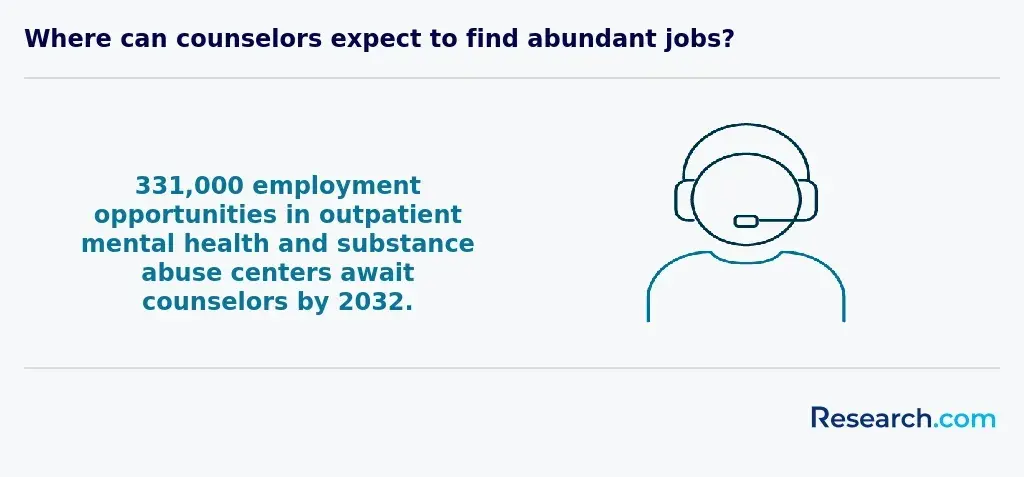
- Hospitals and healthcare systems: Counselors may support crisis intervention, integrated behavioral health, discharge planning, and referrals.
- Private practices: Licensed counselors may build practices around general therapy or specialized services.
- Nonprofit organizations: Many nonprofits provide counseling, advocacy, outreach, prevention, and support for specific populations.
- Substance use treatment programs: Counselors with addiction training may find roles in recovery-oriented settings.
- School and youth-serving environments: Demand may exist for professionals who can support students and families, though specific licensure requirements can differ by role.
If you are weighing Oregon against another state, compare both demand and licensing requirements. For example, readers exploring Tennessee licensed counselor job opportunities should review Tennessee-specific workforce needs, education rules, and credentialing steps.
Can a Master’s in Social Work degree expand my mental health career opportunities in Oregon?
Yes, a Master’s in Social Work can broaden your options if you want a career that combines mental health services with case management, community programs, policy, advocacy, and systems-level support. While counseling degrees focus heavily on therapeutic practice, an MSW may prepare professionals for roles that address both individual needs and social conditions affecting well-being.
This route may be worth considering if you are interested in integrated care, public agencies, community mental health leadership, program development, or advocacy. It may not be the best fit if your primary goal is a counseling identity and you do not want broader social work responsibilities. To compare possible roles, review what can you do with a masters in social work.
What are the marriage counseling education and certification requirements in Oregon?
Marriage and relationship counseling requires focused preparation beyond general helping skills. Professionals who want to work with couples and families should expect training in relationship dynamics, family systems, conflict patterns, communication, attachment, assessment, ethics, and therapy approaches designed for partnered or family clients.
Oregon candidates should verify whether they are pursuing a counseling license, marriage and family therapy license, or another credential because education, supervision, and scope of practice can differ. Before choosing a program or practicum site, review the marriage counselor education requirements in Oregon so your coursework and supervised experience align with the credential you want.
How Can I Stay Updated on Oregon’s Licensing and Certification Standards?
Licensure rules, exam policies, continuing education expectations, and application procedures can change, so Oregon counselors should build a habit of checking official sources. Do not rely only on classmates, social media posts, or outdated program pages when making licensure decisions.
Practical ways to stay current include reviewing Oregon Board communications, saving copies of your licensure documents, tracking continuing education, asking supervisors to confirm current rules, and checking state-by-state guidance. Research.com’s guide to requirements for counseling certification can help you compare how counseling credentialing differs across jurisdictions.
Can mental health counselors transition to school psychology in Oregon?
Mental health counselors can explore a move into school psychology, but it is not usually a simple title change. School psychology focuses on student assessment, learning needs, behavioral supports, consultation with educators, special education processes, and school-based mental health. This may require additional education, supervised experience, and a different credential pathway.
This transition may make sense if you want to work in educational systems and support children and adolescents through assessment, prevention, and intervention. It may be less suitable if you prefer ongoing psychotherapy with adults or independent clinical practice. To understand the likely timeline, review How long does it take to become a school psychologist in Oregon?.
Can mental health counselors transition to social work in Oregon?
Yes, but transitioning from counseling to social work typically requires additional preparation because social work has its own education, field placement, licensure, and scope expectations. Social workers may provide counseling, but they also often address resource navigation, systems advocacy, community programs, family services, healthcare coordination, and public benefits.
Counselors considering this shift should compare what they want to do each day. If you want broader community and systems work, social work may be a strong fit. If you want to remain primarily focused on psychotherapy, counseling may better match your goals. Review the social worker education requirements in Oregon before investing in a new degree or licensure path.
What future trends are shaping mental health counseling in Oregon?
Several practice trends are influencing how Oregon counselors train and work. Telehealth has expanded access for many clients, especially those facing transportation, geographic, mobility, or scheduling barriers. Integrated care models are also becoming more important as mental health services increasingly overlap with primary care, substance use treatment, social services, and crisis response.
Technology is another major factor. Counselors may use secure telehealth platforms, digital intake tools, symptom tracking, mobile health applications, and data-informed care coordination. These tools can improve access and monitoring, but they also raise important questions about confidentiality, informed consent, equity, documentation, and clinical appropriateness.
Students should choose programs and continuing education that address modern clinical delivery, not only traditional office-based counseling. Those comparing psychology-focused academic options can explore the best psychology schools in Oregon as one starting point for researching training environments.
What is the quickest way to launch my mental health counseling career in Oregon?
The quickest responsible route is not about bypassing requirements. It is about avoiding delays. You can shorten your path by choosing a program that clearly aligns with Oregon licensure rules, completing practicum requirements on schedule, tracking supervised hours accurately, preparing for exams early, and submitting complete documentation.
Ways to Avoid Delays
- Confirm licensure alignment before enrolling in a graduate program.
- Ask whether practicum and internship placements are guaranteed, competitive, or student-arranged.
- Keep detailed records of supervision, client contact hours, transcripts, syllabi, and evaluations.
- Start exam preparation before graduation rather than waiting until all coursework is finished.
- Build relationships with potential post-degree supervisors while still in school.
- Review application instructions before you think you are ready to apply so you know what documentation is required.
For a more focused timeline comparison, see Research.com’s guide to the quickest path to becoming a counselor in Oregon.
Could transitioning to school counseling multiply career opportunities in Oregon?
School counseling can expand opportunities for professionals who want to support students’ academic, social, emotional, and career development. However, school counseling is distinct from clinical mental health counseling. It is shaped by education systems, student support teams, school policies, family engagement, and credentialing rules.
This path may be a good fit if you want a structured school environment and enjoy prevention, student development, and collaboration with teachers and families. It may not fit if your primary interest is long-term clinical treatment, private practice, or adult psychotherapy. To compare requirements and career steps, review how to become a school counselor in Oregon.
What are the licensure prerequisites for mental health counselors in Oregon?
Oregon’s mental health counseling licensure prerequisites center on education, supervised experience, examination, and formal application review. Candidates need a master’s degree in counseling or a related field, supervised clinical experience, direct client contact, and a passing score on an accepted exam.
| Prerequisite | Oregon Requirement Mentioned in This Guide | What to Verify |
| Graduate education | A master’s degree in counseling or a related field is required for licensure. | Confirm that the program’s coursework satisfies Oregon Board standards. |
| Supervised experience | Applicants must complete 36 months of eligible supervised clinical experience. | Check supervisor qualifications, documentation rules, and whether hours are eligible. |
| Direct client contact | At least 1,900 hours of supervised direct client contact of counseling are required. | Ask how direct client contact is defined and recorded. |
| Pre-degree hours | Applicants may include a maximum of 400 pre-degree hours. | Verify whether your practicum or internship hours qualify. |
| Exam | Accepted exams include the NCE, NCMHCE, or CRC. | Confirm which exam best fits your path before registering. |
For a deeper explanation of the application process, review the LPC license requirements in Oregon.
What other mental health careers can I pursue in Oregon?
If you are interested in mental health but unsure whether licensed professional counseling is the best match, Oregon offers related paths to compare. Options may include social work, marriage and family therapy, substance abuse counseling, school counseling, school psychology, community behavioral health roles, and case management.
Marriage and family therapy may be especially appealing if you want to focus on relational systems, couples, families, and communication patterns. To learn more about that route, review how to become a marriage and family therapist in Oregon.
What careers are available to Mental Health Counseling Graduates in Oregon?
Graduates with mental health counseling training can pursue several roles, depending on licensure status, specialization, employer requirements, and supervised experience. Some positions may require additional credentials or a specific license, so always check job postings and state rules before assuming eligibility.
| Career Path | Common Responsibilities | Important Consideration |
| Social workers | Help clients access resources, coordinate services, provide support, and work in settings such as hospitals, schools, and community organizations. | Social work has its own education and licensure pathway. |
| Substance abuse counselors | Support clients dealing with addiction through assessments, counseling, treatment plans, coping strategies, and relapse prevention. | Additional addiction-focused training or certification may improve fit and employability. |
| Geriatric counselors | Assist older adults with grief, isolation, health changes, caregiving stress, life transitions, and mental health concerns. | This path may require comfort working with families, medical systems, and aging-related services. |
| Employee Assistance Program (EAP) counselors | Provide confidential short-term support, assessment, referrals, and follow-up for employees facing personal or work-related challenges. | EAP roles often require strong brief-intervention and referral skills. |
| Community mental health counselors | Serve clients through public or nonprofit agencies, often addressing complex needs and coordinating with other providers. | These roles can offer broad experience but may involve high caseloads. |
| Private practice counselors | Provide therapy independently or in group practices after meeting licensure and practice requirements. | Private practice requires business, billing, compliance, and referral-building skills. |
One Oregon counselor reflected on her early career: “Once I graduated, I was eager to start my journey in mental health counseling. I initially faced the challenge of finding a position that aligned with my passion for helping others. I applied to various roles, but it was the opportunity to work as a substance abuse counselor in a community health center that truly resonated with me.”
She continued, “The process was daunting, but once I landed the job, I felt a sense of purpose. Working in a big city like Portland, I encounter diverse clients, each with unique stories. It’s rewarding to see the positive changes in their lives, and it reinforces my commitment to this field. I’ve learned that while the challenges are significant, the impact we make is profound.”
How can I further my expertise and boost my career in Oregon?
Career growth in counseling usually comes from deeper clinical skill, stronger specialization, reliable supervision, ethical practice, and professional visibility. Oregon counselors can build expertise through continuing education, consultation groups, advanced training, leadership roles, and focused experience with specific populations.
Substance use training is one practical area for expansion because addiction and co-occurring mental health concerns are common in behavioral health settings. If you want to strengthen that path, review how to become a substance abuse counselor in Oregon.
What challenges do mental health counselors face in Oregon?
Oregon offers meaningful work for mental health counselors, but the career can be demanding. Before entering the field, students should understand the professional, emotional, regulatory, and financial pressures that may affect long-term satisfaction.
| Challenge | Why It Matters | How to Reduce the Risk |
| High caseloads | When demand exceeds workforce capacity, counselors may face burnout, limited session availability, and pressure to manage complex cases quickly. | Ask employers about caseload expectations, supervision, administrative support, crisis coverage, and documentation time. |
| Licensure complexity | Oregon’s requirements include supervised hours, direct client contact, exams, documentation, and continuing education. | Track requirements from the start and confirm details with official sources rather than relying on informal advice. |
| Economic uncertainty | In August 2024, Oregon ranked 13th among all 50 US states in economic performance but 42nd in economic outlook, based on 15 key state policy variables, including personal income tax progressivity, state minimum wage, and recently legislated tax changes (American Legislative Exchange Council, 2024). | Compare salary offers against debt, rent, benefits, commute, taxes, and long-term location plans. |
| Work-life boundaries | Counseling can involve trauma exposure, crisis situations, compassion fatigue, and emotional carryover after work. | Build supervision, consultation, peer support, personal therapy when appropriate, and realistic scheduling habits. |
| Professional development costs | Continuing education takes time and money, but it is necessary for competent practice and license maintenance. | Look for employers that fund training, provide paid continuing education time, or support certification pathways. |
Common Mistakes to Avoid
- Choosing a program without checking licensure alignment: A degree can be academically legitimate but still create licensing complications if it does not meet Oregon’s requirements.
- Focusing only on tuition: Total cost includes fees, books, commuting, lost work hours, supervision expenses, exam fees, and possible relocation.
- Assuming online programs automatically qualify: Online study can be convenient, but students must verify that coursework, practicum, and internship requirements satisfy Oregon standards.
- Ignoring supervised hour documentation: Poor records can delay licensure even when the clinical work was completed.
- Relying only on rankings: A highly visible school is not always the best match for your budget, location, specialization, or licensure plan.
- Assuming salary outcomes are guaranteed: The median wage is useful context, but actual pay depends on employer, license level, setting, experience, location, and benefits.
- Waiting too long to plan for exams: Exam preparation is easier when it is integrated with coursework and supervised practice.
The chart below provides a visualization of the obstacles that counselors in the US face in terms of compensation and debt, according to 2024 data from the American Counseling Association.
Here’s What Mental Health Counselors in Oregon Have to Say About Their Careers
- "As a mental health counselor in Oregon, I've found a profound sense of purpose in helping individuals navigate their struggles. The state's commitment to mental health resources and community support has allowed me to make a tangible difference in people's lives, fostering resilience and hope. Every success story reminds me why I chose this path." —Emily
- "Working in Oregon's diverse communities has enriched my experience as a mental health counselor. The opportunity to engage with various cultures and backgrounds has not only broadened my perspective but also deepened my empathy and understanding. I feel incredibly fulfilled knowing that I contribute to a more inclusive and supportive environment for all." —Anne
- "The beauty of Oregon's landscapes mirrors the transformative journey I witness in my clients every day. The balance of nature and mental health advocacy here inspires me to promote wellness and healing in a holistic way. It's rewarding to see individuals reclaim their lives, and I am grateful to be part of that journey." —Charisse
Key Insights
- Oregon has a clear need for mental health professionals, with 129 mental healthcare HPSA designations and only 31.1% of need met as of April 1, 2024.
- The standard Oregon counseling pathway requires a master’s degree, 36 months of eligible supervised clinical experience, at least 1,900 hours of supervised direct client contact of counseling, and a passing score on an accepted national exam.
- Program choice matters. Before enrolling, verify licensure alignment, clinical placement support, supervision quality, and whether the curriculum prepares you for Oregon requirements.
- Oregon’s median hourly wage for substance abuse, behavioral disorder, and mental health counselors was $29.84 in May 2023, equal to an estimated $57,292.8 annual wage, so applicants should compare pay against cost of living, debt, benefits, and location.
- Practicum and supervised experience are not just boxes to check. They shape your clinical confidence, specialization, job network, and readiness for independent practice.
- Related paths such as social work, school counseling, school psychology, marriage and family therapy, and substance abuse counseling may fit better depending on whether you want clinical therapy, school-based work, systems advocacy, or family-focused practice.
- The best next step is to map your desired role to the correct Oregon credential, then choose an education and supervision plan that gets you there without unnecessary delays.
Related Articles for Nearby States
- 2027 How to Become a Mental Health Counselor in Washington
- 2027 How to Become a Mental Health Counselor in California
- 2027 How to Become a Mental Health Counselor in Idaho
- 2027 How to Become a Mental Health Counselor in Nevada
- 2027 How to Become a Mental Health Counselor in Montana
- 2027 How to Become a Mental Health Counselor in Utah
- 2027 How to Become a Mental Health Counselor in Wyoming
- 2027 How to Become a Mental Health Counselor in Arizona
- 2027 How to Become a Mental Health Counselor in Colorado
- 2027 How to Become a Mental Health Counselor in New Mexico
References:
- American Counseling Association. (2024). Counseling Workforce Survey. https://www.counseling.org/docs/default-source/default-document-library/public-policy-resources-reports/workforce-survey_execsummary_final.pdf?sfvrsn=cdab45d0_1
- American Legislative Exchange Council. (2024). Oregon. Rich States, Poor States. https://www.richstatespoorstates.org/states/OR
- Bureau of Health Workforce. (2024). Health Workforce Shortage Areas. https://data.hrsa.gov/topics/health-workforce/shortage-areas
- bouve.northeastern.edu. (2023, May 28). What do Mental Health Counselors Do? Role & Responsibilities. https://bouve.northeastern.edu/news/what-do-mental-health-counselors-do-role-responsibilities
- careervillage.org. (2020, November 19). What is a good way for undergraduates to gain experience in therapy or mental health counseling? https://www.careervillage.org/questions/316149/what-is-a-good-way-for-undergraduates-to-gain-experience-in-therapy-or-mental-health-counseling
- The Chicago School. (2019, March 26). Careers You Can Pursue with a Master’s Degree in Clinical Mental Health Counseling. https://www.thechicagoschool.edu/insight/career-development/careers-with-masters-degree-clinical-mental-health-counseling
- counseling.education.wm.edu. (2023, October 24). The Different Types of Counseling Careers and Their Challenges. https://counseling.education.wm.edu/blog/opportunities-and-challenges-in-the-counseling-field
- Glasmeier, A. K. & Massachusetts Institute of Technology. (2024). Living Wage Calculation for Oregon. https://livingwage.mit.edu/states/41
- Kaiser Family Foundation. (2024). Mental Health in Oregon. https://www.kff.org/statedata/mental-health-and-substance-use-state-fact-sheets/oregon
- ncsbn.org. (n.d.). Licensure. https://www.ncsbn.org/nursing-regulation/licensure.page
- oregon.gov. (2022, February 01). Behavioral Health Workforce Report to the Oregon Health Authority and State Legislature FI N A L R E P O RT. https://www.oregon.gov/oha/ERD/SiteAssets/Pages/Government-Relations/Behavioral%20Health%20Workforce%20Wage%20Study%20Report-Final%20020122.pdf
- socialworklicensemap.com. (2022, May 13). What Are the Requirements to Become a Mental Health Counselor? https://socialworklicensemap.com/social-work-resources/become-mental-health-counselor
- US Bureau of Labor Statistics. (2024, April 3). May 2023 State Occupational Employment and Wage Estimates: Oregon. Occupational Employment and Wage Statistics. https://www.bls.gov/oes/2023/may/oes_or.htm
- US Bureau of Labor Statistics. (2024, April 3). Occupational Employment and Wages, May 2023: 21-1018 Substance Abuse, Behavioral Disorder, and Mental Health Counselors. Occupational Employment and Wage Statistics. https://www.bls.gov/oes/current/oes211018.htm
- US Bureau of Labor Statistics. (2024, April 17). Substance Abuse, Behavioral Disorder, and Mental Health Counselors. Occupational Outlook Handbook. https://www.bls.gov/ooh/community-and-social-service/substance-abuse-behavioral-disorder-and-mental-health-counselors.htm
Other Things You Should Know About Mental Health Counseling in Oregon
In 2027, aspiring mental health counselors in Oregon are required to obtain a Licensed Professional Counselor (LPC) designation. This entails completing a master's or doctoral degree in counseling, fulfilling supervised experience, and passing the National Counselor Examination (NCE) to be eligible for state licensure.
In 2027, Licensed Professional Counselors (LPCs) in Oregon must complete 40 hours of continuing education every two years, including six hours focused on ethics training, to maintain licensure. This ensures counselors stay current with best practices and ethical standards.
To become a mental health counselor in Oregon in 2027, you'll need a master’s degree in counseling or a related field from an accredited institution, complete a specified number of supervised clinical hours, and pass the National Counselor Examination (NCE) or an equivalent exam.