
2027 How to Become a Substance Abuse Counselor in Minnesota

Co-Founder and Chief Data Scientist
Becoming a substance abuse counselor in Minnesota means preparing for a licensed helping profession with strict education, practicum, examination, ethics, and continuing education expectations. The path is worth understanding before you choose a degree program, because the wrong coursework or an unapproved practicum can delay licensure. This guide explains how Minnesota’s Licensed Alcohol and Drug Counselor pathway works, what substance abuse counselors do, what education and supervised experience you need, how salaries and job demand compare, and how to choose a program that supports your long-term goals. It is written for students, career changers, behavioral health workers, and human services professionals who want a practical roadmap rather than a generic career overview.
Quick answer: How do you become a substance abuse counselor in Minnesota?
To become a substance abuse counselor in Minnesota, you typically need at least a bachelor’s degree in a behavioral science field, alcohol and drug counseling coursework, supervised practicum experience, a passing score on an accepted alcohol and drug counselor examination, and approval from the Minnesota Board of Behavioral Health and Therapy for the Licensed Alcohol and Drug Counselor credential. Candidates should verify requirements directly with the board before enrolling, because licensure depends on meeting Minnesota-specific education, practicum, examination, and application rules.
Key facts to know before choosing this career in Minnesota
- Minnesota has a documented need for more substance abuse counselors, with an estimated 1,000 additional professionals needed to meet service demand. Rising substance use disorder treatment needs and greater recognition of behavioral health concerns are major reasons this career path continues to attract attention.
- Salary estimates vary by source and role. One commonly cited figure places the average salary for substance abuse counselors in Minnesota at approximately $54,000 per year, with entry-level roles near $40,000 and experienced counselors earning upwards of $70,000 depending on specialization, employer, and location.
- Employment projections also vary across sources. The field has been described as having a projected job growth rate of 22% from 2022 to 2032, which signals strong demand compared with many other occupations.
- Minnesota’s cost of living is often described as moderate, with a cost of living index around 98.5 compared with the national average of 100. For new counselors, this matters because wages should be evaluated against rent, transportation, loan payments, and regional job availability.
- Steps to become a substance abuse counselor in Minnesota
- Minimum education required for Minnesota substance abuse counselors
- What substance abuse counselors do day to day
- Minnesota certification and licensing process
- Legal and ethical duties for counselors in Minnesota
- Substance abuse counselor salary in Minnesota
- Whether mental health counseling credentials can add career value
- How to compare affordable substance abuse counseling programs
- How marriage counseling knowledge can support addiction treatment
- Work-life balance and burnout prevention
- Forensic science and interdisciplinary training
- Behavior analysis as a complementary skill set
- Minnesota job market for substance abuse counselors
- Telehealth and substance abuse counseling access
- Community collaboration and cultural competence
- School psychology partnerships and early intervention
- Career paths and advancement options
- Continuing education and professional development
- Insurance reimbursement and counseling services
- Challenges to expect in the profession
How can you become a substance abuse counselor in Minnesota?
The Minnesota pathway is best understood as a sequence: choose the right education, complete alcohol and drug counseling coursework, gain supervised practice, pass an accepted exam, apply for the LADC credential, and then continue learning throughout your career. The process is manageable, but it requires careful documentation.
| Step | What you need to do | Why it matters |
| 1. Confirm the license goal | Review the Licensed Alcohol and Drug Counselor requirements through the Minnesota Board of Behavioral Health and Therapy. | The LADC is the central credential for alcohol and drug counseling practice in Minnesota. |
| 2. Complete the required education | Earn at least a bachelor’s degree in a behavioral science field and complete alcohol and drug counseling coursework. | Licensure depends on both the degree area and the specific counseling content, not only the name of the major. |
| 3. Finish supervised practicum training | Complete supervised field experience in an appropriate counseling or treatment setting. | Practicum hours help you apply assessment, treatment planning, counseling, documentation, referral, and ethical decision-making skills. |
| 4. Pass an accepted exam | Prepare for and pass the IC&RC Alcohol and Drug Counselor Exam or another accepted examination route listed by the board. | The exam verifies that you understand core alcohol and drug counseling knowledge and professional responsibilities. |
| 5. Apply for licensure | Submit education records, supervised experience documentation, exam results, application forms, and any required fees. | Incomplete or inconsistent documentation is one of the most preventable causes of licensing delays. |
| 6. Build your first job search plan | Prepare a counseling-focused resume, request references from supervisors, and apply to treatment centers, hospitals, community agencies, correctional programs, and recovery organizations. | Employers look for licensure readiness, practical experience, documentation skills, and the ability to work with complex client needs. |
Programs such as those at Metro State University and other Minnesota institutions can help students complete addiction-focused coursework and supervised learning. Students who are also comparing counseling licensure in other states may find it useful to review a broader counselor pathway such as this Florida licensed counselor career guide, but Minnesota candidates should rely on Minnesota rules for final decisions.
The most practical strategy is to work backward from the LADC requirements before enrolling. Ask each school how its coursework maps to Minnesota’s alcohol and drug counseling requirements, whether practicum placements meet board expectations, and how graduates typically prepare for the licensing exam.
What is the minimum educational requirement to become a substance abuse counselor in Minnesota?
The minimum education commonly described for Minnesota substance abuse counseling candidates is at least a bachelor’s degree in a behavioral science field, along with addiction counseling coursework that covers required content areas. A master’s degree is not always the first requirement for entry into the LADC pathway, but it can be useful for broader clinical roles, supervision, leadership, or later movement into mental health counseling.
- Degree level: Candidates are generally expected to hold at least a bachelor’s degree in a behavioral science field. Psychology, counseling, social work, human services, criminal justice, family studies, and related fields may be relevant, but the exact acceptability should be confirmed with the licensing board.
- Alcohol and drug counseling coursework: Programs should include at least 18 semester credits, or approximately 270 hours, of alcohol and drug counseling coursework. This training should address the 12 Core Functions of substance abuse counseling, ethics, assessment, treatment planning, referral, documentation, and co-occurring concerns.
- Typical timeline: A bachelor’s degree usually takes four years, while a master’s program can add another two years. Students seeking advanced counseling roles should plan for a longer education timeline.
- Estimated cost range: A bachelor’s degree in behavioral science can range from $30,000 to $60,000 depending on the institution. Graduate programs may cost between $20,000 and $40,000. These figures should be compared with aid offers, transfer credit, employer tuition support, and total debt.
- Practicum requirement: Candidates must complete an 880-hour practicum under a qualified clinical supervisor. This fieldwork is where classroom knowledge becomes client-facing skill.
- Accreditation: Choose an accredited institution. Accreditation affects credit transfer, graduate school options, financial aid eligibility, and employer trust.
- Minnesota program examples: The University of Minnesota is one institution associated with relevant training in this field. If you are comparing counseling requirements across states, this Maryland LPC education overview can provide context, but it should not be used as a substitute for Minnesota’s LADC rules.
Before committing to a program, ask for a written course map showing exactly how the degree meets Minnesota’s LADC education and practicum expectations. Do not assume that every counseling, psychology, or human services degree automatically includes the required addiction counseling content.
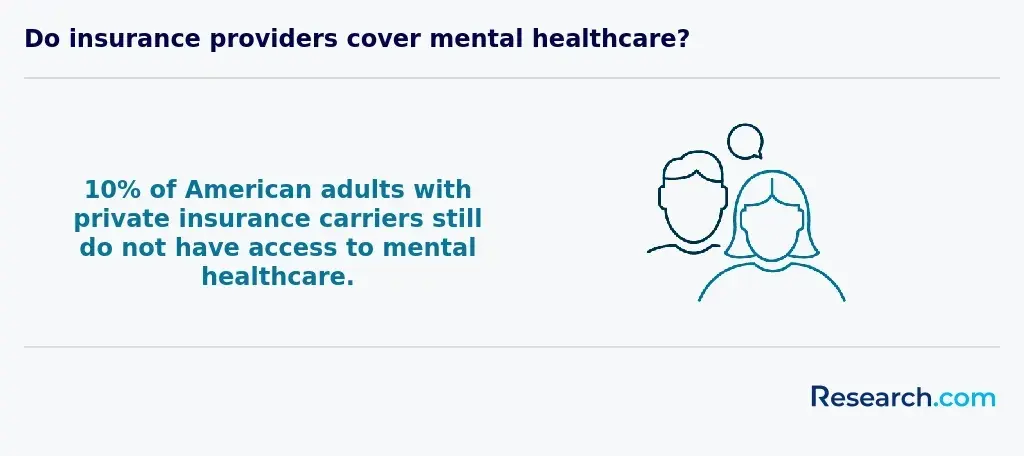
Access to behavioral health services remains a national concern. One important context for future counselors is that 10% of American adults do not have access to mental health care even through private insurance carriers, as illustrated below.
What does a substance abuse counselor do?
Substance abuse counselors help people affected by alcohol and drug use disorders assess their needs, set recovery goals, reduce harm, strengthen coping skills, and connect with long-term support. The role often involves direct counseling, crisis-aware communication, documentation, referrals, family education, and coordination with medical, mental health, legal, housing, and community resources.
- Evaluate client histories, current substance use patterns, risk factors, strengths, and treatment needs.
- Create individualized treatment plans that reflect client goals, clinical assessment, safety concerns, and available supports.
- Lead individual counseling sessions, group counseling, relapse prevention work, psychoeducation, and recovery planning.
- Teach clients and families about addiction, withdrawal risks, recovery stages, triggers, boundaries, and support systems.
- Track progress over time and modify treatment plans when clients relapse, disengage, stabilize, or need a different level of care.
- Collaborate with physicians, mental health counselors, social workers, probation officers, case managers, peer recovery specialists, and community programs.
| Work activity | What it looks like in practice | Skill it requires |
| Assessment | Gathering clinical, social, medical, legal, and substance use information. | Interviewing, clinical judgment, documentation, and cultural awareness. |
| Counseling | Helping clients identify triggers, practice coping strategies, and strengthen motivation for change. | Empathy, motivational interviewing, group facilitation, and crisis sensitivity. |
| Treatment planning | Turning assessment results into measurable recovery goals and service recommendations. | Problem-solving, case formulation, ethical decision-making, and collaboration. |
| Care coordination | Connecting clients with detox, housing, medical care, mental health services, family support, or legal resources. | Resource knowledge, advocacy, communication, and follow-through. |
| Progress monitoring | Reviewing attendance, relapse risk, goal progress, and treatment response. | Observation, data-informed thinking, flexibility, and professional boundaries. |
Strong counselors combine compassion with structure. They must be able to listen without judgment, document carefully, recognize risk, respect confidentiality, and maintain boundaries even when client situations are emotionally difficult.
One Minnesota counselor describes the early career experience this way: “My training at the University of Minnesota changed how I understood addiction and recovery. During my first group session, I saw how much courage it takes for clients to speak honestly, and that moment confirmed why this work matters.” Her reflection captures a common truth about the profession: counselors often see people at vulnerable points, and their consistency can become an important part of recovery.
What is the certification and licensing process for a substance abuse counselor in Minnesota?
Minnesota’s substance abuse counseling license is the Licensed Alcohol and Drug Counselor credential. The licensing process is administered by the Minnesota Board of Behavioral Health and Therapy, often referred to as BBHT. Candidates should use the board’s current application materials as the controlling source because policies, forms, fees, and documentation rules can change.
- Complete approved education: Finish a qualifying behavioral science degree and alcohol and drug counseling coursework covering required areas, including the 12 Core Functions.
- Complete supervised clinical experience: Finish the required practicum under a qualified clinical supervisor. Keep careful records of dates, settings, duties, and supervisor information.
- Register for an accepted examination: Candidates may take the IC&RC Alcohol and Drug Counselor Exam or the Advanced Alcohol and Drug Counselor Exam if it is accepted for their route.
- Submit the LADC application: Provide transcripts, practicum documentation, exam results, identity information, application forms, and required fees.
- Complete background-related steps if required: Some applicants may need fingerprinting or background checks as part of the review process.
- Maintain the credential: After licensure, counselors must complete continuing education and follow Minnesota’s professional conduct rules.
Applicants often run into problems when transcripts do not clearly show required coursework, practicum documentation is incomplete, or they apply before confirming that all prerequisites are finished. Joining professional organizations and staying connected with faculty, supervisors, and the board can reduce avoidable errors.
Candidates comparing counseling fields may also want to understand how other states structure mental health licensure. This North Carolina LPC career guide offers a useful comparison point, although Minnesota’s LADC process remains the relevant standard for alcohol and drug counseling in the state.
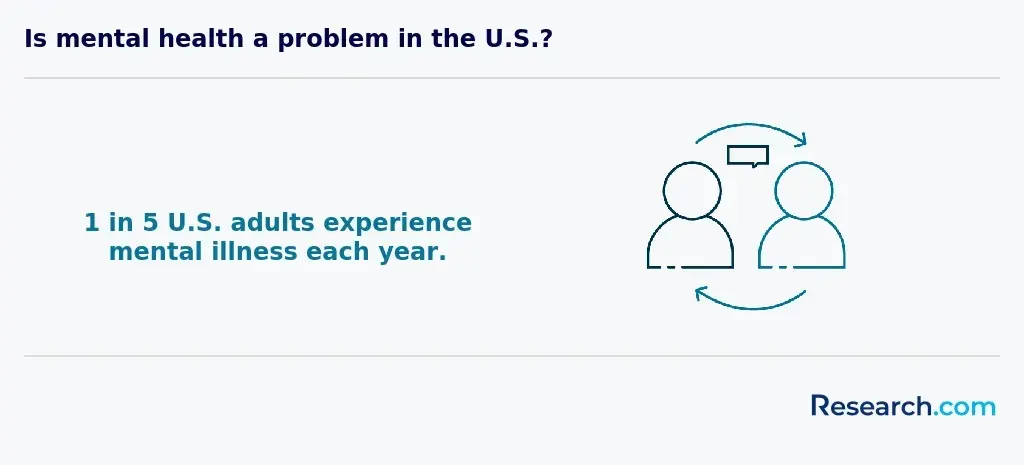
Substance use treatment is part of a larger mental health system. Nationally, about one in five U.S. adults experience mental illness annually, as shown below, which is one reason integrated behavioral health knowledge is increasingly valuable.
What legal and ethical considerations must a substance abuse counselor consider in Minnesota?
Substance abuse counselors work with sensitive records, vulnerable clients, relapse risk, family conflict, court involvement, and sometimes immediate safety concerns. For that reason, legal compliance and ethical judgment are not optional parts of the job; they are central to safe practice.
Legal responsibilities
- Licensure: Minnesota substance abuse counselors must practice within the scope authorized by the Minnesota Board of Behavioral Health and Therapy and must meet education, supervision, exam, and renewal requirements.
- Mandatory reporting: Counselors may be required to report suspected child abuse or neglect, threats of serious harm, or other situations specified by law.
- Informed consent: Clients should understand the nature of services, limits of confidentiality, fees, records practices, risks, benefits, and available alternatives before treatment begins.
Confidentiality practices
- HIPAA compliance: Counselors must protect health information under the Health Insurance Portability and Accountability Act and follow appropriate privacy and security practices.
- Minnesota confidentiality rules: Substance use disorder treatment records receive strong confidentiality protections, and written consent is generally required before disclosure except in legally permitted situations.
Ethical issues
- Dual relationships: Counselors should avoid personal, financial, romantic, or social relationships with clients when those relationships could impair judgment or exploit the client.
- Cultural competence: Ethical practice requires respect for clients’ cultural identities, language, family structures, spiritual beliefs, trauma histories, and community contexts.
- Scope of competence: Counselors should not provide services beyond their training. When clients need psychiatric care, medical detox, trauma therapy, family therapy, or crisis intervention, referral and collaboration may be necessary.
Compliance with laws
- State and federal standards: Counselors should stay informed about Minnesota law, federal confidentiality requirements, and treatment standards associated with agencies such as SAMHSA.
- Continuing education: Legal and ethical topics should be part of ongoing training so counselors can adjust to new rules, service models, and risk-management expectations.
The best ethical practice is proactive. Keep records current, consult supervisors early, document decision-making, and avoid casual disclosures even when family members, courts, employers, or partner agencies request information.
How much can you earn as a substance abuse counselor in Minnesota?
Salary depends on licensure, experience, employer type, region, shift requirements, supervisory duties, and whether the role is direct-service, program-level, or administrative. Existing figures in this guide show several salary estimates, so readers should treat them as directional rather than guaranteed outcomes.
| Salary or role figure | Amount cited | How to interpret it |
| Average salary in Minnesota | Approximately $51,000 per year | A broad estimate for substance abuse counselor roles across the state. |
| Median salary in Minnesota | Around $48,000 | A midpoint estimate that may better reflect typical earnings than top-end roles. |
| National average salary | About $47,000 annually | A comparison point for evaluating Minnesota compensation. |
| Entry-level roles | Around $40,000 | Commonly associated with early career positions or limited experience. |
| Experienced counselors | Upwards of $70,000 | More likely in specialized, supervisory, administrative, or high-demand settings. |
Some of the higher-paying career directions include clinical leadership, program management, and advanced licensed counseling roles. A clinical director may earn upwards of $70,000 annually, a program manager may reach around $65,000, and an experienced Licensed Alcohol and Drug Counselor can earn between $55,000 and $60,000 depending on the role and setting.
Location also affects compensation. Minneapolis has been associated with average earnings around $54,000, Saint Paul with salaries often in the range of $52,000, and Rochester with earnings of approximately $50,000. These figures should be weighed against commuting, caseload size, benefits, supervision access, and cost of living.
Can substance abuse counselors benefit from pursuing mental health counseling credentials in Minnesota?
Yes, additional mental health counseling preparation can strengthen a substance abuse counselor’s ability to work with clients who have co-occurring disorders, trauma histories, anxiety, depression, family conflict, or crisis needs. It may also open more employment options in integrated behavioral health settings. However, a mental health counseling credential usually has its own education, supervision, exam, and scope-of-practice requirements, so it should be planned carefully rather than treated as a simple add-on. If you are considering that broader clinical route, review this guide on how to become a mental health counselor in Minnesota.
How do I choose a high-quality and affordable substance abuse counseling program?
A good program is not just the cheapest program. It is the program that helps you meet Minnesota licensure requirements with the least wasted time, debt, and uncertainty. Compare accreditation, required coursework, practicum placement support, faculty experience, exam preparation, student support, scheduling flexibility, and total net cost after financial aid.
| Question to ask | Why it matters | Warning sign |
| Is the institution accredited? | Accreditation can affect financial aid, transfer credit, graduate admission, and employer acceptance. | The school avoids giving a clear accreditation answer. |
| Does the curriculum include alcohol and drug counseling coursework? | Minnesota candidates need specific addiction counseling content, not just general psychology courses. | The program cannot map courses to LADC requirements. |
| How are practicum placements arranged? | The 880-hour practicum is a major licensing requirement and can be difficult to arrange alone. | Students must find placements without meaningful support. |
| What is the total cost after aid? | Tuition alone does not show fees, books, travel, technology, unpaid practicum costs, or lost work hours. | The school emphasizes monthly payments without explaining total debt. |
| Can I attend part time or online? | Flexible formats can help working adults, but practicum work still requires approved field experience. | The school implies that online coursework eliminates clinical training requirements. |
Students who need a flexible and budget-conscious option may want to compare accredited online counseling programs, including listings of affordable online counseling degree options. Always confirm whether an online program’s courses and fieldwork satisfy Minnesota’s LADC requirements before enrolling.
Can cross-specialization with marriage counseling enhance substance abuse counseling practice in Minnesota?
Marriage and family counseling knowledge can be useful because substance use disorders often affect relationships, parenting, trust, finances, safety, and household routines. A substance abuse counselor who understands family systems may communicate more effectively with partners and relatives, recognize relational triggers, and coordinate care with family therapists when clients need that level of support. For professionals exploring family-systems training, this resource on marriage counselor education requirements in Minnesota can help clarify a related credential path.
How can substance abuse counselors maintain work-life balance and prevent burnout in Minnesota?
Burnout is a real risk in addiction counseling because caseloads can include relapse, trauma, crisis, housing instability, court involvement, grief, and repeated setbacks. Counselors need practical systems, not vague self-care advice. Useful strategies include protected supervision time, realistic caseload expectations, peer consultation, time away from documentation, clear boundaries around after-hours communication, and regular training in trauma-informed practice.
- Use supervision before stress becomes impairment.
- Track workload patterns, especially no-shows, crisis calls, and high-acuity clients.
- Schedule recovery time after difficult groups, client deaths, or emergency interventions.
- Separate professional empathy from personal responsibility for every client outcome.
- Consider career redesign if direct-service intensity becomes unsustainable.
Some counselors also explore adjacent helping professions to understand different work environments and compensation models. For example, a comparison with spiritual counselor salary and career information may help professionals think more broadly about long-term vocational fit.
Can interdisciplinary training, including forensic science, enhance counseling outcomes in Minnesota?
Interdisciplinary knowledge can help substance abuse counselors understand clients whose substance use intersects with courts, probation, incarceration, impaired driving, custody disputes, workplace testing, or trauma exposure. Forensic science itself is a distinct field, but familiarity with evidence handling, risk assessment, legal processes, and investigative thinking may improve communication with justice-system partners. Counselors interested in that broader perspective can explore how to become a forensic scientist in Minnesota while recognizing that forensic science training does not replace counseling licensure.
Can integrating behavior analysis further enhance treatment outcomes?
Behavior analysis can complement substance abuse counseling when counselors use structured interventions to identify triggers, consequences, reinforcement patterns, and measurable behavior change goals. This can be especially relevant for relapse prevention, contingency planning, habit substitution, and skills practice. Counselors should use behavior analytic tools within their competence and collaborate with qualified specialists when cases require specialized behavioral assessment. To understand the credential pathway, review this guide on how to become a behavior analyst in Minnesota.
What is the job market like for a substance abuse counselor in Minnesota?
The job market for Minnesota substance abuse counselors is described as strong, but the exact growth estimate depends on the source and time period. One cited projection from the Minnesota Department of Employment and Economic Development indicates that employment of substance abuse counselors is projected to grow by 18% from 2020 to 2030. Other figures in this guide cite 22% from 2020 to 2030 and 22% from 2022 to 2032. Because projections differ, students should use them as evidence of demand while still checking current state labor market data before making financial decisions.
- Employers: Common employers include outpatient treatment centers, residential programs, hospitals, community mental health agencies, correctional programs, recovery organizations, tribal and culturally specific programs, and social service agencies.
- Compensation: The average salary for substance abuse counselors in Minnesota is approximately $50,000 per year in one cited estimate, with entry-level roles around $40,000 and experienced professionals earning upwards of $70,000.
- Competition: Demand is high, but desirable positions in Minneapolis and St. Paul can still be competitive. Practicum quality, licensure status, references, and experience with co-occurring disorders can improve your prospects.
- Growth options: Additional credentials, graduate study, supervision training, trauma-informed practice, telehealth skills, and co-occurring disorder expertise can support advancement.
- Regional fit: Rural areas may offer strong need and broader responsibilities, while urban settings may offer more specialized programs but higher living costs.
One Minnesota counselor summarized the trade-off well: “I chose this field because the need in my community was obvious. Finding the right first job in the Twin Cities took effort, but the combination of demand, supervision, and community support made the work worthwhile.”
Substance use trends provide context for why this workforce matters. Marijuana dominates substance use in the U.S., with nearly one in five people using it in the past year. Opioids and prescription pain medication remain serious concerns, and the use of prescription stimulants, sedatives, LSD, cocaine, methamphetamines, and heroin continues to create public health challenges, as shown below.
How is telehealth transforming substance abuse counseling in Minnesota?
Telehealth has expanded how substance abuse counseling can reach clients, especially in rural or underserved areas where transportation, distance, weather, disability, work schedules, or childcare can make in-person appointments difficult. Hybrid models can support continuity of care by combining office visits, virtual counseling, check-ins, and remote family participation when appropriate.
Telehealth also creates responsibilities. Counselors need secure platforms, privacy-aware documentation, emergency planning for remote sessions, informed consent specific to virtual care, and a plan for clients who need higher levels of support than telehealth can safely provide. Students interested in entering counseling quickly while understanding modern service delivery may find this guide on the quickest way to become a counselor in Minnesota helpful.
How can community collaboration and cultural competence improve treatment outcomes in Minnesota?
Substance use treatment is more effective when it fits the client’s real life. In Minnesota, that may mean working with culturally specific providers, tribal communities, immigrant and refugee organizations, public health departments, shelters, recovery groups, correctional programs, schools, faith communities, and family-support networks. Cultural competence is not a checklist; it is the ongoing practice of asking better questions, listening to local knowledge, and adapting care without stereotyping clients.
Collaboration can also help counselors understand legal and behavioral patterns affecting clients. For example, professionals interested in justice-system intersections may benefit from reviewing how to become a criminal psychologist in Minnesota as a related career lens.
Can collaboration with school psychologists improve early intervention outcomes?
Yes. School psychologists can help identify academic, behavioral, emotional, and family stressors that may place youth at risk for substance use or complicate early recovery. Substance abuse counselors who collaborate with school-based professionals can support earlier referrals, coordinated care plans, parent communication, and age-appropriate prevention work. For readers comparing school-based credential paths, this overview of Minnesota school psychologist certification requirements provides related context.
What career and advancement opportunities are available for a substance abuse counselor in Minnesota?
Substance abuse counseling can lead to direct-service, supervisory, program management, and interdisciplinary behavioral health roles. A projected national growth rate of 23% has been cited for this field, and Minnesota employers such as hospitals, rehabilitation centers, community agencies, and correctional programs continue to need qualified professionals.
| Career stage | Possible roles | How to move forward |
| Entry level | Substance abuse counselor, case manager, recovery coach | Complete licensure requirements, build documentation skills, and gain supervised client experience. |
| Experienced counselor | Licensed Alcohol and Drug Counselor, group counselor, co-occurring disorders specialist | Develop specialty training in trauma, family systems, medication-assisted treatment coordination, or culturally responsive care. |
| Mid-level leadership | Program coordinator, clinical supervisor | Pursue supervision training, strengthen compliance knowledge, and demonstrate quality improvement skills. |
| Senior leadership | Director of substance abuse programs, behavioral health administrator | Build experience in budgeting, staff development, regulation, outcomes reporting, and strategic planning. |
| Related pathways | Mental health counselor, social worker, health educator | Identify any additional degree, licensure, or certification requirements before changing scope of practice. |
A master’s degree may improve access to advanced counseling, supervision, and administrative roles, although the right graduate path depends on your target license. Some students explore other counseling professions while comparing graduate options; for example, reviewing the best genetic counseling courses can clarify how different counseling specialties vary in science content, clinical training, and career outcomes.
What professional development and continuing education opportunities are available for substance abuse counselors in Minnesota?
Minnesota substance abuse counselors must keep learning after initial licensure. Continuing education helps counselors stay current on ethics, co-occurring disorders, trauma-informed care, motivational interviewing, telehealth, culturally responsive practice, documentation, and changes in treatment standards.
- Licensed substance abuse counselors in Minnesota are required to complete 40 hours of continuing education every two years to maintain licensure.
- The Minnesota Board of Behavioral Health and Therapy provides information about approved continuing education providers, including workshops, seminars, and online courses. Counselors comparing broader counseling licenses may also find this Minnesota LPC guide useful.
- The Minnesota Association of Resources for Recovery and Chemical Health, known as MARRCH, offers training and conferences focused on substance use treatment and recovery services.
- The Minnesota Department of Human Services hosts webinars and training on topics such as trauma-informed care, motivational interviewing, and co-occurring disorders.
- Universities and colleges including the University of Minnesota and Minnesota State University, Mankato provide professional development opportunities for practicing counselors.
- NAADAC offers online courses that can help counselors complete training on a flexible schedule.
- Professional organizations such as the Minnesota Association of Alcoholism and Drug Abuse Counselors, or MAADAC, can help counselors network, share resources, and stay informed about field changes.
- State and national conferences can provide continuing education credits, current research updates, and practical tools for improving client care.
Public perceptions of substance use also shape prevention, funding, and treatment priorities. In 2018, 43% of adults viewed prescription pain medications such as Oxycontin, Percocet, and Vicodin as major community problems; 42% identified other drugs such as cocaine and methamphetamines as serious concerns; 37% viewed heroin use as a serious issue; 34% considered alcohol use problematic; and 26% regarded marijuana use as a serious concern, as shown below.
How do insurance reimbursement policies affect substance abuse counseling services in Minnesota?
Insurance reimbursement affects who can access care, how quickly services are approved, which treatment settings can remain financially stable, and how counselors document medical necessity. Public and private payers may differ in covered services, prior authorization rules, session limits, provider credential requirements, and payment timelines. For counselors, this makes insurance literacy a practical skill, not just an administrative concern.
Clinicians in agency settings often work with billing teams, but they still need accurate documentation, diagnosis awareness, treatment-plan clarity, and timely progress notes. Counselors in private or group practice must be especially careful about eligibility verification, reimbursement delays, and policies related to telehealth or group treatment. Professionals who want a broader family-systems practice model can review how to become an MFT in Minnesota as a related credential pathway.
Common mistakes to avoid when pursuing substance abuse counseling in Minnesota
| Mistake | Why it can hurt you | Better approach |
| Choosing a program before checking LADC requirements | You may complete credits that do not satisfy Minnesota’s alcohol and drug counseling coursework rules. | Ask the school for a licensure alignment chart and verify requirements with the board. |
| Looking only at tuition | Fees, books, commuting, technology, practicum costs, and unpaid hours can change the real cost. | Calculate total cost of attendance and compare financial aid, transfer credits, and employer support. |
| Assuming online means easier licensure | Online coursework may be convenient, but practicum and state-specific licensing rules still apply. | Confirm how online courses and field placements meet Minnesota requirements. |
| Waiting too long to plan practicum | Placements may be competitive, especially in areas with many counseling students. | Discuss placement timelines with faculty early and prepare a resume before applying. |
| Ignoring documentation skills | Poor documentation can affect client care, reimbursement, supervision, and licensure files. | Practice treatment planning, progress notes, releases of information, and ethical recordkeeping. |
| Expecting salary outcomes to be guaranteed | Pay varies by setting, location, experience, credential, and role responsibilities. | Compare job postings, benefits, supervision, advancement pathways, and cost of living. |
What challenges should you consider as a substance abuse counselor in Minnesota?
Substance abuse counseling is meaningful work, but it is not simple work. Counselors need emotional stamina, ethical discipline, and a realistic view of client change. The most effective professionals prepare for setbacks while continuing to practice with respect and accountability.
- Client resistance: Some clients enter treatment because of court orders, employer pressure, family conflict, or crisis rather than personal readiness. Motivational interviewing and strong rapport-building skills are essential.
- High relapse rates: Relapse is a major part of addiction recovery work, and over 85% of individuals experience a relapse within a year of treatment. Counselors need relapse prevention plans that address triggers, support systems, housing, relationships, mental health, and practical barriers.
- Fragmented support systems: Clients may need help from healthcare, housing, employment, courts, child welfare, mental health providers, and recovery supports at the same time. Counselors often spend significant effort coordinating care across disconnected systems.
- Stigma and bias: Addiction stigma can affect clients in families, workplaces, medical settings, and the legal system. Counselors must also examine their own assumptions so care remains respectful and client-centered.
- Burnout risk: Repeated exposure to relapse, trauma, overdose risk, grief, and system barriers can wear down counselors without supervision, boundaries, and peer support.
If you want stronger preparation for complex clinical roles, graduate training may be useful. Comparing options such as an affordable online master's in counseling can help you evaluate whether additional education fits your budget, schedule, and career plan.
What do substance abuse counselors say about their careers in Minnesota?
Serving as a substance abuse counselor in Minnesota has given me the chance to watch clients rebuild trust, repair relationships, and regain direction. The work can be heavy, but the community support makes it feel deeply meaningful. For me, it is more than employment; it is a purpose-driven profession. Antonia
What I value most about this field in Minnesota is the range of people I get to support. Every client arrives with a different history, and helping them move through recovery is powerful. The state has many resource networks, which helps counselors connect clients with more complete care. Jomar
My career in substance abuse counseling has pushed me to keep learning. Minnesota’s emphasis on training and professional development helps me stay current, and collaboration with other behavioral health providers improves the care we can offer. It is rewarding to work in a profession where skill and compassion can change outcomes. Lynn
Related Articles for Nearby States
- 2027 How to Become a Substance Abuse Counselor in Wisconsin
- 2027 How to Become a Substance Abuse Counselor in Iowa
- 2027 How to Become a Substance Abuse Counselor in North Dakota
- 2027 How to Become a Substance Abuse Counselor in South Dakota
- 2027 How to Become a Substance Abuse Counselor in Nebraska
- 2027 How to Become a Substance Abuse Counselor in Illinois
- 2027 How to Become a Substance Abuse Counselor in Missouri
- 2027 How to Become a Substance Abuse Counselor in Michigan
- 2027 How to Become a Substance Abuse Counselor in Kansas
- 2027 How to Become a Substance Abuse Counselor in Indiana
References:
- Center for Addiction Studies and Research. Minnesota ADC-MN certification requirements and courses. Center for Addiction Studies and Research. Related Minnesota program career information: Rochester Community and Technical College alcohol and drug counseling careers.
- Minnesota Department of Health. Minnesota’s licensed alcohol and drug counselor workforce. Health.state.mn.us. Related Minnesota program career information: Rochester Community and Technical College alcohol and drug counseling careers.
- Metro State University. Substance use disorders post-baccalaureate UCERT. Metro State University. Related Minnesota program career information: Rochester Community and Technical College alcohol and drug counseling careers.
- Minnesota Board of Behavioral Health and Therapy. Alcohol & drug counselor. Minnesota Board of Behavioral Health and Therapy. Related Minnesota program career information: Rochester Community and Technical College alcohol and drug counseling careers.
- Minnesota Department of Corrections. Substance abuse program. Minnesota Department of Corrections. Related Minnesota program career information: Rochester Community and Technical College alcohol and drug counseling careers.
- St. Cloud State University. Addictions counseling program careers. St. Cloud State University. Related Minnesota program career information: Rochester Community and Technical College alcohol and drug counseling careers.
Key Insights
- The core Minnesota credential for this career is the Licensed Alcohol and Drug Counselor, and candidates should verify all requirements with the Minnesota Board of Behavioral Health and Therapy before choosing a program.
- A bachelor’s degree in a behavioral science field, 18 semester credits or approximately 270 hours of alcohol and drug counseling coursework, and an 880-hour practicum are central preparation points discussed in this guide.
- Salary estimates vary, but cited Minnesota figures include approximately $51,000, approximately $54,000, and a median of around $48,000, with higher earnings more likely in experienced, specialized, supervisory, or administrative roles.
- Job demand appears strong, but projections differ across cited sources, including 18% from 2020 to 2030, 22% from 2020 to 2030, 22% from 2022 to 2032, and a projected national growth rate of 23%. Use these as directional indicators and confirm current labor market data.
- The best program is one that is accredited, affordable after total cost is calculated, aligned with LADC requirements, and able to support practicum placement and exam preparation.
- Telehealth, co-occurring disorder treatment, cultural competence, insurance reimbursement knowledge, and interdisciplinary collaboration are increasingly important for counselors who want to remain effective and employable.
- This career can be highly meaningful, but it also involves relapse, resistance, trauma exposure, documentation pressure, and burnout risk. Supervision, boundaries, continuing education, and realistic expectations are essential for long-term success.
Other Things You Should Know About Becoming a Substance Abuse Counselor in Minnesota
In Minnesota, aspiring substance abuse counselors typically need supervised practical experience, often filled through internships. The Minnesota Board of Behavioral Health and Therapy mandates 880 hours of supervised field experience as part of the licensing process to ensure hands-on skills and competency.
In 2027, to become a licensed substance abuse counselor in Minnesota, you must have at least a bachelor's degree in counseling or a related field, complete supervised clinical hours, and pass the National Counselor Examination (NCE) or an equivalent examination.
The Minnesota Board of Behavioral Health and Therapy oversees Licensed Alcohol and Drug Counselor (LADC) credentials. Applicants must meet education, supervised practice, and exam rules set by the board, and renew the license on the schedule required by Minnesota law.


