
2027 How to Become a Substance Abuse Counselor

Co-Founder and Chief Data Scientist
Becoming a substance abuse counselor is a career decision that combines clinical training, state credentialing, crisis work, and long-term client support. The need is significant: in the United States, 48.5 million individuals aged 12 years and older dealt with substance abuse in 2022. Counselors help people affected by alcohol, drugs, and other substances build recovery plans, manage relapse risks, reconnect with support systems, and access treatment resources.
This guide explains how to become a substance abuse counselor, what the job actually involves, how long the path can take, which credentials may matter, and how to evaluate salary, job outlook, education options, burnout risk, and career advancement. It is designed for students, career changers, and current human services professionals who want a practical roadmap before investing time and money in training.
Quick Answer: How Do You Become a Substance Abuse Counselor?
To become a substance abuse counselor, you typically need to complete education in counseling, psychology, social work, addiction studies, or a related field; finish supervised clinical experience; meet your state’s certification or licensure requirements; pass required exams; and maintain continuing education. Some entry-level roles may accept a high school diploma, GED, or associate degree, but many employers prefer a bachelor’s degree, and advanced clinical or supervisory roles often require a master’s degree.
Key Things You Should Know About Becoming a Substance Abuse Counselor
- Substance abuse counselors help people address addiction through assessment, counseling, treatment planning, relapse-prevention work, family education, and referrals to community resources.
- The full path to becoming a substance abuse counselor generally takes six to ten years, depending on education level, state requirements, and supervised experience requirements.
- According to 2025 data from Zippia, 57% of substance abuse counselors in the United States earned a bachelor's degree, 25% have a master's degree, 14% earned an associate degree, and 2% have a high school diploma.
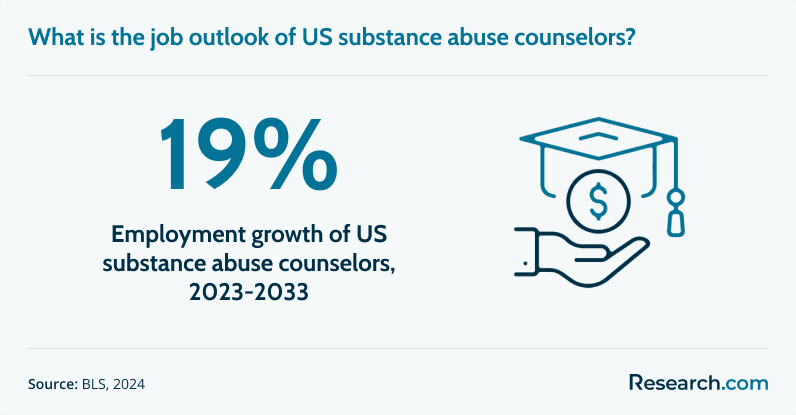
- The employment of substance abuse counselors is anticipated to grow by 19% from 2023 to 2033.
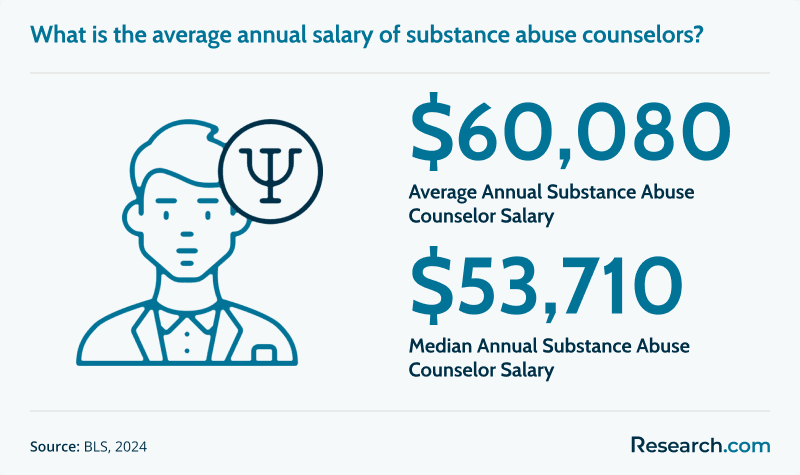
- Substance abuse counselors in the United States take home an average annual salary of $60,080, while their median annual salary is $53,710.
- The highest-paying industries for substance abuse counselors by average pay are business, labor, and political organizations ($94,050), religious organizations ($78,220), insurance carriers ($77,900), child care services ($76,790), and junior colleges ($72,930).
- What does a substance abuse counselor do?
- How to become a substance abuse counselor
- How long does it take to become a substance abuse counselor?
- What counseling techniques do substance abuse counselors use?
- What skills do substance abuse counselors need?
- What certifications are useful for substance abuse counselors?
- How do substance abuse counselors stay current with best practices?
- How can interdisciplinary education support advancement in substance abuse counseling?
- What career paths are available in substance abuse counseling?
- What is the job outlook for substance abuse counselors?
- Is advanced counseling education worth the investment?
- How are digital tools changing substance abuse counseling?Compare advanced education ROI
- What ethical and legal issues should substance abuse counselors understand?
- How can substance abuse counselors reduce burnout risk?
- How does mentorship help substance abuse counselors grow?
- Can online education prepare you for substance abuse counseling?
- What is the average salary for substance abuse counselors?
- What challenges do substance abuse counselors face?
- Can specialized certifications improve career options and pay?
- Can an advanced clinical doctorate expand your counseling impact?Review specialized credential optionsUnderstand workplace challenges
What does a substance abuse counselor do?
A substance abuse counselor supports people who are working to reduce or stop harmful substance use. The role is not limited to “talk therapy.” Counselors assess client needs, develop treatment plans, teach coping strategies, coordinate with families and treatment teams, document progress, and connect clients to services that can support recovery outside counseling sessions.
Common responsibilities include:
- Client assessment: Reviewing a client’s substance use history, mental health status, physical health concerns, risk factors, readiness for treatment, and immediate support needs.
- Treatment planning: Building a structured plan with realistic recovery goals, counseling strategies, relapse-prevention steps, and referrals when needed.
- Individual and group counseling: Leading sessions that help clients understand triggers, strengthen coping skills, regulate emotions, improve decision-making, and develop support networks.
- Crisis intervention: Responding to relapse risk, safety concerns, severe distress, or other urgent situations by following clinical and organizational protocols.
- Family education and involvement: Helping families understand addiction, communication patterns, boundaries, relapse warning signs, and the role they can play in recovery support.
- Progress documentation: Maintaining accurate records, tracking client outcomes, updating treatment plans, and documenting referrals, attendance, and clinical observations.
- Resource coordination: Referring clients to rehabilitation programs, 12-step groups such as Alcoholics Anonymous, housing assistance, job training, medical care, and other community-based supports.
Substance abuse counselors work in settings such as rehabilitation facilities, outpatient clinics, hospitals, schools, correctional facilities, community agencies, and private practices. Students comparing counseling careers may also want to review how to become a school counselor, especially if they are deciding between addiction counseling and school-based student support.
| Work setting | What counselors often do there | Who may be a good fit |
| Outpatient treatment centers | Provide recurring counseling, monitor recovery progress, support relapse prevention, and coordinate referrals. | People who want ongoing client relationships and structured treatment work. |
| Residential treatment facilities | Support clients in intensive recovery environments, often with higher clinical needs and more frequent contact. | Counselors comfortable with complex cases and team-based care. |
| Hospitals and healthcare settings | Work with medical teams, address co-occurring health needs, and support discharge or continuing-care plans. | Professionals interested in integrated behavioral and medical care. |
| Correctional facilities | Provide counseling, relapse-prevention planning, reentry support, and risk-focused case coordination. | Counselors interested in criminal justice, rehabilitation, and community reintegration. |
| Schools and community programs | Educate students or community members, identify early concerns, and connect people with treatment resources. | Those who want prevention, outreach, and youth or community-focused work. |
How to become a substance abuse counselor
The steps for becoming a substance abuse counselor depend heavily on state rules, job level, and employer expectations. A master’s degree is not always required for every substance abuse counseling role, but it is commonly needed for advanced clinical practice, supervision, private practice, or related roles such as learning how to become a mental health counselor.
Use the steps below as a planning framework, then verify the exact requirements with your state licensing or certification board before enrolling in a program.
- Choose the right education level for your target role. Some entry-level roles may accept a high school diploma, GED, or associate degree, but many employers prefer a bachelor’s degree in counseling, psychology, social work, addiction studies, or a related field. Students who need flexibility can compare online substance abuse counseling degree options. If you plan to pursue advanced counseling roles, graduate study may be necessary; comparing related graduate pathways such as is a master’s in marriage and family therapy worth it can help you think through cost, time, and career value.
- Complete required practicum, internship, or supervised work. Most states require supervised clinical experience in an addiction treatment or behavioral health setting. Depending on the credential, candidates may need between 2,000 and 4,000 hours of supervised practice, and some state pathways require more.
- Apply for state certification or licensure. Common credentials include Certified Alcohol and Drug Counselor (CADC), Licensed Alcohol and Drug Counselor (LADC), National Certified Addiction Counselor (NCAC), and Master Addiction Counselor (MAC). Requirements usually include approved coursework, supervised hours, an application, a background review, and a passing exam.
- Build early professional experience. Entry-level roles in rehabilitation centers, outpatient clinics, hospitals, schools, community agencies, and correctional facilities can help you develop assessment, documentation, group facilitation, crisis response, and case coordination skills. If you are interested in work that overlaps with justice or social service systems, you may also compare this path with how to become an investigator.
- Maintain continuing education and renew credentials. Substance abuse counseling changes as treatment models, legal requirements, documentation standards, and telehealth practices evolve. Continuing education is often required to keep credentials active and can also prepare counselors for supervisory or specialized roles.
- Apply strategically for jobs that match your credential level. Before applying, confirm whether the employer requires a specific license, independent practice authority, experience with co-occurring disorders, group counseling skills, or electronic health record documentation. Students comparing broader healthcare paths may also find it useful to review MSN vs. RN career in nursing, since nurses and counselors may work together in substance use treatment settings.
| Step | Why it matters | Decision tip |
| Check your state requirements first | Credential titles, required coursework, exams, and supervised hours vary by location. | Do this before choosing a school so you do not complete coursework that fails to meet licensing rules. |
| Select a degree level | Your education level can affect entry-level eligibility, clinical authority, and advancement options. | Match the degree to the job you want, not just the fastest program available. |
| Complete supervised experience | Supervision turns academic preparation into practice-based counseling skill. | Ask programs whether they help arrange placements or expect students to find their own sites. |
| Earn the required credential | Many employers and states require certification or licensure before independent or advanced practice. | Review exam, renewal, and continuing education requirements early. |
| Keep learning after hire | Best practices, documentation rules, ethics standards, and treatment models continue to evolve. | Choose continuing education that supports your intended specialization. |
How long does it take to become a substance abuse counselor?
The process generally takes six to ten years when it includes degree completion, supervised experience, credentialing, and exams. The timeline can be shorter for limited entry-level roles and longer for professionals pursuing master’s-level clinical practice or advanced licensure.
An associate degree typically takes two years and may qualify candidates for some support or entry-level positions, depending on state rules and employer requirements. A bachelor’s degree usually takes about four years of full-time study and is a common expectation for counseling-related positions. A master’s degree often adds another two years and may be required for advanced clinical, supervisory, or private practice roles.
After formal education, candidates usually need supervised clinical experience. Requirements can range from 2,000 to 6,000 hours depending on the state and credential. Completing those hours may take one to three years of full-time supervised work.
| Pathway | Typical education time | Possible career use | Important limitation |
| High school diploma or GED | Varies by state and employer | May qualify for some support roles or entry-level pathways in certain settings. | Often not enough for counseling roles that require formal certification or licensure. |
| Associate degree | Two years | May support entry-level addiction counseling or human services roles where allowed. | Advancement may be limited without additional education and supervised experience. |
| Bachelor’s degree | About four years of full-time study | Common preparation for substance abuse counseling, case management, and behavioral health roles. | Some advanced clinical roles still require graduate education. |
| Master’s degree | Often an additional two years | Supports advanced clinical work, supervision, private practice pathways, or broader mental health counseling roles. | Costs and time commitment are higher, so ROI should be evaluated carefully. |
| Supervised clinical experience | Often one to three years of full-time supervised work | Required for many credentials and essential for hands-on skill development. | Required hours vary widely, so state rules must be checked early. |
According to 2025 data from Zippia, as shown in the chart below, 57% of substance abuse counselors in the United States earned a bachelor's degree, 25% have a master's degree, 14% earned an associate degree, and 2% have a high school diploma.
What counseling techniques do substance abuse counselors use?
Substance abuse counselors use evidence-based counseling approaches to help clients understand substance use patterns, strengthen motivation for change, manage cravings, repair relationships, and reduce relapse risk. The best technique depends on the client’s diagnosis, treatment setting, cultural context, trauma history, readiness for change, and support system.
- Motivational Interviewing (MI): Helps clients explore mixed feelings about change and identify personal reasons to pursue recovery.
- Cognitive Behavioral Therapy (CBT): Teaches clients to identify thought patterns, emotional triggers, and behaviors that contribute to substance use.
- Contingency Management (CM): Uses incentives to reinforce treatment participation, sobriety-related goals, and other positive behaviors.
- Dialectical Behavior Therapy (DBT): Builds skills in mindfulness, emotional regulation, distress tolerance, and interpersonal effectiveness, especially for clients with co-occurring mental health concerns.
- 12-Step Facilitation Therapy: Encourages participation in peer-support groups such as AA or NA when that model fits the client’s recovery plan.
- Rational Emotive Behavior Therapy (REBT): Helps clients challenge unhelpful beliefs and replace them with more constructive ways of thinking and responding.
- Trauma-Informed Therapy: Recognizes how trauma can shape substance use and emphasizes safety, trust, choice, collaboration, and empowerment.
- Relapse Prevention Therapy (RPT): Focuses on identifying triggers, planning for cravings, building coping strategies, and reducing the likelihood or severity of relapse.
- Family and Couples Therapy: Addresses communication, boundaries, conflict, support systems, and family patterns that may affect recovery.
- Mindfulness-Based Therapy: Uses present-moment awareness practices to help clients manage stress, cravings, and emotional reactivity.
People who are more interested in relationship systems, family conflict, and marital dynamics may want to compare addiction counseling with marriage and family therapy master's programs online.
| Technique | Best used when clients need help with | Counselor focus |
| Motivational Interviewing | Ambivalence, low motivation, or uncertainty about treatment. | Drawing out the client’s own reasons for change. |
| CBT | Triggers, cravings, distorted thinking, and behavior patterns. | Building practical coping and problem-solving skills. |
| DBT | Emotional dysregulation, distress, and interpersonal conflict. | Teaching structured skills for managing intense emotions. |
| Relapse Prevention Therapy | High-risk situations and returning to use after treatment progress. | Creating realistic plans for cravings, triggers, and setbacks. |
| Family and Couples Therapy | Relationship strain, communication problems, and unstable support systems. | Improving family support without enabling harmful patterns. |
What skills do substance abuse counselors need?
Strong substance abuse counselors combine clinical knowledge with interpersonal discipline. They must be compassionate without becoming permissive, supportive without ignoring safety concerns, and organized enough to manage documentation, caseloads, referrals, and treatment plans.
- Empathy: Clients often enter treatment with shame, fear, anger, or mistrust. Empathy helps counselors build rapport without minimizing accountability.
- Clear communication: Counselors must explain treatment goals, listen closely, ask effective questions, and interpret verbal and nonverbal cues. Professionals who want to deepen communication expertise may consider an online master's in communication.
- Problem-solving: Treatment plans often need to change when clients face relapse, housing instability, family conflict, legal problems, or co-occurring disorders.
- Patience and resilience: Recovery is rarely linear. Counselors need the emotional steadiness to keep working effectively when progress slows or setbacks occur.
- Active listening: Clients are more likely to engage when they feel heard accurately, not rushed or judged.
- Boundary setting: Effective counseling requires warmth and structure. Boundaries help prevent enabling, overinvolvement, and ethical problems.
- Stress management: Counselors regularly encounter crisis, relapse, trauma, and grief. Sustainable self-management protects both the counselor and the quality of care.
A report by Zippia identifies common skills on substance abuse counselor resumes as patients (15.9%), substance abuse treatment (11.3%), social work (8.2%), crisis intervention (8%), intake assessments (5.1%), rehabilitation (3.5%), and interpersonal affairs (2.9%).
The chart below shows the US states that take in the most substance abuse counselors.
What certifications are useful for substance abuse counselors?
Substance abuse counselor credentials signal that a professional has met defined standards for education, supervised experience, ethics, and examination. The right credential depends on where you plan to work, the population you want to serve, and whether your goal is entry-level practice, advanced clinical work, supervision, or specialization. Students researching credential pathways can start with this overview of Substance abuse counselor certification.
- Certified Substance Abuse Counselor (CSAC): The CSAC credential verifies basic competency in substance abuse counseling services. It requires three years of supervised work experience, specific educational hours in substance abuse topics, and passing the CSAC examination.
- Certified Alcohol and Drug Counselor (ADC): Offered by the International Certification & Reciprocity Consortium (IC&RC), the ADC is a recognized credential for entry-level professionals who meet education, supervised experience, and exam requirements.
- Master Addiction Counselor (MAC): The MAC is intended for experienced counselors and requires a master's degree, substantial supervised clinical experience, and an examination focused on advanced addiction counseling knowledge.
- National Certified Addiction Counselor, Level I (NCAC I): This credential is designed for candidates with a high school diploma or GED and significant supervised experience. It recognizes foundational addiction counseling competencies and requires an exam.
- Licensed Advanced Alcohol and Drug Counselor (LAADC): The LAADC is California's highest level of certification. Applicants must hold a master's degree, carry professional liability insurance, demonstrate extensive clinical experience, and pass a rigorous exam.
- Certified Chemical Dependency Counselor (CCDC): The CCDC is focused on chemical dependency treatment and commonly requires approved coursework, supervised practical experience, and an examination.
- Certified Rehabilitation Counselor (CRC): The CRC applies to professionals who help people with disabilities, including individuals recovering from substance use disorders. It requires education standards, supervised experience, and an exam.
| Credential | Best suited for | Key requirement to verify |
| CSAC | Counselors seeking a substance abuse counseling competency credential. | Required supervised experience, education hours, and exam details. |
| ADC | Entry-level alcohol and drug counseling professionals. | IC&RC-related education, supervised hours, and exam expectations. |
| MAC | Experienced counselors with graduate-level preparation. | Master’s degree requirement and advanced clinical experience standards. |
| NCAC I | Candidates with foundational preparation and substantial supervised experience. | Eligibility rules for education level, supervised experience, and exam. |
| LAADC | California professionals pursuing the highest level of alcohol and drug counseling certification. | Master’s degree, liability insurance, clinical experience, and exam requirements. |
| CCDC | Counselors focused on chemical dependency treatment. | Coursework, supervised practice, and state or credentialing-body rules. |
| CRC | Counselors serving clients with disabilities, including recovery-related needs. | Education, supervised experience, and exam standards. |
How do substance abuse counselors stay current with best practices?
Substance abuse counselors stay current through continuing education, supervision, peer consultation, professional associations, updated ethics training, and new research on addiction treatment. This matters because client needs, telehealth rules, documentation standards, co-occurring disorder treatment, and evidence-based interventions continue to evolve.
Practical ways to keep skills current include attending workshops, completing CE credits required for credential renewal, joining peer supervision groups, reviewing new clinical guidance, and pursuing advanced credentials when they match career goals. Counselors who want a faster route into a counseling credential can also compare the fastest way to become a counselor, but they should still confirm that any accelerated path meets state-specific requirements.
How can interdisciplinary education support advancement in substance abuse counseling?
Interdisciplinary training can make a substance abuse counselor more useful in complex care environments. Addiction treatment often overlaps with trauma, family systems, behavioral analysis, criminal justice, disability services, public health, and mental health care. Additional education can help counselors collaborate more effectively across these systems and qualify for specialized or leadership-oriented roles.
For example, professionals who want stronger behavioral intervention skills may review BCBA school online options. This type of training should be evaluated as an add-on to, not a substitute for, state-required substance abuse counseling credentials.
What career paths are available in substance abuse counseling?
Training in substance abuse counseling can lead to several related roles in behavioral health, human services, rehabilitation, education, and community care. The best option depends on your credential level, population interests, preferred work setting, and tolerance for clinical intensity.
- Substance Abuse Counselor: Works directly with clients affected by addiction by conducting assessments, creating treatment plans, providing counseling, and monitoring recovery progress.
- Addiction Therapist: Provides deeper therapeutic work around the causes, patterns, and consequences of addiction, often in collaboration with other healthcare providers.
- Clinical Rehabilitation Specialist: Supports clients in inpatient or outpatient programs by tracking treatment goals, adjusting care plans, and coordinating recovery services.
- Recovery Coach: Offers practical and motivational support during recovery, including relapse-prevention support, goal setting, and accountability.
- Case Manager: Coordinates care, referrals, benefits, housing, treatment access, and follow-up services for clients with multiple needs.
- Social Worker: Helps clients address social, family, financial, housing, and service-access barriers that affect recovery. Students drawn to this broader advocacy role can compare online degrees in social work.
- Community Health Worker: Connects individuals and communities with health education, treatment resources, prevention programs, and support services.
- Recovery Specialist: Provides mentorship, advocacy, and lived-experience-informed support focused on long-term sobriety and relapse prevention.
- Professor or Educator: Teaches future counselors, develops addiction-related curriculum, and may participate in research or professional training. Advanced degrees are typically required.
- Clinical Supervisor: Oversees counseling staff, reviews documentation and treatment quality, supports ethical practice, and helps organizations maintain compliance with credentialing or licensing standards.
| Career direction | Best fit if you want to | Likely education or credential consideration |
| Direct addiction counseling | Provide individual and group counseling to clients in treatment. | State substance abuse counseling certification or licensure. |
| Case management | Coordinate services and help clients access practical supports. | Human services, social work, counseling, or addiction-related education. |
| Clinical supervision | Lead counselors and improve program quality. | Advanced credential, experience, and often graduate-level preparation. |
| Education or teaching | Train future professionals or develop curriculum. | Advanced degree and subject-matter expertise. |
| Community outreach | Focus on prevention, access, education, and resource navigation. | Public health, community health, counseling, or social services background. |
What is the job outlook for substance abuse counselors?
According to the United States Bureau of Labor Statistics (BLS), employment of substance abuse counselors is anticipated to grow by 19% from 2023 to 2033, compared with the national average of 4%. The number of substance abuse, behavioral disorder, and mental health counselors is projected to increase from 449,800 in 2023 to 534,300 by 2033.
During the same period, the BLS reports 48,900 openings for substance abuse, mental health, and behavioral disorder counselors each year. Indeed also reports over 12,000 jobs for substance abuse counselors in the country.
The largest employing industries for substance abuse, behavioral disorder, and mental health counselors are outpatient care centers (85,380), individual and family services (68,510), offices of other health practitioners (63,370), residential mental health and substance abuse facilities (42,230), and local government units (25,860).
For career planning, the outlook is favorable, but job availability still depends on location, credential level, employer type, and willingness to work with high-need populations. Candidates with supervised experience, crisis skills, group counseling experience, and co-occurring disorder knowledge may be more competitive.
Is advanced counseling education worth the investment?
Advanced education can expand clinical authority, improve eligibility for supervisory roles, and support transitions into private practice, teaching, leadership, or specialized treatment. However, it also adds tuition costs, time, and potential lost earnings. The value depends on whether the degree is required for the credential or role you want.
Before enrolling in a graduate or doctoral program, compare total tuition, fees, supervision requirements, accreditation, licensure alignment, expected time to completion, and realistic salary outcomes in your target state. Professionals considering doctoral-level clinical education may use the average cost of PsyD program as one reference point when evaluating whether advanced training fits their long-term goals.
How are digital tools changing substance abuse counseling?
Digital innovations have changed how many substance abuse counselors deliver and coordinate care. Secure video counseling, digital intake tools, client portals, scheduling platforms, electronic health records, progress-tracking tools, and mobile health applications can make care more flexible and easier to monitor. These tools can also support continuity for clients who face transportation, scheduling, or geographic barriers.
Technology does not replace clinical judgment. Counselors still need to protect confidentiality, document carefully, verify emergency procedures, follow telehealth rules, and assess whether virtual care is appropriate for each client. Students who want broader psychology preparation and a shorter academic path may compare accelerated psychology programs, while confirming that any program supports the clinical requirements for their intended counseling credential.
What ethical and legal issues should substance abuse counselors understand?
Substance abuse counselors work with sensitive information, high-risk situations, family dynamics, mandated reporting concerns, and clients who may be involved with courts, employers, or child welfare systems. Ethical and legal competence is therefore central to the job.
- Confidentiality: Counselors must understand when information is protected and when disclosure is required by law or safety protocols.
- Informed consent: Clients should understand the purpose of treatment, limits of confidentiality, documentation practices, fees, and participation expectations.
- Mandated reporting: Counselors must follow state and organizational rules for reporting abuse, neglect, imminent danger, or other reportable concerns.
- Professional boundaries: Dual relationships, excessive personal involvement, favoritism, or unclear boundaries can harm clients and create ethical violations.
- Accurate records: Documentation must be timely, factual, clinically relevant, and compliant with employer and legal standards.
Professionals who work with clients involved in legal systems may benefit from interdisciplinary study in areas such as forensic psychology masters online, especially when cases involve courts, correctional settings, risk assessment, or mandated treatment.
How can substance abuse counselors reduce burnout risk?
Substance abuse counseling can be emotionally demanding. Counselors may manage relapse, trauma histories, crisis calls, heavy documentation, high caseloads, grief, and client resistance. Burnout prevention should be treated as a professional responsibility, not an optional wellness extra.
- Use supervision consistently: Supervision helps counselors process difficult cases, improve clinical decisions, and avoid isolation.
- Set workload boundaries: Counselors should monitor caseload size, availability expectations, and after-hours demands where possible.
- Build recovery from work into the schedule: Exercise, sleep, mindfulness, peer support, and time away from crisis-oriented work can support long-term resilience.
- Watch for compassion fatigue: Emotional numbness, irritability, hopelessness, and detachment can signal that support is needed.
- Keep improving clinical competence: Counselors who feel prepared for complex cases may experience less stress. Some professionals build foundational knowledge through an affordable bachelors in psychology degree.
How does mentorship help substance abuse counselors grow?
Mentorship gives new and mid-career counselors access to practical guidance that is hard to learn from coursework alone. A strong mentor can help with treatment planning, ethical dilemmas, documentation standards, difficult client interactions, credentialing decisions, workplace politics, and career specialization.
Good mentorship can come from a clinical supervisor, senior counselor, professional association, graduate faculty member, or structured workplace program. Counselors interested in long-term leadership, teaching, or advanced clinical work may also explore doctorate in psychology online accredited programs as part of a broader development plan.
Can online education prepare you for substance abuse counseling?
Online education can prepare students for substance abuse counseling when the program is properly accredited, aligned with state credentialing requirements, and includes the required supervised field experience. Coursework can often be completed online, but practicum, internship, or supervised clinical hours usually require approved real-world placement.
Before choosing an online program, ask whether it meets your state’s substance abuse counselor requirements, whether it has appropriate accreditation, whether field placements are available in your area, and whether graduates are eligible for the credential you want. Students comparing distance learning should also review whether is an online psychology degree worth it to understand how online psychology-related credentials may be evaluated by employers and licensing bodies.
| Question to ask an online program | Why it matters |
| Does this program meet substance abuse counseling requirements in my state? | Licensure and certification rules vary, and not every online program is designed for every state. |
| Is the program accredited? | Accreditation can affect credit transfer, financial aid eligibility, employer acceptance, and licensure review. |
| How are supervised hours arranged? | Students need to know whether the school helps secure approved field sites or requires them to find placements independently. |
| What credential are graduates prepared to pursue? | A program should be clear about whether it supports entry-level certification, advanced licensure, or a related degree path. |
| What are the total costs beyond tuition? | Fees, books, travel to field placements, background checks, and exam costs can affect affordability. |
What is the average salary for substance abuse counselors?
BLS data shows that substance abuse counselors in the United States take home an average annual salary of $60,080, while their median annual salary is $53,710. This is higher than the collective median annual salary of all US jobs, which is $48,060. Individual earnings can vary based on location, credential level, employer type, experience, specialization, and supervisory responsibilities.
The industries that offer the highest average pay to substance abuse counselors, as shown by the chart below, are business, labor, and political organizations ($94,050), religious organizations ($78,220), insurance carriers ($77,900), child care services ($76,790), and junior colleges ($72,930).
The US states with the highest average salaries are Alaska ($77,430), Utah ($70,310), the District of Columbia ($67,750), New Jersey ($67,250), and New York ($67,240).
| Salary factor | How it can affect earnings |
| Credential level | Advanced credentials may qualify counselors for higher-responsibility roles, depending on employer and state rules. |
| Education level | Graduate education may be required for clinical supervision, private practice, or certain advanced roles. |
| Industry | Average pay differs across outpatient care, government, education, insurance, religious organizations, and other employers. |
| Location | State and local labor markets can significantly affect pay and job availability. |
| Experience and specialization | Crisis work, co-occurring disorder experience, supervisory skill, and specialized populations can influence competitiveness. |
What challenges do substance abuse counselors face?
Substance abuse counseling is meaningful work, but it is also demanding. Counselors support clients through relapse risk, trauma, unstable housing, legal pressures, family conflict, co-occurring disorders, and inconsistent motivation. Understanding these challenges before entering the field helps students make a more realistic career decision.
- Client relapse: Relapse can occur during recovery, and counselors must help clients plan for triggers, cravings, setbacks, and renewed engagement with treatment.
- Burnout and compassion fatigue: Constant exposure to crisis and suffering can affect emotional well-being if counselors do not use supervision, boundaries, and self-care.
- High caseloads: Heavy workloads can make it harder to provide individualized attention, complete documentation, and coordinate services.
- Co-occurring disorders: Many clients also experience mental health conditions, requiring collaboration with other professionals and broader clinical knowledge.
- Stigma: Social stigma can discourage clients from seeking help and may also shape how communities view addiction treatment.
- Low client motivation: Some clients enter treatment because of family pressure, court orders, employment requirements, or health crises rather than personal readiness.
- Boundary management: Counselors must avoid enabling behavior while still maintaining a compassionate, supportive therapeutic relationship.
| Common mistake | Why it causes problems | Better approach |
| Choosing a program before checking state requirements | The program may not meet certification or licensure rules where you plan to work. | Start with your state board or credentialing body, then choose a program that aligns. |
| Looking only at tuition | Fees, supervision costs, exams, books, and placement travel can change the real cost. | Compare total cost of attendance and credential-related expenses. |
| Assuming every online program leads to licensure | Online coursework may not satisfy field placement or state-specific requirements. | Ask for written confirmation of licensure or certification alignment. |
| Ignoring burnout risk | The emotional intensity of the role can lead to turnover or reduced effectiveness. | Evaluate supervision quality, caseload expectations, and workplace support before accepting a job. |
| Assuming salary outcomes are guaranteed | Pay depends on location, employer, credential, experience, and role responsibilities. | Use salary data as a planning tool, not a promise. |
Can specialized certifications improve career options and pay?
Specialized certifications can help counselors demonstrate focused expertise, qualify for more advanced responsibilities, and stand out in competitive hiring processes. They may be especially useful for professionals who want to work with specific populations, move into supervision, deepen behavioral intervention skills, or strengthen their clinical profile.
Additional credentials should be chosen strategically. A certification is most valuable when it is recognized by employers, relevant to the counselor’s target population, and aligned with state rules. Professionals interested in behavioral analysis credentials and compensation comparisons may review the ABA certification salary report as part of broader career planning.
Can an advanced clinical doctorate expand your counseling impact?
An advanced clinical doctorate may help some substance abuse counselors expand into leadership, advanced clinical practice, teaching, research, program development, or supervision. It can also deepen knowledge of diagnosis, treatment design, assessment, and organizational decision-making.
A doctorate is not required for every substance abuse counseling career, so the decision should be based on a clear goal. Before enrolling, compare cost, time, accreditation, licensure implications, career outcomes, and whether a master’s-level credential would already meet your needs. Counselors evaluating doctoral clinical training can explore PsyD degree programs.
What substance abuse counselors say about their work
-
: "
"The most fulfilling aspect of my role as a substance abuse counselor is the deep connections I build with my clients. I get to create a safe space where they feel heard and understood, which is crucial for their healing process. Knowing that I can make a difference in someone's life is what drives my passion for this work." - Bruce
"
-
: "
"As a substance abuse counselor, I’ve learned that healing isn’t just about overcoming addiction—it’s about rebuilding lives. I’ve helped clients reconnect with their families, rediscover their passions, and find stability they never thought possible. Seeing that growth firsthand is the most rewarding part of my job." – Clark
"
-
: "
"This career has given me purpose in a way I never expected. Every session is a chance to help someone break free from addiction and rewrite their story, and that’s incredibly powerful. I’ve grown not only as a counselor but as a person, learning patience, empathy, and the true meaning of resilience." – Diana
"
Key Insights
- Substance abuse counseling is a structured clinical and support role focused on assessment, counseling, relapse prevention, crisis response, family education, and referral coordination.
- The path usually takes six to ten years when education, supervised experience, and credentialing are included, but the exact timeline depends on state rules and career goals.
- A bachelor’s degree is common in the field, but some roles allow lower entry points and advanced clinical paths may require a master’s degree.
- The job outlook is strong, with BLS projecting 19% employment growth from 2023 to 2033 for substance abuse counselors.
- Salary varies by industry, state, credential, and experience; the national average annual salary is $60,080 and the median annual salary is $53,710.
- Before choosing a program, verify accreditation, state credential alignment, supervised experience support, total cost, and whether online coursework meets your intended licensing pathway.
- This career can be highly rewarding, but burnout risk is real. Supervision, boundaries, manageable caseloads, and ongoing professional development are essential for long-term success.
References:
- American Addiction Centers (2024, December 31). Alcohol and Drug Abuse Statistics (Facts About Addiction). American Addiction Centers
- BLS (2024, April 3). 21-1018 Substance Abuse, Behavioral Disorder, and Mental Health Counselors. BLS
- BLS (2024, August 29). Substance Abuse, Behavioral Disorder, and Mental Health Counselors. BLS
- Zippia (2025, January 8). Substance Abuse Counselor Education Requirements. Zippia
- Zippia (2025, January 8). Substance Abuse Counselor skills for your resume and career. ZippiaSubstance abuse counselor education data
Other Things You Should Know About Substance Abuse Counselors
In 2027, substance abuse counselors must complete continuing education credits to maintain licensure. Requirements vary by state, typically ranging from 20 to 40 hours every two years, often focusing on ethics, addiction medicine, and counseling techniques to ensure counselors remain current in their practice.
Most states require 300 to 1,000 hours of supervised practicum or internship experience before licensure. These hours are usually completed during an accredited counseling or addiction studies program and must be documented by a qualified clinical supervisor for state board review.
To become a substance abuse counselor in 2027, you typically need to complete state-specific certification programs, such as the Certified Addiction Counselor (CAC) or the Licensed Chemical Dependency Counselor (LCDC). These certifications ensure adherence to professional standards and competence in counseling practices.


