2027 Online vs Campus Physical Therapy Assistant Outcomes Report: Graduation Rates, Cost, and Career Trade-Offs

Co-Founder and Chief Data Scientist
Adult learners and working professionals often face a critical dilemma when choosing between online and campus physical therapy assistant programs: how to maximize transfer credits without extending time to graduation. In 2024, only 58% of transfer credits are accepted on average by online PTA programs compared to 74% at brick-and-mortar institutions, reflecting a growing divide in credit recognition policies.
This trend reveals an institutional tension between flexible access and strict clinical hour requirements, affecting completion efficiency and educational affordability. This article compares graduation rates, cost implications, and career trade-offs to guide informed decisions on the most practical PTA program delivery method.
Key Things to Know About Online vs Campus Physical Therapy Assistant Outcomes
- Online physical therapy assistant programs show a 15% lower graduation rate than campus-based ones, reflecting challenges in remote clinical skill acquisition that can delay workforce entry.
- Campus program graduates often benefit from direct employer networking, increasing early hire likelihood, whereas online graduates may face perception barriers requiring proactive relationship-building.
- Despite higher tuition, campus programs' integrated clinical hours reduce total out-of-pocket costs by limiting additional placement expenses common among online students balancing work and study.
- Key Things to Know About Online vs Campus Physical Therapy Assistant Outcomes Key Things to Know About Online vs Campus Physical Therapy Assistant Outcomes
- What Are the Biggest Differences Between Online and Campus Physical Therapy Assistant Program Outcomes? Online vs Campus Outcomes
- How Do Graduation Rates Compare Between Online and Campus Physical Therapy Assistant Programs? Comparing Graduation Rates
- Why Do Online and Campus Physical Therapy Assistant Students Have Different Completion Rates? Why Completion Rates Differ
- How Do Online and Campus Physical Therapy Assistant Programs Compare on Total Cost? Total Cost Comparison
- What Hidden Costs Should Students Expect in Online vs Campus Physical Therapy Assistant Programs? Hidden Program Costs
- How Does Financial Aid Affect the Cost of Online and Campus Physical Therapy Assistant Programs? Financial Aid Impact
- Do Online and Campus Physical Therapy Assistant Graduates Have Different Career Outcomes? Comparing Career Outcomes
- How Do Employers View Online vs Campus Physical Therapy Assistant Degrees? How Do Employers View Online vs Campus Physical Therapy Assistant Degrees?
- Which Physical Therapy Assistant Degree Format Offers Better Flexibility for Working Adults? Which Physical Therapy Assistant Degree Format Offers Better Flexibility for Working Adults?
- How Should Students Choose Between an Online and Campus Physical Therapy Assistant Program? Choosing Your Program Format
What Are the Biggest Differences Between Online and Campus Physical Therapy Assistant Program Outcomes?
The gap in graduation outcomes between online and campus physical therapy assistant programs largely stems from differences in student persistence and access to hands-on support. Campus programs report completion rates near 68%, visibly higher than the approximately 60% for online formats, reflecting how real-time faculty interaction, cohort dynamics, and structured lab practice bolster retention and skill acquisition.
A student balancing work and family, for example, may find an online environment more flexible but must proactively manage clinical placements and independent study, often extending completion timelines and increasing indirect costs. This dynamic illustrates a critical trade-off between the structured support networks that aid persistence and the autonomy demanded by remote learning.
Cost and career trade-offs in physical therapy assistant programs extend beyond sticker tuition to include resources, clinical placement logistics, and networking. While online programs appear cheaper per credit, additional fees for technology and unassisted clinical practicum coordination can erode financial advantages, sometimes surpassing campus expenses that incorporate more bundled services and on-site resources.
Employers tend to perceive campus-trained graduates as more immediately ready due to in-person mentorship and demonstrated practical competencies, impacting early career mobility and placement rates. For those seeking greater flexibility without sacrificing licensure preparedness, exploring options like a DNP program without clinical hours or hybrid pathways may balance convenience with the value of immersive, practice-focused learning.
How Do Graduation Rates Compare Between Online and Campus Physical Therapy Assistant Programs?
Graduation rates for physical therapy assistant programs illustrate significant variation based on delivery format, but raw numbers alone can mislead. According to the 2024 Integrated Postsecondary Education Data System (IPEDS), campus programs show roughly a 75% three-year completion rate, notably higher than online programs at about 60%, with hybrid models around 68%. These differences often reflect student demographics and programmatic factors-on-campus students typically enroll full-time with fewer outside obligations.
Online learners frequently balance work, family, and part-time study, raising stop-out risks despite the format's flexibility. Furthermore, disparities in how programs report transfers or part-time completions complicate direct comparisons, underscoring the need to assess advising quality, clinical placement support, and pacing when interpreting graduation data.
Program design also plays a pivotal role beyond delivery medium. Campus offerings often provide selective admission and cohort-driven peer engagement that reinforce accountability, while online programs vary widely in synchronous interaction and virtual community building, which can affect student retention. For working adults juggling clinical practicum requirements alongside employment, the additional stresses of asynchronous coursework and limited real-time faculty contact may depress completion rates even if content rigor remains equivalent.
Prospective students should consider whether an online program includes proactive advising and cohort cohesion or if it risks leaving learners isolated within flexible pacing frameworks that demand high self-discipline. Evaluating these operational differences helps frame graduation statistics in terms of realistic completion planning rather than simplistic format preferences.
One physical therapy assistant student recalled hesitating between an online program offering scheduling freedom and a campus cohort with fixed class times. They researched cohort sizes, advising availability, and completion support, noting many campus students benefited from structured study groups and clear clinical placement pathways.
Meanwhile, the online option, though appealing for part-time study, lacked regular synchronous sessions, raising concerns about staying on track amid a busy work and family schedule. This student ultimately chose the campus format, describing it as "a manageable but firm schedule" that provided the momentum needed to avoid drifting off course, illustrating how personal circumstances can tip the balance when graduation rates alone don't capture program logistics and support nuances.
Why Do Online and Campus Physical Therapy Assistant Students Have Different Completion Rates?
Completion rates for online versus campus physical therapy assistant programs often reflect underlying differences in student demographics and program structure rather than instructional quality alone. On-campus students typically benefit from more integrated cohort experiences, immediate faculty access, and regular on-site lab and clinical sessions, all of which help maintain steady progress.
In contrast, a significant portion of online learners are adults juggling full-time work and family commitments, with nearly 60% enrolling part-time compared to about 30% in campus programs, a factor that frequently extends program timelines and increases risks of interruption or dropout. Financial and advising challenges also influence persistence in online programs. Limited availability of financial aid tailored to non-traditional learners and less streamlined transfer credit evaluations often complicate the path to completion for online students.
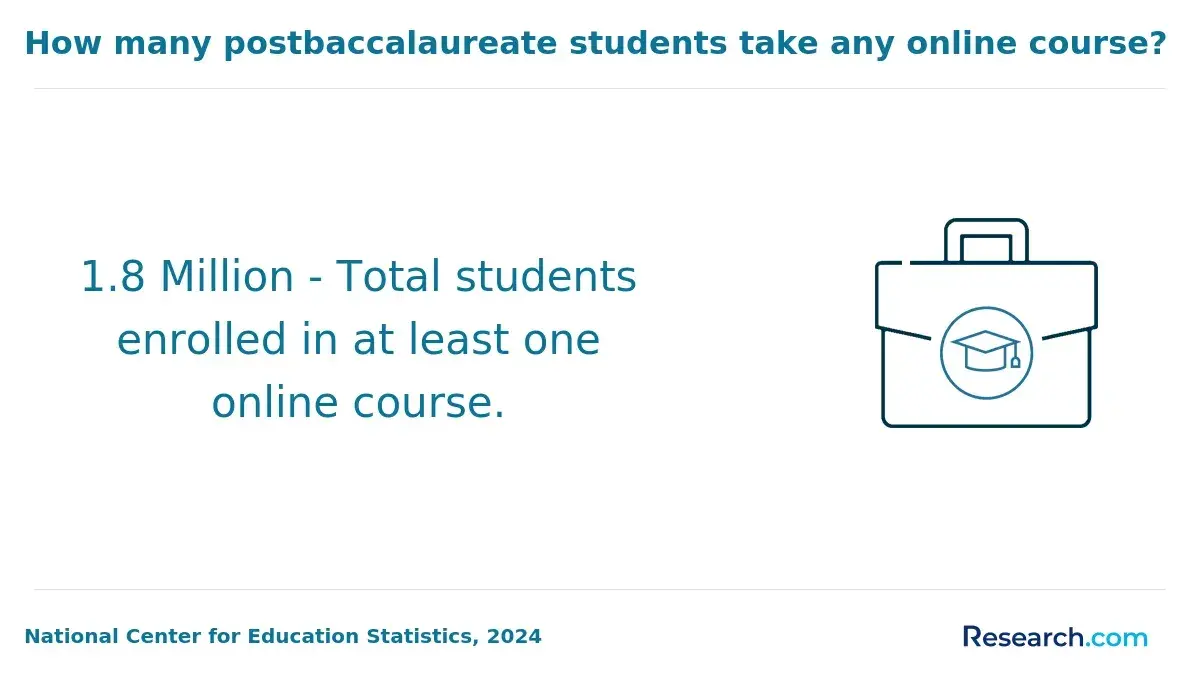
Meanwhile, campus-based programs usually offer more centralized support services such as tutoring, mental health counseling, and career advising, which contribute to higher retention. According to 2024 data from the National Center for Education Statistics, campus-based physical therapy assistant programs have graduation rates near 65%, while fully online options average closer to 50%, underscoring how these structural and demographic factors manifest in measurable outcomes.
Prospective students should interpret these completion differentials in light of their own stability and support needs. Those with stable schedules who can engage consistently with cohort pacing and clinical rotations may find campus programs align better with timely graduation. Alternatively, learners requiring greater flexibility should anticipate potential stop-out risks and plan proactively for slower progression, especially given variability in practicum placement access and remote advising.
How Do Online and Campus Physical Therapy Assistant Programs Compare on Total Cost?
Comparing the total cost of online versus campus physical therapy assistant programs reveals important financial trade-offs beyond tuition. While online formats often have lower advertised tuition, added technology fees and travel expenses for clinical practicums can reduce savings. Conversely, campus students face on-site fees like laboratories and health services but usually avoid extensive travel costs and incur significant housing and meal expenses that online students typically bypass, often saving around $12,000 annually on living costs.
These factors complicate any straightforward cost comparison for physical therapy assistant program total cost comparison. Financial aid eligibility and institutional type also influence net costs, with public and nonprofit schools generally providing stronger support than for-profit institutions, though aid packages may differ between delivery methods. Online learners often benefit from maintaining employment during studies, potentially reducing debt accumulation, which IPEDS data confirms by showing slightly lower average debt for online physical therapy assistant students.
Ultimately, prospective students should assess how program length, residency requirements, and fee structures affect their budget and timeline, balancing tuition savings against hidden expenses and personal circumstances. For those exploring viable healthcare roles, understanding these nuances supports informed decisions about aligning educational pathways with job market realities and personal finances, whether pursuing on-campus study or online learning and reflecting on broader career factors such as jobs with biology degree.
What Hidden Costs Should Students Expect in Online vs Campus Physical Therapy Assistant Programs?
The upfront tuition in online versus campus physical therapy assistant programs often masks a broader set of hidden expenses that critically influence total cost and completion planning. Online formats, while avoiding commuting, typically impose technology fees, mandatory exam proctoring charges, and software licensing requirements that can total several hundred dollars each term.
Meanwhile, campus-based students face often underestimated costs like regular commuting expenses-which can exceed $2,000 annually in urban areas-and parking fees around $800, alongside significantly higher housing costs averaging over $9,500 per year in college towns, according to 2024 data from the U.S. Department of Transportation and College Scorecard. These factors, combined with clinical site travel and potential work-hour reductions due to fixed schedules, shape the financial and practical realities students must weigh beyond advertised prices.
This financial calculus influences career trade-offs, as students balancing work and study might favor online flexibility but incur higher digital infrastructure costs, whereas campus attendance may facilitate stronger financial aid packages including housing stipends but also lead to income loss from rigid class times. A nuanced understanding of how these indirect costs modulate affordability and time-to-graduation is crucial because employer demand in healthcare increasingly values program completion speed and practical readiness, factors tied to how well students manage these non-tuition burdens.
Selecting a program without factoring in these expenditures risks underestimating the true investment needed to enter the physical therapy assistant workforce effectively. One recent graduate recalled hesitating between an online program with compelling tuition rates and a local campus offering structured clinical access. Early in the decision process, they uncovered that technology fees and proctoring costs required by the online option nearly matched the commuting and parking expenses they would face on campus.
Adding childcare logistics and the unpredictability of requiring several trips to clinical sites made them second-guess the convenience of the online path. Ultimately, choosing the campus route offered clearer cost expectations despite higher sticker prices, a decision informed by real-world budgeting challenges rather than initial tuition comparisons alone.
How Does Financial Aid Affect the Cost of Online and Campus Physical Therapy Assistant Programs?
Financial aid fundamentally alters the cost dynamics between online and campus physical therapy assistant programs, frequently narrowing or even reversing apparent sticker price differences. Campus programs tend to offer a wider range of institutional aid, including assistantships and scholarships that often require on-site enrollment and residency status, which online students usually cannot access.
For instance, a full-time campus student might receive need-based aid covering room and board, while an online counterpart attending part-time could face reduced grant eligibility and incur additional technology fees that drive up net costs, despite lower published tuition rates. These disparities in aid award structures demand careful comparison of net price rather than tuition alone.
Given these factors, students focusing on financial aid impact on online physical therapy assistant program costs must evaluate how enrollment intensity, scholarship requirements, and employer tuition benefits interplay with program format. Employer tuition reimbursement often favors online students who can study while working, shifting the real cost calculus through reduced lost wages and flexible pacing. However, this advantage is highly variable depending on individual employer policies and student employment status.
Additionally, federal student loans often form a baseline funding source but may result in higher debt burdens for online learners due to fewer grants and scholarships, underscoring the importance of strategic borrowing aligned to realistic career income expectations. Veterans can leverage military benefits equitably across formats, adding another key consideration in financial planning. Successful cost assessment also involves factoring in graduation timelines and program pace, which impact borrowing and employment continuity.
Prospective students should weigh these trade-offs alongside career outcomes and include all financial aid variables in their decision. For those seeking deeper expertise in allied health education pathways, comprehensive resources-such as those covering a PhD in healthcare management-can offer valuable context on long-term educational investment. Understanding campus physical therapy assistant financial aid and tuition affordability nuances is critical to selecting a program format that balances economic realities with career goals.
Do Online and Campus Physical Therapy Assistant Graduates Have Different Career Outcomes?
Employment outcomes for online and campus Physical Therapy Assistant graduates are broadly comparable, yet critical differences surface when considering program structure and employer preferences. Campus-based programs typically offer more direct access to in-person clinical internships and established healthcare partnerships, which often result in higher first-time pass rates on licensing exams and can ease entry into competitive job markets.
In contrast, online graduates benefit from greater scheduling flexibility and reduced costs but may face initial employer skepticism regarding hands-on skill verification, necessitating proactive demonstration of clinical competencies to overcome biases. Networking opportunities strongly influence early career trajectories, with campus cohorts leveraging alumni networks and career services to secure positions and mentorship more readily, while online students often need to independently build professional connections, which can affect local versus broader geographic job prospects.
Students balancing work or family commitments might find online formats more adaptable but should weigh potential extended time-to-completion or supplemental training expenses. According to 2024 data from the National Center for Education Statistics and the U.S. Department of Education's College Scorecard, employment rates within six months post-graduation converge around 85% regardless of delivery mode, underscoring the primacy of individual initiative and program accreditation over format alone in shaping long-term career viability.
How Do Employers View Online vs Campus Physical Therapy Assistant Degrees?
Employer evaluations of physical therapy assistant degrees increasingly prioritize program accreditation, documented clinical experience, and institutional reputation over delivery format. According to a 2024 survey by the National Association of Colleges and Employers, 62% of healthcare employers indicated no strong preference between online and campus degrees, provided that the program demonstrated recognized accreditation and robust hands-on internships.
However, hiring managers often scrutinize how well a candidate's practical training aligns with licensure requirements and whether the transcript or diploma avoids differentiating the degree by mode of instruction, as these factors influence perceived readiness and program rigor. In practical hiring scenarios, candidates from campus programs may benefit from more visible access to direct faculty mentorship and on-site lab work, which some employers associate with stronger immediate competencies.
Yet, online programs with transparent clinical placements and state-approved curricula increasingly achieve parity when applicants present verifiable fieldwork and professional references. Employer familiarity with online education, emphasized in a 2024 report by the Society for Human Resource Management, helps reduce biases, especially in allied health roles where measurable outcomes and work history can outweigh initial degree format.
For prospective students, the decision to pursue an online or campus physical therapy assistant degree ultimately depends on balancing the logistical advantages of remote learning with the necessity of acquiring credible and clearly documented clinical experience to navigate diverse employer standards and career mobility challenges.
Which Physical Therapy Assistant Degree Format Offers Better Flexibility for Working Adults?
Flexibility for working adults in physical therapy assistant programs is a complex balance between scheduling autonomy and the unavoidable hands-on requirements of clinical practicums. Unlike standard online degrees, these programs demand substantial in-person attendance for labs and supervised clinical hours, limiting the fully remote experience many anticipate.
Those enrolled in campus-based programs face fixed class times and commuting commitments that can strain the schedules of employed students, whereas online formats often support part-time enrollment and asynchronous coursework, allowing for more adaptable pacing but sometimes at the cost of reduced real-time faculty interaction and peer support. This tradeoff affects persistence and graduation timelines, with working learners needing to carefully assess how in-person versus online components align with their caregiving or shift work responsibilities.
Considering the practical realities of online and campus physical therapy assistant scheduling options, hybrid models emerge frequently as employer-preferred solutions that blend flexible online instruction with localized, essential clinical practice. Weekend or evening lab sessions can mitigate scheduling conflicts, yet proximity to clinical sites remains vital to minimize commute disruptions and maintain steady progress.
These scheduling and format differences have direct career implications: delays in clinical completion can prolong time to licensure and workforce entry, impacting income continuity and potentially increasing total program costs. Working adults must therefore evaluate individual program policies on stop-outs and transfers, as these can significantly affect their ability to finish on schedule while managing work and family pressures.
Prospective students balancing employment should also explore credential options related to physical therapy assistant programs, such as NASP-accredited programs, to understand alignment with career pathways. Ultimately, making an informed choice about flexibility means integrating knowledge of each format's scheduling demands, support structures, and experiential requirements to advance both educational completion and long-term employability within the healthcare environment.
How Should Students Choose Between an Online and Campus Physical Therapy Assistant Program?
Graduation rates for online physical therapy assistant programs generally lag behind those of campus counterparts, reflecting the heightened self-discipline and limited face-to-face support inherent to remote learning. Campus programs often report retention around 70-80%, a factor that employers may view as indicative of candidate preparedness given the structured environment and direct faculty access.
However, students balancing work or caregiving responsibilities might find the greater flexibility of online formats essential, even though this can impact persistence and course sequencing. Cost considerations are substantial; annual on-campus expenses often run between $15,000 and $25,000, including housing and commuting, while online options typically lower these costs by 20-40%, altering the overall financial calculus of program choice.
Career trade-offs between formats hinge significantly on access to clinical placements and networking opportunities. Campus programs often facilitate in-person collaboration and more direct assistance securing internships, which can influence initial employability in a competitive healthcare job market. Nevertheless, accredited online physical therapy assistant programs are increasingly integrating virtual simulations and remote advisement to bridge these gaps.
Licensing requirements remain similar across formats, necessitating completion of accredited curricula and clinical hours. In practice, learners must weigh the practical benefits of campus connections against the operational advantage of remote learning, aligning choice with their professional ambitions and personal circumstances. For those exploring broader degree options that require comparable decision frameworks, a bachelor's degree in sociology online offers a parallel example of balancing flexibility with academic outcomes.
References
- Program Cost https://www.navarrocollege.edu/academics/physical-therapist-assistant/program-cost.html
- Can You Get a Physical Therapy Assistant Degree Online? - CBD College https://www.cbd.edu/blog/physical-therapist-assistant/can-you-get-a-physical-therapy-assistant-degree-online/
- Physical Therapist Assistant | Pueblo Community College https://pueblocc.edu/programs/pta
- PTA Programs in Texas: Costs, Ratings and Classes for 2026 https://physical-therapy-assistant.org/pta-schools-in-texas-tx/
- Physical Therapist Assistant (PTA) & PT Aide - Certification & Salary https://www.healthcaredegree.com/physical/physical-therapist-assistant
- Physical Therapist Assistant (A.A.S.) - Walters State Community College https://ws.edu/academics/programs/aas/_info/physical-therapist-assistant-info.aspx
- Physical Therapist Assistant Graduate Outcomes https://www.shawnee.edu/areas-study/college-health-human-services/rehabilitation-sciences/physical-therapist-assistant/graduate-outcomes
- 25 Best Physical Therapist Assistant Programs | Become With Lantern https://www.learnhowtobecome.org/best-physical-therapist-assistant-programs/
- Physical Therapist Assistant vs. Physical Therapist: What’s the Difference? https://blog.methodistcollege.edu/pta-versus-physical-therapist-whats-the-difference
- Physical Therapist vs. Physical Therapist Assistant: Key Differences https://www.distinctivetherapyservices.com/physical-therapist-vs-physical-therapist-assistant/
Other Things You Should Know About Physical Therapy Assistant
Both formats require supervised clinical placements, but campus programs often integrate hands-on labs and clinical skills practice more intensively throughout the curriculum. Online students may face compressed or less frequent in-person skills sessions, which can challenge the development of manual therapy techniques crucial for employment. This difference can affect readiness by requiring online learners to be more proactive in seeking extra hands-on practice or supplemental training to meet employer expectations.
Campus programs naturally facilitate face-to-face peer collaboration and interaction with faculty, which often leads to stronger professional networks and mentorship opportunities. Online students may have fewer informal networking moments, potentially limiting early career connections that assist with job referrals or recommendations. Prioritizing programs with structured virtual networking, active alumni engagement, or local cohort meetups can help online learners mitigate this gap.
Online programs generally offer greater scheduling flexibility, enabling students to fit coursework around work and family commitments more easily. However, this flexibility often requires a higher degree of self-discipline and time management to avoid falling behind. Those who work irregular hours or have intensive family obligations might prioritize online options but must be prepared for a self-directed learning environment that demands consistent engagement and planning.
Hands-on skills are fundamental to physical therapy assistant practice, and campus programs typically provide more structured lab sessions to develop these competencies in real time. Online offerings rely heavily on video demonstrations and limited in-person skill sessions, which may not fully replicate real-world interactions. Students who prioritize mastery of manual and tactile skills should lean toward campus-based programs or ensure that online programs offer sufficient, quality in-person clinical practice components.