
2027 How Much Does a Social Worker Make? Salary Guide

Co-Founder and Chief Data Scientist
Choosing social work as a career means weighing a clear trade-off: the work can be deeply meaningful, but earnings vary widely by license level, specialty, employer, and location. The National Association of Social Workers (NASW) has reported about 700,000 licensed social workers in the country, with 720,000 active social workers in the United States. For students, career changers, and working social workers considering an MSW, LCSW, doctorate, or specialty certification, salary data should be part of the decision before taking on tuition costs, supervised hours, licensing exams, or relocation.
Social worker pay is not one simple number. According to figures cited from the U.S. Bureau of Labor Statistics, the median annual wage for social workers was $49,870 in 2024, while another BLS-based wage estimate places social worker pay at about $33.10 per hour, or roughly $68,930 per year. The difference usually comes from occupational category, reporting year, specialty, and whether the figure reflects median or average pay. The highest 10% of earners were reported at over $89,000 annually, while other wage tables show top earners around $100,200.
This guide explains how much social workers make, which social work specialties tend to pay more, where wages are highest, how education changes career options, and what to check before choosing a degree or licensure path. It is designed to help you compare salary potential against cost, time, licensing requirements, and long-term career goals.
How Much Does a Social Worker Make: Guide Contents
- What do social workers do in practice?
- What is the average social worker salary?
- How much can social workers earn by specialty and experience?
- Where do social workers earn the most?
- Social worker salary by state and territory
- How education affects social work jobs and pay
- Online vs. traditional pathways for social work advancement
- Higher education and specialized training options
- MSW vs. LCSW career implications
- Benefits beyond base salary
- Technology trends in social work practice
- Whether a doctorate in social work is worth considering
- Advanced Standing MSW programs and career acceleration
- Networking and mentorship for career growth
- State licensure requirements for social workers
- Social work job growth outlook
- Professional development and certifications
- Accelerated MSW programs and return on investment
- Affordable ways to begin a social work career
Quick Answer: How Much Does a Social Worker Make?
Social worker salaries depend most on specialization, license level, employer, geography, and experience. Reported 2024 wage figures include a median annual wage of $49,870, an estimated average of about $33.10 per hour or $68,930 per year, and a high-end range above $89,000 annually, with some data showing top earners around $100,200. Higher-paying opportunities are more common in federal government roles, school and educational support services, office administration services, insurance carriers, hospitals, healthcare social work, and some mental health and substance abuse roles in high-paying states.
| Salary Factor | What It Means for Your Earning Potential |
| Education level | A BSW can lead to entry-level and community service roles, while an MSW is often tied to licensure pathways and more specialized positions. |
| Licensure | Clinical licensure, such as the LCSW, generally expands eligibility for therapy, assessment, and independent clinical roles. |
| Specialty | Healthcare, federal government, school support, insurance, and mental health/substance abuse roles may pay differently from child, family, and school social work. |
| Location | State and metro area pay differences can be large, so salary should be compared with cost of living and licensure portability. |
| Experience | Entry-level, mid-career, and senior social workers can see meaningful pay differences, especially when experience is combined with credentials. |
What do social workers do?
Social workers help people, families, groups, and communities respond to problems that affect safety, health, stability, education, housing, and mental well-being. Their work may include assessment, case planning, crisis response, counseling, advocacy, referral coordination, benefits navigation, school support, hospital discharge planning, child welfare services, policy work, and community program development. Many people begin by completing campus-based or online social work bachelor’s programs, gaining supervised field experience, and meeting state licensure rules.
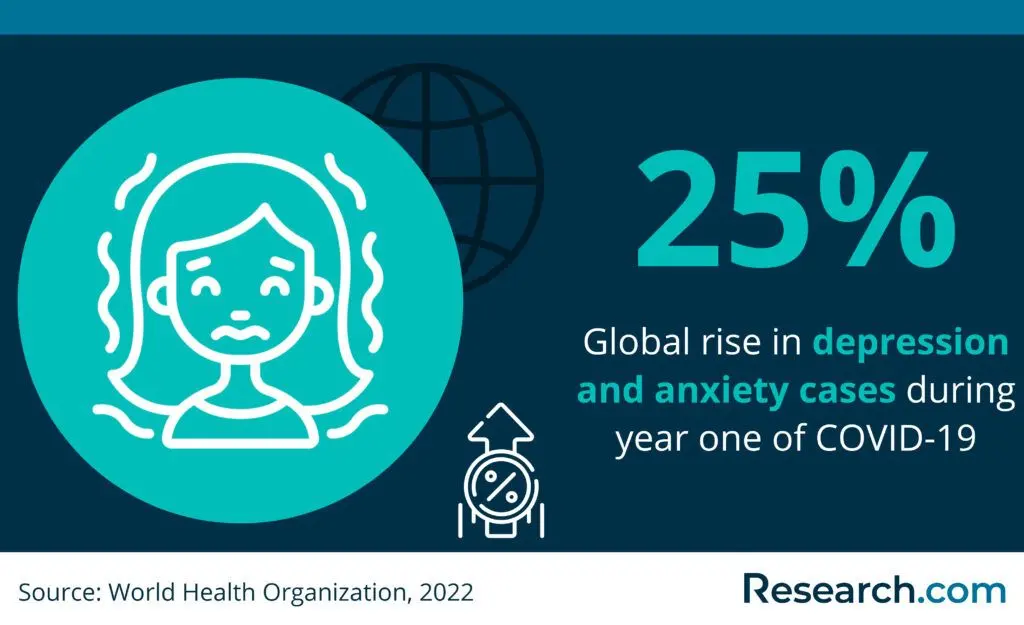
The COVID-19 pandemic made the public health role of social workers more visible. Global reports connected the pandemic with a 25% increase in anxiety and depression worldwide, and social workers were involved in supporting at-risk people and groups, building communication strategies, reducing isolation, and helping communities access services. The International Federation of Social Workers also emphasized that a strong pandemic response should include care for vulnerable people and communities. According to the World Health Organization, an estimated 1.3 billion people globally are affected by social isolation and loneliness, which reinforces the need for targeted social work interventions.
- : "Okafor’s 2024 work, “Role of the Social Worker in the Outbreak of Pandemics (A Case of COVID-19),” describes social workers as essential during public health emergencies because they provide social support, advocate for inclusion, raise awareness, support mental health strategies, and help communities build resilience."
Published in Cogent Psychology, Okafor’s article also argues that pandemics and emergencies give the profession an opportunity to demonstrate its value through practical interventions and sustained support for people affected by crisis.
Average Social Worker Salary
Average social worker salary estimates vary because “social worker” is used across several occupational categories. Pay can change based on state, employer type, practice setting, specialty, seniority, union coverage, shift requirements, and whether the role requires an MSW or clinical license. BLS-based data cited in this guide show an estimated median salary of around $33.10 per hour, or roughly $68,930 per year, with lower-end earnings around $39,000 and the highest percentile around $100,200.
When comparing salary numbers, use the same category each time. For example, child, family, and school social workers, healthcare social workers, and mental health and substance abuse social workers are reported separately in BLS wage tables. A hospital social worker in California and a child welfare worker in Puerto Rico are both in social work, but their pay, licensing requirements, and cost-of-living context may be very different.
How much do different types of social workers make?
The strongest salary comparison looks at three things together: experience level, specialization, and employer. A social worker with a BSW in a community agency will usually face a different salary ceiling than an MSW-prepared clinical social worker in healthcare, a school-based specialist, or a policy professional in the federal government.
Social worker salary by experience level
Experience can raise earnings, especially when it is paired with licensure, supervision credentials, program management responsibilities, or specialization. Estimates cited in this guide show entry-level social workers earning around $52,300 per year, mid-level social workers with about five to 10 years in the field earning about $66,500 annually, and senior-level professionals with more than a decade of experience earning as much as $85,000 or more each year.
| Career Stage | Typical Profile | Salary Figure Cited |
| Entry-level | New professional, often building supervised experience and learning agency systems | Around $52,300 per year |
| Mid-level | About five to 10 years of experience, often with more independent case responsibility | About $66,500 per year |
| Senior-level | More than a decade in practice, often with advanced credentials, supervision, or leadership duties | As much as $85,000 or more each year |
Highest-paying social worker jobs by specialty
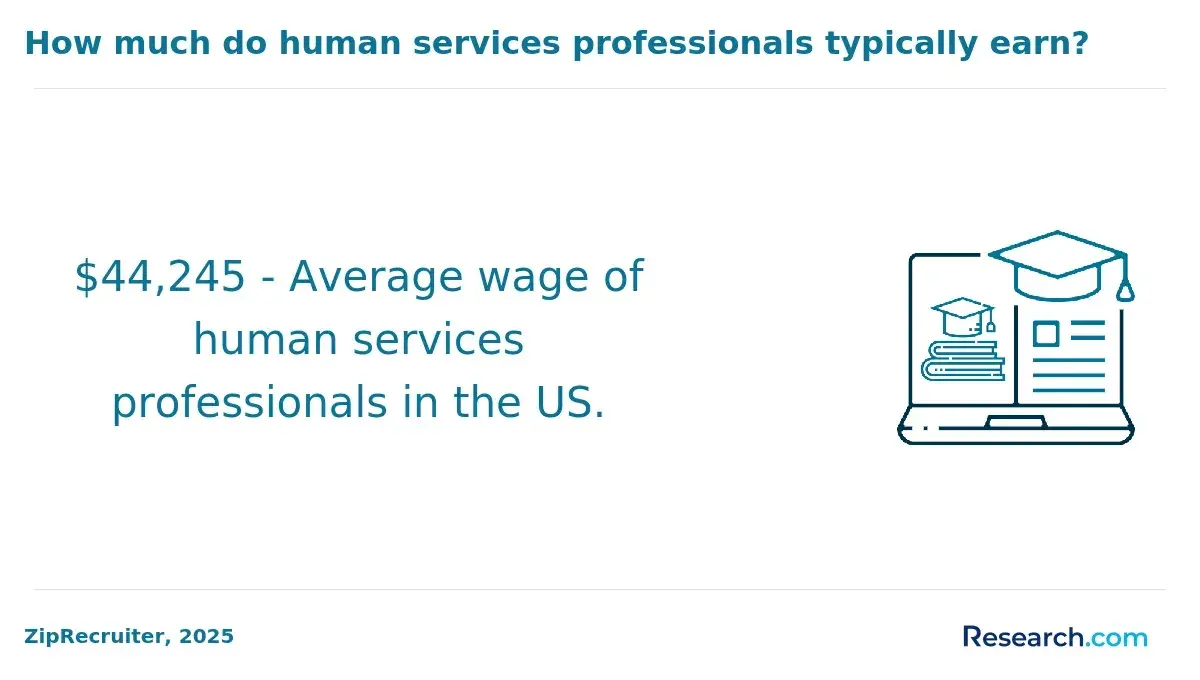
Specialty matters. In 2024, licensed social workers were reported at an average of $66,200 annually, while healthcare social workers made around $65,400. Child, family, and school social workers were reported at $50,300, and mental health and substance abuse social workers at $50,250. These figures should be treated as broad comparisons rather than guaranteed outcomes, because actual pay depends on state, employer, licensure, workload, and benefits.
What field of social work pays the most?
Some of the highest-paying social work settings are not always the most obvious. According to U.S. Bureau of Labor Statistics data cited for 2025, the strongest-paying fields include federal government roles, educational support services, administrative services, insurance carriers, and hospitals. These jobs may require advanced experience, specialized knowledge, strong documentation skills, or graduate education.
- Federal Government. Social workers in federal settings may contribute to policy, programs, public benefits, veterans services, public health initiatives, or services for vulnerable populations. Reported annual pay can reach $86,030.
- School and Educational Support Services. A school social worker wage is listed at $80,530 annually. Work may involve accessibility, intervention programs, student support, crisis response, and inclusive school policies.
- Office Administration Services. Social work administrators need policy knowledge, budget awareness, program oversight ability, and strong relationships with community and government partners. The cited annual figure is $77,140.
- Insurance Carriers. Social workers in insurance settings can support care coordination, coverage review, and client advocacy related to health needs. The reported annual salary is $71,050.
- Medical and Surgical Hospitals. Hospital and clinical roles can involve assessment, discharge planning, mental health support, treatment coordination, and therapy-related services. The cited clinical social worker or counselor salary figure is $70,890 per year. If this setting interests you, compare online clinical and medical social work degree options before choosing a program.
How much do similar helping professions make?
Social work overlaps with counseling, therapy, psychology, and human services, but these careers are not interchangeable. They can differ in scope of practice, licensure requirements, diagnosis authority, treatment model, education length, and salary. If you are still comparing options, review the major differences among counseling, therapy, and psychology careers before choosing a degree.
Reported annual wages include about $49,770 for counselors, $71,860 for therapists, and $99,560 for psychologists. The table below uses the May 2025 figures cited in the original salary comparison.
| Occupation | Average Yearly Wage Listed for May 2025 |
| Substance Abuse, Behavioral Disorder, and Mental Health Counselors | $59,190 |
| Social Workers | $61,330 |
| Marriage and Family Therapists | $63,780 |
| Education, Guidance, and Career Counselors and Advisors | $65,140 |
| Therapists | $71,860 |
| Clinical and Counseling Psychologists | $102,740 |
| Industrial-Organizational Psychologists | $144,610 |
| Source cited: U.S. Bureau of Labor Statistics, 2025 |
Top-Paying Locations for Social Workers
Location can change a social worker’s paycheck substantially. However, a high salary state is not automatically the best financial choice. Compare salary with housing, commuting, student loan obligations, supervision availability, state licensure rules, union protections, and public-sector benefits.
Top 5 highest-paying states
For the general social worker category, BLS data cited for 2025 identify Rhode Island ($84,430), Washington ($82,220), Oklahoma ($80,410), the District of Columbia ($79,520), and Kansas ($78,610) as the highest-paying locations.
For child, family, and school social workers, the strongest state-level figures listed are New Jersey ($75,590), Connecticut ($71,970), New York ($70,690), the District of Columbia ($69,980), and Maryland ($66,850).
For healthcare social workers, the highest-paying states cited are California ($88,380), Oregon ($77,150), Rhode Island ($74,110), Connecticut ($73,720), and Hawaii ($72,660).
For mental health and substance abuse social workers, the leading states listed are New Jersey ($92,850), California ($81,720), New York ($79,700), Connecticut ($79,080), and the District of Columbia $72,990).
Top 5 highest-paying metropolitan areas
For social workers overall, the top-paying metro areas cited are Santa Rosa, CA ($88,680), New Haven, CT ($86,060), Seattle-Tacoma-Bellevue, WA ($84,950), Lebanon, PA ($83,930), and Providence-Warwick, RI-MA ($83,130).
For child, family, and school social workers, the strongest metro salaries listed are San Jose-Sunnyvale-Santa Clara, CA ($80,390), New York-Newark-Jersey City, NY-NJ-PA ($76,200), Bridgeport-Stamford-Norwalk, CT ($75,540), Trenton, NJ ($74,560), and Santa Cruz-Watsonville, CA ($73,910).
Healthcare social workers have especially high cited wages in California metros, including San Jose-Sunnyvale-Santa Clara ($109,530), San Francisco-Oakland-Hayward ($104,200), Vallejo-Fairfield ($103,180), Santa Rosa ($100,130), and Yuba City ($99,910).
For mental health and substance abuse social workers, the cited high-paying metro areas are also heavily concentrated in California. Compared with the earnings of addiction counselors, these social work roles can show stronger wage figures in Napa ($105,020), Vallejo-Fairfield ($98,390), Madera ($95,060), San Jose-Sunnyvale-Santa Clara ($93,480), and Hanford-Corcoran ($92,810).
Average Social Worker Salary by U.S. State and Territory
The state table below compares cited annual salary figures across four categories: social workers overall, child, family, and school social workers, healthcare social workers, and mental health and substance abuse social workers. Use it as a starting point, then verify current state licensure rules, local hiring demand, and living costs before relocating or choosing a program.
| State or Territory | Social Workers Overall | Child, Family, and School Roles | Healthcare Roles | Mental Health and Substance Abuse Roles |
| Alabama | no data | $44,670 | $51,540 | $36,810 |
| Alaska | $61,090 | $63,370 | $68,430 | $57,640 |
| Arizona | $62,410 | $44,760 | $63,130 | $45,420 |
| Arkansas | $53,460 | $42,160 | $56,630 | $45,380 |
| California | $69,530 | $66,340 | $88,380 | $81,720 |
| Colorado | $55,000 | $58,930 | $58,310 | $56,460 |
| Connecticut | $73,390 | $71,970 | $73,720 | $79,080 |
| Delaware | $66,600 | $45,950 | $58,100 | $52,770 |
| District of Columbia | $79,520 | $69,980 | no data | $72,990 |
| Florida | $55,990 | $49,910 | $55,270 | $47,520 |
| Georgia | $67,100 | $47,790 | $57,640 | $53,570 |
| Guam | no data | $39,240 | $48,600 | no data |
| Hawaii | $76,280 | $63,880 | $72,660 | $65,270 |
| Idaho | $56,150 | $53,700 | $61,610 | $50,030 |
| Illinois | $65,630 | $60,740 | $59,030 | $54,870 |
| Indiana | $70,840 | $47,940 | $57,150 | $47,770 |
| Iowa | $67,710 | $51,460 | $57,920 | $49,850 |
| Kansas | $78,610 | $50,080 | $60,340 | $50,730 |
| Kentucky | $64,530 | $45,710 | $56,280 | $45,080 |
| Louisiana | $62,460 | $50,600 | $59,830 | $46,580 |
| Maine | $58,000 | $61,760 | $60,430 | $68,900 |
| Maryland | $68,000 | $66,850 | $58,980 | $55,880 |
| Massachusetts | $74,220 | $57,370 | $65,440 | $56,860 |
| Michigan | $64,200 | $53,760 | $59,390 | $53,110 |
| Minnesota | $67,960 | $64,490 | $64,080 | $67,230 |
| Mississippi | $62,300 | $38,650 | $54,760 | $43,360 |
| Missouri | $52,700 | $41,240 | $51,580 | $43,980 |
| Montana | $51,230 | $43,360 | $57,320 | $41,790 |
| Nebraska | $63,140 | $44,200 | $54,340 | $39,750 |
| Nevada | $71,820 | $59,160 | $69,940 | $54,760 |
| New Hampshire | no data | $56,520 | $71,200 | $65,760 |
| New Jersey | $67,030 | $75,590 | $71,660 | $92,850 |
| New Mexico | $62,410 | $52,860 | $63,180 | $52,390 |
| New York | $78,540 | $70,690 | $60,440 | $79,700 |
| North Carolina | $63,770 | $50,420 | $63,110 | $53,940 |
| North Dakota | $72,280 | $60,880 | $58,890 | $56,320 |
| Ohio | $57,680 | $48,780 | $59,720 | $49,020 |
| Oklahoma | $80,410 | $51,070 | $53,020 | $40,360 |
| Oregon | $59,600 | $59,390 | $77,150 | $54,370 |
| Pennsylvania | $73,800 | $52,230 | $62,410 | $46,360 |
| Puerto Rico | $42,840 | $35,780 | $33,730 | $27,660 |
| Rhode Island | $84,430 | $66,460 | $74,110 | $61,460 |
| South Carolina | $75,610 | $44,890 | $59,270 | $46,990 |
| South Dakota | $77,230 | $46,710 | $48,950 | $44,890 |
| Tennessee | $54,460 | $48,940 | $53,320 | $42,070 |
| Texas | $68,500 | $49,810 | $62,500 | $44,100 |
| Utah | $58,590 | $56,140 | $68,050 | $68,130 |
| Vermont | $64,760 | $54,820 | $65,290 | $56,080 |
| Virginia | $73,590 | $59,530 | $57,570 | $54,660 |
| Washington | $82,220 | $62,800 | $71,270 | $58,250 |
| West Virginia | $70,670 | $41,110 | $56,940 | $36,450 |
| Wisconsin | $55,320 | $50,950 | $61,110 | $52,860 |
| Wyoming | no data | $47,640 | $60,780 | $54,560 |
| Source cited: U.S. Bureau of Labor Statistics, 2024 |
Social Worker Salary and Jobs by Educational Attainment
Education affects both access and earnings in social work. A bachelor’s degree can prepare graduates for entry-level direct service, case support, community outreach, and human services roles. A master’s degree can open the door to advanced practice and licensure pathways. A doctorate is usually most relevant for leadership, teaching, research, policy, or advanced program design.
Social work education has also expanded over time. A cited CSWE report notes that in 2025, student enrollment in bachelor’s social work programs grew by 8.2%. Master’s program admissions increased by 27.4% in the same period, while students in practice doctorate programs in social work surged by 45.3% in 2024 alone.
Before enrolling, students should ask whether a program is properly accredited for their intended licensure path, how field placements are arranged, whether online students receive placement support, and whether graduates qualify for licensure in the state where they plan to practice.
Bachelor’s degree pathways
A bachelor’s degree is often the starting point for social work and human services careers. Depending on the state and employer, graduates may work in supportive, outreach, administrative, or community-facing roles while building experience.
- Social and Human Service Assistants. These professionals support licensed social workers by helping with client outreach, records, service coordination, and treatment plan logistics. The cited average wage is $41,600 (BLS, 2025).
- Community Health Workers. These workers connect communities with health education, outreach, prevention resources, counseling referrals, and support services. The cited annual wage is $49,900 (BLS, 2025).
- Social and Community Service Managers. These managers plan community programs, coordinate staff, work with stakeholders, and prepare budgets. The cited yearly pay is around $79,310 (BLS, 2025).
Master’s degree pathways
An MSW is often the key academic credential for advanced social work practice and many licensure paths. It can also improve eligibility for specialized and supervisory roles, which is why many students compare MSW salary outcomes by state before applying. Some schools also offer 1 year MSW programs, especially for students who already hold qualifying social work preparation.
Common roles connected with graduate-level preparation include the following:
- Rehabilitation Counselors. Rehabilitation counselors support people with disabilities through counseling, treatment planning, service coordination, and connections to healthcare resources. The cited annual wage is around $46,020 (BLS, 2025).
- Geriatric Social Workers. These professionals support older adults with isolation, counseling needs, care planning, health monitoring, and family coordination. The cited annual salary is about $52,588 (Salary.com, 2025).
- School Social Workers. School-based social workers address student needs that can affect learning, including family stressors, mental health, attendance, school climate, and issues reflected in sleep and academic performance statistics. The cited annual salary is $56,680 (BLS, 2025).
If you are deciding between a graduate degree and clinical licensure, start with this explanation of the MSW and LCSW difference.
Doctorate degree pathways
A doctorate in social work is not necessary for every social work career. It is most useful for professionals aiming for executive leadership, higher education, advanced policy work, research, or large-scale program evaluation. Students who need flexibility can compare online DSW programs before committing to a doctoral path.
- NGO Executive Directors. Executive directors guide nonprofit strategy, manage staff, oversee programs, maintain legal and regulatory compliance, and build relationships with funders and partners. The cited salary is $75,540.
- Postsecondary Education Professors. College and university instructors teach social work courses, evaluate students, conduct research, and advise learners. The cited annual figure is as much as $91,760 yearly (BLS, 2025).
- Public Policy Managers. These professionals work with public agencies, organizations, and stakeholders to shape policy and programs affecting social services and vulnerable populations. The cited yearly salary is $141,660 (Salary.com, 2025).
Comparing Traditional and Online Pathways to Advance in Social Work
Social work students now have more program formats to compare, especially at the MSW level. The right choice depends on schedule, cost, learning style, field placement support, licensure goals, and whether the student needs to keep working while enrolled.
Campus programs can be a strong fit for students who want in-person faculty access, local networking, a structured schedule, and direct use of campus services such as libraries, career offices, and student organizations. They may also make sense when the school has strong relationships with local hospitals, schools, public agencies, or nonprofits.
Online programs can work well for students who need flexibility or cannot relocate. Many programs include asynchronous coursework, allowing students to complete academic requirements around work or family obligations. However, field placement requirements still matter. Before choosing an online MSW, ask who arranges placements, whether your state accepts the program for licensure, and how much support online students receive. Students looking for lower-cost options can compare the most affordable online master’s in social work programs.
| Program Format | Best For | Watch Out For |
| Campus-based MSW | Students who value face-to-face instruction, local networking, and structured schedules | Relocation, commuting, fixed class times, and possibly higher living costs |
| Online MSW | Working adults, caregivers, rural students, and learners who need schedule flexibility | Field placement logistics, state licensure fit, technology requirements, and self-discipline |
| Hybrid MSW | Students who want some in-person connection without full-time campus attendance | Travel requirements, weekend intensives, and limited scheduling options |
What opportunities are available for social workers to pursue higher education and specialized training?
Social workers can deepen their practice through MSW programs, clinical training, school social work preparation, healthcare specialization, substance abuse training, gerontology, policy study, and human services education. Some professionals also broaden their background through an online human services degree, especially if they work in community programs, nonprofit administration, or service coordination.
Specialized training should be chosen with a clear goal. If the aim is clinical practice, verify that the program supports licensure. If the goal is school social work, check state education department requirements. If the goal is leadership, compare coursework in budgeting, supervision, program evaluation, grant writing, and policy.
What are the career implications of choosing an MSW versus an LCSW?
An MSW is a graduate degree. An LCSW is a professional license earned after meeting state requirements, which typically include graduate education, supervised clinical experience, and an exam. The MSW can qualify graduates for many advanced social work roles, while the LCSW generally expands access to clinical responsibilities such as therapy, diagnosis-related work where permitted, treatment planning, and independent practice in many jurisdictions.
The decision is not really MSW or LCSW for many students; it is often MSW first, then LCSW if clinical practice is the goal. For a more detailed side-by-side explanation, review this guide to LCSW vs MSW.
What additional benefits and perks can social workers expect beyond salary?
Salary is only one part of compensation. Social workers may receive benefits that materially change the value of a job offer, especially in government, healthcare, school, and large nonprofit settings.
- Health coverage. Many employers provide medical, dental, and vision insurance, and some include employee assistance or mental health support.
- Retirement benefits. Public-sector and larger institutional employers may offer pension access, retirement plans, or employer matching.
- Paid leave and flexible scheduling. Some roles include paid time off, remote documentation days, flexible hours, or hybrid work arrangements, although crisis and direct service roles may have less flexibility.
- Training support. Employers may pay for continuing education, license renewal, supervision, workshops, conferences, or specialty certifications.
- Loan or public service advantages. Some social workers in qualifying public or nonprofit jobs may explore loan-related options, but eligibility rules must be verified carefully.
When comparing offers, ask for the full compensation package rather than focusing only on the base salary. A slightly lower salary with strong health insurance, paid supervision, retirement benefits, and manageable caseloads may be more valuable than a higher salary with weak support.
How is technology transforming modern social work practice?
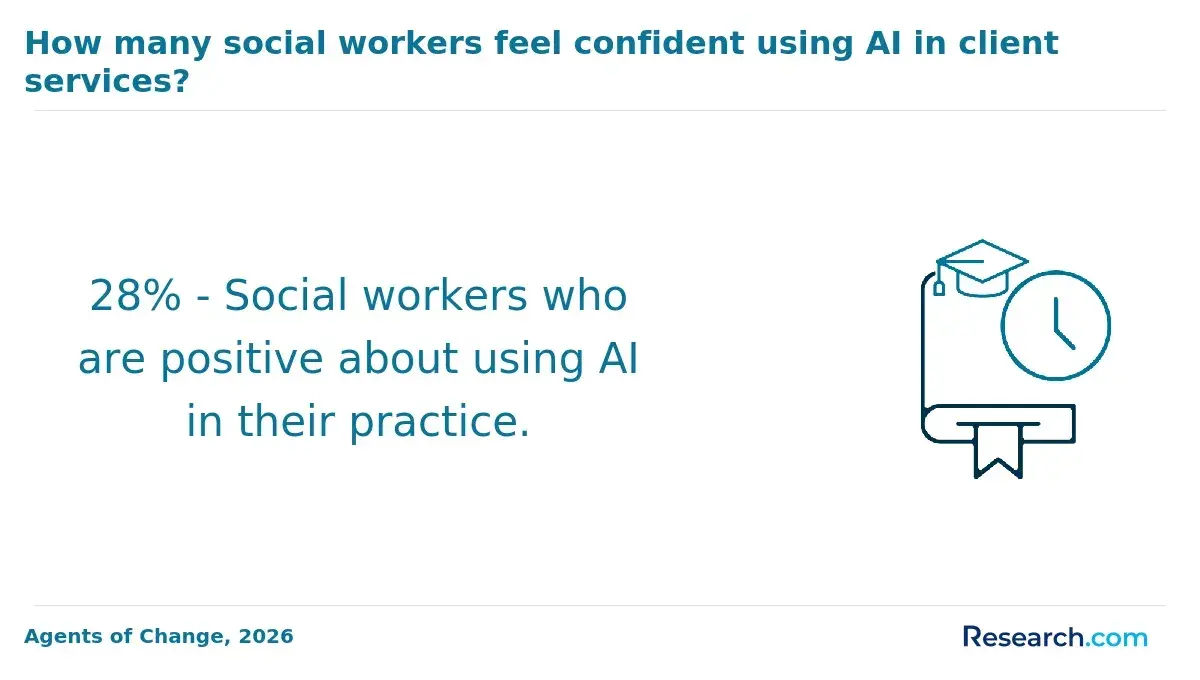
Technology is changing how social workers document services, communicate with clients, coordinate care, and deliver support. Telehealth, remote consultations, virtual groups, digital case management platforms, and data dashboards can improve access and efficiency, especially for clients in underserved areas. At the same time, they raise important concerns about privacy, informed consent, digital access, documentation quality, and ethical boundaries.
Social workers who want to stay competitive should build comfort with electronic records, telebehavioral health tools, secure communication, data-informed decision-making, and online client engagement. Those comparing graduate pathways can explore how technology and advanced practice skills appear across MSW career options.
Is pursuing a doctorate in social work beneficial for career advancement?
A doctorate can be valuable when it supports a specific career objective: executive leadership, university teaching, policy influence, research, advanced clinical leadership, or complex program evaluation. It is less likely to be worth the cost and time if the only goal is a modest salary increase in direct practice.
Before applying, compare accreditation, faculty expertise, dissertation or capstone expectations, residency requirements, tuition, employer tuition support, and the career outcomes of graduates. If cost is a major concern, review affordable online doctor of social work degree options and ask whether the program’s format fits your professional goals.
Can an Advanced Standing MSW Accelerate Your Career Growth?
Advanced Standing MSW programs are designed for students who already hold a qualifying BSW. Because these students have completed foundational social work coursework, they may be able to move more quickly into advanced graduate study, reducing time in school and potentially lowering total education costs.
This route can make sense for BSW graduates who want licensure eligibility, clinical preparation, or faster access to advanced roles. It may not be ideal for students who need a slower pace, want to change specialties gradually, or need extensive field placement support. Compare curriculum, practicum structure, accreditation, faculty expertise, and licensure alignment before enrolling. A good starting point is this list of top online Advanced Standing MSW programs.
How can networking and mentorship drive career advancement in social work?
Networking and mentorship can help social workers move into better roles, understand licensure strategy, find supervision, learn about specialized practice areas, and identify openings that may not be widely advertised. Strong mentors can also help new professionals avoid burnout, negotiate caseload expectations, and choose continuing education wisely.
Useful networking channels include professional associations, field placement supervisors, alumni groups, conferences, agency coalitions, LinkedIn, local nonprofit networks, and interdisciplinary teams. Students interested in broader service roles can also explore jobs in human services to understand adjacent career options.
What are the state-specific requirements for social work licensure?
Social work licensure is regulated by state boards, so requirements can differ by jurisdiction. Common requirements include an accredited degree, supervised experience, licensing exams, background checks, continuing education, and renewal fees. Clinical practice requirements are especially state-specific, and an online program that works for one state may not automatically meet requirements in another.
Before selecting a degree, ask the school to confirm whether the program is designed to meet licensure requirements in your state. Also check the state board directly. Students comparing related helping professions can use this state-focused resource on counseling licensure by state as a reminder that licensing rules vary widely across professions and jurisdictions.
Is social work a growing profession?
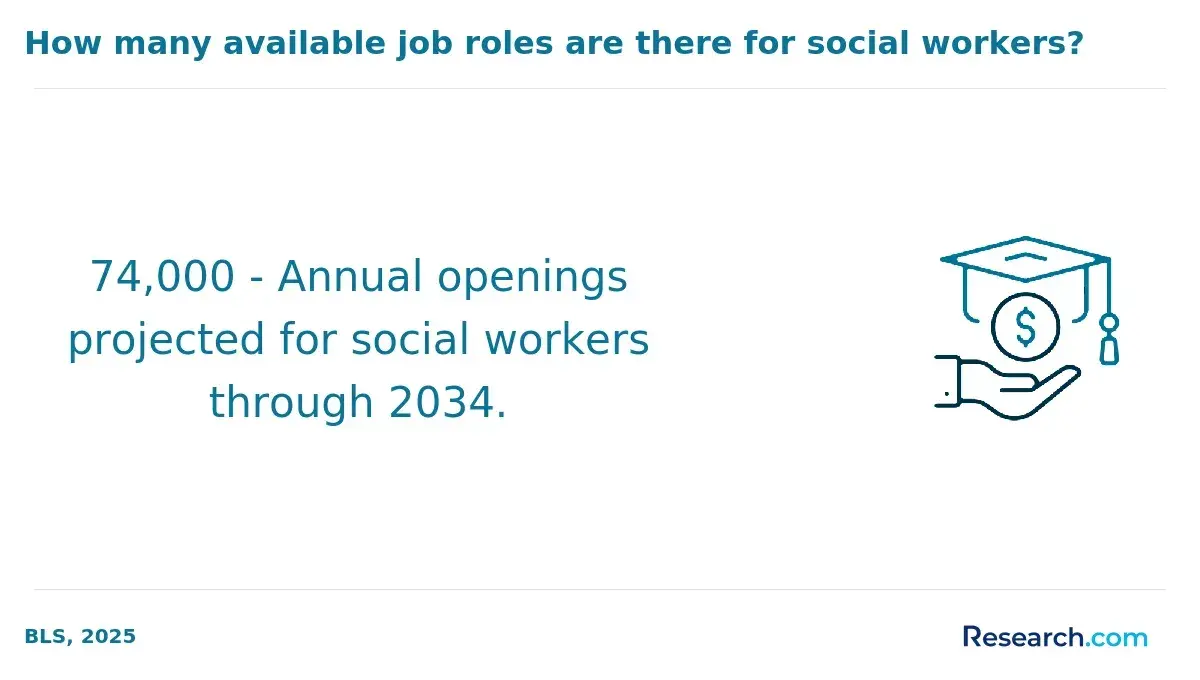
Salary is important, but job outlook should also shape your decision. Overall employment for social workers from 2024 to 2034 is projected to grow by 12%, adding about 105,000 new jobs over the decade. This indicates growth that is much faster than the average for all jobs.
Demand is supported by ongoing needs in mental health, healthcare, aging services, schools, substance abuse treatment, family services, and community support. The COVID-19 pandemic also increased public awareness of mental health, isolation, grief, and service access gaps, all of which connect to social work practice.
How can social workers enhance their careers with professional development and certifications?
Professional development can increase a social worker’s value, but it should be chosen strategically. The best training is tied to a specific goal: clinical licensure, school practice, healthcare specialization, supervision, leadership, trauma-informed care, substance abuse treatment, family therapy, gerontology, or policy work.
Certifications may require education, supervised experience, documented practice hours, exams, or continuing education. They can strengthen a resume, but they do not replace state licensure when licensure is required. For clinical practice, students should look for programs that support licensure requirements and supervised practice preparation. One option to compare is accredited online LCSW-oriented programs.
Continuing education in mental health, substance use, family systems, ethics, documentation, telehealth, crisis intervention, and evidence-based practice can also help social workers improve client outcomes and remain current as employer expectations change.
Are accelerated MSW programs a smart investment for rapid career advancement?
Accelerated MSW programs can be a smart choice for students who are academically prepared, have a clear career goal, and can handle an intensive schedule. They may shorten the path to advanced credentials and reduce time away from higher-level roles. However, faster does not always mean better.
Before enrolling, verify accreditation, licensure alignment, field placement support, weekly time expectations, tuition, graduation requirements, and whether the pace is realistic with work and family obligations. Students comparing fast-track options can review accelerated MSW programs and evaluate whether the shorter timeline justifies the workload.
Exploring Cost-Effective Options to Kickstart Your Social Work Career
Education cost can strongly affect the financial return of a social work career. Because social work salaries vary by specialty and state, students should avoid overborrowing without a clear licensure and salary plan. Lower-cost pathways can make the profession more financially sustainable.
One option is to compare affordable online BSW programs, especially for students who need flexibility. A BSW can provide training in ethics, human behavior, social welfare policy, research basics, diversity, and field practice.
Students can also reduce cost by using community college transfer pathways, applying for scholarships and grants, checking employer tuition benefits, comparing public in-state tuition, and asking how many credits will transfer before enrolling. Do not choose only by sticker price; field placement quality, accreditation, licensure fit, and graduation support matter as well.
Common Mistakes to Avoid When Planning a Social Work Career
- Choosing a program without checking accreditation. Accreditation can affect licensure eligibility, graduate school admission, and employer recognition.
- Assuming every online program meets your state’s licensure rules. Always verify with the state board and the school before enrolling.
- Comparing salaries without considering cost of living. A higher wage in a high-cost metro may not improve take-home financial comfort.
- Ignoring field placement support. Field education is central to social work preparation, and weak placement support can delay progress.
- Focusing only on salary. Caseload size, supervision quality, safety, benefits, flexibility, and burnout risk matter.
- Assuming an MSW automatically equals clinical independence. Clinical practice usually requires supervised hours, exams, and state licensure after graduation.
- Overlooking public-sector benefits. Government, school, hospital, and nonprofit jobs may offer retirement, paid leave, and training support that change the real value of compensation.
Stay Informed about Social Worker Salary Trends and Make Wise Career Decisions
Social work can be a strong career for people who want to serve individuals and communities, but it requires careful planning. Salary outcomes are shaped by degree level, licensure, specialization, state, employer, and experience. Students should compare programs not only by tuition, but by accreditation, licensure alignment, field placement quality, completion time, and realistic salary expectations.
Working social workers can improve career options by pursuing relevant credentials, documenting outcomes, developing specialized expertise, seeking supervision or mentorship, and comparing employers based on total compensation rather than base salary alone. As demand for social work services grows, informed professionals are better positioned to advocate for fair pay, sustainable caseloads, and high-quality client care.
Key Insights
- Social worker salaries vary widely. Cited figures include a 2024 median annual wage of $49,870, an estimate of about $33.10 per hour or roughly $68,930 per year, and high-end earnings above $89,000 annually or around $100,200 in some wage tables.
- Location can strongly affect pay. Rhode Island, Washington, Oklahoma, the District of Columbia, and Kansas are listed among the highest-paying locations for social workers overall, while some California metros show especially high healthcare and mental health social work wages.
- Specialization matters. Federal government, school and educational support services, office administration services, insurance carriers, and medical and surgical hospitals are among the higher-paying settings cited.
- Education changes access to roles. A bachelor’s degree can support entry-level and community-based work; an MSW can support advanced practice and licensure pathways; a doctorate is most useful for leadership, teaching, policy, and research goals.
- MSW and LCSW are different milestones. The MSW is a degree, while the LCSW is a license that typically requires additional supervised clinical experience and exams after graduate education.
- Job growth is favorable. Employment for social workers from 2024 to 2034 is projected to grow by 12%, with about 105,000 new jobs expected over the decade.
- Benefits can change the real value of a job. Health insurance, retirement plans, paid leave, supervision, continuing education support, and manageable caseloads should be weighed alongside salary.
- Program choice should be practical. Before enrolling, verify accreditation, state licensure fit, field placement support, tuition, transfer credits, and whether the expected salary can justify the cost.
References:
- Glassdoor. (2024, September 15). How much does a social worker make? Social Worker Salaries United States. https://www.glassdoor.com/Salaries/social-worker-salary-SRCH_KO0,13.ht
- Payscale. (2024). U.S. median salary increased to $55,640 in 2024. Average executive director, non-profit organization salary. https://www.payscale.com/research/US/Job=Executive_Director%2C_Non-Profit_Organization/Salary
- Salary.com. (2025, May 1). Geriatric social worker salary in the United States. https://www.salary.com/research/salary/posting/geriatric-social-worker-salary
- Salary.com. (2025, May 1). Public policy manager salary in the United States. https://www.salary.com/research/salary/alternate/public-policy-manager-salary
- U.S. Bureau of Labor Statistics. (2024). Social workers. Occupational Outlook Handbook. https://www.bls.gov/ooh/community-and-social-service/social-workers.htm
- U.S. Bureau of Labor Statistics. (2024a, April 25). Occupational Employment and Wage Statistics. https://www.bls.gov/oes/current/oes211029.htm
- U.S. Bureau of Labor Statistics. (2025, April 25). Occupational employment and wages, May 2024 Counselors, all other Occupational Employment and Wage Statistics. https://www.bls.gov/oes/current/oes211019.htm
- U.S. Bureau of Labor Statistics. (2025, April 25). Occupational employment and wages, May 2024 Therapists, all other. Occupational Employment and Wage Statistics. https://www.bls.gov/oes/current/oes291129.htm
- U.S. Bureau of Labor Statistics. (2025 April 25). Occupational employment and wages, May 2024 Psychologists, all other. Occupational Employment and Wage Statistics. https://www.bls.gov/oes/current/oes193039.htm
- U.S. Bureau of Labor Statistics. (2025, April 25). Occupational employment and wages, May 2024 Child, family, and school social workers. Occupational Employment and Wage Statistics. https://www.bls.gov/oes/current/oes211021.htm
- U.S. Bureau of Labor Statistics. (2025, April 25). Occupational employment and wages, May 2024 Healthcare social workers. Occupational Employment and Wage Statistics. https://www.bls.gov/oes/current/oes211022.htm
- U.S. Bureau of Labor Statistics. (2025, April 25). Occupational employment and wages, May 2024 Mental health and substance abuse social workers. Occupational Employment and Wage Statistics. https://www.bls.gov/oes/current/oes211023.htm
- U.S. Bureau of Labor Statistics. (2025, April 25). Occupational employment and wages, May 2024 Social and human service assistants. Occupational Employment and Wage Statistics. https://www.bls.gov/oes/current/oes211093.htm
- U.S. Bureau of Labor Statistics. (2025, April 25). Occupational employment and wages, May 2024 Community health workers. Occupational Employment and Wage Statistics. https://www.bls.gov/oes/current/oes211094.htm
- U.S. Bureau of Labor Statistics. (2025, April 25). Occupational employment and wages, May 2024 Social and community service managers. Occupational Employment and Wage Statistics. https://www.bls.gov/oes/current/oes119151.htm
- U.S. Bureau of Labor Statistics. (2025, April 25). Occupational employment and wages, May 2024 Rehabilitation counselors. Occupational Employment and Wage Statistics. https://www.bls.gov/oes/current/oes211015.htm
- U.S. Bureau of Labor Statistics. (2024l, April 25). Occupational employment and wages, Postsecondary teachers, all other Occupational Employment and Wage Statistics. https://www.bls.gov/oes/current/oes251199.htm
- World Health Organization. (2024, June 16). World mental health report: Transforming mental health for all. https://www.who.int/publications/i/item/9789240049338
Other Things You Should Know About How Much a Social Worker Makes
Yes. Licensed clinical social workers usually earn more because they qualify for independent practice and advanced roles. The Association of Social Work Boards requires an MSW, supervised experience, and a passing score on the clinical licensing exam, which helps unlock higher-paying positions in healthcare, mental health, and private practice.
The highest-paying fields for social workers are in the federal government ($86,030 annually), school and educational support services ($80,530 annually), and office administration services ($77,140 annually).
Entry-level social workers earn around $49,353 per year. Mid-level social workers with five to ten years of experience earn about $62,469 annually, while senior-level social workers with over a decade of experience can make up to $78,610 or more per year.
The top-paying states for social workers are Rhode Island ($84,430), Washington ($82,220), Oklahoma ($80,410), the District of Columbia ($79,520), and Kansas ($78,610).
In 2027, the starting salary for entry-level social workers in the United States averages around $45,000 to $50,000 annually, depending on the region and specific employer. This reflects typical compensation for those holding a Bachelor of Social Work degree.
In 2027, educational attainment significantly impacts social worker salaries. Those with a master's degree typically earn more than those with a bachelor's degree. Advanced education can open doors to specialized roles and higher-paying positions within the field. Additionally, certain certifications can further enhance earnings potential.
Yes, social workers in urban areas often earn higher salaries than those in rural areas due to increased living costs. For instance, a 2027 study could show that urban social workers earn up to 15% more than their rural counterparts and highlights geographic disparities impacting income.





