
2027 Best Careers to Pursue with a Human Services Master’s Degree

Co-Founder and Chief Data Scientist
A master’s in human services is for people who want to move beyond entry-level helping roles into program leadership, counseling-adjacent work, community services, healthcare administration, education support, advocacy, or nonprofit management. The degree can be valuable, but it is not the same as a Master of Social Work, a counseling degree, or a psychology doctorate. That distinction matters because licensure rules, supervised experience requirements, salaries, and job options can vary sharply by career goal and state.
This guide explains what you can realistically do with a human services master’s degree, which careers offer the strongest salary and growth potential, when a different graduate degree may be a better fit, and how to compare programs before enrolling. It uses cited labor market data from the US Bureau of Labor Statistics and other sources already referenced in this article, including 2023 wage data and 2023 to 2033 employment projections.
Quick answer: Is a master’s in human services worth it?
A master’s in human services can be worth it if your goal is to supervise programs, manage community services, work in healthcare or nonprofit administration, support counseling-related services, or build expertise in advocacy and case coordination. It is less ideal if your primary goal is to become a licensed clinical social worker, licensed psychologist, or independently licensed therapist without checking whether the curriculum meets your state’s requirements.
The strongest fit is usually for professionals who want broader leadership, client-service, and systems-level training rather than a single clinical licensure pathway. Before enrolling, compare accreditation, fieldwork opportunities, licensure alignment, total cost, transfer policies, and the job outcomes tied to your intended role.
What are the benefits of earning a human services master’s degree?
- Broader access to leadership roles: Graduate study can help prepare professionals for supervisory, administrative, and policy-related positions in healthcare, education, nonprofit organizations, social services, and community programs.
- Stronger program design and evaluation skills: Students often learn how to assess community needs, build services for vulnerable populations, apply ethical standards, and evaluate whether programs are producing useful outcomes.
- More career flexibility: The degree can support several paths, including social and community service management, healthcare services management, rehabilitation support, education advising, health education, and some counseling-related roles depending on state rules.
- Deeper understanding of social systems: Human services programs typically examine how families, institutions, policies, health systems, schools, and community organizations interact, which is useful for professionals who want to solve problems at both the individual and organizational levels.
- What are the best human services master's degree careers to pursue for 2027?
- Can you make a good living with a human services degree?
- Which industries hire professionals with a human services degree?
- What skills does a human services master’s degree equip students with?
- Can I become a licensed counselor with a human services master’s?
- Can I become a social worker with a human services master’s degree?
- What jobs in education are available with a master’s in human services?
- What are the admission requirements for a human services master’s program?
- What professional organizations offer certifications for human services professionals?
- How important is hands-on experience for career advancement in human services?
- How does a human services master’s differ from a social work degree?
- Can an accelerated psychology degree complement a human services master’s program?
- How are emerging trends reshaping human services education?
- What is the long-term return on investment for a human services master’s degree?
- How can I compare program affordability across related fields?
- Could combining human services with clinical psychology offer a competitive edge?
- What is the demand for human services master's degree careers?
- What specialized certifications can elevate a human services career?
- What are the benefits of pursuing an online MFT program?
- What factors should I consider when choosing a human services master’s program?
- What common mistakes should I avoid before enrolling?
What are the best human services master's degree careers to pursue for 2027?
The best career path depends on whether you want to manage systems, work directly with clients, support students, coordinate rehabilitation services, or move into healthcare operations. A master’s in human services is especially useful when the role requires leadership, program planning, staff supervision, ethical decision-making, and the ability to work across agencies.
| Career | Best for | Typical work focus | Important caution |
| Medical and Health Services Manager | Professionals interested in healthcare leadership and operations | Managing departments, budgets, staffing, compliance, quality improvement, and patient-service systems | Some employers may prefer healthcare administration, public health, business, or clinical experience in addition to human services training. |
| Social and Community Service Manager | People who want to lead nonprofit, government, or community programs | Supervising staff, planning services, managing grants or budgets, measuring outcomes, and coordinating community resources | Management experience and fieldwork can matter as much as the degree title. |
| School and Career Counselor and Advisor | Professionals who want to support students or career changers | Academic planning, career exploration, student support, referrals, and skill-building | School counseling roles may require state-specific credentials beyond a human services degree. |
| Substance Abuse, Behavioral Disorder, and Mental Health Counselor | Students aiming for direct support roles in addiction or behavioral health settings | Assessment, treatment planning support, counseling services, referrals, recovery planning, and documentation | Independent practice and clinical counseling titles usually require state-approved coursework, exams, and supervised hours. |
| Rehabilitation Counselor | Professionals interested in disability support, employment services, and independent living | Helping clients identify goals, access resources, develop work readiness, and navigate barriers | Some rehabilitation roles may require specialized credentials or state-specific qualifications. |
1. Medical and Health Services Manager
Medical and health services managers coordinate the business and administrative side of healthcare delivery. Their work may include staffing plans, budget oversight, compliance monitoring, process improvement, patient-service coordination, and communication between clinical teams and organizational leadership. A human services master’s degree can be relevant when paired with healthcare experience, especially for roles focused on patient advocacy, community health programs, long-term care, behavioral health operations, or service coordination.
2. Social and Community Service Manager
Social and community service managers oversee programs that serve families, children, older adults, people with disabilities, people facing housing insecurity, individuals in recovery, or other community groups. They may supervise frontline workers, write reports, manage funding requirements, analyze community needs, and track whether services are meeting program goals. This is one of the most direct fits for a human services graduate degree because the role combines leadership with mission-driven service delivery.
3. School and Career Counselor and Advisor
School and career counselors and advisors help people make academic, personal, and employment-related decisions. In schools and colleges, they may support course planning, career exploration, student success initiatives, and referrals to additional resources. In workforce or community settings, they may assist with job readiness, resumes, interviews, career transitions, and training options. Students considering this route should confirm whether a human services program meets the credentialing requirements for school-based roles in their state.
4. Substance Abuse, Behavioral Disorder, and Mental Health Counselor
Substance abuse, behavioral disorder, and mental health counselors support clients dealing with addiction, emotional distress, behavioral concerns, or recovery-related challenges. Their responsibilities may include intake assessment, care planning, group education, crisis referral, documentation, and collaboration with healthcare or social service providers. A counseling-focused human services program may help, but licensure requirements are not uniform across states.
Some professionals come to behavioral health from adjacent clinical fields. For example, registered nurses who want to work in psychiatric or mental health practice may pursue advanced nursing preparation and can compare options such as the cheapest PMHNP programs online.
5. Rehabilitation Counselor
Rehabilitation counselors help people with physical, emotional, developmental, or mental health disabilities work toward independence, employment, education, and daily living goals. They may assess strengths and barriers, coordinate services, work with employers, connect clients to assistive resources, and provide counseling or support within approved practice limits. Human services training can be useful because rehabilitation work often requires both client-centered communication and knowledge of community systems.
Can you make a good living with a human services degree?
Yes, but earnings depend heavily on role, industry, location, experience, licensure, and whether the job is administrative or clinical. Human services careers tied to healthcare management generally have higher wage potential than many direct-service counseling or rehabilitation roles. The following 2023 median annual wages are from US BLS data cited in 2024:
| Occupation | 2023 median annual wage | What the salary suggests for degree planning |
| Medical and Health Services Manager | $110,680 | Often the strongest wage path, especially for students with healthcare experience or administrative goals. |
| Social and Community Service Manager | $77,030 | A strong fit for nonprofit, public agency, and community program leadership. |
| School and Career Counselor and Advisor | $61,710 | May require additional education or state credentials for certain school-based positions. |
| Substance Abuse, Behavioral Disorder, and Mental Health Counselor | $53,710 | Can be rewarding direct-service work, but licensure status and setting strongly affect opportunities. |
| Rehabilitation Counselor | $44,040 | Often mission-centered work; students should examine employer requirements and advancement paths carefully. |
These figures show why it is important to connect the degree to a specific job target before enrolling. A student aiming for healthcare leadership may evaluate ROI differently than a student pursuing community counseling, rehabilitation services, or school advising. For a broader comparison of adjacent health-related education outcomes, readers may also review information on bachelor's in public health salary.
Healthcare credentials can also change the career equation. Professionals who are already registered nurses or who want advanced clinical provider roles may compare human services pathways with nursing options such as an online post masters FNP program.
Leadership preparation can improve mobility in many human services settings, but a master’s degree is not the only way to build management skills. Students comparing shorter professional development options can also examine what are the best online leadership and management courses.
The chart below visualizes the 2023 median annual wages for selected human services-related professions in the US, based on 2024 US BLS data.
Which industries hire professionals with a human services degree?
Human services graduates work in healthcare organizations, schools, colleges, social service agencies, disability services, government offices, outpatient care centers, residential facilities, and nonprofit organizations. The industries below had the highest employment levels for selected human services-related occupations according to 2024 US BLS data.
Medical and Health Services Manager
- General medical and surgical hospitals: 147,250
- Offices of physicians: 68,370
- Outpatient care centers: 38,150
- Nursing care facilities: 28,100
- Home health care services: 25,750
Social and Community Service Manager
- Individual and family services: 50,930
- Local government, excluding schools and hospitals: 18,270
- State government, excluding schools and hospitals: 12,360
- Residential intellectual and developmental disability, mental health, and substance abuse facilities: 12,170
- Community food and housing, and emergency and other relief services: 10,870
Educational, Guidance, and Career Counselor and Advisor
- Elementary and secondary schools: 162,610
- Colleges, universities, and professional schools: 85,280
- Junior colleges: 25,790
- Vocational rehabilitation services: 8,180
- Individual and family services: 6,640
Substance Abuse, Behavioral Disorder, and Mental Health Counselor
- Outpatient care centers: 85,380
- Individual and family services: 68,510
- Offices of other health practitioners: 63,370
- Residential intellectual and developmental disability, mental health, and substance abuse facilities: 42,230
- Local government, excluding schools and hospitals: 25,860
Rehabilitation Counselor
- Vocational rehabilitation services: 28,660
- State government, excluding schools and hospitals: 13,620
- Individual and family services: 10,530
- Residential intellectual and developmental disability, mental health, and substance abuse facilities: 10,270
- Local government, excluding schools and hospitals: 5,100
Students who want to work with families, children, or relationship dynamics may also consider undergraduate preparation in related areas. For example, a best human development and family studies online degree can provide a foundation for later graduate study in human services, counseling, or family-focused support roles.
The chart below shows industries with high employment levels for selected human services occupations in the US in 2023, using 2024 US BLS data.
What skills does a human services master’s degree equip students with?
A strong human services master’s program should build both people-facing and systems-facing skills. Graduates need to understand clients, but they also need to understand agencies, budgets, ethical rules, policy constraints, data, and service outcomes.
| Skill area | How it is used in human services careers | Why it matters |
| Leadership and supervision | Managing teams, coordinating services, planning programs, and supporting staff development | Many master’s-level roles require responsibility for people, resources, and outcomes. |
| Communication and relationship-building | Listening to clients, interviewing stakeholders, writing reports, facilitating meetings, and explaining resources | Human services work often depends on trust, clarity, and accurate documentation. |
| Critical thinking and problem-solving | Analyzing community needs, identifying service gaps, responding to complex cases, and improving workflows | Clients and communities rarely face one isolated problem; professionals must connect multiple factors. |
| Ethical decision-making | Protecting confidentiality, respecting client autonomy, recognizing boundaries, and applying professional standards | Ethics are central when working with vulnerable populations or sensitive information. |
| Policy and program development | Designing services, evaluating outcomes, interpreting regulations, and advocating for better systems | Effective professionals improve not only individual cases but also the programs that serve communities. |
Some of these competencies overlap with organizational management roles in other people-centered fields. For instance, students comparing leadership-focused pathways may also review the cheapest online master's in human resources. Those considering HR leadership specifically can read more about how long to become an HR manager.
Can I become a licensed counselor with a human services master’s?
Possibly, but you should not assume the degree automatically qualifies you. Counseling licensure is controlled at the state level, and requirements may include specific graduate coursework, supervised clinical hours, a qualifying practicum or internship, and an approved exam such as the National Counselor Examination (NCE) or a state-specific test.
Common counseling license titles include Licensed Professional Counselor (LPC) and Licensed Mental Health Counselor (LMHC), but titles and requirements differ by state. A human services master’s program with a counseling concentration may align with some requirements, while a general human services program may leave gaps that require additional coursework or supervised experience.
| If your goal is... | Check before enrolling | Possible better-fit degree |
| Licensed professional counseling | Whether the program meets your state board’s required counseling coursework and clinical hour rules | A counseling master’s program designed for LPC or LMHC eligibility |
| Substance abuse counseling | State credential levels, supervised experience requirements, and approved education rules | A counseling, addiction counseling, or human services program aligned with state requirements |
| School counseling | State education department requirements for school counselor certification or licensure | A school counseling program approved for the state where you plan to work |
| Licensed psychology practice | Doctoral-level psychology requirements and state licensure rules | Psychology graduate programs designed for licensure; students may also compare What is the easiest psychology degree to get |
Can I become a social worker with a human services master’s degree?
In most cases, a master’s in human services alone is not the standard path to social work licensure in the US. Most states require a Master of Social Work from a program accredited by the Council on Social Work Education (CSWE), especially for licensed clinical social work roles such as Licensed Clinical Social Worker (LCSW).
A human services graduate degree can still be useful in social service agencies, nonprofits, community programs, case coordination, and administrative roles. However, if your goal is to become a licensed social worker, you should compare human services programs with CSWE-accredited options, including MSW programs no GRE required.
The key decision is simple: choose human services if you want broad leadership and community-service training; choose an MSW if your goal is social work licensure and a career built around social work practice.
What jobs in education are available with a master’s in human services?
Human services graduates can work in education when the role involves student support, wellness programming, career development, advising, community outreach, or teaching in related subjects. Licensure or certification rules may apply, especially in K-12 settings.
- Health Education Specialists: These professionals create and deliver programs that help students and communities understand health risks, prevention strategies, wellness behaviors, and available resources. In 2023, health education specialists in the US had a median annual wage of $62,860 (US BLS, 2024).
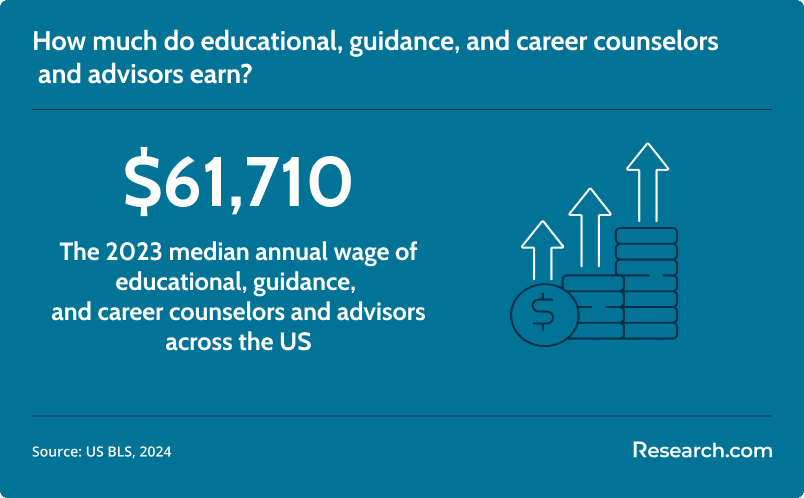
- Educational, Guidance, and Career Counselors and Advisors: These professionals help students and other learners make academic, personal, and career-related decisions. They may work in schools, colleges, career centers, or community organizations. In 2023, educational, guidance, and career counselors and advisors in the US had a median annual wage of $61,710 (US BLS, 2024).
- Postsecondary Teachers: Graduates with advanced expertise may teach human services, counseling-related subjects, or social science courses at colleges and universities, depending on employer requirements. In 2023, postsecondary teachers in the US had a median annual wage of $84,380 (US BLS, 2024).
What are the admission requirements for a human services master’s program?
Most human services master’s programs expect applicants to have a bachelor’s degree from an accredited institution. Programs may prefer applicants with undergraduate coursework or experience in psychology, social sciences, public health, criminal justice, education, family studies, social services, or a related field, but requirements vary.
Common application materials include undergraduate transcripts, a resume, recommendation letters, a statement of purpose, and documentation of relevant work, volunteer, or community service experience. Some programs may request standardized test scores when required, while others focus more on academic record and professional fit.
Before applying, review prerequisites, field placement expectations, online attendance rules, and whether the curriculum matches your intended career. Students still exploring the field can start with a general overview of a human services degree.
Should obtaining a social worker degree boost my human services career?
A social work degree can strengthen a human services career if you want deeper preparation in social work practice, clinical methods, policy, casework, and regulated social work roles. It is especially relevant for professionals who want licensure or who plan to work in clinical, school, healthcare, or child and family social work settings where an MSW is commonly required.
However, it may not be necessary if your goal is program management, nonprofit leadership, community outreach, human services administration, or grant-funded program supervision. If you are deciding between paths, compare a human services master’s with a social worker degree based on licensure, field placement, cost, and the job titles you want.
What professional organizations offer certifications for human services professionals?
Professional certifications can help demonstrate knowledge, specialization, and commitment to ethical practice. They do not replace state licensure when licensure is required, but they may support advancement in case management, counseling-adjacent services, community programs, and specialty roles.
- National Organization for Human Services (NOHS): NOHS supports professional development in the field and is associated with the Human Services-Board Certified Practitioner (HS-BCP) credential, which recognizes core human services competencies.
- National Board for Certified Counselors (NBCC): The NBCC offers credentials such as the National Certified Counselor (NCC), which can signal professional preparation for counselors in approved areas of practice.
- National Association of Social Workers (NASW): Although NASW is a social work organization, NASW provides specialized certifications in areas that may interest human services professionals working near social work, case management, education, or healthcare systems.
How important is hands-on experience for career advancement in human services?
Hands-on experience is often one of the most important parts of career preparation in human services. Internships, practicums, field placements, volunteer work, and supervised employment help students apply classroom concepts to real clients, agencies, and community needs.
Practical experience can also help students test whether they prefer direct service, administration, crisis response, counseling support, policy work, healthcare coordination, or education-based roles. For careers involving counseling or state credentials, supervised experience may be part of the formal pathway. Students considering counseling careers can compare requirements for becoming a counselor.
| Type of experience | What you learn | Why employers value it |
| Internship or practicum | Client interaction, documentation, agency procedures, and ethical boundaries | Shows readiness for applied work and professional responsibility. |
| Volunteer service | Community needs, resource navigation, cultural awareness, and communication | Demonstrates commitment to service and exposes students to real populations. |
| Supervised clinical or counseling-related hours | Assessment support, treatment planning context, crisis protocols, and referral processes | May be required for certain licenses or credentials. |
| Program or administrative assistant roles | Budgets, reports, intake systems, scheduling, grants, and compliance | Builds the operational skills needed for management roles. |
How does a human services master’s differ from a social work degree?
A human services master’s and a Master of Social Work both prepare graduates to help people and communities, but they are built for different outcomes. The most important difference is licensure alignment: an MSW is the standard graduate degree for many social work licenses, while human services is usually broader and more interdisciplinary.
| Category | Master’s in Human Services | Master of Social Work |
| Main focus | Program leadership, service delivery, advocacy, community systems, administration, and interdisciplinary support | Social work practice, casework, clinical methods, social policy, and social work ethics |
| Typical career direction | Community service management, nonprofit leadership, healthcare support administration, rehabilitation services, advising, program coordination | Licensed social work, clinical social work, school social work, healthcare social work, child and family social work |
| Licensure fit | May support some credentials, but often does not meet social work licensure requirements | Designed to align with social work licensure when the program meets state and accreditation requirements |
| Best for | Students who want broad human services leadership and flexible service-sector roles | Students who specifically want to become social workers or pursue LCSW-type pathways |
Can an accelerated psychology degree complement a human services master’s program?
Psychology preparation can strengthen a human services pathway when your work involves behavior, motivation, family systems, trauma-informed support, crisis response, or client communication. An accelerated psychology program may be useful for students who need to build behavioral science knowledge before or alongside graduate human services study.
This combination is not a shortcut to psychology licensure, but it can help students understand assessment concepts, developmental patterns, behavioral interventions, and the psychological context behind community needs. Students comparing faster psychology pathways can review options for an accelerated psychology degree.
How are emerging trends reshaping human services education?
Human services programs are changing as service delivery becomes more digital, data-informed, and interdisciplinary. Many organizations now expect professionals to understand telehealth coordination, electronic documentation, outcome measurement, community data, evidence-based interventions, and ethical service delivery across multiple settings.
Behavioral intervention training is also becoming more visible in related fields. Students interested in autism services, behavioral support, or applied behavior analysis may compare human services coursework with specialized options such as colleges with ABA programs. The best choice depends on whether you want broad service leadership or a narrower behavioral credential pathway.
What is the long-term return on investment for a human services master’s degree?
The long-term ROI of a human services master’s degree depends on total program cost, financial aid, time to completion, whether you can keep working while enrolled, your target occupation, and whether the degree qualifies you for the role you want. A low-cost program can still be a poor investment if it does not meet credential requirements. An expensive program can also be risky if salary outcomes are uncertain or if field placement requirements make it difficult to work.
| ROI factor | Question to ask | Why it matters |
| Total cost | What will I pay after scholarships, employer tuition support, fees, books, and travel? | Published tuition alone may not reflect the real cost of attendance. |
| Career target | Which job title am I preparing for, and does this degree match that job? | Human services is broad; ROI improves when the program aligns with a specific role. |
| Licensure or certification | Will this curriculum meet state or professional requirements? | Extra coursework after graduation can increase cost and delay career advancement. |
| Field placement | Does the school help secure placements, or must I find my own? | Placement support can affect graduation timeline and licensure readiness. |
| Salary path | Do graduates move into management, counseling-related, education, or rehabilitation roles? | Different roles have different wage ceilings and advancement structures. |
Students comparing human services with child and family mental health pathways may also evaluate the cost and career relevance of an online child psychology masters degree.
How can I compare program affordability across related fields?
To compare affordability, look beyond tuition per credit. Include fees, technology costs, campus visits, practicum expenses, background checks, exam fees, lost work hours, and the cost of any additional courses needed for licensure or certification. Also compare graduation requirements: a program that appears inexpensive may become less affordable if it has rigid scheduling or limited field placement support.
It can be useful to benchmark human services against related graduate programs. For example, students interested in justice, behavioral assessment, or legal-system roles may compare costs with affordable forensic psychology masters online options.
Could combining human services with clinical psychology offer a competitive edge?
Combining human services training with clinical psychology preparation can be useful for professionals who want stronger expertise in mental health systems, behavioral intervention, assessment concepts, or clinical leadership. The advantage is not just having more education; it is having a clearer bridge between community service delivery and psychological practice.
Students considering advanced clinical pathways should understand that psychology licensure has specific requirements and usually involves doctoral-level preparation. Those exploring longer clinical routes can compare combined masters and PsyD programs in clinical psychology with human services programs before committing.
What is the demand for human services master's degree careers?
Demand is strongest in roles connected to healthcare management and behavioral health, based on the employment growth projections cited below. However, projected growth does not guarantee an individual job offer. Your local labor market, field experience, credentials, and specialization still matter.
| Occupation | Projected US employment growth, 2023 to 2033 | How to interpret the outlook |
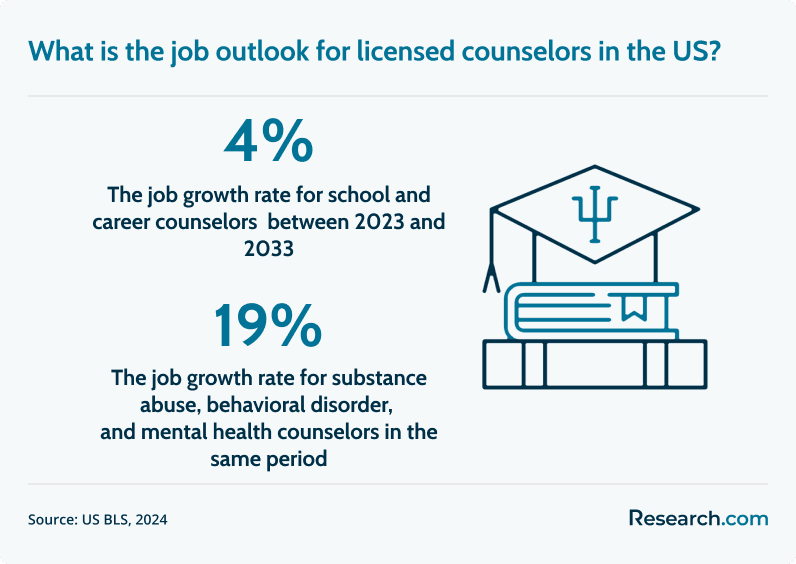
| Medical and Health Services Managers | 29% | Healthcare expansion and operational complexity support strong demand for qualified managers. |
| Social and Community Service Managers | 8% | Community programs, public agencies, and nonprofits continue to need leaders who can manage services and outcomes. |
| School and Career Counselors and Advisors | 4% | Schools, colleges, and career centers need advising support, though requirements vary by setting. |
| Substance Abuse, Behavioral Disorder, and Mental Health Counselors | 19% | Demand is supported by ongoing need for mental health and addiction treatment services. |
| Rehabilitation Counselors | 2% | Growth is steadier, so specialization and experience may be important for advancement. |
What specialized certifications can elevate a human services career?
Specialized certifications can make sense when they match a specific role, employer need, or regulated practice area. Useful areas may include case management, crisis intervention, behavioral analysis, program evaluation, addictions support, health education, or nonprofit leadership. The right credential depends on your target job and state rules.
For professionals interested in behavioral analysis, structured programs such as online BCBA programs may be worth comparing. Before enrolling, verify whether the coursework, supervision, and exam pathway match current certification standards and the state where you plan to work.
What are the benefits of pursuing an online MFT program?
An online marriage and family therapy pathway may appeal to human services professionals who want more focused clinical preparation in family systems, couples work, relational dynamics, and therapy skills. Online formats can be helpful for working adults, but students should carefully check practicum placement rules, state licensure alignment, residency requirements, and whether the program is accepted where they plan to practice.
If your long-term goal is marriage and family therapy, compare a general human services master’s with an MFT program online. The MFT route may be more direct for therapy licensure, while human services may be broader for leadership and community program roles.
Here’s what professionals have to say about careers in human services
- “My graduate work in human services helped me turn a general desire to help people into a more structured career in mental health support. The program strengthened my understanding of behavior, communication, and client needs, which gave me more confidence in difficult conversations.” —Joseph
- “The degree helped me move into nonprofit leadership because I learned how to think about community systems, not just individual services. I use that training when designing programs, supervising teams, and making sure our work stays ethical and practical.” —Jenny
- “Human services training gave me a useful bridge into healthcare administration. I was able to combine management skills with a stronger focus on patient advocacy, service access, and compassionate operations.” —Lisa
What factors should I consider when choosing a human services master’s program?
Choose a program by working backward from your career goal. A student who wants healthcare administration should evaluate different criteria than a student who wants counseling licensure, social service management, school advising, or rehabilitation work.
| Program factor | What to verify | Red flag |
| Accreditation | The institution’s accreditation status and any program-specific recognition relevant to your field | The school is unclear about accreditation or makes vague claims without documentation. |
| Licensure alignment | Whether the curriculum meets requirements for your state and intended credential | The program says it “may qualify” graduates but will not provide state-by-state guidance. |
| Curriculum | Courses in ethics, program evaluation, leadership, counseling foundations, policy, research, and fieldwork | The curriculum is too general for your target job. |
| Field experience | Internship, practicum, or supervised placement requirements and placement support | Students must locate placements with little institutional help. |
| Format | Online, hybrid, or campus attendance expectations, including any required residencies | The schedule conflicts with work or placement requirements. |
| Cost and aid | Total price after fees, scholarships, employer support, and financial aid | The program highlights tuition but leaves out recurring fees or placement-related expenses. |
| Career outcomes | Graduate job titles, employer types, licensure pass support, and alumni network strength | The school cannot explain what graduates actually do after completion. |
Students who are considering doctoral-level clinical practice should also compare human services programs with psychology pathways such as Psy D programs online.
What common mistakes should I avoid before enrolling?
- Choosing the degree without checking licensure: A human services master’s may not meet counseling, social work, school counseling, or psychology licensure requirements. Always check the relevant state board before applying.
- Focusing only on tuition: Fees, field placement costs, technology charges, travel, exam fees, and lost work time can change the real price of a program.
- Assuming online always means flexible: Some online programs still require synchronous classes, local placements, weekend residencies, or strict cohort schedules.
- Ignoring field placement support: Practicum and internship access can affect graduation timing, licensure readiness, and job preparation.
- Using rankings as the only decision tool: Rankings can be a starting point, but your best program is the one that fits your location, budget, credential needs, and career goal.
- Assuming salary outcomes are guaranteed: Wage data shows occupational medians, not personal earnings. Experience, employer type, geography, credentials, and leadership responsibility all influence pay.
- Confusing human services with social work: The two fields overlap, but an MSW is usually the direct route for social work licensure.
Key Insights
- A master’s in human services is best suited for students who want broad preparation in service leadership, advocacy, program management, community support, and client-centered systems work.
- The highest cited median wage among the careers covered is for medical and health services managers, with a 2023 median annual wage of $110,680 according to US BLS data cited in 2024.
- Human services can lead to counseling-related work, but it does not automatically qualify graduates for counseling licensure. State rules, supervised hours, approved coursework, and exams are critical.
- A human services master’s is usually not the right substitute for an MSW if your goal is to become a licensed social worker. Most states require a CSWE-accredited MSW for social work licensure.
- Industries hiring human services-related professionals include hospitals, physician offices, outpatient care centers, individual and family services, schools, colleges, government agencies, residential facilities, and vocational rehabilitation services.
- Employment projections vary by role: medical and health services managers are projected at 29% growth from 2023 to 2033, while rehabilitation counselors are projected at 2% growth over the same period.
- The best program choice depends on career alignment, accreditation, fieldwork, licensure fit, total cost, faculty expertise, and whether graduates actually enter the roles you want.
References:
- King, M. D. (2022, May 24). New Interactive Data Tool Shows Characteristics of Those Who Receive Assistance From Government Programs. https://www.census.gov/library/stories/2022/05/who-is-receiving-social-safety-net-benefits.html
- National Center for Education Statistics. (2024, May). Graduate Degree Fields. Condition of Education. U.S. Department of Education, Institute of Education Sciences. https://nces.ed.gov/programs/coe/indicator/ctb
- US Bureau of Labor Statistics. (2024, August 29). Health Education Specialists. Occupational Outlook Handbook. https://www.bls.gov/ooh/community-and-social-service/health-educators.htm
- US Bureau of Labor Statistics. (2024, August 29). Medical and Health Services Managers. Occupational Outlook Handbook. https://www.bls.gov/ooh/management/medical-and-health-services-managers.htm
- US Bureau of Labor Statistics. (2024, April 03). Occupational Employment and Wages, May 2023, 11-9111 Medical and Health Services Managers. Occupational Employment and Wage Statistics. https://www.bls.gov/oes/2023/may/oes119111.htm
- US Bureau of Labor Statistics. (2024, April 03). Occupational Employment and Wages, May 2023, 11-9151 Social and Community Service Managers. Occupational Employment and Wage Statistics. https://www.bls.gov/oes/2023/may/oes119151.htm
- US Bureau of Labor Statistics. (2024, April 03). Occupational Employment and Wages, May 2023, 21-1012 Educational, Guidance, and Career Counselors and Advisors. Occupational Employment and Wage Statistics. https://www.bls.gov/oes/2023/may/oes211012.htm
- US Bureau of Labor Statistics. (2024, April 03). Occupational Employment and Wages, May 2023, 21-1018 Substance Abuse, Behavioral Disorder, and Mental Health Counselors. Occupational Employment and Wage Statistics. https://www.bls.gov/oes/2023/may/oes211018.htm
- US Bureau of Labor Statistics. (2024, April 03). Occupational Employment and Wages, May 2023, 21-1021 Child, Family, and School Social Workers. Occupational Employment and Wage Statistics. https://www.bls.gov/oes/current/oes211021.htm
- US Bureau of Labor Statistics. (2024, August 29). Postsecondary Teachers. Occupational Outlook Handbook. https://www.bls.gov/ooh/education-training-and-library/postsecondary-teachers.htm
- US Bureau of Labor Statistics. (2024, August 29). School and Career Counselors and Advisors. Occupational Outlook Handbook. https://www.bls.gov/ooh/community-and-social-service/school-and-career-counselors.htm
- US Bureau of Labor Statistics. (2024, August 29). Social and Community Service Managers. Occupational Outlook Handbook. https://www.bls.gov/ooh/management/social-and-community-service-managers.htm
- US Bureau of Labor Statistics. (2024, August 29). Social Workers. Occupational Outlook Handbook. https://www.bls.gov/ooh/community-and-social-service/social-workers.htm
- US Bureau of Labor Statistics. (2024, August 29). Substance Abuse, Behavioral Disorder, and Mental Health Counselors. Occupational Outlook Handbook. https://www.bls.gov/ooh/community-and-social-service/substance-abuse-behavioral-disorder-and-mental-health-counselors.htm
Other Things You Should Know about Human Services Master’s Degree Careers
Yes, clinical roles usually require state licensure, such as Licensed Clinical Social Worker or Licensed Professional Counselor, plus supervised practice hours and a passing score on a state-recognized exam. Nonclinical human services jobs usually do not require licensure, but employers may prefer relevant certification or field experience.
Obtaining certifications like the Certified Social Work Case Manager (CSWCM), Nonprofit Leadership Alliance Certified Nonprofit Professional (CNP), or Certified Addiction Counselor (CAC) can enhance career prospects. These certifications demonstrate specialized expertise and are recognized by national organizations pertinent to human services work.


