
2027 Substitute Teaching License & Requirements in Oklahoma

Co-Founder and Chief Data Scientist
Substitute teaching in Oklahoma can be a practical way to enter education without immediately committing to a full-time teaching role. It appeals to career changers, retired educators, college students, paraprofessionals, and people who want flexible work while helping schools keep classrooms running when regular teachers are absent.
The decision is not only about meeting minimum requirements. Oklahoma substitutes need to understand district hiring rules, background checks, assignment systems, pay differences, long-term substitute expectations, classroom responsibilities, and whether the role can lead to teacher certification or a permanent classroom position.
This guide explains how to become a substitute teacher in Oklahoma, what districts usually require, how permits and renewals work, how assignments are offered, how much substitutes can earn, and what to consider before relying on substitute teaching as a primary income source or career pathway.
Quick Answer: How do you become a substitute teacher in Oklahoma?
To become a substitute teacher in Oklahoma, you generally need to be at least 18 years old, hold a high school diploma or equivalent, apply through a school district or approved substitute staffing system, verify your legal eligibility to work, and pass fingerprint-based background checks through the Oklahoma State Bureau of Investigation and the FBI. Some districts also require orientation, classroom management training, interviews, transcripts, recommendation letters, or a substitute teaching permit.
Key Points About Becoming a Substitute Teacher in Oklahoma
- Oklahoma substitute teachers usually need at least a high school diploma, legal work authorization, district approval, and a completed background check; some districts add local training or permit requirements.
- Demand remains steady in many Oklahoma districts because schools continue to need coverage for teacher absences, vacancies, turnover, and hard-to-fill classrooms.
- Pay varies widely by district, credential level, assignment length, and location, with commonly cited rates including about $90 per day, a statewide average hourly wage around $13.95, and higher rates in some urban or long-term placements.
- Requirements to become a substitute teacher in Oklahoma
- Types of substitute teaching permits in Oklahoma
- How substitute teachers renew a permit in Oklahoma
- How Oklahoma substitutes receive classroom assignments
- Can substitute teaching become a full-time teaching job?
- Substitute teacher pay in Oklahoma
- Job outlook for Oklahoma substitute teachers
- Professional development options for substitute teachers
- Legal responsibilities of substitute teachers
- Moving from public substitute teaching to private schools
- Career advancement options for substitutes
- Ethical standards for Oklahoma substitute teachers
- Benefits and incentives available to substitutes
- Common challenges in substitute teaching
- Online training opportunities for Oklahoma substitutes
What are the requirements to become a substitute teacher in Oklahoma?
Oklahoma does not use one single statewide substitute hiring process for every school. Instead, districts set many of the day-to-day application steps, while legal employment rules, safety checks, and certification-related requirements still shape who can work in classrooms. Before applying, confirm the requirements with the district where you want to work because documents, training, interviews, and pay categories can differ.
| Requirement | What it usually means for applicants | Why it matters |
| Minimum age and education | You generally must be at least 18 years old and have a high school diploma or equivalent. Some districts prefer college coursework or a bachelor’s degree. | Your education level may affect eligibility, assignment options, and pay category. |
| District application | Most candidates apply through a district employment portal and may need to upload transcripts, references, identification, and employment history. | Substitute teaching approval is typically handled locally, not through a single statewide job pool. |
| Work authorization | You must complete employment eligibility verification, such as Form I-9, using acceptable identification documents. | Schools must verify that every employee is legally authorized to work in the United States. |
| Fingerprinting and background check | Applicants must pass criminal history screening through the Oklahoma State Bureau of Investigation and the FBI. Candidates commonly pay the required fees. | Student safety is central to district hiring decisions. |
| Orientation or required training | Many districts require training on classroom management, student safety, reporting procedures, school technology, and district rules. | Substitutes often enter unfamiliar classrooms, so districts need them prepared before accepting jobs. |
| Local district procedures | Some districts, including examples such as Owasso Public Schools, may include an HR interview or additional screening steps. | Local policies can determine how quickly you can be placed on the substitute list. |
A good first step is to choose the districts where you are willing to work, review each district’s substitute page, and prepare your documents before starting applications. If you are using substitute teaching to test whether education is the right long-term field, it may also be useful to compare classroom work with education degree careers outside traditional teaching.
What are the different types of substitute teaching permits in Oklahoma?
Oklahoma substitute roles can involve different permit or approval categories depending on a candidate’s education, certification status, and assignment length. Districts may use these categories to decide who can cover short-term absences, long-term vacancies, or specialized classrooms.
| Permit or role type | Who it is generally for | Best use case |
| Emergency Substitute Permit | Individuals who do not hold a teaching degree but are approved to help schools meet temporary staffing needs. | Short-term classroom coverage when districts need additional substitute capacity. |
| Standard Substitute Permit | Candidates with a bachelor’s degree who are not fully certified teachers. | Applicants who want broader substitute eligibility for a defined period, often up to three years. |
| Certified Substitute Permit | Educators who already hold an Oklahoma teaching certificate. | Certified teachers who want to substitute without completing a separate extensive credentialing process. |
| Long-Term Substitute Permit | Substitutes assigned to the same class or position for an extended stretch, typically beyond 20 consecutive days. | Vacancies, leaves of absence, or classrooms needing continuity for multiple weeks. |
The right path depends on your background and goal. If you want occasional work, district substitute approval may be enough. If you hope to move into full-time teaching, a bachelor’s degree, certification planning, and long-term assignments can matter more.
How do substitute teachers renew their teaching permit in Oklahoma?
If your substitute role requires a permit or license renewal, plan ahead rather than waiting until your eligibility is close to expiring. Renewal requirements can include state paperwork, district verification, professional learning documentation, and updated background screening when required.
- Submit the renewal application: Substitutes complete the renewal process through the Oklahoma State Department of Education’s online system when a state-issued renewal is required.
- Pay the renewal fee: A $50 fee is required for renewal of the standard substitute teaching license and is typically paid online with the application.
- Complete professional learning: Educators must document 75 hours of relevant professional learning or continuing education every five years, which may include approved workshops, college coursework, or district-recognized training.
- Verify completed hours: Professional learning records must be confirmed by the local district or supervisor to show that the hours meet applicable requirements.
- Repeat background screening if needed: A new background check may be required after a gap in service, a move to another district, or a district policy change.
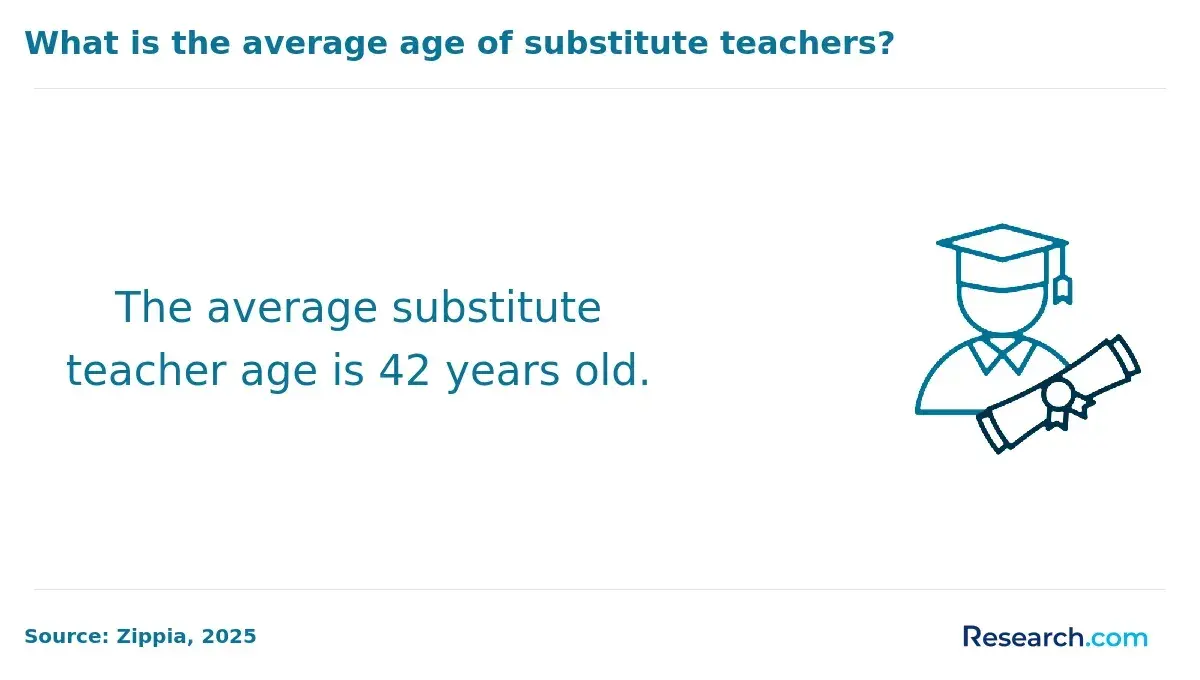
Keep copies of training certificates, district emails, transcripts, and renewal confirmations. If you are using renewal requirements as a chance to build stronger credentials, compare flexible programs such as online teaching degree options that may support future teacher certification goals. The image below provides additional context on the average age of substitute teachers in the U.S.
How do substitute teachers receive assignments in Oklahoma districts?
Most Oklahoma districts use a digital or centralized system to offer substitute jobs, although smaller districts may still rely more heavily on direct school contact. Your chances of getting consistent work often depend on how quickly you respond, how flexible your availability is, and how well you perform after accepting assignments.
- Online substitute platforms: Many districts post available jobs through web-based systems where approved substitutes can review dates, schools, grade levels, and subjects.
- Automated alerts: Job notices may arrive by email, text, or phone, and assignments can be filled quickly on a first-come, first-served basis.
- Preferred substitute lists: Schools may contact reliable substitutes earlier or more frequently, especially when staff members have had positive prior experiences with them.
- Availability and location matching: Districts may consider your stated schedule, preferred campuses, and travel distance when offering assignments.
- Centralized and school-based systems: Larger districts such as Oklahoma City and Tulsa often rely on centralized assignment systems, while smaller or rural districts may allow individual schools to reach out directly.
- Same-day flexibility: A substitute may arrive expecting one classroom and be reassigned because of changing staffing needs during the school day.
- Lesson plan access: Lesson plans may appear in the assignment system or be provided at the school office, in the teacher’s classroom, or through another district process.
- Required orientation before access: Districts commonly require training on technology, school procedures, classroom expectations, and safety protocols before substitutes can accept jobs.
| To get more assignments | Why it helps |
| Keep your calendar current in the assignment system. | Schools are more likely to contact substitutes who appear available and responsive. |
| Accept a mix of grade levels or campuses at first. | Broader availability can help you build relationships and experience faster. |
| Arrive early and leave detailed notes for the teacher. | Professional follow-through can help you become a preferred substitute. |
| Respond quickly to alerts. | High-demand assignments may disappear within minutes. |
| Communicate clearly with school offices. | Administrators remember substitutes who are dependable and easy to work with. |
The chart below highlights common skills that substitute teachers often feature on resumes.
Can substitute teaching lead to a full-time teaching job in Oklahoma?
Substitute teaching can help you move toward a full-time teaching position in Oklahoma, but it does not replace certification, district hiring, or formal applications. Think of it as a visibility and experience pathway: it lets schools observe your classroom management, reliability, communication style, and ability to work with students before you apply for permanent openings.
- Earn trust through consistency: Showing up on time, following lesson plans, managing classrooms calmly, and communicating well with staff can make principals more willing to recommend you.
- Apply through the district’s official process: Permanent teaching jobs still require a formal application, resume, references, and required documentation.
- Complete educator background requirements: Fingerprinting and criminal history checks remain mandatory for educators working in Oklahoma schools.
- Meet role-specific training expectations: Long-term assignments and specialized classrooms, including special education roles, may require targeted training and proof of completion.
- Pursue teacher certification: Moving into full-time teaching generally requires certification through a traditional route or Oklahoma’s Alternative Placement Program, along with required documentation and exams.
- Use substitute experience strategically: Long-term assignments, difficult classroom coverage, and repeat requests from schools can strengthen your application by showing practical readiness.
One Oklahoma substitute described the transition as valuable but not automatic. He said the role was less about “filling in” and more about proving he could manage the uncertainty of a high school math classroom.
He found that certification requirements and district applications took patience, but consistent work, strong relationships with principals, and steady professionalism helped him become a stronger candidate. His experience shows why substitute teaching can be useful career evidence, especially when paired with the credentials required for a permanent job.
How much do substitute teachers make in Oklahoma?
Substitute teacher pay in Oklahoma depends heavily on district policy, certification status, assignment length, and location. Reported figures include a statewide average hourly wage around $13.95, while Tulsa averages about $17.90 per hour. Annual salaries may range from approximately $42,804 to $50,218 when benefits and bonuses are included, although substitute income can fluctuate because work is often daily or temporary.
| Pay factor | How it can affect earnings |
| Certification status | Certified substitutes often receive higher daily rates. Some certified substitutes start around $85 and may move to $100 for long-term placements, while non-certified substitutes may start lower. |
| Length of assignment | Long-term work can pay more. For example, assignments of 20 or more consecutive days may trigger higher rates, and Yukon Public Schools offers up to $200 per day after the 21st day for certified substitutes. |
| District pay scale | Each district sets its own pay rules, which means two nearby districts may offer different rates for similar work. |
| Urban or rural location | Urban areas such as Tulsa and Oklahoma City tend to offer higher substitute pay than some rural districts because of local demand and cost-of-living differences. |
| Shortage conditions | Districts may temporarily increase rates when they have difficulty filling substitute positions. |
Before accepting work, ask whether the posted rate is hourly or daily, when payment is issued, whether long-term rates apply automatically, and whether training days are paid. If your longer-term plan is to move into advanced education roles, programs such as affordable online EdD programs may be worth comparing later in your career, but they are not necessary for entry-level substitute teaching.
What is the job outlook for substitute teachers in Oklahoma?
Oklahoma’s substitute teacher outlook is shaped by teacher absences, vacancies, turnover, emergency certifications, and uneven staffing across urban, suburban, and rural districts. Demand can be strong, but the number of available assignments still varies by district, school calendar, subject area, and substitute availability.
- Oklahoma City Public Schools: Substitute needs are affected by teacher turnover, larger class sizes, regular absences, and classroom management pressures tied in part to the number of alternatively-certified teachers needing support.
- Shawnee Public Schools: Even after wage increases, Shawnee has experienced serious substitute shortages connected to broader teacher shortages and the need to maintain daily classroom coverage.
- Moore, Edmond, Putnam City, and Norman districts: These districts increased daily pay rates after the pandemic to respond to long-running substitute shortages, especially in core subjects affected by absences and attrition.
- Statewide emergency certification: Oklahoma issued over 1,700 emergency teaching certificates in the 2024-2025 school year, underscoring the severity of staffing shortages across the state.
- Rural and smaller districts: Smaller hiring pools and limited resources can make substitute coverage harder to secure, increasing the need for reliable local substitutes.
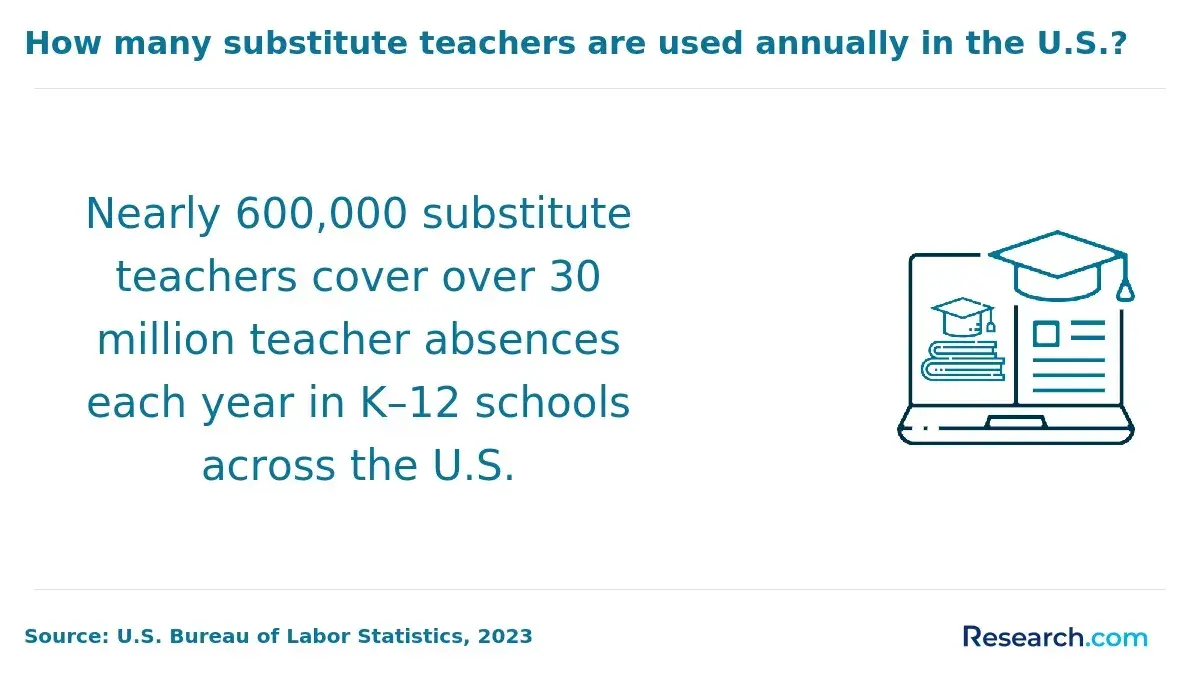
For candidates, the practical takeaway is to apply to multiple districts if permitted, stay flexible on grade levels, and consider hard-to-fill assignments if you are prepared for them. The image below shows how many substitute teachers are used across the U.S. each year.
If you are considering permanent teaching roles, earning a graduate credential such as one of the most affordable online master’s degrees in teaching may improve your long-term options, depending on your certification pathway and career goals.
What professional development opportunities exist for substitute teachers in Oklahoma?
Professional development can make substitute teaching less stressful and more useful as career preparation. Oklahoma substitutes may find district workshops, onboarding sessions, classroom management training, instructional strategy modules, mentorship opportunities, or continuing education options. Availability is not identical across districts, so ask whether training is required, optional, paid, recorded, or connected to permit renewal.
Useful training topics include behavior management, trauma-informed practices, special education procedures, emergency response, student confidentiality, technology platforms, lesson plan execution, and communicating with teachers after an assignment. If your goal is to become a certified teacher, review the teaching certification types and requirements in Oklahoma so you can choose professional development that supports your next step instead of taking unrelated courses.
What legal responsibilities do substitute teachers have in Oklahoma?
Substitute teachers have legal duties even when they work only one day in a classroom. They must follow district policies, maintain student confidentiality, supervise students appropriately, and report safety concerns through the proper channels. They should also understand mandatory reporting responsibilities for suspected abuse or neglect and avoid sharing confidential student information outside authorized school personnel.
Substitutes should not treat the role as informal childcare. They are acting as school employees or approved district workers and must follow the assigned lesson plans, student supervision rules, technology policies, and emergency procedures. If you want a step-by-step entry overview, see this guide on becoming a substitute teacher in Oklahoma.
How can substitute teachers transition to private school settings in Oklahoma?
Private schools in Oklahoma may use different hiring standards than public districts. Some may prioritize subject knowledge, faith-based mission fit, independent school experience, specialized teaching methods, or familiarity with smaller classroom environments. A public school substitute background can help, but private schools may still require separate applications, interviews, references, and school-specific training.
To improve your chances, build a record of reliability, ask for references from administrators, document successful long-term or specialized assignments, and learn the instructional style of the private schools you are targeting. For a broader look at expectations outside public districts, review how to become a private school teacher in Oklahoma.
How can substitute teachers in Oklahoma advance their careers?
Substitute teaching can support several next steps: full-time teacher certification, paraprofessional roles, tutoring, school administration support, instructional aide work, private school teaching, or graduate study in education. The best advancement route depends on whether you want a classroom teaching license, a school support role, or an education-related career outside teaching.
| Career goal | Best next step | Why substitute teaching helps |
| Full-time public school teacher | Research certification requirements and apply through district hiring systems. | Classroom experience can strengthen your resume and help you identify preferred grade levels. |
| Long-term substitute | Build relationships with schools and complete any district-required training. | Schools often prefer reliable substitutes who can maintain continuity for the same class. |
| Special education support | Ask about required in-service training and classroom support expectations. | Experience with diverse learners can prepare you for more specialized education roles. |
| Private school teacher | Prepare school-specific applications and references. | Substitute experience can show adaptability, professionalism, and classroom confidence. |
| Advanced education roles | Compare degree and certification pathways before enrolling. | Substitute work helps clarify whether a longer education commitment is worth it. |
If you are trying to estimate the timeline from substitute teaching to certified teaching, start with the education requirements explained in how many years of college it can take to become a teacher in Oklahoma.
What ethical standards do substitute teachers adhere to in Oklahoma?
Oklahoma substitute teachers are expected to act professionally, protect students, and support the regular teacher’s instructional plan. Ethical conduct matters because substitutes often enter classrooms with little time to build trust, yet they still have authority over student safety and learning for the day.
- Professional conduct: Arrive on time, follow school procedures, and represent the district appropriately.
- Respectful treatment of students: Maintain a classroom environment free from humiliation, discrimination, favoritism, or unnecessary conflict.
- Confidentiality: Do not share student grades, disabilities, behavior records, family information, or personal circumstances except with authorized staff or when legally required.
- Lesson plan fidelity: Follow the regular teacher’s plans as closely as possible unless an administrator instructs otherwise.
- Appropriate appearance: Dress in a way that fits educator expectations and allows you to perform all assigned duties, including supervision outside the classroom.
- Policy compliance: Follow district and state rules on student safety, technology, supervision, incident reporting, and emergency response.
- Honest communication: Avoid false, damaging, or careless statements about students, staff, administrators, or district procedures.
- Student welfare: Treat physical and emotional safety as the first priority and report concerns promptly.
- Conflict-of-interest awareness: Avoid gifts, favors, or relationships that could influence professional judgment.
- Fairness: Apply rules consistently and avoid bias in discipline, participation, and student support.
- Legal and moral compliance: Conduct that violates state or federal law can disqualify a person from school employment.
An Oklahoma substitute who works in high school math described the role as “walking a tightrope” between being warm enough to build rapport and professional enough to enforce expectations immediately. She said preparation, confidentiality, appropriate dress, and knowing when to escalate safety concerns are essential parts of doing the job well.
What are the benefits received by substitute teachers in Oklahoma?
The biggest benefits of substitute teaching in Oklahoma are flexibility, classroom exposure, and a relatively accessible entry point into school work. However, substitutes should not assume the role comes with the same benefits as full-time teaching. Health insurance, retirement eligibility, paid leave, and other benefits depend on employment status and district policy.
- Flexible scheduling: Substitutes can often choose which days to work, making the role useful for people balancing school, caregiving, retirement, or another job.
- Daily compensation: Pay is usually calculated by day or assignment. Certified substitutes in Oklahoma City Public Schools earn $125 per day for the 2024-2025 school year.
- Long-term assignment incentives: Some districts provide higher rates or bonuses for extended placements, but these incentives are not guaranteed statewide.
- Professional growth: Many substitutes use the role to practice classroom management, learn school routines, and decide whether to pursue certification.
- Access to school resources: Substitutes may use lesson materials, district technology, classroom tools, and staff support while on assignment.
- Limited full-time benefits: Many substitutes are classified as temporary or part-time and may not qualify for full health insurance or Oklahoma Teacher Retirement System benefits.
The average annual salary for substitute teachers in Oklahoma is about $39,005, with reported earnings as low as $17,543 and as high as $63,710 depending on district, work frequency, credentials, and experience. If you later earn advanced education credentials, compare possible outcomes with roles listed among jobs for Master of Education graduates.
What are the common challenges for substitute teachers in Oklahoma?
Substitute teaching can be rewarding, but it is not always predictable. Oklahoma substitutes may face unstable schedules, inconsistent pay, limited preparation time, and challenging classroom dynamics. Understanding these issues before applying can help you decide whether the role fits your financial needs and temperament.
| Common mistake or challenge | Why it causes problems | Better approach |
| Relying on one district only | Assignments may be inconsistent, especially during school breaks or low-absence periods. | Apply to multiple eligible districts if allowed and practical. |
| Looking only at the daily pay rate | A higher daily rate may not mean higher monthly income if jobs are limited. | Ask about average assignment availability, pay schedule, and long-term rates. |
| Skipping district orientation details | Unfamiliar procedures can lead to classroom confusion or policy mistakes. | Review emergency plans, attendance procedures, technology expectations, and reporting rules before your first job. |
| Assuming all classrooms are the same | Grade levels, subjects, special education settings, and school cultures vary widely. | Start with settings you can manage well, then expand as your confidence grows. |
| Ignoring certification planning | Substitute experience alone does not automatically qualify you for full-time teaching. | Map out certification requirements early if permanent teaching is your goal. |
- Unpredictable scheduling: Jobs may appear at the last minute, and income can vary from week to week.
- Limited preparation: Some substitutes receive only brief orientation before entering classrooms and may not have the same professional development access as full-time educators.
- Classroom management pressure: Students may test boundaries with a temporary teacher, especially when classes are large or routines are unclear.
- Not enough support: Substitutes can feel isolated when lesson plans, administrator guidance, or teacher notes are incomplete.
- Pay variation: Some districts may offer as little as $45 per day, while others pay $85–$100 for certified substitutes.
- Few employee benefits: Temporary or part-time classification often means limited access to health insurance, retirement plans, and paid leave.
- Extra workload during shortages: Substitutes may be asked to cover additional classes, duties, or periods when schools are short-staffed.
- Qualification concerns: Emergency and adjunct certification pathways can place some substitutes in settings where subject knowledge or classroom training may be limited.
The chart below adds context on another workforce issue that may affect financial stability: the gender pay gap.
What Are the Online Training Opportunities for Substitute Teachers in Oklahoma?
Online training can help Oklahoma substitutes build practical skills without committing immediately to a full degree program. Relevant topics may include classroom management, substitute teaching basics, instructional technology, working with English learners, supporting students with disabilities, school safety, and professional ethics. Districts may also offer online onboarding modules before substitutes can accept assignments.
Before paying for any online course, ask whether your district recognizes it, whether it applies to renewal or professional learning requirements, and whether it supports your long-term certification plan. If your goal is to become a licensed teacher through an online pathway, review how to become a teacher online in Oklahoma before choosing a program.
Related Articles for Nearby States
- 2027 Substitute Teaching License & Requirements in Texas
- 2027 Substitute Teaching License & Requirements in Kansas
- 2027 Substitute Teaching License & Requirements in Arkansas
- 2027 Substitute Teaching License & Requirements in Missouri
- 2027 Substitute Teaching License & Requirements in Colorado
- 2027 Substitute Teaching License & Requirements in New Mexico
- 2027 Substitute Teaching License & Requirements in Nebraska
- 2027 Substitute Teaching License & Requirements in Louisiana
- 2027 Substitute Teaching License & Requirements in Iowa
- 2027 Substitute Teaching License & Requirements in Mississippi
Questions to ask before becoming a substitute teacher in Oklahoma
- What minimum education level does this district require for substitutes?
- Does the district require a substitute permit, training module, interview, or orientation?
- Who pays for fingerprinting and background checks?
- Is pay hourly, daily, or different for long-term assignments?
- How often are substitutes paid?
- Are certified and non-certified substitutes paid differently?
- Can I choose specific schools, grade levels, or subjects?
- What happens if I arrive and the school reassigns me to another classroom?
- Does substitute work count toward future hiring consideration?
- What support is available if I have a discipline, safety, or medical concern during the day?
References:
- AllEducationSchools.com. (n.d.). Learn How to Earn a Teaching License in Oklahoma. AllEducationSchools.com
- Glassdoor. (2025). Total salary range for Oklahoma City Public Schools Substitute Teacher. Glassdoor
- Justia. (2024). 2024 Oklahoma Statutes Title 70. Schools. Justia
- Mustang Public Schools. (n.d.). Substitute Information. MPS
- Owasso Public Schools. (n.d.). Interested in Becoming a Substitute Teacher? OPS
- Swing Education. (n.d.). How to substitute teach at more than one district. Swing
- Teach Oklahoma. (n.d.). Oklahoma Certification. Teach Oklahoma
- TeachingCertification.com. (2025). Oklahoma Substitute Teaching License. TeachingCertification.com
- Tulsa Public Schools. (n.d.). Substitute Teachers. TPS
- Zippia. (2025). Substitute Teacher Demographics. Zippia
Key Insights
- Oklahoma substitute teaching is locally managed in many practical ways, so district requirements matter as much as statewide rules.
- The basic entry path usually includes being at least 18, having a high school diploma or equivalent, applying through a district, verifying work eligibility, and passing OSBI and FBI background checks.
- Pay is highly variable. Compare daily rates, long-term pay rules, assignment volume, and payment schedules before treating substitute teaching as dependable income.
- Substitute teaching can support a future full-time teaching career, but it does not replace certification, exams, formal applications, or district hiring requirements.
- The strongest substitutes are reliable, adaptable, prepared, ethical, and clear communicators who can follow lesson plans while keeping students safe.
- Before accepting assignments, ask each district about training, permit expectations, classroom support, long-term assignment rules, and whether substitute work can improve future hiring prospects.
Other Things You Need to Know About Becoming a Substitute Teacher in Oklahoma
To apply for a substitute teaching license in Oklahoma in 2027, complete the online application through the Oklahoma State Department of Education website. You'll need to submit your transcripts, complete a background check, and pay the associated fees. Ensure all documents are accurate and up-to-date.
Oklahoma requires at least a high school diploma or GED for emergency substitute authorization. Many districts also prefer college coursework, and a standard substitute certificate may require 60 college credit hours or a bachelor’s degree, depending on the district and assignment.


