2027 How to Become a Corrections Social Worker

Co-Founder and Chief Data Scientist
Becoming a corrections social worker means choosing a social work career inside jails, prisons, juvenile facilities, reentry programs, and diversion settings. The work is demanding because clients may be dealing with trauma, substance use, mental health conditions, family separation, limited education, housing instability, and the long-term effects of incarceration. It also matters because recidivism remains a serious public issue: in 2021, the US Department of Justice reported that 62% of released prisoners were rearrested within three years, and 46% returned to prison within five years.
This guide explains what corrections social workers do, what degree and license requirements to expect, how the career compares with related criminal justice and behavioral health roles, and how to choose an education path that supports long-term career growth. It is designed for students considering social work, current human services professionals exploring justice-related roles, and career changers who want practical work that combines counseling, advocacy, case management, and rehabilitation.
Quick answer: How do you become a corrections social worker?
The most common path is to earn a Bachelor of Social Work (BSW) or Master of Social Work (MSW), complete supervised field experience, meet your state’s social work licensure requirements, and build specialized knowledge in correctional systems, trauma-informed care, mental health, substance use, reentry planning, and forensic or criminal justice practice. Advanced clinical roles usually require an MSW, supervised post-graduate experience, and a state clinical license.
Key things you should know about becoming a corrections social worker
- Recidivism is a major reason this role exists: in 2021, 62% of released prisoners were rearrested within three years, and 46% returned to prison within five years.
- Corrections social workers help incarcerated and justice-involved people prepare for safer, more stable reentry by assessing needs, creating service plans, coordinating treatment, and connecting clients with housing, employment, healthcare, and community supports.
- Common workplaces include prisons, jails, juvenile detention facilities, correctional centers, law enforcement-related agencies, reentry organizations, and diversion programs.
- The average yearly income for social workers was $55,350 in 2022, while top earners made more than $87,300. Social workers employed by local governments earned $62,390, and those in state government earned $52,640.
- Social work careers are projected to grow 7% from 2022 to 2032, with more than 63,000 openings projected each year.
How to Become a Corrections Social Worker Table of Contents
- What is a corrections social worker?
- What can you expect from a corrections social worker degree?
- Where can I work with a corrections social worker degree?
- How much can I make with a corrections social worker degree?
- List of Corrections Social Worker Program/Universities for 2027
- What are the corrections social worker education requirements?
- What certifications do I need to advance in a corrections social worker role?
- How to Become a Licensed Corrections Social Worker
- What specialized knowledge will I gain from a corrections social worker master's program?
- What are the key skills needed for a corrections social worker?
- How can gaining experience in school social work prepare you for a career in corrections social work?
- How can corrections social workers ensure ongoing professional development?
- How can corrections social workers manage stress and prevent burnout?
- How can pursuing accessible educational pathways kickstart your corrections social work career?
- What are the primary challenges corrections social workers face in their roles?
- What metrics demonstrate success in corrections social work?
- How does corrections social work compensation compare to related fields?
- What educational pathways can corrections social workers pursue to enhance their careers?
- What are the key differences between an MSW and an LCSW in corrections social work?
- What are the career advancement opportunities for corrections social workers?
- What legal and policy factors influence corrections social work?
- What are the emerging trends in corrections social work in 2027?
What is a corrections social worker?
A corrections social worker is a trained social work professional who supports people involved in the criminal justice system. They may work with adults in prisons and jails, youth in juvenile detention, people on pretrial or diversion programs, or individuals preparing for release and reentry. Their central goal is not security enforcement; it is rehabilitation, stabilization, treatment coordination, and reintegration.
This career can make some students pause and ask whether a social work degree is worth it for such a difficult setting. The answer depends on your temperament and goals. Corrections social work is best suited for people who can balance empathy with boundaries, advocate for clients while respecting institutional rules, and stay calm in environments where trauma, conflict, and crisis are common.
Corrections social workers differ from correctional officers, probation officers, and correctional treatment specialists. Correctional officers focus primarily on safety, custody, and facility procedures. Probation officers and correctional treatment specialists supervise compliance and may coordinate treatment plans. Corrections social workers concentrate more directly on psychosocial assessment, counseling, crisis support, family engagement, discharge planning, and connection to services.
They are also different from criminal psychologists. Criminal psychologists may study criminal behavior, conduct evaluations, or work in forensic assessment and research. Corrections social workers are more likely to manage day-to-day client needs, coordinate care, facilitate groups, advocate for services, and help clients prepare for release. There can be overlap, especially when mental health, trauma, addiction, or risk assessment is involved.
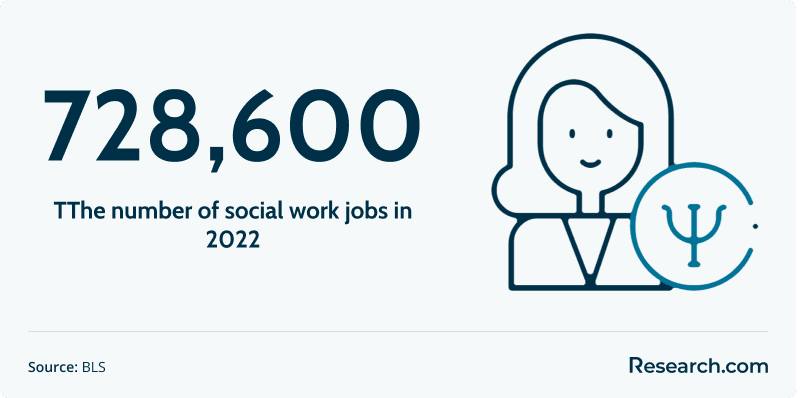
As of the latest data cited in the original article, there were more than 700,000 social work jobs in the United States in 2022.
What graduates say about corrections social work training
- My corrections social work coursework helped me understand how rehabilitation, case planning, and direct support can change a person’s path after incarceration. I now work with clients preparing for reentry, and the most meaningful part of the job is seeing someone build a realistic plan for life after release. -Sarah
- Specializing in corrections social work gave me the practical foundation I needed for a challenging environment. Field-based learning, trauma-informed practice, and supervised casework prepared me to work with clients who often need both accountability and compassion. -Michael
- An online social work pathway made it possible for me to keep working while preparing for a justice-focused career. The flexibility helped me complete coursework, build skills, and move toward a corrections social work role without putting the rest of my life on hold. -Emily
What can you expect from a corrections social worker degree?
A corrections social work degree path usually begins with a BSW or MSW, then becomes more specialized through electives, field placement, certificates, internships, and supervised professional experience. Students learn generalist social work practice first: assessment, interviewing, ethics, cultural responsiveness, policy, human behavior, research, and case management. Corrections-focused preparation then applies those skills to incarcerated and justice-involved populations.
In practice, that means learning how to assess a client’s risks and needs, identify mental health or substance use concerns, develop service plans, facilitate individual or group interventions, document progress, communicate with correctional staff, and prepare clients for release. Reentry planning can include referrals for housing, employment, healthcare, counseling, medication management, family support, transportation, and community supervision requirements.
A strong program should also teach students how to work within systems. Corrections social workers must understand institutional policies, confidentiality limits, mandated reporting, safety protocols, court-related documentation, and the ethical tension between client advocacy and public safety. This is not a purely classroom-based career; field learning is essential.
| Degree or training option | Best for | What it can prepare you to do | Important limitation |
| BSW | Students seeking entry-level social work or human services roles | Build case management, interviewing, policy, and field practice skills | May not qualify you for advanced clinical roles without graduate study |
| MSW | Students who want advanced practice, clinical preparation, or leadership options | Develop deeper assessment, intervention, supervision, and program skills | Licensure and supervised experience requirements still vary by state |
| Forensic or corrections-focused electives | Students who want to work directly with justice-involved clients | Apply social work methods to courts, prisons, jails, reentry, and diversion settings | Availability depends on the school and field placement network |
| Field placement in criminal justice or behavioral health | Students who need practical experience before applying for corrections roles | Practice documentation, crisis response, case planning, and interdisciplinary teamwork | Placements may be competitive and may require background checks or facility clearance |
Where can I work with a corrections social worker degree?
Corrections social workers can work in secure facilities, community-based programs, public agencies, nonprofit organizations, and treatment settings that serve justice-involved people. Many work in juvenile detention centers, county jails, state or federal correctional facilities, or correctional treatment programs. Others work in diversion programs that allow eligible defendants to complete treatment or services instead of incarceration.
Typical responsibilities vary by setting. In a prison or jail, the role may involve intake assessment, crisis intervention, group programming, discharge planning, and coordination with correctional officers or mental health teams. In a reentry organization, the work may focus more on housing, employment, family reunification, benefits, relapse prevention, and compliance with community supervision. In juvenile settings, social workers may coordinate with schools, families, child welfare agencies, and courts.
Corrections social workers may collaborate with probation officers, attorneys, correctional teams, substance use counselors, mental health clinicians, and professionals in criminal psychology careers. They may also meet with a client’s spouse, children, parents, or other family members when family involvement supports treatment, release planning, or safety.
| Work setting | Common clients | Typical focus | Good fit if you want to... |
| Prisons and jails | Adults who are incarcerated or detained | Assessment, crisis support, treatment planning, discharge planning | Work inside correctional institutions and coordinate with security staff |
| Juvenile detention facilities | Youth involved in the justice system | Family support, school coordination, trauma-informed intervention, behavioral planning | Help younger clients address risks before patterns become permanent |
| Diversion programs | Eligible defendants or participants avoiding incarceration through services | Compliance support, counseling referrals, substance use treatment coordination | Work in alternatives to incarceration and restorative approaches |
| Reentry programs | People leaving incarceration | Housing, employment, healthcare, benefits, community resources | Help clients manage the practical barriers that can lead to reoffending |
| Law enforcement-related agencies | Justice-involved individuals and families | Crisis response, victim or family support, referrals, interdisciplinary coordination | Operate at the intersection of public safety and social services |
How much can I make with a corrections social worker degree?
Corrections social worker pay depends on the employer, role, location, degree level, licensure status, union or government pay scales, and years of experience. A corrections social worker employed by a state agency may be paid differently from someone working for a nonprofit reentry program, a county jail, or a contracted behavioral health provider.
ZipRecruiter reports that correctional social worker pay varies by state, with Oregon ($84,437), Alaska ($84,36), and North Dakota ($84,094) listed among the higher-paying states in its state-by-state correctional social worker salary data. Because salary sites use different collection methods, use those figures as one reference point rather than a guaranteed outcome.
The Bureau of Labor Statistics does not publish a separate occupational category only for corrections social workers. However, related BLS data can help frame expectations. Social workers earned an average annual income of $55,350 in 2022, with top earners making more than $87,300. Probation officers and correctional treatment specialists earned a median annual wage of $59,860 in May 2022. Students comparing justice-related helping careers may also want to review the substance abuse counselor job outlook, since addiction treatment is often connected to correctional and reentry work.
| Role or category | Reported pay information | How to interpret it |
| Social workers | Average yearly income was $55,350 in 2022; top earners made more than $87,300 | Useful broad benchmark, but not specific to correctional settings |
| Social workers in local government | $62,390 | Relevant because many correctional and community justice roles are public-sector positions |
| Social workers in state government | $52,640 | Relevant for state correctional systems and public agencies |
| Probation officers and correctional treatment specialists | $59,860 in May 2022 | Helpful comparison for roles that combine supervision, treatment planning, and justice-system work |
| ZipRecruiter state examples | Oregon ($84,437), Alaska ($84,36), North Dakota ($84,094) | Can guide location research, but verify with actual employer postings and state salary schedules |
Salary should not be the only deciding factor. A higher-paying facility may involve more safety risk, larger caseloads, shift requirements, or more administrative documentation. When comparing offers, look at supervision quality, benefits, retirement plans, caseload expectations, clinical hours, safety training, and whether the role supports your path to licensure.
List of Corrections Social Worker Program/Universities for 2027
The programs below are not all titled “corrections social work” programs, but they can support preparation for corrections-related practice through accredited social work coursework, field education, clinical or policy training, and electives connected to mental health, substance use, justice, or marginalized populations. When comparing schools, confirm accreditation, field placement options, cost, format, transfer policies, and whether the program supports the license you want in your state.
1. University of Louisville, Bachelor of Social Work (BSW)
The University of Louisville offers a Bachelor of Social Work designed around experiential learning and practicum preparation. Coursework is delivered 100% online, with 24/7 access to learning materials. The program emphasizes interventions connected to social justice and includes an optional alcohol and drug counseling specialization. Students are prepared to work with marginalized populations and may continue into the university’s Master of Science in Social Work after graduation.
- Program Length: N/A
- Cost Per Credit: $527
- Required Credits: 120
- Accreditation: Council on Social Work Education (CSWE)
2. Northern Arizona University, Bachelor of Social Work (BSW)
Northern Arizona University provides a Bachelor of Social Work in online and campus-based formats. The program centers social justice and service to marginalized communities, including attention to poverty, racism, oppression, rural regions, and indigenous communities. Students complete a quantitative reasoning course and onsite fieldwork. Campus-based classes are available at Flagstaff or Yuma, while online students follow a traditional semester schedule with set deadlines.
- Program Length: N/A
- Tuition Per Year: $11,352
- Required Credits: 120
- Accreditation: CSWE
3. University of Southern California, Master of Social Work (MSW)
The USC Suzanne Dworak-Peck School of Social Work offers an MSW with full-time, part-time, campus-based, online, and hybrid options. The program uses experiential, practice-oriented, and competency-based learning to prepare students for social change work. Its concentrations can support students interested in mental health, youth and families, military populations, schools, and broader social innovation.
- Program Length: 12-28 months
- Tracks/Concentrations: Adult Mental Health & Wellness; Social Change and Innovation; Military Populations and Settings; Children, Youth and Families; School and Educational Settings
- Tuition Per Unit: $2,137 per unit (students enrolled in 1-14 units); $31,902 (students enrolled in 15-18 units)
- Required Credits: N/A
- Accreditation: CSWE
4. Rutgers University, Master of Social Work (MSW)
Rutgers University School of Social Work offers an MSW taught by faculty and researchers connected to clinical social work, nonprofit leadership, and public administration. Students may study through traditional, blended, fully online, or weekend formats. The school reports placement opportunities with about 1,000 field companies across New Jersey and the United States. Students can also pursue specializations and certificate options.
- Program Length: N/A
- Tracks/Concentrations: Clinical Social Work, Management and Policy
- Tuition: $9,672 (New Jersey residents); 16,440 (nonresidents); $1,007 per credit (online)
- Required Credits: N/A
- Accreditation: CSWE
5. New York University, Master of Social Work (MSW)
New York University offers an in-person MSW through the Silver School of Social Work. The program emphasizes research-informed direct practice with a social justice focus. Students can also explore policy, community practice, global social work, and study abroad opportunities. Classes commonly range from 15 to 25 students, and both full-time and part-time pathways are available.
- Program Length: N/A
- Tuition Per Point, Per Term: $1,588
- Required Credits: N/A
- Accreditation: CSWE
6. University of Tennessee, Knoxville, Bachelor of Science in Social Work (BSSW)
The University of Tennessee, Knoxville offers a Bachelor of Science in Social Work focused on generalist practice and the relationship between people and their environments. The curriculum includes field practice experiences and prepares students to promote human rights, use research and policy-informed practice, and advance diversity. Faculty, staff, and field instructors support the CSWE-accredited program’s attention to social, economic, and environmental justice. The university also offers an online BSSW option.
What are the corrections social worker education requirements?
Education requirements depend on the role and state, but corrections social workers usually need formal social work training, supervised experience, and licensure for clinical or advanced positions. Entry-level roles may accept a BSW or a related degree, while clinical assessment, therapy, diagnosis, independent practice, or supervisory work typically requires an MSW and appropriate state licensure.
- BSW or MSW: A Bachelor of Social Work or Master of Social Work is the most direct academic route. Some students begin in related fields such as psychology, criminal justice, or an affordable online psychology degree, but social work licensure usually requires a social work degree from an approved program.
- Accredited online options: Online programs can work well for students who need flexibility, but accreditation matters. Look for programs recognized by the Council on Social Work Education when your goal is social work licensure.
- Corrections or forensic training: Coursework in forensic social work, criminal justice, trauma, addiction, crisis intervention, and reentry services can make your education more relevant to correctional settings.
- Field experience: Practicum or internship experience helps you build real-world skills. A placement in a jail, prison, court program, juvenile facility, behavioral health agency, reentry nonprofit, or substance use treatment setting can be especially valuable.
- Licensure: Many non-entry-level social work roles require state licensure. Requirements commonly include an approved degree, supervised experience, and an exam through the Association of Social Work Boards (ASWB), but details vary by state.
- Certification options: Advanced credentials, including Certified Forensic Social Worker (CFSW), may be available to professionals with graduate social work education and relevant experience.
- Continuing education: Licensed professionals usually need ongoing training to keep their credentials active and stay current with law, ethics, treatment models, and correctional policy.
| Career goal | Likely education path | Credential considerations |
| Entry-level case management or support role | BSW or related bachelor’s degree | Check whether the employer requires social work licensure or only a degree |
| Clinical corrections social work | MSW with clinical coursework and relevant field placement | State clinical licensure is usually needed for independent clinical practice |
| Reentry, diversion, or program coordination | BSW or MSW depending on responsibility level | Experience with housing, employment, substance use, and community resources is valuable |
| Leadership, supervision, or policy work | MSW, DSW, or related graduate study | Advanced credentials may strengthen eligibility for senior roles |
What certifications do I need to advance in a corrections social worker role?
Certifications are not always mandatory, but they can strengthen your qualifications for specialized, clinical, supervisory, or interdisciplinary work. Before paying for a credential, verify whether employers in your target state and setting value it. A certification is most useful when it aligns with the duties you actually want to perform.
- Certified Correctional Health Professional (CCHP): This credential is designed for professionals working in correctional health environments and emphasizes ethical practice and continuing education.
- Licensed Clinical Social Worker (LCSW): The LCSW is a state license rather than a simple certificate. It signals advanced clinical preparation and may expand your ability to provide therapy, clinical assessment, and independent services. Students planning for this route may compare online clinical MSW programs.
- Certified Social Work Case Manager (C-SWCM): This option can be relevant for professionals whose role centers on case planning, service coordination, documentation, and rehabilitation plans.
Corrections social workers often collaborate with psychiatrists, nurses, addiction counselors, probation staff, attorneys, and behavioral health specialists. Working alongside a forensic psychologist, for example, can help social workers better understand assessment, risk factors, and the psychology of offending behavior while still maintaining a social work focus on environment, systems, advocacy, and client support.
How to Become a Licensed Corrections Social Worker
Licensure rules are set by each state, so the exact process can differ. Still, most students follow a similar sequence: complete the right degree, gain supervised experience, pass the required exam, apply for state licensure, and maintain the license through continuing education.
- Earn the required degree: Start with a BSW, MSW, or a closely related undergraduate field such as psychology or criminal justice. For advanced clinical roles, plan for an MSW.
- Choose relevant graduate preparation: An MSW with clinical, forensic, behavioral health, or corrections-related coursework can be especially useful. Students seeking a shorter graduate timeline may explore fast track MSW programs.
- Complete fieldwork and supervised practice: Use practicum, internship, and post-graduate supervision to build experience with assessment, documentation, crisis response, group work, and reentry planning.
- Pass the licensing exam: Most states use an ASWB exam or a state-approved equivalent for social work licensure.
- Apply through your state board: Submit transcripts, supervision documentation, exam results, background information, fees, and any required forms.
- Maintain your license: Complete continuing education and renew your license according to your state’s timeline.
What specialized knowledge will I gain from a corrections social worker master's program?
A master’s degree in social work online or on campus can help students move beyond entry-level casework into clinical, leadership, policy, or specialized practice. In a corrections-focused pathway, students usually study how criminal justice systems affect individuals, families, and communities, as well as how trauma, poverty, addiction, mental illness, racism, and family disruption can shape justice involvement.
Students may also learn rehabilitation models, risk and needs assessment, crisis intervention, motivational interviewing, strengths-based practice, restorative justice, reentry planning, group facilitation, and interdisciplinary collaboration. The strengths/empowerment perspective discussed by van Wormer and Boes is one example of an approach that shifts the focus from deficits alone to client capacity, dignity, and change.
A strong MSW should also prepare students to analyze systemic issues, including the disproportionate incarceration rates among minorities. This matters because corrections social workers must often advocate within institutions that have rigid rules, limited resources, and complex power dynamics. Graduate social work training can also be a foundation for later doctoral or psychology-related study, including options such as the cheapest online PsyD programs, for students whose goals shift toward advanced behavioral health or research.
What are the key skills needed for a corrections social worker?
Corrections social work requires a mix of clinical judgment, emotional control, practical problem-solving, and systems knowledge. The best professionals in this field are not only compassionate; they are also organized, safety-aware, ethical, and consistent.
- Empathy with boundaries: Clients may have experienced serious trauma, but the setting also requires clear professional limits and careful judgment.
- Assessment skills: Social workers must identify needs related to mental health, substance use, housing, family, medical care, education, safety, and reentry.
- Clear communication: Strong writing and speaking skills are needed for case notes, treatment plans, team meetings, court-related documentation, and client interviews.
- Conflict de-escalation: Correctional settings can be tense, so social workers need strategies for calming situations and responding safely.
- Cultural responsiveness: Clients come from different racial, ethnic, socioeconomic, linguistic, and community backgrounds, and effective practice requires respect for those differences.
- Crisis intervention: Suicidality, withdrawal, trauma reactions, family emergencies, and facility incidents can require immediate, structured response.
- Case management: Reentry planning depends on coordinating documents, appointments, referrals, benefits, transportation, housing, and treatment.
- Ethical decision-making: Confidentiality, safety, institutional rules, client autonomy, and mandated reporting can conflict, so ethical reasoning is essential.
How can gaining experience in school social work prepare you for a career in corrections social work?
School social work can be a useful foundation for corrections social work because both fields require crisis intervention, family systems knowledge, advocacy, trauma awareness, and coordination with multiple stakeholders. School social workers often support students facing poverty, family instability, behavioral concerns, bullying, abuse, grief, mental health challenges, or chronic absenteeism. Those experiences can translate well to justice-related practice.
The connection is especially important in juvenile and reentry work. Early risk factors such as truancy, untreated trauma, family conflict, substance use, and behavioral concerns may appear long before a person enters the justice system. A professional who understands prevention, school-based support, and youth development may be better equipped to work with young people in detention or adults whose justice involvement began early in life.
If you are comparing these paths, review school social worker requirements to understand how school-based social work credentials, field placements, and state rules may complement or differ from corrections-focused practice.
How can corrections social workers ensure ongoing professional development?
Corrections social workers need continuing professional growth because law, ethics, treatment methods, correctional policy, and technology can change. Useful development activities include clinical supervision, ethics training, workshops on trauma and addiction, conferences, peer consultation groups, correctional health education, and training in evidence-informed interventions.
Graduate education can also support advancement. Flexible options such as affordable online MSW programs may help working professionals move toward clinical, supervisory, or specialized roles without leaving their current job. Before enrolling, ask whether the program’s field placement structure can accommodate your location and whether it supports your state’s licensure pathway.
How can corrections social workers manage stress and prevent burnout?
Burnout risk is real in correctional settings. Social workers may handle trauma disclosures, crisis calls, large caseloads, safety concerns, administrative pressure, and client setbacks. Preventing burnout requires more than personal resilience; it also requires supervision, manageable expectations, peer support, and an employer that takes staff safety and mental health seriously.
- Use supervision consistently: Do not wait until a crisis occurs to discuss difficult cases, ethical tension, or emotional strain.
- Debrief after serious incidents: Structured debriefings can reduce isolation and help staff process high-stress events.
- Set documentation routines: Falling behind on case notes can increase stress and create risk.
- Maintain work-life boundaries: Correctional work can be emotionally consuming; recovery time matters.
- Watch for warning signs: Emotional numbness, irritability, sleep problems, dread before work, and cynicism can signal burnout.
- Consider career mobility: If the setting is no longer sustainable, related jobs for MSW graduates may offer alternative ways to use the same skills.
How can pursuing accessible educational pathways kickstart your corrections social work career?
Accessible education pathways can help students enter the field without unnecessary barriers. Online, part-time, transfer-friendly, and less selective programs may be practical for working adults, first-generation college students, caregivers, and career changers. Options such as the easiest social work programs to get into can be worth exploring if you need a realistic admission pathway, but admission ease should never be the only factor.
For corrections social work, the better question is whether the program is credible, accredited, affordable, and connected to useful field placements. Look for coursework in trauma-informed care, restorative justice, substance use, mental health, advocacy, policy, and case management. Also ask whether the school can help arrange placements in criminal justice, behavioral health, reentry, or community-based service settings.
| Question to ask before enrolling | Why it matters for corrections social work |
| Is the program CSWE-accredited? | Accreditation is often critical for social work licensure and employer recognition. |
| Can I complete fieldwork near where I live? | Online coursework is not enough; you still need supervised practice experience. |
| Does the school have justice-related placements? | Corrections, reentry, juvenile justice, or behavioral health placements can strengthen your resume. |
| What is the total cost, not just tuition? | Fees, travel, lost work hours, books, and internship requirements affect affordability. |
| Will this program support licensure in my state? | Licensure requirements vary, and some online programs may not meet every state’s rules. |
What are the primary challenges corrections social workers face in their roles?
Corrections social work can be meaningful, but it is not an easy career. The setting creates pressures that students should understand before committing to this path.
- High-stress facilities: Jails, prisons, and detention centers can involve conflict, security restrictions, crisis events, and unpredictable behavior.
- Ethical tension: Social workers must balance client advocacy, confidentiality, institutional policy, safety expectations, and legal obligations.
- Limited resources: Correctional systems may not have enough mental health providers, housing options, treatment slots, or community services for every client who needs help.
- Burnout and emotional fatigue: Repeated exposure to trauma, relapse, reincarceration, and family distress can affect professionals over time.
- Administrative burden: Documentation, compliance, reporting, and coordination can consume a large share of the workday.
- Reentry barriers: Clients may leave custody without stable housing, income, healthcare, identification documents, or family support.
These challenges do not make the career impossible, but they do make preparation important. Students should seek programs with strong field supervision, realistic career advising, and coursework that addresses crisis work, ethics, and systems-level advocacy.
What metrics demonstrate success in corrections social work?
Success in corrections social work should be measured by more than whether a client avoids rearrest. Recidivism is important, but it is affected by many factors outside one social worker’s control, including housing markets, employment barriers, treatment access, supervision rules, family stability, and local policy. Strong programs use several indicators to evaluate progress.
- Reentry stability: Housing, employment, healthcare enrollment, transportation, identification documents, and community appointments.
- Treatment engagement: Participation in mental health care, substance use services, medication management, or support groups.
- Behavioral progress: Improved coping skills, reduced crisis incidents, better communication, and safer decision-making.
- Compliance milestones: Attendance at required appointments, program completion, and adherence to release or diversion plans.
- Client feedback: Self-reported trust, goal progress, perceived support, and readiness for community life.
- Program outcomes: Referral completion, service utilization, reduced disruptions, and long-term follow-up results when available.
Professionals interested in outcome measurement, program evaluation, and service systems may benefit from related training such as an affordable online degree in human services, especially if their goal is to improve programs rather than only provide direct services.
How does corrections social work compensation compare to related fields?
Corrections social work compensation often falls between social services, behavioral health, and public-sector criminal justice roles. Pay can be higher in some government or high-need correctional settings, but those roles may involve stricter policies, heavier documentation, or greater safety demands. Nonprofit reentry roles may offer mission-driven work but sometimes have tighter funding.
When comparing careers, consider scope of practice. A licensed clinical social worker may qualify for different responsibilities than a bachelor’s-level case manager. A psychologist, probation officer, addiction counselor, and corrections social worker may all work with justice-involved clients, but their training, legal authority, and daily duties differ. For a broader comparison, see this guide to social work vs psychology salary and career differences.
What educational pathways can corrections social workers pursue to enhance their careers?
Career growth usually comes from combining experience with targeted education. A BSW may help you enter case management or support roles. An MSW can expand options in clinical practice, supervision, policy, program design, and leadership. Certificates in forensic social work, addiction counseling, trauma treatment, correctional health, or case management may also support specialization.
Some professionals choose adjacent education to broaden their practice. An online human services degree may be useful for students interested in service coordination, community programs, and systems-level support. Others pursue an MSW, DSW, public administration, counseling, psychology, or criminal justice path depending on whether they want to practice clinically, manage programs, lead policy work, or conduct research.
What are the key differences between an MSW and an LCSW in corrections social work?
An MSW is a graduate degree. An LCSW is a state clinical license. The difference matters because a degree shows that you completed academic and field training, while licensure indicates that you met state requirements for supervised practice, examination, and clinical authority.
| Credential | What it is | How it matters in corrections social work |
| MSW | A Master of Social Work degree | Can prepare you for advanced practice, specialized fieldwork, and licensure eligibility |
| LCSW | A state-issued clinical social work license | May allow independent clinical practice, therapy, diagnosis, supervision, or higher-level roles depending on state law |
For students planning a clinical career in correctional mental health, the distinction is critical. You may need the MSW first, then supervised post-graduate experience and an exam before becoming an LCSW. For a fuller explanation, read this breakdown of LCSW vs MSW.
What are the career advancement opportunities for corrections social workers?
Corrections social workers can advance into clinical supervision, program management, reentry leadership, policy advising, training, quality assurance, research, or executive roles in public agencies and nonprofits. Advancement usually requires demonstrated judgment, strong documentation, interdisciplinary credibility, and the ability to manage both client needs and institutional constraints.
Possible next steps include becoming a senior social worker, clinical supervisor, reentry program director, behavioral health coordinator, juvenile justice specialist, forensic social work consultant, correctional health administrator, policy analyst, or educator. Professionals interested in high-level leadership, scholarship, or advanced practice may consider doctoral study, including options such as the most affordable DSW degree online.
What legal and policy factors influence corrections social work?
Corrections social work is shaped by law and policy every day. Confidentiality rules, client rights, mandated reporting, court orders, facility procedures, release conditions, disability accommodations, healthcare access, and documentation requirements all affect practice. Social workers must understand where their clinical role begins and ends within a legal environment.
Policy changes can also reshape the field. Diversion initiatives, sentencing reforms, funding for mental health treatment, substance use policy, juvenile justice rules, and reentry legislation can all affect caseloads and service models. Advanced programs such as accelerated online MSW programs may help students build the policy, ethics, and clinical foundation needed to respond to these changes, but students should still verify licensure alignment before enrolling.
What are the emerging trends in corrections social work in 2027?
Several trends are shaping corrections social work in 2027. One is the continuing emphasis on mental health, trauma-informed care, and substance use treatment. Correctional populations often include people with complex behavioral health needs, and social workers are frequently part of the team responsible for screening, referral, safety planning, and treatment coordination.
Technology is also changing the work. Digital case management systems, telehealth services, virtual counseling options, and data tracking tools can help agencies coordinate services and monitor outcomes. At the same time, technology raises concerns about privacy, access, documentation burden, and whether virtual services can meet the needs of clients with complex trauma or limited digital literacy.
Diversion programs, restorative justice, and reentry-centered models are also expanding the role beyond traditional facility-based work. Instead of focusing only on incarceration, many programs aim to reduce harm, improve accountability, address root causes, and help people remain safely in the community. Professionals with counseling, addiction, mental health, and rehabilitation training may find opportunities in these models. Students comparing counseling-oriented pathways may also explore options such as the cheapest CACREP-accredited programs online.
Common mistakes to avoid when preparing for corrections social work
- Choosing a program without checking accreditation: If social work licensure is your goal, confirm that the program meets the standards required by your state.
- Assuming online automatically means easier: Online programs can be flexible, but fieldwork, deadlines, exams, and supervision can still be demanding.
- Ignoring field placement quality: A strong justice-related placement can be more valuable than a generic internship that does not match your career goals.
- Looking only at tuition: Compare total cost, fees, travel, lost income, books, technology, and unpaid internship requirements.
- Assuming salary outcomes are guaranteed: Pay depends on location, employer, licensure, funding, and experience.
- Overlooking emotional fit: Corrections work requires comfort with conflict, boundaries, institutional rules, and clients with complex histories.
- Waiting too long to research licensure: State rules can affect which degree, practicum, supervision, and exams you need.
Questions to ask before choosing this career path
- Do I want direct clinical work, case management, policy, reentry programming, or supervision?
- Am I prepared to work in environments with strict security rules and limited resources?
- Does my target state require a BSW, MSW, LCSW, or another license for the roles I want?
- Can the program help me secure a relevant field placement?
- How will I manage unpaid practicum hours, work responsibilities, and personal obligations?
- What populations do I want to serve: adults, youth, families, people in reentry, or people in diversion programs?
- What supports will I use to prevent burnout?
References
- Durose, Matthew R., & Antenangeli, Leonardo, PhD. (2021, July). Recidivism of Prisoners Released in 34 States in 2012: A 5-Year Follow-Up Period (2012-2017). Retrieved December 14, 2023, from U.S. Department of Justice.
- Indeed. (2023, July 1). How To Become a Criminal Justice Social Worker. Retrieved December 15, 2023, from Indeed.
- Social Work & Social Welfare: Modern Practice in a Diverse World. (2014). Retrieved April 17, 2024, from OER Commons.
- Van Wormer, K., & Boes, M. (1998). Social Work, Corrections, and the Strengths Approach. Paper presented at the National Social Work Conference, Canadian Association of Social Workers, June 20-24, Edmonton, Alberta, Canada. Retrieved Apri 17, 2024, from University of Northern Iowa.
Key Insights
- Corrections social work is a rehabilitation-focused social work path for people who want to serve incarcerated, detained, diverted, or reentering populations.
- The most reliable academic route is a CSWE-accredited BSW or MSW, followed by field experience and state licensure when required.
- An MSW is often important for advanced and clinical roles, while an LCSW can expand independent practice and leadership opportunities depending on state law.
- Salary varies widely by employer, state, licensure, and setting; use BLS and employer-specific data instead of assuming any single salary figure applies to every corrections role.
- Field placement quality matters. Experience in reentry, behavioral health, juvenile justice, diversion, addiction treatment, or correctional facilities can make you more competitive.
- This career is meaningful but emotionally demanding. Strong supervision, boundaries, safety awareness, and burnout prevention are essential for long-term success.
- Before enrolling in a program, confirm accreditation, licensure alignment, total cost, field placement support, and whether the curriculum fits your correctional or forensic social work goals.
Other Things You Should Know About Becoming a Corrections Social Workers
To become a corrections social worker in 2027, individuals need a bachelor's degree in social work or a related field, often followed by a master's degree. Additional training in criminal justice is beneficial. Licensing requirements vary, typically including supervised work experience and passing the Association of Social Work Boards (ASWB) exam.
In 2026, obtaining a degree in corrections social work typically costs between $10,000 and $50,000 annually, depending on the institution, residency status, and additional fees such as materials and textbooks. Financial aid and scholarships can help offset these expenses.