2027 Corrections Career Outcomes by Degree Level Report: Pay, Employment, and Advancement Patterns

Co-Founder and Chief Data Scientist
Choosing the right degree level for a corrections career poses a critical challenge: which credential truly aligns with the evolving demands of the field and maximizes job security and upward mobility? A 2024 study from the National Institute of Justice revealed that candidates with advanced corrections degrees experience notably faster promotion rates, reflecting a growing employer preference for specialized training. This shift signals broader trends in workforce professionalism and credential inflation that affect hiring and retention strategies nationwide.
For students balancing work, family, or military commitments, understanding how pay, employment, and advancement vary by degree is vital. This article analyzes these dimensions to guide informed decisions on corrections education pathways.
Key Things to Know About Corrections Career Outcomes by Degree Level
- Associate degrees often enable quicker entry into corrections roles but limit advancement, reflecting a tradeoff where faster workforce access may delay leadership eligibility due to credential ceilings.
- Employers increasingly prioritize bachelor's credentials for supervisory roles, signaling a workforce shift that pressures mid-career learners toward degree completion for meaningful promotion opportunities.
- Master's and doctoral programs yield diminishing practical returns given higher costs and longer completion times, suggesting candidates weigh credential investment against realistic advancement within corrections hierarchies.
- Key Things to Know About Corrections Career Outcomes by Degree Level Key Things to Know About Corrections Career Outcomes by Degree Level
- What Career Outcomes Can Students Expect From Each Corrections Degree Level? Career Outcomes by Degree
- How Much Do Corrections Graduates Earn by Degree Level? Salary by Degree Level
- Which Corrections Degree Level Offers the Strongest Employment Prospects? Best Degrees for Employment
- What Entry-Level Jobs Can You Get With a Corrections Degree? Entry-Level Career Opportunities
- How Do Corrections Degree Levels Affect Career Advancement and Promotion Opportunities? Career Growth by Degree
- Is a Corrections Degree Worth It Based on Salary, Employment, and ROI? Salary, ROI, and Value
- How Do Associate, Bachelor's, Master's, and Doctoral Corrections Degrees Compare? Comparing Degree Levels
- Which Industries and Employers Hire Corrections Graduates by Degree Level? Which Industries and Employers Hire Corrections Graduates by Degree Level?
- What Skills, Credentials, and Experience Improve Corrections Career Outcomes? What Skills, Credentials, and Experience Improve Corrections Career Outcomes?
- Which Corrections Degree Level Is Best for Your Career Goals? Choosing the Right Degree
What Career Outcomes Can Students Expect From Each Corrections Degree Level?
The trajectory of corrections career outcomes by degree level reveals distinct trade-offs between immediate workforce entry and long-term advancement prospects. Certificate holders often gain timely access to frontline roles such as correctional officers, meeting many state requirements but generally encountering limited upward mobility without further education or experience. In contrast, associate degree programs, which blend foundational criminal justice knowledge with corrections-specific training, tend to improve job retention and open doors to roles like case management and rehabilitation support. This expanded preparation correlates with a modestly higher employment rate and more frequent employer-sponsored training, indicating a tangible advantage amid competitive hiring environments.
Bachelor's degrees serve as a critical inflection point for accessing supervisory and specialized positions, reflecting employer preferences for leadership potential and analytical competencies in mid-level management. Programs increasingly integrate internships or practicum experiences, which enhance career mobility by providing practical skills valued in evolving agency contexts. Master's credentials deepen specialization and qualify professionals for leadership, policy, or administrative roles, often commanding broader responsibilities and pay scales. While doctoral degrees remain less common and focused on research or high-level policy influence, they exert limited direct impact on most practitioners' career pathways due to the niche nature of roles requiring this terminal credential.
Students weighing these pathways should consider factors including time investment, transfer policies, and employer credential expectations characteristic of corrections career outcomes by degree level. Working adults and military-affiliated students benefit notably from programs offering flexible formats and credit recognition, which facilitate progression from entry roles to advanced responsibilities without redundant coursework. With employer demand tied closely to both credential level and field-specific experience, understanding how degree choices affect employment and advancement patterns in corrections careers is essential for strategic planning. Those aiming to integrate practical training with recognized credentials may also explore overlaps with healthcare fields, where increasing demand across systems encourages interdisciplinary preparation, as highlighted in the DNP program online trend.
How Much Do Corrections Graduates Earn by Degree Level?
Earnings for corrections graduates vary widely across degree levels, shaped by the practical realities of job roles, employer expectations, and geographic differences. Entry-level positions accessible to those holding certificates or associate degrees typically offer median salaries between $40,000 and $50,000, but these roles often have limited growth potential without further education or significant experience. Bachelor's degree holders generally secure higher median pay-around $55,000 to $65,000-reflecting eligibility for supervisory duties and specialized functions like case management or compliance, which many employers explicitly require. Advancing to a master's degree opens access to senior administrative or policy-oriented roles, with salaries frequently above $70,000; yet the additional time and cost investment must be weighed against the potential for accelerated promotion and access to better-funded federal jobs. The jump to doctoral or professional degrees often leads to research or high-level policy positions exceeding $90,000 but tends to be relevant mainly for a small segment targeting academia or consultancy within corrections systems rather than frontline practice.
Adult learners and working professionals must carefully consider how degree choices align with licensure requirements, employer preferences, and transfer-credit applicability. For instance, pursuing a bachelor's after an associate can bridge the gap toward management roles, but doing so requires balancing course load against job demands, especially since urban and federal employers often pay more than local agencies for comparable credentials. Data from the U.S. Bureau of Labor Statistics and the National Center for Education Statistics from 2024 underlines that while higher degrees often correlate with better pay and stability, these outcomes hinge on industry context and geographic location. Consequently, decisions to invest in advanced education should factor in realistic timelines and financial burdens relative to expected labor market returns-particularly in a field with varied role definitions and employer expectations like corrections.
One corrections graduate shared how the salary difference between an associate and bachelor's degree helped clarify their next steps. Initially hesitant to return to school while working full-time, they reviewed local job postings and spoke directly with hiring managers, discovering that many supervisory roles required a bachelor's and offered $10,000 more annually. This pragmatic insight, combined with flexible transfer credits and employer tuition assistance, tipped the balance for enrolling in a bachelor's completion program. However, they also noted surprise at how limited the salary premium was beyond the bachelor's in their area, which made pursuing a master's degree feel less urgent despite the potential for federal employment, highlighting how local market factors must guide education investment decisions.
Which Corrections Degree Level Offers the Strongest Employment Prospects?
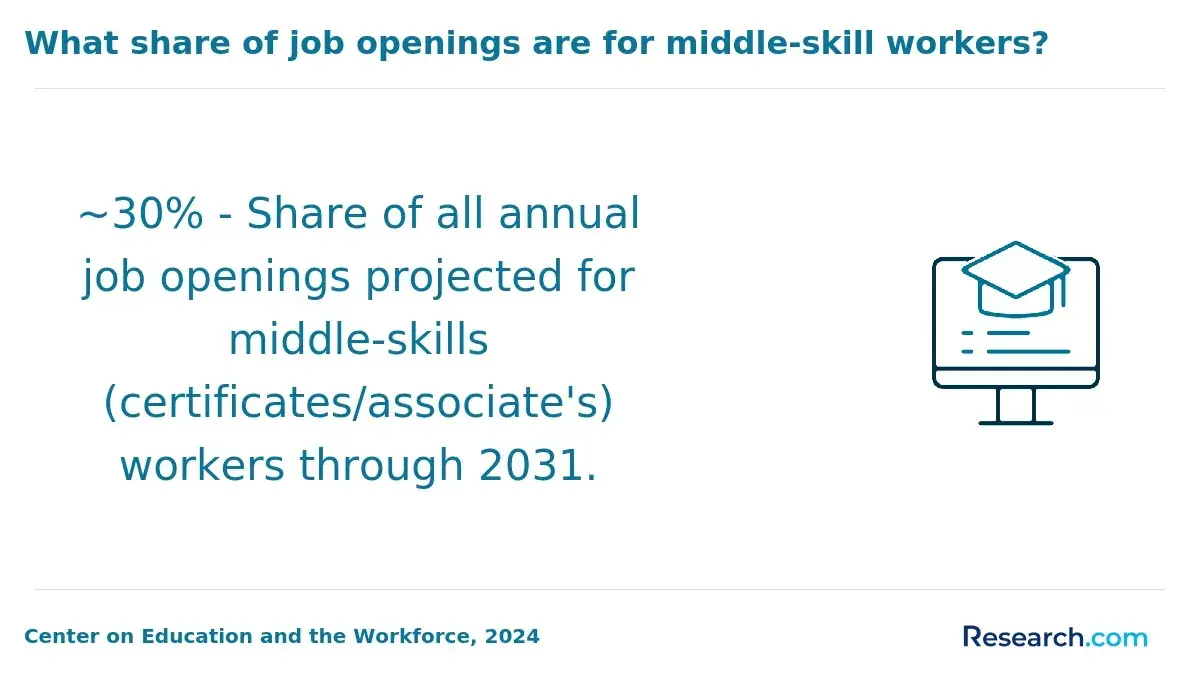
The strongest employment outcomes in corrections tend to align with bachelor's degrees, which offer broader access to higher-level roles compared to certificates or associate degrees. In practice, candidates holding only certificates or associate degrees often fill entry-level officer positions that carry higher turnover and limited career growth, especially in regions where licensing and employer preferences emphasize advanced credentials. For example, 2024 data from BLS indicates that the unemployment rate for those without a bachelor's degree in corrections-related fields is nearly 50% higher, highlighting the risk of restricted job stability when stopping short of a four-year diploma.
While associate or certificate holders may enter the workforce more quickly, their upward mobility is generally constrained by employer expectations that favor bachelor's or graduate degrees for supervisory, administrative, or specialized policy roles. Master's graduates in corrections often secure higher median wages-about 20% more than bachelor's holders-reflecting their qualification for leadership and research-focused positions. Those weighing immediate employment versus long-term advancement should consider local labor markets, which frequently show stronger demand for advanced skills in urban systems where program management and policy development roles predominate.
Students aiming to balance work and study may find strategic value in starting with an associate or certificate and transferring credits to a bachelor's program, thus expanding access while controlling time and costs. Graduate-level credentials further target niches such as academic research or correctional system reform, but they cater to fewer positions and require clear professional goals. Ultimately, degree level shapes not just entry but the trajectory of correctional careers, with practical implications for pay scales, licensure compliance, and leadership pathways within diverse correctional environments.
What Entry-Level Jobs Can You Get With a Corrections Degree?
Entry-level corrections job opportunities vary significantly by degree level and related qualifications, shaping both employability and career trajectory. Graduates with an associate degree often access roles focused on security and supervision, such as correctional officers or detention aides, where practical skills and certifications like firearms training can be decisive. In contrast, bachelor's degree holders may pursue positions involving case or parole management and juvenile corrections, demanding stronger knowledge of behavioral sciences and legal procedures. According to 2024 data from the U.S. Bureau of Labor Statistics, over half of correctional officer roles require only a high school diploma, yet holding a corrections degree enhances hiring prospects by signaling specialized commitment and preparedness.
Internships and fieldwork experience notably influence early-career success, demonstrating to employers the candidate's ability to handle real-world conflict resolution, communication, and ethical decision-making under pressure. Geographic location also matters: urban areas typically offer more rehabilitative program roles, while rural settings emphasize security functions, impacting long-term advancement and stability. For many students evaluating entry points, balancing credential level with required licensure and local demand is crucial. Those aiming for further graduate study or social work-related fields should consider bachelor's programs, while associate degrees may serve better as direct entry points into frontline correctional positions. Practical decisions can be informed by exploring options like accredited online college no application fee pathways to reduce initial hurdles without compromising employability.
How Do Corrections Degree Levels Affect Career Advancement and Promotion Opportunities?
Educational attainment in corrections significantly impacts not only eligibility but also the timeline for promotion and leadership opportunities within the field. Many agencies set a baseline of an associate degree for specialized or supervisory positions, but a bachelor's degree is increasingly a de facto requirement for mid-management or administrative roles, reflecting demands for advanced skills in policy oversight and staff supervision. For example, recent Bureau of Labor Statistics data from 2024 indicates that candidates holding a bachelor's degree tend to advance 20-30% faster than those with only a high school diploma or associate degree, particularly when combined with certifications or prior work experience. However, pursuing higher degrees involves tradeoffs in time and financial investment, which may pose challenges for working professionals balancing career progression with immediate employment needs.
This complexity is especially relevant for adult learners or military-affiliated students who may have accumulated prior college credits or practical experience, both of which can smooth the path toward degree completion without career interruption. Employers often value a hybrid of formal credentials and real-world experience, with compliance to licensure or certification standards adding another layer to promotion considerations. While a master's or doctoral degree can deepen specialized expertise and enhance professional credibility, it is rarely a guaranteed ticket to faster advancement unless it aligns strategically with the agency's role requirements and workforce planning.
One corrections officer who weighed these factors recalled debating whether to pursue a bachelor's degree after years on the job. Although his supervisor encouraged further education to qualify for supervisory roles, he hesitated due to workload and family commitments. Ultimately, he found transfer-credit policies in a flexible adult program essential to balancing coursework with shifts, giving him cautious optimism about qualifying for promotion within three years without stepping away from his current position.
Is a Corrections Degree Worth It Based on Salary, Employment, and ROI?
Salary and employment outcomes for individuals holding corrections degrees reveal important nuances that affect return on investment. While median wages for correctional officers and bailiffs tend to fall within a moderate range, those earning a bachelor's degree in corrections or criminal justice generally qualify for higher starting salaries and supervisory roles. However, the difference in pay compared to associate degree holders or high school graduates is not always substantial enough to justify the longer completion time and higher tuition costs without factoring in regional demand and available advancement pathways. For many working adults or military-affiliated students, balancing continued employment while earning credentials or certifications can significantly shape the financial and practical viability of further education in corrections.
Employment stability in corrections remains relatively steady, particularly in the public sector, where government funding supports long-term positions. Yet, job security can fluctuate with budget decisions or policy changes, especially in private-sector roles, which may raise challenges for those managing student debt from their education investment. The return on investment for corrections degree holders depends on how quickly graduates translate their credentials into more advanced or specialized roles. Those considering upgrades from associate to bachelor's level should weigh time-to-completion and debt burden carefully, particularly against moderate wage growth. Public service loan forgiveness and part-time study options may improve ROI, but tangible gains often require certifications, experience, and regional labor market fit. Prospective students aiming to compare corrections degree salary and employment outcomes should integrate these factors in their decision-making rather than relying solely on credential attainment.
Given these complexities, students also may explore alternatives such as an online degree in nutrition for broader employment options when evaluating cross-field flexibility and financial risk. Ultimately, pursuing a corrections degree hinges on a realistic assessment of how degree level, employer preferences, and local demand converge with personal circumstances including the ability to finance and complete education without jeopardizing current employment.
How Do Associate, Bachelor's, Master's, and Doctoral Corrections Degrees Compare?
Choosing between associate, bachelor's, master's, and doctoral degrees in corrections significantly affects employability and career flexibility, especially given industry licensing and employer credential preferences. An associate degree often grants immediate access to frontline roles, with about 65% employment within a year, per NCES 2024 data, but prospects plateau without further study or certifications. In contrast, a bachelor's degree opens doors to supervisory or specialist positions, offering roughly 15% higher employment rates in administration fields, yet involves a critical tradeoff: it demands more time and financial investment but better aligns with employer expectations for leadership and specialized functions.
Master's programs introduce advanced policy, management, and research skills suited for program development or executive roles, but their value depends heavily on relevant work experience and varies by program requirements, often lacking credit stackability from prior degrees. This makes the decision to pursue graduate study contingent on clear career goals and readiness for significant time and cost commitments. Doctoral studies, while rare and focused on research or academic leadership, typically do not enhance traditional corrections employment opportunities but instead position graduates for influence through scholarship or consultancy, rather than direct workforce engagement.
The interplay between degree level, licensure, and credit transfer impacts how students plan education paths. Certifications and practical training frequently outweigh advanced degrees for licensing, and credit transfer is strongest from associate to bachelor's levels, with graduate programs often requiring fresh admission processes. For working adults balancing career and education, weighing the incremental employment benefits against cost, time, and stability-especially in a field where practical experience remains paramount-is essential for strategic progression through corrections credentials.
Which Industries and Employers Hire Corrections Graduates by Degree Level?
Employers hiring corrections graduates demonstrate clear preferences tied to degree level, shaping job roles and career trajectories within government, private, and nonprofit sectors. Associate degree holders frequently fill frontline positions such as correctional and probation officers in government-run facilities, where standardized training, certifications, and state licensure are critical entry requirements. In contrast, bachelor's degree graduates access a wider employer base that includes private correctional institutions and nonprofit organizations, often securing supervisory or program development roles that require both educational credentials and practical field experience. For example, a candidate with a bachelor's degree might advance more quickly into crisis intervention or inmate programming positions than a peer with only an associate degree.
Advanced degrees unlock leadership, policy, and specialized research opportunities largely found in large public corrections systems, academia, and government agencies focused on reform. According to 2024 IPEDS data, master's graduates commonly transition into administrative management or correctional psychology, requiring analytical capabilities beyond operational tasks. Doctoral holders typically engage in high-level consulting, systemic reform initiatives, or senior executive roles. Certificate programs, while valuable for technical skill updates or niche compliance expertise, seldom replace degree qualifications for climbing beyond technician-level jobs. This stratification underlines the tradeoff between rapid entry with associate or certificate credentials and the broader, often higher-paying career options tied to graduate-level education within corrections.
What Skills, Credentials, and Experience Improve Corrections Career Outcomes?
Corrections career outcomes hinge heavily on mastering role-specific technical skills and accumulating applied experience that align with employer expectations. Candidates holding an associate degree must often supplement academic credentials with certifications from bodies such as the National Commission on Correctional Health Care (NCCHC) or secure licensure in juvenile justice or mental health corrections to remain competitive. For example, a candidate entering corrections through a shorter credential program may quickly gain workforce access but face limited promotion without adding experiential learning or certificates, underscoring a common tradeoff between speed of entry and long-term advancement. Employers prioritize conflict resolution, crisis management, and legal competencies alongside demonstrated leadership and problem-solving capabilities, especially for supervisory roles.
Integrating internships, apprenticeships, or military service experience not only increases employment prospects but also fosters readiness for operational realities within institutional settings. Data from the National Center for Education Statistics confirms that candidates with supplementary credentials plus a bachelor's or higher degree experience more stable employment and faster industry progression, validating the practical advantage of combining academic credentials with targeted applied learning. Employers in corrections increasingly expect candidates to present such a combination as evidence of commitment and competence rather than rely on academic achievement alone. Soft skills like communication and emotional intelligence become critical factors in readiness for management roles, impacting promotion eligibility and cross-specialization options.
Students and working professionals must weigh employment and credential requirements in corrections careers carefully, balancing transferable skills with specialized knowledge for sustained mobility. Decision-makers benefit from analyzing how combining prior credits, experience, and new credentials affect both pay and role trajectory, a nuance sometimes overlooked in broader credential discussions. For those exploring advancement, understanding comparative outcomes tied to degree level is essential, akin to reviewing the master in health information management salary data that highlights the tangible benefits of elevated credentials paired with strategic skills.
Which Corrections Degree Level Is Best for Your Career Goals?
Choosing the appropriate corrections degree level shapes access to different employment segments and influences long-term career trajectories. Associate degrees typically align with entry-level correctional officer positions and limited supervisory roles, providing a baseline credential with modest employment advantages over high school diplomas, as shown by the Bureau of Labor Statistics (2024). However, this level may limit upward mobility without further education or certifications. Adult learners and working professionals often must balance the shorter completion time of associate programs against the narrower scope of employer expectations and limited eligibility for specialized roles or promotion.
Bachelor's degrees in corrections or related fields expand opportunities into supervisory, training, and case management positions, reflecting a 15% higher employment rate compared to associate degree holders, according to the National Center for Education Statistics (2024). For many career-focused learners, especially military-affiliated students and transfer candidates, advancing to a bachelor's degree improves eligibility not only for leadership track positions but also for specialized certifications increasingly demanded by correctional institutions. Graduate degrees serve those targeting senior management, policy roles, or broader criminal justice fields but carry higher costs and debt risks, necessitating cautious evaluation of long-term returns. In navigating these pathways, students should consider time-to-degree, the potential need for further certifications, and program flexibility; some may benefit from exploring pathways similar to online accelerated nursing programs for non nurses that accommodate accelerating education while working.
Determining the best corrections degree level for your goals requires assessing employment and advancement by corrections degree against practical constraints such as opportunity cost, credit transfer, and employer credentials. Working adults contemplating whether to extend beyond associate or bachelor's programs must weigh the specialized roles their intended positions demand, including potential licensure or certification requirements. Integrating these factors into educational planning ensures alignment with real-world workforce needs and professional flexibility within the corrections sector.
References
- Criminal Justice & Corrections Majors & Degrees: Salary, Careers & More - Course Advisor https://courseadvisor.com/majors/law-enforcement-and-firefighting/criminal-justice-and-corrections/
- How to Become a Correctional Officer (2026 Guide) https://policeofficer.org/careers/correctional-officer/
- Should I Earn an Associate or Bachelor's in Criminal Justice? https://www.allcriminaljusticeschools.com/blog/associate-vs-bachelors-in-criminal-justice/
- Explore Your Future Career Path in Corrections Degree https://atacollege.edu/your-next-career-path-in-corrections-degree/
- Correctional Officer https://www.truity.com/career-profile/correctional-officer
- Is College Worth it? | Return on Investment Analysis of College Degree https://educationdata.org/college-degree-roi
- Careers in Criminal Justice | University of Phoenix https://www.phoenix.edu/articles/criminal-justice/careers-in-criminal-justice.html
- How to develop your correctional officer career - Corrections1 https://www.corrections1.com/corrections-jobs-careers/4-critical-elements-of-professional-growth-and-development-in-corrections
- The Prison Credential Dilemma: Insights into Applying for Jobs with Qualifications Earned during Incarceration https://workrisenetwork.org/working-knowledge/prison-credential-dilemma-insights-applying-jobs-qualifications-earned-during
- Correctional Officer Training and Education https://www.correctionalofficer.org/training
Other Things You Should Know About Corrections
Obtaining advanced degrees in corrections often requires significant time investment, which can delay entry into full-time employment. For many, the immediate financial tradeoff is lost wages and work experience during study. However, this delay may not always translate into proportional long-term advancement or salary gains, especially since some employers value practical frontline experience over extended academic credentials. Candidates who prioritize earlier workforce immersion should weigh whether accelerated experience might better position them for certain supervisory roles than a prolonged educational pathway.
Doctoral degrees in corrections can lead to specialized roles in research, policy, or academia, but these positions are relatively rare compared to practitioner opportunities. Many corrections professionals with doctoral credentials find that the salary premium over a master's degree is modest, and job flexibility often depends more on the employer than the degree itself. For most working adults, pursuing a doctorate should be a strategic choice focused on non-traditional career paths rather than expecting significant pay jumps or improved day-to-day job conditions in correctional facilities.
Public corrections agencies often emphasize degrees at the associate or bachelor's level combined with direct experience, while private or specialized sectors may prioritize advanced degrees or certifications. Understanding the sector you aim to enter is critical; for example, prison administration roles may require higher degrees, but frontline or probation work may not. Prospective students should align their level of study with the credential expectations of their targeted segment to avoid over- or under-qualification, which can affect hiring and promotion chances.
For many mid-career corrections employees, targeted certifications and in-job training yield more immediate career benefits than returning for a full higher degree. Certifications often address specific skills or regulatory compliance that employers value and can be completed more rapidly. Unless aiming for roles in management, policy, or academia, balancing targeted skill development with practical experience often offers a better return on investment than extended degree programs.