
2026 Corrections Degree Outlook Through 2030: Enrollment, Salary, and Hiring Projections

Co-Founder and Chief Data Scientist
Deciding whether to pursue or continue a corrections degree hinges on more than projected job growth alone. While the Bureau of Labor Statistics forecasts a 9% increase in correctional officer employment through 2030, rising enrollment rates may saturate the graduate pool, intensifying competition. Salary trends, influenced by regional budget constraints and evolving credential requirements, vary widely and can limit upward mobility.
Additionally, shifts toward technology and rehabilitation-focused roles create uneven opportunities across sectors. Navigating these complexities requires a clear understanding of enrollment, salary, hiring projections, industry demand, geographic variations, and workforce changes. This article breaks down these factors through 2030 to inform smarter educational and career choices.
Key Things to Know About the Corrections Degree Outlook Through 2030
- Corrections enrollment growth slowed to under 2% annually by 2024, indicating tightening candidate pipelines; this signals rising competition that may pressure applicants to specialize or gain practical experience early.
- Employer surveys in 2024 report a growing preference for candidates with advanced certifications, reflecting a shift toward multi-skilled staff and increasing barriers for basic-degree holders entering the workforce.
- Automation's gradual integration into administrative tasks may reduce some entry-level roles by late decade, emphasizing timing and cost-efficiency in training to maintain employability amid evolving job requirements.
- Key Things to Know About the Corrections Degree Outlook Through 2030 Key Things to Know About the Corrections Degree Outlook Through 2030
- How is Corrections Degree Enrollment Expected to Change Through 2030? Enrollment Trends Through 2030
- How Many Corrections Graduates Will Enter the Workforce by 2030? Graduate Workforce Entry Projections
- What Are the Hiring Projections for Corrections Graduates Through 2030? Hiring Projections Through 2030
- Which Corrections Careers Will Experience the Most Job Growth? Fastest-Growing Career Paths
- What Is the Salary Outlook for Corrections Graduates Through 2030? Salary Outlook Through 2030
- Which Industries Will Hire the Most Corrections Graduates by 2030? Top Hiring Industries
- Where Will Demand for Corrections Graduates Be Strongest? Strongest Geographic Demand
- Which Corrections Specializations Will Be Most in Demand by 2030? Which Corrections Specializations Will Be Most in Demand by 2030?
- How Will AI and Technology Affect Corrections Careers Through 2030? How Will AI and Technology Affect Corrections Careers Through 2030?
- Is a Corrections Degree Worth Pursuing Based on 2030 Projections? Degree Value Through 2030
How is Corrections Degree Enrollment Expected to Change Through 2030?
Projected enrollment in corrections degree programs through 2030 reflects a complex balance between steady workforce demand and evolving educational priorities. The National Center for Education Statistics data indicates consistent growth rates averaging 3% to 5% annually, yet this expansion is uneven across regions and specialties. Students and educators must consider how hiring preferences for candidates versed in rehabilitation and community supervision may shift demand away from more traditional correctional officer tracks.
Decision-makers should also weigh how program flexibility and practical training components influence retention and graduate supply in an environment of tuition pressures and institutional resource limits. Programs that fail to integrate relevant hands-on experience risk lower completion rates, affecting the pipeline of qualified graduates.
While moderate enrollment growth aligns with labor-market needs, oversaturation remains a possibility in geographic areas with stagnant correctional employment, underscoring the importance of choosing programs responsive to employer expectations. Prospective students might find comparative insights by investigating adjacent fields such as healthcare administration, which demonstrate increasing emphasis on specialized competencies tailored to workforce realities.
How Many Corrections Graduates Will Enter the Workforce by 2030?
Graduate numbers alone offer an incomplete picture of Corrections workforce entry by 2030 due to various transitional and market factors. While degree completions in corrections-related fields are predicted to increase steadily at around 2% annually, this does not directly translate into equivalent job growth, as public agency hiring faces budget limits and evolving criminal justice priorities.
Many graduates delay workforce entry to pursue advanced degrees, enter adjacent sectors such as community-based programs, or remain in related roles acquired prior to graduation, all of which dilute the immediate labor pool for traditional correctional positions. This dynamic highlights the importance of practical experience and specialized skills beyond academic credentials for candidates seeking employment in corrections, where competition intensifies amid changing recruitment landscapes.
Based on National Center for Education Statistics data, roughly 17,000 to 20,000 corrections-related degree holders might graduate annually by 2030, yet the Bureau of Labor Statistics projects only about 3% employment growth for correctional officers through 2032. This discrepancy emphasizes a gap between educational output and absorption capacity, urging prospective students and educators to critically evaluate career pathways that align with workforce realities.
Geographic variations and agency-specific hiring practices further fragment opportunities, encouraging candidates to develop versatile competencies and to consider roles beyond core correctional officer positions to sustain long-term employment prospects. One recent graduand reflected on the uphill challenge faced entering the corrections job market: after completing their associate degree, they found recruitment channels becoming increasingly crowded, with several qualified contenders vying for a limited number of positions in their state.
While encouraged by increasing graduation rates, they remained cautious about immediate placement given slow agency hiring cycles and competition from those with additional certifications or relevant work experience. Their approach included targeting community corrections and rehabilitation support roles as strategic alternatives, balancing the risks of delayed employment against the desire to remain within the corrections field amid shifting labor market signals.
What Are the Hiring Projections for Corrections Graduates Through 2030?
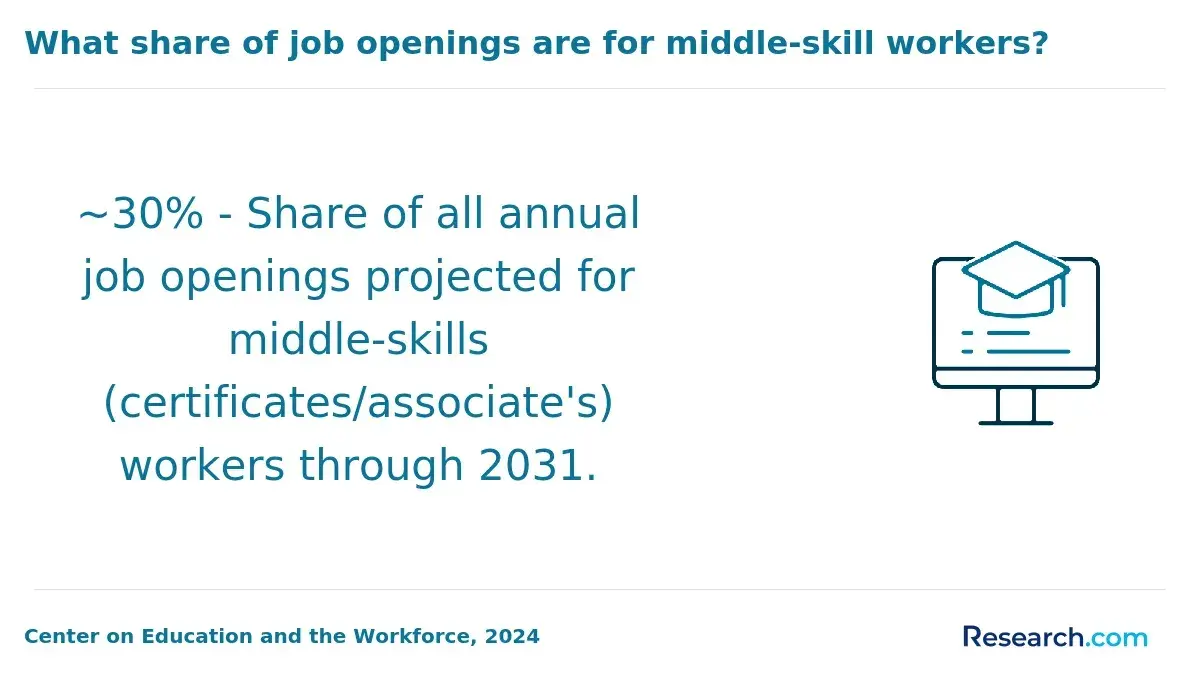
Employer demand for corrections graduates through 2030 is expected to be moderate but uneven, shaped by regional policies and evolving operational needs rather than robust nationwide growth. The U.S. Bureau of Labor Statistics projects a roughly 4% increase in employment for correctional officers and jailers, reflecting a stable labor market balanced between gradual expansion and significant replacement demand from retirements and turnover.
However, these figures mask important geographic disparities: urban centers with larger facilities often see more intense competition for openings, while jurisdictions implementing decarceration initiatives may experience slower growth or shifts toward alternative roles in rehabilitation and community supervision. The roughly 16,300 annual job openings estimated during the decade combine new positions and replacement hires, signaling that growth alone will not guarantee straightforward access for entry-level candidates.
Employers increasingly prioritize a mix of education and practical experience, including internships and prior law enforcement roles, alongside competencies in crisis management and ethical decision-making. Technological advancements in monitoring further necessitate digital proficiency, complicating the skills landscape for corrections professionals today and likely intensifying qualifications over time.
Students and degree holders must weigh these factors regionally and professionally, as relying solely on national hiring trends risks overlooking critical local labor market nuances and evolving employer expectations. While incremental salary increases and public-sector budget constraints suggest limited financial upside, longer-term career stability often depends on continued skills development, specialization, or transitions into administrative or probationary positions.
Those unprepared for these dynamics may find entry and upward mobility more challenging, underscoring the importance of strategic education combined with relevant experience in navigating the corrections employment environment through 2030.
Which Corrections Careers Will Experience the Most Job Growth?
Job growth in corrections careers through 2030 will favor community-focused roles over traditional prison-based positions, reflecting shifting priorities toward rehabilitation and alternatives to incarceration. Probation officers and correctional treatment specialists, for instance, are projected to grow near 10%, significantly outpacing the 3% to 4% increase expected in residential correctional custody.
For students evaluating enrollment options, this means degrees aligned with counseling, case management, and community supervision could offer stronger employability prospects, though these roles demand emotional resilience and skilled interpersonal engagement. Regional differences further complicate the highest demand corrections careers by region, influenced by local policies and incarceration rates.
While correctional officers remain critical, replacement hires and slower growth limit broader opportunity expansion in this segment. The increasing need for substance abuse counselors and reentry coordinators signals a workforce increasingly focused on mental health and societal reintegration, demanding interdisciplinary knowledge beyond traditional corrections training. Prospective students should also consider how evolving correctional philosophies and workforce analytics inform both salary potential and long-term stability.
Those pursuing corrections degrees should carefully weigh program outcomes alongside hiring projections, including realistic annual openings and skills alignment. For many, choosing programs with strong practical elements and support for community-oriented careers may mitigate entry barriers. Research indicates that focusing on expanding subsectors within corrections improves career longevity. For guidance on affordable, accessible options, exploring pathways like an online college no application fee can streamline enrollment without sacrificing quality.
What Is the Salary Outlook for Corrections Graduates Through 2030?
Salary projections for corrections graduates must be examined in the context of inflation, evolving job demands, credential requirements, and shifts within the criminal justice system. Although projections indicate modest wage increases through 2030, these gains often lag behind cost-of-living adjustments and vary widely by role, geography, and specialization.
Entry-level salaries tend to reflect local market conditions and agency budgets more than broad national trends, while advancement beyond frontline positions typically requires additional credentials or specialized experience. The following points summarize critical factors shaping future earnings for corrections professionals.
- Inflation-Adjusted Growth: Projected average wage increases around 5% by 2030 largely track inflation rather than delivering real salary gains. Corrections roles within publicly funded agencies may see tighter budget constraints limiting meaningful pay raises.
- Regional Variability: Salaries fluctuate significantly by state and metropolitan area, with larger urban centers and better-funded agencies typically offering higher wages. This variation underscores the importance of geographic mobility and local labor market conditions.
- Specialization Premium: Positions such as correctional treatment specialists and policy analysts often command salaries exceeding $70,000, reflecting demand for advanced skills and experience beyond standard corrections officer duties.
- Credential Impact: Holding a bachelor's degree can enhance starting pay compared to associate-level or certificate credentials, signaling employer preference for higher educational attainment in a competitive labor market.
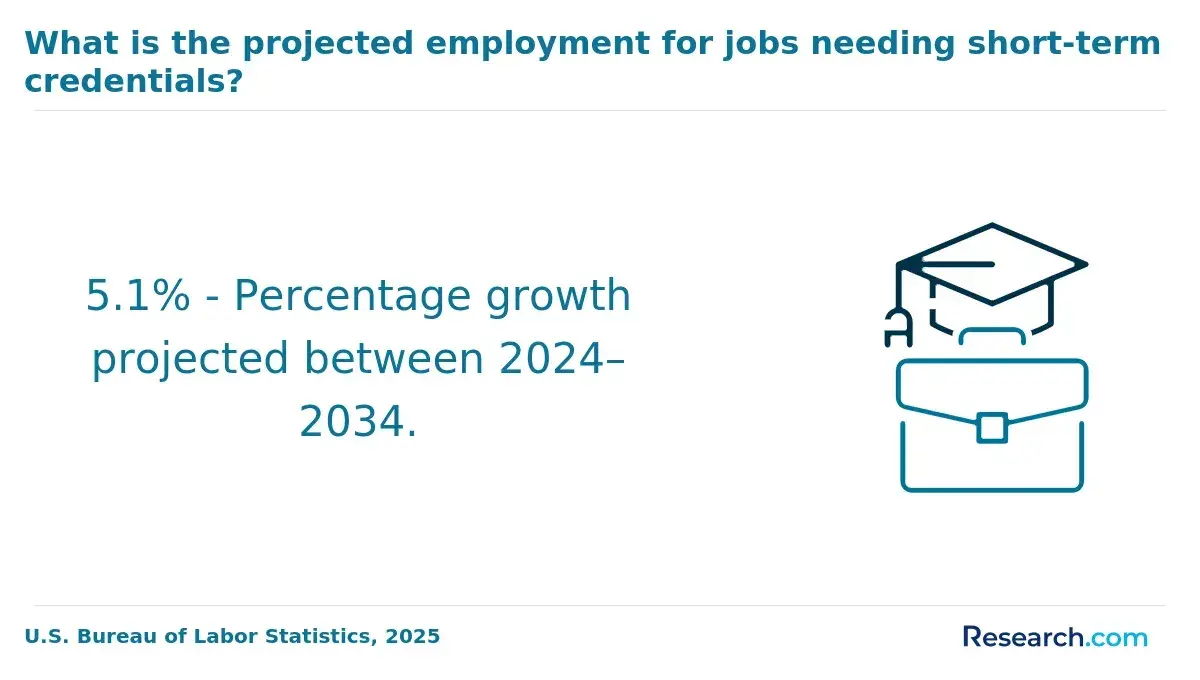
- Labor Demand Pressure: Anticipated 2% to 4% annual job growth in corrections may incrementally support wage increases, especially in regions experiencing staffing shortages or increased enforcement activities.
- Career Plateau Risks: Mid-level professionals may encounter limited salary progression due to structured pay scales and capped promotion opportunities in many public correctional institutions.
- Policy and Privatization Effects: Legislative reforms, funding priorities, and shifts toward privatized facilities could cause localized salary disruptions, requiring adaptability from professionals navigating these changes.
A recent graduate with a bachelor's degree in corrections faced a starting offer on the lower end of the $38,000 to $45,000 spectrum in a mid-sized city. Although initial prospects seemed modest, the candidate recognized that supplemental training in substance abuse counseling could unlock specialized roles with stronger pay. Negotiation conversations revealed the regional budget rigidity, prompting a pragmatic choice to accept the offer with a long-term plan for targeted skill development and geographic flexibility to improve future earning potential.
Which Industries Will Hire the Most Corrections Graduates by 2030?
Projected labor market trends through 2030 suggest that demand for corrections degree holders will remain concentrated in sectors tied to public safety, though nuanced shifts in workforce needs and regulatory environments will shape hiring patterns. Government-operated correctional systems will sustain steady hiring driven by replacement needs and policy reforms emphasizing rehabilitation alongside traditional security roles.
Meanwhile, technological advancements and data-informed supervision are expanding skill demands, particularly in community corrections and private sector programs. Career paths that combine corrections education with mental health, legal compliance, or forensic expertise may gain strategic advantage, although such cross-disciplinary roles often require additional credentials. The following list outlines the primary industries expected to generate strong hiring interest for corrections graduates by 2030.
- Government Correctional Institutions: Federal, state, and local correctional facilities will continue steady hiring primarily for officer and supervisory positions. Candidates with knowledge of evolving incarceration policies and rehabilitation techniques are favored, reflecting ongoing incarceration rates and criminal justice reforms.
- Private Correctional Services: Growth here stems from privatized detention centers and contracted community-based programs. Graduates versed in regulatory compliance and reintegration strategies will find roles in security, case management, and program coordination.
- Community Corrections and Probation Agencies: Increasing reliance on technology-enhanced supervision and data analytics drives demand for multidisciplinary corrections professionals. Positions often blend rehabilitative and supervisory functions, requiring adaptable skill sets.
- Rehabilitation and Reentry Programs: These sectors are poised to expand as emphasis on reducing recidivism grows. Graduates with training in mental health and offender support services will access roles that integrate corrections education with social service skills.
- Forensic Psychology and Legal Compliance Units: While smaller in volume, these fields value candidates who can apply corrections knowledge to offender assessment and regulatory adherence. Advanced credentials may be necessary for entry.
- Juvenile Detention Centers: Specialized institutions serving youth offenders require staff familiar with corrections practices tailored to juvenile populations. Growth here reflects policy shifts toward rehabilitation over punishment for minors.
- Security and Protective Services Firms: Ancillary firms supporting correctional operations and transport services increasingly seek degrees reflecting contemporary corrections issues, broadening traditional hiring landscapes.
Those evaluating educational pathways should weigh how incorporation of multidisciplinary skills-mental health, data proficiency, legal knowledge-can impact employability across these evolving sectors. For instance, a corrections graduate combining certification in mental health counseling may enhance prospects substantially within rehabilitation and reentry environments. While the public safety sector dominates projected demand for those with a corrections degree, prospective students might also explore complementary credentials or specialties in related fields.
This analysis ties directly into broader labor market data on projected demand for corrections degree holders in U.S. public safety sectors, underscoring the importance of aligning educational focus with practical workforce trends. Additionally, those considering interdisciplinary options might evaluate pathways such as an accelerated nutrition degree for roles linked to offender wellness and rehabilitation support, reflecting the expanding scope of corrections-related employment.
Where Will Demand for Corrections Graduates Be Strongest?
Employment for corrections graduates is heavily concentrated in local and state government sectors, which account for the vast majority of available positions. This geographic and institutional concentration means that candidates targeting high-volume jobs should consider states with large or growing incarcerated populations, such as Texas, California, Florida, and New York, where systemic scale combines with ongoing reforms that create openings in community supervision and parole roles.
However, job seekers should weigh regional cost-of-living differences and applicant competition carefully; urban centers may offer more positions but also attract larger candidate pools and impose higher living expenses, potentially offsetting salary gains. For instance, while the South and Southwest show the fastest projected hiring growth, many of these roles remain tied to government funding cycles and evolving local policy priorities, which can affect job stability and promotion pathways.
Private sector employment within corrections, including private prison management and rehabilitation services, remains a smaller but stable segment. Yet, shifts in public sentiment and policy aiming to reduce privatization in criminal justice create uncertainty around the scalability of these roles. Additionally, niche specialties such as cyber monitoring, data analytics for risk assessment, and behavioral health integration are emerging but require interdisciplinary skills not typically covered in traditional corrections curricula, limiting their accessibility.
Prospective graduates enhancing their qualifications in communication, conflict resolution, and technology-based monitoring are better positioned to meet employer expectations, which increasingly prioritize adaptability and credential verification. These factors illustrate that while steady demand exists, the value of a corrections degree depends substantially on geographic, institutional, and skill-specific variables through 2030.
Which Corrections Specializations Will Be Most in Demand by 2030?
Shifts in criminal justice priorities are reshaping employer demand within corrections through 2030, favoring candidates with interdisciplinary skills beyond traditional security roles. As efforts to reduce recidivism and support offender reintegration grow, specializations that integrate behavioral health and community-based strategies gain traction. At the same time, technical competencies associated with security technology and data analytics are becoming increasingly vital, reflecting the sector's move toward more sophisticated operational management.
For example, a student weighing rehabilitation counseling against security technology management must consider not only projected job growth but also the stronger technical prerequisites and ongoing credentialing demands linked to the latter. Emerging research from McKinsey and labor forecasts from the U.S. Bureau of Labor Statistics indicate these specializations will not only expand in volume but require flexibility across agencies and jurisdictions, underscoring the value of adaptable skills and practical experience.
Projected high-demand specializations include:
- Rehabilitation And Mental Health Counseling: Demand stems from growing emphasis on therapeutic approaches to reduce recidivism, intersecting with social work and psychology. Candidates benefit from credentials in behavioral health alongside corrections training.
- Reentry Planning And Community Corrections: Roles focus on offender reintegration through coordination with community resources, requiring excellent communication and case management skills amid shifting policy landscapes.
- Security Technology Management: Expertise in surveillance systems and cybersecurity within correctional facilities commands higher pay but necessitates continual technical updating and certifications.
- Data Analytics For Criminal Justice: Emerging specialization involving interpretation of inmate and system data to inform evidence-based management decisions, often requiring proficiency in statistics and software tools.
- Crisis Intervention And De-escalation Training: Growing employer preference for officers equipped to handle behavioral health crises safely emphasizes practical psychological skills integrated with frontline security work.
- Policy Analysis And Program Evaluation: Increasingly important within corrections administration and reform efforts, these roles demand strong analytical capabilities and understanding of correctional operations.
How Will AI and Technology Affect Corrections Careers Through 2030?
Technology integration in corrections careers is poised more to augment than entirely automate common responsibilities, reshaping entry-level tasks while elevating the demand for specialized judgment and ethical oversight. For example, officers increasingly tasked with managing AI-driven surveillance and behavior prediction tools must balance interpreting algorithmic outputs with human discretion to mitigate biases and unpredictable scenarios.
Failure to adapt could marginalize professionals clinging solely to traditional supervision methods, as facilities prioritize candidates skilled in data literacy, digital communication, and secure technology handling. Corrections technology advancements impact workforce demand through 2030 by shifting hiring trends toward candidates who can operate seamlessly in hybrid environments that combine automated oversight with human decision-making.
This evolution implies educational programs must integrate technology-focused curricula and applied projects relevant to criminal justice contexts, ensuring graduates possess practical skills beyond foundational competencies. As roles evolve, compensation expectations likely will reflect interdisciplinary expertise, although professionals must weigh the tradeoffs between cultivating technical fluency and maintaining essential conflict resolution and ethical communication skills.
Given these dynamics, workforce entrants and current professionals should critically evaluate coursework and certifications for their alignment with emerging technologies rather than assuming all corrections careers will be equally affected. Trends suggest that while routine administrative duties may automate, higher-value functions involving complex judgment and system management will grow in prominence.
Those interested in understanding how these shifts influence corrections salary outlooks and sector-specific demand can also consult data on how much do DNP nurses make, which provides context for salary evolution driven by interdisciplinary skill sets.
Is a Corrections Degree Worth Pursuing Based on 2030 Projections?
The corrections degree job outlook 2030 indicates a modest growth rate of about 4%, which is slower than the average for most occupations. This limited expansion signals a competitive employment market where many openings primarily result from staff turnover rather than new position creation. Prospective students must consider that median salaries for corrections graduates hover near entry-level thresholds, with only incremental growth expected, making financial return a key tradeoff against the degree's time and cost investment.
Salary and hiring projections for corrections graduates reveal that employer expectations often extend beyond the degree itself, requiring additional certifications, adaptive skills, or relevant field experience. These factors can create barriers for new graduates seeking stable roles. For candidates focused on public safety careers where job stability and community impact are prioritized, this degree retains value, but it demands careful assessment of long-term employability risks versus alternatives with stronger financial rewards. Students weighing these options should also consider flexible pathways such as fully-funded DSW programs online that might offer broader career applications.
References
- A looming 'demographic cliff': Fewer college students and ultimately fewer graduates https://www.npr.org/2025/01/08/nx-s1-5246200/demographic-cliff-fewer-college-students-mean-fewer-graduates
- The Labor Market for People with Conviction Histories https://www.vera.org/publications/the-labor-market-for-people-with-conviction-histories
- The AI Revolution: How Jobs Will Change by 2030 https://suzulabs.com/suzu-labs-blog/the-ai-revolution-how-jobs-will-change-by-2030
- Reentry 2030 Could Keep 500,000+ People Out of Prison and Save States $43 Billion - Reentry2030 https://reentry2030.org/news/impact-cost-savings-recidivism-rates/
- Berkeley Study Shines Light on the Pressures of Being a Corrections Officer | National Reentry Resource Center https://nationalreentryresourcecenter.org/resources/berkeley-study-shines-light-pressures-being-corrections-officer
- Young degree holders set to double to 300 million by 2030 https://www.universityworldnews.com/post.php
- Council of State Governments Convenes Reentry 2030 States to Discuss Employment Issues https://www.georeentry.com/community-corrections-research-news/council-state-governments-reentry-2030-employment-issues/
- Which jobs can remain secure until 2030 despite AI? - AEEN https://www.aeen.org/which-jobs-can-remain-secure-until-2030-despite-ai/
- The future of work: Emerging job trends and the impact of AI (2025-2030) | EIT Deep Tech Talent Initiative https://www.eitdeeptechtalent.eu/news-and-events/news-archive/the-future-of-work-emerging-job-trends-and-the-impact-of-ai-2025-2030/
- BOP: Correctional Officer https://www.bop.gov/jobs/positions/index.jsp
Other Things You Should Know About Corrections
Program structure significantly affects readiness for corrections roles, as hands-on training components like internships or practicum placements correlate strongly with employer preferences. Students should prioritize programs offering substantial field exposure, even if these programs demand more time or cost, because this experience directly impacts job prospects and ability to perform under real-world supervision and stress. Purely theoretical programs may limit practical skill development, creating a gap when transitioning to correctional environments that require immediate operational competence.
Corrections salaries vary widely by region, with urban and high-cost areas often offering better pay but also higher living expenses and competitive hiring pools. Candidates must balance higher nominal salaries against the density of available positions and cost of living, as rural or lower-cost regions may present more frequent job openings but with comparatively lower wages. For many, accepting roles in less saturated markets may improve job stability and career advancement despite the initial salary tradeoff.
Candidates without prior corrections or criminal justice experience often face steeper learning curves post-degree and may encounter limited advancement early on. Gaining entry-level work or volunteer experience before enrolling can sharpen understanding of job demands and inform the choice of specialized coursework, making subsequent degree programs more targeted and efficient. This approach typically results in stronger resumes and practical skills that appeal to employers, outweighing the cost and time of a delayed degree start.
Despite modest growth projections, workload intensity and high job stress in corrections remain persistent issues that affect retention and job satisfaction. Hiring increases may not sufficiently offset workforce attrition caused by burnout or safety concerns, meaning new entrants should consider their resilience and support systems critically. Prioritizing programs that address stress management and situational training can better prepare graduates for these realities, influencing long-term career sustainability beyond initial hiring trends.


