2027 Corrections Degree Completion Time Report: How Long Students Actually Take to Graduate

Co-Founder and Chief Data Scientist
Many students pursuing a corrections degree face unpredictable timelines shaped by external obligations, course availability, and transfer credit complexities. Recent data from the National Student Clearinghouse Research Center indicates shifting enrollment patterns in criminal justice-related fields, highlighting that pauses and part-time attendance significantly extend graduation time. Workforce demands and employer expectations in the corrections sector often require balancing education with job responsibilities, leading to varied pacing in degree progress.
Understanding these practical realities clarifies why completion often diverges from prescribed curricular lengths. This report examines actual completion durations, the influences behind delays or acceleration, and critical insights for realistic academic planning in corrections fields.
Key Things to Know About Corrections Degree Completion Time
- Most students take longer than the advertised program length. Only about 45% of first-time, full-time bachelor's students graduate within four years, while roughly 64% finish within six years, making the actual completion time longer for many learners.
- The average college graduate is often older than expected. The median age of bachelor's degree recipients is around 23 years, while master's degree recipients are typically in their early 30s, reflecting the growing number of adult and returning students.
- Completing a degree can significantly increase lifetime earnings. Workers with a bachelor's degree earn roughly 65% more per week than those with only a high school diploma, and graduate degree holders typically earn even higher median wages over their careers.
- What Is the Average Graduation Time for Corrections Students? Average Graduation Timeline
- What Factors Have the Biggest Impact on Graduation Speed? Graduation Timeline Factors
- How Does Full-Time Versus Part-Time Enrollment Affect Graduation Timelines? Full-Time vs. Part-Time Graduation Timeline
- Do Online Corrections Students Graduate Faster Than Campus-Based Students? Online vs. Campus-Based Timeline
- How Many Months or Years Can Transfer Credits Save? Using Transfer Credits
- Do Accelerated Corrections Programs Significantly Reduce Completion Time? Accelerated Program Timeline
- Which Corrections Program Requirements Most Often Extend Graduation Timelines? Factors Extending Graduation Timeline
- Does Taking Longer to Graduate Increase the Cost of a Corrections Degree? Impact on Program Cost
- Does Graduating Faster Improve Career Prospects? Impact on Career Prospects
- Which Scheduling Mistakes Commonly Delay Graduation? Mistakes to Avoid
What Is the Average Graduation Time for Corrections Students?
Corrections degree completion timelines generally reflect the intensity of enrollment and program level. Most associate degree candidates who study full-time finish within two to three years, consistent with broader academic benchmarks for similar credentials. Bachelor's degrees in corrections extend longer, typically ranging from four to six years, largely due to part-time attendance patterns among working adults balancing employment and family obligations. These variations mean the average time to graduate corrections degree students often require exceeds traditional academic schedules, particularly when students juggle multiple responsibilities outside the classroom.
Several determinants shape these disparities in graduation time. Enrollment status is pivotal: full-time students progress faster, while part-time learners, common in corrections education due to shift work and law enforcement commitments, experience slower progression. Transfer credits can either accelerate or delay completion depending on alignment with program requirements and institutional policies, where mismatches often necessitate repeating courses. Further complexities arise from mandated practicum placements, security clearances, and certifications integral to corrections fields, which can interrupt continuous study or extend program length. The blend of online and on-campus formats also factors into pacing, with some cohorts benefiting from flexible scheduling but still constrained by practical fieldwork demands.
Graduation timing profoundly influences financial planning and workforce entry strategies. Students who accelerate completion can reduce tuition costs and enter corrections careers sooner, an important consideration amid evolving employer preferences. Conversely, those pursuing extended timelines may gain specialized knowledge or credentials but risk delayed earnings and increased expenses. Educational planners and prospective students must weigh these trade-offs carefully, grounding decisions in realistic expectations shaped by institutional frameworks and labor market needs. For those exploring support options in related healthcare fields, understanding differences in program length and structure is essential, as reflected in research on affordable online FNP programs.
What Factors Have the Biggest Impact on Graduation Speed?
Graduation speed in corrections degree programs results from the interplay of academic planning, institutional policies, and personal circumstances rather than any single factor. Students' choices regarding enrollment intensity, credit transfer, and course delivery format combine with external demands and program design to shape how quickly credentials are earned. Recognizing these dynamics provides a clearer picture for prospective and current students aiming to optimize their path through corrections studies while managing competing responsibilities.
- Enrollment Status and Course Load: Full-time enrollment significantly accelerates completion by enabling students to progress through required coursework within standard academic cycles. Part-time students, who often juggle employment or family duties, typically extend their timeline, with recent NCES data showing only about 40% of part-time undergraduates finishing within six years compared to nearly 60% of full-time peers. This variable directly influences workload pacing and the ability to maintain consistent academic momentum.
- Transfer Credits and Institutional Acceptance: Students entering corrections programs with prior relevant credits can reduce redundant coursework and shorten time to degree. However, inconsistencies in how institutions evaluate and accept transfer credits can create bottlenecks, delaying progression when transferred coursework fails to satisfy core requirements or align with program competencies. Careful upfront planning and credit articulation are crucial to leveraging this advantage.
- Course Availability and Scheduling Flexibility: Programs offering evening, weekend, or online classes tend to support faster graduation for working adults by accommodating varied schedules. Conversely, limited course slots or inflexible schedules may force students to pause until key classes become available, especially in tightly sequenced corrections curricula. The rise of specialized formats, including some healthcare adjacent fields like an online PhD in nursing, illustrates the growing demand for flexible delivery that also impacts completion timelines in corrections and related disciplines.
- Financial Constraints and Employment Obligations: Dependence on part-time work to finance education frequently results in reduced credit loads per semester, extending graduation timeframes. The pressure to balance employment with academic demands constrains study hours and may necessitate slower progression through complex corrections coursework or required practicum components.
- Availability of Student Support Services: Access to targeted advising, tutoring, and career counseling improves degree completion rates by helping students navigate program requirements efficiently and resolve academic challenges promptly. Institutions that integrate comprehensive support structures help mitigate delays caused by administrative hurdles or performance setbacks endemic in corrections studies.
How Does Full-Time Versus Part-Time Enrollment Affect Graduation Timelines?
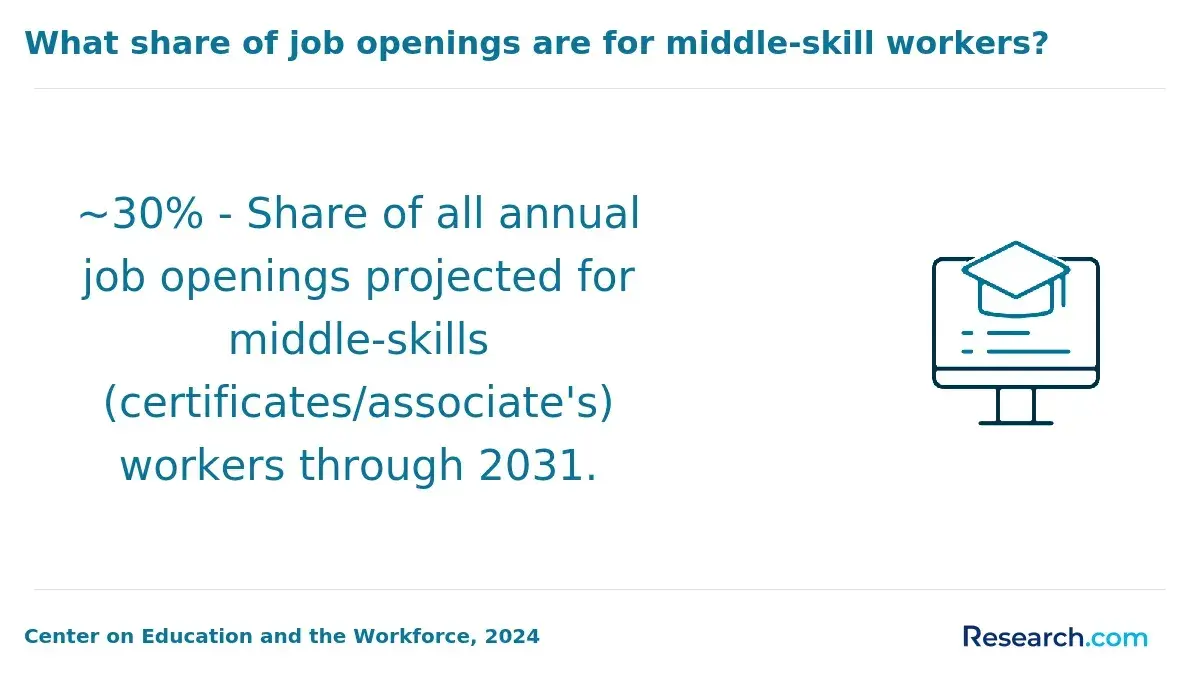
Enrollment status significantly influences how long it takes to complete a corrections degree, with full-time students typically graduating within the program's standard two- to four-year timeframe. Data from 2024 analysis by the National Center for Education Statistics shows part-time students often require 1.5 to 2 times longer than their full-time counterparts to finish. This difference reflects how full-time enrollment facilitates a more consistent, concentrated course load that aligns with established academic sequences and institutional pacing, enabling earlier degree completion and workforce entry. Meanwhile, part-time pathways extend graduation timelines due to reduced credit loads each semester and interruptions in academic continuity.
The variation in completion timing hinges on multiple intertwined factors. Full-time students benefit from structured scheduling that supports sequential coursework and steady progress through complex requirements, while part-time students must navigate fewer courses per term amid competing demands such as employment or family responsibilities. Program delivery models also affect outcomes; some institutions offer greater flexibility or hybrid formats that attempt to accommodate part-time learners, but disruptions in course availability and cohort cohesion remain challenges. The interplay between academic rigor, institutional structure, and external life commitments shapes how realistically one can maintain momentum toward graduation under differing enrollment statuses.
Choosing between full-time and part-time enrollment carries practical implications beyond timing, impacting financial planning and integration into corrections career pathways. Full-time study may entail greater short-term costs and workload intensity but enables faster credentialing and alignment with employer expectations that increasingly prioritize timely degree completion. Part-time students gain valuable life balance but face risk of curricular changes or drifting skills relevancy with extended durations. These tradeoffs highlight the importance of weighing personal circumstances against the operational realities of academic progression and workforce entry within corrections education.
Do Online Corrections Students Graduate Faster Than Campus-Based Students?
Online students pursuing degrees in corrections often complete their programs more quickly than those attending traditional campus settings, though this outcome is not universal. Data from the National Center for Education Statistics in 2024 indicates that about 58% of online corrections students graduate within four years, versus 45% of on-campus students, suggesting an overall acceleration trend for online learners. Nonetheless, the variability in student backgrounds, program rigor, and external commitments means some campus-based students may graduate at comparable or faster rates depending on their circumstances. Graduation speed in corrections education is therefore better understood as context-dependent, reflecting how program structure interacts with individual student needs and goals.
The capacity for flexible scheduling and self-paced coursework often gives online corrections students an advantage in managing their time around work and family responsibilities. Many online programs allow enrollment intensity to vary semester-to-semester, which can shorten time-to-degree for motivated students but also extends duration if part-time study dominates. Conversely, campus-based curricula typically adhere to fixed semester calendars and semester-based enrollment, which can slow completion but also provide a more predictable and supported progression. Additional factors such as internship or practicum requirements, access to faculty guidance, and students' time-management discipline significantly influence how quickly students advance regardless of delivery mode.
Choosing between online and campus corrections programs also affects how students cultivate habits essential for academic success and workforce readiness. Online formats demand strong self-regulation and proactive engagement, which can accelerate degree completion for organized learners but may introduce delays for those needing more structure. Campus settings often integrate extracurricular and networking elements that contribute to long-term professional development, potentially lengthening the path to graduation but enriching career entry conditions. The better pathway depends on balancing immediate educational pace with broader career preparation and personal circumstances.
One corrections graduate recalled hesitating before enrolling due to rolling admissions deadlines and uncertainty about transferring prior credits. Waiting for clearance from an admissions advisor caused a several-week delay, during which they debated whether to start online courses immediately or wait for a campus-based option with more direct advising. Ultimately, the decision hinged on balancing the desire to begin quickly against ensuring they met prerequisites that would prevent unnecessary course repeats, illustrating how timing and institutional processes influence graduation timelines just as much as student effort.
How Many Months or Years Can Transfer Credits Save?
Transfer credits can reduce the total time required to complete a corrections degree by several months to more than a year, depending on how many credits are accepted and how well they align with the program's requirements. Recent findings from the National Student Clearinghouse Research Center suggest that students with substantial transfer credits typically shorten their time to degree by 25% to 40%, demonstrating that such credits often account for a significant portion of foundational coursework. However, this time savings varies widely because not all transferred credits count equally toward the degree, and the complexity of corrections degree pathways influences how quickly students can progress toward graduation. Addressing the practical question of average months saved with transfer credits in corrections programs requires examining these factors closely rather than relying on broad assumptions.
Key determinants of the time saved include institutional accreditation compatibility, which ensures credits meet quality standards, as well as course equivalency evaluations that assess whether prior coursework matches the receiving program's curriculum. Many corrections programs enforce residency requirements or cap transferable credits-commonly limiting transfers to 60 credits for a bachelor's degree-which restrict how many credits apply directly to degree progression. Additionally, some institutions require minimum grades for transfer acceptance or exclude certain courses from credit for program relevancy, further influencing the actual months saved through transferred credits. These policies create variability in student experience, demanding careful navigation of academic credit systems and degree pathway flexibility.
Effectively leveraging transfer credits impacts academic planning and financial costs by allowing students to sequence remaining courses more strategically to optimize learning outcomes and workforce readiness. While accelerated graduation timelines reduce tuition and living expenses, students must balance speed with comprehensive coverage of specialized training essential in corrections fields. In considering transfer credit benefits, prospective students should also recognize that these credits influence how education intersects with employer expectations focused on content relevancy and practical skills. For those comparing pathways across disciplines, understanding credit transfer nuances in corrections programs can be as important as the well-documented demand for credentials in fields like dietetics programs, where transfer policies similarly affect educational trajectories.
Do Accelerated Corrections Programs Significantly Reduce Completion Time?
Accelerated corrections programs aim to compress the traditional timeline of degree completion by increasing course loads per term and streamlining curriculum pathways. Typically, these programs reduce nominal degree lengths from four years to two or three for bachelor's or from two years to one year for master's degrees. Their design often involves offering condensed terms, overlapping prerequisite and core courses, and minimizing breaks between sessions. However, institutional structures and curriculum requirements still set boundaries on how much pacing can be intensified without compromising academic standards or accreditation.
The actual time saved in accelerated formats depends heavily on factors such as course intensity, credit requirements per semester, and the sequencing of prerequisite classes. Even if credits are redistributed to allow heavier loads, internships, practicum, or capstone projects usually maintain original durations due to external expectations or learning outcomes. Additionally, students must manage the workforce and life commitments that frequently necessitate part-time enrollment or paused study periods, which diminish potential gains in completion speed. Thus, while accelerated programs promise shorter degree timelines, structural and personal constraints often result in more modest improvements in actual graduation times.
These compressed programs typically entail a more demanding workload and less scheduling flexibility, forcing students to weigh faster progression against potential burnout or incomplete mastery of material. The intensity can challenge retention and practical skill development, essential for corrections professionals, where employers prioritize demonstrated competencies alongside credential timelines. Consequently, accelerated tracks require careful consideration of individual capacity, life circumstances, and professional goals to ensure that expedited pacing does not compromise the depth or applicability of learning.
One graduate recalled hesitating before applying due to the rolling admissions process, uncertain if starting sooner would be possible given work demands and prerequisite completion. The applicant delayed finalizing enrollment, weighing the risks of losing a spot against the need for additional preparation time. When acceptance finally arrived close to the preferred term start, the graduate felt relief but also recognized that the accelerated format required adjustments to personal scheduling and study habits. This experience highlighted that, beyond program design, timing and readiness factor heavily in whether accelerated corrections degrees translate to meaningful reductions in total completion time.
Which Corrections Program Requirements Most Often Extend Graduation Timelines?
Graduation timelines in corrections degree programs are influenced less by the total credit count and more by embedded curricular demands designed to ensure professional readiness. These components-while vital for aligning academic preparation with workforce expectations-often constrain pacing due to their fixed scheduling and experiential nature. The structuring of such requirements frequently limits student flexibility, making on-time completion a challenge across many institutional settings.
- Mandatory Practical Training: Internships, fieldwork, or clinical placements require set hours in real-world correctional environments, which cannot be compressed or replaced with independent study. These experiential mandates are essential for licensure and skill acquisition but often conflict with students' work or personal schedules, extending degree duration especially for those balancing multiple commitments.
- Sequential Course Prerequisites: Core and elective courses frequently necessitate completion of prior classes before progression. This rigid sequencing can create bottlenecks when demand exceeds availability or when programs offer limited sections per term, leading to delays in enrolling for required courses.
- General Education Requirements: Beyond corrections-specific content, students must fulfill foundational liberal arts or science credits that may not directly relate to the field. These additional hours extend the overall credit burden and often impact transfer students disproportionately when previously earned credits do not fully align with program criteria.
- Part-Time Enrollment Patterns: Many corrections students juggle employment and family responsibilities, prompting enrollment below full-time status to manage workload. While understandable, reduced course loads translate into longer completion periods, reinforcing that academic scheduling rigidity disproportionately affects non-traditional learners.
Recent labor market data from 2024 reveals that approximately 40% of corrections students exceed six years to graduate, highlighting the practical impact of these structural constraints. Recognizing these factors is crucial for students and advisors aiming to develop realistic academic plans that balance professional preparation with personal obligations and institutional policies.
Does Taking Longer to Graduate Increase the Cost of a Corrections Degree?
Taking longer to graduate from a corrections degree program frequently increases total tuition and related costs, especially when institutions charge students per term rather than a flat overall rate. Students extending beyond standard timelines often incur additional fees for repeated semesters, textbooks, and administrative expenses, which accumulated over time raise overall financial outlays. Loss of eligibility for certain financial aid packages or scholarships tied to on-time completion further inflates effective costs. Enrollment status also plays a critical role; part-time students typically pay tuition per credit hour but might face longer degree durations, combining to raise cumulative expenses. These intertwined factors shape the impact of extended completion on the real cost burden, particularly given that many corrections roles require timely graduation to meet employer expectations and capitalize on available salary ranges reported by industry sources like the U.S. Bureau of Labor Statistics.
However, extended graduation does not invariably translate to substantial cost increases, depending on specific institutional policies and student choices. Some programs offer flat-rate tuition models or allow flexible course loads that minimize financial penalties for prolonged study periods. Employer tuition assistance or other funding sources may also offset incremental costs, especially for working adults balancing job commitments. Strategic enrollment pacing-even if slower-can mitigate immediate expenses, though it risks delayed workforce entry. Understanding the nuances of enrollment behavior and institutional pricing is essential in managing corrections degree extended graduation costs. Those weighing alternatives might also compare with accelerated pathways, such as an accelerated PharmD program, which illustrate how compressed timelines influence financial and career outcomes differently.
Does Graduating Faster Improve Career Prospects?
Graduating faster from a corrections degree program can provide an earlier entry point into the workforce, potentially shortening the gap between education completion and employment. This timing advantage may improve initial job search competitiveness by aligning candidates sooner with employer hiring cycles. However, employers rarely evaluate graduation speed in isolation; they emphasize a candidate's practical skills, demonstrated competencies, and overall readiness to perform in corrections roles. The value of completing a degree quickly depends significantly on how well the student has cultivated applicable skills and credentials alongside their academic progress, impacting real hiring decisions.
Whether accelerated graduation improves career outcomes hinges on factors beyond timeline compression. Internship experience, hands-on applied learning, and networking opportunities often carry greater weight with corrections employers than simply finishing a program ahead of schedule. Candidates who accelerate but sacrifice these experiential components may find their portfolio less compelling compared to peers who graduate on a traditional timeline enriched with relevant work experience and deeper skill mastery. The market demand for specific certifications or practical competencies also influences how strongly graduation speed signals readiness in this labor segment, requiring students to gauge whether their accelerated path aligns with industry priorities.
Trade-offs between speed and experiential depth are critical in shaping longer-term career prospects within corrections. While graduating faster can reduce educational costs and hasten workforce entry, it may limit time for valuable internships or part-time roles that build essential professional networks and on-the-job skills. Students should balance their goal of early completion with opportunities to engage in substantive learning and credential-building activities, as this combination often proves more predictive of sustained employability and advancement. To explore how different educational choices affect cost-effectiveness and career value in related fields, consider reviewing options for online masters forensic psychology.
Which Scheduling Mistakes Commonly Delay Graduation?
Graduation delays in corrections degree programs usually stem not from academic difficulty alone but from avoidable scheduling and enrollment planning errors. These mistakes disrupt consistent progression across program levels and formats, affecting working adults, transfer students, and full-time learners alike. Understanding how course sequencing, credit loads, and institutional timing impact degree timelines can help maintain steady advancement toward completion.
- Part-Time Enrollment Without Strategic Planning: Taking fewer credits per term than advised extends the timeline, especially when students balance work or family commitments. Institutions often design curricula expecting a full- or near-full-time load, so part-time attendance without intentional course load adjustments disrupts momentum.
- Ignoring Prerequisite Sequencing: Corrections programs require foundational courses before advanced topics. Enrolling out of order leads to registration blocks or course repeats, causing significant delays tied directly to curriculum sequencing rules.
- Insufficient Transfer Credit Evaluation: Transfer students frequently encounter credit mismatches that force additional coursework beyond initial estimates. Delaying comprehensive credit review with advisors before enrollment compounds this issue.
- Missed Course Availability Windows: Required courses offered only in select terms can generate bottlenecks. Students who miss registration deadlines or must retake failed courses wait months for the next offering, stretching degree duration.
- Failure to Align Enrollment with Institutional Policies: Misunderstanding term schedules, add/drop deadlines, or maximum credit caps often causes unintended disruptions in academic progress.
A 2024 National Student Clearinghouse report found that around 38% of degree completers nationwide delayed graduation by at least one year due to enrollment interruptions or misaligned scheduling. This illustrates how institutional structures, credit sequencing, and enrollment behaviors jointly shape time-to-degree outcomes in corrections programs.
Other Things You Should Know About Corrections
Effective workload management can influence completion speed, but students must recognize limits imposed by curriculum demands and necessary skill acquisition. Overloading courses risks superficial mastery and burnout, delaying graduation through course failures or withdrawn classes. A better approach is prioritizing consistent pacing and leveraging program support resources to maintain steady progress rather than seeking rapid completion that compromises learning quality.
Corrections programs vary; some emphasize theory and research, while others focus on applied skills and policy. Students aiming for roles requiring deep analytical abilities might accept longer timelines to engage fully with advanced topics. Conversely, those targeting entry-level positions could prioritize faster completion through programs with streamlined, practical curricula. The decision should weigh long-term career goals against immediate time-to-degree, favoring program alignment with role preparedness over speed alone.
Transfer students often face curricular mismatches that make completion timelines unpredictable, particularly in corrections where certain credentialing prerequisites are non-negotiable. While seeking maximum credit transfer can shorten duration, it may disrupt the continuity of learning essential for developing competencies valued by corrections employers. It is advisable to prioritize programs that offer structured guidance on transfer integration, ensuring consistency and skill mastery even if it means a modest extension of the time needed to graduate.