2027 Best Accredited Online Creative Writing Degree Programs: Compare Tuition, Admissions, and Career Outcomes

Co-Founder and Chief Data Scientist
Choosing an online creative writing degree is a cost, time, and career-fit decision, not just a search for the most inspiring program. The U.S. Bureau of Labor Statistics reported a 2024 median pay of $72,270 for writers and authors, but outcomes vary widely by portfolio, industry, and experience.
This guide is for students comparing accredited online bachelor's and master's options. You will learn how to evaluate tuition, admissions, format, accreditation, support services, and career paths so you can choose a program that fits your goals and budget.
Key Things You Should Know
- The best-value online creative writing programs are usually institutionally accredited, transparent about total cost, generous with transfer credit, and strong in faculty feedback, portfolio development, and career support.
- College Board's 2024 tuition data shows published tuition and fees averaged $11,610 at public four-year in-state institutions and $43,350 at private nonprofit four-year institutions, so school type and residency can strongly affect ROI.
- Creative writing degrees can support careers in writing, editing, publishing, marketing, communications, technical writing, and content strategy, but students should compare employment data and portfolio outcomes rather than relying on rankings alone.
Which Accredited Online Creative Writing Degree Programs Offer the Best Overall Value?
The best overall value usually comes from a program that balances four factors: recognized accreditation, reasonable total cost, flexible delivery, and strong writing mentorship. A low-cost program may not be the best investment if it offers little faculty feedback, limited workshop opportunities, or weak career support; a more expensive program may be worthwhile only if it clearly improves portfolio quality, networking access, or professional preparation.
For most students, value depends on the degree level. A bachelor's degree in creative writing, English, or professional writing is often best for students who need a broad undergraduate credential. An online MFA or master's in creative writing is usually better for writers seeking advanced workshop training, teaching preparation, publishing credentials, or a structured environment to complete a book-length manuscript.
The table below summarizes which types of accredited online creative writing programs tend to offer the strongest value for different student profiles. It focuses on decision factors rather than ranking schools by reputation alone.
| Student goal | Best-value program type | Why it may be a strong fit | What to verify before enrolling |
| Lowest total undergraduate cost | Public online bachelor's program with in-state or flat-rate tuition | Often combines institutional accreditation, lower published tuition, and transfer pathways | Online fees, residency rules, transfer limits, and course availability |
| Working adult completing a degree | Online bachelor's completion program in creative writing, English, or professional writing | May accept prior credits and offer asynchronous courses | Maximum transfer credits, prior learning credit, and required upper-division writing courses |
| Portfolio-focused writer | Low-residency or fully online MFA | Provides workshop critique, faculty mentorship, and manuscript development | Faculty publishing background, genre options, residency requirements, and thesis expectations |
| Career-focused communicator | Professional writing, technical writing, or writing and rhetoric program | Can align writing skills with workplace communication, UX, editing, grants, or content strategy | Internship access, career services, writing samples, and employer-facing projects |
| Student unsure about graduate study | Affordable bachelor's program with electives in publishing, digital media, or editing | Builds a broader employment foundation before committing to an MFA | Whether courses produce a portfolio usable for jobs or graduate applications |
A common mistake is choosing the most famous writing program without calculating net price or checking whether the format fits your life. A better approach is to identify your primary outcome first: finishing a degree, building a publishable portfolio, preparing for teaching, or entering a writing-related career.
Students should be cautious about programs that advertise creativity but do not show clear degree requirements, faculty credentials, sample course lists, or career services. Strong programs usually make it easy to see how courses build from craft fundamentals to advanced workshops, revision, professional writing, and a final portfolio or thesis.
What Accreditation Should Students Look for in an Online Creative Writing Degree Program?
Accreditation is the quality-control baseline for an online creative writing degree. In the U.S., students should prioritize institutional accreditation from an agency recognized by the U.S. Department of Education or the Council for Higher Education Accreditation. This matters because institutional accreditation affects federal financial aid eligibility, transfer credit, graduate school recognition, and employer confidence.
Creative writing does not typically have a required programmatic accreditor in the same way some health, counseling, education, or clinical fields do. For example, accredited online speech pathology programs must be evaluated against profession-specific standards for licensure preparation, while creative writing programs are generally judged by institutional quality, curriculum strength, faculty experience, and portfolio outcomes.
Use the following steps to verify accreditation before applying. This is especially important for online students because search results and advertisements can make unaccredited or weakly recognized providers appear similar to established institutions.
- Confirm the institution's accreditor on the school's official accreditation page.
- Check that the accreditor is recognized by the U.S. Department of Education or CHEA.
- Verify that the online creative writing program is offered by the accredited institution, not by an unrelated third-party provider.
- Ask whether online credits, transfer credits, and graduate credits appear on the transcript in the same way as campus-based credits.
- Review whether the program has published student learning outcomes, faculty profiles, and portfolio or thesis requirements.
Red flags include vague claims such as "internationally accredited" without a recognized U.S. accreditor, pressure-based enrollment tactics, unclear tuition policies, and promises that a writing degree will lead to guaranteed publication or employment. Accreditation does not guarantee a perfect program, but it is a minimum requirement for protecting your academic and financial investment.
How Do Tuition Costs Compare Across Accredited Online Creative Writing Degree Programs?
Tuition for accredited online creative writing degrees varies by school type, residency status, degree level, fees, and transfer credit. Students comparing programs should look beyond the advertised per-credit rate and estimate the total cost to complete the degree from where they are now.
College Board's 2024 Trends in College Pricing reported average published tuition and fees of $11,610 for public four-year in-state students and $43,350 for private nonprofit four-year students. For online creative writing students, this means a public program with flat-rate or in-state pricing can be a major value advantage, but only if required fees, books, technology costs, and delayed course availability do not offset the savings.
The table below shows the main cost factors students should compare. It is designed to help you estimate actual cost, not just advertised tuition.
| Cost factor | Why it matters | Decision tip |
| Per-credit tuition | Most online programs charge by credit, especially for part-time learners | Multiply by remaining credits after transfer evaluation |
| Residency pricing | Public universities may charge different rates for in-state and out-of-state students | Ask whether online students receive a separate flat rate |
| Online course fees | Technology or distance-learning fees can raise the real cost | Request a full cost sheet for the entire program |
| Transfer credit acceptance | Accepted credits reduce both time and tuition | Get an official transfer review before committing |
| Residency or campus visits | Some low-residency MFA programs require travel | Include lodging, transportation, and missed work in your estimate |
| Graduation timeline | Extra semesters may increase fees and opportunity cost | Check whether required workshops run every term |
Graduate creative writing students should compare cost with career intent. If your goal is a direct workplace promotion, a writing degree may compete with other professional graduate options; for example, students comparing communication, people operations, or organizational writing roles may also research the cheapest online master's in human resources to understand how different degrees align with employer demand and salary pathways.
The biggest pricing mistake is comparing schools by tuition alone. A program charging a lower per-credit rate may cost more if it accepts fewer transfer credits, requires more total credits, or offers required courses infrequently. Before applying, ask each school for a written estimate based on your transcript, not a generic program cost.
How Competitive Is Admission to Accredited Online Creative Writing Degree Programs?
Admissions competitiveness depends heavily on the degree level. Online bachelor's programs in creative writing or English are often designed for access and degree completion, while MFA programs are typically more selective because they rely on workshops, faculty mentorship, and portfolio review.
For undergraduate applicants, schools usually evaluate academic readiness through transcripts, GPA, transfer credits, and general admission requirements. Students without many completed credits may consider starting with an associate's degree and then transferring into a bachelor's completion program, especially if cost control and academic confidence are major priorities.
The table below compares common admissions requirements by degree level. Requirements vary by institution, so treat this as a planning guide rather than a substitute for a school's official admissions page.
| Program level | Typical admissions materials | Competitiveness level | Best fit |
| Online bachelor's in creative writing or English | High school transcript or transfer transcript, application, and sometimes placement information | Usually low to moderate | First-time students, transfer students, and adult learners |
| Bachelor's completion program | Prior college credits, minimum GPA, official transcripts, and sometimes a writing sample | Moderate, depending on transfer requirements | Students with previous college coursework |
| Online MA in creative writing, English, or professional writing | Bachelor's degree, statement of purpose, writing sample, resume, and recommendations | Moderate | Students seeking advanced writing study with broad academic or career applications |
| Online or low-residency MFA | Creative portfolio, statement, recommendations, transcripts, and genre selection | Often selective | Writers seeking intensive craft training, manuscript development, or teaching preparation |
Admissions flexibility should not be confused with low quality. Many reputable online programs are built for adult learners and use broader access policies, while still requiring rigorous writing workshops and capstone work. On the other hand, highly selective MFA programs are not automatically better for every student; they may be less flexible, more expensive, or too literary-focused for students pursuing workplace writing careers.
Applicants can strengthen their chances by submitting polished writing samples, explaining their goals clearly, and choosing programs that support their preferred genre or writing field. For MFA applicants, the writing sample usually matters more than test scores because it shows voice, craft, revision ability, and fit with the faculty.
Which Learning Formats Offer the Greatest Flexibility in Online Creative Writing Degree Programs?
The most flexible online creative writing programs are usually asynchronous, part-time friendly, and designed around repeated writing and revision rather than fixed meeting times. However, maximum flexibility is not always the same as maximum learning. Writers often benefit from live workshops, cohort feedback, deadlines, and faculty conferences.
Online learning formats differ in how much independence they require. Students who are comparing pace and flexibility across fields may notice that models used in fast track MSW programs online also appear in writing programs: compressed terms, year-round enrollment, and heavier weekly workloads. Acceleration can work well for disciplined students, but it can reduce revision time, which is central to creative writing.
The table below compares common online formats and the students they tend to serve best.
| Format | How it works | Best for | Potential drawback |
| Asynchronous online | Students complete readings, discussions, workshops, and assignments on weekly deadlines | Working adults, caregivers, military students, and students in different time zones | Requires strong self-management and proactive communication |
| Synchronous online | Classes or workshops meet live by video at scheduled times | Students who want real-time discussion and peer accountability | Less convenient for unpredictable work schedules |
| Low-residency | Mostly online coursework with short campus or retreat-style residencies | MFA students seeking intensive mentorship and community | Travel costs and time away from work may be significant |
| Accelerated terms | Courses run in shorter sessions with concentrated workloads | Students with strong writing discipline and clear completion goals | May limit time for revision and deep reading |
| Self-paced or competency-based elements | Students progress through some material at their own pace | Experienced writers and adult learners with prior knowledge | May offer fewer workshop interactions |
Before choosing a format, ask how workshops are conducted. A strong online workshop should include clear critique guidelines, instructor moderation, revision expectations, and opportunities to discuss feedback. Programs that rely only on discussion boards without meaningful faculty engagement may not provide enough developmental support for serious writers.
A practical way to choose is to match format to your weekly schedule. If you can write and revise on a predictable routine, asynchronous learning may be ideal. If you need spoken discussion to stay engaged, synchronous or low-residency formats may be worth the added scheduling constraints.
What Student Support Services Improve Success in Online Creative Writing Degree Programs?
Student support services can make a major difference in online creative writing programs because writing improves through feedback, revision, and community. Support matters even more for adult learners who are balancing school with work, family, and financial responsibilities.
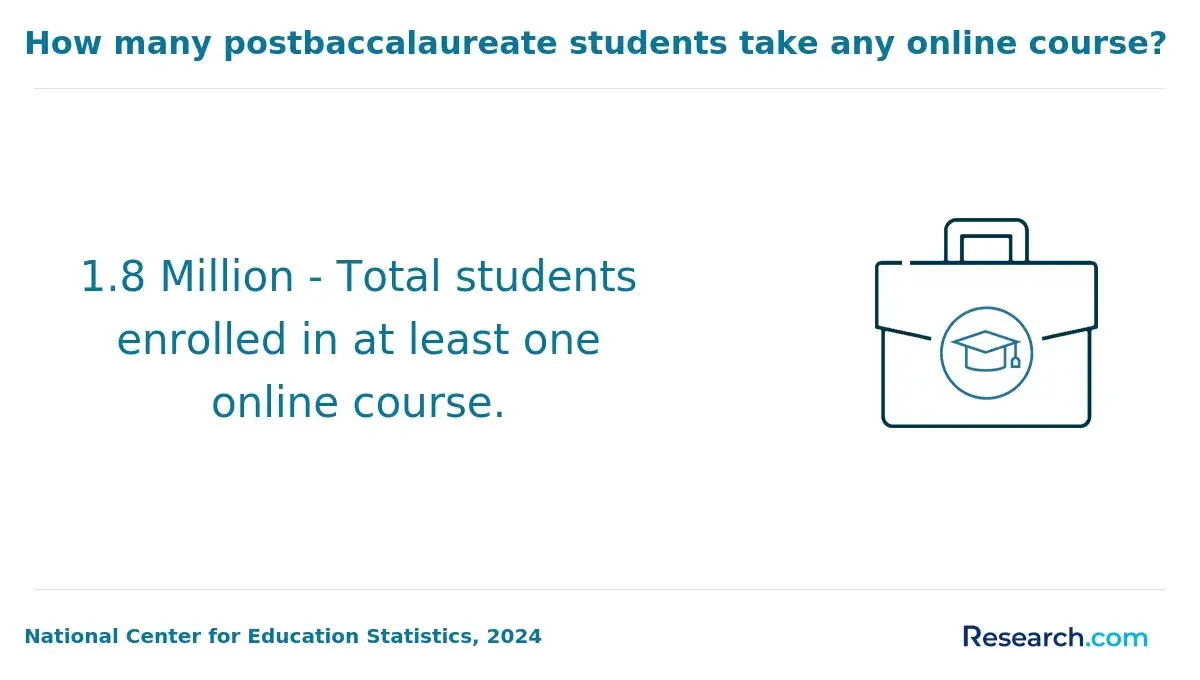
The National Center for Education Statistics reported in 2024 that distance education remains a major part of U.S. higher education after its rapid expansion earlier in the decade. For creative writing students, the key takeaway is that online learning is no longer unusual, but students still need to evaluate whether a school's support systems are designed for remote learners rather than simply adapted from campus services.
Look for support services that directly affect writing quality, academic persistence, and career preparation. The most useful programs make these services available online, outside standard business hours, or through appointments that fit working students.
- Online writing center access with feedback on drafts, not only grammar correction.
- Faculty office hours by video, phone, or messaging for craft and revision questions.
- Library databases with literary journals, publishing resources, style guides, and research support.
- Career services that understand writing-related fields such as publishing, marketing, grants, editing, communications, and technical writing.
- Portfolio or thesis advising that helps students select, revise, and present their strongest work.
- Peer writing groups, literary magazines, readings, or online events that build community.
- Accessibility services, tutoring, and academic advising designed for remote students.
One red flag is a program that promotes "personal mentorship" but does not explain how often students meet faculty, how workshop feedback is structured, or whether online students can participate in literary events. Another is a school that offers career services only for campus students or only during hours that working adults cannot use.
Ask admissions counselors specific support questions before applying. For example: Who reviews creative portfolios? How many students are in a workshop? Can online students submit to the campus literary journal? Are internships remote-friendly? The answers will tell you more about student experience than a marketing slogan.
Which Financial Aid Options Are Available for Accredited Online Creative Writing Degree Students?
Students in accredited online creative writing programs may be eligible for federal financial aid if the institution participates in Title IV aid programs and the student meets eligibility rules. Aid can include grants, scholarships, work-study, and federal loans. Graduate students usually rely more heavily on loans and institutional scholarships because federal Pell Grants are generally for eligible undergraduates.
The Federal Student Aid office's 2024 updates to FAFSA processing highlighted how important timing is for aid planning. Students comparing creative writing programs should apply early, watch school-specific priority deadlines, and avoid assuming that the cheapest advertised tuition will produce the lowest net price after grants and scholarships.
Creative writing students should compare financial aid offers in the same structured way they compare curriculum. This process helps prevent overborrowing and makes programs easier to evaluate against other online graduate or professional options, including fields such as the cheapest online master's in social work, where cost, licensure preparation, and long-term ROI may be weighed differently.
- File the FAFSA as early as possible and list every school you are seriously considering.
- Ask each institution for a net price estimate that includes tuition, mandatory fees, books, technology costs, and any residency travel.
- Separate gift aid, such as grants and scholarships, from loans that must be repaid.
- Check whether scholarships are renewable and whether they require full-time enrollment or a minimum GPA.
- Ask about departmental awards for writing, publishing, teaching assistantships, or graduate fellowships.
- Compare monthly debt burden against realistic writing-related salaries, not best-case publishing outcomes.
Some employers provide tuition assistance for degrees related to communications, marketing, content strategy, training, or technical documentation. If you are already working, ask whether your employer covers writing, English, or professional communication coursework. Employer tuition benefits may require you to remain employed for a set period after completing courses, so review repayment clauses carefully.
A common mistake is using loans to pay for an expensive MFA without a clear plan for how the degree supports employment, teaching, freelance growth, or a major writing project. Borrowing can be reasonable, but students should connect debt decisions to a realistic completion plan and career strategy.
Which Career Outcomes Are Associated With Accredited Online Creative Writing Degree Programs?
An accredited online creative writing degree can support several career paths, but it is not a direct license or guaranteed job credential. Outcomes depend on the student's portfolio, internships, professional network, technical skills, industry knowledge, and ability to adapt writing to audiences and platforms.
The U.S. Bureau of Labor Statistics reported a 2024 median annual wage of $72,270 for writers and authors. That figure is useful as a broad labor-market benchmark, but students should interpret it carefully because writing careers include salaried roles, freelance work, publishing income, contract assignments, and jobs where writing is one responsibility among many.
The table below summarizes common career directions associated with creative writing education. It focuses on how the degree may connect to work, not on promises of employment.
| Career direction | Typical responsibilities | How a creative writing degree can help | Additional skills that improve employability |
| Writer or author | Create fiction, nonfiction, scripts, essays, or other original work | Builds craft, revision discipline, genre awareness, and manuscript development | Publishing knowledge, platform building, editing, and persistence |
| Editor | Review, revise, organize, and prepare content for publication | Strengthens close reading, style, structure, and feedback skills | Copyediting, style guides, project management, and publishing tools |
| Content writer or strategist | Create digital content for websites, campaigns, brands, or organizations | Develops audience awareness, storytelling, and clear written communication | SEO, analytics, CMS tools, UX writing, and marketing basics |
| Technical writer | Explain complex products, processes, policies, or software clearly | Supports clarity, organization, and user-focused communication | Subject-matter knowledge, documentation tools, and information design |
| Communications specialist | Prepare messaging, press materials, internal updates, and public-facing content | Improves narrative control, tone, and audience adaptation | Media relations, social media, data interpretation, and campaign planning |
| Teaching or higher education pathway | Teach writing, tutor students, or support writing programs | An MFA may support college-level teaching opportunities, depending on institution requirements | Teaching experience, pedagogy, publications, and graduate credentials |
AI is changing writing careers, but it has not eliminated the need for skilled writers. Employers increasingly value writers who can plan content, verify information, shape narrative, edit AI-assisted drafts, maintain brand voice, and apply ethical judgment. Students should look for programs that discuss digital publishing, editing, rhetoric, professional writing, or media literacy alongside creative craft.
Students seeking the strongest career outcomes should graduate with more than a transcript. A practical portfolio may include revised creative work, professional writing samples, edited pieces, digital content, grant or proposal samples, and a clear description of the writing process. Programs that help students produce polished, job-ready work often provide better career value than programs focused only on isolated course papers.
How Do Online and Campus-Based Creative Writing Degree Programs Compare?
Online and campus-based creative writing programs can both be academically credible when offered by accredited institutions. The better choice depends on how you learn, how much structure you need, whether you value in-person literary community, and how much schedule flexibility you require.
Online programs often work well for students who need to keep working, live far from campus, or prefer written discussion. Campus programs may be better for students who want face-to-face workshops, readings, internships near publishing hubs, or a traditional residential college experience.
The table below compares the practical differences that matter most when choosing between online and campus-based study.
| Comparison factor | Online creative writing degree | Campus-based creative writing degree |
| Schedule flexibility | Often stronger, especially in asynchronous programs | More fixed class meeting times |
| Workshop interaction | Can be strong if courses include detailed written critique and faculty moderation | Often more immediate through live classroom discussion |
| Networking | Depends on virtual events, cohorts, residencies, and online literary communities | May offer easier access to readings, campus publications, and local arts events |
| Cost control | May reduce relocation and commuting costs | May include housing, transportation, and campus-based fees |
| Learning style fit | Best for self-directed students comfortable with digital communication | Best for students who need physical presence and routine |
| Access to internships | Can support remote internships in content, publishing, editing, or communications | May have stronger local employer relationships in some regions |
One mistake is assuming online workshops are less rigorous. In many writing courses, written critique can be deeper and more reflective than live comments because students have time to read carefully and respond thoughtfully. However, online programs require initiative; students must participate actively, meet deadlines, and seek feedback instead of waiting for informal campus interactions.
Another mistake is choosing campus study for prestige without considering opportunity cost. If relocating means taking on more debt or leaving a stable job, an online accredited program may offer better practical value. If your goal is to immerse yourself in a literary community or pursue campus teaching opportunities, a campus or low-residency program may justify the added cost.
How Should Students Choose the Best Accredited Online Creative Writing Degree Program?
Students should choose an accredited online creative writing degree by matching the program to a specific outcome: degree completion, portfolio development, graduate preparation, teaching, publishing, or writing-related employment. The "best" program is the one that offers the strongest fit at a cost you can reasonably manage.
A simple ranking cannot capture important differences such as transfer credit, workshop quality, genre fit, faculty mentorship, course rotation, or financial aid. Use the steps below to compare programs systematically before applying.
- Define your primary goal: finishing a bachelor's degree, entering a writing career, preparing for an MFA, completing a manuscript, or qualifying for teaching opportunities.
- Verify institutional accreditation and confirm that online students receive the same recognized degree as campus students.
- Calculate total cost using remaining credits, fees, books, residency travel, and likely time to completion.
- Review curriculum depth, including workshops, literature courses, revision expectations, professional writing options, and capstone or thesis requirements.
- Check faculty fit by genre, publication record, teaching experience, and availability to online students.
- Compare admissions requirements and choose realistic reach, match, and safety options.
- Request an official transfer evaluation before making a deposit if you have prior credits.
- Ask for career outcome information, internship access, portfolio support, and alumni examples.
- Compare financial aid offers by net price, not by scholarship amount alone.
- Choose the program that provides the best mix of affordability, academic quality, flexibility, and career relevance.
Students should also know when not to choose this degree. If your main goal is a licensed profession, a creative writing degree is usually not the right credential. If you want the fastest route into a high-demand technical role, a professional writing, communications, marketing, or technical writing program may offer a more direct connection to employment. If your goal is personal enrichment rather than a credential, individual workshops or certificates may cost less.
Before enrolling, ask admissions counselors direct questions about the program's structure and outcomes. Useful questions include:
- How many students are in each workshop?
- How often do online students meet faculty?
- Are internships available remotely?
- What percentage of the degree can be transferred?
- Does the program support multiple genres?
- How is the final portfolio evaluated?
The strongest long-term ROI usually comes from combining writing craft with practical skills: editing, digital publishing, audience analysis, research, project management, and ethical use of AI tools. Students who build a flexible portfolio can pursue more options than students who graduate with only one narrow type of writing sample.
Other Things You Should Know About Creative Writing
Faculty in top online creative writing programs typically hold advanced degrees in writing or literature, often with publications in recognized literary journals. Many are practicing writers who have received awards, offering students insider insights and connections within the writing industry.
Online creative writing programs in 2027 are ranked based on faculty credentials, alumni success, accreditation, and student satisfaction. Rankings consider data from sources like U.S. News & World Report and other academic publications, providing prospective students a comprehensive assessment of program quality.
Common options include fiction, poetry, creative nonfiction, screenwriting, playwriting, young adult writing, genre fiction, and professional writing. Availability varies, so students should confirm that required workshops support their preferred genre.
In 2027, whether an online creative writing program requires a thesis largely depends on the degree level. Master's programs often require a thesis or a capstone project, while undergraduate programs may not. It is advisable to check specific program requirements for accurate information.
References
- Create Your Best 2025 with These Top MFA Creative Writing Programs https://www.onlinemastersdegrees.org/best-programs/fine-arts-mfa/creative-writing/
- The Best Undergraduate Creative Writing Programs — TKG https://www.koppelmangroup.com/blog/2017/11/5/the-best-undergraduate-creative-writing-programs
- Average Cost of College [2025]: Yearly Tuition + Expenses https://educationdata.org/average-cost-of-college
- Tuition & Costs – The W Online https://www.muw.edu/online/costs/
- Most Affordable Online Creative Writing Degrees | AffordableCollegesOnline.org https://www.affordablecollegesonline.org/degrees/best-online-bachelors-in-creative-writing/
- Best MFA Creative Writing Programs Online and On-Campus https://www.creativewritingedu.org/editors-choice/best-creative-writing-mfa-programs/
- 15 Best Creative Writing MFA Programs in 2025 https://www.collegetransitions.com/blog/best-mfa-creative-writing-programs/
- Associate degree in creative writing https://www.trevecca.edu/academics/program/creative-writing-aa
- Top 12 Best Creative Writing Programs for High School Students https://cambridge-research.org/blogs/top-12-best-creative-writing-programs-for-high-school-students/