2027 Accredited Online Creative Writing Degree Programs for Working Adults: Flexible, Part-Time, and Self-Paced Options

Co-Founder and Chief Data Scientist
Choosing an accredited online creative writing degree while working full time means comparing more than tuition. You need to know whether courses are truly flexible, how much writing and reading fit into your week, and whether the credential will be recognized.
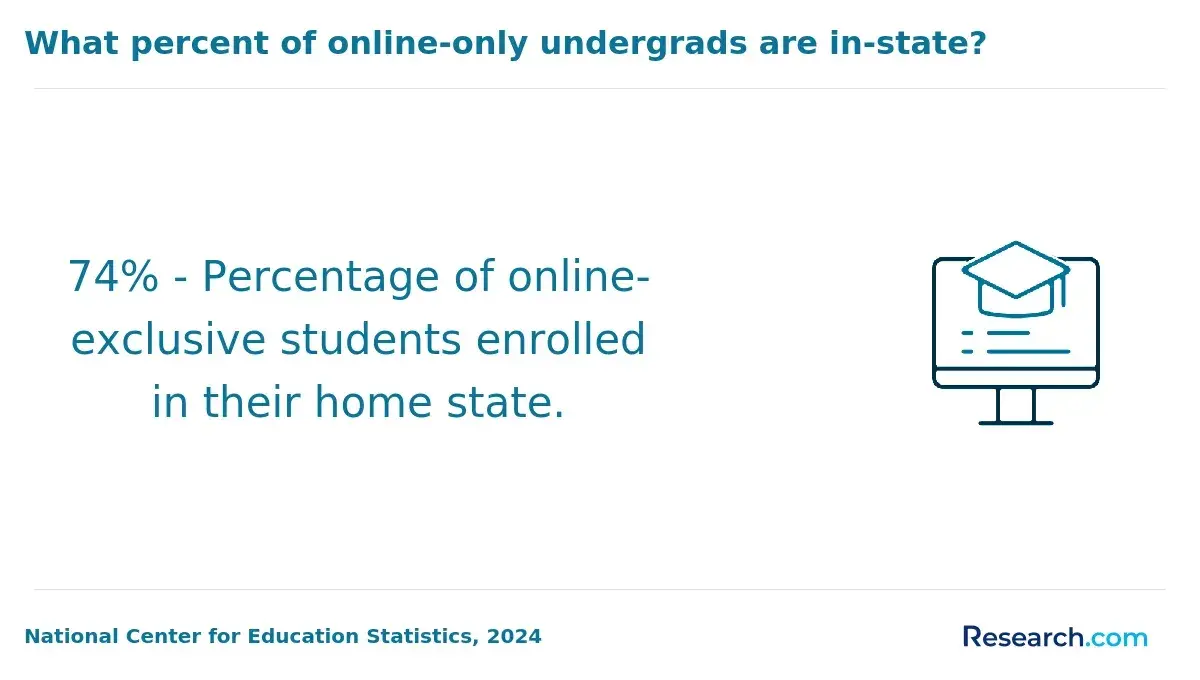
NCES data released in 2024 shows that about 54% of U.S. college students took at least one distance education course, making online study mainstream. This guide helps working adults evaluate accreditation, part-time and self-paced formats, costs, transfer credits, timelines, and career fit before enrolling.
Key Things You Should Know
- Choose a school recognized by an institutional accreditor listed by the U.S. Department of Education, because it affects federal aid, credit transfer, graduate admission, and employer recognition.
- Most working adults do best with part-time or asynchronous online study; a typical 3-credit course can require about 9 hours per week, so taking 1 to 2 courses per term is often more realistic than a full-time load.
- A 120-credit bachelor's degree may take 4 years full time or 5 to 6 years part time, while transfer-friendly programs may accept 60 to 90 credits and significantly reduce both time and tuition.
What Is an Accredited Online Creative Writing Degree Program and Why Does Accreditation Matter?
An accredited online creative writing degree program is a college program offered mostly or fully online by an institution that has been reviewed for academic quality, financial stability, student services, faculty qualifications, and learning outcomes. Creative writing degrees are usually offered as a Bachelor of Arts, Bachelor of Fine Arts, Master of Arts, or Master of Fine Arts, often through English, writing, liberal arts, or humanities departments.
Accreditation matters because it is the quality-control system that helps separate recognized colleges from schools that may not meet accepted academic standards. For working adults, it also affects practical issues: whether you can use federal financial aid, whether previous credits may transfer, whether graduate schools will review your transcript, and whether employers will view the degree as legitimate.
Creative writing typically does not require specialized programmatic accreditation the way some licensed health or education fields do. For example, students comparing accredited online speech pathology programs must pay close attention to professional standards tied to licensure, while creative writing students usually focus on institutional accreditation, faculty expertise, curriculum depth, and portfolio development.
Before you apply, confirm the school's accreditation directly through official databases rather than relying only on marketing language. A careful review should include the following checks:
- Search the institution in the U.S. Department of Education's Database of Accredited Postsecondary Institutions and Programs.
- Confirm that the accreditor listed is currently recognized and that the school is not under serious sanction.
- Ask whether the online creative writing program appears on the same transcript as the campus-based program, if a campus version exists.
- Check whether credits from the program have historically transferred to other accredited colleges or graduate schools.
- Review the school's public student outcomes, refund policies, complaint process, and academic catalog before signing an enrollment agreement.
A common mistake is assuming that "online" and "accredited" mean the same thing. They do not. Online describes delivery format; accreditation describes institutional review. A program can be online and accredited, online and unaccredited, or accredited but not flexible enough for an adult learner's schedule.
Which Flexible Creative Writing Degree Formats Are Best for Working Adults: Part-Time, Full-Time, or Self-Paced?
The best format depends on how predictable your work schedule is, how quickly you want to finish, and how much structure you need to keep writing consistently. Working adults should pay close attention to the difference between asynchronous, synchronous, part-time, full-time, accelerated, and self-paced programs because schools often use the word "flexible" in different ways.
The table below compares common online creative writing formats from the perspective of a working adult. Use it to match program structure with your available hours, preferred deadlines, and tolerance for schedule pressure.
| Format | How it usually works | Best fit | Trade-off to check |
| Part-time asynchronous | Students complete weekly modules, readings, writing exercises, and discussion posts by set deadlines. | Adults with full-time jobs, caregiving duties, or variable weekly availability. | Flexible does not mean deadline-free; workshops and peer critiques still require regular participation. |
| Full-time online | Students take a heavier course load each term, often similar to campus students. | Learners who can reduce work hours or use employer support to study more intensively. | The weekly workload can be difficult if you work 40 or more hours. |
| Self-paced or competency-based | Students move through coursework faster or slower within school-defined term limits. | Highly organized adults with strong writing discipline and irregular schedules. | Not all creative writing courses work well without cohort feedback, workshops, or faculty pacing. |
| Synchronous online | Students attend live virtual classes, workshops, or residency sessions at scheduled times. | Writers who want real-time discussion, instructor interaction, and accountability. | Evening or weekend classes may still conflict with work shifts, travel, or family responsibilities. |
| Low-residency hybrid | Students complete most work online but attend short campus or destination residencies. | MFA students who want mentorship and community without relocating. | Residencies add travel costs and require time away from work. |
A helpful planning rule is to estimate workload by credit hours. Many colleges design a 3-credit course around roughly 9 hours of total weekly effort, including reading, drafting, revision, peer critique, and discussion. That means two courses can feel like a part-time job, especially in writing-intensive terms.
Part-time study usually makes the most sense if you need stability, employer tuition reimbursement, or time to build a portfolio gradually. Full-time study may be better if you have a clear deadline, fewer outside obligations, or enough financial support to limit paid work. Self-paced study can be efficient, but it is risky if you need external deadlines, instructor feedback, or workshop accountability to keep producing finished work.
Working adults should also ask whether the program is cohort-based. Cohorts can create strong peer communities, but they may limit your ability to stop out, slow down, or take courses out of sequence. A non-cohort model may be easier to customize, but you may need to be more proactive about networking and feedback.
What Are the Admission Requirements for Accredited Online Creative Writing Degree Programs?
Admission requirements vary by degree level, but accredited online creative writing programs usually evaluate both academic readiness and writing potential. Bachelor's programs tend to focus on transcripts and general college readiness, while MFA and master's programs often place more weight on a writing sample, statement of purpose, and fit with faculty strengths.
Applicants entering with prior college experience should ask how previous coursework will be evaluated. If you already completed an associate's degree, a transfer-friendly bachelor's program may allow you to satisfy many general education requirements before focusing on upper-division writing workshops.
Most applicants should prepare for the following admissions items, especially if they are applying while balancing work and family obligations:
- Official transcripts from high school, community colleges, military education, or prior universities.
- A writing sample, often including fiction, poetry, creative nonfiction, scripts, or a mixed-genre portfolio.
- A personal statement explaining your writing goals, preferred genre, academic background, and reason for choosing online study.
- Letters of recommendation, especially for graduate programs or selective MFA programs.
- A current resume for adult learners whose professional experience connects to writing, editing, communications, publishing, marketing, or education.
- Proof of English proficiency if required by the institution.
Many online bachelor's programs do not require standardized test scores, but selective graduate programs may still request additional materials. GRE requirements have become less common in many humanities programs, yet applicants should verify the current policy because requirements can change by school and term.
The most important red flag is a program that admits students immediately without transcripts, placement review, or any meaningful academic screening. Open or broad access is not automatically bad, but a legitimate accredited college should still be able to explain placement, transfer evaluation, academic advising, and writing support before you enroll.
How Much Does an Online Creative Writing Degree Cost, and What Financial Aid Options Are Available?
The cost of an online creative writing degree depends on degree level, public or private status, residency rules, transfer credits, course load, fees, and whether the program charges online students a flat tuition rate. College Board's 2024 Trends in College Pricing reported average published tuition and fees of $11,610 for in-state students at public four-year institutions and $43,350 at private nonprofit four-year institutions for 2024-25. Online programs may be lower or higher than those averages, so always calculate total program cost rather than comparing sticker tuition alone.
When comparing programs, look beyond the advertised per-credit rate. A practical cost estimate should include these common charges:
- Tuition per credit or per term.
- Online learning, technology, distance education, or student service fees.
- Books, software, writing platform subscriptions, and library access costs.
- Residency, travel, lodging, or meal costs if the program includes in-person components.
- Graduation, portfolio review, transcript, or course material fees.
- Lost income if you reduce work hours to study full time.
Financial aid can make a major difference, but eligibility depends on accreditation, enrollment status, degree level, satisfactory academic progress, and your personal aid profile. The maximum Federal Pell Grant for the 2024-25 award year is $7,395, which is most relevant for eligible undergraduate students; graduate students typically rely more on loans, scholarships, assistantships, employer benefits, or payment plans.
Use this table to compare common funding sources and the limitations working adults should consider before committing to a program.
| Funding option | Who it may help | Important limitation |
| Federal grants | Eligible undergraduate students with financial need. | Availability depends on FAFSA results, enrollment intensity, and degree status. |
| Federal loans | Undergraduate and graduate students who need to finance remaining costs. | Loans must be repaid, and borrowing should be weighed against expected career use of the degree. |
| Employer tuition assistance | Adults whose employers support education tied to communications, training, marketing, or advancement. | Benefits may require minimum grades, continued employment, or approved programs. |
| Institutional scholarships | Students with strong academic records, writing samples, financial need, or transfer standing. | Online students may not qualify for every campus-based award. |
| Military and veteran benefits | Eligible service members, veterans, and dependents. | Benefit rules vary, and students should confirm school participation before enrolling. |
Adults comparing writing programs sometimes also compare costs across other people-centered graduate degrees, such as the cheapest online master's in social work, to decide whether their next credential should support creative, communications, nonprofit, or clinical goals. That comparison can be useful as long as you evaluate career requirements, not just tuition.
A common mistake is choosing the lowest per-credit tuition without asking how many credits you must actually complete at that institution. A school with a higher rate but generous transfer credit may cost less overall than a cheaper program that requires you to retake courses.
How Long Does It Take to Complete an Online Creative Writing Degree, and Can Transfer Credits Help You Graduate Faster?
Completion time depends on degree level, course load, term length, transfer credits, and whether the program offers accelerated or self-paced options. A bachelor's degree is typically built around about 120 credits, while master's and MFA programs often require fewer total credits but more advanced workshops, thesis work, mentorship, or portfolio development.
The table below summarizes common completion patterns. It is not a guarantee; use it as a planning tool before asking schools for a personalized degree audit.
| Program type | Common credit structure | Typical full-time timeline | Typical part-time timeline |
| Online bachelor's in creative writing or English with writing concentration | About 120 credits | About 4 years for first-time students | Often 5 to 6 years, depending on course load |
| Bachelor's completion program | Upper-division major and remaining general education credits | About 1.5 to 3 years with substantial transfer credit | Often 3 to 4 years |
| Online MA in creative writing, English, or writing studies | Often 30 to 36 credits | About 1 to 2 years | Often 2 to 3 years |
| Online or low-residency MFA | Often 36 to 60 credits plus thesis or manuscript work | About 2 to 3 years | Often 3 to 4 years |
Transfer credits can be one of the biggest time-saving tools for working adults. Many bachelor's programs review prior college credits, military training, standardized exams, professional certifications, and sometimes prior learning portfolios, but policies vary widely.
Before enrolling, take these steps to estimate your real graduation timeline:
- Request an unofficial transfer evaluation before paying a deposit, if the school offers one.
- Ask how many total transfer credits can apply toward the degree and how many must be completed in residence.
- Confirm whether transferred courses count only as electives or can satisfy major and general education requirements.
- Ask whether credits expire, especially for older coursework in technology, communications, or professional writing.
- Review the course rotation to make sure required writing workshops are offered often enough for part-time students.
Accelerated programs can be appealing, but speed should not be the only goal. Students looking at models such as fast track MSW programs online will notice that acceleration works best when the curriculum has clear sequencing, strong advising, and realistic workload expectations; the same principle applies to creative writing programs.
The key question is not "How fast can I finish?" but "Can I produce strong writing, receive meaningful feedback, and maintain my work and family responsibilities at this pace?" For creative writing, rushing through workshops may reduce the portfolio value of the degree.
What Should You Look for When Comparing Accredited Online Creative Writing Degree Programs?
Accreditation is the first screen, but it should not be the last. A strong online creative writing program should give you rigorous feedback, a clear writing sequence, faculty with relevant publication or industry experience, access to literary communities, and enough flexibility to fit your real schedule.
Use the following comparison points when reviewing schools. These are especially important for adults who cannot easily change work shifts, travel for campus requirements, or retake courses because of poor advising.
- Accreditation: Verify institutional accreditation and confirm that the online program is included under the accredited institution.
- Format: Ask whether courses are asynchronous, synchronous, self-paced, cohort-based, accelerated, or low-residency.
- Workshop model: Review how often students receive instructor feedback, peer critique, revision opportunities, and portfolio guidance.
- Faculty fit: Look for instructors who publish, edit, teach, or work in genres that match your goals.
- Curriculum balance: Compare courses in craft, literature, editing, publishing, digital writing, professional writing, and capstone work.
- Transfer policy: Ask for a written transfer evaluation and check residency requirements.
- Student support: Confirm access to online tutoring, library databases, career services, advising, disability support, and technical help.
- Total cost: Calculate tuition, fees, books, residency expenses, and time away from work.
The table below highlights common red flags and better alternatives. It can help you avoid decisions that look convenient at first but create problems after enrollment.
| Red flag | Why it matters | Better alternative |
| The school will not clearly identify its accreditor. | You may have trouble using aid, transferring credits, or applying to graduate school. | Choose a school whose accreditation can be verified through official databases. |
| "Self-paced" is advertised without completion limits. | You may later discover minimum pacing rules, term deadlines, or subscription costs. | Ask for written policies on pacing, maximum course time, and tuition structure. |
| The program has few workshops or limited feedback. | Creative writing degrees rely heavily on critique, revision, and mentorship. | Review syllabi and ask how often students receive faculty comments on drafts. |
| Tuition looks low but fees are unclear. | Online fees, residency costs, and materials can change the total price. | Request a full cost-of-attendance estimate for your expected course load. |
| Courses are offered rarely. | Part-time students may face delays if required classes rotate only once per year. | Ask for a two-year course rotation and sample part-time plan. |
It can also help to compare creative writing against adjacent online degrees if your goal is workplace advancement rather than publication. For example, someone choosing between writing, communications, and management may also review the cheapest online master's in human resources to see whether a business-focused credential better matches their promotion path.
Ask schools direct questions before enrolling. The most useful questions are specific: "How many hours do successful part-time students spend per week?" "Can I pause enrollment without losing my catalog year?" "How many online students complete the program?" "Can I see a sample workshop syllabus?" If admissions staff cannot answer, ask to speak with an academic advisor or program director.
What Career Opportunities and Salary Potential Can You Expect With a Creative Writing Degree?
A creative writing degree can support several career paths, but outcomes depend heavily on your portfolio, professional experience, genre, networking, internships, and ability to apply writing skills in practical settings. It is rarely a direct pipeline to one guaranteed job title. Instead, it can strengthen skills used in publishing, editing, marketing, communications, content strategy, education, grant writing, technical communication, and freelance work.
BLS May 2024 wage data provides useful salary context, but it should not be read as a promise for degree holders. The table below lists writing-adjacent occupations where creative writing skills may be relevant, along with typical responsibilities and median annual wage data from U.S. labor statistics.
| Role | Typical responsibilities | Median annual wage context |
| Writer or author | Create fiction, nonfiction, scripts, articles, books, essays, or other written content. | BLS reported a median annual wage of $72,270 in May 2024. |
| Editor | Revise, shape, assign, and prepare written work for publication or organizational use. | BLS reported a median annual wage of $75,260 in May 2024. |
| Technical writer | Translate complex information into manuals, guides, documentation, and instructional content. | BLS reported a median annual wage of $91,670 in May 2024. |
| Public relations specialist | Write press materials, brand messages, speeches, media content, and stakeholder communications. | BLS reported a median annual wage of $69,780 in May 2024. |
| Content strategist or marketing writer | Plan and write digital content for audiences, campaigns, websites, email, and social platforms. | Salary varies by industry, location, analytics skills, and marketing experience. |
The degree may be worth it if you need structured mentorship, a stronger portfolio, teaching preparation, graduate study preparation, or a recognized credential for writing-centered roles. It may be less worthwhile if your main goal is a quick salary increase in a field that values software skills, certifications, or industry experience more than a writing degree.
Creative writing also overlaps with nonprofit, education, community, and advocacy work, but those fields may require different credentials. If your long-term goal is counseling, case management, or licensed social services rather than writing and communications, comparing options such as the cheapest online master's in social work may lead to a more appropriate path.
Current trends also affect the value of the degree. AI writing tools have increased demand for writers who can revise, fact-check, develop original voice, manage editorial judgment, and create audience-specific content. Employers may use AI for first drafts, but human skills in narrative structure, ethics, research, voice, and brand judgment remain important in professional writing roles.
To improve return on investment, choose a program that helps you produce usable work: a manuscript sample, edited portfolio, published pieces, grant samples, teaching materials, digital content, or professional writing clips. The stronger your portfolio, the easier it is to show employers or clients what the degree helped you build.
How Can Working Adults Balance a Creative Writing Degree With Full-Time Work and Family Responsibilities?
Balancing a creative writing degree with full-time work requires a realistic schedule, not just motivation. Writing courses can be emotionally and mentally demanding because they require drafting, critique, revision, reading, and reflection. The workload may be less test-heavy than some majors, but it is rarely light.
Adults who succeed online often build a weekly system before classes begin. The following steps can help you decide whether your schedule can support enrollment:
- Calculate available study hours after work, commuting, caregiving, sleep, and recurring obligations.
- Start with one course if you have not studied recently or if your job schedule changes often.
- Reserve separate time blocks for reading, drafting, peer critique, revision, and discussion posts.
- Tell family members or housemates your fixed writing times so they know when you are unavailable.
- Use vacation days strategically for final portfolios, residencies, thesis deadlines, or intensive workshops.
- Reassess your course load after the first term instead of assuming the same pace will work all year.
Asynchronous courses can be helpful because you do not need to log in at one set time, but they still have deadlines. A common mistake is waiting until the weekend to complete all reading and writing. That may work for a short discussion post, but it often fails for creative drafts because revision needs time between sessions.
Self-paced courses require even more planning. If there are no weekly deadlines, create your own draft dates, critique dates, and revision dates. Without a schedule, a self-paced course can quietly become more stressful than a structured course because work accumulates until the end of the term.
Working adults should also protect recovery time. Creative work improves when you have enough mental space to reflect, revise, and read deeply. If every evening is packed, a slower part-time plan may produce better writing and reduce the chance of stopping out.
What Student Support Services and Online Learning Resources Should You Expect From a Creative Writing Degree Program?
Student support can determine whether an online creative writing program is merely convenient or genuinely workable for adults. Because writing programs depend on feedback and revision, you should look for more than a learning management system and recorded lectures.
Before enrolling, confirm that online students receive access to the same essential services as campus students. Strong programs commonly provide the following resources:
- Online academic advising with evening or flexible appointment options.
- Writing center support for drafts, grammar, structure, revision, and citation questions.
- Library databases, research consultations, interlibrary loan, and digital literary resources.
- Career services for resumes, portfolios, internships, freelance preparation, and job search strategy.
- Technical support during nights or weekends when working adults are most likely to study.
- Disability accommodations for online courses, workshops, residencies, and timed assignments.
- Faculty office hours by video, phone, chat, or appointment.
- Peer community through workshops, literary journals, online readings, student groups, or alumni networks.
Ask how feedback works in practice. In a strong writing course, you should know whether drafts receive instructor comments, peer comments, recorded feedback, rubric-based evaluation, or live conference discussion. A program that relies only on automated quizzes or generic discussion posts may not provide the level of mentorship many writers expect from a degree.
Career support is especially important because creative writing career paths are broad. A good program should help students translate writing skills into roles in editing, marketing, publishing, education, nonprofit communications, technical writing, and freelance work. Portfolio review, internship guidance, and alumni connections can be more valuable than a general job board.
For working adults, the best support services are accessible outside standard business hours. If tutoring, advising, and tech support are available only while you are at work, the program may be less flexible than advertised.
Do Online Creative Writing Degree Programs Include Internships, Practicums, or Other Hands-On Learning Requirements?
Online creative writing programs may include hands-on learning, but the format depends on degree level and school design. Instead of labs or clinical placements, hands-on experience usually appears through writing workshops, editorial projects, literary journal work, internships, teaching practica, publishing projects, capstones, thesis manuscripts, or low-residency seminars.
These requirements can add value, but they can also affect scheduling. Working adults should review experiential components before enrolling, especially if travel, daytime meetings, unpaid internships, or synchronous workshops would be difficult.
Common hands-on elements include the following:
- Workshops: Students submit original work, critique peers, and revise based on feedback.
- Capstone projects: Students complete a polished portfolio, long-form manuscript excerpt, or professional writing project.
- MFA thesis: Graduate students may produce a book-length or substantial creative manuscript with faculty mentorship.
- Literary journal work: Students may read submissions, edit pieces, manage publication workflows, or support digital publishing.
- Internships: Some programs offer placements with publishers, nonprofits, marketing teams, magazines, schools, or arts organizations.
- Residencies: Low-residency programs may require short in-person sessions for workshops, readings, craft seminars, and faculty meetings.
Not every hands-on requirement is equally practical for full-time workers. An internship can be useful if it is remote, project-based, or scheduled around your job. It may be difficult if it requires daytime availability or unpaid hours you cannot afford. Similarly, a residency can be inspiring, but it requires travel planning, childcare arrangements, and time away from work.
The best question to ask is, "Can I complete every experiential requirement without leaving my job?" If the answer is unclear, request a written explanation of internship flexibility, residency dates, remote options, and alternative capstone pathways.
Other Things You Should Know About Creative Writing
Often, yes. Many programs offer electives or workshops in fiction, poetry, creative nonfiction, screenwriting, young adult literature, speculative fiction, or professional writing. Check how often those courses are offered online before choosing a program for a specific genre.
Financial aid options for online creative writing degrees include federal student loans, grants, and scholarships specifically for distance learning. Some employers offer tuition reimbursement for programs completed while working, and students should also explore financial aid opportunities directly from their chosen institution.
Not necessarily for bachelor's programs. Graduate programs usually expect a stronger writing sample and clearer goals. If you are returning to school after a long break, consider taking one workshop or certificate course first to test your readiness.
Online creative writing degree programs in 2027 often require a reliable computer, high-speed internet, and access to specific software like Microsoft Word or Google Docs. Some courses might use video conferencing tools, so a working webcam and microphone are essential for participation.
References
- How Do Distance Learning Formats Structure ... https://www.dailywritingtips.com/distance-learning-asynchronous-creative-workshops/
- Most Affordable Online Creative Writing Degrees | AffordableCollegesOnline.org https://www.affordablecollegesonline.org/degrees/best-online-bachelors-in-creative-writing/
- Top Short Creative Writing Courses Online » Creative Writing Ink https://creativewritingink.co.uk/top-short-creative-writing-courses/
- How to Find Time for Creative Writing | The Writers College https://www.thewriterscollege.com/how-to-find-time-for-creative-writing/
- How Much Do Writing Courses Cost? https://blog.nobledesktop.com/learn/writing/how-much-is-a-writing-course
- 2025 Most Affordable Master's in Creative Writing Online https://www.onlineu.com/most-affordable-colleges/creative-writing-masters-degrees
- Self-Guided Writing Courses To Make You a Better Writer https://writinggales.com/2025/08/27/self-guided-writing-courses-to-make-you-a-better-writer/
- 25 best creative writing courses and classes you can’t afford to miss – Creativindie https://www.creativindie.com/best-online-writing-courses-for-authors/
- Self-paced online courses https://nationalcentreforwriting.org.uk/academy/self-paced-courses/
- Best Creative Writing Courses and Learning Platforms https://dystopianstories.com/articles/best-online-creative-writing-courses-and-learning-platforms/