2027 Online General Studies Degrees for Students Who Want Cross-Functional Workplace Roles

Co-Founder and Chief Data Scientist
Choosing a broad degree can feel risky if you want flexible career options rather than one narrow job title. Online general studies programs are built for that goal, especially for adults with transfer credits, changing career plans, or workplace experience. NCES reported in 2024 that more than half of U. S. postsecondary students took at least one distance education course in fall 2022, showing how mainstream online learning has become.
This guide explains what the degree covers, how employers view it, what it costs, and how to choose a program that supports cross-functional roles.
Key Things You Should Know
- Online general studies degrees are best for students who want a flexible bachelor's credential that combines communication, business, technology, social science, and applied problem-solving rather than training for one licensed profession.
- The financial case depends heavily on transfer credits and tuition: College Board's 2024 pricing report lists average published 2024-25 tuition and fees at $11,610 for in-state public four-year colleges and $43,350 for private nonprofit four-year colleges.
- Cross-functional roles can offer solid mobility, but outcomes vary by specialization; BLS 2024 wage data shows examples ranging from $65,850 for training and development specialists to $101,190 for management analysts.
What is an online general studies degree and how does it support cross-functional careers?
An online general studies degree is a broad undergraduate program that lets students complete general education requirements, upper-division electives, and one or more concentrations across multiple fields. Instead of focusing entirely on a single major such as accounting, nursing, or computer science, it helps students build a practical mix of workplace skills: writing, analysis, project coordination, technology use, research, leadership, and organizational communication.
That structure can support cross-functional careers because many organizations need employees who can work across departments. For example, a project coordinator may communicate with finance, operations, vendors, and customer success teams. A training specialist may combine communication, HR policy, basic analytics, and learning technology. A general studies curriculum can make sense when the job requires breadth, adaptability, and the ability to translate between teams.
The degree is not ideal for every goal. It is usually not the best first choice for careers that require a specific accredited major, supervised clinical training, licensure, or deep technical preparation. Students planning to become engineers, registered nurses, certified public accountants, licensed teachers, or licensed counselors should check profession-specific requirements before enrolling.
The table below summarizes when an online general studies degree is a strong fit and when a more specialized major may be the better investment.
| Student goal | How general studies can help | When to consider another path |
| Finish a bachelor's degree with prior credits | Flexible electives may accept more transfer coursework and reduce repeated classes. | If previous credits already align closely with a specialized major, that major may provide clearer signaling. |
| Move into coordination, operations, HR, or administrative leadership | The degree can combine communication, management, data literacy, and organizational behavior. | If the target role requires a specific credential, such as HR certification plus specialized coursework, compare curricula carefully. |
| Keep career options open | Students can sample several fields and build a customized professional profile. | If the student already knows the exact field, a focused major may be easier for employers to interpret. |
| Prepare for graduate study | Students can complete a bachelor's degree and choose electives that meet prerequisite needs. | Some graduate programs require specific prerequisite courses, minimum grades, portfolios, or supervised experience. |
In practical terms, the degree is most valuable when students use its flexibility strategically. A transcript full of unrelated electives may look unfocused, while a planned combination such as business communication, data analysis, public administration, and project management can tell a coherent career story.
How do online general studies programs prepare students for cross-functional workplace roles?
Online general studies programs prepare students for cross-functional work by emphasizing transferable skills rather than one narrow technical track. The strongest programs do not simply offer "random electives"; they help students connect courses into an academic plan that supports a target career area.
Students should look for programs that build a layered skill set. The following elements are especially useful because they mirror how cross-functional employees solve problems at work:
- Communication across audiences: Courses in professional writing, public speaking, digital communication, and persuasion help students translate information for managers, customers, vendors, and internal teams.
- Business and organizational understanding: Classes in management, human resources, operations, marketing, or public administration help students understand how decisions affect multiple departments.
- Data and technology literacy: Introductory coursework in statistics, spreadsheets, information systems, data visualization, or business analytics helps graduates participate in evidence-based decision-making.
- Applied problem-solving: Capstones, portfolios, internships, simulations, and project-based assignments help students demonstrate that they can coordinate work, meet deadlines, and synthesize information.
- Career narrative development: Advising, resume support, and experiential learning help students explain why their broad degree is an asset rather than a lack of specialization.
AI and automation make this preparation more relevant, not less. Routine reporting, scheduling, and content drafting are increasingly supported by digital tools, which means employees gain value by asking better questions, interpreting outputs, checking quality, and coordinating human decisions. A general studies student who adds data literacy, AI tool awareness, and strong communication can be better positioned than one who completes only broad survey courses.
One common mistake is assuming flexibility alone creates career readiness. Students should choose electives around a theme, complete practical assignments they can show in a portfolio, and seek internships or work-based projects whenever possible. Employers often respond better to evidence of skills than to a degree title by itself.
Are online general studies degrees respected by employers and fully accredited in the U.S.?
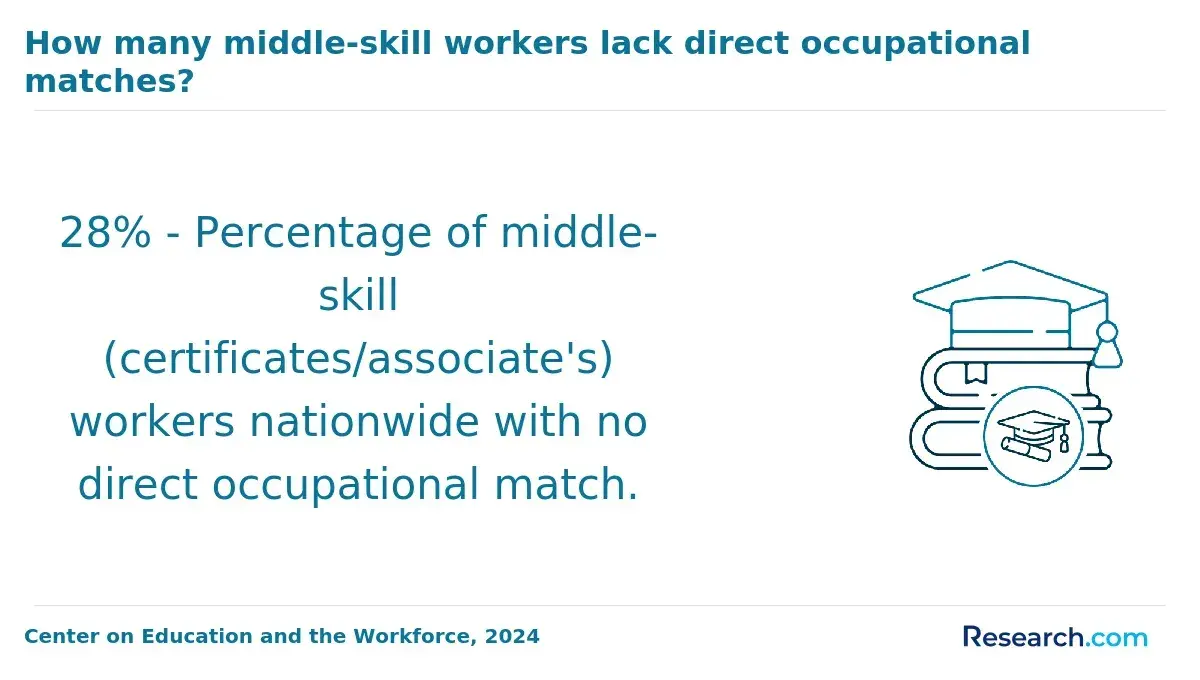
Yes, online general studies degrees can be respected by employers when they come from a properly accredited U.S. institution and the student can connect the degree to relevant skills. Employers generally care more about institutional legitimacy, bachelor's completion, work experience, and role-specific competencies than whether the coursework was delivered online or on campus.
The key issue is accreditation. Students should verify that the college or university holds institutional accreditation from an accreditor recognized by the U.S. Department of Education or the Council for Higher Education Accreditation. Institutional accreditation affects transfer credit, eligibility for federal financial aid, graduate school recognition, and employer confidence.
Programmatic accreditation is usually less central for general studies than for fields such as nursing, engineering, education, or counseling, but it may matter if the student adds a professional concentration.
Students should also understand the difference between "online" and "self-paced." Some online programs follow weekly deadlines and live sessions, while others use asynchronous modules that allow students to complete work around jobs and family responsibilities. Neither format is automatically better; the right choice depends on learning style, schedule, and need for structure.
Before applying, students can use this quick accreditation and reputation check to avoid low-value programs:
- Confirm the institution appears in the U.S. Department of Education's Database of Accredited Postsecondary Institutions and Programs.
- Check whether the program is offered directly by the institution, not only through a third-party platform with unclear academic control.
- Review transfer policies, graduation requirements, faculty credentials, and student support services.
- Ask whether the transcript and diploma identify the degree in a way that matches the school's official catalog.
- Look for clear outcome information, including retention, graduation, career services, and alumni examples.
A red flag is any school that pressures students to enroll immediately, avoids accreditation questions, offers unrealistic credit for life experience, or promises specific jobs or salaries. A legitimate degree can improve opportunities, but it should never be marketed as a guaranteed outcome.
What are the typical admission requirements for online general studies bachelor's programs?
Admission requirements for online general studies bachelor's programs are usually similar to other bachelor's programs at the same institution. Many programs are transfer-friendly, which makes them especially attractive to adults who started college earlier, earned an associate degree, completed military training, or accumulated credits across several schools.
Most applicants should expect to prepare the following materials. Requirements vary by institution, so students should confirm details before paying an application fee:
- High school diploma or equivalent: First-year applicants typically need proof of high school graduation, a GED, or an approved equivalent.
- Official transcripts: Transfer applicants must submit transcripts from every college attended, even if they do not want to use all prior credits.
- Minimum GPA: Some programs set a minimum GPA, while others use a more flexible review process for adult learners or returning students.
- Placement or prerequisite requirements: Students may need college-level writing or math readiness before taking upper-division courses.
- Application form and fee: Many schools require a standard online application; some waive fees during specific periods.
- Personal statement or advising plan: Some programs ask students to explain academic goals so advisors can approve a coherent concentration or degree plan.
Transfer credit evaluation is often the most important admissions step. A program that accepts more credits may reduce cost and time, but students should ask how those credits apply. Credits that transfer only as general electives may not shorten the path if the student still needs upper-division, residency, or concentration requirements.
Applicants should also ask about credit for prior learning, military experience, professional certifications, standardized exams, and portfolio assessment. These options can help some students, but policies vary widely and may include fees or credit limits.
How do online general studies programs compare to on-campus options in flexibility and outcomes?
Online and on-campus general studies programs can lead to the same degree when they are offered by the same accredited institution and follow the same academic standards. The main difference is how students experience the program: scheduling, access to campus resources, peer interaction, and the level of self-direction required.
Students comparing formats should focus on fit rather than assuming one format is always superior. Those who need speed and flexibility may also want to compare an accelerated bachelor's degree online, especially if they already have transfer credits and can manage intensive course loads.
The table below compares common differences that affect student success, cost, and career preparation.
| Factor | Online general studies | On-campus general studies |
| Schedule flexibility | Often better for working adults, caregivers, military students, and students outside commuting distance. | Better for students who prefer set class times and face-to-face structure. |
| Networking | Can be strong when programs include live sessions, group projects, alumni events, and career platforms. | May offer easier informal networking through campus events, clubs, and in-person faculty access. |
| Cost structure | May reduce commuting, housing, and relocation costs, though online fees can apply. | May include higher living and transportation costs, but some students benefit from campus jobs or local scholarships. |
| Learning style | Works best for students who can manage deadlines, written communication, and independent study. | Works best for students who need immediate in-person feedback and a routine campus environment. |
| Career services | Quality varies; strong programs offer virtual coaching, resume reviews, and employer events. | Students may have more direct access to campus recruiting and in-person workshops. |
Outcomes depend less on format and more on program quality, student engagement, advising, and career alignment. A poorly planned online program can be isolating, but a strong one can be highly practical. Likewise, a campus program can provide structure, but it may be less realistic for adults who need to keep working.
What core courses and concentrations are offered in online general studies programs?
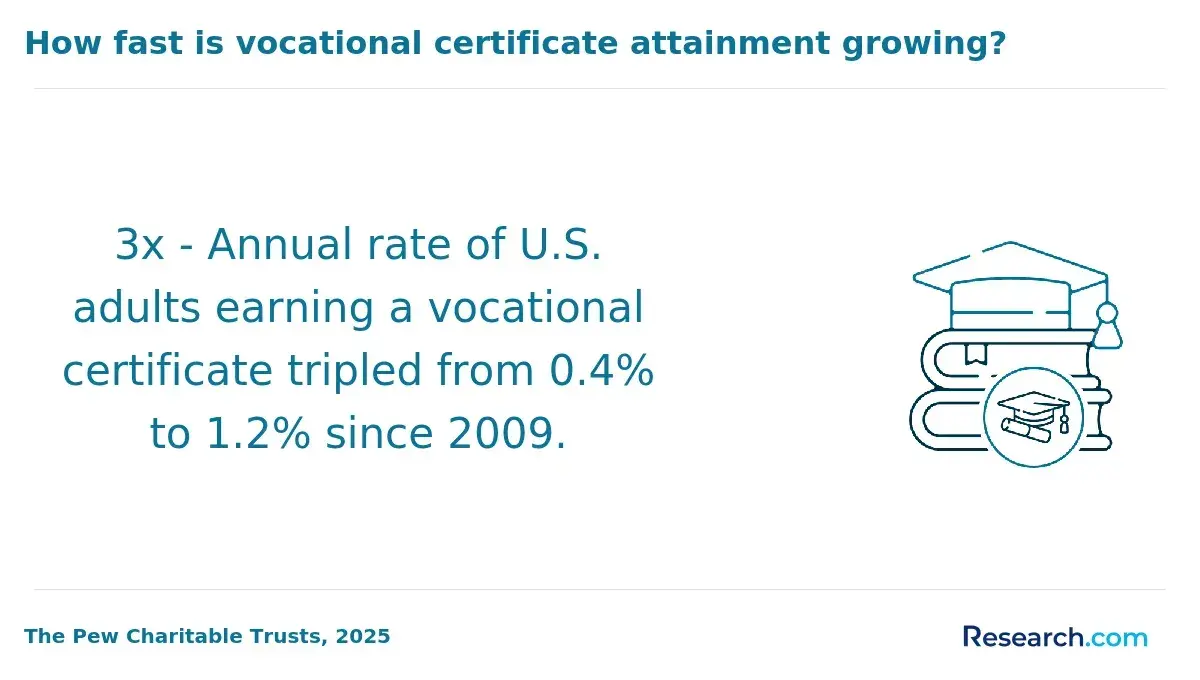
Online general studies curricula usually include general education courses, upper-division interdisciplinary courses, electives, and a capstone or senior project. The best programs let students build a concentration that signals a practical career direction while still preserving flexibility.
Core courses often cover communication, quantitative reasoning, humanities, natural sciences, social sciences, ethics, technology, and civic or cultural understanding. Upper-division courses may focus on interdisciplinary research, leadership, organizational behavior, professional writing, and applied problem-solving.
Concentrations vary by school, but the following options are common because they connect naturally to cross-functional workplace roles:
- Business and management: Useful for students targeting operations, office management, project coordination, entrepreneurship, or administrative leadership.
- Communication and media: Useful for students interested in internal communications, marketing support, public relations, customer education, or content coordination.
- Human services or social science: Useful for students considering nonprofit administration, community programs, case coordination, or public-facing support roles.
- Technology and data literacy: Useful for students who want basic analytics, information systems, digital operations, or process-improvement responsibilities.
- Public administration or policy: Useful for students interested in government, civic organizations, compliance support, or program administration.
Students should also compare general studies with specialized majors when they already know the industry they want. For example, someone aiming for athletic administration or recreation leadership may find a sports management degree more directly aligned than a broad general studies plan with a few sports-related electives.
A strong capstone is especially valuable. It can turn a broad degree into an employer-ready portfolio by asking students to analyze a workplace problem, design a process improvement, create a communications plan, or evaluate a community program. Students should ask admissions advisors for examples of recent capstone topics before enrolling.
How long does it take to complete an online general studies degree and what does it cost?
Most online general studies bachelor's degrees require about 120 semester credits. A first-time full-time student may take about four years, while transfer students can finish faster depending on how many credits apply to the degree. Part-time students often take longer, but the ability to keep working can make the trade-off worthwhile.
Cost varies widely by residency, institution type, transfer credit, fees, books, technology needs, and pace. College Board's 2024 Trends in College Pricing and Student Aid report lists the following average published tuition and fees for 2024-25, which can help students benchmark whether a program is unusually expensive or comparatively affordable:
- Public four-year, in-state: $11,610
- Public four-year, out-of-state: $30,780
- Private nonprofit four-year: $43,350
These figures are published prices, not what every student pays after grants, scholarships, employer tuition assistance, military benefits, or transfer savings. For many online learners, the biggest ROI lever is not the sticker price alone but how many credits the school accepts and how many credits remain after evaluation.
Students seeking a cheap online general studies degree should compare total program cost, not just per-credit tuition. A lower per-credit rate can become less affordable if the school accepts fewer transfer credits, charges high online fees, or requires extra courses that do not support the student's career goal.
Before enrolling, students should calculate cost in this order:
- Request an official or preliminary transfer credit evaluation.
- Confirm how many credits remain for graduation, including upper-division and residency requirements.
- Multiply remaining credits by tuition and mandatory fees.
- Add books, software, exam proctoring, technology, graduation, and portfolio assessment fees.
- Subtract confirmed grants, scholarships, employer benefits, military benefits, and tuition reimbursement.
- Compare the final net cost against realistic target roles, not best-case salary claims.
A common mistake is choosing the fastest option without considering workload. Accelerated courses can be efficient, but students working full time should ask how many hours per week each course typically requires and whether multiple accelerated courses can overlap.
What cross-functional job titles can graduates with general studies degrees pursue?
General studies graduates often pursue roles that value coordination, communication, analysis, and administrative judgment. The degree can be especially useful for people who already have industry experience and need a bachelor's credential to qualify for promotion, management-track roles, or graduate study.
The table below outlines cross-functional job titles that may align with a general studies background. Actual qualifications vary by employer, industry, experience level, and chosen concentration.
| Job title | Typical responsibilities | Helpful concentration or electives |
| Project coordinator | Track deadlines, update stakeholders, organize documents, support budgets, and coordinate project meetings. | Business, communication, data literacy, project management |
| Operations coordinator | Improve workflows, support scheduling, monitor process issues, and communicate across departments. | Management, analytics, information systems |
| Human resources assistant or specialist | Support hiring, onboarding, employee records, training logistics, and policy communication. | Human resources, psychology, communication |
| Training and development specialist | Create learning materials, coordinate training sessions, evaluate learner needs, and support employee development. | Education, communication, organizational behavior |
| Program coordinator | Manage program logistics, communicate with participants, track outcomes, and support reports for leaders or funders. | Public administration, nonprofit studies, social science |
| Customer success coordinator | Help clients adopt products or services, coordinate support, document feedback, and communicate with sales or product teams. | Communication, business, technology |
| Administrative services supervisor | Oversee office operations, records, vendors, facilities coordination, and internal procedures. | Management, operations, communication |
Students should not rely on the degree title alone to open doors. Job descriptions often mention specific tools or skills, such as Excel, CRM platforms, HR information systems, project management software, data dashboards, or basic budgeting. Choosing electives and certificates that match those requirements can make a general studies degree more competitive.
For students considering graduate school, the degree can be a bridge, but prerequisites matter. Someone aiming for clinical or helping professions should compare requirements early; for example, an online master's in counseling may require specific psychology coursework, minimum GPA standards, recommendations, and field placement planning.
What salary ranges and job outlook can general studies graduates expect in cross-functional roles?
Salary outcomes for general studies graduates vary because the degree supports many roles rather than one occupation. Location, industry, work experience, concentration, internships, technical skills, and prior employment history can all affect compensation. The safest way to evaluate ROI is to identify target job titles first, then compare the degree plan against those job requirements.
The table below uses BLS May 2024 wage data and current BLS occupational projections to show examples of cross-functional roles that may fit some general studies graduates. These are occupation-level figures, not guaranteed outcomes for degree holders.
| Role | Median annual wage | Projected employment growth | What the figure means for students |
| Management analyst | $101,190 | 11% | This role often requires strong analysis, business knowledge, and experience; a general studies degree may need to be paired with data or operations coursework. |
| Project management specialist | $100,750 | 7% | Project coordination experience, scheduling tools, and process documentation can matter as much as the degree title. |
| Market research analyst | $76,950 | 8% | Students should add statistics, research methods, spreadsheets, and data visualization if they want this path. |
| Human resources specialist | $72,910 | 8% | HR-related electives, employment law, communication, and internships can strengthen alignment. |
| Training and development specialist | $65,850 | 12% | Students interested in this role should build skills in instructional design, presentation, and learning technologies. |
Broader education data also supports the value of completing a bachelor's degree, while still leaving room for individual variation. BLS reported 2024 median weekly earnings of $1,543 for workers with a bachelor's degree and $930 for workers with only a high school diploma. That gap does not mean every graduate will earn more immediately, but it shows why degree completion can matter for long-term employability and advancement.
Job outlook is strongest when students treat general studies as a platform. A student who adds analytics, project management, HR, or operations experience may have clearer options than a student who graduates with no focused coursework, no portfolio, and no work experience.
How can students choose a reputable online general studies program that fits their career goals?
Choosing a reputable online general studies program starts with one question: what role should this degree help you pursue next? The best program is not simply the cheapest, fastest, or highest-ranked. It is the one that accepts useful transfer credits, offers relevant concentrations, provides real advising, and helps you build evidence of workplace-ready skills.
Use the following steps to compare programs before committing. This process helps prevent the most common enrollment mistakes:
- Define a target role cluster: Choose two or three realistic job families, such as operations, HR, program coordination, customer success, or training.
- Map courses to job postings: Review current job descriptions and note repeated skills, tools, and experience requirements.
- Verify accreditation: Confirm institutional accreditation through recognized U.S. databases and avoid schools with vague or misleading claims.
- Request a transfer evaluation: Ask how each prior course applies to the degree, not just whether credits are accepted.
- Compare total net cost: Include fees, remaining credits, books, technology, and realistic financial aid.
- Evaluate support services: Look for online tutoring, library access, career coaching, disability services, writing help, and responsive advising.
- Ask about applied learning: Prioritize programs with capstones, internships, portfolios, employer projects, or credit for professional learning.
- Check graduate school fit: If a master's degree is possible later, confirm prerequisites and GPA expectations before choosing electives.
Students should also watch for red flags. Be cautious if a program will not provide a clear degree audit, hides fees until late in the process, claims that online degrees are automatically faster, or discourages students from comparing other schools. Strong programs welcome informed questions.
A general studies degree is usually worth considering if you need a bachelor's credential, have prior credits, want cross-functional roles, and can build a focused plan around employable skills. It may be less suitable if your target career requires a specific major, licensure pathway, clinical placement, or deeply technical sequence. The smartest choice is the program that turns flexibility into a clear career strategy.
Other Things You Should Know About General Studies
Most online general studies bachelor’s degrees require about 120 semester credits, including 30 to 40 credits of general education and 30 to 45 credits in the major or concentration area. Many schools also require a final capstone course, usually taken in the last term.
They are similar, but not always identical. General studies is often a broad degree-completion pathway, while interdisciplinary studies may require a more formally designed combination of academic fields. Schools define these programs differently.
Yes. Many students pair the degree with certificates in project management, HR, data analytics, digital marketing, nonprofit management, or leadership. Certifications can help clarify your career direction when the major is broad.
Yes, many online general studies degrees offer the option to focus on specific areas of interest, like communications, business, or the arts. This enables students to tailor their education towards career goals, making them well-prepared for cross-functional roles in the workplace.
References
- A General Studies Degree Is a Launchpad for Career Changers https://www.tuw.edu/gen-ed/general-studies-degree-benefits/
- Online Bachelor's Degree: General Studies https://www.umgc.edu/online-degrees/bachelors/general-studies
- How to Decide Between an Online and Onsite Degree https://www.indwes.edu/articles/2022/07/how-to-decide-between-an-online-and-onsite-degree
- What Can You Do With a General Studies Degree? https://www.calcoast.edu/news/what-can-you-do-with-a-general-studies-degree
- Online General Studies Degree | Programs & Career Options https://www.learnhowtobecome.org/best-online-bachelors-in-general-studies-degree-programs/
- 7 Reasons to Pursue an Online Degree Program | University of Bridgeport https://www.bridgeport.edu/news/why-high-school-students-are-looking-to-online-degree-programs/
- General Studies Degree Jobs: 10 Careers + Salaries (2026) | Extern https://www.extern.com/post/general-studies-degree-jobs-career-guide
- How to Choose the Best Online Degree Based on Your Career Goals https://careerambit.com/blog/how-to-choose-the-best-online-degree-based-on-your-career-goals