
2026 Corrections Degree Oversupply or Undersupply? Student Volume vs Employer Demand

Co-Founder and Chief Data Scientist
Key Things to Know About Corrections Graduate Supply and Employer Demand
- Corrections graduate numbers outpace specialized job openings by over 20% in 2024, indicating competition intensifies for limited entry-level positions where practical experience often outweighs credentials.
- Employer demand clusters regionally, with states facing prison population growth showing high hiring needs; this geographic imbalance requires students to consider mobility or niche specializations for better alignment.
- Programs emphasizing advanced behavioral or technology skills see stronger employer interest, but longer, costlier pathways delay workforce entry, posing tradeoffs between specialization benefits and immediate job market access.
- Key Things to Know About Corrections Graduate Supply and Employer Demand Key Things to Know About Corrections Graduate Supply and Employer Demand
- Is There an Oversupply or Undersupply of Corrections Graduates? Graduate Oversupply or Shortage
- How is Corrections Degree Enrollment Changing? Degree Enrollment Trends
- How Many Corrections Graduates Enter the Workforce Each Year? Annual Graduate Workforce Entry
- Does Job Growth Support the Rising Supply of Corrections Graduates? Job Growth Versus Supply
- How Competitive is the Entry-Level Market for Corrections Graduates? Entry-Level Market Competition
- Which Industries Have the Greatest Demand for Corrections Graduates? Top Hiring Industries
- Where are Corrections Graduates Most in Demand? Top Geographic Demand
- Which Corrections Specializations and Degree Levels Face the Strongest Demand? Which Corrections Specializations and Degree Levels Face the Strongest Demand?
- Are Employer Skill Gaps Affecting Demand for Corrections Graduates? Are Employer Skill Gaps Affecting Demand for Corrections Graduates?
- What is the Future Supply-and-Demand Outlook for Corrections Graduates? Future Supply-Demand Outlook
Is There an Oversupply or Undersupply of Corrections Graduates?
Corrections degree graduate job market balance is far from uniform, with regional and role-specific disparities shaping whether supply meets employer demand. Nationally, moderate growth in associate's and bachelor's completions has not translated into clear oversupply, largely because steady replacement needs among correctional officers, driven by retirements and turnover, sustain demand that often outpaces new entrants. However, specialized positions requiring advanced credentials or targeted skills, such as probation officers, experience more competition and employer preference for candidates with internships or hands-on experience, creating localized shortages despite apparent overall equilibrium.
Geographic variability plays a critical role, as states with expanding inmate populations in the South and West face tighter labor markets, whereas some Northeastern states report marginal oversupply where graduate output occasionally exceeds openings, prolonging job searches. Employers in private correctional sectors frequently prioritize practical experience over formal degrees, further complicating the balance by effectively narrowing the pool of qualified candidates. Prospective students and current degree holders must recognize these nuances, considering how credential level, specialization, and experience align with evolving employer expectations and regional demand patterns to navigate the complex landscape effectively.
Finally, fluctuation in enrollment and hiring practices can distort simple graduate-to-job ratios, especially where training availability or hiring freezes temporarily affect supply perceptions. For those assessing pathways, balancing credential attainment with realistic opportunities is crucial, and exploring options like the shortest DNP program online can offer insights into how focused, efficient education models address workforce needs in parallel fields. Understanding these layered dynamics helps avoid both overestimating competition and missing regions or roles where undersupply persists.
How is Corrections Degree Enrollment Changing?
Enrollment trends in corrections degree programs are showing a nuanced redistribution rather than simply growing or shrinking, with important implications for graduate competition and employer demand. While total enrollments remain relatively stable, an expanded presence of online programs has broadened access, particularly for working adults and nontraditional students. This shift increases overall graduate numbers but also intensifies local competition where public-sector correctional jobs are declining or stagnant. Meanwhile, associate degree completions outpace entry-level job openings in many regions, creating pockets of oversupply, whereas advanced credentials linked to rehabilitation and correctional administration align more closely with evolving employer needs and often face less saturation.
The demographic diversification of students, with greater participation from women and minorities, reflects broader inclusivity efforts but also complicates predictions about labor market absorption since demand varies significantly by region and specialization. Relying on national graduate totals risks obscuring these local variances, where some states experience tighter labor markets while others see fewer job opportunities. Candidates focusing on higher-level certificates or specialized program tracks may find a better match between supply and demand, though the uneven economic and policy shifts affecting public-sector corrections underscore the importance of assessing regional job dynamics alongside credential choice. The data from the National Center for Education Statistics in 2024 underlines how these enrollment patterns produce a cautiously expanding graduate pool with mixed alignment to labor market realities.
An individual currently enrolled in a corrections program recently noted that while the cohort size has grown due to new online classes, there is lingering uncertainty about what this means for job prospects after graduation. The student observed an influx of peers from diverse backgrounds, which feels encouraging but also raises questions about increased competition for limited state-funded positions. Course availability has improved, and instructors emphasize advanced certifications as a strategic path, yet the student remains cautious about interpreting rising enrollment as an automatic sign of stronger employment opportunities. This firsthand perspective highlights the critical need for prospective students to critically evaluate local market trends and credential relevance when considering corrections degree programs today.
How Many Corrections Graduates Enter the Workforce Each Year?
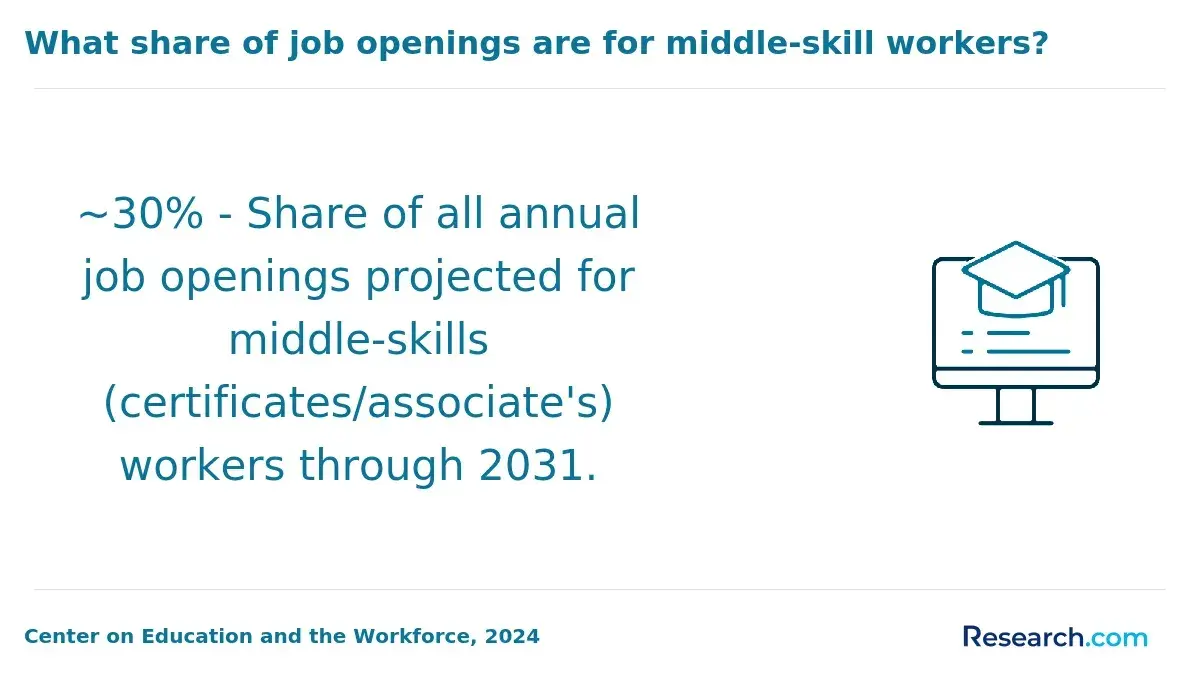
Assessing whether the annual supply of corrections graduates meets employer demand requires more than tallying degree completions; it demands understanding who actually enters corrections roles and under what conditions. Data from the U.S. Department of Education's IPEDS and College Scorecard (2023-2024) show around 5,000 to 6,000 associate's and bachelor's degrees in corrections-related fields are awarded yearly, yet only about 60% to 70% of these graduates secure relevant employment within a year. This gap highlights the importance of differentiating between the number of graduates, the diverse career paths pursued, and the varying requirements across correctional agencies, many of which consider certifications, experience, or regional labor market factors alongside formal education.
For example, some states face persistent shortages in correctional staff, creating regional demand spikes that may absorb a portion of new graduates, while other areas report surpluses leading to underemployment or longer job searches. Additionally, many correctional positions do not require a degree, resulting in competition that extends beyond the graduate pool. This complexity means workforce planners and educators must interpret completion data alongside regional job vacancy statistics, turnover rates, and employer criteria to align training capacity with actual labor market needs. Overreliance on graduate volume alone risks misjudging supply dynamics and overlooks the role of non-degree credentials and post-graduate experience in shaping employment outcomes.
Does Job Growth Support the Rising Supply of Corrections Graduates?
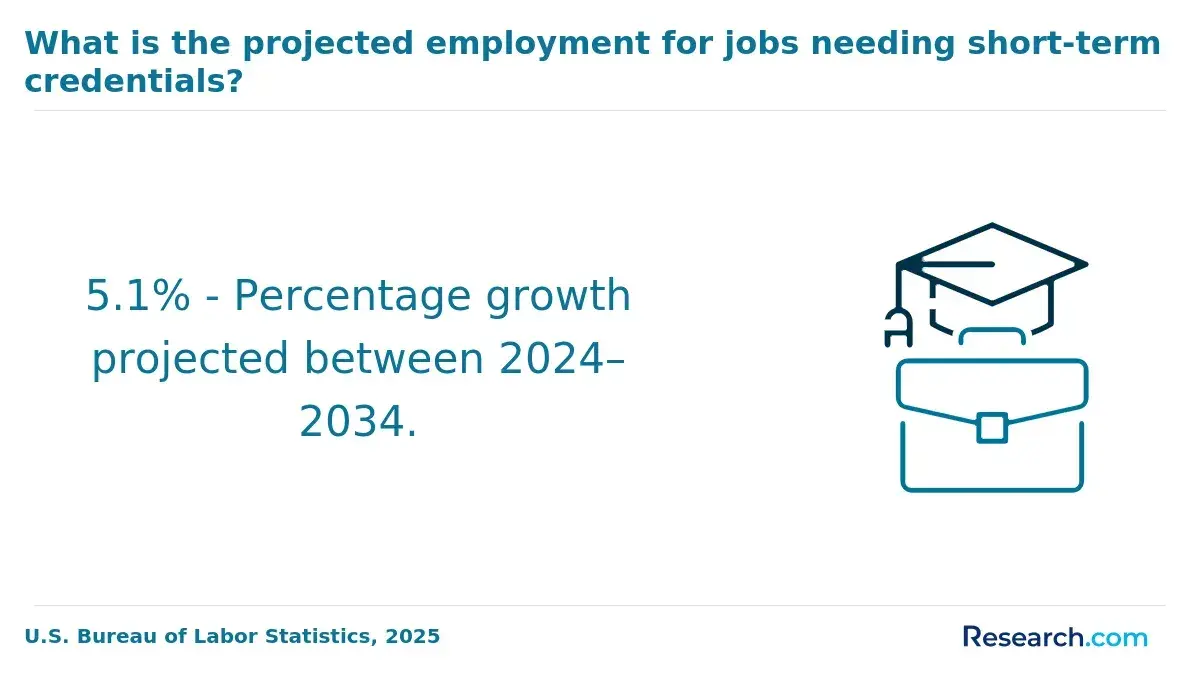
Projected job growth for correctional officers and jailers, while moderate at around 5% over the next decade according to the U.S. Bureau of Labor Statistics, does not fully accommodate the increasing number of graduates entering the field. The supply of individuals with corrections degrees, especially at associate and bachelor's levels, has risen steadily due to expanded academic offerings and career interest, creating a competitive environment where employer demand for corrections degree holders often prioritizes experience, additional certifications, or practical skills rather than academic credentials alone. For example, a recent graduate without specialized training or regional flexibility may struggle to secure an entry-level position if new openings largely reflect replacement demand rather than net job creation.
The corrections job growth and graduate employment dynamic varies significantly by geography and institutional trends, with some states implementing hiring freezes or reductions amid shrinking prison populations, while others see more sustained demand driven by retirements or local workforce shortages. Rising interest in community supervision and alternatives to incarceration further shifts employer demand toward candidates who can demonstrate adaptable, interdisciplinary competencies. Navigating this complex labour market requires graduates to balance degree selection with continuing education and practical experience, akin to other fields where occupational growth does not straightforwardly translate into ample entry-level opportunities. Those evaluating pathways in corrections should consider these nuanced labor-market factors much like prospective students compare fields such as health administration master programs with differing supply-demand fundamentals.
How Competitive is the Entry-Level Market for Corrections Graduates?
The entry-level job market for corrections graduates in 2024 reflects a complex balance between steady employer demand and a significant supply of qualified applicants. While the U.S. Bureau of Labor Statistics projects a modest 4% growth for correctional officer roles through 2030, hiring remains competitive due to regional fluctuations and varying agency preferences. Many employers prioritize candidates with hands-on experience, such as internships or certifications, making purely academic credentials less decisive. This creates a scenario where some graduates face extended job searches or accept roles outside traditional corrections fields. Several key elements influence this competitive landscape:
- Applicant Concentration: Areas with multiple criminal justice programs generate high candidate volumes, intensifying competition for limited local openings and requiring graduates to consider relocation or niche specializations.
- Experience Expectations: Employers favor applicants with demonstrated field experience, such as volunteer work or internships, heightening barriers for fresh graduates and reinforcing the value of practical engagement during study.
- Geographic Demand Variances: State and federal agencies differ in hiring rates, with rural and less-populated regions often offering lower competition but fewer positions, prompting strategic job search decisions.
- Skill and Fitness Requirements: Psychological and physical assessments add complexity to candidate evaluation, filtering out a sizable share of applicants despite strong academic backgrounds.
- Soft Skills Emphasis: Increasing reliance on situational judgment and interpersonal abilities over purely technical knowledge shapes employer preferences, potentially disadvantaging those without targeted development.
- Underemployment Risks: Some graduates accept related but non-corrections roles while awaiting openings, which may stall direct career progression and affect long-term workforce alignment.
- Multi-Stage Screening: Agencies often employ layered selection processes, limiting advancement to final hiring stages and making persistence and adaptability crucial for early-career success.
A recent graduate's experience illustrates these dynamics: After completing a corrections degree, the individual applied broadly but encountered large, competitive applicant pools for state-level positions that demanded prior volunteer or internship experience-opportunities they had limited access to. Facing repeated physical fitness test requirements and situational judgment interviews, this graduate ultimately shifted focus toward smaller jurisdictions where fewer candidates applied. The process was marked by uncertainty and intermittent discouragement, but strategic narrowing of geographic scope and role type provided eventual entry. This reflects how nuanced understanding of regional demand and employer expectations is essential to navigating the corrections job market realistically.
Which Industries Have the Greatest Demand for Corrections Graduates?
Employer demand for corrections graduates is not evenly distributed across the labor market but clearly concentrated in particular sectors where public safety and rehabilitation intersect. The dominance of government agencies reflects both structural budget commitments and regulatory mandates that maintain steady hiring volumes. However, jobs vary significantly in accessibility and career trajectory, so graduates must weigh the volume of openings against competition and credential expectations. For example, a graduate evaluating opportunities in state corrections facilities might face high entry barriers but greater job stability, whereas community-based organizations may offer fewer roles but opportunities for specialization in counseling or reentry services. The following industries demonstrate the strongest demand for corrections graduates based on regional corrections employment growth trends and hiring data.
- Government Agencies: State and federal government employ the largest share of corrections graduates, filling positions in correctional facilities, probation, parole, and federal detention centers. These roles emphasize security, policy compliance, and rehabilitation program management, often requiring certifications and long-term career investment.
- Private Correctional Services: Private firms manage detention centers and rehabilitation programs under contract to government entities. While hiring volume is smaller than public agencies, these companies prioritize candidates with operational expertise and familiarity with security protocols, sometimes offering accelerated advancement.
- Community Organizations: Groups focused on reentry, victim support, and restorative justice increasingly seek corrections graduates skilled in offender counseling and social services. This industry typically values interdisciplinary training and provides varied entry points though often with lower salary ceilings.
- Healthcare Providers: Within correctional settings, healthcare roles require professionals who understand both inmate health needs and institutional security. Graduates with cross-disciplinary skills related to mental health or public health experience can find specialized roles here, though demand is niche.
- Law Enforcement Agencies: Some corrections graduates transition into broader law enforcement fields, including federal agencies overseeing detention and prosecution. These positions call for rigorous backgrounds checks and advanced qualifications, limiting hiring to highly competitive candidates.
Active research into PhD healthcare programs underscores the value of interdisciplinary skills. Corrections graduates who cultivate expertise in healthcare management may improve employability in correctional healthcare settings. However, prospective students should carefully analyze corrections graduate job demand by industry and local labor conditions, as sustained growth remains most stable within public sector institutions rather than newer or smaller private entities.
Where are Corrections Graduates Most in Demand?
National statistics on demand for corrections graduates often mask sharp regional imbalances driven by local incarceration trends, institutional budgets, and workforce pipelines. For example, while states with large correctional systems such as Texas or Florida may display higher hiring volumes, these openings often require relocation and come with tradeoffs including cost of living and competition for specialized roles. Candidates pursuing positions in oversupplied markets with stagnant correctional populations can encounter extended job searches, increased employer selectivity, and a rising premium on practical experience or advanced qualifications.
Urban centers with dense correctional institutions frequently post the greatest number of opportunities, but these markets also feature higher turnover and more competitive applicant pools. Employers in government agencies-where most corrections grads find work-expect graduates to have a mix of academic credentials and relevant field experience, which can limit immediate employability for recent graduates without internships or hands-on training. Moreover, despite rising openings in private and rehabilitative sectors, demand remains concentrated in public institutions, intensifying regional competition and the need for geographic flexibility to maximize job prospects.
Prospective students and degree holders must weigh not just the quantity of available corrections jobs but practical factors like workforce saturation, local credential expectations, and realistic mobility options. Many graduates who relocate to states with expanding correctional populations may find faster placement but confront challenges related to living costs and adapting to distinct agency cultures. Thoughtful assessment of labor market conditions beyond headline job counts is essential to align educational pathways with sustainable employment outcomes in corrections careers.
Which Corrections Specializations and Degree Levels Face the Strongest Demand?
Employer demand within corrections is highly specialized and unevenly distributed across degree levels and focus areas. Candidates with specialized skills aligned to shifting public safety policies and rehabilitative methods encounter more favorable hiring conditions than generalist degree holders. For example, a bachelor's graduate concentrating in correctional counseling typically faces less competition and more relevant openings than an associate degree graduate pursuing entry-level officer roles, where supply far outstrips demand. At the graduate level, those holding master's degrees emphasizing leadership or policy development engage with a tighter labor market characterized by strategic program needs and fewer qualified applicants. This disparity reflects a broader trend: employers value mental health expertise, crisis intervention capabilities, and program management skills beyond the traditional security functions. Below are key specializations and degree tiers where demand is strongest, shaping the practical outlook for job seekers and educational planners.
- Correctional Counseling: Employers seek bachelor's-level professionals skilled in behavioral health and substance abuse intervention, fueled by expanding mental health initiatives within correctional systems and community reentry programs.
- Juvenile Justice Specialization: Demand centers on bachelor's graduates trained to handle youth offenders with restorative justice approaches, supporting diversion programs and specialized facility needs.
- Behavioral Health Interventions: Roles requiring knowledge of trauma-informed care and crisis management are growing, favoring candidates with targeted coursework and field experience commonly found in advanced undergraduate tracks.
- Leadership and Administration: Master's degree holders with corrections emphases fill gaps in program direction and policy roles, as agencies struggle to recruit professionals capable of strategic development and compliance oversight.
- Generalist Associate Degrees: These remain the most common pathway but encounter saturated job markets, limited upward mobility, and higher turnover, often confining graduates to routine security positions.
- Crisis Management Competency: Emerging as a core employer expectation, this skill improves hiring prospects in both specialized counseling and supervisory roles, reflecting increased focus on de-escalation tactics within facilities.
According to the U.S. Bureau of Labor Statistics and LinkedIn Workforce Insights from 2024, correctional counseling and juvenile justice specializations show notably higher employer demand than more general credentials. This evidence underlines the importance of aligning education choices with nuanced labor market requirements rather than defaulting to traditional degree pathways.
Are Employer Skill Gaps Affecting Demand for Corrections Graduates?
The demand for corrections graduates reflects not a simple shortage of candidates but a more complex deficit in job-ready competencies. Employers frequently report open positions for roles requiring advanced skills in conflict resolution, mental health awareness, technology integration, and rehabilitation programming management-capabilities that many graduates lack despite steady or growing graduation rates. A hiring manager may encounter numerous applicants with foundational corrections knowledge but few demonstrating applied experience with electronic monitoring systems or data analysis tools, ultimately delaying recruitment and increasing reliance on costly on-the-job training. This operational consequence illustrates how misreading the pipeline as an oversupply based purely on graduate volume obscures the real issue of preparing candidates with precise, industry-specific skills.
These employer skill gaps in corrections workforce reshape competition across locations and roles, particularly disadvantaging entry-level graduates who have not pursued targeted experiential learning or specialization. Candidates who supplement their academic preparation with relevant internships, certifications, or projects aligned with employer expectations strongly improve their employment prospects, whereas those emerging from broader, less practice-focused programs may face extended job searches. Prospective students and current degree holders evaluating program options should weigh curricula that emphasize professional competencies and digital literacy. For example, familiarity with tools highlighted in facilities management can differentiate candidates in competitive job markets and accelerate readiness in evolving corrections environments.
In response to these dynamics, educators and workforce stakeholders must adjust instructional design to mitigate the corrections graduate job skill mismatch analysis that drives persistent hard-to-fill positions. Identifying and addressing the intersection of foundational knowledge plus applied technical skills will better align graduate supply with labor market demand. Those considering alternative pathways can explore accelerated options such as a 6-month RN to BSN program online in adjacent fields to supplement qualifications where interdisciplinary competencies intersect with corrections career trajectories.
What is the Future Supply-and-Demand Outlook for Corrections Graduates?
A targeted job search focused on specific entry-level positions within corrections typically yields better results than submitting a high volume of unfocused applications. Candidates who invest effort in identifying job titles with actual openings, such as correctional treatment specialists or probation officers, and prioritize locations or states where policy changes have increased employer demand position themselves more competitively. For example, a graduate relocating to states with expanding community-based corrections programs may have an advantage over peers applying broadly in saturated urban markets. Tailoring resumes to mirror employer language and demonstrating relevant skills through internships or certifications can improve interview conversion rates by aligning qualifications closely with job requirements.
Application timing and informed market research also play critical roles; submitting materials soon after job postings appear and leveraging credible data from sources like the U.S. Bureau of Labor Statistics for trends in corrections degree demand and employment forecasts helps candidates avoid crowded applicant pools. Networking with hiring managers remains one tool among many rather than a catch-all solution-increasingly, employers seek concrete evidence of practical readiness, such as certifications or experience with electronic monitoring technologies. Prospective graduates should consider supplementing their Corrections degrees with focused skill-building in areas that reflect evolving industry priorities rather than relying solely on academic credentials.
The future corrections graduate job market trends indicate a slow growth rate alongside rising graduate volume, intensifying competition especially in traditional incarceration roles. This saturation underscores the importance of strategic educational pathways that integrate rehabilitation or mental health training. Those exploring alternative or complementary degrees might also consult resources like APA accredited PsyD programs to diversify their qualifications and expand career options.
References
- Educated but unemployed, a rising reality for US college grads https://www.oxfordeconomics.com/resource/educated-but-unemployed-a-rising-reality-for-us-college-grads/
- The Labor Market for People with Conviction Histories https://www.vera.org/publications/the-labor-market-for-people-with-conviction-histories
- Shrinking enrollments lead to rethinking of criminal justice programs https://www.ccdaily.com/2023/07/shrinking-enrollments-lead-to-rethinking-of-criminal-justice-programs/
- Degrees for Occupational Advancement in the Corrections Field https://www.correctionalofficer.org/degrees-for-occupational-advancement-in-the-corrections-field
- Correctional Officers https://www.dac.nc.gov/correctional-officers
- Finding Your Path: A Comprehensive Guide To Entry Level ... https://test.e4e.org.il/entry-level-criminal-justice-jobs-o18f.html
- The Future of Corrections: Job Trends and Industry Changes https://www.whallsgroup.com/post/the-future-of-corrections-job-trends-and-industry-changes
- Want to get promoted within corrections? Get a degree https://www.corrections1.com/corrections-jobs-careers/articles/want-to-get-promoted-within-corrections-get-a-degree-mENjb72FNaoVUzIu/
- Working in “a meat grinder”: A research roundup showing prison and jail jobs aren’t all that states promise they will be https://www.prisonpolicy.org/blog/2022/05/09/correctional_jobs/
- This Is How To Become a Correctional Officer | Career & Duties https://www.allcriminaljusticeschools.com/corrections/corrections-officer-career/
Other Things You Should Know About Corrections
Specializations that emphasize practical skills such as rehabilitation techniques, conflict resolution, or mental health in corrections often lead to better job alignment than purely theoretical tracks. Employers increasingly value candidates with experience in evidence-based interventions and case management, so graduates from programs focused on these areas tend to have stronger employment outcomes. Prospective students should prioritize programs with substantial applied learning components and partnerships with corrections agencies to increase workplace readiness.
Corrections employment demand varies significantly by region, largely driven by local crime rates, budget allocations, and facility capacities. Graduates tied to high-supply areas with limited openings may face prolonged job searches, so flexibility in relocating can substantially improve job prospects. When choosing a program or making career plans, it's practical to assess regional labor markets and consider expanding job search areas beyond one's immediate vicinity to avoid tedious competition in oversaturated locales.
While flexible degree formats enhance accessibility, they often provide fewer hands-on training opportunities critical for corrections roles, such as internships or live simulations. Employers generally prefer candidates who demonstrate proven field experience, which can be harder to attain in purely remote programs. Students opting for non-traditional formats should seek supplementary practical experiences, like volunteering or externships, to offset potential deficits in applied training and improve credibility in hiring processes.
In markets with oversupply, initial entry-level roles may offer limited advancement and lower salary growth as employers have the luxury to select highly experienced candidates. This environment can lead to longer periods of underemployment or turnover. Graduates in these conditions should consider supplementing education with certifications, networking intensively, or diversifying skills to remain competitive and facilitate career progression within corrections or related public safety fields.


