2027 Corrections Transfer Credit Trends: How Schools Are Adapting for Adult Learners

Co-Founder and Chief Data Scientist
This article examines recent transfer credit trends, evolving institutional practices, and their implications for adult learners navigating Corrections programs efficiently and affordably.
Key Things to Know About Corrections Transfer Credit Trends for Adult Learners
- Expanded acceptance of military and workforce credits reflects a shift toward recognizing experiential learning, but varying institutional standards create transfer inconsistencies that require students to carefully verify credit applicability.
- Technology-enabled transcript evaluations improve transfer decision speed, yet tradeoffs include reduced personalized advising, potentially impacting students' strategic credit maximization and degree planning.
- Credit-for-prior-learning policies reduce degree completion time by an average of 20%, enhancing access but sometimes limiting alignment with employer expectations for formal academic credentials in corrections roles.
- Key Things to Know About Corrections Transfer Credit Trends for Adult Learners Key Things to Know About Corrections Transfer Credit Trends for Adult Learners
- How Are Corrections Programs Changing Transfer Credit Policies for Adult Learners? Evolving Adult Transfer Policies
- Why Are More Corrections Schools Accepting Credit for Prior Learning and Work Experience? Prior Learning Credit Benefits
- How Do Corrections Colleges Evaluate and Award Transfer Credits Today? Transfer Credit Evaluation Process
- Which Alternative Credits Are Most Commonly Accepted by Corrections Programs? Accepted Alternative Credits
- How Are Corrections Schools Improving Transfer Pathways for Community College Students? Improved Community College Pathways
- How Can Transfer Credits Help Corrections Students Graduate Faster? Accelerating Degree Completion
- How Much Money Can Students Save Through Corrections Transfer Credit Opportunities? Cost Saving Through Transfers
- How Are Corrections Programs Supporting Military Students and Workforce Learners Through Transfer Credits? How Are Corrections Programs Supporting Military Students and Workforce Learners Through Transfer Credits?
- What Transfer Credit Innovations Are Shaping the Future of Corrections Education? What Transfer Credit Innovations Are Shaping the Future of Corrections Education?
- How Can Adult Learners Maximize Transfer Credits in a Corrections Program? Maximizing Your Transfer Credits
How Are Corrections Programs Changing Transfer Credit Policies for Adult Learners?
Corrections programs are increasingly shifting toward more inclusive transfer credit policies that recognize the diverse experiences of adult learners, military-affiliated students, and working professionals. This shift goes beyond traditional credit equivalencies by incorporating prior learning assessments, military service evaluations, and workforce certifications, which can significantly reduce redundant coursework and shorten time-to-degree. For example, students transferring from community colleges often benefit from articulation agreements that facilitate credit portability, though they must navigate varying institutional standards that sometimes limit the total credits accepted. Understanding these nuances is critical when comparing programs, as policies affect affordability and course sequencing in complex ways that directly influence long-term educational trajectories.
Such adaptations to transfer credit acceptance in corrections education programs respond to growing demand for flexible pathways but come with tradeoffs related to academic rigor and the consistency of credit audits. One notable challenge is the lack of standardized credit evaluation practices, which contributes to about 25% of transfer students losing credits during the process, according to National Student Clearinghouse Research Center data. This reality underscores the importance of individualized transcript reviews that consider competency-based education alongside more traditional credits, allowing students to leverage previously earned credits without compromising degree integrity.
Adult learners and degree completers must carefully assess these factors to maximize their credit transfer benefits while ensuring their educational plans align with workforce requirements, whether pursuing a corrections-related career or fields with increasing demand such as nursing, where programs like nursing degree online offer alternative transition opportunities.
Why Are More Corrections Schools Accepting Credit for Prior Learning and Work Experience?
The increased acceptance of credit for prior learning and work experience in corrections programs signals a strategic adjustment to accommodate the complex realities adult students face rather than a simple relaxation of transfer rules. Institutions recognize that many learners bring relevant military training, industry certifications, or employer-based competencies that align closely with workforce needs, especially in sectors experiencing labor shortages. According to a 2024 Council for Adult and Experiential Learning report, over 70% of adult learners consider this recognition critical when selecting a program, underscoring how credit policies directly influence enrollment and persistence. Yet, striking a balance between credit flexibility and maintaining academic rigor remains a challenge-schools must carefully evaluate experiential portfolios and competency assessments to ensure standards are met while avoiding redundancies that delay graduation.
This trend also reflects broader institutional imperatives to improve retention and shorten time to degree by reducing course duplication for students managing jobs and families. Corrections programs increasingly deploy structured, transparent assessment processes that differentiate valid prior learning from inconsistent or inadequate experiences, a nuance highlighted by a 2024 Lumina Foundation analysis correlating clear credit policies with enhanced degree completion rates.
However, variability in how institutions value different types of nontraditional credits means students must navigate complex transfer evaluations, often balancing the potential advantage of accelerated completion against the risk of limited credit applicability or extended documentation requirements. For many adult learners, these decisions affect long-term career trajectories by determining not only how quickly they graduate but also how well their credentials align with employer expectations in corrections-related fields.
One military veteran pursuing a corrections degree shared how her experience initially met with skepticism during credit evaluation because some training modules lacked clear academic equivalents. Despite the setback, she appreciated the school's evolving prior learning assessment policy, which eventually allowed her to submit a detailed portfolio that combined military certifications and workplace evaluations. While the process delayed her enrollment by several months, she felt validated when much of her past experience was accepted, shortening her time to degree and enabling a faster return to civilian employment. This cautious optimism illustrates how institutions' growing willingness to integrate diverse experiential credits can empower adult learners-provided they understand the procedural complexities and prepare thorough documentation from the outset.
How Do Corrections Colleges Evaluate and Award Transfer Credits Today?
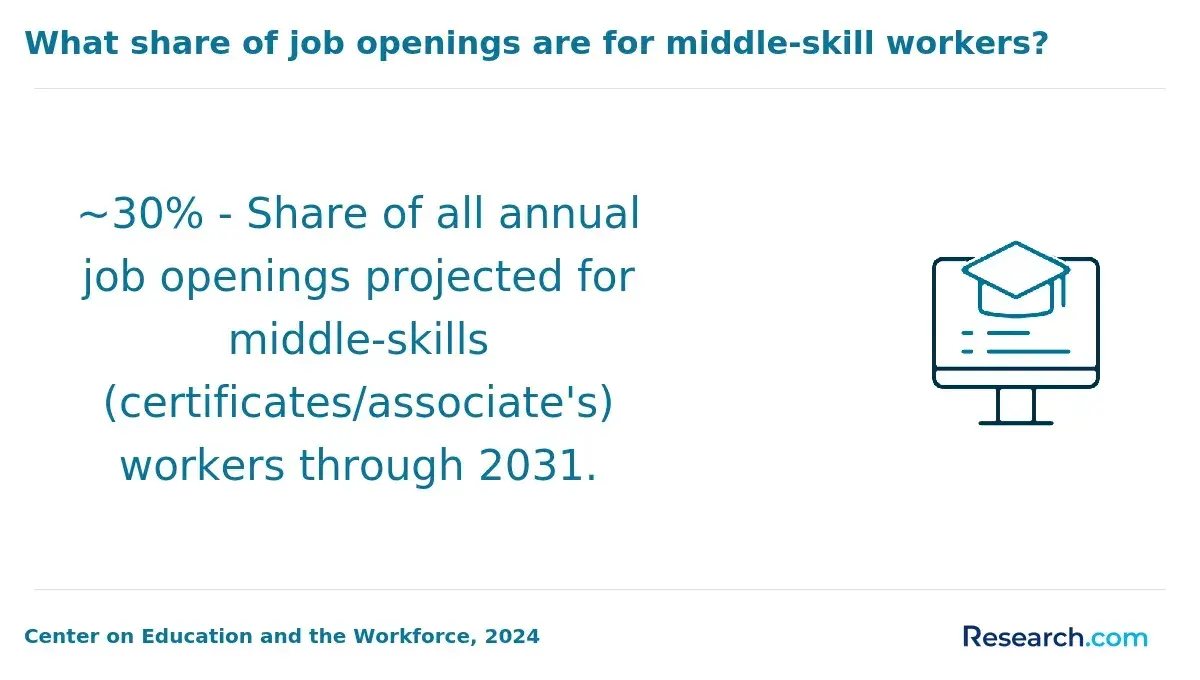
Evaluating transfer credits in corrections colleges has shifted from a procedural step to a strategic element in student progression and institutional enrollment planning. Rather than merely verifying transcripts, schools analyze accreditation legitimacy, course content alignment, and grade thresholds-often requiring a minimum grade of C-to ensure transferred credits sustain academic quality and program integrity. For example, a military-affiliated student seeking credit for training experiences must navigate both ACE-recommended credit frameworks and program-specific residency limits, which can significantly influence how much prior learning counts toward degree milestones. Such tradeoffs impact not only a student's timeline but also financial outlays by potentially reducing redundant coursework.
Course equivalency remains central, with many institutions leveraging articulation agreements to enhance credit mobility; recent data from the National Center for Education Statistics in 2024 shows approximately 68% of transfer students benefit from these partnerships. However, variability persists, as some credits are deemed applicable only as electives or restricted to lower-division status, creating practical challenges for degree planning. Competency-based credits, standardized exams like CLEP or DSST, and validated workforce certifications increasingly provide alternative pathways but require nuanced evaluation to fit specific degree criteria without diluting academic standards. Adult learners must balance the opportunity to accelerate degree completion against policies that may limit transfer credit applicability, affecting both graduation timelines and workforce entry.
Modern transfer evaluations also integrate technology tools to improve consistency and reduce administrative delays, yet students should approach credit transfer as a complex negotiation involving institutional policy, prior learning documentation, and program-specific mandates. Those moving between community colleges, adult education programs, military service, and four-year institutions face distinct challenges in understanding how credits will apply and whether they align with long-term employment goals. Clear, upfront advising remains critical to help avoid surprises that can extend time to degree or increase costs, underscoring the importance of strategic academic planning tailored to corrections education pathways.
Which Alternative Credits Are Most Commonly Accepted by Corrections Programs?
Corrections programs increasingly treat alternative credit acceptance as a strategic means to improve access and completion for adult learners rather than merely adjusting transfer policies. Credit for prior learning (CPL) and military training credits remain central due to their direct alignment with practical skills and workplace experiences, though institutions apply rigorous course equivalency reviews and limit upper-division credit applicability to maintain academic standards. This creates tradeoffs for students who must balance leveraging prior experiences with residency requirements and institutional variations, underscoring the need for proactive advising to maximize degree progress without extending timelines unnecessarily.
Examinations such as CLEP and DSST play a crucial role in transfer credit options for adult learners in corrections programs, offering a standardized, affordable route to demonstrate competencies and reduce redundant coursework. Data from the Council for Adult and Experiential Learning shows over 65% of corrections-affiliated colleges award CPL credits, while nearly 60% of transfer students utilize CLEP or DSST credits, reflecting growing institutional reliance on these pathways. Additionally, acceptance of workforce certifications and competency-based assessments varies widely by program but can significantly affect affordability and flexibility, enabling students to apply employer-sponsored learning or online accredited coursework selectively. Those considering corrections degrees often benefit from researching specific program policies and aligning prior credits meticulously to avoid unexpected credit denials or extended time to completion, especially when exploring options like RN to BSN online programs.
How Are Corrections Schools Improving Transfer Pathways for Community College Students?
Corrections programs have recognized that enhancing transfer pathways is essential to addressing the persistent credit loss and extended timelines community college students often face. Despite clear articulation agreements, students can lose significant credits-up to 40% according to the National Student Clearinghouse Research Center in 2024-which delays graduation and burdens adult learners juggling work and personal responsibilities. To mitigate this, many Corrections schools are refining credit evaluation to include prior learning assessments and military experience, while aligning curricula more closely with feeder programs. This focus on reducing unnecessary repetition and providing transfer-friendly degree maps aims to sustain academic momentum and improve overall educational accessibility, though students must still navigate variations in how institutions apply these policies.
Dedicated transfer advising has become a pivotal component, offering students personalized guidance on which credits will count and how to plan their courses strategically to avoid surprises late in their programs. Some colleges integrate technology platforms that give real-time visibility into credit applicability, allowing proactive decision-making. Nevertheless, tradeoffs remain; for instance, articulation agreements may prioritize core Corrections content but limit elective credit recognition, prompting students to weigh the value of certain courses versus time to degree completion. Additionally, statewide transfer policies like reverse transfer improve degree attainment rates but require careful coordination across institutions, reflecting the complex ecosystem adult learners must navigate.
A transfer student from a community college recounts being initially uncertain whether her military training credits would apply toward her Corrections bachelor's degree. After conflicting information from admissions and the registrar's office, she engaged closely with a transfer advisor who helped interpret the articulation agreement and prior learning policies. The advisor identified specific course equivalencies and arranged a credit evaluation that ultimately preserved several credits she feared losing, allowing her to start with a clearer academic plan. This experience highlighted the critical role of transparent transfer pathways and advising in reducing friction and bolstering student confidence amid complex institutional processes.
How Can Transfer Credits Help Corrections Students Graduate Faster?
Transfer credit policies for corrections students are a nuanced factor in degree acceleration, as acceptance rates and credit applicability often hinge on institutional standards and specific degree requirements. While prior learning assessments (PLA) and formal articulation agreements between community colleges and four-year institutions improve recognition of workforce training, military experience, or certifications, students must still navigate residency rules and upper-division coursework mandates. For example, credits from non-accredited programs or outdated courses may be rejected, or apply only as electives, limiting their actual impact on shortening time to completion. Adult learners balancing work and personal commitments face the challenge of sequencing remaining coursework effectively to meet both academic and state certification demands without extending enrollment unnecessarily.
Accelerated degree completion through transferred credits depends heavily on how well previous credits align with core corrections curricula and program-specific graduation criteria. Flexible, stackable credentials and hybrid delivery options increasingly support transfer students, but financial benefits from reduced tuition must be weighed against potential delays if credits fail to count toward critical requirements. Military-affiliated students and working professionals will find that understanding these credit evaluation processes upfront is crucial to creating realistic enrollment strategies. Institutions with strengthened transfer pathways for criminal justice and public safety courses allow students to bypass introductory classes, but must still ensure exposure to advanced topics essential for employability and workforce readiness.
Exploring options like the easiest online RN to BSN program can also provide insight into how credit transfer functions in related fields, informing decisions about educational planning and credit maximization.
How Much Money Can Students Save Through Corrections Transfer Credit Opportunities?
Transfer credit acceptance in Corrections programs can significantly lower the overall cost of education, but these savings are closely tied to institutional policies and student circumstances. For example, military-affiliated learners may receive up to 30 credits for prior service training, substantially reducing required coursework and tuition fees; however, many institutions limit the number of transferable credits to around half of the total degree requirements. Residency rules often mandate that a minimum number of credits be completed at the awarding school, which can diminish cost reductions by prolonging enrollment and increasing fees beyond tuition. Additionally, not all transferred credits apply directly to Corrections-specific courses, necessitating additional classes that offset some financial benefits.
The National Student Clearinghouse's 2024 report indicates that transfer students who effectively utilize previous credits can cut their course load by 20% to 40%, translating into notable tuition savings depending on per-credit charges. Yet, an estimated 15% of eligible credits are often lost or deemed non-equivalent during transfer, extending time-to-degree and adding to overall expenses. For adult learners balancing work and family, these delays may carry significant indirect costs such as lost income or increased childcare expenses. Thus, while credit transfer opportunities can offer meaningful financial relief, they require careful evaluation of program-specific credit transfer ceilings, course alignment, and institutional residency rules to optimize educational investment within Corrections degree pathways.
How Are Corrections Programs Supporting Military Students and Workforce Learners Through Transfer Credits?
Transfer credit policies in corrections programs directly affect how military-affiliated students and workforce learners leverage prior experience to shorten degree timelines. Approximately 60% of adult learners in corrections-related fields enter with prior learning, making institutional acceptance of military training and professional certifications a critical factor. Programs aligned with American Council on Education (ACE) recommendations facilitate credit for service members' occupational specialties, yet inconsistent application and additional documentation requirements often delay academic planning and prolong remaining credit needs. For example, a veteran with relevant occupational training may still face hurdles translating military coursework into accredited credits, impacting timely degree completion and employment readiness.
Workforce learners encounter similar complexities when professional credentials and apprenticeship experiences are evaluated unevenly through prior learning assessments (PLAs). While some institutions apply flexible PLA criteria to recognize non-college experiences-thereby reducing redundant coursework and cost-others maintain rigid standards that limit credit awards despite demonstrated competencies. Transfer articulation agreements between community colleges, military education programs, and four-year institutions aim to streamline credit mobility, but fragmented policies and interdisciplinary corrections curricula continue to impede seamless transitions. These challenges underscore a tradeoff between maintaining academic rigor and enhancing educational accessibility, with implications for career trajectories in corrections and related fields.
What Transfer Credit Innovations Are Shaping the Future of Corrections Education?
Innovations in transfer credit policies are reshaping corrections education by increasing degree mobility and reducing time to completion for adult learners and transfer students. A significant driver is the adoption of technology-driven transfer credit assessment methods, including artificial intelligence-assisted transcript evaluations, which, according to the 2024 National Student Clearinghouse report, have decreased processing times by up to 40%. This improvement can accelerate enrollment decisions but also introduces challenges in standardizing credit acceptance, especially given the uneven adoption across institutions and varying state transfer policies. For corrections students, who often juggle employment and nontraditional schedules, these developments impact how efficiently previously earned credits, including military and workforce training, are recognized and applied.
Credit for prior learning (CPL) remains vital in addressing affordability and decreasing redundant coursework by validating military service, industry certifications, and occupational experience. However, ensuring consistent academic quality and equivalence across institutions requires careful assessment, which often depends on robust competency-based education models integrated into corrections degree pathways. Digital credentialing systems and blockchain-enabled transcript verification further enhance credit portability but demand that students and advisors remain aware of policy discrepancies that may affect transfer success. Educators and administrators increasingly negotiate transfer pathway agreements to mitigate these inconsistencies, yet adult learners must still navigate complex credit articulation processes.
Understanding these programmatic shifts is crucial for corrections students planning degree completion and workforce entry. In corrections education, where employers expect practical skills aligned with credential attainment, credits accepted from prior learning and sources outside traditional academia directly impact employability. For those weighing occupational costs and benefits, including considerations like the health information management salary and related career outcomes, decision-making must integrate the realities of credit recognition policies and transfer systems. In practice, transfer credit innovations can improve accessibility, but learners must prepare for variability in credit acceptance and invest in strategic advising to maximize their credit and time investment.
How Can Adult Learners Maximize Transfer Credits in a Corrections Program?
Maximizing transfer credits in a corrections program demands more than simply submitting transcripts; it requires proactive navigation of transfer evaluations and institutional policies that often restrict credit acceptance through residency or course equivalency limits. For example, an adult learner transferring military training and community college courses may find a partial credit match, but without early transcript assessment and requesting a degree audit focused on credit for prior learning, they risk lengthy degree completion and repeating content. Since many corrections programs cap transferable credits to avoid diluting program rigor, students must balance credit maximization against ensuring coursework aligns with state licensing or certification expectations.
Effective credit transfer options for working professionals in corrections education include leveraging alternative credit pathways-military experience and workforce certifications often receive recognition through statewide articulation agreements or experiential learning portfolios. According to the National Student Clearinghouse Report (2024), students who complete official transcript evaluations before enrollment have a 35% higher likelihood of maximizing prior credits, directly impacting time-to-degree and educational costs. Adult learners should scrutinize articulation compacts between institutions and seek programs with flexible pathways, such as degree-completion tracks or validated military credit acceptance, to avoid barriers like course mismatch or transfer caps. For those exploring accelerated degree paths, resources like the fast track ABA masters online can illustrate alternative models valuing transfer credits strategically within corrections and allied fields.
References
- Adult Postsecondary Learners: Reviewing the Data and Evidence https://www.jff.org/idea/adult-learners/
- The Missing Link: Adult Learners and the Transfer Process https://www.cael.org/resouces/pathways-blog/the-missing-link-adult-learners-and-the-transfer-process
- Improving the Experience for Community College Transfer Students https://changinghighered.com/improving-the-experience-for-community-college-transfer-students/
- The Role of Policy and Digital Strategy in Shaping the Future of Corrections - JUSTICE TRENDS Magazine https://justice-trends.press/the-role-of-policy-and-digital-strategy-in-shaping-the-future-of-corrections/
- How College Credit Transfer Really Works: A Practical Guide https://www.straighterline.com/blog/transfer-how-college-credit-transfer-really-works-a-practical-guide
- Transforming corrections: Global experts converge to discuss the future of digital corrections - IPS Innovative Prison Systems https://prisonsystems.eu/transforming-corrections-global-experts-converge-to-discuss-the-future-of-digital-corrections/
- Improving the Share of Adult Learners at Four-Year Institutions - Ithaka S+R https://sr.ithaka.org/blog/improving-the-share-of-adult-learners-at-four-year-institutions/
- 2.04 – Transfer and Exam-based Credit | Ozarks Technical Community College https://ozarkstech.edu/policy/2-04-transfer-of-credit/
- Expanding credit for prior learning https://www.ccdaily.com/2026/03/expanding-credit-for-prior-learning/
- Increasing Community College Transfers: Progress and Barriers - Public Policy Institute of California https://www.ppic.org/publication/increasing-community-college-transfers-progress-and-barriers/
Other Things You Should Know About Corrections
Employers in the corrections field tend to prioritize candidates with comprehensive, relevant training over those who merely accumulate credits. While transfer credits can shorten time to degree completion, students should ensure that the credits accepted reflect substantive coursework aligned with corrections competencies. Accepting too many unrelated transfer credits may raise concerns about preparedness or undercut the perceived rigor of the degree, which can affect employment or promotion prospects in competitive corrections environments.
Programs extensively built on transfer credits often streamline curriculum by eliminating foundational courses, which can speed completion but reduce opportunities for building core corrections knowledge and skills. Adult learners must weigh the benefit of faster graduation against potential gaps in training that could limit real-world readiness. Prioritizing programs that balance credit acceptance with targeted corrections coursework generally leads to better long-term career outcomes.
Yes, many corrections programs require practical components such as internships or lab simulations that cannot be transferred. A heavy reliance on transferred academic credits may reduce on-campus or in-field engagement, potentially diminishing experiential learning critical for corrections work. Students should assess how programs integrate hands-on training alongside accepted credits to ensure readiness for the workforce.
Flexibility in transfer credit policies can be beneficial for adult learners with diverse educational backgrounds, but overly flexible programs might lack clear, standardized progression, risking course redundancy or gaps. Conversely, structured degree paths often provide clearer milestones and deeper alignment with employer expectations. For most corrections students aiming for employability and career advancement, programs with defined curricula that still offer reasonable credit transfer strikes the best balance.