
2027 What’s the Difference Between Social Work and Sociology?

Co-Founder and Chief Data Scientist
Choosing between social work and sociology is not just a choice between two similar-sounding majors. It is a decision about how you want to engage with social problems: by working directly with individuals, families, and communities, or by studying social patterns, institutions, and systems to explain how society works.
Social work is a practice-oriented profession focused on helping people navigate challenges such as mental health concerns, poverty, family conflict, school difficulties, addiction, aging, and access to services. Sociology is a research-centered social science that examines human behavior, social groups, culture, inequality, institutions, and social change. Both fields can lead to meaningful careers, but they differ in education requirements, licensing, daily work, research methods, and long-term career options.
This guide compares education in social work and sociology education so you can decide which path fits your strengths, career goals, preferred work environment, and financial plans.
Quick Answer: What Is the Main Difference Between Social Work and Sociology?
The main difference is purpose. Social work applies knowledge to help people solve immediate and long-term problems, often through counseling, case management, advocacy, and direct services. Sociology studies society itself, using research to explain social behavior, inequality, institutions, culture, and group dynamics.
| Question | Social Work | Sociology |
| Primary focus | Helping individuals, families, groups, and communities improve well-being | Understanding how societies, institutions, and social groups function |
| Typical work style | Direct service, advocacy, intervention, and client support | Research, teaching, analysis, policy work, and data interpretation |
| Licensure | Often required, especially for clinical practice | Generally not required for most sociology roles |
| Best fit for students who | Want a people-facing career with practical intervention responsibilities | Want to study social patterns, conduct research, or analyze social systems |
| Common next step | BSW, MSW, fieldwork, state licensure, supervised practice | Bachelor’s degree, research experience, graduate study for advanced roles |
What’s the Difference Between Social Work and Sociology Table of Contents
- Career path differences between social work and sociology
- Job outlook and labor market differences
- How research differs in social work and sociology
- Theories used in each field
- Practice methods and professional responsibilities
- Education, cost, and credential requirements
- How accreditation affects career options
- Long-term value of a master’s in social work
- Future trends shaping social work and sociology
- Benefits of a doctorate in social work
- Whether advanced standing MSW programs are worth it
- Essential skills for social work and sociology
- Certifications and licensure in social science careers
- Balancing cost and access when choosing a program
- Career advancement options
- Job satisfaction and long-term growth
- How to transition into social work or sociology
Social work and sociology have long overlapped because both fields are concerned with social problems, inequality, institutions, and human behavior. The difference is how they use that knowledge. Sociologists often ask why social patterns exist. Social workers ask what can be done to support a person, family, or community facing those patterns in real life.
Shaw (2020), in “Social work and sociology/sociology and social work: Peering back and forth,” published in Qualitative Social Work, observes that some social workers practice and write in ways that can be understood as “sociological social work.” His work points to a productive overlap: social work can benefit from sociological research, while sociology can be strengthened by attention to lived experience and applied intervention.
Cauševic and Pandžic (2022) also argue for an interdisciplinary view of society that draws on both sociology and social work. Their research highlights how difficult it can be to fully separate the two fields when studying real social conditions. For students, however, the practical decision is clearer: choose social work if you want a regulated helping profession, and choose sociology if you want to study, explain, and analyze social life.

Social Work vs. Sociology: Difference in Career Paths
Career paths are where the difference becomes most visible. Social work careers usually involve direct service, crisis support, benefits navigation, counseling-related tasks, community programming, or advocacy. Sociology careers are more likely to involve research, teaching, policy analysis, consulting, data interpretation, or work in organizations that need insight into human behavior and social trends.
Data USA reports that over 700,000 social workers are active in the country. Zippia estimates that over 100,000 are licensed. The same Zippia report notes that private companies employ the largest share of social workers, while a smaller portion work for government employers. In practice, social workers help clients understand available services, make decisions, and manage challenges affecting mental, emotional, physical, family, and community well-being.
Data USA reports that the United States has more than 3 million sociologists. According to Zippia, many sociology professionals are connected to teaching in some form. That connection makes sense because sociology is built around explaining social groups, social interaction, culture, inequality, and institutional behavior. Sociologists may work in universities, research organizations, government agencies, nonprofits, consulting firms, or private-sector roles that rely on social data.
| Career factor | Social Work | Sociology |
| Typical work setting | Hospitals, schools, mental health agencies, social service organizations, child welfare, community agencies, private practice | Colleges, research centers, government agencies, nonprofits, policy organizations, consulting firms, market research teams |
| Typical daily work | Assess needs, coordinate services, counsel or support clients, advocate, document cases, refer clients to resources | Design studies, collect data, analyze social behavior, teach, write reports, evaluate programs, advise organizations |
| Direct client contact | Usually high | Often limited, depending on role |
| Most important credential issue | Accredited social work degree and state licensure for many roles | Graduate education and research skills for many advanced roles |
What career paths can social workers take?
Social workers can build careers in clinical practice, schools, hospitals, child and family services, aging services, community agencies, policy organizations, and social service administration. Some also move into different types of counseling jobs, depending on their education, licensure, and state rules. Students comparing healthcare paths may also want to review hospital social worker salary and career options.
Some students also consider psychology-related fields, including forensic psychology, when they are deciding whether they want to focus on individuals, behavior, legal systems, or broader social conditions.
| Social work role | What the role does | Median salary |
| Mental health and substance abuse social worker | Supports individuals and families dealing with mental health concerns, addiction, treatment access, and recovery-related needs. These professionals may work in hospitals, clinics, treatment centers, or private practice settings. | $49,130 |
| School social worker | Helps students and families manage academic, social, emotional, and behavioral challenges. School social workers may also address absenteeism, bullying, family stress, and access to community supports. | $49,150 |
| Social work administrator | Oversees programs, supervises teams, manages service delivery, evaluates staff performance, and works to improve the quality of social services. | $73,850 |
| Social work policy analyst | Studies social programs and policies, identifies gaps, and recommends changes that may improve outcomes for communities and service users. | $74,310 |
Other social work specialties include hospice and palliative care. Students interested in end-of-life support can explore hospice social worker salary and career options.
What career paths can sociology graduates take?
Sociology does not limit graduates to professor roles. The major develops research, writing, data, and social analysis skills that can be used in education, public policy, marketing, human resources, nonprofit management, criminal justice, urban planning, and organizational research.
| Sociology-related role | What the role does | Median salary |
| Social science researcher | Investigates social issues by collecting, organizing, and interpreting data. These professionals may work in universities, government, laboratories, research institutes, or policy organizations. | $83,230 |
| Market research analyst | Studies consumers, competitors, and markets to help organizations make decisions about products, pricing, messaging, and strategy. | $63,290 |
| Public relations specialist | Manages communication between organizations and the public, using media relations, campaigns, social media, events, and messaging strategy to shape public perception. | $59,110 |
| Human resources specialist | Supports recruitment, hiring, onboarding, employee relations, training, and workforce development in private, public, or nonprofit organizations. | $61,150 |
Social Work vs. Sociology: Difference in Job Outlook
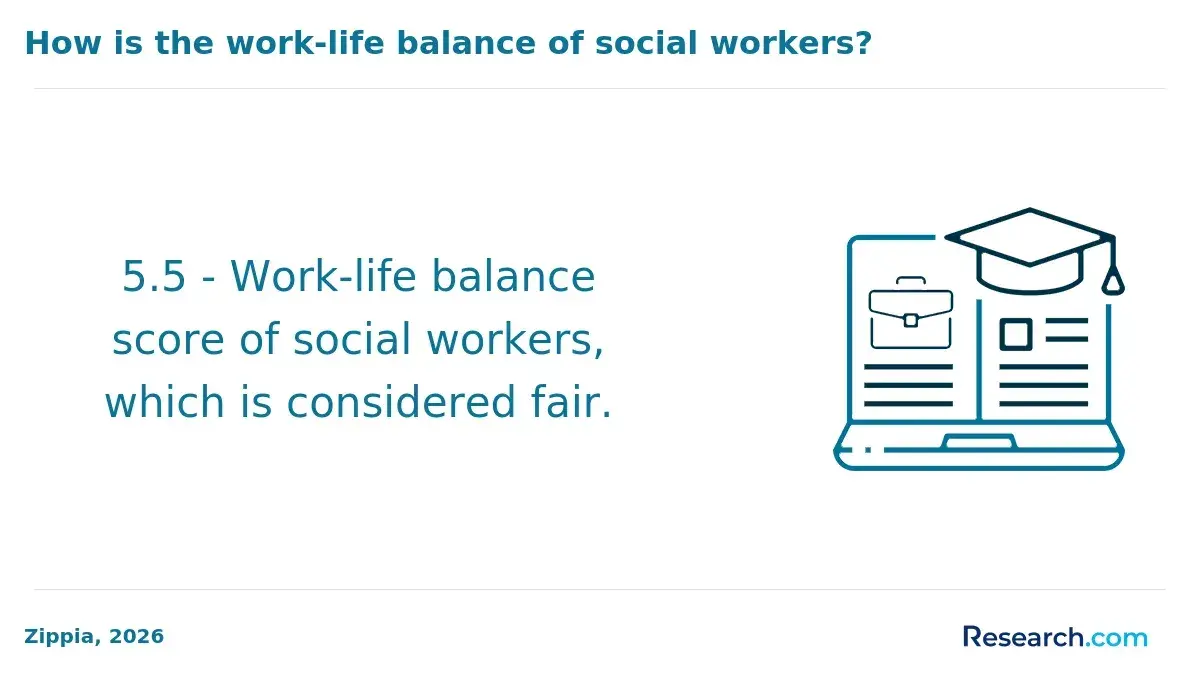
The labor market differs by role, credential level, and specialization. The U.S. Bureau of Labor Statistics reports a 5% outlook for sociologists, which is as fast as the average. The cited outlook for social work is 9%, faster than the average, over the next decade. Zippia records unemployment rates of 3.18% for licensed social workers and 2.98% for sociology professors. Students considering aging services may also compare geriatric social worker salary and career options.
Social work demand is connected to healthcare access, mental health needs, substance abuse treatment, school support, aging populations, chronic health conditions, and the need for community-based services. Sociology demand is more concentrated because many jobs that use sociological skills may be classified under other titles, including policy analyst, research analyst, data analyst, educator, nonprofit program evaluator, or market researcher.
Data USA shows that the sociologist workforce is more than triple the size of the social worker workforce. Geographic concentration also differs. New York has the highest concentration of healthcare social workers, while California has the largest number of mental health and substance abuse social workers, child, family, and school social workers, other social workers, and sociologists.
| If your priority is... | Social work may fit better when... | Sociology may fit better when... |
| Clear professional pathway | You want a defined route through degree, fieldwork, licensure, and supervised practice. | You are comfortable building a flexible career through research, graduate study, internships, or applied roles. |
| Direct social impact | You want to work face-to-face with clients or communities. | You want to influence systems through research, teaching, policy, or organizational analysis. |
| Job title clarity | You want roles clearly labeled as social worker, case manager, clinical social worker, or school social worker. | You are open to job titles outside “sociologist,” such as researcher, analyst, consultant, or educator. |
| Licensure-based advancement | You are willing to meet state licensure, supervision, and continuing education requirements. | You prefer roles where licensure is usually not the central requirement. |
Social Work vs. Sociology: Difference in Research
Both fields study human behavior and social conditions, but they ask different kinds of questions. Social work research usually evaluates how programs, policies, services, and interventions affect people’s lives. Sociology research usually investigates how social structures, institutions, culture, and group relationships shape behavior and outcomes.
A social work researcher might study whether a child maltreatment prevention program reduces harm, whether cognitive-behavioral therapy improves depression among older adults, or whether financial education helps low-income households. A sociologist might examine how poverty is linked to education and health, how social media changes relationships, or how social movements produce social change.
| Research dimension | Social Work | Sociology |
| Main research goal | Improve services, interventions, policies, and outcomes for individuals, families, and communities | Explain social behavior, institutions, inequality, culture, and social change |
| Common outcome | Program evaluation, intervention design, service improvement, practice guidance | Theory development, social explanation, policy insight, academic or applied analysis |
| Typical subjects | Clients, families, service users, agencies, communities, and programs | Groups, institutions, populations, cultures, systems, and societies |
| Example questions | Which intervention improves outcomes for a specific population? | What social forces explain a pattern of inequality or behavior? |
Social Work vs. Sociology: Difference in Theories
Theory matters in both fields, but it is used differently. In social work, theory supports assessment, intervention, and ethical practice. In sociology, theory helps explain how society operates and why social patterns persist or change.
For example, a social worker may use human development theory to understand the needs of a child having difficulty in school. A sociologist may use social inequality theory to examine why certain groups experience poverty, discrimination, or reduced access to resources at higher rates than others.
Examples of social work theories
- Systems theory: Views people, families, communities, and institutions as connected systems. It helps social workers understand how problems in one part of a person’s environment can affect other areas of life.
- Human development theory: Explains how needs, risks, and strengths change across the life span, from childhood through older adulthood.
- Strengths-based perspective: Emphasizes a person’s existing resources, resilience, relationships, and capacities instead of focusing only on deficits.
Examples of sociology theories
- Social inequality theory: Examines why some groups are more likely to experience poverty, discrimination, and limited opportunity.
- Social change theory: Explores how societies transform over time and how problems such as poverty or exclusion may be addressed.
- Social movements theory: Studies how collective action begins, expands, succeeds, declines, or reshapes institutions.
Social Work vs. Sociology: Difference in Methods or Practice
Licensure is one of the clearest professional differences. Social workers, especially those in clinical roles, often need state licensure because they provide services that directly affect client welfare. Sociologists generally do not need a professional license because many work in research, teaching, consulting, or analysis rather than direct clinical service.
Social work licensing helps protect the public by setting expectations for education, supervised experience, ethics, scope of practice, and professional accountability. A licensed social worker may face disciplinary action for violating professional standards. Sociology careers may have ethical research requirements, institutional review expectations, and academic standards, but they do not usually follow the same state-by-state licensure model.
| Method or practice area | Social Work | Sociology |
| Counseling-related support | Helps individuals, families, or groups understand problems, build coping strategies, and connect with appropriate resources, depending on role and licensure. | Usually not part of the profession unless the person has separate counseling or clinical credentials. |
| Case management | Coordinates services, referrals, benefits, care plans, and community resources for clients and families. | May study case management systems but typically does not provide case management directly. |
| Advocacy | Supports client rights, service access, community needs, and policy improvements. | May analyze advocacy movements, policy effects, or institutional behavior. |
| Surveys | May use surveys to evaluate services or understand client/community needs. | Common method for studying attitudes, beliefs, behaviors, and social trends across populations. |
| Interviews | Used in assessment, program evaluation, and practice-based research. | Used to study lived experiences, meaning, identity, culture, and social interaction. |
| Participant observation | Less central to direct practice, though useful in community assessment or research. | Common in qualitative research on groups, institutions, communities, and everyday social life. |
Social Work vs. Sociology: Difference in Education
Education requirements depend on the career target. A bachelor’s degree may qualify graduates for some entry-level social service, nonprofit, research support, or human services roles. Advanced social work practice, especially clinical practice, usually requires graduate education and licensure. Advanced sociology careers in academia, research leadership, and specialized analysis often require a master’s degree or doctorate.
According to Data USA, 37,747 individuals graduated from sociology programs, while social work degree graduates numbered 56,762 in the same year. Reported tuition medians are also similar at public institutions: the median in-state public tuition is $7,070. Out-of-state private tuition is listed as $37,390 for sociology and $31,450 for social work.
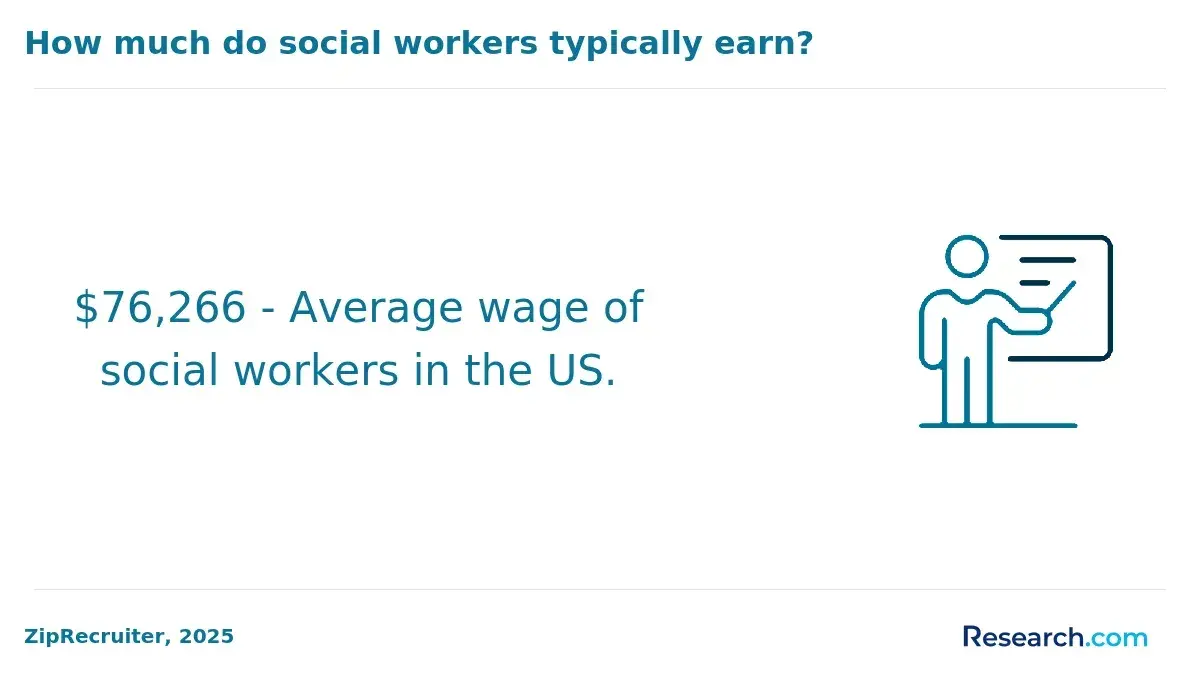
Students who want a social work career often begin with a Bachelor of Social Work (BSW), while students focused on sociological study may pursue a bachelor’s degree in sociology. Zippia reports that 59% of social workers have a bachelor’s degree and 33% have a master’s degree. Higher education in social work can improve access to advanced roles, but salary gains vary by specialization, employer, location, and licensure.
For sociology professors, Zippia reports that the salary gap between those with and without this degree averages about $20,000 per year, even though only 9% have doctorates.
| Education question | Social Work | Sociology |
| Common bachelor’s degree | BSW or related human services major | Bachelor’s degree in sociology or a related social science |
| Typical coursework | Human development, social welfare policy, social work practice, ethics, field education, diversity, assessment | Social inequality, social change, research methods, theory, culture, institutions, social movements |
| Graduate degree importance | Important for clinical, supervisory, advanced practice, policy, and leadership roles | Important for research, teaching, advanced analysis, and academic careers |
| Fieldwork or research experience | Field placements are central in accredited social work education. | Research projects, statistics, internships, and assistantships are especially valuable. |
| Credential examples | Clinical Social Worker (CSW), National Association of Social Workers (NASW) | American Sociological Association (ASA) affiliation or research/data credentials may strengthen a profile. |
Certification is more common and career-defining in social work than in sociology. Social workers who plan to specialize should verify state rules because titles, scopes of practice, and licensure requirements differ. Sociology students should prioritize research methods, statistics, writing, policy analysis, and data tools if they want wider career flexibility.
How does program accreditation impact your career outcomes?
Accreditation can affect whether your degree is recognized by employers, graduate schools, licensing boards, and professional organizations. This is especially important in social work, where licensure eligibility may depend on completing a program that meets recognized professional standards. Accredited programs are reviewed for curriculum quality, field education, faculty qualifications, student support, and alignment with professional expectations.
For students planning clinical practice, accreditation is not a minor detail. Before enrolling, confirm that the program’s status supports your licensing goals in the state where you plan to work. Students comparing clinical pathways can review LCSW online programs to better understand how accredited options are structured.
What Are the Long-Term Financial Benefits of Earning a Master’s in Social Work?
A master’s degree in social work can expand eligibility for clinical practice, supervisory positions, specialized practice areas, policy roles, and leadership jobs. The financial value depends on tuition, debt, scholarships, employer support, state licensure requirements, local wages, and how quickly a graduate moves into an advanced role.
Students should compare total program cost against realistic earnings in their intended specialization rather than assuming any graduate degree automatically pays off. A useful starting point is Research.com’s guide on How much does a masters in social work cost?, which can help prospective students weigh affordability, program format, and possible salary growth. Scholarships, grants, employer tuition reimbursement, and accelerated options may improve return on investment, but they should be evaluated before enrollment, not after loans are taken out.
What Future Trends Are Impacting Social Work and Sociology?
Technology is changing both fields, but not in the same way. In sociology, digital research methods, big data analysis, online community studies, and virtual ethnography are expanding how researchers study social behavior. In social work, telehealth, remote service delivery, digital case management, and data-informed decision support are changing how professionals document cases, communicate with clients, and coordinate care.
Artificial intelligence is also affecting research and practice. Sociologists may use AI-supported tools to analyze large datasets or identify patterns in text, behavior, and networks. Social workers may encounter predictive tools in child welfare, healthcare, behavioral health, and benefits systems. These tools can create efficiencies, but they also raise ethical concerns about bias, privacy, transparency, and human judgment. Students preparing for careers with MSW should expect technology literacy to become increasingly important.
What Are the Benefits of Pursuing a Doctorate in Social Work?
A doctorate in social work may make sense for professionals who want to lead agencies, teach, conduct advanced research, shape policy, evaluate programs, or influence systems beyond direct practice. Doctoral study can strengthen skills in research design, evidence-based practice, leadership, program evaluation, and policy analysis.
This path is not necessary for every social worker. It is most useful when a person’s goals involve senior leadership, higher education, advanced scholarship, or major systems-level work. Professionals who need a more cost-conscious route can compare affordable online doctorate programs in social work before committing to a long-term program.
Are advanced standing MSW programs worth pursuing?
Advanced standing MSW programs can be worthwhile for students who already hold a Bachelor of Social Work and want to complete graduate study faster. Because these programs build on prior accredited social work coursework, they may reduce time in school and lower total cost compared with a traditional MSW pathway.
The right choice depends on eligibility, accreditation, field placement structure, state licensure goals, tuition, and schedule. Students should not choose an advanced standing program only because it is faster. They should confirm that the curriculum, practicum experience, and state licensing alignment support their intended role. A comparison of top MSW advanced standing online programs can help narrow options.
What key skills are essential for success in social work vs. sociology?
Social work and sociology share a commitment to understanding people in context, but they require different skill sets. Social workers need strong interpersonal communication, crisis response, ethical judgment, cultural humility, documentation skills, boundaries, and the ability to coordinate services under pressure. Sociologists need research design, statistical reasoning, interviewing, writing, theory, data interpretation, and critical analysis.
| Skill area | Why it matters in social work | Why it matters in sociology |
| Communication | Needed for interviewing clients, collaborating with agencies, and explaining service plans. | Needed for teaching, presenting research, writing reports, and explaining social patterns. |
| Data and evidence | Supports assessment, program evaluation, and evidence-based practice. | Central to surveys, interviews, statistical analysis, and theory development. |
| Ethical judgment | Essential when handling vulnerable clients, confidentiality, mandated reporting, and boundaries. | Essential for informed consent, research integrity, privacy, and responsible interpretation. |
| Cultural competence | Helps professionals serve diverse clients without reducing them to stereotypes. | Helps researchers interpret social behavior within cultural, historical, and institutional contexts. |
| Collaboration | Required when working with healthcare providers, schools, courts, agencies, and families. | Useful in interdisciplinary research, policy projects, consulting, and applied analysis. |
Students comparing people-focused social science degrees may also want to review how skills and salaries connect in a human services degree salary discussion.
What role do certifications and licensure play in advancing social science careers?
Licensure is often central in social work because it defines what services a professional may legally provide. Clinical social work, counseling-related services, and independent practice typically require state-specific credentials, supervised experience, and exams. Students should review requirements in the state where they plan to work before choosing a program.
Those considering counseling-related pathways should compare social work rules with counseling certification requirements because the required degree, supervised hours, exams, and scope of practice can differ. Sociologists generally do not need licensure, but specialized credentials in data analysis, evaluation, statistics, research methods, or policy analysis can improve competitiveness in applied roles.
Balancing Costs and Accessibility in Educational Options for Social Sciences
Cost should be evaluated beyond advertised tuition. Students should compare fees, books, technology costs, commuting, field placement requirements, lost work hours, transfer credit policies, graduate school plans, and licensing-related expenses. An inexpensive program may not be a good investment if it does not support your career goal, while a more expensive program may still be risky if expected earnings do not justify the debt.
For sociology students, affordability matters because many advanced research, teaching, and policy roles may require graduate education. Students seeking lower-cost options can start by comparing an affordable online sociology degree with local public universities, transfer pathways, and employer-supported education benefits.
For social work students, online BSW and MSW options can improve access for working adults, caregivers, and students who do not live near a campus. However, online does not mean fieldwork-free. Social work programs typically require supervised field placements, and students should ask how placements are arranged, whether evening or weekend options exist, and whether the program meets licensure expectations in their state.
Questions to ask before choosing a program
- Is the program accredited in a way that supports my career or licensure goal?
- What is the total cost after fees, books, technology, commuting, and field placement expenses?
- Will my transfer credits apply to major requirements or only electives?
- Does the program publish field placement support details?
- Can I complete required internships or practicums near where I live?
- What graduate schools, employers, or licensing boards recognize this degree?
- What student support is available for online learners?
- What percentage of students complete the program on time?
Social Work vs. Sociology: Career Advancement Opportunities
Both fields offer advancement, but they reward different types of preparation. Social work advancement often depends on graduate education, licensure, supervised practice, specialization, and leadership experience. Sociology advancement often depends on research output, analytical skill, graduate training, teaching experience, policy expertise, or applied data work.
- Social Work: Professionals may move into clinical practice, supervision, healthcare leadership, child welfare administration, public policy, advocacy, nonprofit leadership, or higher education. An online PhD in social work may support goals in research, teaching, policy reform, or senior leadership.
- Sociology: Professionals may advance through academia, research management, policy analysis, consulting, data analysis, survey research, evaluation, or organizational leadership. Doctoral study can be important for tenure-track academic roles and high-level research positions.
Job Satisfaction and Long-Term Career Growth in Social Work vs. Sociology
Job satisfaction depends on fit. Social work can be deeply meaningful because professionals see the direct effects of their work on clients and communities. It can also be emotionally demanding, especially in child welfare, crisis response, hospitals, behavioral health, and under-resourced agencies.
Sociology can be satisfying for people who enjoy asking big questions, analyzing evidence, teaching, writing, and explaining social patterns. The challenge is that some sociology graduates must translate their degree into broader job titles such as analyst, researcher, evaluator, consultant, or educator rather than looking only for roles labeled “sociologist.”
| Long-term consideration | Social Work | Sociology |
| Most rewarding aspect | Directly helping people navigate real problems and access support | Understanding social systems and producing insight that can influence policy, teaching, or organizations |
| Common challenge | Emotional workload, documentation burden, caseload pressure, burnout risk | Competitive academic market, research funding limits, need to market transferable skills |
| Growth strategy | Earn MSW, pursue licensure, specialize, seek supervision or leadership roles | Build research, statistics, writing, data, teaching, and applied analysis experience |
| Best personality fit | People-oriented, resilient, ethical, organized, comfortable with complex human needs | Curious, analytical, theory-minded, evidence-driven, comfortable with writing and research |
Students who want to move quickly into advanced social work roles may compare accelerated formats such as 1 year MSW programs online no BSW, while carefully checking eligibility, accreditation, field requirements, and licensure fit.
How can you transition into a career in social work or sociology?
Changing into social work or sociology is possible, but the best route depends on your prior education, work history, and target role. Someone with a background in psychology, education, public health, criminal justice, human services, communications, statistics, or nonprofit work may already have transferable skills.
- Clarify your target role first. Do not start with the degree. Start with the job you want. Clinical social worker, school social worker, policy analyst, social researcher, professor, program evaluator, and HR specialist require different preparation.
- Review your current qualifications. Courses in research methods, statistics, human behavior, public policy, psychology, or community work can support either path. Prior experience in schools, nonprofits, healthcare, public service, or advocacy may also be valuable.
- Choose the right education route. For social work, an accredited BSW is a direct undergraduate route, while an MSW is often needed for advanced and clinical roles. Students seeking lower-cost undergraduate options can compare cheapest online BSW programs. For sociology, prioritize research methods, statistics, writing, internships, and faculty-led projects.
- Build experience before graduation. Social work students should seek field placements aligned with their intended practice area. Sociology students should pursue research assistantships, data projects, internships, policy work, survey research, or nonprofit evaluation experience.
- Check licensure early. Social work licensure rules vary by state and role. Sociology generally does not require licensure, but applied credentials in data, evaluation, or policy can strengthen job prospects.
- Network with working professionals. Talk to licensed social workers, sociology faculty, applied researchers, nonprofit leaders, policy analysts, and alumni. Ask what their daily work actually looks like, not just what their job title sounds like.
Common Mistakes When Choosing Between Social Work and Sociology
- Choosing based only on the course catalog: A class list does not show fieldwork demands, licensing requirements, emotional labor, or job-market realities.
- Ignoring accreditation: This is especially risky in social work because an unrecognized program may not support licensure goals.
- Assuming sociology only leads to teaching: Sociology graduates can work in research, policy, business, nonprofits, HR, and data roles, but they often need to build applied skills intentionally.
- Assuming social work is only counseling: Social workers also work in policy, advocacy, case management, healthcare, schools, administration, and community development.
- Looking only at tuition: Total cost includes fees, supplies, field placement expenses, transportation, lost wages, licensing exams, and graduate school plans.
- Forgetting state rules: Online social work programs may not automatically meet licensure requirements in every state.
- Expecting salary outcomes to be guaranteed: Earnings depend on location, credential level, employer, specialization, experience, licensure, and labor market conditions.
Deciding Between Social Work and Sociology
The simplest way to decide is to picture the work you want to do every week. If you want to sit with clients, assess needs, coordinate services, advocate, and help people through difficult life situations, social work is likely the stronger fit. If you want to study patterns, conduct research, teach, analyze data, write about society, or influence policy through evidence, sociology may be a better match.
| Choose social work if you... | Choose sociology if you... |
| Want a regulated helping profession with direct service responsibilities | Want to understand and explain how social systems operate |
| Are comfortable with emotionally complex client situations | Enjoy research, theory, writing, and analysis |
| Are willing to complete fieldwork and pursue licensure if needed | Are open to careers with titles such as analyst, researcher, evaluator, or educator |
| Want to work in schools, hospitals, clinics, agencies, or community services | Want to work in academia, policy, consulting, research, nonprofits, or organizations using social data |
| Prefer practical intervention and advocacy | Prefer investigation, explanation, and systems-level insight |
If your interest is less about society as a whole and more about learning why individuals behave as they do, you may also want to compare related paths such as behavioral psychology jobs.
Key Insights
- Social work is applied; sociology is analytical. Social workers use knowledge to help people and communities. Sociologists use research to explain social patterns, institutions, and behavior.
- Licensure is a major divider. Social work often requires state licensure for clinical or advanced practice. Sociology usually does not, though advanced roles may require graduate education and strong research skills.
- Career titles differ. Social work graduates often pursue clearly defined helping roles. Sociology graduates may use their training in broader roles such as researcher, analyst, educator, consultant, HR specialist, or policy professional.
- Job-growth figures should be read carefully. Cited sources report a 5% outlook for sociologists and a 9% outlook for social work over the next decade, while another cited BLS reference notes 6% from 2024 to 2034 for social workers. Always verify the latest BLS page before making a decision based on labor-market projections.
- Accreditation matters most for social work. If you plan to become licensed, confirm that your program meets the requirements in the state where you intend to practice.
- Cost and ROI depend on the role you want. Compare total program cost, debt, fieldwork logistics, licensure expenses, and realistic salaries before choosing a degree.
- The best choice depends on daily work fit. Choose social work if you want direct human service and intervention. Choose sociology if you want research, social analysis, teaching, or systems-level understanding.
References:
- BLS. (2024). Social Workers: Occupational Outlook Handbook:: U.S. Bureau of Labor Statistics.
- BLS. (2024). Sociologists: Occupational Outlook Handbook:: U.S. Bureau of Labor Statistics.
- BLS. (2024). Child, Family, and School Social Workers.
- BLS. (2024). Healthcare Social Workers.
- BLS. (2024). Mental Health and Substance Abuse Social Workers.
- BLS. (2024). Social Workers, All Other.
- BLS. (2024). Sociologists.
- Cauševic, M., & Pandžic, A. (2022). Interdisciplinarity of Sociology and Social Work Experiences and Perspectives. Društvene i Humanisticke Studije (Online), 7(2(19)), 233248.
- Shaw, I. (2020). Social work and sociology/sociology and social work: Peering back and forth. Qualitative Social Work.
Other Things You Should Know About Social Work and Sociology
Social work is focused on directly helping individuals, families, and communities to improve their well-being, while sociology studies the structures, interactions, and dynamics of societies as a whole.
In 2027, social work and sociology play crucial roles in addressing societal issues. Social work applies practical interventions to assist individuals and communities directly, while sociology analyzes societal structures and patterns to understand and inform policies. Together, they contribute to improving societal well-being and informing effective change strategies.
Social work places greater emphasis on direct interaction with individuals. Social workers often engage in one-on-one or small group settings, providing support and services directly to clients. Sociologists, on the other hand, tend to focus on studying social patterns and structures, often through research rather than direct client interaction.
In 2027, social work primarily employs methods like case management, counseling, and advocacy to directly assist individuals and communities. In contrast, sociology uses quantitative research, qualitative interviews, and ethnography to understand and analyze societal patterns and structures without direct intervention.
While a sociology degree provides a strong foundation in understanding social issues, becoming a licensed social worker typically requires a degree in social work and meeting specific licensure requirements.
Social workers' salaries vary by specialization but generally range from $49,130 to $74,310 annually. Sociologists, particularly those in research or academia, can earn median salaries around $83,230 per year.
If you want to work directly with people to help solve their problems and improve their lives, social work is likely the better fit. If you are more interested in understanding how societies function and conducting research, sociology might be more suitable.


