2027 LMSW vs. LCSW – What’s the Difference?

Co-Founder and Chief Data Scientist
If you are comparing social work credentials, the LMSW vs. LCSW distinction matters because it affects scope of practice, supervision, therapy privileges, salary potential, and career flexibility. It also matters if you are looking for help: an LMSW may be the right professional for resource navigation and support services, while an LCSW is typically the better fit when you need clinical assessment, diagnosis, or therapy.
This guide explains how Licensed Master Social Workers and Licensed Clinical Social Workers differ, where they overlap, and what each path requires. It is written for prospective social work students, MSW graduates planning for licensure, career changers, and clients trying to understand which type of professional to contact.
You will also learn how the LMSW and LCSW compare with the difference between MSW and LCSW, what to ask before choosing a program, and how current trends such as telehealth, trauma-informed care, and cultural competence are shaping social work practice.
LMSW vs. LCSW Table of Contents
- Quick answer: LMSW vs. LCSW
- What LMSW and LCSW mean
- Education requirements
- Licensing requirements
- Job duties and scope of practice
- Ethical standards
- Salary, job outlook, and job satisfaction
- Career advancement options
- How to choose the right MSW program
- How social workers differ from psychologists
- How location affects social work careers
- Certifications that can strengthen a social work career
- State-by-state pay and licensure considerations
- Related mental health career comparisons
- MSW program selection questions
- Long-term advancement planning
Quick Answer: What Is the Difference Between an LMSW and an LCSW?
An LMSW is a master’s-level licensed social worker who usually provides case management, advocacy, counseling, assessment, and coordinated support services under supervision. An LCSW is a clinically licensed social worker who can generally provide psychotherapy, diagnose mental health conditions, create clinical treatment plans, and practice more independently, depending on state law.
| Comparison Point | LMSW | LCSW |
| Primary focus | Case management, advocacy, counseling support, resource coordination, and social services | Clinical assessment, diagnosis, psychotherapy, treatment planning, and mental health care |
| Typical independence | Often works under supervision, especially for clinical services | May practice independently within state scope-of-practice rules |
| Education | Usually requires an MSW from a CSWE-accredited program | Requires an MSW from a CSWE-accredited program plus post-graduate clinical supervision |
| Licensing exam | Usually the ASWB Master’s level exam | Usually the ASWB Clinical level exam |
| Best fit for | Students and professionals interested in social services, systems navigation, program work, policy, school, hospital, or agency roles | Professionals who want to provide therapy, diagnose, supervise clinically, or pursue private practice |
Both credentials can lead to meaningful social work careers, but the better choice depends on whether you want a broader social services role or a clinical mental health practice path.
Several trends affect both credentials. Technology is now part of service delivery, especially for clients who cannot visit a social service agency in person. Although digital health funding saw a $23.3 billion drop in funding, telehealth continues to help LCSWs serve remote clients. At the same time, ethical use, privacy, documentation, and clinical appropriateness remain important concerns, even with 67% of patients being satisfied with digital health tools.
Trauma-informed care has also become more central to social work practice. Brown et al. (2022), in “Trauma-informed Care Interventions in Emergency Medicine: A Systematic Review,” published in the Western Journal of Emergency Medicine, found that trauma-informed care is “critical in fostering patients’ physical and emotional safety.” The authors emphasized that empowering patients to discuss what they believed would best protect their safety was a major element of effective trauma-informed intervention.
Cultural competence is another core expectation. LMSWs and LCSWs increasingly need to understand clients’ cultural identities, values, family systems, community contexts, and lived experiences so services are respectful, inclusive, and aligned with National Association of Social Workers standards.
LMSW vs. LCSW: What Each Credential Means
The simplest way to understand the distinction is this: LMSW is usually a master’s-level generalist or supervised practice license, while LCSW is a clinical license that allows a broader range of independent mental health services.
A Licensed Master Social Worker, or LMSW, has completed graduate-level social work education and earned a state social work license. LMSWs may help clients access benefits, coordinate services, plan interventions, provide counseling, document client progress, and advocate across healthcare, school, nonprofit, public agency, and community settings.
A Licensed Clinical Social Worker, or LCSW, has completed an MSW, met post-graduate supervised clinical experience requirements, and passed the clinical licensing exam required by the state. LCSWs are trained to assess and treat emotional, behavioral, and mental health concerns. They may provide psychotherapy to individuals, couples, families, or groups and may work in private practice, hospitals, community mental health centers, substance use treatment programs, or integrated care teams.
Where LMSWs and LCSWs Overlap
- Both are licensed social work professionals who are expected to follow state regulations and professional ethical standards.
- Both commonly complete a Master of Social Work degree from a program accredited by the Council on Social Work Education.
- Both may work with vulnerable populations, advocate for client rights, coordinate care, and support people facing complex social, economic, behavioral, or health-related challenges.
- Both can pursue specialized roles in areas such as healthcare, child welfare, schools, aging services, substance use services, and community programs.
Where LMSWs and LCSWs Differ
- LCSWs usually complete more post-graduate clinical training than LMSWs.
- LCSWs generally have a broader clinical scope, including diagnosis and psychotherapy, while LMSWs are more commonly associated with supervised practice, case management, and non-independent clinical support.
- LMSWs may need supervision to provide certain clinical services, while LCSWs may provide those services independently when allowed by state law.
- LCSWs often have access to private practice, clinical supervision, and specialized mental health leadership roles that may not be open to LMSWs.
The difference can also affect your social worker career path. If you want to work mainly in social services, an LMSW may be sufficient for many roles. If your goal is therapy, diagnosis, or independent clinical practice, the LCSW path is usually more appropriate.
LMSW and LCSW Education Requirements
Both the LMSW and LCSW routes usually require graduate education in social work. The main educational foundation is the Master of Social Work, commonly called an MSW. A social work degree can also begin at the bachelor’s level, but a graduate degree is typically needed for LMSW or LCSW licensure.
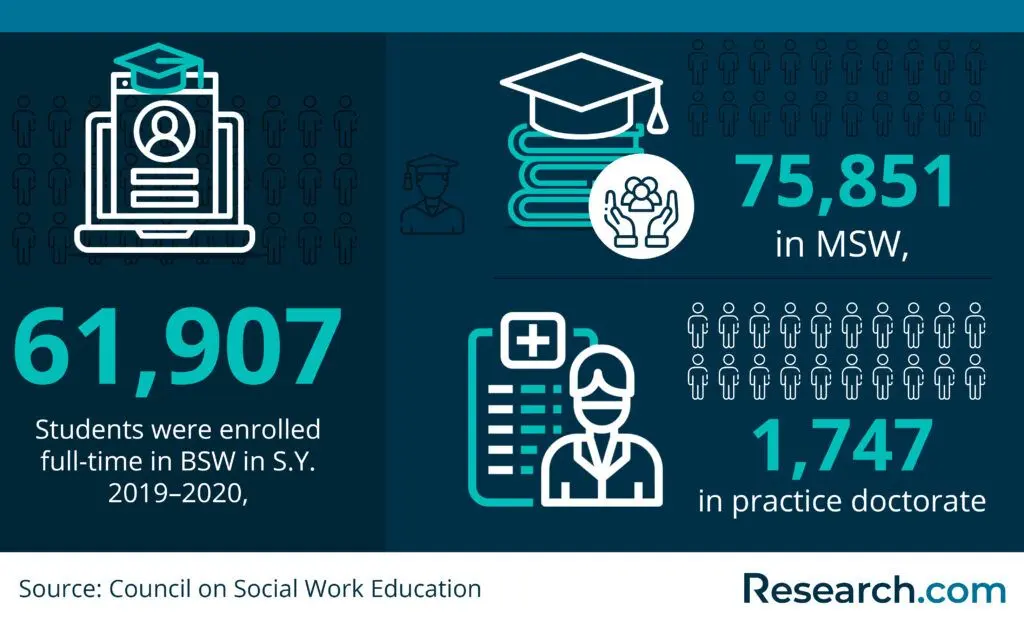
In the most recent Council on Social Work Education report cited here, 75,851 students are enrolled in MSW programs, and the 283 MSW programs that provided data had an average of 168 students. Those numbers show the scale of MSW education, but becoming a social worker still requires careful planning beyond simply finishing a degree.
| Requirement | LMSW Path | LCSW Path |
| Bachelor’s degree | A BSW can be helpful, especially for advanced standing MSW admission. Students may begin by graduating from an online BSW program recognized by CSWE. | A bachelor’s degree is required, but it does not always have to be in social work. A BSW may reduce graduate coursework if the student qualifies for advanced standing. |
| Master’s degree | An MSW from a CSWE-accredited program is generally required for LMSW licensure. | An MSW from a CSWE-accredited program is generally required before post-graduate clinical supervision can begin. |
| Coursework focus | Generalist practice, policy, assessment, case management, community practice, and advocacy may be especially useful. | Clinical assessment, diagnosis, psychotherapy, trauma-informed practice, behavioral health, and treatment planning are especially relevant. |
| Planning concern | Confirm that the MSW meets your state’s LMSW eligibility rules. | Confirm that the program supports clinical licensure preparation and supervised post-graduate practice requirements in your state. |
Educational rules vary by jurisdiction. Before enrolling, check the state licensing board where you plan to practice. This is especially important for online programs, out-of-state programs, and students planning to move after graduation. If you need a broader overview, review how to become a social worker before choosing a program.
LMSW and LCSW Licensing Requirements
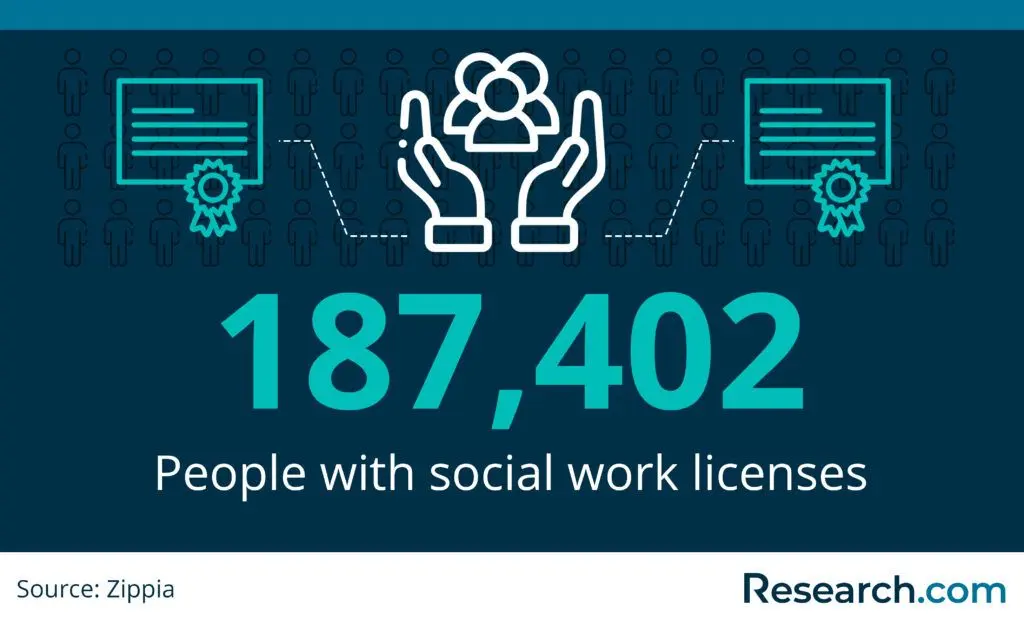
Licensure is controlled by state boards, so the exact titles, supervision rules, exam requirements, and renewal requirements can differ. According to Zippia, there are currently 187,402 licensed social workers in the United States, but the path to licensure is not identical in every state.
For both LMSW and LCSW candidates, the MSW is the common starting point. The main difference is that LCSW candidates typically need additional post-graduate supervised clinical experience before independent clinical licensure.
| Licensing Step | LMSW | LCSW |
| Education | Complete a CSWE-accredited MSW program. | Complete a CSWE-accredited MSW program. |
| Supervised experience | Complete supervised practice hours if required by the licensing board. The work may be clinical or non-clinical depending on state rules. | Complete post-graduate supervised clinical practice hours, often under an LCSW or another approved licensed mental health professional. |
| Exam | Pass the ASWB Master’s level exam or another exam required by the state. Preparation for the social work licensing exam should begin before graduation. | Pass the ASWB Clinical level exam, which focuses on clinical knowledge, assessment, diagnosis, ethics, and treatment. |
| Renewal | Complete continuing education and renewal requirements set by the state. | Complete continuing education and renewal requirements set by the state, including any clinical or ethics requirements. |
Do not assume that one state’s license automatically transfers to another state. If you plan to practice across state lines or provide telehealth, confirm reciprocity, endorsement, temporary practice, and telehealth rules with the relevant licensing boards.
LMSW and LCSW Job Duties
LMSWs and LCSWs both support individuals, families, groups, and communities, but the depth of clinical responsibility is different. LMSWs often focus on assessment, service coordination, advocacy, and support. LCSWs are more likely to provide psychotherapy, diagnose mental health conditions, and manage clinical treatment.
Common LMSW Responsibilities
- Client assessment: Gather information about a client’s social, emotional, family, health, housing, financial, and behavioral needs.
- Case management: Coordinate services, referrals, benefits, healthcare support, housing resources, school supports, and community programs.
- Counseling support: Help clients identify challenges, build coping strategies, and work toward goals within the scope allowed by state law and supervision rules.
- Advocacy: Support clients in accessing services, understanding rights, and navigating complex systems.
- Crisis response: Provide immediate support during emergencies and connect clients with appropriate safety resources.
- Program and community work: Participate in outreach, prevention programs, needs assessments, policy work, or community education.
- Interdisciplinary collaboration: Work with healthcare providers, schools, courts, nonprofits, public agencies, and family systems to coordinate care.
Common LCSW Responsibilities
- Psychotherapy: Provide therapy to individuals, couples, families, or groups experiencing mental health, behavioral, relational, or emotional concerns.
- Clinical assessment and diagnosis: Evaluate symptoms, functioning, risk factors, trauma history, and psychosocial context to support diagnosis and treatment planning.
- Treatment planning: Create individualized clinical plans with goals, interventions, safety considerations, and measurable progress markers.
- Crisis intervention: Assess risk, support stabilization, create safety plans, and coordinate emergency or higher-level care when needed.
- Clinical supervision: Supervise LMSWs, MSW graduates, interns, or other professionals when authorized by state rules and employer policy.
- Care coordination: Collaborate with psychiatrists, psychologists, nurses, primary care clinicians, schools, courts, and community partners.
- Advocacy and outreach: Promote client access, mental health education, social justice, prevention, and community-based support.
LMSW and LCSW Ethical Standards
Ethical practice is not optional in social work. Both LMSWs and LCSWs must protect client dignity, safety, privacy, and autonomy while practicing within their competence and legal scope.
- Confidentiality: Client information must be protected and disclosed only when legally required or ethically justified.
- Informed consent: Clients should understand the services being offered, their rights, potential risks, fees when applicable, privacy limits, and alternatives.
- Cultural humility and competence: Social workers must respect cultural identity, language, values, family structure, disability, religion, race, ethnicity, gender identity, sexual orientation, immigration background, and community context.
- Professional boundaries: LMSWs and LCSWs must avoid conflicts of interest, exploitative relationships, and dual relationships that could harm clients or impair judgment.
- Competence and continuing education: Social workers must keep their knowledge current, seek supervision or consultation when needed, and avoid practicing outside their training.
- Technology ethics: Telehealth, electronic records, messaging, and AI-supported tools require careful attention to privacy, documentation, informed consent, and clinical appropriateness.
Ethics are especially important when clients are experiencing crisis, trauma, discrimination, poverty, family instability, illness, or legal involvement. Trust is part of the intervention.
LMSW and LCSW Salary Range
According to the U.S. Bureau of Labor Statistics, the median annual wage for social workers is $61,330 (BLS, 2025). Actual pay differs by state, employer, setting, specialization, experience, union coverage, and whether the role is clinical or non-clinical.
Zippia reports that the median annual salary for licensed social workers is $57,005, while $63,056 yearly, specifically for clinical social workers. Glassdoor reports $78,999 for LMSWs compared with $82,096 for LCSWs. These figures suggest that LCSWs may have higher earning potential, but salary is never guaranteed by a credential alone.
| Salary Source or Role | Reported Figure | How to Interpret It |
| BLS social workers median annual wage | $61,330 | A broad social worker figure that includes multiple settings and specialties. |
| Zippia licensed social workers | $57,005 | A licensed social worker estimate, not limited to clinical roles. |
| Zippia clinical social workers | $63,056 yearly | A clinical social worker estimate that may align more closely with LCSW work. |
| Glassdoor LMSW | $78,999 | An employer- and user-reported estimate that may vary by region and role. |
| Glassdoor LCSW | $82,096 | An employer- and user-reported estimate that may reflect higher clinical responsibility. |
Related fields can have comparable earnings. Criminology degree jobs have an average annual salary of $60,579, while a licensed professional counselor salary is $89,711 on average yearly. These comparisons can help if you are deciding between social work, counseling, psychology, criminal justice, or human services careers.
Before choosing a pathway based on pay, research local job postings, state reimbursement rules, clinical supervision costs, employer benefits, caseload expectations, and whether the role qualifies for loan repayment or public service benefits.
LMSW and LCSW Job Outlook
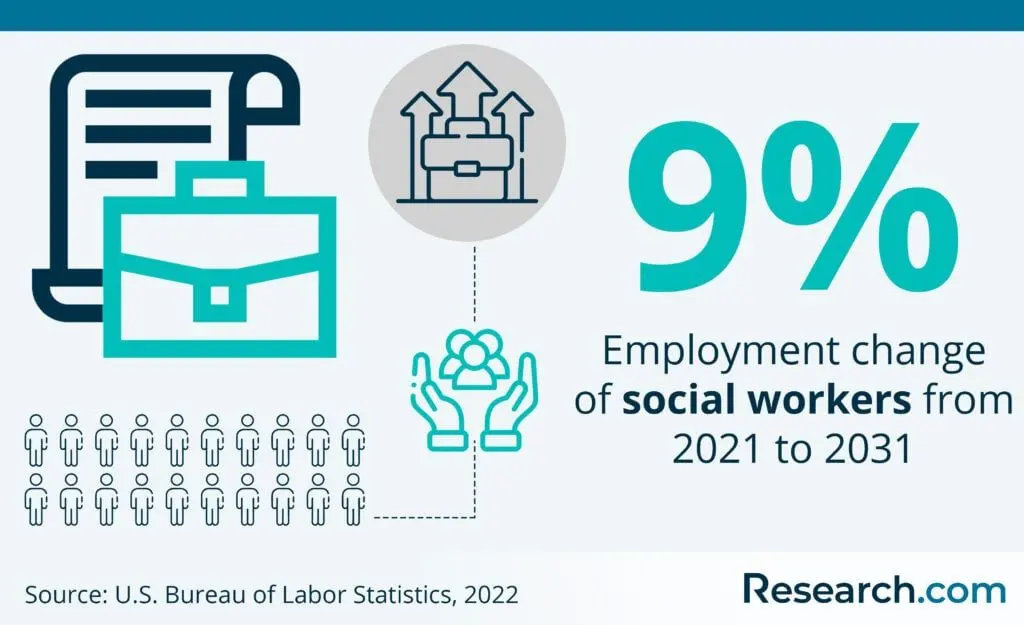
Precise LMSW-only and LCSW-only projections are difficult to separate, but the overall outlook for social workers is positive at 6% from 2024 to 2034 (BLS, 2025). Zippia reports that in 2025, there are around 255,843 employed social workers in the United States.
Zippia also lists 11% job growth until 2028 for social workers, including both LMSWs and LCSWs. The platform currently shows 77,340 job openings for social workers, 66,130 for licensed social workers, and 124,816 for clinical social workers in the United States.
Demand can be stronger in areas such as healthcare, mental health, substance use treatment, aging services, child and family services, schools, crisis response, and community-based care. Location matters. Some regions have more openings but lower pay; others offer higher salaries but stricter licensing competition or higher costs of living.
LMSW and LCSW Job Satisfaction
Job satisfaction in social work depends on more than the license title. Caseload size, supervision quality, workplace culture, pay, administrative burden, safety, schedule, population served, and access to resources can shape whether the work feels sustainable.
What May Make LMSW Work Satisfying
- Broad practice settings: LMSWs may work in schools, hospitals, agencies, nonprofits, government offices, and community programs.
- Visible client support: Helping clients access housing, benefits, healthcare, education, safety planning, or family support can produce immediate practical impact.
- Team-based work: LMSWs often collaborate with multidisciplinary teams, which can provide structure and shared responsibility.
- Potentially clearer boundaries: Some non-clinical or agency roles may offer more predictable schedules than intensive therapy or crisis roles.
What May Make LCSW Work Satisfying
- Greater autonomy: LCSWs may have more authority to assess, diagnose, treat, and manage clinical care independently.
- Direct therapeutic impact: Many LCSWs value the opportunity to help clients process trauma, manage symptoms, repair relationships, and build long-term coping skills.
- More specialization options: Clinical licensure can support work in trauma, substance use, family therapy, integrated healthcare, crisis care, or private practice.
- Advancement potential: LCSWs may qualify for clinical supervision, leadership, consulting, teaching, and private practice roles.
If you are early in your education and want a flexible foundation, online BSW study can be a practical first step. Students trying to reduce upfront costs may compare the cheapest online BSW programs before moving toward an MSW.
LMSW and LCSW Career Advancement Opportunities
Both credentials can grow into strong careers, but advancement usually looks different. LMSWs may move toward program, policy, agency, or supervisory roles, while LCSWs may add clinical leadership, private practice, and advanced therapeutic specialization.
| Career Goal | LMSW Route | LCSW Route |
| Supervision | May supervise casework teams, interns, program staff, or service coordination roles depending on employer policy. | May provide clinical supervision to LMSWs, MSW graduates, or other professionals when state rules allow. |
| Specialization | Can specialize in school social work, healthcare navigation, child welfare, aging services, policy, or community programs. | Can specialize in trauma, psychotherapy, substance use treatment, crisis care, family therapy, or integrated behavioral health. |
| Leadership | May advance into nonprofit management, program direction, grant-funded initiatives, community outreach, or public agency leadership. | May advance into clinical director roles, behavioral health leadership, supervision, consultation, or mental health program administration. |
| Independent practice | Usually limited for clinical services and often requires supervision. | More likely to qualify for private practice and independent therapy services. |
Continuing education, strong supervision, licensure planning, and networking all affect advancement. Students looking for a lower-cost graduate route can compare the cheapest MSW programs online while checking accreditation and state licensure compatibility.
How to Choose the Right MSW Program for LMSW or LCSW Goals
The MSW program you choose can make the LMSW or LCSW path easier—or more complicated. The right program should match your state’s licensing requirements, your preferred population, your budget, your field placement needs, and your long-term career goal.
Choose an MSW Program With These Questions in Mind
- Is the program CSWE-accredited? This is one of the most important checks for future licensure eligibility.
- Does the curriculum fit your goal? Future LCSWs should look closely at clinical coursework, assessment, diagnosis, treatment planning, and psychotherapy preparation. Future LMSWs may prioritize policy, administration, case management, macro practice, and community work.
- Will field placements work for your location? Online students should ask how placements are arranged, who approves sites, and whether local placements meet state requirements.
- Does the program support licensure in your state? Do not rely on general statements. Ask directly whether graduates meet educational requirements for LMSW or LCSW preparation in your state.
- Can you afford the total cost? Compare tuition, fees, field placement travel, lost work hours, technology costs, books, exam fees, and supervision expenses after graduation.
- Is the timeline realistic? Accelerated options can save time, but they may be demanding for students who work full time or have caregiving responsibilities.
Students who want a faster graduate pathway can review accelerated social work masters programs. Those with a CSWE-accredited BSW may also qualify for advanced standing, which can shorten the MSW timeline.
What Advantages Does a Doctorate in Social Work Offer?
A doctorate in social work is not required for LMSW or LCSW licensure, but it can support advanced goals in leadership, research, teaching, policy, organizational strategy, or high-level program development. It may be most useful for experienced social workers who want to influence systems rather than only provide direct services.
If cost is a major factor, compare the cheapest CSWE accredited DSW programs online and evaluate whether the degree aligns with your long-term career objectives before committing.
What Impact Does an Advanced Standing MSW Have on Career Opportunities?
Advanced standing MSW programs allow eligible BSW graduates to skip repeated foundation coursework and move more quickly into advanced social work study. This can reduce time in school and help students reach LMSW or LCSW eligibility sooner, provided the program meets state requirements.
These programs may be especially useful for students who already know whether they want a clinical or non-clinical path. To compare options, review this guide to advanced standing MSW programs.
What Is a Human Services Degree Good For?
A human services degree can prepare students for support, outreach, case coordination, advocacy, and program roles that overlap with social services but do not always lead directly to social work licensure. It may be a good fit for students who want community-focused work but are not sure they want to complete an MSW or pursue LMSW or LCSW licensure.
For a broader comparison, read What is a human services degree good for? and consider how human services, social work, counseling, and public health careers differ.
What Are the Long-Term Career Implications of Pursuing a Degree in Social Work?
A social work degree can lead to direct service, clinical practice, administration, policy, advocacy, school-based work, healthcare roles, and community leadership. The long-term value depends on the credential level, state licensure rules, career setting, debt, salary expectations, and emotional sustainability of the work.
Before committing, ask whether social work is a good major for your goals, temperament, finances, and desired work environment.
How Do Social Workers Differ from Psychologists?
Social workers and psychologists may both work in mental health, but their training models differ. Social workers often focus on clients within family, community, social, economic, and systems contexts. Psychologists typically receive deeper training in psychological testing, research methods, and specialized psychological assessment.
In practice, LCSWs may provide therapy, while psychologists may provide therapy, testing, research-based assessment, and certain specialized interventions. For a deeper comparison, review this social worker vs psychologist discussion.
How Does Geographic Location Affect Social Work Opportunities?
Location can change almost everything about an LMSW or LCSW career: licensure title, supervision requirements, exam rules, continuing education, telehealth permissions, salary, cost of living, and job availability. A credential that is common in one state may have a different title or scope in another.
Before relocating or enrolling in an out-of-state online program, compare licensing board rules and regional pay. The LCSW salary by state guide can help you evaluate how earnings may vary by location.
What Additional Certifications Can Enhance a Social Work Career?
Certifications are not a substitute for licensure, but targeted training can strengthen your expertise and competitiveness. Depending on your goals, useful areas may include trauma-informed care, substance use treatment, school social work, gerontology, child welfare, crisis intervention, clinical supervision, or integrated behavioral health.
Choose certifications that match your state rules, employer expectations, and population served. For broader career planning after graduate study, review What can I do with a MSW?
How Can Social Workers Adapt to Changing Regulatory Standards?
Social work regulation changes over time, especially around telehealth, interstate practice, documentation, continuing education, supervision, and clinical scope. LMSWs and LCSWs should check licensing board updates regularly instead of relying only on school advisors, employers, or older online summaries.
If you are comparing social work with counseling or another mental health profession, the requirements for counseling license guide can help you understand how state-based credentialing differs across related fields.
LMSW vs. LCSW: Which Path Is Better?
Neither credential is automatically better. The better choice depends on the work you want to do.
| Choose This Path If... | LMSW May Fit Better | LCSW May Fit Better |
| You want to provide therapy independently | Usually not the best final credential for independent therapy | Usually the stronger choice |
| You prefer case management and resource coordination | Strong fit | Possible, but may not require full clinical licensure |
| You want private practice | Usually limited | Often the expected credential |
| You want to work in schools, hospitals, agencies, or nonprofits | Strong fit for many roles | Strong fit for clinical or behavioral health roles |
| You want the shortest route after MSW graduation | May be faster, depending on state rules | Usually requires additional supervised clinical experience |
If you are seeking professional help, choose based on your need. For benefits, referrals, housing support, school coordination, service planning, or advocacy, an LMSW may be appropriate. For therapy, diagnosis, trauma treatment, clinical counseling, or mental health treatment planning, an LCSW is often the better match.
If you want a helping profession but are also interested in law, mental health, and criminal justice, compare social work with forensic psychology degree programs before deciding.
Common Mistakes to Avoid When Choosing Between LMSW and LCSW
- Assuming every state uses the same license titles: Social work credentials and scopes of practice vary by jurisdiction.
- Choosing an MSW without checking accreditation: A non-accredited program can create serious licensure problems.
- Focusing only on tuition: Field placement logistics, exam fees, supervision costs, lost wages, and relocation can change the true cost.
- Assuming online programs automatically meet your state’s rules: Always verify licensure alignment with the licensing board where you plan to practice.
- Waiting too long to plan supervision: Future LCSWs should understand supervised clinical hour requirements before graduating.
- Expecting salary outcomes to be guaranteed: Pay depends on location, employer, specialization, experience, and local demand.
- Relying only on rankings: Rankings can be useful, but licensure fit, field placement support, accreditation, cost, and graduation outcomes matter more.
Key Insights
- LMSW and LCSW are not interchangeable. LMSWs often focus on case management, advocacy, counseling support, and coordinated services; LCSWs usually have broader clinical authority for diagnosis, psychotherapy, and independent mental health practice.
- Both paths usually require an MSW. The program should be CSWE-accredited and aligned with the state where you plan to seek licensure.
- The LCSW path takes additional clinical preparation. Candidates typically need post-graduate supervised clinical experience and must pass the ASWB Clinical level exam.
- Salary may be higher for LCSWs, but it is not automatic. Reported figures include $57,005 for licensed social workers, $63,056 yearly for clinical social workers, $78,999 for LMSWs, and $82,096 for LCSWs, but location and employer type matter heavily.
- The broader social work outlook is positive. BLS reports 6% growth from 2024 to 2034, while Zippia reports 11% job growth until 2028 for social workers.
- Technology is changing practice. Telehealth can expand access, but privacy, ethics, documentation, and clinical appropriateness must be handled carefully.
- Trauma-informed and culturally responsive care are now essential. Both LMSWs and LCSWs need the skills to work safely and respectfully with diverse clients and communities.
- The best choice depends on your end goal. Choose LMSW if you want broad social services or supervised practice; choose LCSW if your goal is therapy, diagnosis, clinical supervision, or private practice.
References:
- BLS. (2024). Social Workers: Occupational Outlook Handbook: U.S. Bureau of Labor Statistics.
- Brown, T., Ashworth, H., Bass, M., Rittenberg, E., Levy-Carrick, N., Grossman, S., Lewis-O’Connor, A., & Stoklosa, H. (2022). Trauma-informed Care Interventions in Emergency Medicine: A Systematic Review. Western Journal of Emergency Medicine, 23(3), 334344.
- NASW. (n.d.). Facts.
- NASW. (n.d.). NASW Standards for Social Work Practice with Clients with Substance Use Disorders.
- NASW. (n.d.). National Social Work Public Opinion Survey.
Other Things You Should Know About LMSW vs. LCSW
The primary difference is in their scope of practice. LMSWs focus on case management and general social work services, while LCSWs provide clinical services, including diagnosing and treating mental health conditions through therapy and counseling.
To become an LMSW, one must complete a Master of Social Work (MSW) program accredited by the Council on Social Work Education (CSWE). This typically involves coursework in social work theory and practice, as well as supervised fieldwork. After earning the degree, candidates must pass the LMSW licensing exam in their state.
Yes, LMSWs can provide counseling services, but they typically work under supervision and do not have the same level of autonomy in clinical practice as LCSWs.
LCSWs must pass the clinical-level ASWB exam and complete the required hours of supervised clinical practice. They must also maintain their license through continuing education.
LMSWs primarily work under supervision and offer assessment, case management, and supportive counseling. LCSWs, on the other hand, can practice independently, providing clinical therapy and diagnosis while supervising other social workers, thanks to advanced licensure and experience.