
2027 How to Become a Social Worker in Oklahoma

Co-Founder and Chief Data Scientist
Becoming a social worker in Oklahoma is a licensing decision as much as a career choice. The state needs professionals who can support children and families, connect people with mental health and substance use services, coordinate care in rural communities, and advocate for clients who may have limited access to resources. At the same time, new entrants often struggle to understand which degree they need, which Oklahoma license fits their goals, how supervised experience works, and whether the cost of the education is worth the expected salary.
This guide explains how to become a social worker in Oklahoma in practical terms. You will learn what social workers do, which degrees and licenses are required, how much the path may cost, where demand is strongest, what specializations can improve career options, and how to choose field placements, financial aid, and professional networks that support long-term advancement.
Quick Answer: How do you become a social worker in Oklahoma?
To become a social worker in Oklahoma, you generally need a social work degree from a CSWE-accredited program, an Oklahoma social work license, and supervised experience if you plan to practice clinically. A BSW can support entry-level supervised roles, while an MSW is required for advanced and clinical paths. Licensed Clinical Social Workers complete at least two years, or 3,000 hours, of supervised post-master’s clinical experience before qualifying for independent clinical practice.
Key Things to Know About Becoming a Social Worker in Oklahoma
- Oklahoma’s projected social worker job growth rate is 12% from 2022 to 2032, which signals stronger-than-average demand in the state.
- The median annual salary for Oklahoma social workers is about $48,000; this is lower than the national median, but it should be evaluated alongside the state’s cost of living.
- The typical route includes a four-year Bachelor of Social Work, followed by a Master of Social Work for clinical licensure, with supervised practice requirements depending on the license type.
- What does a social worker do in Oklahoma?
- What education do Oklahoma social workers need?
- What licenses are required for social workers in Oklahoma?
- How much do Oklahoma social workers earn?
- What is the job outlook for social workers in Oklahoma?
- Which social work specialties are in demand in Oklahoma?
- How can social workers advance their careers in Oklahoma?
- How do Oklahoma students find social work field experience?
- Which Oklahoma organizations help social workers network?
- What does it cost to become a social worker in Oklahoma?
- How can marriage and family therapy fit into an Oklahoma social work career?
- What financial aid options are available to Oklahoma social work students?
- How should students track changing Oklahoma social work education standards?
- Which added certifications can strengthen an Oklahoma social work career?
- Can Oklahoma social workers move into related career fields?
- How can mental health counseling skills support Oklahoma social work practice?
What does a social worker do in Oklahoma?
Social workers in Oklahoma help people manage difficult life situations, access public and community services, and build safer, more stable living conditions. The role can look different depending on the setting. A school social worker may help a student dealing with housing instability, while a hospital social worker may coordinate discharge planning and connect a family with long-term care resources. In rural counties, one professional may cover a wide range of needs because service providers are limited.
Common responsibilities include:
- Interviewing clients, families, and support systems to understand risks, strengths, urgent needs, and available resources.
- Creating service plans for concerns such as mental health, substance use, family conflict, housing insecurity, child safety, or disability support.
- Referring clients to agencies, healthcare providers, schools, legal resources, shelters, food assistance, and public benefit programs.
- Coordinating with hospitals, courts, schools, community organizations, tribal programs, and state agencies to avoid fragmented care.
- Documenting services, updating case notes, tracking progress, and revising plans when client needs change.
- Responding to crises involving domestic violence, child welfare concerns, behavioral health emergencies, or urgent safety risks.
- Providing community education and outreach, including work with rural communities and Native American populations.
- Supporting policy and program improvement by reporting service gaps, client needs, and community trends.
- Following the Oklahoma State Board of Licensed Social Workers’ rules for licensure, supervision, ethics, and continuing education.
- Collaborating with the Oklahoma Department of Human Services when cases involve protective services or vulnerable populations.
| Work setting | Typical focus | Best fit for |
| Child welfare and family services | Safety planning, foster care, family support, and protective services | People who can manage urgent cases, documentation, and emotionally difficult situations |
| Healthcare | Discharge planning, chronic illness support, care coordination, and patient advocacy | Students interested in hospitals, clinics, aging services, and interdisciplinary teams |
| Mental health and substance use | Counseling support, treatment coordination, crisis response, and recovery planning | MSW students and licensed professionals pursuing clinical or behavioral health roles |
| Schools | Student support, attendance barriers, family engagement, and crisis intervention | Professionals who want to work with children, families, teachers, and school systems |
| Community and nonprofit agencies | Housing, poverty, outreach, advocacy, and program delivery | People who want direct community impact and broad resource-navigation experience |
What are the educational requirements for becoming a social worker in Oklahoma?
Oklahoma social work education requirements depend on the level of practice you want. The most important factor is accreditation. For licensure, students should choose a Council on Social Work Education-accredited program because Oklahoma licensing pathways are built around recognized social work education.
- Bachelor of Social Work: A CSWE-accredited BSW is the common starting point for supervised entry-level practice and can prepare students for bachelor-level licensure.
- Master of Social Work: A CSWE-accredited MSW is needed for advanced social work practice and is the standard degree for those planning to pursue clinical licensure.
- Supervised clinical experience: After the MSW, future clinical social workers complete at least two years, or 3,000 hours, of supervised clinical work under a qualified Licensed Clinical Social Worker.
- Oklahoma-relevant preparation: Strong programs should include training in rural practice, cultural competence, Native American community contexts, behavioral health, poverty, child welfare, and ethical decision-making.
- Continuing education: Social workers must keep learning after licensure to remain compliant with Oklahoma renewal expectations and current practice standards.
If you are comparing degree options, review the qualifications required for social work careers before choosing a program. The right degree should match both Oklahoma licensing rules and the kind of work you want to do after graduation.
| Education level | Typical time commitment | Where it can lead | Decision point |
| BSW | Typically 4 years | Supervised social work roles and bachelor-level licensure pathways | Choose this if you want a direct undergraduate route into the field. |
| MSW | Varies by program structure | Advanced practice, broader job options, and preparation for clinical licensure | Choose this if you want clinical, supervisory, healthcare, or advanced direct-practice roles. |
| Post-MSW supervised clinical experience | At least two years, or 3,000 hours | Eligibility for LCSW-level independent clinical practice | Choose this path if your goal is therapy, diagnosis-related work, or independent clinical practice. |
What are the licensing requirements for social workers in Oklahoma?
Oklahoma social work licensure is tied to your degree level, exam completion, supervised experience, background checks, and continuing education. Before enrolling in a program, confirm that the degree supports the license you want, especially if you plan to study online or move across state lines.
Licensed Social Worker Associate (LSWA)
The LSWA is an early license option connected to bachelor-level social work preparation from a CSWE-accredited program. It supports supervised practice and can be a stepping stone for people who plan to gain experience before moving toward more advanced credentials.
Licensed Master Social Worker (LMSW)
The LMSW requires a Master of Social Work from a CSWE-accredited institution and passing the ASWB Master’s exam. LMSWs may provide direct social work services, but clinical work still requires appropriate supervision. This credential is often a good fit for non-independent roles in agencies, healthcare systems, schools, government, and nonprofit settings. Renewal occurs every two years and includes continuing education requirements.
Licensed Clinical Social Worker (LCSW)
The LCSW is the key credential for independent clinical social work in Oklahoma. Candidates need an MSW, at least 3,000 hours of supervised post-master’s clinical experience over two years, a passing score on the ASWB Clinical exam, and documentation that verifies supervised practice. Renewal requires 30 continuing education hours, including ethics and cultural competence training.
Oklahoma social work certification and licensure steps also include a criminal background check. If you need a flexible graduate path, compare accredited online MSW programs carefully, paying close attention to field placement support and Oklahoma licensure alignment.
| License | Education required | Exam or experience requirement | Best for |
| LSWA | CSWE-accredited bachelor’s degree in social work | Supervised practice expectations apply | Entry-level supervised social work roles |
| LMSW | CSWE-accredited MSW | ASWB Master’s exam | Advanced non-independent practice and supervised clinical work |
| LCSW | MSW | At least 3,000 supervised clinical hours over two years and ASWB Clinical exam | Independent clinical social work practice |
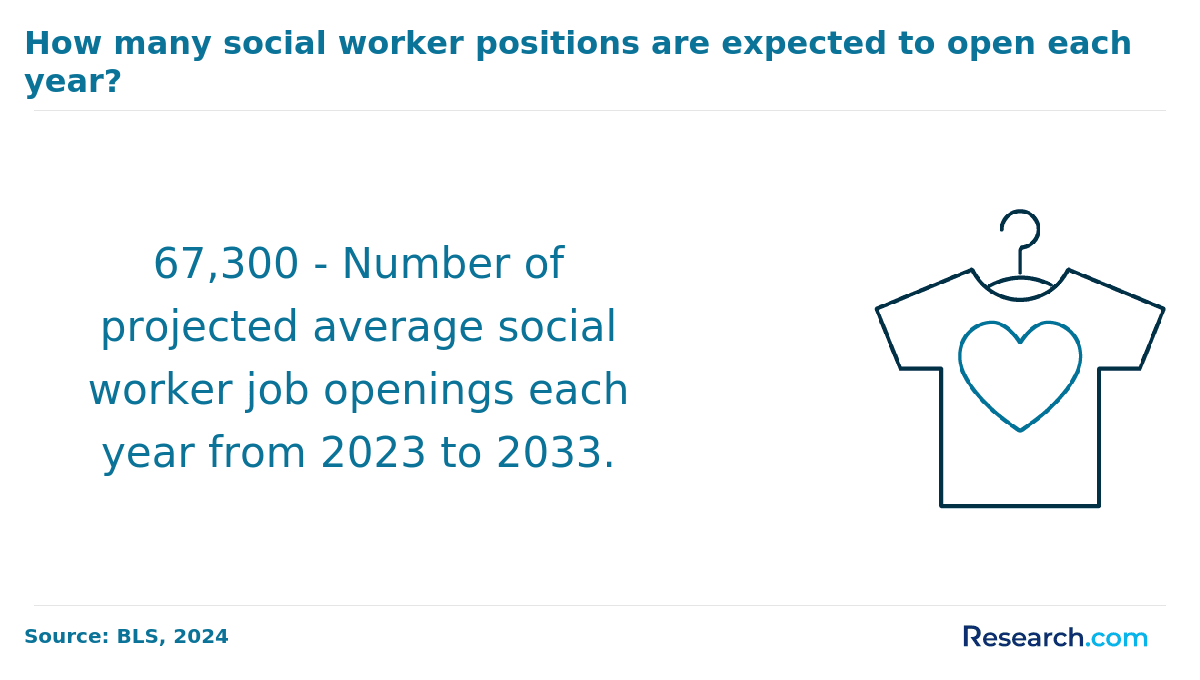
The chart below shows states with the highest employment levels for social workers. Use it as context for understanding where social work jobs are concentrated, but base your Oklahoma career plan on state licensure rules, field placement options, and local employer demand.
How much do social workers make in Oklahoma?
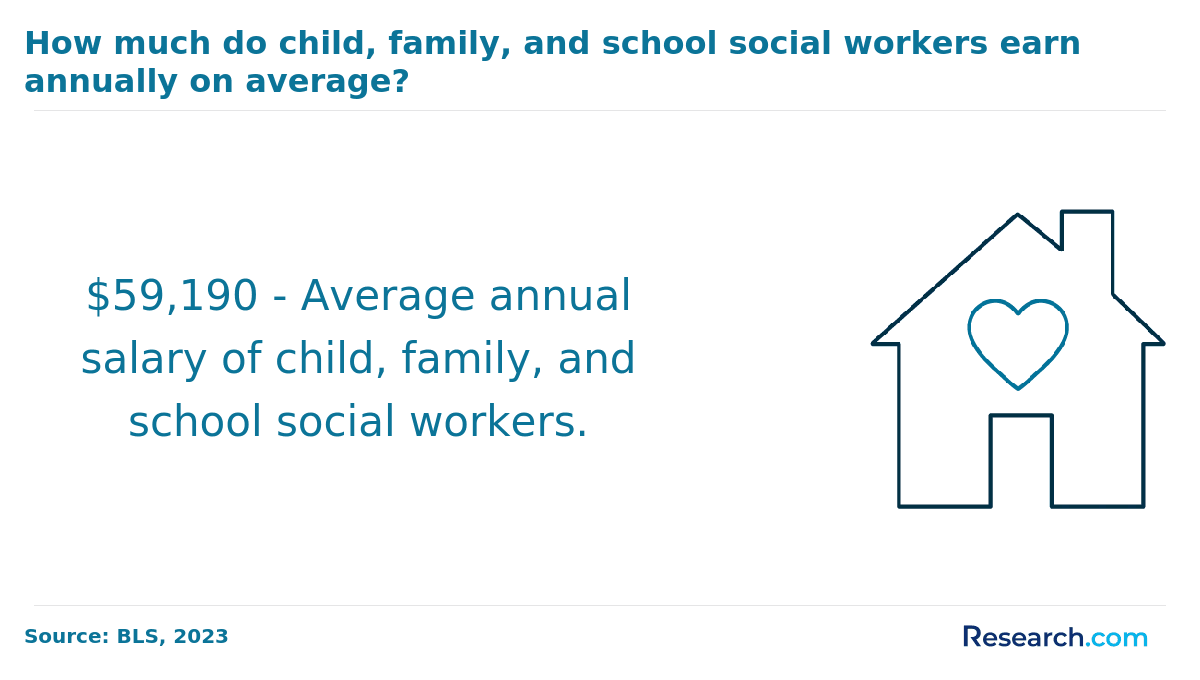
Oklahoma social worker salaries vary by license, setting, specialization, experience, and geography. Entry-level social workers commonly start around $35,000. With experience, earnings can rise to about $49,000. Specialized roles and extensive experience can reach $65,000 or more annually. Licensed Clinical Social Workers earn 20-30% more than non-licensed peers, which shows why clinical licensure can matter for long-term earning power.
The median annual salary for social workers in Oklahoma is approximately $48,000. That figure should not be treated as a guaranteed outcome. A new BSW graduate in a supervised role, an LMSW in a public agency, and an LCSW in behavioral health may have very different compensation.
| Career stage or credential | Salary information stated for Oklahoma | What can affect pay |
| Early career | Around $35,000 | Degree level, employer type, location, and caseload responsibilities |
| Experienced social worker | About $49,000 | Years of practice, specialization, supervision responsibilities, and agency budget |
| Specialized or highly experienced roles | $65,000 or more annually | Clinical licensure, healthcare or behavioral health settings, leadership duties, and advanced expertise |
| LCSW | 20-30% higher than non-licensed peers | Independent clinical authority, therapy-related work, and demand for behavioral health providers |
To improve earning potential, focus first on the credential that matches your intended role. For many students, that means moving from BSW-level work to an MSW and then completing the supervised hours required for clinical practice. Additional training in mental health, substance use, trauma-informed care, or child welfare can also make a candidate more competitive for specialized roles.
What is the job outlook for social workers in Oklahoma?
The outlook for Oklahoma social workers is steady, with demand shaped by healthcare access, mental health needs, child welfare, substance use services, and rural service shortages. The state’s projected 12% growth rate from 2022 to 2032 indicates meaningful opportunity, especially for licensed professionals who can fill clinical, behavioral health, and case management roles.
Rural areas may offer strong opportunities because fewer providers are available, but those roles can also involve heavier resource coordination and broader responsibilities. Professionals who understand Oklahoma’s demographic and cultural context, including Native American communities, may be better prepared to build trust and deliver effective services.
If you are specifically interested in child welfare, review the career path for becoming a child and family social worker. Child welfare roles often reward candidates who already have field experience, documentation skills, crisis judgment, and familiarity with state systems.
What social work specializations are in demand in Oklahoma?
Choosing a specialization can make your Oklahoma social work career more focused and may improve your job options. The best choice depends on your tolerance for crisis work, interest in clinical practice, preferred population, and willingness to pursue graduate education or licensure.
- Child, family, and school social work: This path includes child protective services, foster care, school support, and family stabilization. It is suited to people who can handle sensitive cases and complex family systems.
- Healthcare social work: Hospitals, clinics, and rural health settings need professionals who can coordinate care, support patients with chronic conditions, and help families navigate discharge and community services.
- Mental health and substance abuse social work: This area is especially relevant for MSW graduates pursuing clinical licensure. Work may include crisis care, therapy support, treatment planning, and recovery services.
- Gerontological social work: Aging-related services include elder abuse prevention, long-term care planning, caregiver support, and access to healthcare and public benefits.
- Community and social systems social work: This specialization focuses on poverty, housing insecurity, racial disparities, program development, and policy advocacy.
- Corrections and forensic social work: Social workers in this field support rehabilitation, reentry, court-related services, and efforts to reduce recidivism.
Students comparing helping professions should understand the difference between social work and therapy careers. Social workers often combine counseling, advocacy, case management, policy knowledge, and resource coordination, while therapist roles may be more narrowly focused on counseling and treatment.
| Specialization | Why it matters in Oklahoma | Credential strategy |
| Child welfare | Families may need safety planning, foster care support, and protective services | BSW can help with entry-level access; MSW supports advancement |
| Healthcare | Patients need care coordination, discharge planning, and resource navigation | MSW and healthcare field experience can improve competitiveness |
| Mental health and substance use | Behavioral health needs create demand for clinically trained professionals | LCSW path is often valuable |
| Gerontology | Older adults need support with health, safety, benefits, and care transitions | Training in aging services can strengthen applications |
| Community systems | Housing, poverty, and service access issues require program-level solutions | Policy, grant, and program evaluation skills help |
| Forensic and corrections | Reentry and rehabilitation require coordinated social support | Experience with justice-involved populations is useful |
What career advancement opportunities exist for social workers in Oklahoma?
Social work advancement in Oklahoma usually comes from one or more of four moves: earning an MSW, obtaining clinical licensure, developing a high-demand specialty, or moving into leadership. The strongest path depends on whether you want to provide therapy, supervise teams, manage programs, shape policy, or teach and train future practitioners.
Supervisory and Management Roles
Experienced social workers may move from case management or direct service into team lead, supervisor, program manager, or agency administrator roles. These positions often require strong documentation habits, ethical judgment, staff coaching, budgeting awareness, and the ability to coordinate with government or nonprofit partners.
Clinical Specialization
The clinical route is best for professionals who want deeper involvement in assessment, therapy, treatment planning, and behavioral health. An MSW and LCSW are central to this path. Continuing education in trauma-informed care, addiction treatment, crisis intervention, or culturally responsive practice can help clinical social workers serve complex client needs.
Child Welfare Leadership
Child welfare advancement may lead to senior case roles, training, quality assurance, policy work, or administrative leadership. Professionals who understand Oklahoma child welfare procedures, family court dynamics, community resources, and foster care systems are better positioned for these roles.
Educational and Training Opportunities
Some social workers move into school district coordination, university field education, staff development, or community training. These roles suit professionals who enjoy teaching, program design, supervision, and translating practice experience into learning materials.
Nonprofit and Advocacy Leadership
Nonprofit leadership requires more than direct-practice skill. Grant writing, fundraising, board communication, public speaking, policy analysis, and program evaluation can all become important. Social workers who can connect client experience to systems change may find strong opportunities in advocacy organizations.
Healthcare Social Work
In healthcare settings, advancement may involve senior case management, department leadership, Medicaid-related programs, integrated care teams, or complex discharge planning. This path is a strong fit for social workers who can collaborate with physicians, nurses, families, insurers, and community agencies.
Policy and Research Careers
Social workers with research, evaluation, or policy training may move into government, think tanks, universities, or advocacy groups. These roles influence program funding, service design, and statewide social service priorities.
| Advancement goal | Best next step | Good fit if you want to... |
| Higher clinical responsibility | Earn an MSW and pursue LCSW licensure | Provide independent clinical services |
| Agency leadership | Build supervision, budgeting, and program management skills | Lead teams and improve service delivery |
| Child welfare specialization | Gain direct child welfare experience and policy knowledge | Work with families, safety systems, and advocacy groups |
| Healthcare advancement | Develop care coordination and discharge planning expertise | Work in hospitals, clinics, and integrated care |
| Policy or research | Strengthen data, evaluation, and public policy skills | Shape systems rather than only individual cases |
How do I get field experience and internships in social work in Oklahoma?
Field education is where social work training becomes real practice. In Oklahoma, students should look for placements that both satisfy program requirements and build experience in the population or setting they hope to serve after graduation.
Start with your school’s field office. Programs such as the University of Oklahoma School of Social Work work with agencies that provide supervised placements. The Oklahoma Department of Human Services can be especially relevant for students interested in child protective services, family support, and public-sector practice. The Oklahoma Social Work Education Consortium can also help students understand field placement options across urban and rural communities.
When choosing an internship, ask whether the placement offers structured supervision, exposure to documentation, opportunities to observe client interactions, and experience with Oklahoma-specific service systems. Students interested in behavioral health should look for placements connected to substance use, crisis services, or community mental health. Students interested in rural practice should ask how the agency handles transportation, referral gaps, and limited provider networks.
To clarify how field experiences differ across related roles, use this guide to compare social worker jobs with therapy careers.
| Field placement question | Why it matters |
| Will this placement satisfy my program’s field education requirements? | Not every volunteer or work experience counts toward degree requirements. |
| Who will supervise me? | Qualified supervision is essential for learning, ethics, and future licensure planning. |
| What client populations will I work with? | Experience should match your intended specialization when possible. |
| Will I learn documentation and case planning? | These are core skills in most Oklahoma social work settings. |
| Does the agency serve rural, tribal, urban, clinical, school, or healthcare populations? | Setting matters because each environment builds different competencies. |
The chart below shows projected growth rates for social work specializations from 2023 to 2033. Use it to compare broad practice areas, but remember that local licensure, internships, and employer needs will shape your actual job options in Oklahoma.
What local organizations and networking opportunities are available for social workers in Oklahoma?
Networking is not only about finding jobs. In social work, professional relationships can help you locate field placements, understand licensure changes, find supervisors, access continuing education, and learn which agencies are hiring.
- Oklahoma Chapter of the National Association of Social Workers: Offers continuing education, advocacy updates, student resources, conferences, and professional connections across the state.
- Oklahoma Social Work Education Consortium: Connects educators, students, and agencies involved in statewide social work training and field education.
- University of Oklahoma School of Social Work: Provides field-connected learning opportunities, agency relationships, research activity, and mentorship pathways.
- Oklahoma Department of Mental Health and Substance Abuse Services: Offers training and professional development related to behavioral health and substance use services.
- Oklahoma Social Work Conference: Brings practitioners together for sessions on ethics, healthcare, child welfare, cultural competence, and practice trends.
- Oklahoma Behavioral Health Conference: Helps social workers connect with professionals focused on integrated care, behavioral health policy, and trauma-informed services.
- Annual Oklahoma Child Welfare Conference: Supports professionals working in child protection, foster care, family services, and related systems.
What is the cost of becoming a social worker in Oklahoma?
The cost of becoming a social worker in Oklahoma includes tuition, fees, books, background checks, licensing costs, exam fees, continuing education, and living expenses. In-state tuition is typically around $11,000 annually for a bachelor’s degree and $12,500 for a master’s degree. Additional fees may be about $1,000 per year, while textbooks may cost $1,000 to $1,500.
Licensure-related expenses also matter. Background checks may cost $40 to $75. Licensing costs can include a $100 application fee, a $75 licensing fee, and a $260 exam fee. Continuing education may add $100 to $300 each year. Students who complete general education courses at a community college first may reduce costs, since resident tuition can be under $3,000 annually. Living costs should also be included; rent in Oklahoma averages $800 monthly.
| Cost category | Amount stated | How to plan for it |
| Bachelor’s tuition | Around $11,000 annually for in-state students | Compare public university costs and transfer options. |
| Master’s tuition | Around $12,500 annually for in-state students | Ask about assistantships, employer reimbursement, and part-time enrollment. |
| Additional fees | About $1,000 per year | Include mandatory student, technology, and program fees in your budget. |
| Textbooks | $1,000 to $1,500 | Check used, rental, digital, and library options. |
| Background check | $40 to $75 | Budget for this before field placement or licensure steps. |
| Licensing application fee | $100 | Plan for this after meeting education requirements. |
| Licensing fee | $75 | Include this in your post-graduation licensing budget. |
| Exam fee | $260 | Budget for exam preparation as well as the exam itself. |
| Continuing education | $100 to $300 yearly | Use employer-sponsored training when available. |
| Rent | Averaging $800 monthly | Compare campus, online, and part-time options based on work and housing needs. |
How can I integrate marriage and family therapy into my social work career in Oklahoma?
Social workers who regularly serve couples, parents, children, and extended family systems may benefit from marriage and family therapy training. This does not replace Oklahoma social work licensure, but it can strengthen clinical skills in family systems, communication patterns, relational conflict, and trauma within households. If you are considering a dual or complementary pathway, review the requirements for becoming a marriage and family therapist in Oklahoma before committing to coursework or supervision.
What financial aid, scholarships, and grants are available for social work students in Oklahoma?
Financial aid can change the return on investment of a social work degree. Because social work salaries vary by credential and setting, students should reduce borrowing where possible and prioritize aid that supports public service careers.
- Complete the FAFSA early to be considered for federal grants, including Pell Grants and FSEOG, as well as federal student loans.
- Apply for the Oklahoma Tuition Aid Grant if you are an eligible Oklahoma resident attending an eligible institution.
- Check scholarships through the University of Oklahoma’s School of Social Work, especially awards connected to merit, service, or underserved communities.
- Review loan forgiveness options, including the Oklahoma Student Loan Forgiveness Program and federal Public Service Loan Forgiveness, if you plan to work in qualifying public service roles.
- Join professional organizations such as the Oklahoma Social Workers Association to learn about scholarships, networking events, and student opportunities.
- Ask community organizations, including the Community Service Council of Greater Tulsa, about grants, stipends, or subsidized internship options.
| Funding option | Best use | What to verify |
| FAFSA-based aid | Federal grants and loans | Deadlines, dependency status, and school participation |
| Oklahoma Tuition Aid Grant | Need-based tuition support for eligible residents | Institution eligibility and application timing |
| University scholarships | Reducing tuition and fees | Merit, service, essay, and enrollment requirements |
| Loan forgiveness | Managing debt after graduation | Qualifying employer, repayment rules, and documentation requirements |
| Professional association awards | Student support and networking | Membership rules and award deadlines |
How do I navigate evolving educational standards for social work in Oklahoma?
Education and licensure rules can change, so students should verify requirements before enrollment, before field placement, and again before applying for a license. Do not rely only on a school’s general marketing page. Review accreditation status, field placement structure, faculty experience, graduation outcomes, and whether the program prepares students for Oklahoma licensure.
For a focused overview of current degree expectations, consult this guide to social worker education requirements in Oklahoma. If you plan to study online or outside Oklahoma, ask the program in writing whether its curriculum and field placement process support the Oklahoma license you intend to pursue.
What complementary certifications can enhance my career in Oklahoma?
Additional credentials can help social workers serve specialized populations, but they should be chosen strategically. The most useful certifications are those that match your setting, clients, and license level. Common areas of added training include trauma-informed practice, substance use treatment, crisis response, behavioral intervention, child welfare, and gerontology.
Social workers interested in behavioral intervention may also explore the pathway for becoming a behavior analyst in Oklahoma. This can be especially relevant for professionals working with developmental, educational, or behavioral support needs, although it is a separate credential path and should be evaluated carefully before investing time or tuition.
Can I diversify my career opportunities beyond traditional social work roles in Oklahoma?
Yes. Social work training can support careers beyond direct casework, especially for professionals who build skills in policy, community development, program evaluation, grant writing, public health, education, or planning. Diversification makes the most sense when your new direction builds on your social work strengths rather than pulls you into an unrelated field without a clear plan.
For example, social workers interested in housing, transportation access, neighborhood development, and community design may want to explore how to become an urban planner in Oklahoma. This route can complement social work experience in poverty, housing instability, disability access, and community systems.
How can mental health counseling enhance my social work practice in Oklahoma?
Mental health counseling skills can strengthen social work practice by improving assessment, therapeutic communication, crisis response, and treatment planning. This is especially useful in behavioral health, child welfare, schools, healthcare, and substance use settings. However, social work licensure and counseling licensure are not identical, so students should compare education, supervised experience, and scope of practice before choosing a path.
If you are deciding between clinical social work and counseling, review the education requirements for mental health counselors in Oklahoma. The right option depends on whether you want a broader systems-focused social work role, a counseling-centered role, or a career that blends both through additional training.
Common mistakes to avoid when becoming a social worker in Oklahoma
- Choosing a program without confirming CSWE accreditation: Accreditation is central to social work licensure planning. Verify it before enrolling.
- Looking only at tuition: Fees, books, licensing exams, background checks, commuting, field placement schedules, and lost work hours can change the real cost.
- Assuming every online MSW fits Oklahoma licensure: Ask about Oklahoma field placement support and state licensure alignment before applying.
- Waiting too long to plan supervised hours: Clinical licensure requires the right supervision structure, not just any social work job.
- Ignoring rural practice realities: Rural roles may offer opportunity, but they can also require broader resource coordination and more independent judgment.
- Relying only on rankings or convenience: A program should match your license goal, field placement needs, budget, and intended specialization.
- Assuming salary outcomes are guaranteed: Pay depends on credential level, employer, location, specialization, experience, and funding environment.
Questions to ask before choosing an Oklahoma social work program
- Is the BSW or MSW program CSWE-accredited?
- Which Oklahoma licenses does the program prepare students to pursue?
- How are field placements assigned, and are placements available near where I live?
- Does the program support rural, healthcare, child welfare, mental health, or substance use placements?
- What is the total estimated cost, including fees, books, travel, and field placement expenses?
- Are part-time, evening, hybrid, or online options available for working students?
- What scholarships, grants, assistantships, or employer partnerships are available?
- How does the program help students prepare for ASWB exams?
- Can the school explain the difference between LMSW and LCSW pathways in Oklahoma?
- What continuing education or alumni support is available after graduation?
What do social workers say about their careers in Oklahoma?
- My time studying social work at the University of Oklahoma helped me connect classroom concepts with the day-to-day realities of supporting families in child welfare settings. Local nonprofit placements gave me a clearer view of community needs and strengthened my commitment to advocacy. Marcus
- Working with the Oklahoma Department of Mental Health and Substance Abuse Services taught me that effective social work requires consistency, patience, and empathy. I saw how steady support can help people facing addiction move toward stability. Elena
- Volunteering with an Oklahoma City nonprofit helped me build crisis intervention and resource coordination skills. The work was challenging, but it showed me how trust can grow when clients feel heard and supported. Jamal
Related Articles for Nearby States
- 2027 How to Become a Social Worker in Kansas
- 2027 How to Become a Social Worker in Arkansas
- 2027 How to Become a Social Worker in Missouri
- 2027 How to Become a Social Worker in Colorado
- 2027 How to Become a Social Worker in New Mexico
- 2027 How to Become a Social Worker in Nebraska
- 2027 How to Become a Social Worker in Louisiana
- 2027 How to Become a Social Worker in Iowa
- 2027 How to Become a Social Worker in Mississippi
- 2027 How to Become a Social Worker in Tennessee
References:
- Calm Waters. (n.d.). Calm Waters internship opportunities.
- CREOKS. (n.d.). 2025 Oklahoma Social Work Summit.
- East Central University. (n.d.). East Central University social work internship program.
- Family & Children's Services. (n.d.). Internships and practicums at Family & Children's Services.
- KGOU. (2024, March 21). Oklahoma social workers face barriers in getting licensed.
- National Association of Social Workers Oklahoma Chapter. (n.d.). NASW Oklahoma student internship resources.
- SocialWorkLicenseMap.com. (n.d.). How to become a social worker in Oklahoma.
- U.S. Bureau of Labor Statistics. (n.d.). Social workers occupational outlook.
- VHA Social Work. (n.d.). VHA social work student internship programs.
Key Insights
- Oklahoma social work careers require careful planning around education, licensure, supervised experience, and specialization; the right path depends on whether you want entry-level, advanced, or independent clinical practice.
- A CSWE-accredited BSW can support supervised entry-level roles, but an MSW is the main route for advanced practice and clinical licensure.
- LCSW licensure is valuable for social workers who want independent clinical practice and stronger salary potential; Oklahoma requires at least 3,000 supervised clinical hours over two years after the MSW.
- Social workers in Oklahoma typically start around $35,000, may rise to about $49,000 with experience, and can reach $65,000 or more in specialized or highly experienced roles.
- The projected 12% job growth rate from 2022 to 2032 suggests meaningful demand, especially in mental health, substance use, child welfare, healthcare, rural practice, and aging services.
- Program choice should not be based on tuition alone. Include fees, textbooks, background checks, exam costs, continuing education, rent, field placement logistics, and potential loan forgiveness in your decision.
- The strongest candidates build relevant field experience early, choose placements that match their career goals, and stay connected to Oklahoma professional organizations for supervision, continuing education, and job leads.
Other Things You Should Know About Becoming a Social Worker in Oklahoma
To become a licensed social worker in Oklahoma, you must pass the Association of Social Work Boards (ASWB) exam. The exam covers key areas such as human development and ethics. It's a requirement after completing an accredited social work program.
The Oklahoma State Board of Licensed Social Workers licenses social workers in the state. It sets rules for application review, approved supervision, and renewal. Applicants must follow the Board’s licensing standards and submit required documents through the state licensing process.
To be a social worker in Oklahoma, you need a Master's degree in Social Work from a program accredited by the Council on Social Work Education (CSWE). Additionally, completion of specific coursework, field education, and passing the ASWB exam are required.


