2027 How to Become an Urban Planner in Oklahoma

Co-Founder and Chief Data Scientist
Becoming an urban planner in Oklahoma is a practical career path for people who want to shape how cities, towns, transportation systems, neighborhoods, public spaces, and infrastructure develop. The work matters because Oklahoma communities face a mix of planning issues: population growth in major metro areas, transportation needs, severe-weather risk, downtown redevelopment, land-use decisions, housing pressure, and sustainability goals.
This guide explains how to become an urban planner in Oklahoma in 2026, including education options, certification, timelines, salaries, specializations, internships, professional organizations, and career paths. It is designed for students comparing majors, career changers evaluating graduate school, and early-career professionals deciding whether urban planning is worth pursuing in the state.
Quick Answer: How do you become an urban planner in Oklahoma?
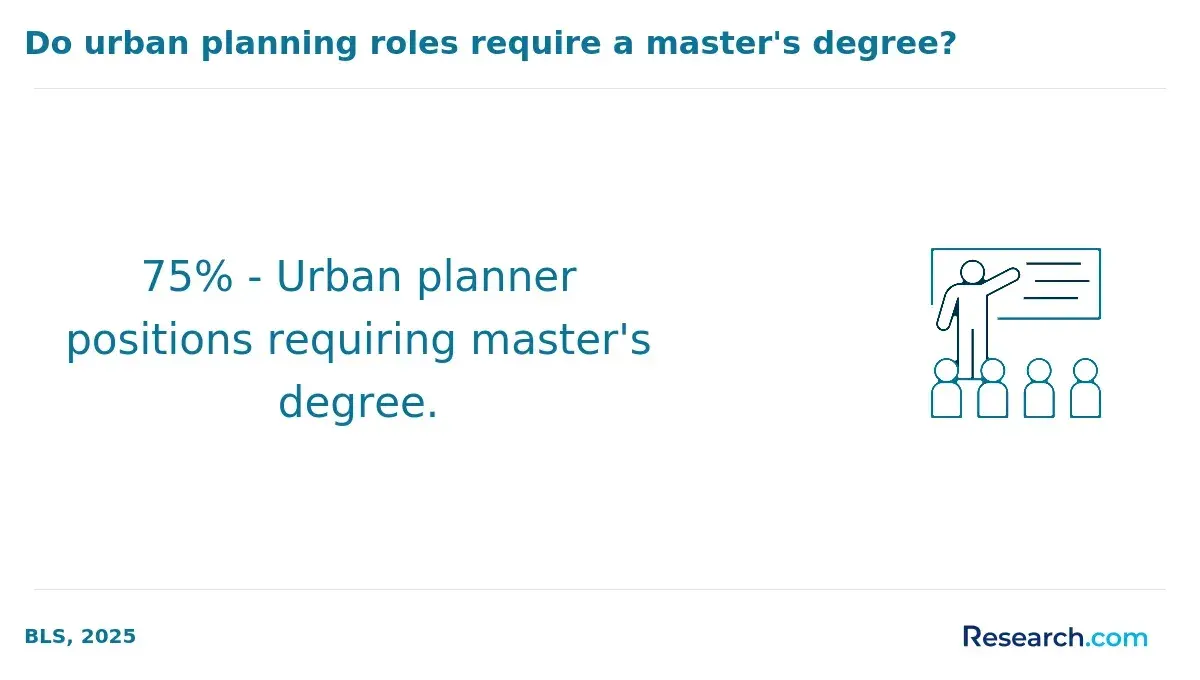
Most urban planners in Oklahoma start with a bachelor’s degree in planning, geography, architecture, environmental design, public administration, sustainability, or a related field. Many employers prefer or require a master’s degree in urban, regional, or city planning for professional planning roles. Oklahoma does not require a state license for urban planners, but the American Institute of Certified Planners credential can strengthen job prospects after candidates meet education, experience, and exam requirements.
| Step | What to do | Why it matters |
| 1. Choose a relevant degree path | Study planning, geography, architecture, environmental design, sustainability, public administration, or a related field. | Employers expect planners to understand land use, communities, infrastructure, policy, and data. |
| 2. Build technical and public-facing skills | Learn GIS, zoning basics, research methods, community engagement, transportation concepts, and environmental planning. | Urban planning combines analysis, communication, regulation, and public decision-making. |
| 3. Gain field experience | Look for internships with city planning departments, ODOT, state agencies, consulting firms, or municipal programs. | Practical experience is often the difference between a planning-related degree and a competitive job application. |
| 4. Consider graduate school | Compare master’s programs, especially if you want advanced public-sector, consulting, transportation, or policy roles. | According to Zippia, 60% of urban planners have a bachelor’s degree and 30% completed a master’s. |
| 5. Pursue professional certification when ready | After gaining qualifying experience, consider AICP certification or specialty credentials such as GIS, LEED, CFM, MSAI, or PTP. | Certification is not required by Oklahoma, but it can signal professional competence and commitment. |
Key Things to Know About Becoming an Urban Planner in Oklahoma
- O*NET OnLine projects 5% growth for urban planners in Oklahoma from 2024 to 2034.
- ZipRecruiter data from 2024 reports an average annual wage of approximately $69,281 for urban planners in Oklahoma.
- Urban planning work in the state can involve transportation, land use, community revitalization, sustainability, economic development, and disaster resilience.
- The University of Oklahoma and Oklahoma State University are important schools to compare, but students should verify whether a specific program is accredited and whether it matches their career goals.
- Education requirements for urban planners in Oklahoma
- Urban planning specializations in Oklahoma
- Licensing and certification requirements
- Timeline to become an urban planner
- Urban planner salaries in Oklahoma
- Career options for Oklahoma planners
- Common responsibilities in planning jobs
- Trends shaping urban planning in Oklahoma
- Urban planning and public health
- Interdisciplinary skills for planning careers
- Business education and planning leadership
- Regulatory and policy changes
- Financial skills for planners
- Social work and community-centered planning
- Accounting knowledge for planning projects
- Legal knowledge in urban planning
- Performance metrics planners should track
- Scholarships for urban planning students
- Internships and practical experience
- Professional organizations for Oklahoma planners
What are the education requirements for urban planners in Oklahoma?
Urban planning is not a single-major profession. In Oklahoma, many planners enter the field through degrees that teach them how communities function, how land is regulated, how infrastructure is planned, and how public decisions are made. A planning-specific degree is useful, but related fields can also lead into the profession when paired with internships, GIS experience, policy knowledge, and strong communication skills.
- Bachelor’s degree: A bachelor’s degree is the usual starting point for entry-level planning roles or planning-adjacent positions. Oklahoma State University and the University of Central Oklahoma offer relevant coursework that can help students prepare for graduate study or early professional experience.
- Relevant major: Good undergraduate options include urban studies, geography, architecture, landscape architecture, environmental design, public administration, and sustainability. Students interested in environmental planning can also compare online sustainability bachelor’s programs. Data USA identifies Social Sciences and Architecture and Related Services as two of the most common majors among urban planners.
- Core planning coursework: Students should look for classes in land use, urban design, transportation systems, environmental planning, zoning, community development, statistics, research methods, GIS, and public policy.
- Practical experience: Internships, studio projects, community engagement work, GIS mapping, municipal research, and planning commission exposure can make a candidate more competitive. Experience is especially important for students whose degree is related to planning but not specifically titled urban planning.
The University of Oklahoma currently has academic programs accredited by the Planning Accreditation Board and the Association of Collegiate Schools of Planning. Other Oklahoma institutions may still provide useful preparation through related undergraduate and graduate programs, but students should confirm accreditation, curriculum, internship support, and employer connections before enrolling.
How to choose the right degree path
| Path | Best fit | Potential limitation |
| Bachelor’s in planning or environmental design | Students who want a direct introduction to land use, design, and community planning. | Some professional planning jobs may still prefer a master’s degree. |
| Geography or GIS-focused degree | Students interested in spatial analysis, transportation, environmental risk, or mapping-heavy roles. | Students may need extra coursework in zoning, policy, and public engagement. |
| Architecture or landscape architecture | Students drawn to the physical design of places, streetscapes, campuses, and public spaces. | Design training may need to be paired with planning law and policy experience. |
| Public administration or policy | Students interested in government planning, budgeting, public meetings, and implementation. | Technical planning tools such as GIS may require additional training. |
| Environmental science or sustainability | Students focused on resilience, conservation, land impacts, or sustainable development. | Urban design and transportation planning may require supplemental coursework. |
A strong planning education should not only teach theory. It should help students analyze real sites, work with community feedback, read planning documents, understand regulations, use data, and explain trade-offs to elected officials, residents, and developers.
What urban planning specializations are available in Oklahoma?
Oklahoma planners can specialize in several areas depending on whether they want to focus on transportation, environmental sustainability, community redevelopment, infrastructure, emergency risk, or economic growth. The best specialization depends on the type of employer you want to work for and the planning problems you want to solve.
- Disaster and resilience planning: Oklahoma’s exposure to tornadoes, floods, and severe weather makes resilience planning especially relevant. Planners in this area may support hazard mitigation, emergency preparedness, stormwater planning, floodplain management, shelter access, infrastructure hardening, and coordination with agencies such as the Federal Emergency Management Agency.
- Transportation planning: Transportation planners study traffic patterns, road networks, transit access, pedestrian safety, mobility needs, and long-term infrastructure demand. This specialization is especially useful for candidates interested in roles with local governments, metropolitan planning organizations, engineering firms, or the Oklahoma Department of Transportation.
- Sustainable development planning: Sustainability-focused planners work on growth patterns that reduce environmental harm, protect natural resources, expand green space, improve energy efficiency, and support long-term community resilience. Students exploring this path may also want to review broader sustainability career options.
- Smart city planning: Smart city work uses data, sensors, digital systems, and analytics to improve public services, infrastructure monitoring, mobility, energy use, and civic decision-making. This area rewards planners who are comfortable with technology, data interpretation, and cross-department collaboration.
- Economic development planning: Economic development planners help communities attract investment, reuse underused sites, support small businesses, plan commercial districts, and improve workforce connections. In Oklahoma, this may intersect with energy, agriculture, technology, downtown redevelopment, and high-paying trade career pathways.
Which specialization should you choose?
| If you care most about... | Consider specializing in... | Skills to build |
| Reducing storm, flood, and disaster risk | Disaster and resilience planning | Hazard mitigation, emergency planning, floodplain policy, GIS, interagency coordination |
| Improving mobility and infrastructure | Transportation planning | Traffic analysis, transit planning, public engagement, data visualization, transportation policy |
| Balancing growth and environmental protection | Sustainable development planning | Environmental review, green infrastructure, sustainability metrics, land-use analysis |
| Using technology to improve city services | Smart city planning | Data analytics, GIS, civic technology, privacy awareness, systems thinking |
| Revitalizing downtowns or attracting investment | Economic development planning | Market analysis, redevelopment strategy, public-private partnerships, grant writing |
Are there licensing requirements for urban planners in Oklahoma?
Oklahoma does not currently require urban planners to hold a state license. This means a person can work in planning without a state-issued planning license, as long as they meet employer requirements. However, certification can still matter because planning jobs often involve public trust, complex regulations, long-term investment decisions, and community impact.
The most recognized professional credential for planners is certification through the American Institute of Certified Planners. Candidates must register with AICP, pass the AICP examination, document relevant professional experience, and complete certification maintenance requirements of 32 credits every two years. Because Oklahoma does not have a separate state licensure process for planners, AICP certification can be a useful way to demonstrate professional standards and career commitment.
Specialty credentials can also help planners compete for specific roles:
- LEED Accreditation: Useful for planners involved in sustainable buildings, green development, and energy-conscious design.
- Geographic Information Systems Certification: Valuable for roles involving spatial analysis, transportation planning, environmental planning, land-use mapping, and infrastructure data.
- Certified Floodplain Manager: Relevant for planners who work on flood risk, floodplain regulations, stormwater, or resilience projects.
- Main Street America Institute Certification: Helpful for professionals focused on downtown revitalization, commercial districts, and community redevelopment.
- Professional Transportation Planner: Designed for planners who specialize in transportation systems, mobility, and infrastructure planning.
License vs. certification: what is the difference?
| Credential type | Required in Oklahoma? | How it helps |
| State planning license | No | Oklahoma does not currently require a state license for urban planners. |
| AICP certification | No, but often valued | Signals professional experience, exam-based competence, and ongoing education. |
| Specialty certifications | No, role-dependent | Can strengthen applications for GIS, sustainability, transportation, floodplain, or downtown-development jobs. |
How long does it take to become an urban planner in Oklahoma?
The typical pathway to a professional urban planning career in Oklahoma takes about six to eight years when it includes both undergraduate education and graduate study or certification preparation. The timeline can be shorter for entry-level planning support roles and longer for candidates pursuing advanced credentials or specialized public-sector positions.
- Bachelor’s degree: A bachelor’s program generally takes about four years. For example, the University of Oklahoma offers a Bachelor of Science in Environmental Design, which can provide preparation for graduate planning study or related work.
- Master’s degree: Many planning professionals complete a master’s degree in urban, regional, or city planning, often adding about two years. The University of Oklahoma offers a Master of Regional and City Planning for students seeking advanced preparation.
- Certification experience: Candidates interested in AICP certification typically need two years of relevant work experience before they can sit for the certification exam.
According to Zippia, 60% of urban planners have a bachelor’s degree and 30% completed a master’s. A graduate degree can improve access to advanced roles, but it also requires time and money. Before enrolling, compare the cost, accreditation, internship access, placement support, and whether the program’s strengths match your intended specialization.
Urban planning career timeline
| Stage | Estimated time | What to focus on |
| Undergraduate study | About four years | Planning foundations, GIS, research, design, public policy, internships |
| Graduate planning study | Typically two additional years | Advanced studios, land-use law, transportation, community engagement, specialization |
| Early professional experience | Varies by role | Municipal planning, consulting, data analysis, public meetings, project review |
| AICP preparation | After qualifying experience | Exam readiness, professional documentation, continuing education planning |
How much do urban planners in Oklahoma earn?
Urban planner pay in Oklahoma depends on education, experience, employer type, technical skills, specialization, and location. Salaries can also differ between local government, state agencies, federal roles, consulting firms, legal services, and private development-related work.
ZipRecruiter annual mean wage information from 2025 lists $69,281 for urban planners in Oklahoma. Location can affect pay: Tulsa planners are listed at $68,553 a year, while Oklahoma City planners are listed at $69,703.
For entry-level planners, ZipRecruiter reports starting salaries of about $64,256. Mid-level planners may see salaries increase to $68,000 and even up to $97,000, depending on role, employer, and experience.
| Salary point | Reported amount | Source context |
| Oklahoma average annual wage | $69,281 | ZipRecruiter annual mean wage information from 2025 |
| Tulsa | $68,553 | ZipRecruiter city-level figure cited for planners |
| Oklahoma City | $69,703 | ZipRecruiter city-level figure cited for planners |
| Starting salary | About $64,256 | ZipRecruiter entry-level figure cited for planners |
| Mid-level range mentioned | $68,000 to $97,000 | Varies by experience, employer, and specialization |
Government and legal services roles may offer higher compensation for some planners in Oklahoma. However, salary outcomes are not guaranteed. Candidates should compare job postings, benefits, pension eligibility, remote or hybrid policies, certification preferences, and promotion pathways rather than relying on a single salary average.
What careers are available to urban planners in Oklahoma?
Urban planning graduates in Oklahoma can work for city governments, county agencies, state departments, consulting firms, nonprofits, real estate and development organizations, transportation agencies, environmental groups, and academic or research institutions. The role title may not always be “urban planner,” so job seekers should search broadly across planning, community development, transportation, sustainability, GIS, zoning, and economic development positions.
- Town Planner: Town planners help cities and smaller municipalities manage growth, review land use, update comprehensive plans, and coordinate development with community needs. Local government agencies, including the City of Oklahoma City, may hire planners to support livability and manage sprawl.
- Transportation Planner: Transportation planners work on road systems, traffic management, mobility access, transit options, and long-term infrastructure planning. The Oklahoma Department of Transportation hires professionals in this area to support transportation and infrastructure priorities.
- Environmental Planner: Environmental planners evaluate how development affects land, water, ecosystems, and community resilience. Organizations such as the Oklahoma Conservation Commission may seek professionals who can integrate environmental considerations into planning decisions. Students interested in this track can compare affordable online environmental science degree programs.
- Urban Designer: Urban designers focus on how public spaces, streetscapes, districts, and built environments look and function. They often collaborate with architects, landscape architects, planners, engineers, and community members.
Other possible paths include historic preservation, resilience planning, housing policy, GIS analysis, downtown development, regional planning, zoning administration, land-use consulting, and natural-resource planning. Students with environmental or land management interests may also compare affordable forestry degree options when exploring adjacent fields.
Planning career options by employer type
| Employer type | Possible roles | Best for candidates who like... |
| City or county government | Planner, zoning analyst, community development specialist, comprehensive planning staff | Public meetings, local policy, neighborhood issues, implementation |
| State agencies | Transportation planner, environmental planner, regional planning analyst | Infrastructure, statewide policy, public programs, technical review |
| Consulting firms | Planning consultant, urban designer, GIS analyst, transportation analyst | Project variety, client work, deadlines, technical deliverables |
| Nonprofits and development organizations | Community development planner, revitalization coordinator, housing or economic development staff | Community impact, grant work, stakeholder engagement, redevelopment |
| Academic or research organizations | Research assistant, planning analyst, policy researcher | Data, reports, evaluation, long-term planning questions |
What are the typical responsibilities of urban planners in Oklahoma?
Urban planners in Oklahoma may spend one day analyzing zoning applications and another day facilitating a public meeting or reviewing transportation data. The exact job depends on the employer, but most planning roles combine research, regulation, communication, project coordination, and community engagement.
- Research population shifts, land-use trends, housing patterns, infrastructure needs, and environmental impacts.
- Review development proposals, zoning applications, site plans, and land-use requests for consistency with local rules and community plans.
- Coordinate with elected officials, city staff, developers, engineers, residents, nonprofit groups, and regional partners.
- Prepare comprehensive plans, neighborhood plans, transportation recommendations, zoning updates, and public reports.
- Use Geographic Information Systems to map parcels, infrastructure, hazard areas, demographic trends, and service gaps.
- Monitor whether development and public projects align with regulations, plans, permits, and adopted policies.
- Work on issues such as affordable housing, stormwater, downtown revitalization, transportation access, infrastructure improvement, and environmental resilience.
- Plan and facilitate public meetings, workshops, surveys, hearings, and stakeholder sessions.
Skills employers often expect
| Skill area | Why it matters in planning |
| GIS and spatial analysis | Planners use maps and location-based data to evaluate land use, transportation, hazards, and service access. |
| Writing and presentation | Planning work must be explained clearly to residents, boards, elected officials, and technical teams. |
| Public engagement | Good plans reflect community input, especially from people directly affected by development decisions. |
| Regulatory knowledge | Zoning, land use, environmental rules, permits, and public procedures shape what can be built and where. |
| Data interpretation | Planners need to turn demographic, transportation, housing, and environmental data into practical recommendations. |
| Project management | Planning initiatives often involve budgets, timelines, consultants, agencies, and public milestones. |
What emerging trends are shaping urban planning in Oklahoma?
Several trends are changing how planners work in Oklahoma. GIS, data analytics, and smart city tools are making it easier to evaluate growth, infrastructure demand, transportation patterns, and public-service needs. At the same time, severe-weather risk keeps resilience, floodplain management, emergency preparedness, and climate-conscious infrastructure near the center of planning conversations.
Green infrastructure and sustainable development are also becoming more important as communities look for ways to manage stormwater, protect natural resources, improve public spaces, and reduce long-term infrastructure costs. Planners who want to move into leadership roles may benefit from business, finance, and project-management skills; comparing programs at the best business schools in Oklahoma can be useful for professionals considering that direction.
How can urban planning and public health collaborate to enhance community well-being?
Urban planning decisions shape daily health conditions. Street design affects walking and biking. Park access affects recreation. Zoning can influence food access, housing stability, air quality, and proximity to services. In Oklahoma communities, planners who understand public health can design neighborhoods that support safer mobility, stronger social connection, better access to community services, and more resilient public spaces.
Public health knowledge can also help planners evaluate whether projects benefit all residents or only certain neighborhoods. Professionals interested in the connection between built environments, food access, and wellness can learn more from Research.com’s guide on becoming a nutritionist in Oklahoma.
Planning leadership also requires budgeting, strategy, negotiation, and organizational management. Professionals who oversee complex redevelopment, transportation, or infrastructure projects may consider advanced business study, including affordable online DBA programs, when their goal is executive-level leadership, applied research, or organizational strategy.
What interdisciplinary expertise can enhance urban planning careers in Oklahoma?
Urban planning rewards professionals who can connect data, policy, design, environmental risk, finance, law, and community needs. A planner with GIS skills can analyze land and infrastructure more effectively. A planner with environmental science training can better evaluate sustainability impacts. A planner with engineering awareness can communicate more clearly with technical teams.
Some less obvious fields can also build useful analytical habits. For example, investigative reasoning, evidence review, and technical documentation are relevant to complex planning problems; students interested in that analytical skill set can review how a forensic science degree in Oklahoma develops related competencies.
Can advanced business education accelerate your urban planning career in Oklahoma?
Business education can help urban planners move from technical roles into project leadership, consulting, development strategy, or public-sector management. Large planning projects often involve budgets, timelines, procurement, funding applications, public-private coordination, and competing stakeholder priorities. Planners who understand financial models and organizational strategy can communicate more effectively with city leaders, developers, investors, and agency directors.
An MBA is not required to become a planner, but it may be useful for professionals who want to manage teams, lead consulting practices, direct redevelopment initiatives, or compete for senior administrative roles. Flexible options such as the cheapest online MBA programs may be worth comparing if business training fits your career plan and budget.
How can urban planners navigate regulatory and policy changes in Oklahoma?
Planning work is shaped by zoning ordinances, building codes, land-use rules, environmental requirements, permitting procedures, public notice requirements, and local policy priorities. Because these rules can change, planners must stay current through municipal updates, state agency notices, planning commission agendas, public hearings, professional workshops, and coordination with legal or administrative staff.
The best approach is proactive. Review proposed ordinance changes early, document decision criteria, communicate requirements clearly to applicants and residents, and ask legal questions before a project reaches a conflict point. This kind of requirements-focused practice is similar to other regulated professions, where candidates must understand state-specific rules such as speech pathologist requirements in Oklahoma.
How can financial acumen enhance urban planning careers in Oklahoma?
Urban planning projects often fail or stall because the financial plan is weak. Planners who understand budgets, funding sources, cost estimates, tax incentives, grants, capital improvement planning, and long-term maintenance costs can make stronger recommendations. Financial literacy is especially useful in redevelopment, transportation, public facilities, housing, and resilience projects.
Planners do not need to become accountants, but they should be able to read budgets, explain trade-offs, and recognize when a project’s funding assumptions are unrealistic. Professionals who want to build this foundation can review Research.com’s guide on how to become an accountant in Oklahoma.
Can social work insights enhance urban planning strategies in Oklahoma?
Social work and urban planning both focus on people, systems, access, and community well-being. For planners, social work principles can improve outreach to vulnerable populations, strengthen trust-building, clarify service gaps, and help teams design engagement processes that include residents who are often left out of planning decisions.
This perspective is especially useful in housing, neighborhood revitalization, public health, homelessness response, accessibility, and community development. Students interested in people-centered policy and outreach can compare these planning applications with the education requirements for social workers in Oklahoma.
How can integrating accounting insights improve urban planning strategies in Oklahoma?
Accounting knowledge can improve planning work by strengthening cost control, grant tracking, fiscal transparency, and project reporting. Community projects often involve multiple funding sources, reimbursement rules, public accountability requirements, and long timelines. A planner who understands financial documentation can help reduce delays and improve trust among agencies, funders, and residents.
Accounting is particularly relevant for capital projects, downtown redevelopment, infrastructure upgrades, tax increment financing, and grant-funded initiatives. Professionals who want formal financial training can review programs at the best accounting schools in Oklahoma.
How can legal expertise support urban planning projects in Oklahoma?
Planning decisions often involve legal risk. Zoning disputes, land-use appeals, development agreements, environmental compliance, easements, public hearings, and permit procedures all require careful documentation and process awareness. Planners who understand legal basics can work more effectively with attorneys, developers, boards, and residents.
Legal knowledge does not replace legal counsel, but it helps planners ask better questions and avoid preventable mistakes. Candidates who want to strengthen this area can explore foundational legal training through resources such as how to become a paralegal in Oklahoma.
What key performance metrics should urban planners in Oklahoma track?
Good planning is not only about producing a plan; it is about whether the plan improves community outcomes. Oklahoma planners should track indicators that connect project performance, public value, financial discipline, equity, and environmental impact.
| Metric | What it helps measure |
| Project timeline adherence | Whether planning milestones, approvals, and implementation steps are moving as expected. |
| Budget variance | Whether spending is aligned with estimates, funding commitments, and public expectations. |
| Stakeholder satisfaction | Whether residents, agencies, elected officials, and project partners understand and support the process. |
| Public participation | Attendance at meetings, survey response levels, workshop participation, and representation across affected groups. |
| Environmental sustainability outcomes | Progress on stormwater, green space, energy efficiency, land conservation, or resilience goals. |
| Local economic activity | Changes in business investment, redevelopment momentum, employment access, or commercial district vitality. |
| Quality-of-life indicators | Access to parks, transportation, housing, public services, safety improvements, and neighborhood amenities. |
Planners working on community-focused outcomes may also benefit from understanding how other fields measure well-being and service access. For example, reviewing social worker degree requirements in Oklahoma can provide context for human-services training that complements neighborhood planning.
Are there available scholarships for urban planners in Oklahoma?
Urban planning students in Oklahoma can reduce education costs by looking for scholarships from planning organizations, universities, departments, and employers. Because awards and deadlines can change, students should verify eligibility, membership requirements, application materials, and renewal rules directly with the organization or school.
- Charles Abrams Scholarship: Offered by the American Planning Association, this scholarship supports student members who show academic strength and commitment to the planning profession. The amount varies.
- Judith McManus Price Scholarship: Also administered by the APA, this scholarship supports students engaged in planning studies. The application deadline is April 30 each year, and the exact award amount is not specified here.
- General Academic Scholarships: Universities such as the University of Oklahoma and Oklahoma State University may offer merit-based, need-based, departmental, or program-specific scholarships for students in planning-related fields such as city planning, environmental design, geography, public administration, or urban design.
Some employers may also help pay for graduate education, certification, conference attendance, or professional development, especially when the training supports a current role.
Cost questions to ask before choosing a program
- Is the program accredited, and does accreditation matter for my target jobs?
- What is the full cost after fees, books, commuting, housing, and lost work time?
- Does the school offer assistantships, scholarships, employer partnerships, or paid internships?
- How many credits can I transfer?
- Does the program provide GIS software access, studio experience, and career placement support?
- Do graduates work in the roles, cities, and agencies I am targeting?
What urban planning internships or practical experiences can I pursue in Oklahoma?
Internships are one of the most important steps for becoming competitive in urban planning. They help students turn coursework into evidence of job-ready ability: writing staff reports, mapping data, attending public meetings, researching ordinances, supporting transportation studies, or helping with community engagement.
- Oklahoma Department of Transportation Internship Program: ODOT internships can expose students to transportation planning, infrastructure development, traffic management, road design, environmental assessment, and state-level planning processes.
- Oklahoma City Planning Department Internship Program: Interns may gain experience with comprehensive plans, zoning applications, land-use review, neighborhood planning, and public engagement in a local government setting.
- Oklahoma Municipal Management Services Internship Program: This program works with municipalities, including the City of Edmond and other Oklahoma City metro communities, to give students exposure to city operations and local governance.
- State Internship Program: Administered by Oklahoma’s Office of Management and Enterprise Services, this program places undergraduate and graduate students in state agencies, where they can learn about government operations, public policy, and planning-related work.
How to make an internship application stronger
- Create a short portfolio with maps, planning memos, studio projects, research papers, or design work.
- Learn basic GIS before applying, even if the internship does not list it as required.
- Attend a planning commission meeting and mention what you learned in your cover letter.
- Tailor your resume to the employer’s work, such as transportation, zoning, environmental planning, or community development.
- Ask professors, city staff, or professional organization members about openings that may not be widely advertised.

What professional organizations in Oklahoma should I join to advance my career as an urban planner?
Professional organizations can help aspiring planners find mentors, internships, job leads, continuing education, certification guidance, and exposure to real planning issues in Oklahoma. They are especially useful for students who are not enrolled in a planning-specific program or who want to build a local network before graduation.
- Oklahoma Chapter American Planning Association: OKAPA supports planners across the state through professional education, networking, policy discussion, certification resources, and planning practice development.
- Alliance for Economic Development of Oklahoma City: Founded in 2011, this organization works to make Oklahoma City more attractive to businesses and developers through economic and strategic initiatives. Planners interested in redevelopment and job creation may find its work relevant.
- Urban Land Institute Oklahoma: ULI Oklahoma connects professionals in real estate, development, land use, and planning. It can be valuable for planners interested in sustainable development, market trends, public-private partnerships, and urban innovation.
- Oklahoma Historical Society: Planners interested in historic preservation can use this organization’s resources, partnerships, and preservation knowledge to support communities that want to protect cultural and architectural heritage.
Common mistakes to avoid when pursuing urban planning in Oklahoma
| Mistake | Why it can hurt you | Better approach |
| Choosing a program without checking accreditation | Some employers may value accredited planning education for professional roles. | Verify program accreditation, curriculum, and graduate outcomes before enrolling. |
| Focusing only on tuition | Fees, commuting, housing, software, books, and lost work hours can change the real cost. | Calculate total cost and compare scholarships, assistantships, and employer support. |
| Waiting until graduation to get experience | Planning employers often want evidence of applied skills. | Pursue internships, GIS projects, volunteer planning work, or public meeting experience early. |
| Assuming one degree title is the only route | Planning careers can come from geography, design, public administration, sustainability, and other fields. | Match your coursework and experience to your target planning role. |
| Ignoring public communication skills | Planners must explain technical decisions to residents, boards, and elected officials. | Practice writing memos, presenting findings, and facilitating public input. |
| Relying only on salary averages | Pay varies by city, employer, specialization, benefits, and advancement path. | Review actual job postings, benefits, promotion criteria, and certification preferences. |
What urban planners in Oklahoma have to say about their careers
- “Planning work in Oklahoma gives me a direct role in improving the places people use every day. When residents, agencies, and local leaders work together, a finished project feels like a shared accomplishment.” - Tim
- “One of the best parts of planning here is balancing Oklahoma’s history with new ideas. Revitalizing neighborhoods and improving public spaces makes the work feel visible and worthwhile.” - Eve
- “Urban planning has helped me build relationships across communities while working on projects that change how people move, gather, and connect. The variety of Oklahoma’s cities and landscapes keeps the work creative.” - Edgar
Related Articles for Nearby States
- 2027 How to Become an Urban Planner in Texas
- 2027 How to Become an Urban Planner in Kansas
- 2027 How to Become an Urban Planner in Arkansas
- 2027 How to Become an Urban Planner in Missouri
- 2027 How to Become an Urban Planner in Colorado
- 2027 How to Become an Urban Planner in New Mexico
- 2027 How to Become an Urban Planner in Nebraska
- 2027 How to Become an Urban Planner in Louisiana
- 2027 How to Become an Urban Planner in Iowa
- 2027 How to Become an Urban Planner in Mississippi
Key Insights
- Oklahoma does not require a state license for urban planners, but AICP certification and specialty credentials can improve credibility and mobility.
- A bachelor’s degree can open entry-level doors, while a master’s degree may help candidates compete for advanced planning, consulting, transportation, and public-sector roles.
- O*NET OnLine projects 5% growth for urban planners in Oklahoma from 2024 to 2034, and ZipRecruiter lists the statewide annual mean wage at $69,281 in 2025.
- The strongest candidates combine education with internships, GIS ability, public communication skills, and knowledge of zoning, transportation, sustainability, and community engagement.
- Oklahoma planners can specialize in resilience, transportation, sustainability, smart city work, economic development, environmental planning, or urban design.
- Before choosing a program, verify accreditation, total cost, internship access, transfer policies, faculty expertise, and whether graduates work in the roles you want.
- Urban planning is a good fit if you want a career that blends data, policy, design, public service, and long-term community impact.
References:
- Data USA (n.d.). Urban & regional planners. https://datausa.io/profile/soc/urban-regional-planners
- O*NET OnLine (n.d.). Urban and Regional Planners, 19-3051.00. Retrieved from https://www.onetonline.org/link/summary/19-3051.00
- U.S. Bureau of Labor Statistics (2024). Occupational Employment and Wage Statistics Query System. Data Retrieved from: https://data.bls.gov/oes
- Zippia (2026). Urban Planner demographics and statistics in the US. https://www.zippia.com/urban-planner-jobs/demographics
- ZipRecruiter (2025). What Is the Average Urban Planner Salary by State. Retrieved from https://www.ziprecruiter.com/Salaries/What-Is-the-Average-Urban-Planner-Salary-by-State
Other Things to Know About Becoming an Urban Planner in Oklahoma
In 2027, a bachelor’s degree in urban planning, geography, or a related field is typically required to become an urban planner in Oklahoma. Higher-level positions may require a master's degree and additional certifications, such as AICP certification, to advance in this career.
In 2027, urban planners in Oklahoma can enhance their careers by pursuing certifications such as the American Institute of Certified Planners (AICP). This certification requires a combination of education and professional planning experience, followed by passing a comprehensive exam.