2027 How to Become an Urban Planner in Arizona

Co-Founder and Chief Data Scientist
Arizona’s growth creates a practical career question: how do you become an urban planner in a state where cities are expanding, water and land use decisions are increasingly complex, and communities need better housing, transportation, and climate-resilient design? With an 89.3% urban population, Arizona offers real opportunities for planners who can connect data, public policy, environmental constraints, and community priorities.
This guide explains the education, skills, certifications, salary expectations, internships, scholarships, and career paths that matter if you want to work as an urban planner in Arizona. It is designed for students comparing degree options, career changers exploring planning work, and early-career professionals deciding whether a master’s degree, certification, or specialization is worth the investment.
Quick Answer: How Do You Become an Urban Planner in Arizona?
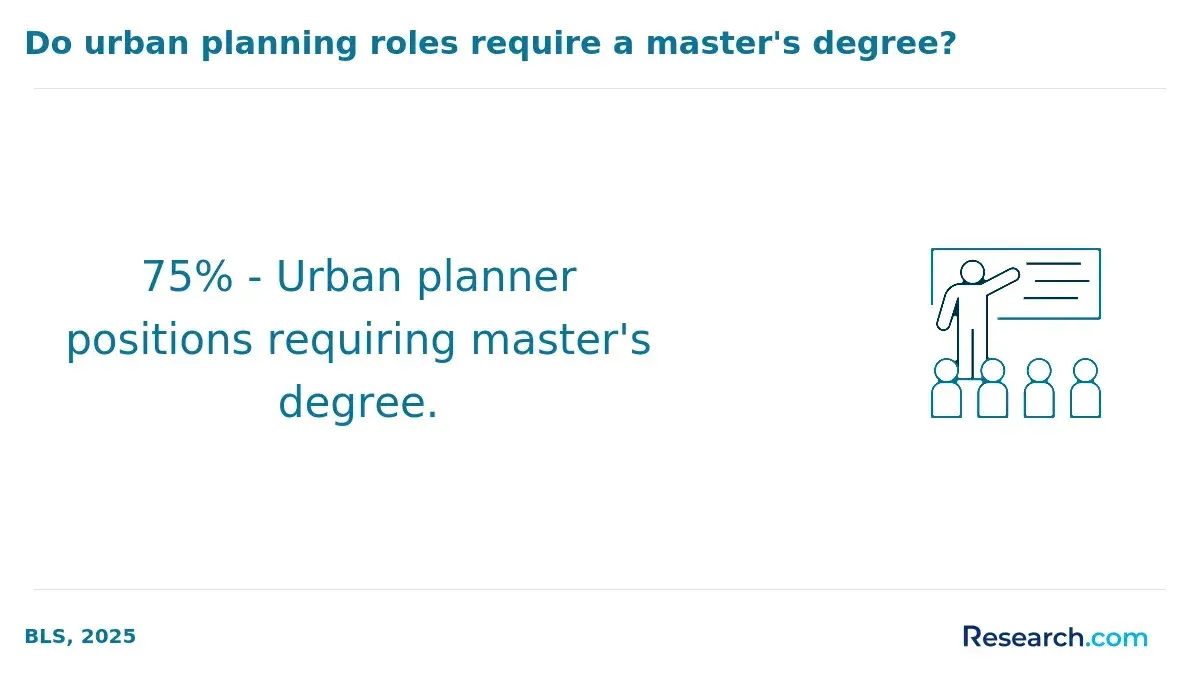
Most urban planners in Arizona start with a bachelor’s degree in urban planning, geography, environmental studies, public policy, or a closely related field. Many employers prefer or require a master’s degree for professional planning roles, especially in government, transportation, environmental planning, and consulting. Arizona does not require a state license for urban planners, but national certification through the American Institute of Certified Planners (AICP) can strengthen long-term career prospects.
The typical path takes about 6 to 7 years if you complete a bachelor’s degree, pursue a master’s degree, gain internship experience, and prepare for professional certification. Practical experience with GIS, zoning, public engagement, environmental review, and transportation planning is especially valuable in Arizona.
Key Things to Know About Becoming an Urban Planner in Arizona
- Urban planners in Arizona earn an average of $68,720 annually.
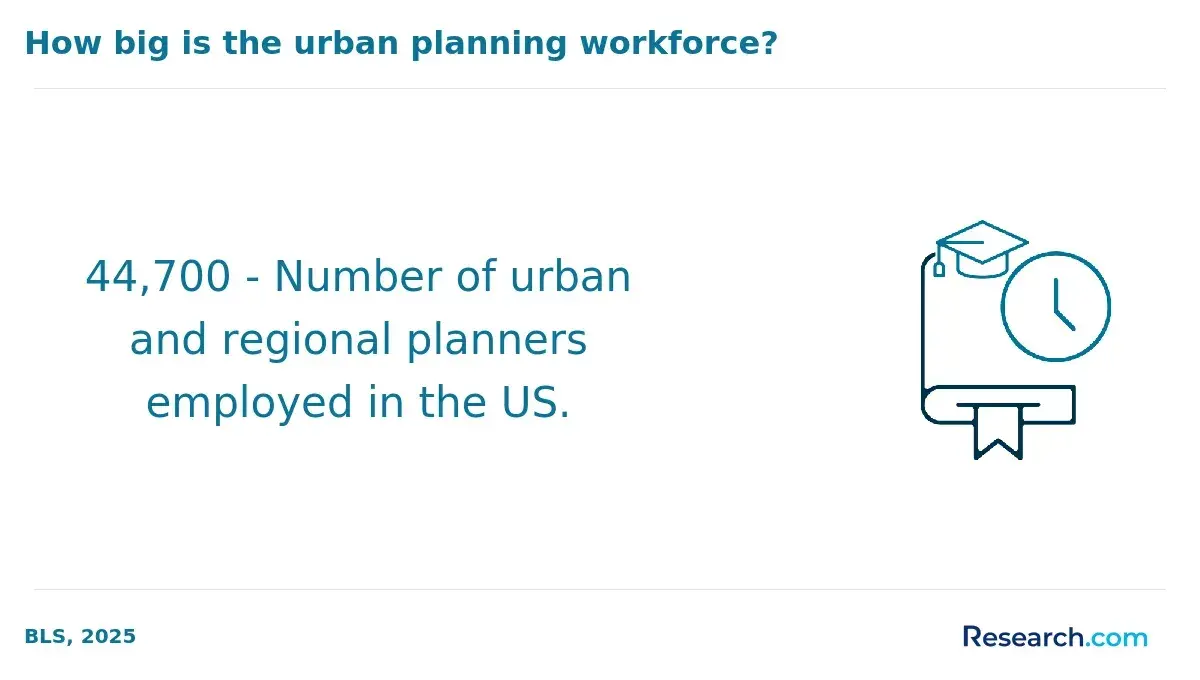
- As of June 2025, there are 1,170 urban and regional planners in Arizona.
- Employment for urban planners in Arizona is expected to be 690 planners by 2030.
- Urban planning jobs in Arizona are projected to grow in line with the national average of 3% through 2034.
- Approximately 80 job openings for urban and regional planners in Arizona are anticipated each year through 2032.
- The Brian & Leah Swanton Urban Planning Scholarship offers two awards of up to $1,000 for students dedicated to urban planning in Arizona.
- Education requirements for urban planners in Arizona
- Urban planning specializations in Arizona and related education paths
- Licensing and certification requirements
- How long the career path takes
- Urban planner salaries in Arizona
- Career options for Arizona urban planners
- Typical job responsibilities
- How business education can support planning careers
- Continuing education and cross-disciplinary skills
- Whether an MBA makes sense for planners
- Scholarships for urban planning students
- Funding large-scale planning projects
- Interdisciplinary collaboration in planning
- Legal and ethical issues in Arizona planning
- Working with social service professionals
- Improving financial sustainability in development
- Using legal knowledge in planning work
- Addressing social equity challenges
- Internships and practical experience
- Professional organizations to join
- Emerging technologies in Arizona planning and related planning tools
What are the education requirements for urban planners in Arizona?
Urban planning is an interdisciplinary profession. In Arizona, planners need to understand land development, transportation systems, desert ecology, public engagement, zoning, housing policy, water constraints, and data analysis. A strong academic foundation helps you compete for entry-level roles and prepares you for the technical and public-facing parts of the job.
- Bachelor’s degree: A bachelor’s degree is the usual starting point. A major in urban planning is helpful, but employers may also consider related fields such as geography, environmental studies, public administration, public policy, sustainability, civil engineering, or economics.
- Relevant Arizona programs: Arizona State University and the University of Arizona are commonly referenced options for students interested in planning-related study. When comparing schools, look at curriculum, faculty expertise, internships, alumni outcomes, and whether the program aligns with the type of planning work you want to do.
- Graduate education: Many professional planning positions prefer a master’s degree, particularly roles involving comprehensive planning, transportation planning, environmental planning, or policy analysis. A graduate program can also help career changers build planning-specific credentials.
- Core coursework: Useful courses include urban design, land use policy, transportation planning, environmental planning, statistics, public finance, housing policy, community development, and geographic information systems (GIS).
- Applied experience: Internships, planning studio courses, field research, GIS projects, and public meeting experience help you show employers that you can apply classroom knowledge to real planning problems.
- Arizona-specific knowledge: Students should pay close attention to issues such as rapid population growth, water conservation, heat mitigation, affordable housing, transportation access, tribal and regional planning considerations, and environmental sustainability.
| Education Path | Best Fit | What to Prioritize |
| Bachelor’s degree in urban planning or a related field | Students seeking entry-level planning, GIS, research, or planning assistant roles | GIS skills, internships, land use coursework, writing samples, and local government exposure |
| Master’s degree in urban or environmental planning | Students aiming for professional planner, policy, transportation, or environmental planning positions | Accreditation, studio projects, faculty specialization, internship placement, and capstone quality |
| Related degree plus planning experience | Career changers from environmental science, public policy, engineering, architecture, or public administration | Portfolio projects, zoning knowledge, public engagement experience, and planning software proficiency |
What urban planning specializations are available in Arizona?
Arizona’s planning needs are shaped by fast-growing metropolitan areas, desert environments, transportation demands, housing pressure, and long-term sustainability concerns. Choosing a specialization can help you target internships, graduate coursework, certifications, and employers more effectively.
- Transportation planning: Transportation planners analyze travel patterns, public transit needs, roadway safety, pedestrian access, and regional mobility. This specialty is especially relevant in large and growing areas such as Maricopa County, where long commutes and infrastructure planning are major concerns.
- Environmental planning: Environmental planners evaluate how land use decisions affect ecosystems, water resources, flood risk, air quality, and compliance with environmental rules. In Arizona, this specialization often connects directly to drought planning, conservation, and responsible growth.
- Community development: Community development planners focus on neighborhoods, housing access, public services, economic revitalization, and resident engagement. This path is a strong fit for planners who want to work directly with communities and local stakeholders.
- Sustainable development planning: Sustainability-focused planners help cities use land, energy, water, and infrastructure more responsibly. Students interested in this direction may also want to explore jobs in environmental sustainability or compare academic options such as the best online environmental sustainability degrees.
| Specialization | Common Work | Useful Skills |
| Transportation planning | Transit planning, traffic studies, corridor analysis, mobility policy | GIS, data analysis, public engagement, transportation modeling basics |
| Environmental planning | Impact review, conservation planning, flood and drought resilience, land use analysis | Environmental regulation knowledge, mapping, technical writing, sustainability planning |
| Community development | Housing policy, neighborhood planning, economic development, public meetings | Facilitation, policy writing, demographic analysis, stakeholder communication |
| Sustainable development | Green infrastructure, energy-conscious development, water-sensitive planning | Systems thinking, sustainability metrics, land use planning, project coordination |
Are there licensing requirements for urban planners in Arizona?
Arizona does not have a separate state license or registration requirement for urban planners. That means you can work in planning roles without obtaining an Arizona-issued planning license. However, credentials still matter because employers often use education, experience, technical skills, and professional certification to evaluate candidates.
The most recognized professional credential is certification through the American Institute of Certified Planners (AICP). The AICP process generally requires candidates to register, meet education and experience expectations, pass the AICP examination, and complete certification maintenance requirements. While not mandatory in Arizona, AICP certification can be useful for planners seeking advancement, leadership roles, or stronger professional credibility.
Specialty credentials may also help depending on your career focus:
- Certified Transportation Planner (CTP): Useful for planners who want to demonstrate deeper transportation planning expertise.
- LEED Accredited Professional: Relevant for planners involved in sustainable development, green building, and environmentally responsible land use.
- Certified Environmental Planner (CEP): Valuable for professionals focused on environmental review, ecological impacts, and sustainability-oriented planning.
| Credential | Required in Arizona? | When It May Help |
| Arizona state planning license | No | Arizona does not require a separate state license for urban planners. |
| AICP certification | No, but respected | Helpful for professional credibility, promotion, and competitive planning roles. |
| Specialty certifications | No | Useful when your work centers on transportation, sustainability, or environmental planning. |
How long does it take to become an urban planner in Arizona?
The full path to becoming a well-qualified urban planner in Arizona often takes around 6 to 7 years. The timeline depends on whether you stop after a bachelor’s degree, continue into a master’s program, complete internships, and pursue professional certification.
A typical student begins with a four-year bachelor’s degree. Some graduates enter planning assistant, research, GIS, or local government roles at that point. Others continue into a master’s degree, which generally adds about two years. The University of Arizona, for example, offers a Master of Urban and Environmental Planning that can fit this stage of the path.
Internships may last from three months to a year and can make a major difference in employability. Employers often want evidence that you understand public meetings, policy documents, zoning issues, data collection, mapping, and cross-agency coordination.
AICP certification is optional, but preparing for it can add several months. The practical timeline from starting college to becoming a stronger professional candidate is commonly five to six years, while full professional establishment may take closer to 6 to 7 years.
| Stage | Typical Time | Career Value |
| Bachelor’s degree | Four years | Builds the academic base for entry-level planning or related roles. |
| Internship or field experience | Three months to a year | Provides applied experience and professional contacts. |
| Master’s degree | About two years | Improves access to professional planning, policy, and specialized roles. |
| AICP preparation | Several months | Can support advancement and professional credibility. |
How much do urban planners in Arizona earn?
Urban planner salary figures for Arizona vary by source, role level, employer, location, and methodology. The article data includes several different figures, so readers should treat salary numbers as reference points rather than guaranteed outcomes.
- Urban planners in Arizona earn an average of $68,720 annually.
- Arizona employed 1,440 urban and regional planners.
- Urban and regional planners can anticipate an average annual salary of $89,300.
- Entry-level urban planners earn $68,720 per year.
- Senior urban planners can make $100,490 annually.
Pay is commonly influenced by graduate education, GIS ability, years of experience, public versus private employment, supervisory responsibility, and specialization. Transportation, environmental review, and complex development work may require stronger technical skills, while senior roles usually involve policy judgment, project management, and stakeholder negotiation.
| Career Level or Measure | Salary or Employment Figure | How to Interpret It |
| Average annual salary | $68,720 | A commonly cited average figure for Arizona urban planners. |
| Average annual salary | $89,300 | Another cited average figure; compare source methodology before relying on it. |
| Entry-level urban planner | $68,720 per year | A reference point for early-career compensation. |
| Senior urban planner | $100,490 annually | A figure associated with more experienced or advanced roles. |
| Arizona employment count | 1,440 urban and regional planners | A cited employment figure that differs from the June 2025 count of 1,170. |
If you are still comparing education options, review whether a program’s cost is reasonable for your target role. Students interested in sustainability-related planning may also compare the best online environmental sustainability degrees as part of a broader career plan.
What careers are available to urban planners in Arizona?
Urban planners in Arizona work in government, consulting, transportation, environmental planning, real estate development, nonprofit organizations, and regional agencies. The right path depends on whether you prefer public policy, technical analysis, community engagement, sustainability, infrastructure, or private development work.
- Local and state government: City and county planning departments hire planners to work on zoning, comprehensive plans, permitting, land use reviews, neighborhood plans, and public engagement. State-level agencies may focus on transportation, infrastructure, land management, or environmental policy.
- Transportation agencies: Planners may work on transit systems, roadway planning, pedestrian and bicycle access, safety studies, and regional mobility strategies.
- Private consulting firms: Consulting planners help public agencies, developers, and organizations complete planning studies, environmental assessments, community outreach, regulatory review, and project management.
- Environmental and land management organizations: Arizona’s ecosystems and water challenges create demand for planners who understand conservation, land stewardship, environmental impacts, and sustainable resource use.
- Nonprofit and community development groups: These roles often focus on affordable housing, neighborhood revitalization, equitable development, and quality-of-life improvements.
| Role | Typical Employer | Best For Candidates Who Like |
| City Planner | Local government | Zoning, public meetings, land use policy, and long-range planning |
| Transportation Planner | Transportation agency or consulting firm | Mobility data, transit systems, traffic issues, and infrastructure planning |
| Environmental Planner | Public agency, consultant, or land management organization | Environmental review, conservation, water issues, and sustainability |
| Community Development Planner | Nonprofit, city agency, or regional organization | Housing, equity, neighborhood engagement, and public services |
| Planning Consultant | Private consulting firm | Client work, project deadlines, technical reports, and varied assignments |
If you are comparing urban planning with other career routes that do not necessarily require the same academic path, Research.com also provides information on top-paying vocational jobs.
What are the typical responsibilities of urban planners in Arizona?
Urban planners translate community goals, regulations, environmental realities, and growth pressures into workable plans. In Arizona, the role often requires balancing housing demand, transportation needs, limited resources, heat resilience, and community input.
Common responsibilities include:
- Studying population trends, demographic patterns, development activity, and land use changes.
- Analyzing housing needs, transportation systems, environmental constraints, and public infrastructure.
- Preparing land use plans, zoning recommendations, comprehensive plans, corridor studies, and community development strategies.
- Using GIS and other mapping tools to analyze spatial data and communicate planning options.
- Reviewing development proposals for consistency with local regulations and policy goals.
- Coordinating with elected officials, engineers, developers, public agencies, neighborhood groups, and residents.
- Designing and facilitating public meetings, surveys, workshops, and outreach efforts.
- Documenting findings clearly through staff reports, maps, presentations, and policy memos.
- Addressing planning challenges related to affordable housing, transportation access, climate resilience, and equitable development.
| Responsibility | Why It Matters in Arizona |
| Land use and zoning analysis | Growth pressure requires careful decisions about where and how communities expand. |
| Transportation planning | Large metropolitan areas need safe, efficient, and accessible mobility options. |
| Environmental review | Water, heat, habitat, and land conservation issues affect development decisions. |
| Public engagement | Planning decisions affect residents directly, so public trust and participation are essential. |
| GIS and data analysis | Mapping helps planners visualize risk, access, growth, and infrastructure needs. |
One Arizona planner described the work this way: “A community meeting can change how you understand a project. Residents may arrive worried about traffic, housing, safety, or neighborhood character. The planner’s job is not only to prepare maps and policies, but to listen carefully, explain trade-offs, and help decision-makers understand what each option means for people’s daily lives.”
How Can Complementary Business Education Elevate Urban Planning Careers in Arizona?
Business knowledge can help urban planners move beyond technical analysis and understand whether projects are financially realistic. Skills in budgeting, market analysis, project management, negotiation, and organizational leadership are useful for planners who work with developers, public agencies, bond-funded projects, or public-private partnerships. If you want to strengthen that side of your profile, reviewing the best business schools in Arizona can help you compare business education options that may complement planning expertise.
How Can Continuing Education and Cross-Disciplinary Expertise Elevate Urban Planning Careers in Arizona?
Planning practice changes as technology, community needs, environmental pressures, and public expectations evolve. Continuing education can help planners stay current in GIS, data visualization, climate adaptation, community health, public finance, and facilitation. Cross-disciplinary learning is useful when it helps planners understand how the built environment affects daily life. For example, knowledge of community wellness issues may help planners collaborate more effectively with public health professionals; resources on how to become a nutritionist in Arizona can provide one perspective on health-related education paths, even though nutrition is not a substitute for planning training.
Should an MBA Enhance My Urban Planning Career in Arizona?
An MBA can be valuable for some urban planners, but it is not necessary for everyone. It may make sense if your career goal involves real estate development, infrastructure finance, consulting leadership, public-private partnerships, department management, or large project budgeting. It may be less useful if you plan to focus primarily on entry-level planning analysis, public engagement, or technical GIS work. Before enrolling, compare the cost, time commitment, employer expectations, and your target role. Research.com’s guide, Is an MBA worth it?, can help you evaluate whether the return justifies the investment.
Are there available scholarships for urban planners in Arizona?
Scholarships can reduce the cost of planning education, especially for students pursuing graduate study or fieldwork. Arizona students should look at university awards, planning association scholarships, community foundation funding, and national planning scholarships.
- Brian & Leah Swanton Urban Planning Scholarship: This award supports students who want to use planning to advance social equity and improve distressed communities. It is open to international and U.S. students in planning disciplines and offers two awards of up to $1,000 each.
- Matthew G. Bailey Scholarship Award: This scholarship supports undergraduate and graduate students at Arizona State University’s School of Geographical Sciences and Urban Planning. It funds fieldwork connected to a B.A., B.S., M.A., or Ph.D. degree in Geography. It is open to international and U.S. students in Geography or GIS disciplines and offers awards of up to $2,000.
- Arizona Planning Association Scholarship: This scholarship is intended for students pursuing urban planning or related fields. The amount may vary by year and is generally used to help with education costs.
| Scholarship | Who It Supports | Amount Mentioned |
| Brian & Leah Swanton Urban Planning Scholarship | Planning students focused on social equity and distressed communities | Two awards of up to $1,000 each |
| Matthew G. Bailey Scholarship Award | ASU students in Geography or GIS disciplines completing fieldwork | Up to $2,000 |
| Arizona Planning Association Scholarship | Students in urban planning or related fields | Varies annually |
Students comparing planning with adjacent technical fields may also want to review related education options, including Research.com’s discussion of least difficult engineering programs, especially if they are weighing engineering, infrastructure, and planning career paths.
How Do Urban Planners Secure Funding for Large-Scale Projects in Arizona?
Large planning projects often require multiple funding sources. Arizona planners may work with municipal budgets, competitive grants, state and federal funding, private investment, development fees, and public-private partnerships. The planner’s role is not always to “find the money” alone, but planners often help define project scope, document public benefits, support cost-benefit analysis, and coordinate stakeholders.
Financial literacy becomes more important as planners move into senior roles. Understanding capital improvement plans, grant requirements, long-term maintenance costs, and risk allocation can make projects more realistic. Planners who want broader business training may compare options such as MBA programs with high acceptance rates, particularly if their career goals involve management or project finance.
How Does Interdisciplinary Collaboration Enhance Urban Planning in Arizona?
Urban planning works best when planners do not make decisions in isolation. Effective projects often involve engineers, architects, environmental scientists, public health professionals, school districts, housing specialists, disability advocates, social service providers, tribal representatives, and community organizations.
Collaboration improves the quality of planning decisions because each discipline sees different risks and opportunities. For example, accessibility and communication needs can affect how public meetings are designed and how public spaces serve residents. Learning about fields such as speech pathologist requirements in Arizona can help planners better appreciate how communication and accessibility issues intersect with community design.
What Are the Legal and Ethical Challenges Faced by Urban Planners in Arizona?
Urban planners regularly work within legal and ethical constraints. Their recommendations can affect property rights, housing access, transportation options, environmental resources, neighborhood character, and public spending. In Arizona, planners must pay close attention to local zoning codes, state requirements, environmental rules, public meeting procedures, and transparent documentation.
Ethical planning also requires more than legal compliance. Planners must avoid conflicts of interest, communicate trade-offs honestly, document assumptions, consider who benefits and who is burdened, and ensure residents have meaningful opportunities to participate. Financial analysis can support ethical decision-making by clarifying costs, fiscal impacts, and long-term obligations. For readers interested in finance-oriented career preparation, Research.com explains how to become an accountant in Arizona.
How Can Urban Planners Collaborate with Social Service Professionals to Enhance Community Well-Being?
Urban plans affect health, safety, stability, and access to opportunity. That is why collaboration with social service professionals can be valuable, especially on projects involving affordable housing, homelessness response, neighborhood redevelopment, transportation access, parks, food access, and public facilities.
Social workers and community service professionals can help planners understand barriers residents face before a project is designed. Their insight can improve outreach, reduce unintended harm, and connect physical planning with supportive services. If you want to understand this related field, see Research.com’s guide to social worker education requirements in Arizona.
How Can Urban Planners Enhance Financial Sustainability in Arizona’s Development Projects?
A plan that looks good on paper still has to be financially workable. Planners increasingly need to consider upfront costs, long-term maintenance, infrastructure capacity, fiscal impacts, operating budgets, and funding reliability. This is especially important for public projects, transportation improvements, water infrastructure, and redevelopment efforts.
Practical strategies include building realistic cost assumptions into plans, coordinating early with finance staff, documenting maintenance responsibilities, comparing project alternatives, and identifying funding gaps before approval. Planners who want deeper financial training may benefit from reviewing the best accounting schools in Arizona as a complementary education resource.
How Can Urban Planners Benefit from Legal Insights in Arizona?
Legal knowledge helps planners understand how land use decisions are made, challenged, negotiated, and implemented. Planners do not need to become lawyers to be effective, but they should understand zoning procedures, public notice requirements, development agreements, environmental compliance, open meeting expectations, and the limits of local authority.
Legal awareness can reduce project delays, improve staff reports, support clearer communication with applicants and residents, and help planners recognize when legal counsel should be involved. Related training resources, such as guidance on how to become a paralegal in Arizona, can provide useful context for professionals interested in legal processes connected to planning work.
How Do Urban Planners Address Social Equity Challenges in Arizona?
Social equity in planning means asking who has access to housing, transportation, parks, schools, public services, clean environments, and safe neighborhoods—and who may be excluded or harmed by development decisions. In Arizona, equity work can involve affordable housing, heat exposure, transit access, disability access, tribal and rural community needs, environmental burdens, and displacement risk.
Planners can address equity by using inclusive engagement methods, analyzing demographic and spatial data, identifying underserved areas, documenting project impacts, and involving community partners early. Collaboration with professionals who understand the social worker degree requirements in Arizona can help planners connect physical development decisions with broader community support needs.
What urban planning internships or practical experiences can I pursue in Arizona?
Internships are one of the best ways to test whether urban planning fits your skills and interests. They also help you build a portfolio, gain references, learn planning software, and understand how public decisions are made.
- Arizona Department of Transportation (ADOT): Internship opportunities may involve transportation planning, infrastructure research, community outreach, data collection, and project analysis. This is a strong fit for students interested in mobility, safety, and statewide transportation systems.
- Maricopa Association of Governments (MAG): Interns may gain exposure to regional planning, transportation policy, environmental sustainability, research, and cross-jurisdiction coordination. This experience is useful for understanding how cities and agencies work together at the regional level.
- Arizona State University (ASU) School of Geographical Sciences and Urban Planning: ASU-related opportunities may involve GIS mapping, research, planning studios, local government partnerships, and community-based projects.
| Experience Type | What You Can Learn | How It Helps Your Resume |
| Government internship | Zoning, staff reports, public meetings, planning review | Shows familiarity with public-sector planning processes. |
| Transportation internship | Mobility analysis, safety planning, infrastructure data | Supports transportation planning and regional agency roles. |
| GIS or research assistantship | Mapping, data cleaning, spatial analysis, visualization | Demonstrates technical skill that many planning employers value. |
| Community engagement project | Facilitation, surveys, stakeholder communication | Shows you can work with residents and explain planning trade-offs. |
If you are evaluating college options based on long-term outcomes, you may also want to compare the US colleges with highest earnings.
What professional organizations in Arizona should I join to advance my career as an urban planner?
Professional organizations can help you find mentors, job leads, continuing education, conferences, policy updates, and peer support. For students and early-career planners, membership can also make the profession feel less abstract by connecting classroom learning to active planning work across Arizona.
- American Planning Association (APA) Arizona Chapter: Established in 1978, this chapter supports planning practice, professional development, networking, and advocacy for planners in Arizona.
- Urban Land Institute (ULI) Arizona District Council: Founded in 1936, ULI focuses on responsible land use and real estate development. Its programs can help planners better understand development feasibility, market forces, and public-private collaboration.
- Arizona Chapter of the American Society of Landscape Architects (ASLA): ASLA is useful for planners who work closely with landscape architecture, public space design, parks, streetscapes, and climate-sensitive site planning.
- Arizona Planning Association: This organization provides resources, training, and networking opportunities for planners working on local and statewide planning challenges.
| Organization | Best For | Career Benefit |
| APA Arizona Chapter | Students, public planners, consultants, and planning professionals | Networking, education, mentoring, and professional visibility |
| ULI Arizona District Council | Planners interested in development, land use, and real estate | Exposure to development finance, market realities, and land use leadership |
| Arizona Chapter of ASLA | Planners working with public spaces, landscape design, and site planning | Better understanding of design, sustainability, and outdoor public environments |
| Arizona Planning Association | Planning students and practitioners across the state | Training, community, and access to Arizona-specific planning conversations |
An Arizona planner summarized the value of professional groups this way: “Joining a planning organization helped me meet people who were already doing the work I wanted to do. Workshops gave me practical tools, but the bigger benefit was learning how other planners handled difficult public meetings, zoning questions, and career decisions.”
What Urban Planners in Arizona Have to Say About Their Careers
- "Planning in Arizona gives me the chance to connect sustainable development with the realities of desert growth. I value the opportunity to help create communities that are livable while still respecting limited natural resources." - Stephen
- "Urban planning has shown me how much thoughtful design can change daily life. Working with residents on public spaces and transportation improvements has made the work feel practical, local, and meaningful." - David
- "Arizona planning work keeps me engaged because the challenges are immediate: heat, resilience, housing, and growth. It is rewarding to know that planning decisions can improve quality of life for people who live here now and in the future." - Maria
What Role Do Emerging Technologies Play in Shaping Urban Planning in Arizona?
Technology is changing how planners collect information, test scenarios, and communicate with the public. GIS remains one of the most important tools, but planners are also using dashboards, data visualization, remote sensing, digital engagement platforms, and modeling tools to understand growth patterns and infrastructure needs.
In Arizona, technology can support analysis of transportation demand, heat exposure, land use change, environmental constraints, and service access. Smart city tools, real-time traffic information, and sensor-based systems may also help agencies manage infrastructure more responsively. The key is to use technology as decision support, not as a replacement for public judgment, community engagement, or ethical planning.
Planners who enjoy analytical investigation may find value in learning from other evidence-based fields. For example, approaches associated with a forensic science degree in Arizona can illustrate how careful data handling, documentation, and evidence review support stronger conclusions.
How to Choose the Right Urban Planning Program in Arizona
The best planning program is not always the one with the most recognizable name. It is the one that fits your career goal, budget, schedule, and preferred specialization. Before enrolling, compare programs based on outcomes and practical training rather than marketing language alone.
- Check planning relevance: Review whether the curriculum includes land use, GIS, transportation, environmental planning, public engagement, and planning law.
- Look for applied projects: Studio courses, capstones, fieldwork, and community partnerships help you build a portfolio.
- Ask about internships: Strong programs should help students connect with agencies, consulting firms, or community organizations.
- Compare total cost: Look beyond tuition. Include fees, technology costs, commuting, housing, books, and lost work time.
- Evaluate faculty expertise: Faculty research and professional networks can matter if you want to specialize in transportation, environment, housing, or sustainability.
- Consider schedule format: Working adults may need part-time, hybrid, or online flexibility, while students seeking intensive networking may prefer campus-based study.
Common Mistakes to Avoid When Preparing for an Urban Planning Career
| Mistake | Why It Can Hurt You | Better Approach |
| Choosing a program based only on name recognition | A well-known school may not match your desired specialization or budget. | Compare curriculum, internships, faculty, cost, and career outcomes. |
| Ignoring GIS and data skills | Many planning roles require mapping, spatial analysis, or data interpretation. | Build a portfolio with GIS maps, analysis projects, and clear written reports. |
| Assuming a degree alone is enough | Employers often want applied experience and evidence of professional judgment. | Complete internships, studio projects, volunteer planning work, or research assistantships. |
| Overlooking public communication | Planners must explain complex issues to residents, officials, and developers. | Practice public speaking, facilitation, memo writing, and visual communication. |
| Relying on salary averages as guarantees | Pay varies by source, employer, experience, specialization, and location. | Compare multiple salary sources and ask employers about advancement paths. |
| Skipping professional organizations | You may miss mentorship, job leads, and continuing education opportunities. | Join planning groups early and attend events before you need a job. |
Questions to Ask Before Becoming an Urban Planner in Arizona
- Do I want to work more with policy, design, transportation, environmental review, housing, or community engagement?
- Am I comfortable working with both technical data and public feedback?
- Can I build GIS, writing, and presentation skills before graduation?
- Does my target job require or prefer a master’s degree?
- Will the cost of my degree be reasonable compared with likely salary outcomes?
- Do I want a public-sector role, consulting career, nonprofit position, or development-related path?
- Am I prepared to work on controversial projects where residents, developers, and officials may disagree?
- Which Arizona-specific issues—water, heat, transportation, housing, land conservation, or equity—do I most want to address?
Key Insights
- Arizona does not require a state license for urban planners, but education, internships, GIS skills, and professional certification can strongly influence competitiveness.
- The most common preparation route is a bachelor’s degree followed by practical experience; many professional roles are stronger fits for candidates with a master’s degree.
- Arizona’s planning challenges make transportation, environmental planning, sustainability, housing, and community development especially relevant specializations.
- Salary data in the available figures varies, with cited numbers including $68,720, $89,300, and $100,490 depending on role level or source context.
- Internships with public agencies, regional planning organizations, universities, and consulting firms are critical because planning employers value applied experience.
- AICP certification is optional in Arizona, but it can help planners demonstrate professional commitment and pursue advancement.
- Business, finance, legal, and social service knowledge can make planners more effective, especially on complex projects involving funding, equity, public engagement, and regulation.
- The best next step is to choose a specialization, compare education costs carefully, build a GIS and writing portfolio, and seek Arizona-based internship experience as early as possible.
Related Articles for Nearby States
- 2027 How to Become an Urban Planner in New Mexico
- 2027 How to Become an Urban Planner in Nevada
- 2027 How to Become an Urban Planner in California
- 2027 How to Become an Urban Planner in Utah
- 2027 How to Become an Urban Planner in Colorado
- 2027 How to Become an Urban Planner in Texas
- 2027 How to Become an Urban Planner in Oklahoma
- 2027 How to Become an Urban Planner in Kansas
- 2027 How to Become an Urban Planner in Wyoming
- 2027 How to Become an Urban Planner in Idaho
References:
- Arizona State University (n.d.). Brian & Leah Swanton Urban Planning Scholarship. Retrieved from https://sgsup.asu.edu/student-life/graduate-experience/swanton-scholarship
- O*Net OnLine (n.d.). Arizona Employment Trends 19-3051.00 - Urban and Regional Planners. Retrieved from https://www.onetonline.org/link/localtrends/19-3051.00?st=AZ
- Unity Environmental University (n.d.). How to Become an Urban Planner. Retrieved from https://unity.edu/careers/urban-planner/ and Bureau of Labor Statistics occupational data: https://www.bls.gov/oes/current/oes193051.htmUrbanization reference
- Zippia. (2026). Urban planner demographics and statistics in the United States. https://www.zippia.com/urban-planner-jobs/demographics/
- Zippia. (2025). Urban planner salary in the United States. https://www.zippia.com/salaries/urban-planner/
- ZipRecruiter. (2025). Urban planner salary in the United States. https://www.ziprecruiter.com/Salaries/Urban-Planner-Salary Zippia salary referenceZippia demographics referenceUrban planner demographics reference
Other Things to Know About Becoming an Urban Planner in Arizona
In 2027, urban planners in Arizona are expected to be in demand due to rapid urbanization and the need for sustainable city development. The growing population in regions like Phoenix and Tucson is increasing the demand for skilled urban planners to design efficient and environmentally friendly urban spaces.
To become an urban planner in Arizona in 2027, a bachelor's degree in urban planning or a related field such as geography, public policy, or environmental design is typically required. Pursuing a master’s degree may be beneficial for advanced positions or specialization. Accreditation by the Planning Accreditation Board may enhance job prospects.
Pursuing a career in urban planning in Arizona can be a rewarding endeavor, offering unique opportunities to shape the future of rapidly growing communities. Arizona's diverse landscapes and urban environments present planners with the chance to engage in innovative projects that address pressing issues such as water management, sustainable development, and transportation.
- The state is home to vibrant cities like Phoenix and Tucson, which are continually evolving and require skilled planners to manage urban sprawl and infrastructure needs.
- Arizona's commitment to sustainability and environmental stewardship allows urban planners to work on initiatives that promote green spaces and renewable energy solutions.
- The state's rich cultural heritage provides planners with the opportunity to integrate historical preservation into modern development, fostering community identity.
Moreover, Arizona's collaborative planning environment encourages professionals to engage with local governments, non-profits, and community stakeholders, enhancing their impact and professional growth. Overall, urban planning in Arizona is not just a career; it is a chance to contribute meaningfully to the state's future.