2027 How to Become an Urban Planner in South Carolina

Co-Founder and Chief Data Scientist
Becoming an urban planner in South Carolina is a practical career path for people who want to shape how communities grow, where housing and transportation investments happen, and how local governments respond to infrastructure, environmental, and affordability challenges. The state offers a strong reason to enter the field: South Carolina ranked 10th among all other US states in terms of economic performance in 2024, yet it also received an average grade of D+ for infrastructure conditions such as roads, transit, and drinking water. In 2024, 13.9% of the state's population lived under the poverty line, compared with the US poverty rate of 11.1%.
Those conditions make planning work especially important. Economic growth alone does not guarantee safe roads, resilient neighborhoods, accessible public services, or equitable development. Urban planners help communities decide how land should be used, how transportation systems should connect people to jobs, how housing supply should grow, and how public investments can support residents over time.
This guide explains how to become an urban planner in South Carolina, including education options, certification, timelines, salaries, career paths, internships, scholarships, and professional organizations. It is designed for students, career changers, and early-career professionals who want a clear, realistic view of the steps involved.
Quick Answer: How do you become an urban planner in South Carolina?
To become an urban planner in South Carolina, you typically need at least a bachelor’s degree in urban planning, geography, environmental science, public policy, urban studies, or a related field. Many planners improve their career options by earning a master’s degree in city and regional planning or a related discipline, completing internships, building GIS and policy analysis skills, and pursuing American Institute of Certified Planners (AICP) certification after gaining qualifying professional experience. South Carolina does not currently require a separate state-specific urban planning license.
Key Things to Know About Becoming an Urban Planner in South Carolina
- Employment for urban and regional planners in the US was projected to increase by 3% between 2024 and 2034.
- Urban and regional planners across the US have a median annual wage of $83,720, equal to $40.25 per hour. In South Carolina, urban and regional planners had a median hourly wage of $32.65 during the same period.
- Urban planning can be professionally stable and personally meaningful because planners work on issues that directly affect daily life, including housing, transportation, land use, environmental protection, and neighborhood revitalization.
- Clemson University and the College of Charleston offer urban planning-related degree and certificate options in South Carolina. Both institutions are accredited by the Southern Association of Colleges and Schools Commission on Colleges (SACSCOC).
- Education requirements for South Carolina urban planners
- Urban planning specializations to consider in South Carolina
- Licensing and certification requirements
- Timeline for becoming an urban planner
- Urban planner salary in South Carolina
- Career paths for urban planners
- Common urban planning responsibilities
- Technology and innovation in planning practice
- Interdisciplinary skills that strengthen planning work
- Business and leadership skills for planners
- Policy and community development influence
- Public-private partnerships in planning
- How cross-field expertise can support your career
- Financial management skills for planning projects
- Collaboration with social work professionals
- Working with financial experts
- Legal and regulatory issues planners face
- Cross-disciplinary education for better planning outcomes
- Scholarships for planning-related study
- Internships and practical experience
- Professional organizations for South Carolina planners
- Key insights
What are the education requirements for urban planners in South Carolina?
Most urban planning careers begin with a college degree and practical experience. Employers may consider candidates from several academic backgrounds, but the strongest preparation usually combines land use knowledge, policy analysis, data skills, public engagement, and environmental awareness.
| Education or preparation step | Why it matters for urban planning | Best fit for |
| Bachelor’s degree | Provides the foundation for entry-level planning roles, planning assistant positions, internships, or graduate study. | Students starting their first planning-related credential. |
| Relevant major or minor | Urban planning, geography, environmental science, public policy, urban studies, and environmental planning help students understand how communities, land, and infrastructure interact. | Students who want a planning career but may not have access to a dedicated undergraduate planning major. |
| Core planning coursework | Courses in land use planning, urban design, transportation planning, environmental policy, zoning, and community development prepare students for real planning problems. | Students comparing degree programs or building a transfer plan. |
| Internships or fieldwork | Hands-on experience helps students learn public meeting procedures, mapping tools, zoning review, site analysis, and stakeholder communication. | Students who want stronger job applications after graduation. |
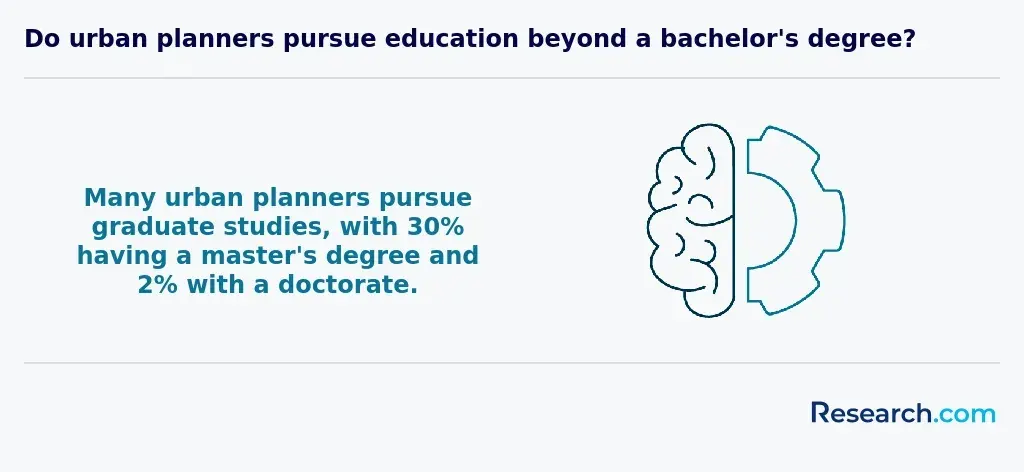
| Master’s degree | A graduate degree is not always required, but it can improve access to more advanced planning, policy, management, and specialization-focused roles. | People seeking professional advancement, leadership roles, or deeper technical training. |
Clemson University and the College of Charleston are two South Carolina institutions with planning-related offerings. Clemson University’s graduate programs include city and regional planning as well as resilient urban design. The College of Charleston offers an Urban Studies Program that can support students interested in cities, policy, development, and community issues.
When comparing programs, look beyond the name of the degree. Review course requirements, faculty expertise, internship access, GIS training, studio or capstone experiences, transfer policies, online availability, and whether the curriculum aligns with the planning work you want to do.
-
: "
A strong planning education should teach you how to analyze places, but it should also teach you how to listen. Community meetings, neighborhood projects, and field assignments often show students that successful plans depend on trust, not only technical skill.
"
What urban planning specializations are available in South Carolina?
South Carolina’s planning needs are shaped by growth, infrastructure strain, coastal and environmental concerns, affordability issues, and the needs of both urban and rural communities. The American Society of Civil Engineers (ASCE) rated several local infrastructure categories from mediocre to poor in its Infrastructure Report Card, including public transportation, roads, bridges, dams, and wastewater. That context makes some planning specializations especially relevant.
| Specialization | What planners focus on | Why it matters in South Carolina |
| Transportation planning | Traffic patterns, road safety, transit access, mobility planning, corridor studies, and transportation infrastructure. | Growing areas such as Charleston and Columbia need transportation systems that can serve residents, workers, visitors, and freight movement efficiently. |
| Environmental planning | Natural resource protection, environmental review, land conservation, flood and resilience planning, and sustainable development policies. | South Carolina’s ecosystems and climate-related vulnerabilities make environmental review and resilience planning important for long-term development decisions. |
| Community development | Housing, neighborhood revitalization, public services, economic development, resident engagement, and quality-of-life improvements. | The state’s poverty rate and uneven access to infrastructure make community-centered planning critical. |
| Urban design | Public spaces, streetscapes, building placement, walkability, parks, and the physical character of neighborhoods and downtowns. | Urban design can help growing communities preserve local identity while improving livability and public space. |
The best specialization depends on the kind of problem you want to solve. If you are drawn to mobility and infrastructure, transportation planning may be the right fit. If you care most about conservation, climate resilience, and responsible development, environmental planning may be stronger. If you want to work directly with residents and local organizations, community development may offer the most meaningful path.
Are there licensing requirements for urban planners in South Carolina?
South Carolina does not currently have a separate state-specific licensure or registration requirement for urban planners. That means planners can work in the state without obtaining an additional South Carolina planning license. However, professional certification can still matter for credibility, advancement, and employer preference.
The most recognized planning credential is certification through the American Institute of Certified Planners (AICP). To earn AICP certification, candidates must complete the organization’s registration process, pass the certification exam, submit documentation of relevant professional experience, and maintain certification by earning 32 credits every 2 years.
| Credential | Primary focus | When it may be useful |
| AICP certification | Professional planning standards, ethics, planning knowledge, and documented experience. | Useful for planners seeking career mobility, senior roles, or stronger professional recognition. |
| Certified Economic Development (CEcD) | Economic development, business attraction, community growth, and local economic strategy. | Helpful for planners working with redevelopment, downtown revitalization, or local government economic initiatives. |
| Professional Transportation Planner (PTP) | Transportation systems, mobility, infrastructure planning, and movement of people and goods. | Relevant for planners focused on roads, transit, traffic, and regional transportation systems. |
| LEED Accredited Professional | Green building principles, sustainable design, and environmentally responsible development. | Helpful for planners working on sustainability, resilient development, or environmentally focused projects. |
If you are still choosing a degree path, an online option can make planning education more accessible. Research.com’s guide to affordable online urban planning programs can help you compare lower-cost routes into the field.
How long does it take to become an urban planner in South Carolina?
The full preparation timeline often depends on whether you stop after a bachelor’s degree or continue into graduate study. Many aspiring planners spend 6 to 8 years building the education, experience, and professional readiness needed for stronger planning roles.
| Stage | Typical length | What you should accomplish |
| Bachelor’s degree | About 4 years | Complete a relevant major, build writing and analysis skills, take planning-related electives, and start using mapping or data tools. |
| Internship experience | 3 months to a year | Work with a government agency, consulting firm, nonprofit, transportation organization, or planning department. |
| Master’s degree | Another 2 years | Deepen expertise in planning theory, policy, design, community engagement, and specialization areas such as transportation or resilience. |
| Professional experience before certification | Usually 2 years before sitting for the AICP certification exam | Gain applied planning experience, document qualifying work, and prepare for professional certification if it fits your goals. |
A faster route may be possible for candidates who earn a bachelor’s degree, complete strong internships, and secure entry-level planning work without graduate school. A longer route may make sense for people targeting advanced public-sector roles, consulting leadership, research positions, or specialized planning work.
How much do urban planners in South Carolina earn?
Urban planner pay depends on education, experience, employer type, specialization, and location. Planners with graduate training, technical skills, management responsibilities, or specialized expertise may have access to higher-paying roles than those in entry-level positions.
Urban and regional planners across the US have a median annual wage of $83,720, which equals $40.25 per hour. In South Carolina, urban and regional planners had a median hourly wage of $32.65 during the same period, or an estimated $67,910 annually.
| Factor | How it can affect earnings |
| Location | Metropolitan markets such as Charleston may offer different salary opportunities than rural areas because of project volume, employer mix, and development activity. |
| Education | A master’s degree can support advancement into policy, senior planning, consulting, or management roles. |
| Specialization | Transportation, environmental planning, GIS-heavy roles, and development review may require technical expertise that can influence compensation. |
| Employer type | Local government, state agencies, consulting firms, real estate developers, nonprofits, and academic institutions may structure pay and benefits differently. |
| Experience level | Entry-level planning assistants generally have different compensation prospects than senior planners, planning directors, or project managers. |
If you are comparing urban planning with nearby fields, Research.com’s overview of sustainability career paths can help you understand related environmental and community-focused roles.
The chart below illustrates the states offering the highest wages for urban planners.
What careers are available to urban planners in South Carolina?
Urban planning is not one job title. In South Carolina, planners may work for municipal governments, county planning departments, state agencies, consulting firms, developers, nonprofit organizations, universities, and regional organizations. Your work setting will shape your daily responsibilities and long-term advancement path.
| Career setting | Possible roles | Good fit for |
| Local and state government | City planner, county planner, zoning administrator, transportation planner, development review planner. | Professionals who want to influence public policy, zoning, land use decisions, and infrastructure planning. |
| Transportation agencies | Transportation planner, mobility planner, corridor planning analyst, infrastructure planning specialist. | Planners interested in roads, transit, safety, traffic, and regional mobility. |
| Private consulting firms | Planning consultant, project planner, land use analyst, environmental planning consultant. | People who want varied projects, client-facing work, and technical planning assignments. |
| Real estate and development | Development planner, site planning coordinator, entitlements specialist, land development analyst. | Professionals interested in how zoning, design, permitting, and market demand shape development projects. |
| Nonprofit organizations | Community development planner, sustainability program coordinator, housing or land use advocate. | Planners motivated by equity, environmental protection, affordable housing, and resident-centered planning. |
| Academic and research institutions | Urban studies researcher, planning instructor, policy analyst, program coordinator. | Professionals drawn to research, teaching, policy evaluation, or applied planning studies. |
The Coastal Conservation League is one example of a nonprofit employer involved in land use and sustainability issues. Public agencies such as the South Carolina Department of Transportation may also need planning talent for transportation systems and infrastructure-related work.
Students who want a broader sustainability foundation may also want to compare planning programs with an online sustainable development degree, especially if their interests include environmental policy, climate resilience, and community systems.
What are the typical responsibilities of urban planners in South Carolina?
Urban planners translate community needs, public policy, development pressure, environmental constraints, and infrastructure realities into workable plans. The job requires both technical analysis and public communication.
- Study land use patterns, population changes, environmental conditions, and community needs.
- Work with elected officials, planning commissions, developers, transportation agencies, residents, and community organizations.
- Analyze demographic and economic data to support long-range planning decisions.
- Draft or review zoning ordinances, land use policies, comprehensive plans, and development proposals.
- Lead or support public meetings, workshops, hearings, and resident engagement efforts.
- Create maps, reports, site plans, visual materials, and planning recommendations.
- Monitor implementation of adopted plans and recommend changes when conditions shift.
- Balance development goals with preservation of historical assets, natural resources, and community character.
In practice, planners often spend as much time explaining trade-offs as they do producing technical documents. A plan may look strong on paper, but it will fail if residents do not understand it, officials do not support it, funding is unrealistic, or implementation responsibilities are unclear.
How are innovations transforming urban planning practices in South Carolina?
Technology is changing how planners collect information, model scenarios, communicate with the public, and track development impacts. Digital mapping and geographic information systems (GIS) help planners evaluate parcels, transportation networks, flood exposure, land use patterns, and public facility access. Smart city tools, including sensor-based data on traffic or environmental conditions, can also support more responsive planning when used carefully and transparently.
Technology does not replace local knowledge. South Carolina planners still need to understand neighborhood history, political context, infrastructure limitations, and community priorities. The strongest professionals combine technical tools with communication, ethics, and judgment. Planners who want stronger project management and stakeholder negotiation skills may also benefit from exploring programs offered by the top business schools in South Carolina.
What interdisciplinary skills can boost urban planning success in South Carolina?
Planning problems rarely fit into a single discipline. Housing decisions affect health, transportation affects employment access, environmental policy affects development feasibility, and public space design affects community well-being. For that reason, urban planners benefit from knowledge in public health, environmental science, transportation logistics, economics, sociology, design, and public administration.
For example, understanding health-related community needs can help planners think more carefully about food access, walkability, recreation, and public service locations. Readers interested in how health and community systems intersect may find useful context in Research.com’s guide on becoming a nutritionist in South Carolina.
How can urban planners enhance their business and leadership skills?
Urban planners often manage projects with multiple agencies, consultants, residents, property owners, elected officials, and funding sources. Business and leadership skills help planners keep those projects organized and financially realistic.
- Learn budgeting basics so you can evaluate whether a plan is implementable.
- Build project management skills for timelines, deliverables, meeting coordination, and consultant oversight.
- Practice negotiation and facilitation for public meetings, stakeholder conflicts, and development review.
- Strengthen data communication so technical findings are understandable to non-specialists.
- Study information systems when your work involves GIS, planning databases, dashboards, or public engagement platforms.
For planners who want a business-focused credential, an online MBA in management information systems may be relevant when the goal is to connect planning, technology, and organizational leadership.
How can urban planners influence local policy and community development in South Carolina?
Urban planners influence policy by translating evidence, resident input, legal requirements, and development goals into recommendations that local decision-makers can act on. Their work may shape comprehensive plans, zoning updates, corridor plans, housing strategies, infrastructure priorities, resilience policies, and public investment decisions.
Effective policy influence usually requires more than technical expertise. Planners need to understand how local ordinances work, how public hearings operate, how elected officials make decisions, and how community coalitions build support. Evidence-based methods from other fields can also improve planning analysis. For example, the investigative mindset described in Research.com’s guide to a forensic science career in South Carolina can be a useful reminder that strong decisions depend on reliable evidence, documentation, and careful interpretation.
How can public-private partnerships drive urban planning success in South Carolina?
Public-private partnerships can help communities complete projects that may be difficult for government agencies or private developers to accomplish alone. In planning, these partnerships may involve infrastructure improvements, mixed-use development, affordable housing initiatives, downtown revitalization, transportation upgrades, or public space investments.
| Potential benefit | Planning risk to manage |
| Additional funding sources and technical capacity. | Public goals can be weakened if agreements lack transparency or accountability. |
| Faster delivery of complex development or infrastructure projects. | Speed can create problems if public engagement, environmental review, or equity concerns are rushed. |
| Access to private-sector design, finance, and project management expertise. | Community benefits must be clearly defined, measurable, and enforceable. |
| Opportunities to align land use, infrastructure, and economic development. | Planners must avoid treating market feasibility as the only measure of public value. |
Because partnerships often require negotiation and financial analysis, business education can be useful. While South Carolina-specific options may be most relevant for local networking, broader business comparisons such as Research.com’s guide to the best business schools in Texas can also help readers understand how business programs are evaluated.
Can interdisciplinary expertise enhance my urban planning career in South Carolina?
Yes. Interdisciplinary expertise can make you a more effective planner because communities are shaped by health, education, mobility, housing, environmental risk, communication access, and economic opportunity. A planner who understands how these systems overlap can design more inclusive recommendations and ask better questions during community engagement.
For example, knowledge of communication access can inform planning for public meetings, community facilities, school-adjacent development, and inclusive outreach. Research.com’s guide to speech-language pathologist requirements in South Carolina offers a different professional lens on accessibility and communication needs.
How can urban planners enhance financial management skills to strengthen their projects?
Plans often fail when funding assumptions are vague. Urban planners do not need to become accountants, but they do need enough financial literacy to understand budgets, cost estimates, funding constraints, grant requirements, and long-term maintenance obligations.
- Review capital improvement plans to see how local governments prioritize infrastructure spending.
- Learn the difference between upfront construction costs and ongoing operating or maintenance costs.
- Use cost-benefit thinking carefully, especially when projects have social or environmental benefits that are hard to monetize.
- Build comfort with financial forecasting when working on long-range plans.
- Collaborate early with finance staff so implementation assumptions are realistic.
If you want a stronger foundation in finance and accounting concepts, Research.com’s guide on how to become an accountant in South Carolina can provide useful career and education context.
How can collaboration with social work professionals benefit urban planning projects in South Carolina?
Social work professionals can help urban planners better understand the needs of vulnerable residents, especially when projects involve housing instability, neighborhood change, public services, disability access, aging populations, youth needs, or community trauma. Their expertise can make outreach more respectful and policies more responsive.
This collaboration is especially useful when planners are working on community development, affordable housing, public facility location, transit access, or neighborhood revitalization. Understanding social worker education requirements in South Carolina can help planners recognize the training and perspective social workers bring to community-centered projects.
How can urban planners enhance collaboration with financial experts in South Carolina?
Financial experts help planners test whether a project can be funded, phased, maintained, and communicated responsibly to decision-makers. This matters for infrastructure plans, redevelopment proposals, public-private partnerships, grant applications, and capital investment strategies.
Good collaboration starts with shared assumptions. Planners should clearly explain policy goals, equity concerns, land use constraints, and community priorities. Financial experts can then help translate those goals into budgets, funding scenarios, and risk assessments. For readers interested in the finance side of local development, Research.com’s guide to the best accounting schools in South Carolina may be a helpful education resource.
What legal and regulatory challenges must urban planners navigate in South Carolina?
Urban planners regularly work within legal and regulatory systems. They may review zoning ordinances, comprehensive plan requirements, subdivision rules, environmental standards, historic preservation requirements, public notice procedures, and permit conditions. Mistakes in these areas can delay projects or expose local governments to disputes.
Planners should know when to involve attorneys, engineers, environmental specialists, surveyors, and other licensed professionals. They should also keep records carefully, communicate procedural requirements clearly, and avoid giving legal advice outside their role. Readers who want a closer look at legal support careers can review Research.com’s guide on how to become a paralegal in South Carolina.
How can cross-disciplinary education enhance urban planning outcomes in South Carolina?
Cross-disciplinary education helps planners design solutions that reflect real community conditions. A transportation plan may need public health insight. A housing strategy may need social service knowledge. A resilience plan may need environmental science. A redevelopment project may need finance, law, and public engagement expertise.
For planners working with vulnerable populations, social work knowledge can be especially valuable. Understanding degree requirements for social workers in South Carolina can help planners collaborate more effectively with professionals trained in outreach, case management, and community support.
Is becoming an urban planner in South Carolina worth it?
Urban planning can be worth it if you want a career that combines public service, policy, data analysis, design thinking, and community problem-solving. It may be especially appealing in South Carolina because the state’s economic performance, infrastructure needs, and poverty challenges create meaningful planning work across transportation, housing, resilience, development review, and community improvement.
| This career may be a strong fit if you... | You may want a different path if you... |
| Care about how neighborhoods, transportation, housing, and public spaces affect daily life. | Prefer work with little public interaction or community disagreement. |
| Enjoy research, writing, mapping, policy analysis, and long-term problem-solving. | Want a career where results are always immediate and easy to measure. |
| Can balance technical recommendations with political, legal, and community realities. | Are uncomfortable working with regulations, public meetings, or competing stakeholder interests. |
| Want a career that can lead to local government, consulting, nonprofit, transportation, or development roles. | Prefer a narrowly defined technical job with limited collaboration across disciplines. |
How to choose an urban planning program in South Carolina
Choosing the right program matters because planning education can vary widely. Some programs emphasize design, while others focus on policy, GIS, public administration, environmental planning, transportation, or community development.
- Check accreditation and institutional status. Clemson University and the College of Charleston are accredited by the Southern Association of Colleges and Schools Commission on Colleges (SACSCOC). Always verify current accreditation before enrolling.
- Review the curriculum. Look for courses in land use, zoning, transportation, environmental planning, GIS, planning law, community engagement, and research methods.
- Ask about practical experience. Internships, studios, capstones, and field projects can be just as important as classroom learning.
- Compare costs beyond tuition. Include fees, technology requirements, housing, transportation, books, and lost income if you plan to study full time.
- Evaluate career support. Ask whether the program connects students with planning departments, consulting firms, transportation agencies, nonprofits, or alumni mentors.
- Consider online versus campus learning. Online courses may help working adults, while campus programs may offer more direct access to local internships and faculty networks.
- Match the program to your specialization. A student interested in transportation should not choose a program with little mobility coursework, and a student interested in resilience should look closely at environmental and climate-related offerings.
Common mistakes to avoid when preparing for an urban planning career
| Mistake | Why it can hurt you | Better approach |
| Choosing a program based only on the degree title. | Two planning-related programs may offer very different skills and career preparation. | Compare courses, faculty, fieldwork, GIS training, internship access, and graduate outcomes. |
| Ignoring accreditation. | Accreditation can affect transfer options, graduate admission, financial aid eligibility, and employer confidence. | Verify institutional accreditation before applying or enrolling. |
| Waiting too long to get experience. | Planning employers often value applied experience, public meeting exposure, and project examples. | Seek internships, volunteer on local boards, attend planning commission meetings, or assist with community projects. |
| Assuming salary outcomes are guaranteed. | Pay varies by location, employer, specialization, and experience. | Use wage data as a benchmark, then research specific employers and job postings. |
| Overlooking communication skills. | Even strong technical recommendations can fail if they are not clearly explained to residents or officials. | Practice public speaking, report writing, facilitation, and visual communication. |
| Relying only on rankings. | A highly ranked program may not fit your goals, budget, location, or schedule. | Use rankings as one input, not the full decision. |
Are there available scholarships for urban planners in South Carolina?
Students interested in urban planning, public administration, local government, or community development may be able to reduce education costs through scholarships and grants. Availability, eligibility, deadlines, and award amounts can change, so always confirm details directly with the scholarship provider or institution.
- South Carolina City and County Management Association (SCCCMA) Scholarships: These scholarships support current Master of Public Administration (MPA) students interested in local government careers. Each scholarship awards $2,500 and gives recipients the opportunity to attend the SCCCMA's Winter Meeting, which can help with professional networking.
- University of South Carolina (USC) Scholarships: USC offers scholarships for both residents and non-residents. Resident scholarships include the Stamps, Carolina, and 1801 Scholars Awards. Non-resident scholarships include the Stamps, McNair, and Horseshoe Scholars Awards.
Students should also ask planning departments, graduate schools, local government associations, and professional organizations about assistantships, tuition support, travel funding, and conference scholarships. If you are comparing urban planning with other education routes, Research.com’s guide to the easiest online majors can help you think through workload and program fit.
What urban planning internships or practical experiences can I pursue in South Carolina?
Internships help aspiring planners move from theory to practice. They also create work samples, references, and professional contacts. In South Carolina, students can look for opportunities with county governments, municipal planning departments, transportation agencies, engineering and planning firms, environmental organizations, and community development groups.
| Organization | Possible experience | What students can learn |
| Charleston County Government | The Zoning & Planning Department offers internships for undergraduate and graduate students in fields such as Urban Studies or Environmental Studies. These positions are unpaid but may satisfy academic credit requirements. | Meeting attendance, site visits, zoning and planning research, local planning procedures, and development review exposure. |
| Thomas & Hutton | This engineering firm may offer internships in its Landscape Architecture Department for students pursuing landscape architecture education. | Project support, site design exposure, interdisciplinary collaboration, and applied design experience. |
| South Carolina Department of Transportation (SCDOT) | Specific opportunities may vary, but students interested in transportation planning may find internships connected to transportation infrastructure and policy. | Transportation systems, planning processes, infrastructure priorities, and public-sector project work. |
Students can also build experience by attending planning commission meetings, volunteering with community organizations, joining campus planning or sustainability projects, learning GIS software, and creating a portfolio of maps, reports, and policy briefs. For related paths, Research.com’s guide to environmental and sustainability careers can help you identify adjacent opportunities.
The chart below visualizes the average wages of common urban planner jobs.
What professional organizations in South Carolina should I join to advance my career as an urban planner?
Professional organizations can help students and early-career planners find mentors, learn local regulations, attend training events, and understand job opportunities. They are especially useful in a field where local networks and public-sector knowledge matter.
| Organization | How it can help | Best use for students and early-career planners |
| American Planning Association (APA) South Carolina Chapter | Supports planning practice through education, advocacy, professional events, and statewide networking. | Attend workshops, meet practicing planners, learn about planning legislation, and explore AICP-related resources. |
| Urban Land Institute (ULI) South Carolina | Creates forums for discussion about land use, development, real estate, and community growth. | Learn how developers, planners, designers, and public officials approach land use decisions. |
| South Carolina Community Development Association | Connects professionals involved in municipal, regional, and community development work. | Build relationships with practitioners focused on local government, community improvement, and development programs. |
Do not wait until graduation to join professional networks. Student memberships, public meetings, webinars, and local events can help you understand what planning work actually looks like before you commit to a specialization.
What urban planners in South Carolina say about their careers
- Rebecca describes planning as a way to connect community development interests with visible improvements, especially through public space and sustainability projects that benefit neighbors.
- Aubrey emphasizes the satisfaction of working with different communities and seeing projects such as neighborhood revitalization or park development become real.
- Samuel points to the variety of the field, from housing needs to transportation improvements, as one reason urban planning remains challenging and rewarding.
Key Insights
- South Carolina’s economic growth, infrastructure concerns, and poverty rate create a strong need for planners who can connect land use, transportation, housing, environmental resilience, and community development.
- A bachelor’s degree is the typical starting point, but a master’s degree can improve access to advanced planning, policy, consulting, and leadership roles.
- South Carolina does not currently require a state-specific urban planning license, but AICP certification can strengthen professional credibility after you gain the required experience.
- Urban and regional planners across the US have a median annual wage of $83,720, while South Carolina urban and regional planners had a median hourly wage of $32.65 during the same period.
- Transportation planning, environmental planning, community development, and urban design are especially relevant specializations in the state.
- Internships, GIS skills, public meeting experience, and a portfolio of planning work can make a major difference when applying for entry-level roles.
- Choose a planning program by checking accreditation, curriculum depth, internship access, cost, and alignment with your preferred specialization—not by name recognition alone.
- The strongest planners combine technical analysis with communication, financial awareness, legal understanding, and the ability to build trust with communities.
Related Articles for Nearby States
- 2027 How to Become an Urban Planner in Georgia
- 2027 How to Become an Urban Planner in North Carolina
- 2027 How to Become an Urban Planner in Florida
- 2027 How to Become an Urban Planner in Tennessee
- 2027 How to Become an Urban Planner in Alabama
- 2027 How to Become an Urban Planner in Virginia
- 2027 How to Become an Urban Planner in Kentucky
- 2027 How to Become an Urban Planner in Mississippi
- 2027 How to Become an Urban Planner in West Virginia
- 2027 How to Become an Urban Planner in Louisiana
References:
- American Legislative Exchange Council. (2024). South Carolina. Rich States, Poor States. https://www.richstatespoorstates.org/states/SC
- American Society of Civil Engineers. South Carolina Infrastructure Report Card. https://infrastructurereportcard.org/state-item/south-carolina
- Clemson University. (n.d.). Clemson University Catalog. City and Regional Planning, MCRP. https://catalog.clemson.edu/preview_program.php?catoid=19&poid=4478
- Clemson University. (n.d.). Master of City and Regional Planning Programs. School of Architecture. https://www.clemson.edu/caac/academics/architecture/programs/city-and-regional-planning/index.html
- College of Charleston. (n.d.). Urban Studies Program. https://charleston.edu/urban-studies/index.php
- Labor Licensing Regulation. (n.d.). Frequently Asked Architect Licensure Questions. South Carolina Board of Architectural Examiners. https://llr.sc.gov/arch/faq/Architect_Licensure.aspx
- Municipal Association of South Carolina. (n.d.). SC Community Development Association. https://www.masc.sc/affiliate-associations/sc-community-development-association
- Municipal Association of South Carolina. SC Community Development Association. https://www.masc.sc/affiliate-associations/sc-community-development-association
- South Carolina Association of Counties. (n.d.). Planning & Zoning Education. https://www.sccounties.org/planning-zoning-education
- Urban Planning Degree scholarship resource. https://urbanplanningdegree.com/scholarship-guide/
- South Carolina Board of Architectural Examiners. Architect licensure information. https://llr.sc.gov/arch/faq/Architect_Licensure.aspx
- Unity Environmental University. Urban planner career overview. https://unity.edu/careers/urban-planner/
- US Census Bureau. (n.d.). American Community Survey (ACS). https://www.census.gov/programs-surveys/acs.html
- US Bureau of Labor Statistics. (2025, August 28). Urban and Regional Planners. https://www.bls.gov/ooh/life-physical-and-social-science/urban-and-regional-planners.htm
Other Things to Know About Becoming an Urban Planner in South Carolina
Yes, urban planners are in demand in South Carolina in 2027. The state's growing population and ongoing urban development projects create a need for skilled planners to guide sustainable and strategic growth, particularly in rapidly expanding areas like Charleston and Greenville.
In 2027, Clemson University and the University of South Carolina are recognized for offering reputable urban planning programs. Clemson especially offers a Master of City and Regional Planning, providing comprehensive training for aspiring urban planners.
To become an urban planner in South Carolina in 2027, you should obtain at least a bachelor's degree in urban planning or a related field. Several universities offer these programs, and pursuing a master's degree can enhance your skills and job prospects.