2027 How to Become an Urban Planner in Nevada

Co-Founder and Chief Data Scientist
Becoming an urban planner in Nevada means preparing for a career at the center of growth, land use, infrastructure, housing, transportation, water constraints, and community development. Nevada is home to 3.3 million people and is the seventh-largest state by area, according to the U.S. Census Bureau, 2025. That combination creates a planning environment where fast-growing metro areas, rural communities, desert ecosystems, public lands, and economic development goals often intersect.
This guide is for students, career changers, and early-career professionals who want to understand how to become an urban planner in Nevada. It explains the education path, certification options, expected timeline, salaries, job settings, internships, specializations, scholarships, and professional organizations that can help you enter and advance in the field.
It also clarifies an important point: Nevada does not have a state license specifically for urban planners. Instead, employers typically evaluate candidates based on education, practical experience, technical skills, local planning knowledge, and, for more advanced roles, national credentials such as AICP certification.
Quick Answer: How Do You Become an Urban Planner in Nevada?
To become an urban planner in Nevada, you typically need a bachelor’s degree in a planning-related field, internship or field experience, and, for stronger advancement prospects, a master’s degree in urban or regional planning. Nevada does not require a state urban planner license, but the American Institute of Certified Planners certification is widely recognized for experienced professionals. Most aspiring planners should expect a six- to eight-year path if they complete both undergraduate and graduate education and build the work experience needed for certification.
Key Things to Know About Becoming an Urban Planner in Nevada
- Nevada’s urban planning field is tied closely to population growth, transportation needs, housing demand, infrastructure expansion, and environmental limits.
- The job outlook for urban planners in Nevada shows a projected growth rate of 9% from 2024 to 2034.
- Urban planners in Nevada earn an average annual wage of $98,470, compared with the national average of $85,940.
- Reno reports an average annual wage of $108,960 for urban planners, while Las Vegas, Henderson, and Paradise, NV, report $95,220.
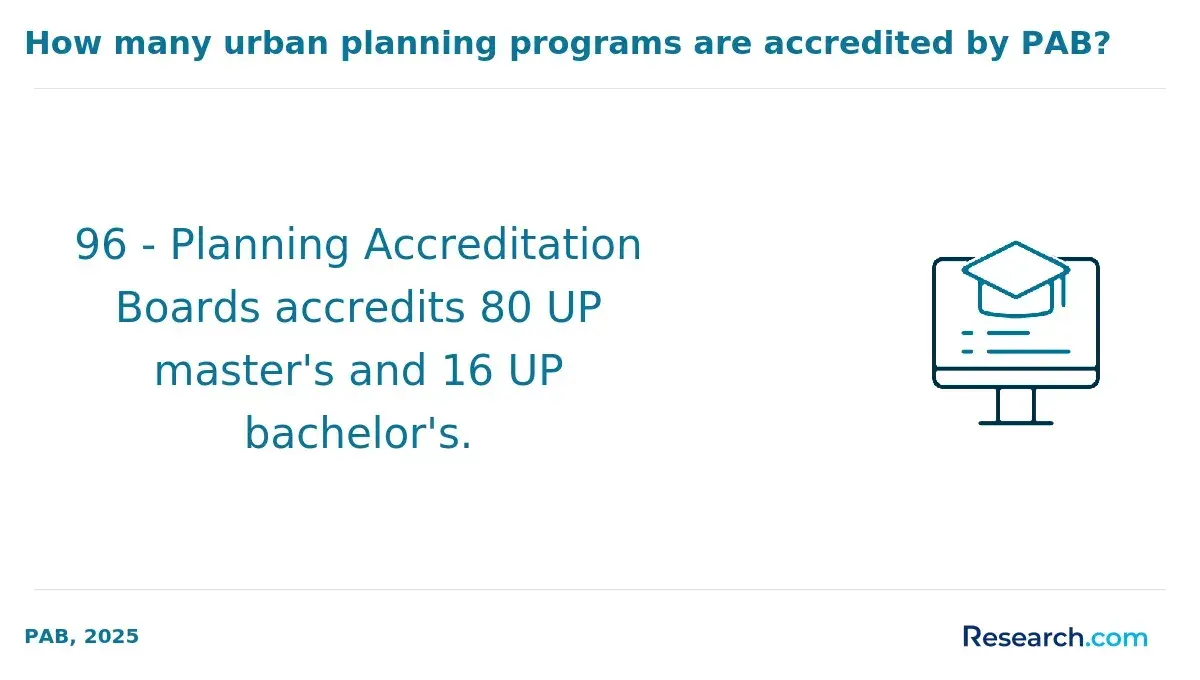
- UNLV and UNR can be useful starting points for related undergraduate study, though Nevada currently does not have a Planning Accreditation Board-accredited urban planning program.
- AICP certification is not a Nevada license, but it can help demonstrate professional planning experience, exam-based competency, and commitment to ethical standards.
- Education requirements for urban planners in Nevada
- Urban planning specializations available in Nevada
- Licensing and certification requirements in Nevada
- How long it takes to become an urban planner in Nevada
- Urban planner salaries in Nevada
- Career options for urban planners in Nevada
- Typical responsibilities of Nevada urban planners
- How business strategy can strengthen a planning career
- How public health and nutrition connect with urban planning
- Whether a graduate business degree can support planning work
- How forensic-style analysis can inform planning decisions
- How technology is changing urban planning in Nevada
- How interdisciplinary expertise improves planning outcomes
- How Nevada’s climate affects planning strategy
- Continuing education options for Nevada planners
- How financial management supports planning projects
- How legal and regulatory knowledge shapes planning work
- How social work knowledge can improve community planning
- Scholarships for future urban planners in Nevada
- Internships and practical experience in Nevada
- Professional organizations for Nevada urban planners Key insights
What are the education requirements for urban planners in Nevada?
Most Nevada urban planning careers begin with a degree that builds skills in land use, policy analysis, data interpretation, design, environmental systems, transportation, or community development. Employers may consider candidates from several academic backgrounds, but applicants are more competitive when they can show direct planning coursework, GIS experience, writing ability, and practical exposure to public processes.
| Education or experience step | Why it matters in Nevada | What to look for |
| Bachelor’s degree | Provides the entry-level foundation for planning assistant, analyst, zoning, transportation, or community development roles. | Relevant majors may include architecture, environmental science, geography, engineering, public policy, or related fields at institutions such as UNLV and UNR. Students who need flexibility may also compare affordable online urban planning bachelor’s degrees. |
| Internships or fieldwork | Helps students understand zoning hearings, public engagement, permitting, data collection, and local government workflows. | Prioritize placements with city or county planning departments, transportation agencies, consulting firms, housing organizations, or environmental offices. |
| Master’s degree | Often improves access to professional planner, senior analyst, project manager, and specialized planning roles. | Nevada currently does not have a Planning Accreditation Board-accredited urban planning program, so students seeking a PAB-accredited option may need to review programs in California, Oregon, Arizona, Utah, or online formats where available. |
| Technical skill development | Planning work increasingly depends on spatial analysis, demographic research, environmental review, and public presentation. | Build skills in GIS, data visualization, policy writing, environmental analysis, transportation modeling, budgeting, and community meeting facilitation. |
A bachelor’s degree may be enough for some entry-level positions, especially if the candidate has strong internship experience. However, a master’s degree in urban or regional planning can be valuable for people who want to move into advanced public-sector planning, consulting, transportation planning, environmental planning, or leadership roles.
Students should also review accreditation carefully. A program can be legitimate and regionally accredited without being accredited specifically by the Planning Accreditation Board. The distinction matters because PAB-accredited planning programs may align more directly with professional planning standards and can affect how some employers evaluate academic preparation.
This chart shows the educational attainment distribution of urban planners across the country.
What urban planning specializations are available in Nevada?
Nevada’s geography, water limitations, tourism economy, fast-growing metro areas, rural communities, and federally managed land create demand for several planning specializations. Choosing a specialization can help students decide which courses, internships, certifications, and technical skills to prioritize.
| Specialization | What the work involves | Best fit for students interested in |
| Environmental planning | Reviews how development affects natural resources, conservation goals, land management, permitting, and long-term sustainability. | Environmental impact analysis, public land issues, conservation, water-sensitive development, and related study such as cost-effective forestry degree programs. |
| Housing and community development | Focuses on affordable housing, neighborhood revitalization, equitable growth, redevelopment, and community services. | Housing policy, public engagement, neighborhood planning, land-use regulation, and nonprofit or local government work. |
| Economic development planning | Supports job creation, business districts, infrastructure investment, redevelopment, and strategies that strengthen local economies. | Public-private partnerships, site planning, workforce development, fiscal analysis, and diversification beyond tourism and gaming. |
| Transportation planning | Examines traffic flow, transit access, roadway design, pedestrian and bicycle safety, freight movement, and long-range mobility needs. | Infrastructure, GIS, travel demand analysis, community mobility, and coordination with agencies such as NDOT. |
| Disaster and resilience planning | Prepares communities for wildfire, flooding, drought, extreme heat, and recovery planning. | Climate adaptation, hazard mitigation, emergency preparedness, infrastructure resilience, and interagency coordination. |
Specialization should not be chosen only by salary potential. A better approach is to compare the kind of problems you want to solve, the agencies or firms you want to work for, and the technical skills you are willing to build. For example, environmental planning may require comfort with regulation and scientific data, while community development may require stronger skills in public meetings, grant writing, and stakeholder negotiation.
Students who are undecided can start broadly. A planning internship, GIS course, public policy class, or community engagement project can reveal whether they prefer technical analysis, design review, policy writing, transportation systems, environmental compliance, or neighborhood-level work.
Are there licensing requirements for urban planners in Nevada?
Nevada does not currently require a state license or state registration specifically for urban planners. This means there is no Nevada planning board exam or state-issued urban planner license comparable to licensure in fields such as architecture, engineering, or social work.
Instead, the most recognized professional credential is certification through the American Institute of Certified Planners. AICP certification is national rather than state-based. To earn it, candidates register with AICP, pass the AICP exam, and document qualifying professional planning experience. Certified planners must also maintain the credential by completing 32 certification maintenance credits.
| Credential | Required in Nevada? | When it may be useful |
| AICP certification | No, but it is widely recognized in the profession. | Helpful for experienced planners seeking senior roles, credibility with employers, and evidence of professional planning knowledge. |
| Certified Economic Developer | No. | Useful for planners focused on business attraction, redevelopment, job creation, and economic strategy. |
| LEED Accredited Professional | No. | Relevant for planners working with sustainable development, green building, site planning, and environmentally responsible design. |
| Professional Transportation Planner | No. | Appropriate for planners specializing in transportation systems, mobility, infrastructure, and long-range travel planning. |
Students should not treat certification as a substitute for experience. Nevada employers still look for practical skills: preparing staff reports, analyzing zoning codes, using GIS, communicating with residents, interpreting demographic data, and understanding how local planning commissions and city councils make decisions.
For planners interested in sustainability, environmental review, or land conservation, additional study through online environmental science degrees with low tuition may strengthen technical knowledge, especially when paired with planning experience.
How long does it take to become an urban planner in Nevada?
The typical path to becoming an urban planner in Nevada takes six to eight years for candidates who complete a bachelor’s degree, pursue graduate study, and build qualifying work experience. Some people enter planning sooner through entry-level roles after a bachelor’s degree, while others take longer if they study part time or change careers from another field.
| Stage | Typical time | What to accomplish |
| Bachelor’s degree | Four years | Complete foundational study in planning-related areas such as geography, architecture, engineering, environmental science, public policy, or a similar field. |
| Internship or field experience | During school or shortly after graduation | Gain exposure to planning departments, transportation agencies, consulting firms, public meetings, zoning review, or research projects. |
| Master’s degree | Generally two years | Develop advanced planning knowledge and build a portfolio of applied projects, research, GIS work, or policy analysis. |
| Professional experience | At least three years for some bachelor’s-level candidates; two years for many master’s-level candidates | Accumulate the planning experience needed for stronger advancement and potential AICP eligibility. |
| AICP exam preparation | A few weeks or months | Review planning history, ethics, law, methods, public participation, plan implementation, and specialty topics before sitting for the exam. |
If your goal is to work as quickly as possible, look for planning technician, planning assistant, GIS technician, community development assistant, zoning assistant, or transportation analyst roles after your bachelor’s degree. If your goal is faster advancement into professional planner or project leadership roles, a master’s degree may be worth considering.
How much do urban planners in Nevada earn?
Urban planner salaries in Nevada vary by location, employer, experience, specialization, and education. Public agencies may offer stability and benefits, while consulting firms may offer project variety and advancement tied to technical expertise or business development. According to the figures cited in this article, Nevada’s average annual wage for urban planners is $98,470, while the national average is $85,940.
| Salary measure | Annual wage |
| 10th percentile | $59,350 |
| 25th percentile | $73,990 |
| 50th percentile | $96,850 |
| 75th percentile | $114,330 |
| 90th percentile | $138,200 |
| Nevada average | $98,470 |
| National average | $85,940 |
Location can also affect earnings. Urban planners in Las Vegas, Henderson, and Paradise, NV, earn $95,220 annually, while planners in Reno earn an average annual wage of $108,960.
Specialization may influence compensation, but no salary outcome is guaranteed. Environmental planning, transportation planning, project management, regulatory compliance, GIS, and development review experience can improve competitiveness, especially when combined with strong writing and public communication skills.
This chart identifies the highest-paying states for urban planners and shows Nevada among the top five.
What careers are available to urban planners in Nevada?
Urban planning careers in Nevada exist across government agencies, consulting firms, nonprofit organizations, transportation agencies, environmental groups, real estate development teams, and community development organizations. The right setting depends on whether you prefer public service, technical analysis, design review, policy work, advocacy, or private-sector project delivery.
| Career setting | Common employers or examples | Typical work |
| Local and state government | City planning departments, county agencies, and the Nevada Department of Transportation | Comprehensive plans, zoning administration, land-use review, public hearings, transportation planning, capital projects, and community engagement. |
| Private consulting | Firms such as Kimley-Horn and AECOM | Environmental assessments, transportation studies, development proposals, GIS analysis, stakeholder outreach, and project documentation. |
| Nonprofit and advocacy organizations | Groups focused on conservation, housing, equity, neighborhood revitalization, or sustainability, including organizations such as the Nevada Conservation League | Policy advocacy, community participation, grant-supported projects, research, education, and equitable development initiatives. |
| Real estate and development | Developers, land-use teams, redevelopment organizations, and planning consultants | Site feasibility, entitlement support, zoning strategy, mixed-use planning, infrastructure coordination, and public approval processes. |
| Environmental and resilience planning | Public agencies, environmental firms, utilities, and resilience-focused organizations | Climate adaptation, drought planning, hazard mitigation, environmental review, conservation coordination, and sustainable infrastructure planning. |
Entry-level titles may include planning assistant, assistant planner, zoning technician, GIS technician, community development specialist, transportation planning analyst, or environmental planning assistant. With experience, planners may advance to associate planner, senior planner, principal planner, planning manager, project manager, community development director, transportation planning manager, or planning consultant.
Urban planning is not the same as skilled trade work, but students comparing career paths may find it helpful to evaluate pay, training time, and employment stability across sectors, including trade school jobs with high salary ranges.
What are the typical responsibilities of urban planners in Nevada?
Urban planners in Nevada help communities make decisions about how land, infrastructure, transportation, housing, public space, and environmental resources should be used. Their work often combines technical review with public communication, because planning decisions affect residents, businesses, property owners, developers, elected officials, and future growth patterns.
- Review land-use proposals, zoning applications, development plans, and code compliance issues.
- Analyze demographic, economic, transportation, housing, and environmental data to support planning recommendations.
- Prepare staff reports, maps, presentations, public notices, and recommendations for planning commissions or city councils.
- Coordinate with engineers, architects, transportation officials, environmental specialists, developers, attorneys, and community groups.
- Lead or support public meetings, workshops, open houses, and stakeholder interviews.
- Create or update comprehensive plans, corridor plans, housing strategies, redevelopment plans, and transportation plans.
- Evaluate project impacts related to mobility, infrastructure capacity, environmental conditions, public services, and neighborhood character.
- Help communities plan for drought, heat, wildfire risk, flooding, and other resilience concerns.
- Monitor project implementation and ensure adopted plans align with regulations and community priorities.
The job requires both analytical and interpersonal skills. A planner may spend one day reviewing maps and ordinances, the next facilitating a public meeting, and the next coordinating with engineers or elected officials on a major infrastructure or development proposal.
How can integrating business strategies boost urban planning careers in Nevada?
Business knowledge can make an urban planner more effective when projects involve budgets, funding sources, public-private partnerships, redevelopment proposals, feasibility studies, or economic development goals. In Nevada, where planning projects may involve tourism corridors, mixed-use development, transportation investment, and infrastructure expansion, planners who understand finance and strategy can communicate more clearly with developers, public officials, and community partners.
Urban planners do not need a business degree for every role. However, courses in budgeting, project management, real estate finance, public administration, or economic analysis can be useful for planners who want leadership responsibilities. Students comparing options can review the best business schools in Nevada to understand how business training may support planning-related decision-making.
How Can Integrating Public Health and Nutritional Science Enhance Urban Planning in Nevada?
Urban planning affects public health because the built environment influences transportation choices, food access, parks, heat exposure, housing quality, and access to services. In Nevada communities, planners may help shape neighborhoods where residents can walk safely, reach grocery stores, access recreation, and connect with healthcare or social services.
Public health and nutrition knowledge can be especially useful for planners working on healthy community design, food deserts, active transportation, school-area planning, and equitable access to public facilities. Professionals interested in the health side of community planning may find additional context by reviewing how to become a nutritionist in Nevada.
Could a Graduate Business Degree Complement My Urban Planning Career in Nevada?
A graduate business degree may complement an urban planning career when your goals include project leadership, redevelopment finance, consulting management, infrastructure funding, real estate strategy, or executive-level public administration. It is less necessary for planners who want to remain focused on zoning review, long-range planning, GIS, or community engagement.
Before enrolling, compare the cost, time commitment, employer expectations, and your intended career path. If you are considering a flexible graduate business option while working in planning, start by asking whether is an online MBA worth it for your specific goals rather than assuming it will automatically increase your salary or promotion prospects.
Could Lessons from Forensic Science Benefit Urban Planning in Nevada?
Forensic science and urban planning are different professions, but both rely on careful evidence gathering, documentation, pattern recognition, and defensible conclusions. Those habits can help planners evaluate infrastructure risks, land-use conflicts, environmental constraints, and development impacts with more rigor.
For example, a planner reviewing a hazard-prone site must be able to examine records, identify inconsistencies, document findings, and explain recommendations clearly. Students interested in evidence-based investigation as a separate career path can compare that work with a forensic science degree in Nevada.
How can emerging technologies optimize urban planning outcomes in Nevada?
Technology is changing how planners collect data, evaluate scenarios, and communicate with the public. Geographic information systems, data dashboards, remote sensing, visualization tools, and smart city platforms can help Nevada planners map growth, evaluate infrastructure needs, model transportation patterns, and present alternatives to residents and decision-makers.
Technology does not replace planning judgment. It improves the quality of analysis when planners understand the data source, assumptions, limitations, and community context. Planners who want to move into leadership or consulting may also benefit from business analytics and strategy training, including options related to the best business master's degrees.
How can interdisciplinary expertise enhance urban planning in Nevada?
Urban planning is inherently interdisciplinary. A single project may require knowledge of transportation, housing, economics, environmental science, communication, public health, engineering, law, and social services. Nevada planners who can work across disciplines are often better prepared to solve problems that do not fit neatly into one department.
Communication skills are especially important because public meetings, stakeholder interviews, and community workshops can determine whether a plan earns trust. Professionals from fields that emphasize evidence-based assessment and communication, such as those described in speech pathologist requirements in Nevada, can offer useful lessons in listening, accessibility, and public-facing communication.
How does Nevada’s climate and environment shape urban planning strategies?
Nevada’s arid climate, extreme temperatures, and limited water resources make environmental planning central to long-term growth. Planners must consider water conservation, heat exposure, drought resilience, energy-efficient design, open-space protection, and infrastructure durability when reviewing projects or writing long-range plans.
Climate-aware planning also requires financial discipline and regulatory coordination. Planners may work with utilities, engineers, budget officers, environmental agencies, and legal teams to determine whether a proposal is feasible and compliant. While accounting is a separate profession, understanding the logic behind budgets and resource tracking can help planners collaborate more effectively with finance professionals; students considering that route can review how to become an accountant in Nevada.
What continuing education opportunities are available for urban planners in Nevada?
Continuing education helps Nevada planners keep up with changing regulations, new technology, public engagement practices, housing policy, environmental review, transportation methods, and certification requirements. AICP-certified planners must complete 32 certification maintenance credits, but even non-certified planners benefit from ongoing training.
- APA workshops, conferences, webinars, and ethics training.
- GIS and data analysis certificates or short courses.
- Transportation planning, resilience, housing, or environmental review workshops.
- Public administration, budgeting, and project management courses.
- Community engagement and equity-focused training.
- Interdisciplinary learning in areas such as social services, including topics connected to social worker education requirements in Nevada.
How Can Financial Management Expertise Enhance Urban Planning Outcomes in Nevada?
Planning ideas must eventually become fundable projects. Financial management skills help planners evaluate costs, compare alternatives, track budgets, support grant applications, and explain trade-offs to public officials and residents. This is especially important for infrastructure, housing, transportation, and redevelopment projects.
Urban planners do not need to become accountants, but they should understand cost estimates, revenue constraints, capital improvement planning, and long-term maintenance obligations. Students who want deeper finance preparation can explore programs through the best accounting schools in Nevada.
How Do Legal and Regulatory Frameworks Influence Urban Planning in Nevada?
Urban planning decisions are shaped by zoning ordinances, comprehensive plans, development codes, environmental regulations, public hearing rules, property rights, and state and federal requirements. A technically strong plan can fail if it ignores legal process or procedural fairness.
Planners often work with attorneys, paralegals, clerks, engineers, and agency staff to prepare legally defensible documents and public records. Understanding how legal support roles operate can help planners communicate more effectively with regulatory teams; one related career path is outlined in how to become a paralegal in Nevada.
How Can Social Work Expertise Complement Urban Planning in Nevada?
Social work and urban planning overlap when communities face housing instability, neighborhood disinvestment, access barriers, poverty, aging populations, disability access, or public service gaps. Planners who understand community needs beyond the physical layout of streets and buildings can design more responsive plans.
Social work principles can strengthen public participation, needs assessment, equity analysis, and coordination with service providers. Students deciding between community development, planning, and human services may want to compare planning roles with social worker degree requirements in Nevada.
Are there available scholarships for urban planners in Nevada?
Future urban planners in Nevada should search for scholarships from universities, planning associations, design organizations, foundations, and public-service programs. Funding can be especially important for students who plan to pursue graduate study out of state because Nevada currently does not have a PAB-accredited urban planning program.
| Scholarship or aid option | Amount or benefit stated | Who should review it |
| SmithGroup J.E.D.I. Scholarship | $6,000 and a paid summer internship at SmithGroup offices nationwide | Students committed to diversity and inclusion in design-related fields. |
| APA Foundation Diversity Scholarship | Up to $5,000 for each scholar | Students from minority backgrounds pursuing planning education. |
| University scholarships | Varies by institution | Students seeking merit-based, need-based, or major-specific support. |
When comparing financial aid, look beyond the award amount. Ask whether the scholarship is renewable, whether it requires full-time enrollment, whether it is limited to accredited programs, whether it includes an internship, and whether it can be combined with assistantships or other aid.
What urban planning internships or practical experiences can I pursue in Nevada?
Internships are one of the most important steps for aspiring urban planners in Nevada because they translate classroom learning into public-facing, technical, and regulatory experience. A strong internship can also help you decide whether you prefer transportation, environmental review, zoning, housing, community development, or consulting.
- Nevada Department of Transportation: NDOT-related experience can expose students to transportation planning, infrastructure development, data analysis, corridor studies, public outreach, and mobility challenges.
- Nevada State Historic Preservation Office: SHPO internships may involve research, documentation, preservation planning, cultural resource protection, and the connection between historic assets and land-use decisions.
- City and county planning departments: Local government internships can involve zoning review, public meeting preparation, permit research, staff reports, mapping, and community outreach.
- Private planning and engineering firms: Consulting internships may include land development review, environmental analysis, GIS work, economic research, and client-facing project support.
- Environmental agencies and organizations: These experiences can be useful for students interested in sustainability, conservation, energy projects, drought planning, or environmental jobs in demand.
Nevada is often discussed as a strong state for infrastructure, which can create opportunities for students interested in transportation, development, and public works. At the same time, environmental concerns related to growth and energy projects mean that planners must be prepared to weigh infrastructure needs against conservation, water use, and community impact.
How to make an internship count
- Ask for at least one writing-heavy assignment, such as a staff report, memo, public notice, or plan summary.
- Build a portfolio with maps, reports, presentations, outreach materials, and project summaries when permitted.
- Attend public meetings to understand how planning decisions are debated and approved.
- Request exposure to zoning codes, comprehensive plans, capital improvement plans, and environmental documents.
- Keep a record of duties and hours if you may later pursue AICP certification.
What professional organizations in Nevada should I join to advance my career as an urban planner?
Professional organizations can help Nevada planning students and early-career planners find mentors, learn about job openings, attend training, understand local issues, and build credibility. Membership is not required, but it can shorten the learning curve for people who are new to the field or new to Nevada.
| Organization | Why it may help | Best use for students and early-career planners |
| American Planning Association Nevada Chapter | Connects planners with professional development, local planning discussions, networking, and planning resources. | Attend events, look for mentors, learn about AICP, and stay current on Nevada planning issues. |
| Urban Land Institute Nevada | Focuses on land use, real estate development, urban design, and best practices in built-environment projects. | Learn how developers, planners, investors, designers, and public officials approach land-use decisions. |
Students should treat networking as professional learning, not just job searching. Ask experienced planners how they entered the field, what skills they use most, what they wish they had learned earlier, and which local issues are shaping hiring demand.
Common Mistakes to Avoid When Becoming an Urban Planner in Nevada
| Mistake | Why it can hurt your progress | Better approach |
| Assuming Nevada has a state urban planner license | You may waste time searching for a state licensure process that does not exist. | Focus on education, experience, employer requirements, and AICP certification if it fits your career stage. |
| Choosing a program without checking accreditation | A general degree may be useful, but it may not provide the planning-specific preparation some employers prefer. | Confirm regional accreditation and, if seeking a planning master’s program, check whether it is Planning Accreditation Board-accredited. |
| Looking only at tuition | Travel, relocation, online fees, books, lost income, and internship access can affect total cost. | Compare total cost, assistantships, scholarships, transfer policies, internship support, and career outcomes. |
| Skipping internships | Planning is practical and process-driven; classroom knowledge alone may not prepare you for public hearings or development review. | Complete internships, volunteer on planning-related projects, attend public meetings, and build a portfolio. |
| Ignoring GIS and data skills | Many planning roles require mapping, demographic analysis, spatial reasoning, or data visualization. | Take GIS coursework and learn how to explain data clearly to nontechnical audiences. |
| Assuming salary averages are guaranteed | Pay varies by employer, location, experience, specialization, and budget conditions. | Use salary data as a benchmark, then compare job postings, benefits, advancement paths, and cost of living. |
Questions to Ask Before Choosing an Urban Planning Path in Nevada
- Do I want to work in local government, consulting, transportation, environmental planning, housing, or economic development?
- Does my preferred role require a master’s degree, or can I enter with a bachelor’s degree and experience?
- If I pursue graduate school, do I need a PAB-accredited program?
- Can I gain internship experience with a Nevada city, county, state agency, nonprofit, or consulting firm?
- Am I willing to build technical skills in GIS, data analysis, zoning, public engagement, and report writing?
- Would AICP certification help me reach my target role, and when would I become eligible?
- How will I finance my education, and what scholarships, assistantships, or employer benefits are available?
- Which Nevada planning issues interest me most: housing, transportation, water, redevelopment, conservation, public lands, or resilience?
What Urban Planners in Nevada Have to Say About Their Careers
- "Transportation planning gave me a practical way to improve daily life in Nevada. Projects that address congestion around Reno can be technically demanding, but the payoff is clear when residents experience safer, smoother, and more reliable travel." - Darius
- "I chose planning because I wanted public-service work with visible community impact. In Nevada, collaboration between local governments, residents, and planners is essential when dealing with housing demand, population growth, and neighborhood change." - Alexis
- "The most meaningful part of planning for me has been contributing to affordable housing and mixed-use projects. Thoughtful planning can expand access, reduce barriers, and make communities function better for the people who live there." - Harriet
Related Articles for Nearby States
- 2027 How to Become an Urban Planner in California
- 2027 How to Become an Urban Planner in Oregon
- 2027 How to Become an Urban Planner in Idaho
- 2027 How to Become an Urban Planner in Arizona
- 2027 How to Become an Urban Planner in Utah
- 2027 How to Become an Urban Planner in Washington
- 2027 How to Become an Urban Planner in Montana
- 2027 How to Become an Urban Planner in Wyoming
- 2027 How to Become an Urban Planner in Colorado
- 2027 How to Become an Urban Planner in New Mexico
Key Insights
- Nevada does not require a state license for urban planners, so career preparation depends on education, experience, technical ability, and optional national certification.
- A bachelor’s degree can support entry-level planning work, but a master’s degree may improve prospects for professional planner, senior analyst, consulting, and leadership roles.
- Nevada currently does not have a PAB-accredited urban planning program, so students seeking that credential should compare out-of-state or suitable online options carefully.
- AICP certification is the main professional credential for planners, but it is most useful after you have qualifying planning experience and are ready to demonstrate advanced professional competence.
- Urban planners in Nevada earn an average annual wage of $98,470, with salary varying by location, employer, specialization, and experience.
- Strong candidates combine planning knowledge with GIS, policy writing, public engagement, environmental awareness, and the ability to explain trade-offs clearly.
- Internships with transportation agencies, local planning departments, preservation offices, environmental groups, or consulting firms can be decisive for career entry.
- The best planning path depends on your target role: transportation and environmental planners need stronger technical analysis, while housing and community development planners need deeper public engagement and policy skills.
References:
- American Planning Association. One Path to AICP. Retrieved November 15, 2024, from https://www.planning.org/certification
- ONET OnLine. Urban and Regional Planners. Nevada Employment Trends. https://www.onetonline.org/link/localtrends/19-3051.00?st=NV
- Statista. Projected state population of the United States in 2040, by state. https://www.statista.com/statistics/312714/us-projected-state-population-by-state
- U.S. Census Bureau. U.S. population growth slows due to historic decline in net international migration. Retrieved February 2, 2026, from https://www.census.gov/newsroom/press-releases/2026/population-growth-slows.html
- Zippia. Urban planner salary. Retrieved February 2, 2026, from https://www.zippia.com/salaries/urban-planner/
Other Things to Know About Becoming an Urban Planner in Nevada
To become an urban planner in Nevada in 2027, a bachelor's degree in urban planning, geography, civil engineering, or a related field is generally required. A master's degree in urban or regional planning is highly recommended for advanced positions.
Urban planners are increasingly in demand in Nevada, driven by rapid population growth and urban development, particularly in cities like Las Vegas and Reno. According to ONET OnLine, the employment of urban and regional planners in Nevada is projected to grow by 9% from 2024 to 2034. This growth translates to approximately 20 new job openings annually, reflecting the state's need for effective land use, transportation planning, and sustainable development. As Nevada continues to expand, urban planners will play a crucial role in shaping livable, resilient communities.
You can study urban planning at the University of Nevada, Las Vegas, which offers a Bachelor of Science in Urban Studies and a Master of Urban and Regional Planning. These programs provide a comprehensive education in planning principles, community development, and sustainable design.