2027 How to Become an Urban Planner in Missouri

Co-Founder and Chief Data Scientist
Becoming an urban planner in Missouri is not just a question of choosing a degree. It is a career decision that involves education, field experience, technical skills, public engagement, and an understanding of how Missouri communities make land-use, transportation, housing, environmental, and economic development decisions. Urban planners help cities, suburbs, counties, and regional agencies decide how land should be used, where infrastructure should go, how communities should prepare for growth, and how public projects can serve residents more effectively.
This guide is for students, career changers, and early-career professionals who want a practical roadmap for entering urban planning in Missouri. You will learn what degree paths are available, whether Missouri requires licensure, how AICP certification works, how long the process can take, what planners earn, where jobs are found, which specializations fit Missouri’s needs, and how to build experience through internships, professional organizations, and interdisciplinary skills.
Quick Answer: How do you become an urban planner in Missouri?
To become an urban planner in Missouri, you typically need at least a bachelor’s degree in urban planning, urban design, geography, public administration, environmental studies, architecture, or a related field. Missouri does not require a state license for urban planners, but many professionals pursue American Institute of Certified Planners (AICP) certification to improve credibility and career mobility. A common path includes completing a four-year bachelor’s degree, gaining internship or entry-level planning experience, considering a master’s degree for advanced roles, and building technical skills in GIS, zoning, community engagement, policy analysis, and project management.
Key Things to Know About Becoming an Urban Planner in Missouri
- The Bureau of Labor Statistics projects a 3% employment growth rate for urban planners between 2024 and 2034, which points to steady but competitive demand.
- Urban planners in Missouri earn an average annual wage of $76,030, though pay varies by city, employer, specialization, experience, and education level.
- Missouri planners can work on land use, transportation, neighborhood revitalization, environmental sustainability, disaster preparedness, housing, and economic development projects.
- The University of Missouri-Kansas City offers a Planning Accreditation Board-accredited BA in Urban Planning and Design, giving Missouri students an in-state accredited undergraduate option.
- Because Missouri does not have a separate state urban planner license, students should focus on accredited education, practical experience, professional networking, and optional credentials such as AICP.
- Education requirements for urban planners in Missouri
- Urban planning specializations in Missouri
- Licensing and certification requirements
- Timeline to become an urban planner
- Urban planner salary in Missouri
- Career paths for Missouri urban planners
- Common responsibilities in urban planning jobs
- Why business knowledge matters in planning
- How cross-disciplinary skills expand planning opportunities
- Technology trends changing Missouri planning work
- Scholarships and grants for planning students
- Advanced business training for planning professionals
- Internships and hands-on experience in Missouri
- Professional organizations for urban planners
- Using social work practices in community planning Networking through planning organizations
- Interdisciplinary education for planning careers
- Communication skills for planning projects
- State and local regulations in Missouri planning
- Financial management in planning projects
- Legal and compliance challenges for planners
- Mentorship and networking for career growth Legal awareness Financial planning Regulatory review Key insights
What are the education requirements for urban planners in Missouri?
Most urban planning positions in Missouri require a college degree because planners must interpret regulations, evaluate land-use proposals, analyze data, communicate with the public, and prepare policy recommendations. The strongest preparation combines planning theory, design thinking, public policy, GIS, environmental analysis, economics, and hands-on project experience.
Missouri students have one important in-state accredited undergraduate pathway: the University of Missouri-Kansas City offers a BA in Urban Planning and Design program accredited by the Planning Accreditation Board (PAB). PAB accreditation matters because it signals that a planning program meets professional education standards and can support students who later pursue AICP certification or graduate study.
| Education or experience step | Why it matters | Missouri-specific note |
| Bachelor’s degree | Provides entry-level preparation in land use, planning law, design, public policy, and community development. | The University of Missouri-Kansas City offers a PAB-accredited BA in Urban Planning and Design. |
| Internships or applied projects | Helps students learn how planning decisions are made in real agencies, departments, consulting firms, and community organizations. | Local governments, regional agencies, transportation organizations, and planning consultants can provide relevant experience. |
| Master’s degree | Can strengthen competitiveness for advanced planning, policy, management, research, or specialized technical roles. | Missouri does not offer an accredited master’s program in urban planning, so students may look at PAB-accredited programs in nearby states. |
| Professional certification preparation | Supports long-term advancement, especially for planners seeking leadership roles or broader recognition. | AICP certification is voluntary in Missouri but widely respected in the planning profession. |
A bachelor’s degree can be enough for some entry-level planning assistant, zoning, GIS, community development, or analyst roles. However, many planners choose graduate study because employers may prefer advanced training for higher-level policy, transportation, environmental, or regional planning positions. Students who want a planning-adjacent foundation may also consider related fields such as environmental science, public administration, geography, architecture, civil engineering, or economics.
Practical experience is not optional in any meaningful sense. Urban planning is applied work. Classroom knowledge helps, but employers want to see that candidates can review development proposals, interpret maps, support public meetings, write staff reports, work with residents, and understand how politics, budgets, and regulations affect projects.
This chart displays the most common educational attainment of planners in the nation.
What urban planning specializations are available in Missouri?
Urban planning is a broad profession, and Missouri’s mix of major metro areas, suburbs, small towns, agricultural regions, river communities, and transportation corridors creates demand for several planning specialties. The best specialization depends on whether you prefer data analysis, public engagement, environmental work, design, policy, infrastructure, or economic development.
| Specialization | What planners focus on | When this path makes sense |
| Regional planning | Coordinating growth, transportation, infrastructure, land use, and resources across counties, metro areas, or multi-jurisdiction regions. | Choose this if you enjoy big-picture planning, intergovernmental coordination, and long-range policy work. |
| Sustainable development planning | Designing communities that use resources responsibly, protect ecosystems, improve walkability, and reduce environmental strain. | Choose this if your interests include climate resilience, green infrastructure, conservation, energy-efficient design, and environmental policy. |
| Economic development planning | Using planning tools to support business growth, job creation, redevelopment, infrastructure investment, and local economic vitality. | Choose this if you want to connect land use, public investment, workforce needs, and private development strategy. |
| Disaster and emergency planning | Preparing communities for floods, tornadoes, infrastructure disruption, and other hazards through resilient land-use and infrastructure decisions. | Choose this if you are drawn to risk management, emergency preparedness, hazard mitigation, and public safety. |
| Transportation planning | Improving mobility through roads, transit, pedestrian networks, bicycle infrastructure, freight movement, and congestion analysis. | Choose this if you like data, modeling, public infrastructure, and the relationship between mobility and land use. |
| Community development planning | Working on housing, neighborhood revitalization, public participation, equity, historic preservation, and local quality-of-life initiatives. | Choose this if you want resident-facing work and projects that directly affect neighborhoods. |
Students should not choose a specialization only because it sounds impressive. A better approach is to compare the daily work. Transportation and GIS-heavy roles may involve more technical analysis, while community development roles often require more public engagement and facilitation. Environmental and disaster planning can involve regulations, risk assessment, and coordination with engineers or environmental consultants. Economic development planning often requires comfort with budgets, incentives, market conditions, and public-private partnerships.
Are there licensing requirements for urban planners in Missouri?
Missouri does not require urban planners to hold a state license. There is no separate Missouri urban planning licensure exam or state registration process for general planning practice. Instead, professional credibility usually comes from education, work experience, a strong portfolio of planning projects, employer references, and voluntary certification.
The most recognized voluntary credential is certification through the American Institute of Certified Planners (AICP). AICP certification is not required for every job, but it can help planners demonstrate professional knowledge, ethical commitment, and readiness for more advanced responsibilities.
How AICP certification generally works
- Confirm eligibility based on education and professional planning experience.
- Register with AICP through the American Planning Association.
- Prepare for and pass the AICP examination.
- Submit documentation showing academic credentials and qualifying planning experience.
- Maintain the credential through the Certification Maintenance program.
Students who are still exploring related academic options may find that planning-adjacent degrees can build useful environmental and policy knowledge. For example, affordable online environmental science bachelor’s programs can provide background in sustainability, ecosystems, and environmental regulation that may support planning work.
Other credentials that may help Missouri planners
- Certified Environmental Planner (CEP): Useful for planners who evaluate environmental impacts, land conservation, resource protection, and sustainability issues.
- Leadership in Energy and Environmental Design (LEED): Helpful for planners involved in sustainable development, green buildings, energy efficiency, and site design.
- Certified Floodplain Manager (CFM): Relevant for professionals working with flood-prone areas, hazard mitigation, resilient land use, and floodplain management.
The right credential depends on your intended role. A city planner may benefit most from AICP, while an environmental planner may value CEP or LEED. A planner working in flood-prone communities may find CFM especially practical. Before investing in any credential, compare eligibility rules, exam requirements, renewal obligations, employer demand, and whether the credential appears in job postings you want.
How long does it take to become an urban planner in Missouri?
A common path to becoming an urban planner in Missouri takes six to eight years, especially for candidates who complete both undergraduate and graduate education before pursuing certification. However, the timeline can be shorter for entry-level roles if you begin working after a bachelor’s degree, and longer if you study part time, change majors, or build experience gradually.
| Stage | Typical time involved | What you should accomplish |
| Bachelor’s degree | Four years | Build core knowledge in planning, land use, policy, GIS, urban design, statistics, and community development. |
| Master’s degree | Two years | Develop advanced specialization, research ability, leadership preparation, and stronger professional networks. |
| Internships and professional experience | Three months to three years | Gain applied experience through government agencies, planning firms, transportation organizations, nonprofits, or regional councils. |
| AICP preparation | A few weeks or months | Review exam content, gather eligibility documentation, and prepare for credential requirements. |
For AICP eligibility, candidates with a bachelor’s degree must complete three years of professional planning experience, while those with a master’s degree need two years of professional planning experience. This difference is one reason some students pursue graduate education even when it is not strictly required for every planning job.
Fastest realistic path
The fastest practical route is to complete a bachelor’s degree, use internships to build experience before graduation, apply for entry-level planning roles, and continue working toward AICP eligibility while employed. This path can work well for students who want to enter the workforce sooner and are comfortable building advanced expertise on the job.
More competitive path
A more competitive route is to complete a bachelor’s degree, pursue a master’s degree in urban planning or a closely related field, complete internships or assistantships, and then seek roles that require stronger analytical, policy, or specialization skills. This path usually takes longer but can improve access to advanced planning positions.
How much do urban planners in Missouri earn?
Urban planner pay in Missouri depends on education, experience, employer type, location, specialization, and job responsibilities. Public-sector planning roles may offer stability and benefits, while consulting or specialized technical roles can vary more widely based on project demand and firm size.
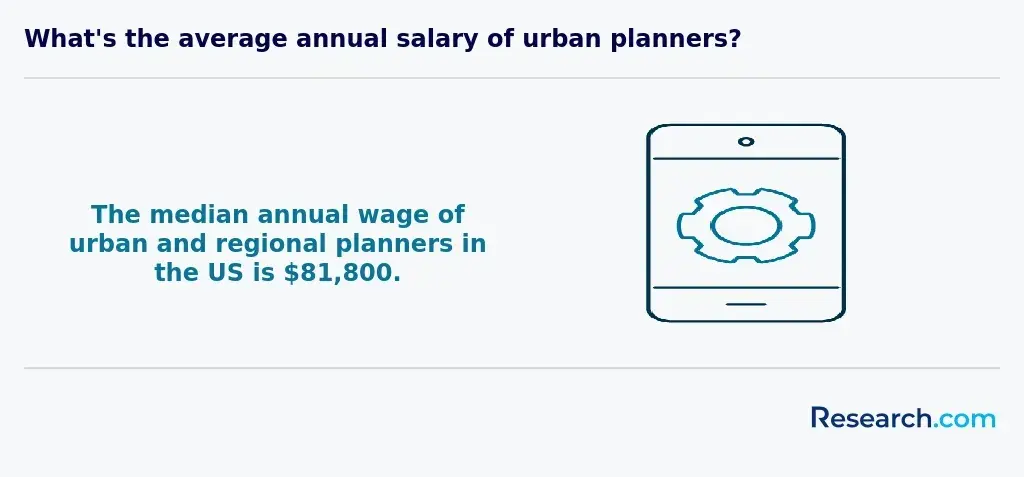
The average annual wage for urban planners in Missouri is $76,030. Entry-level planners may begin near $45,000 to $50,000, mid-career planners often earn about $60,000 to $79,000, and seasoned professionals can earn as much as $82,000 or higher. In the Kansas City metropolitan region, mean total compensation can reach approximately $84,660. In Fayetteville, Springdale, and Rogers, wages can be as low as $51,890 annually.
| Career stage or location | Reported wage information | How to interpret it |
| Missouri average | $76,030 | A useful statewide benchmark, but not a guarantee for any individual job offer. |
| Entry-level urban planners | Near $45,000 to $50,000 | Typical for new professionals building experience, portfolios, and technical skills. |
| Mid-career professionals | About $60,000 to $79,000 | Often reflects several years of experience, stronger project responsibility, or specialization. |
| Seasoned professionals | As much as $82,000 or higher | More likely for planners with leadership duties, advanced credentials, or specialized expertise. |
| Kansas City metropolitan region | Approximately $84,660 | Major metro areas may offer higher compensation because of larger agencies, more complex projects, and stronger demand. |
| Fayetteville, Springdale, and Rogers | As low as $51,890 annually | Regional wage differences can be substantial, so candidates should compare local costs and job responsibilities. |
Urban planning also overlaps with sustainability, environmental policy, conservation, and infrastructure work. If your long-term goal is to work on climate resilience, natural resource protection, or sustainability planning, reviewing related environmental sustainability careers can help you compare adjacent job options.
What careers are available to urban planners in Missouri?
Urban planning graduates in Missouri can work for city governments, county agencies, regional councils, transportation departments, consulting firms, nonprofit organizations, environmental agencies, real estate development teams, and community development organizations. Job titles vary widely, so candidates should search beyond “urban planner” when looking for opportunities.
| Career option | Main focus | Common employers or settings |
| City planner | Land-use planning, zoning review, comprehensive plans, public meetings, redevelopment, and neighborhood policy. | Municipal governments in areas such as St. Louis, Kansas City, and other Missouri cities. |
| Transportation planner | Traffic patterns, transit access, mobility, congestion, pedestrian and bicycle planning, and infrastructure coordination. | Missouri Department of Transportation (MoDOT), regional agencies, consulting firms, and local governments. |
| Environmental planner | Environmental review, sustainability, conservation, resource protection, and development impacts. | Missouri Department of Natural Resources, local agencies, environmental consulting firms, and regional organizations. |
| Urban design consultant | Public space design, site planning, streetscape improvement, design guidelines, and community aesthetics. | Private planning firms, architecture firms, landscape design teams, and nonprofits. |
| Community development planner | Housing, neighborhood revitalization, community engagement, equity, public investment, and local quality of life. | City departments, nonprofit organizations, community development corporations, and regional agencies. |
| GIS or planning analyst | Spatial data, mapping, demographic analysis, land-use trends, dashboards, and technical reporting. | Government agencies, utilities, planning firms, transportation organizations, and research groups. |
Some professionals strengthen their planning profile with practical technical skills from adjacent fields. For example, construction, surveying, drafting, environmental technology, transportation operations, and infrastructure-related experience can be useful in planning roles. Students comparing hands-on career options can review the highest paying trade school jobs to understand which practical skills may complement planning work.
What are the typical responsibilities of urban planners in Missouri?
Urban planners rarely do just one type of task. A planner may analyze GIS data in the morning, write a staff report in the afternoon, and attend a public meeting in the evening. The role blends research, policy, design, facilitation, regulation, and project coordination.
- Analyze population trends, land-use patterns, transportation needs, housing demand, environmental impacts, and development conditions.
- Prepare comprehensive plans, neighborhood plans, corridor studies, zoning updates, and land-use recommendations.
- Review development applications for consistency with zoning rules, local plans, environmental standards, and public infrastructure capacity.
- Coordinate with engineers, architects, developers, environmental consultants, elected officials, community groups, and residents.
- Lead or support public engagement through hearings, workshops, surveys, open houses, and stakeholder meetings.
- Use Geographic Information Systems (GIS) to map land uses, analyze spatial relationships, and communicate planning findings.
- Evaluate transportation, housing, sustainability, economic development, and public facility issues.
- Monitor whether adopted plans are working and recommend updates when conditions change.
- Translate technical information into clear reports, presentations, and recommendations for decision-makers and the public.
Missouri planning work can involve both fast-growing suburban areas and communities dealing with disinvestment, infrastructure needs, environmental constraints, or redevelopment pressure. That variety makes adaptability important. Successful planners must understand data, but they also need patience, listening skills, and the ability to work with residents who may disagree about what their community should become.
This chart reveals the top skills demonstrated by urban planners.
How can business acumen enhance my urban planning career in Missouri?
Business knowledge helps urban planners move from ideas to implementable projects. Plans often fail not because the vision is weak, but because the funding strategy, cost assumptions, stakeholder incentives, or implementation structure is unclear. Planners who understand budgets, public-private partnerships, grants, capital planning, market feasibility, and economic development are better prepared to recommend projects that can actually be built and maintained.
This is especially valuable in Missouri communities balancing growth, infrastructure costs, redevelopment needs, and limited public resources. Business training can help planners evaluate whether a project is financially realistic, how public investment may influence private development, and how to communicate economic trade-offs to elected officials and residents. Professionals who want formal business preparation can explore programs from the best business schools in Missouri.
How can cross-disciplinary skills enhance my urban planning opportunities in Missouri?
Urban planning sits at the intersection of public health, housing, transportation, environmental science, economics, architecture, law, and social services. Cross-disciplinary skills help planners see how decisions affect residents’ daily lives. For example, a land-use decision may influence access to healthy food, commute time, stormwater runoff, school access, neighborhood safety, or economic opportunity.
Public health and nutrition knowledge can be useful when planning for food access, walkable neighborhoods, community gardens, and healthier built environments. Students interested in this connection can compare planning with guidance on how to become a nutritionist in Missouri to understand how community health expertise may support more complete planning strategies.
How are emerging technologies shaping urban planning practices in Missouri?
Technology is changing how planners collect evidence, test scenarios, communicate with the public, and monitor outcomes. GIS remains central, but planners increasingly work with interactive maps, online engagement platforms, real-time transportation data, remote sensing, dashboards, digital permitting systems, and scenario modeling tools. These tools do not replace planning judgment; they make it easier to compare options, explain trade-offs, and update decisions as conditions change.
AI and automation may also affect routine research, document review, data cleaning, and public-comment analysis. However, the human parts of planning remain critical: ethical judgment, public trust, equity considerations, legal interpretation, negotiation, and local context. Planners who combine technical fluency with management ability will be better positioned to lead complex projects. One possible way to strengthen that leadership skill set is to consider options such as the fastest online MBA, especially for professionals moving toward project management or executive roles.
Are there available scholarships for urban planners in Missouri?
Students preparing for urban planning careers should look for funding from universities, state aid programs, planning departments, professional associations, and related fields such as architecture, environmental studies, geography, public administration, and engineering. Scholarship availability can change, so always verify deadlines, eligibility, enrollment requirements, and renewal rules directly with the awarding organization.
- The Steve and Marianne Noll Scholarship: This award supports full-time undergraduate students in the Department of Architecture, Urban Planning + Design at the University of Missouri. Students in good academic standing who demonstrate financial need may receive up to $1,000.
- Access Missouri Grant Program: This need-based grant helps eligible Missouri students cover college costs. Award amounts vary depending on financial need and program rules.
- Bright Flight Scholarship Program: This merit-based program supports high-achieving Missouri students. It is not limited to urban planning majors, but planning students may qualify if they meet the academic criteria. Applicants must be within the top 3% or included in the top fourth or fifth percentiles of all students taking the SAT/ACT.
How to reduce the cost of becoming an urban planner
- Start with an in-state public institution when it offers the coursework and accreditation you need.
- Ask whether planning studios, internships, or assistantships provide paid experience or tuition support.
- Compare total program cost, not just tuition; include fees, commuting, technology, books, housing, and unpaid internship time.
- Look for scholarships through architecture, public policy, environmental science, geography, engineering, and community development departments.
- Consider whether related academic routes, such as accessible engineering degree options, may provide transferable infrastructure, design, or technical skills.
How can advanced business training elevate my urban planning practice in Missouri?
Advanced business training can be useful for planners who want to manage departments, lead consulting teams, direct redevelopment projects, or negotiate public-private partnerships. Planning leaders often need to evaluate budgets, justify capital investments, manage contracts, assess risk, and communicate financial trade-offs to elected officials and the public.
An affordable executive MBA may be worth considering for experienced planners moving into leadership, economic development, real estate, infrastructure finance, or organizational management. It is less likely to be necessary for a new planner who still needs core technical experience. The decision should depend on career stage, employer expectations, cost, schedule, and whether business training will directly support your next role.
What urban planning internships or practical experiences can I pursue in Missouri?
Internships are one of the most important steps for aspiring urban planners in Missouri. They help students build a portfolio, learn agency workflows, understand public meetings, practice GIS and research skills, and make professional contacts before graduation. A strong internship can also clarify which planning specialization fits your strengths.
- Missouri Department of Transportation (MoDOT): Interns may support transportation planning, infrastructure analysis, data work, public outreach, and project coordination. This is a strong option for students interested in transportation, mobility, infrastructure, and regional connectivity.
- Mid-America Regional Council (MARC): MARC serves the Kansas City area and works on regional planning, transportation, sustainability, land use, and public engagement. Internships can expose students to multi-jurisdiction planning and regional policy issues.
- Kansas City Streetcar Authority (KCSA): Students interested in transit-oriented development, urban mobility, downtown planning, public transportation, and infrastructure operations may find practical experience through streetcar-related planning and analysis work.
What to look for in a planning internship
| Internship feature | Why it matters |
| Real project involvement | Look for roles where you contribute to plans, reports, maps, engagement materials, or analysis rather than only administrative tasks. |
| Exposure to public process | Public meetings, hearings, workshops, and stakeholder interviews teach skills that classrooms cannot fully replicate. |
| GIS or data responsibilities | Mapping and data analysis skills are valuable across many planning roles. |
| Mentorship | A supervisor who reviews your work and explains planning decisions can accelerate your learning. |
| Portfolio-ready deliverables | Reports, maps, presentations, and project summaries can help you compete for entry-level roles. |
Students comparing degree affordability and career payoff may also want to review the best value colleges in the US when weighing school options.

What professional organizations in Missouri should I join to advance my career as an urban planner?
Professional organizations help planning students and early-career professionals learn the field faster. They provide networking, job postings, policy updates, continuing education, conferences, mentorship, and exposure to real planning debates. Joining is useful, but active participation matters more than simply paying dues.
- American Planning Association (APA) Missouri Chapter: The state chapter supports planning professionals through events, professional development, job resources, newsletters, and opportunities to connect with planners working across Missouri.
- Missouri Association of Councils of Government (MACOG): MACOG supports regional planning organizations and helps planners engage with regional coordination, training, and policy issues affecting communities across the state.
How to get value from planning organizations
- Attend local events and introduce yourself to planners working in roles you want.
- Ask about informational interviews instead of immediately asking for a job.
- Volunteer for committees, student events, conference support, or policy discussions.
- Use job boards to learn which skills employers repeatedly request.
- Find mentors who can review your resume, portfolio, and AICP preparation plan.
How can integrating social work practices improve urban planning outcomes in Missouri?
Urban planning decisions affect housing stability, transportation access, environmental burdens, public safety, disability access, neighborhood resources, and community trust. Social work practices can help planners engage residents more ethically, especially when projects affect vulnerable or historically excluded communities.
Planners do not need to become social workers to benefit from social work-informed approaches. They can use trauma-informed engagement, inclusive meeting design, needs assessment, resource mapping, and stronger referral partnerships with community organizations. Reviewing social worker education requirements in Missouri can help planners understand how social service training approaches community well-being, advocacy, and equity.
How can sound financial management practices enhance urban planning outcomes in Missouri?
Good plans require credible financial strategies. Planners often need to understand capital improvement budgets, grant requirements, developer contributions, tax incentives, maintenance costs, public benefit analysis, and long-term fiscal impacts. Without financial planning, communities may adopt attractive plans that cannot be implemented or maintained.
Financial management skills help planners compare project alternatives, explain trade-offs, and build trust with residents and decision-makers. They also support transparent budgeting and better coordination between planning, public works, finance departments, and elected officials. Students or professionals who want deeper finance and accounting knowledge can explore programs from the best accounting schools in Missouri.
Which legal and compliance challenges affect urban planning in Missouri?
Urban planners in Missouri work within a legal environment shaped by zoning ordinances, subdivision regulations, comprehensive plans, property rights, environmental rules, public notice requirements, contracts, development approvals, and administrative procedures. Planners are not usually attorneys, but they must know when legal review is needed and how to prepare defensible recommendations.
Common compliance issues include inconsistent zoning interpretations, incomplete public notice, development conditions that exceed local authority, environmental review gaps, conflicts between local priorities and state or federal rules, and disputes over property use. A planner who understands legal workflows can communicate better with municipal attorneys, developers, residents, and regulatory agencies. For those interested in legal support roles or legal research skills, guidance on how to become a paralegal in Missouri can provide useful context.
How can mentorship and networking accelerate career growth for urban planners in Missouri?
Mentorship can shorten the learning curve for new planners. A mentor can explain how public meetings really work, how to handle controversial projects, how to prepare stronger staff reports, how to choose certifications, and how to move from entry-level work into project management or leadership.
Networking also helps candidates discover roles that may not be obvious from job boards alone. Many planning opportunities are shaped by relationships among cities, counties, consulting firms, regional agencies, nonprofits, and professional associations. Interdisciplinary networking can be useful as well. For example, understanding social worker degree requirements in Missouri can help planners connect with professionals focused on housing, health, family services, and community resilience.
What urban planners in Missouri have to say about their careers
- "The most satisfying part of planning in Missouri is seeing a public idea turn into a visible community improvement. The work can shift quickly from environmental coordination to sustainable design review, so you have to keep learning. I like knowing that the projects we support can improve both neighborhoods and natural systems." - Clarence
- "Urban planning lets me combine design thinking with public service. Missouri communities are changing, and thoughtful planning is needed to manage development while respecting what residents value. Watching a public space move from concept to daily use is one of the reasons I stay in the field." - Lacey
- "The variety of communities in Missouri keeps the work meaningful. I have seen planning challenges in small towns, historic areas, and growing cities, and each one requires a different approach. Good planning is practical, but it is also personal because it affects how people live every day." - Jay
Can interdisciplinary education broaden my urban planning expertise in Missouri?
Interdisciplinary education can make planners better problem-solvers. Emergency planning, forensic analysis, infrastructure risk, environmental review, public health, economics, and law can all influence planning decisions. The goal is not to collect unrelated credentials, but to add knowledge that supports the planning work you want to do.
For planners interested in hazard mitigation, emergency preparedness, infrastructure vulnerability, or investigative analysis, reviewing how a forensic science degree in Missouri develops analytical skills may offer useful perspective. The strongest interdisciplinary choices are the ones that connect directly to your intended planning specialization.
How can effective communication strategies optimize urban planning projects in Missouri?
Communication is one of the most important urban planning skills because planning decisions often involve technical details, public concern, political pressure, and competing priorities. A planner must explain zoning, maps, budgets, traffic impacts, environmental issues, and design alternatives in language that residents and decision-makers can understand.
Strong communication includes active listening, plain-language writing, accessible visuals, meeting facilitation, conflict management, and transparent follow-up. Planners can learn from fields that emphasize careful listening and message delivery. For example, reviewing speech pathologist requirements in Missouri can highlight how communication-focused professions approach clarity, audience needs, and structured feedback.
How do state and local regulations impact urban planning projects in Missouri?
State and local regulations shape what can be built, where it can be built, how it is reviewed, and which public approvals are required. In Missouri, planners often work with zoning codes, subdivision rules, local comprehensive plans, transportation standards, stormwater requirements, environmental protections, historic preservation rules, and public hearing procedures.
Regulatory knowledge affects project timelines and feasibility. A development proposal that appears strong from a design standpoint may face delays if it conflicts with zoning, lacks infrastructure capacity, or requires additional environmental or public review. Planners who understand regulations early can help applicants, residents, and officials avoid costly surprises. This work also connects to budgeting and fiscal accountability, which is why knowledge similar to that discussed in how to become an accountant in Missouri can help planners evaluate financial and compliance implications together.
Is becoming an urban planner in Missouri worth it?
Becoming an urban planner in Missouri can be worth it if you want work that combines public service, policy, data, design, and long-term community impact. The career is a strong fit for people who can manage ambiguity, listen to competing viewpoints, explain technical information clearly, and stay patient through slow public processes.
| This path may be a good fit if you... | You may want another path if you... |
| Care about how communities grow, redevelop, and use land. | Want work with quick, easily measurable results every day. |
| Enjoy research, maps, policy, public meetings, and interdisciplinary problem-solving. | Dislike public disagreement, regulations, or long approval timelines. |
| Can balance resident concerns, legal constraints, budgets, and elected-official priorities. | Prefer highly independent work with little stakeholder interaction. |
| Want a career connected to sustainability, transportation, housing, infrastructure, or economic development. | Expect salary outcomes to be guaranteed regardless of location, employer, or experience. |
Common mistakes to avoid when preparing for a Missouri urban planning career
- Choosing a program without checking accreditation. PAB accreditation can matter for professional recognition and certification planning, so verify program status before enrolling.
- Looking only at tuition. Compare total cost, including fees, transportation, housing, books, software, and unpaid internship requirements.
- Waiting too long to get experience. Internships, studio projects, GIS work, and public meeting exposure can make a major difference in entry-level hiring.
- Assuming Missouri requires a state license. Missouri does not have a separate urban planner license, but AICP certification can still help with advancement.
- Ignoring local government processes. Planning is shaped by ordinances, boards, commissions, public notice, budgets, and politics. Learn how decisions are actually made.
- Building only technical skills. GIS and data analysis are valuable, but public communication, writing, facilitation, and negotiation are equally important.
- Relying only on rankings or reputation. A program’s internship access, faculty expertise, studio quality, alumni network, and fit with your specialization may matter more than name recognition alone.
Questions to ask before choosing an urban planning program
- Is the program accredited by the Planning Accreditation Board?
- What planning studios, capstone projects, or applied community projects are required?
- Does the curriculum include GIS, planning law, land use, transportation, sustainability, and community engagement?
- Where do students complete internships, and are paid internships available?
- What percentage of recent graduates work in planning or related fields?
- Does the program help students prepare for AICP certification or professional networking?
- Are faculty members connected to Missouri planning agencies, local governments, or regional organizations?
- Can you specialize in transportation, environmental planning, urban design, economic development, or community development?
- How much will the full degree cost after grants, scholarships, fees, and living expenses?
- Will credits transfer if you later pursue a master’s degree in another state?
Key Insights
- Missouri does not require a state license for urban planners, but AICP certification is a respected voluntary credential that can support advancement.
- The typical preparation route includes a bachelor’s degree, internships or applied planning work, optional graduate study, and professional experience.
- The University of Missouri-Kansas City offers a PAB-accredited BA in Urban Planning and Design, giving students an accredited in-state undergraduate option.
- Urban planners in Missouri earn an average annual wage of $76,030, but location and experience can change compensation significantly.
- Strong career preparation should include GIS, writing, public engagement, zoning, environmental awareness, budgeting, and project coordination.
- Specializations such as transportation planning, sustainable development, disaster planning, regional planning, and economic development align with important Missouri planning needs.
- Internships with organizations such as MoDOT, MARC, and KCSA can help students build practical skills and professional connections.
- The best program or career path is not always the fastest or cheapest; it is the one that matches your goals, provides real experience, and prepares you for the type of planning work you want to do.
Related Articles for Nearby States
- 2027 How to Become an Urban Planner in Kansas
- 2027 How to Become an Urban Planner in Iowa
- 2027 How to Become an Urban Planner in Nebraska
- 2027 How to Become an Urban Planner in Arkansas
- 2027 How to Become an Urban Planner in Oklahoma
- 2027 How to Become an Urban Planner in Illinois
- 2027 How to Become an Urban Planner in Kentucky
- 2027 How to Become an Urban Planner in Tennessee
- 2027 How to Become an Urban Planner in Indiana
- 2027 How to Become an Urban Planner in South Dakota
References:
- American Planning Association. (n.d.). One Path to AICP. Retrieved November 13, 2024, from https://www.planning.org/certification
- Missouri Economic and Research Center. (n.d.). Occupational and Employment Wages Dashboard. Retrieved November 14, 2024, from https://meric.mo.gov/workforce-research/occupational-and-employment-wages-oews-dashboard
- Statista. (2024, July). Projected state population of the United States in 2040, by state. https://www.statista.com/statistics/312714/us-projected-state-population-by-state
- U.S. Bureau of Labor Statistics. (2024, April 3). May 2023 state occupational employment and wage estimates - Missouri. Occupational Employment and Wage Statistics. https://www.bls.gov/oes/current/oes_mo.htm
- Zippia. (2024, April 5). Urban Planner Demographics and Statistics in the US. https://www.zippia.com/urban-planner-jobs/demographics
Other Things to Know About Becoming an Urban Planner in Missouri
Urban planners are indeed in demand in Missouri, reflecting a growing need for sustainable development and effective land use. This demand is driven by the ongoing need for urban renewal, infrastructure modernization, and the integration of environmental sustainability in planning practices. As cities evolve, the role of urban planners becomes increasingly crucial in shaping livable, resilient communities.
In 2027, to become an urban planner in Missouri, you typically need a bachelor's degree in urban planning, geography, or a related field. Advanced positions often require a master's degree. Additionally, gaining experience through internships and obtaining professional certification from the American Institute of Certified Planners (AICP) can be beneficial.