2027 How to Become an Urban Planner in Mississippi

Co-Founder and Chief Data Scientist
Mississippi needs planners who can turn infrastructure constraints, disaster risk, housing needs, transportation gaps, and local economic goals into workable community plans. The state received a C- in the 2024 American Society of Civil Engineers (ASCE) Infrastructure Report Card, and many communities continue to face pressure from limited public funding, storm exposure, aging systems, and shortages of technical professionals.
If you are researching how to become an urban planner in Mississippi, the key decision is not simply whether to earn a planning degree. You also need to understand which educational path fits your goals, whether certification matters, how long the process may take, which specializations are most useful in the state, and how to build practical experience before applying for planning jobs.
This guide explains Mississippi urban planning education options, AICP certification, career paths, salary information, internships, scholarships, professional organizations, and related skills that can strengthen your planning career.
Quick Answer: How do you become an urban planner in Mississippi?
To become an urban planner in Mississippi, you typically earn a bachelor’s degree in urban planning or a related field, build experience through internships or local planning projects, and often complete a graduate planning degree for stronger career prospects. Mississippi does not require a state urban planning license, but many professionals pursue certification through the American Institute of Certified Planners (AICP). Jackson State University offers an MA in Urban and Regional Planning accredited by the Planning Accreditation Board (PAB).
| Decision point | What Mississippi planning candidates should know |
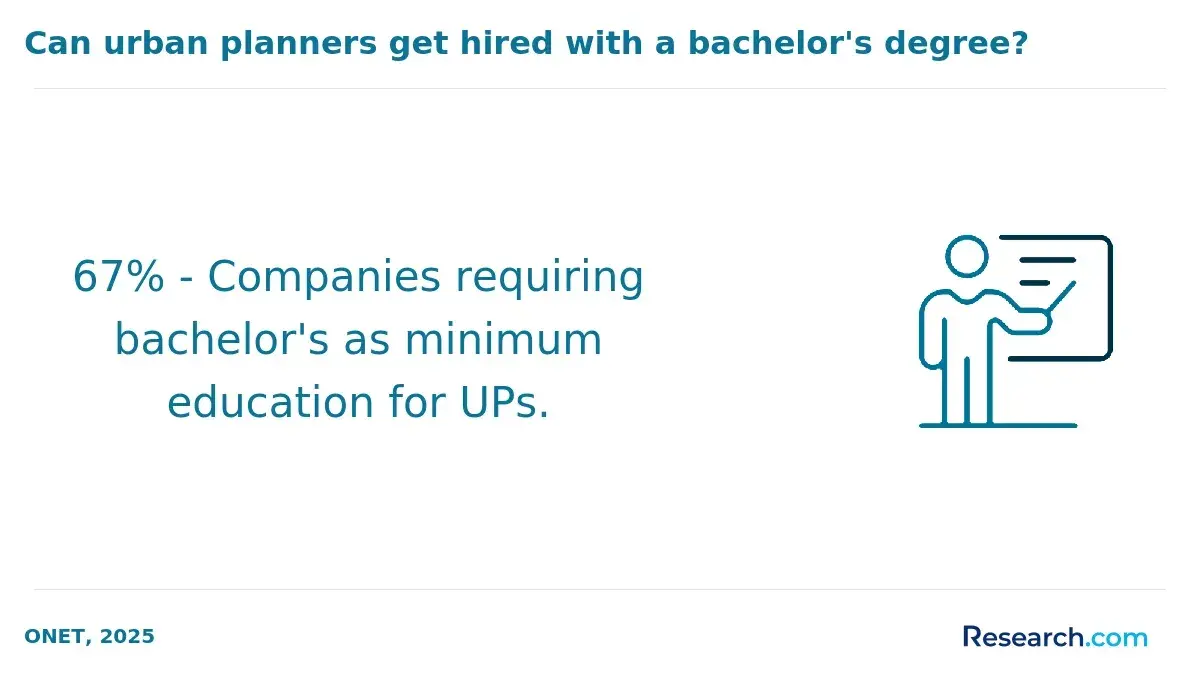
| Minimum education | A bachelor’s degree is generally needed for entry-level planning or planning-adjacent roles. |
| Graduate education | A master’s degree is not legally required, but it can improve access to advanced planning roles and AICP eligibility pathways. |
| Licensure | Mississippi does not have a state licensing requirement for urban planners. |
| Certification | AICP certification is voluntary but widely recognized by planning employers. |
| Salary snapshot | Urban planners in Mississippi earn an average annual wage of approximately $67,110. |
| Job outlook | The projected growth rate is 3% from 2024 to 2034. |
Key Things to Know About Becoming an Urban Planner in Mississippi
- Mississippi’s urban planning job outlook is positive, with projected employment growth of 3% from 2024 to 2034.
- The average annual wage for urban planners in Mississippi is approximately $67,110, with earnings varying by location, specialization, employer, and experience.
- Planning work in Mississippi often centers on resilience, transportation, land use, housing access, environmental protection, and community development.
- Jackson State University offers an accredited urban planning program that can prepare students for professional planning roles.
- Education requirements for urban planners in Mississippi
- Urban planning specializations in Mississippi
- Licensing and certification requirements
- How long it takes to become an urban planner
- Urban planner salaries in Mississippi
- Career options for Mississippi urban planners
- Typical urban planner responsibilities
- Business skills for planning projects
- Interdisciplinary planning expertise
- Financial and project management skills
- Infrastructure safety and forensic methods
- Supplementary business education
- Technology in urban planning
- Financial expertise for planning strategy
- Collaboration with social service providers
- Legal and regulatory knowledge
- Transferable planning skills
- Social work perspectives in planning
- Scholarships for planning students
- Internships and practical experience
- Professional organizations for urban planners
What are the education requirements for urban planners in Mississippi?
Urban planners need a mix of policy knowledge, spatial analysis, public engagement ability, research skills, and practical understanding of how land use decisions affect communities. In Mississippi, students can enter the field through planning, geography, public administration, environmental science, architecture, sustainability, or related academic paths.
| Education or experience step | Why it matters | Mississippi-specific notes |
| Bachelor’s degree | Builds the foundation for entry-level planning, GIS, zoning, research, or community development roles. | The University of Southern Mississippi offers a BS in Geography with a strong focus on geographic information systems. Students who need flexibility may also compare affordable online urban planning degree options. |
| Internships and local projects | Shows employers that you can apply planning concepts to real public meetings, maps, reports, and development reviews. | Experience with city departments, regional planning agencies, transportation projects, or community organizations can be especially useful. |
| Graduate degree | Can strengthen eligibility for advanced planning roles and help candidates specialize in transportation, housing, resilience, or environmental planning. | Jackson State University is the only institution that offers an MA in Urban and Regional Planning program accredited by the Planning Accreditation Board (PAB). |
A bachelor’s degree can be enough for some entry-level positions, especially if paired with GIS skills and internship experience. However, many candidates pursue a master’s degree because planning roles often require technical analysis, public policy knowledge, and strong writing skills. Graduate study can also help students build portfolios through studio projects, community plans, and applied research.
-
: "
“My interest in urban planning began with a simple question: why do some communities recover from storms faster than others? Graduate school gave me the tools to study land use, infrastructure, and resilience together. The hardest part was balancing coursework with community projects, but that experience taught me how planning decisions affect families, businesses, and neighborhoods.”
"
What urban planning specializations are available in Mississippi?
Urban planning is not one job. In Mississippi, planners may work on transportation corridors, coastal resilience, zoning updates, housing policy, economic development, public engagement, environmental review, or long-range comprehensive plans. Choosing a specialization early can help you select the right courses, internships, software skills, and professional contacts.
| Specialization | What planners do | When this path makes sense |
| Transportation planning | Analyze mobility needs, support highway and transit planning, review traffic patterns, improve pedestrian access, and coordinate infrastructure priorities. | Choose this path if you enjoy data, mapping, engineering collaboration, and regional infrastructure issues. |
| Environmental planning | Evaluate environmental impacts, support sustainable land use, protect natural resources, and help communities manage development risk. | This is a strong fit for students interested in flood risk, conservation, environmental policy, or sustainability. Related study through affordable online environmental science programs may support this direction. |
| Housing and community development | Work on neighborhood revitalization, affordable housing access, zoning reforms, community engagement, and equitable development strategies. | Consider this specialization if you want planning work that directly addresses residents’ quality of life and local economic stability. |
| Disaster and resilience planning | Help communities prepare for hurricanes, flooding, and other hazards through evacuation planning, land use policy, mitigation projects, and recovery strategies. | This path is especially relevant in communities exposed to recurring natural hazards. |
Mississippi’s planning needs make resilience, transportation, and housing particularly practical areas of focus. Students should look for coursework and internships that involve GIS, public participation, grant writing, infrastructure planning, and local government procedures.
-
: "
“My first major resilience project focused on hurricane evacuation for a coastal Mississippi town. The technical challenge was route design, but the human challenge was making sure the plan worked for residents with limited mobility. GIS helped us see the problem clearly, but community meetings helped us design a plan people could actually use.”
"
Are there licensing requirements for urban planners in Mississippi?
Mississippi does not require urban planners to hold a state license or registration. Employers may still prefer candidates with graduate education, strong GIS ability, relevant experience, or professional certification. The most recognized voluntary credential is the American Institute of Certified Planners (AICP) certification.
To pursue AICP certification, candidates register with AICP, pass the AICP examination, and document qualifying professional planning experience. Certified planners must also complete Certification Maintenance requirements of 32 credits in two years.
Helpful certifications for Mississippi urban planners
| Credential | How it can help a planner | Best fit |
| AICP certification | Signals professional planning knowledge, ethical commitment, and documented experience. | Planners seeking advancement, local government leadership, consulting roles, or broader professional recognition. |
| Geographic Information Systems (GIS) Professional | Demonstrates capability in spatial data analysis, mapping, and geospatial decision support. | Transportation, environmental, land use, and infrastructure planning roles. |
| Leadership in Energy and Environmental Design (LEED) Accredited Professional | Supports work involving sustainable development, green buildings, and environmentally responsible design. | Planners working with development review, sustainability, or urban design teams. |
| Certified Floodplain Manager (CFM) | Shows knowledge of floodplain management, risk reduction, and hazard mitigation. | Resilience planners, coastal planners, and professionals serving flood-prone communities. |
Certification is not a substitute for practical planning experience. It is most valuable when paired with a portfolio of real projects, public meeting experience, writing samples, GIS work, and references from supervisors or faculty.
How long does it take to become an urban planner in Mississippi?
The timeline depends on whether you stop after a bachelor’s degree, continue into graduate school, and pursue AICP certification. Many aspiring planners spend six to eight years building the education and experience needed for full professional roles.
| Stage | Typical time commitment | What to focus on |
| Bachelor’s degree | About four years | Study planning, geography, public policy, environmental studies, architecture, economics, or a related field. The University of Southern Mississippi and Mississippi State University offer programs that can support planning-related preparation. Students may also consider an accredited undergraduate degree program from Alabama A&M University. |
| Master’s degree | Typically two years | Develop advanced planning skills through studios, research, GIS, policy analysis, and community-based projects. Jackson State University offers a master’s program in urban and regional planning, and students may also review accredited programs from institutions in Tennessee or Louisiana. |
| Internships or professional experience | Three months to three years | Gain hands-on exposure to zoning, transportation plans, environmental review, public engagement, data analysis, and local government procedures. |
| AICP certification preparation | A few weeks or months | Prepare for the exam based on your schedule, planning background, and familiarity with AICP topic areas. |
The AICP requires candidates with an accredited bachelor’s degree in urban planning to have at least three years of relevant work experience, whereas those with a master’s degree need only two years. This is one reason many students view graduate school as a career accelerator, even though it is not required by Mississippi law.
-
: "
“It took nearly seven years for me to move from my first planning courses to a full professional role. The internship was the turning point. Classroom projects taught me the language of planning, but fieldwork taught me how to listen, revise, and defend recommendations in front of real stakeholders.”
"
How much do urban planners in Mississippi earn?
Urban planner earnings in Mississippi vary by employer, region, education, specialization, certifications, and years of experience. Public sector roles may offer stability and community impact, while consulting roles may provide broader project exposure and different compensation structures.
The average annual salary for an urban planner in Mississippi is $67,110. Reported salary examples include:
- Entry-level positions: $42,020
- Seasoned professionals: $79,470
- Jackson, MS: $73,560
- Memphis, MS-TN-AR: $47,940
Specialized roles, such as urban designers, may have salary ranges from $63,000 to $78,000. Candidates interested in sustainability-focused planning may benefit from comparing online sustainability bachelor’s programs, especially if they want to work on resilience, green infrastructure, or environmental planning projects.
| Factor | How it may affect pay |
| Experience | Senior planners, project managers, and department leaders generally have higher earning potential than entry-level planning assistants. |
| Location | Compensation can differ between metropolitan areas, regional agencies, rural communities, and consulting markets. |
| Technical skills | GIS, data analysis, grant writing, transportation modeling, and environmental review experience can strengthen competitiveness. |
| Credentials | AICP, GIS, LEED, or CFM credentials may improve advancement opportunities, depending on the employer and role. |
What careers are available to urban planners in Mississippi?
Urban planners in Mississippi can work in local government, regional planning, transportation, environmental agencies, community development organizations, private consulting, and infrastructure-related roles. The best fit depends on whether you prefer policy work, technical mapping, public meetings, environmental review, design coordination, or project management.
| Career area | Common employers or settings | Typical work |
| Local government planning | City and county planning departments in communities such as Jackson and Biloxi | Land use review, zoning administration, comprehensive plans, public hearings, development proposals, and community engagement. |
| Transportation planning | Mississippi Department of Transportation (MDOT), regional agencies, consulting firms | Roadway planning, corridor studies, public transit coordination, pedestrian access, traffic data, and long-range mobility plans. |
| Environmental planning | Mississippi Department of Environmental Quality (MDEQ), environmental consultants, local agencies | Environmental impact analysis, resource protection, hazard mitigation, sustainable land use, and regulatory coordination. |
| Private consulting | Planning, engineering, architecture, and development consulting firms such as Neel-Schaffer and Waggoner Engineering | Urban design support, feasibility studies, community plans, economic development projects, grant support, and client-facing planning work. |
| Sustainability and resilience roles | Government agencies, nonprofits, utilities, consulting firms, and community development groups | Climate resilience, green infrastructure, flood mitigation, sustainability planning, and recovery strategies. Students exploring adjacent options can review sustainability career paths. |
Mississippi’s infrastructure needs create a practical reason for planners to understand transportation, resilience, and capital project planning. The state faces concerns such as 30% of roads in poor condition and only 57% of bridges in good condition. Long-range efforts such as Mississippi’s MULTIPLAN 2050 show how planners can contribute to coordinated transportation and infrastructure decisions.
What are the typical responsibilities of urban planners in Mississippi?
Urban planners translate community goals into plans, policies, maps, reports, zoning recommendations, and project decisions. The day-to-day work can be technical one day and highly public-facing the next.
- Research land use patterns, population trends, transportation needs, environmental risks, and local development issues.
- Prepare comprehensive plans, neighborhood plans, corridor studies, resilience plans, and policy recommendations.
- Review development proposals for consistency with zoning rules, land use plans, environmental standards, and local procedures.
- Use GIS to analyze spatial data, create maps, identify constraints, and communicate findings.
- Coordinate with elected officials, engineers, developers, public agencies, residents, and community organizations.
- Lead or support public meetings, workshops, surveys, and stakeholder interviews.
- Track federal, state, and local rules that affect planning, infrastructure, housing, and environmental decisions.
- Advocate for practical development strategies that improve quality of life while protecting public resources.
-
: "
“On a transportation project in Gulfport, the technical goal was better traffic flow and safer pedestrian access. The community issue was parking. Local businesses were worried about losing spaces, so we used meetings, traffic data, and design alternatives to find a compromise. That project taught me that planning is as much about trust as it is about maps.”
"
Is becoming an urban planner in Mississippi worth it?
Urban planning can be worth pursuing in Mississippi if you want a public-impact career that combines research, policy, infrastructure, design, and community engagement. The path is especially compelling for students interested in resilience, transportation, housing, environmental planning, or local government leadership.
| This career may be a good fit if you... | You may want to consider another path if you... |
| Want to work on real community problems such as flooding, mobility, zoning, housing, and infrastructure. | Prefer work with little public feedback, political negotiation, or stakeholder conflict. |
| Enjoy combining maps, data, policy, writing, and public communication. | Want a career based mostly on fieldwork or design without meetings, reports, and regulations. |
| Are comfortable with long project timelines and incremental progress. | Need immediate, visible outcomes from every project. |
| Can balance community needs, legal requirements, budgets, and technical constraints. | Dislike compromise or working across agencies and disciplines. |
Current trends affecting urban planning in Mississippi
Several forces are shaping what employers expect from planners. GIS and data visualization are now core tools rather than optional extras. Communities also need planners who can explain risk, support public engagement, understand infrastructure funding limits, and work across disciplines. Resilience planning remains especially important because land use, transportation, housing, and emergency management decisions are closely connected.
Technology is improving how planners model scenarios, communicate with residents, and compare development alternatives. However, technology does not replace local knowledge. Mississippi planners still need strong listening skills, legal awareness, and the ability to adapt plans to community priorities and budget realities.
Skills that can strengthen an urban planning career in Mississippi
Urban planning often overlaps with business, law, public health, social services, environmental science, infrastructure safety, and finance. The links below are not substitutes for planning education, but they point to related fields that can help planners understand the broader systems affecting communities.
| Skill area | Why it matters in planning | Related Research.com resource |
| Business strategy and public-private partnerships | Large planning projects often depend on budgeting, negotiation, funding applications, and coordination between public agencies and private partners. | Explore the best business schools in Mississippi. |
| Public health and food access | Planning decisions can influence walkability, green space, food access, and neighborhood health outcomes. | Review how to become a nutritionist in Mississippi. |
| Project management and budgeting | Planners often coordinate timelines, consultants, public meetings, grants, and implementation budgets. | Compare options for an accelerated online business administration degree. |
| Infrastructure safety and investigation | Risk assessment and evidence-based analysis can support planning for aging infrastructure and disaster recovery. | Learn about becoming a forensic scientist in Mississippi. |
| Foundational business education | Cost analysis, procurement, and resource allocation are useful when planning projects move from concept to implementation. | See affordable options for an online associate in business degree. |
| Technology adoption and professional standards | Planners need to keep up with evolving tools, data systems, and credential expectations across regulated and technical fields. | Read about speech pathologist requirements in Mississippi as an example of a structured professional pathway. |
| Accounting and fiscal analysis | Capital planning, grants, tax incentives, and infrastructure finance require careful financial reasoning. | Learn how to become an accountant in Mississippi. |
| Social services collaboration | Housing, disaster recovery, public safety, and neighborhood revitalization often involve vulnerable populations and service coordination. | Review social worker education requirements in Mississippi. |
| Regulatory and financial compliance | Planning work must align with zoning, permitting, environmental rules, building standards, and fiscal accountability. | Compare the best accounting schools in Mississippi. |
| Legal research and documentation | Zoning decisions, public records, ordinances, and land use procedures require careful reading and documentation. | See how to become a paralegal in Mississippi. |
| Community well-being and social equity | Planning can be stronger when it accounts for housing instability, access to services, mobility barriers, and neighborhood-level needs. | Learn about social worker degree requirements in Mississippi. |
Common mistakes to avoid when preparing for an urban planning career
| Mistake | Why it can hurt your career | Better approach |
| Choosing a program without checking accreditation or outcomes | Accreditation and curriculum quality can affect preparation, professional credibility, and AICP pathways. | Review whether the program fits your career goals and whether it has planning studios, GIS, internships, and faculty expertise in your interest area. |
| Focusing only on tuition | A cheaper program may not be the best value if it lacks internships, career support, or relevant coursework. | Compare total cost, transfer credit policies, assistantships, scholarships, program format, and job placement support. |
| Assuming online programs automatically fit Mississippi planning needs | Some online programs may not provide local government exposure, Mississippi-specific context, or strong applied projects. | Ask how online students complete studios, internships, GIS labs, and community-based planning assignments. |
| Waiting too long to learn GIS | GIS is a common planning tool, and weak mapping skills can limit entry-level opportunities. | Build a portfolio with maps, spatial analysis, and planning reports before graduation. |
| Ignoring public engagement skills | Planning decisions often require meetings, presentations, conflict resolution, and clear explanations. | Practice facilitation, plain-language writing, and public presentation through internships and class projects. |
| Assuming salary outcomes are guaranteed | Pay varies by employer, region, specialization, and experience. | Use salary data as a guide, then research specific employers and job postings before committing to a path. |
Are there available scholarships for urban planners in Mississippi?
Students preparing for planning careers may find financial support through universities, planning organizations, nonprofit groups, and related academic departments. Scholarship availability and eligibility can change, so students should confirm deadlines, award amounts, and requirements directly with each provider.
- Jackson State University Scholarships: Students enrolled in the accredited master’s program may be eligible for departmental scholarship support, including awards intended to help students from varied backgrounds prepare for planning careers.
- Mississippi State University Architecture Scholarships: Some architecture-related scholarships may support students whose coursework overlaps with urban planning, design, or built environment studies.
- APA Foundation Diversity Scholarship: The American Planning Association offers support for students from minority backgrounds who are committed to inclusive and equitable communities.
Students comparing flexible academic options may also review online degree paths with manageable coursework, but planning candidates should still prioritize program quality, accreditation, internship access, and career relevance.
What urban planning internships or practical experiences can I pursue in Mississippi?
Internships are one of the most important steps for becoming employable as a planner. They help you build work samples, understand local government procedures, use GIS on real projects, and develop professional references.
| Internship setting | What you may do | Career value |
| Mississippi Department of Transportation (MDOT) | Support transportation planning, infrastructure documentation, data analysis, mapping, and public outreach. | Useful for students interested in mobility, long-range transportation planning, corridor studies, or project management. |
| Mississippi Development Authority (MDA) | Work with economic development, community planning, land use analysis, zoning research, and impact assessments. | Helpful for students interested in community development, local economies, redevelopment, and regional growth. |
| Local planning firms | Assist with site plans, feasibility studies, public presentations, urban design concepts, and stakeholder coordination. | Builds consulting experience and exposes students to multiple project types and client expectations. |
| City or county planning departments | Review permits, help with zoning cases, prepare staff reports, attend public meetings, and support comprehensive planning. | Best for students who want local government planning experience and direct exposure to public decision-making. |
Before accepting an internship, ask whether you will produce portfolio-ready work, receive supervision from planning professionals, attend public meetings, use GIS, and gain exposure to real planning documents.

What professional organizations in Mississippi should I join to advance my career as an urban planner?
Professional organizations can help students and early-career planners find mentors, learn about job openings, understand AICP expectations, and stay current on Mississippi planning issues. Membership is most valuable when you attend events, volunteer, ask questions, and build relationships over time.
- Mississippi Chapter of the American Planning Association (APA Mississippi): This statewide planning network offers professional development, advocacy, networking, and resources for planners working to improve community quality of life.
- Central Mississippi Planning & Development District (CMPDD): This regional organization supports planning, community development, resource coordination, and local government collaboration across central Mississippi.
-
: "
“Joining APA Mississippi changed how I understood the profession. Workshops helped me improve technical skills, but the bigger benefit was meeting people who had already handled zoning hearings, comprehensive plans, and difficult public meetings. Those connections eventually helped me find my first local government planning job.”
"
What urban planners in Mississippi say about their work
- “Planning lets me work on projects that residents can actually see and use. When a neighborhood plan leads to safer streets, better public spaces, or smarter development, the work feels directly connected to community life.” - Roger
- “Affordable housing work has been the most meaningful part of my career. The process can be slow, but helping lower-income families gain better access to stable neighborhoods makes the effort worthwhile.” - Josephine
- “Sustainable development is what drew me to planning. In Mississippi, that can mean flood management, parks, green infrastructure, or smarter land use. The reward is seeing long-term resilience become part of everyday decisions.” - Derek
Related Articles for Nearby States
- 2027 How to Become an Urban Planner in Louisiana
- 2027 How to Become an Urban Planner in Alabama
- 2027 How to Become an Urban Planner in Arkansas
- 2027 How to Become an Urban Planner in Tennessee
- 2027 How to Become an Urban Planner in Florida
- 2027 How to Become an Urban Planner in Missouri
- 2027 How to Become an Urban Planner in Georgia
- 2027 How to Become an Urban Planner in Kentucky
- 2027 How to Become an Urban Planner in Texas
- 2027 How to Become an Urban Planner in Indiana
Key Insights
- Mississippi does not require a state urban planning license, but AICP certification can strengthen professional credibility.
- A bachelor’s degree can open entry-level doors, while a PAB-accredited graduate program can improve preparation for advanced roles.
- Jackson State University offers the state’s accredited MA in Urban and Regional Planning program.
- Urban planners in Mississippi earn an average annual wage of approximately $67,110, but pay varies by role, location, experience, and specialization.
- The strongest Mississippi planning candidates build practical experience early through GIS projects, internships, public engagement, and applied planning reports.
- Resilience, transportation, environmental planning, housing, and community development are especially relevant specializations because of Mississippi’s infrastructure and disaster-related challenges.
- Do not choose a planning program based on cost alone. Compare accreditation, internship access, GIS training, faculty expertise, transfer policies, and career support.
References:
- American Planning Association. AICP certification information. Retrieved November 15, 2024, from https://www.planning.org/certification
- American Society of Civil Engineers. Mississippi 2024 Report. Published November 2024. https://infrastructurereportcard.org/state-item/mississippi
- Mississippi Department of Employment Security. Labor Market Information, 2024. https://mdes.ms.gov/information-center/labor-market-information
- U.S. Bureau of Labor Statistics. May 2023 state occupational employment and wage estimates - Mississippi. Published April 3, 2024. https://www.bls.gov/oes/current/oes_ms.htm
- U.S. Bureau of Transportation Statistics. State Transportation by the Numbers: interactive data. Retrieved November 15, 2024, from https://www.bts.gov/browse-statistical-products-and-data/state-transportation-statistics/state-transportation-numbers
Other Things to Know About Becoming an Urban Planner in Mississippi
In 2027, aspiring urban planners in Mississippi generally need a bachelor's degree in urban planning or a related field such as geography, public policy, or environmental design. Some positions might require a master's degree, especially for advanced roles or positions in larger municipalities.
Urban planners are increasingly in demand in Mississippi, driven by the state's ongoing urban development projects and infrastructure improvements. According to the U.S. Bureau of Labor Statistics, as of 2023, there were approximately 200 urban planners employed in Mississippi. The state is projected to see a growth rate of about 14.3% in urban planning jobs over the next decade, which translates to around 15 new job openings annually. This demand is fueled by the need for sustainable development, revitalization of urban areas, and effective land use planning, particularly in cities like Jackson, where population growth is prompting new initiatives.
Pursuing a career in urban planning in Mississippi can be a rewarding endeavor, offering unique opportunities to shape communities and enhance quality of life.
- Cultural Heritage: Mississippi is rich in cultural history, and urban planners play a crucial role in preserving and integrating this heritage into modern development. This allows professionals to engage with local communities and create spaces that reflect their identity.
- Community Development: Urban planners in Mississippi often work on revitalization projects in cities like Jackson and Biloxi, focusing on sustainable development and improving infrastructure. This hands-on involvement can lead to significant positive changes in residents' lives.
- Environmental Stewardship: With its diverse ecosystems, Mississippi presents urban planners with the chance to advocate for environmentally sustainable practices. Planners can influence policies that protect natural resources while promoting responsible growth.
In summary, pursuing urban planning in Mississippi offers a fulfilling career path that combines professional growth with meaningful contributions to society.