2027 How to Become an Urban Planner in New Hampshire

Co-Founder and Chief Data Scientist
Becoming an urban planner in New Hampshire is a practical career path for people who want to shape how communities grow, protect natural resources, improve housing access, and plan transportation systems that work for both small towns and expanding cities. The state’s planning challenges are specific: population growth, limited affordable housing, water quality concerns, rural mobility gaps, coastal and flood resilience, and local zoning rules that vary widely by municipality.
This guide explains how to become an urban planner in New Hampshire, including the education you may need, realistic timelines, salary information, certifications, internships, professional organizations, and career options. It is designed for high school students, college students, career changers, and working professionals who want to decide whether urban planning is the right next step.
Key Insights
- New Hampshire does not require a state license for urban planners, but local zoning knowledge, practical experience, GIS ability, and professional credentials can make a major difference.
- A bachelor’s degree can lead to entry-level planning work, while a master’s degree may be valuable for advanced, specialized, or leadership roles.
- Salary data varies by source: ZipRecruiter reports $75,033 in 2025, while BLS reports an annual mean wage of $83,720 in 2024 for New Hampshire urban and regional planners.
- The strongest planning candidates combine policy knowledge with technical tools, public communication, and real project experience.
- Specializations such as transportation planning, environmental planning, housing, community development, disaster planning, and land use are especially relevant to New Hampshire’s growth and resilience challenges.
- Before choosing a degree or certification, compare cost, internship access, employer expectations, and whether the pathway matches your preferred planning role.
Quick Answer: How do you become an urban planner in New Hampshire?
To become an urban planner in New Hampshire, you typically need at least a bachelor’s degree in planning or a related field such as environmental planning, geography, sustainability, public administration, or community development. Many higher-level planning roles prefer or require a master’s degree in urban or regional planning. New Hampshire does not require a state license for urban planners, but employers may value practical experience, GIS skills, knowledge of local zoning, and professional credentials such as AICP, CFM, LEED AP, or CEP.
- O*NET OnLine projects 7% growth for urban planner jobs in New Hampshire from 2024 to 2034.
- Salary estimates vary by source: ZipRecruiter reports an average income of $75,033 in 2025, while 2024 U.S. Bureau of Labor Statistics data lists an annual mean wage of $83,720 for urban and regional planners in New Hampshire.
- The top 10% of urban and regional planners in New Hampshire can earn about $93,000 to $108,000 per year.
- The University of New Hampshire and Plymouth State University offer related academic pathways that can prepare students for planning-focused careers.
- Education requirements for urban planners in New Hampshire
- Urban planning specializations available in New Hampshire
- Licensing and certification requirements
- Timeline to become an urban planner
- Urban planner salaries in New Hampshire
- Career paths for urban planners
- Typical urban planner responsibilities
- How business knowledge can strengthen a planning career
- Technology trends changing urban planning
- Whether an MBA makes sense for urban planners
- How interdisciplinary study can help planners
- Continuing professional development options
- Transferable skills from other careers
- Scholarships for future urban planners
- Environmental and community wellbeing challenges
- Using financial expertise in planning projects
- How legal frameworks affect planning work
- Environmental justice in New Hampshire planning
- Internships and practical experience options
- Professional organizations for New Hampshire planners
- Transitioning from planning into related fields Key insights
What are the education requirements for urban planners in New Hampshire?
Most New Hampshire urban planning jobs require a college education because planners must interpret land use rules, analyze demographic and environmental data, communicate with the public, and prepare reports for local boards or agencies. A bachelor’s degree can support entry-level work, but a master’s degree is often preferred for policy, management, regional planning, transportation planning, and consulting roles.
New Hampshire’s planning needs are shaped by long-term growth pressure. The state’s population is anticipated to reach 1.5 million by 2040, which increases the importance of smart growth, housing policy, climate resilience, and infrastructure planning.
| Education step | Why it matters | New Hampshire examples and related options |
| Bachelor’s degree | Builds the foundation for entry-level planning, GIS, sustainability, public policy, or community development roles. | Students can consider the Bachelor of Science in Community & Environmental Planning at the University of New Hampshire or the Bachelor of Science in Climate Studies at Plymouth State University. |
| Relevant major | Helps students learn how communities, infrastructure, natural systems, and public policy interact. | Common choices include environmental planning, geography, public administration, sustainability, urban studies, and related social science fields. Students comparing flexible options can also review online bachelor’s programs in sustainability. |
| Core coursework | Prepares students for the technical and policy side of planning work. | Useful subjects include land use planning, environmental policy, zoning, urban design, public finance, research methods, transportation planning, and geographic information systems. |
| Internship or fieldwork | Gives students experience with public meetings, permitting, mapping, comprehensive plans, housing studies, or transportation projects. | Local planning departments, regional planning commissions, transportation agencies, and community development organizations may offer relevant experience. |
| Graduate degree | Can improve access to advanced planning, leadership, consulting, and policy roles. | A master’s degree in urban planning, regional planning, public policy, environmental planning, or a closely related field may be useful, depending on the role. |
Students do not need to begin with a planning-specific degree to enter the field. Some planners come from sustainability, environmental science, engineering, economics, architecture, public health, or policy backgrounds. For example, students interested in infrastructure or built-environment roles may compare planning with related technical pathways, including some of the more accessible online engineering degree options.
What should you study if New Hampshire does not offer your ideal planning major?
If a dedicated urban planning program is not available, choose a major that develops three skill sets: spatial analysis, policy interpretation, and community problem-solving. GIS, statistics, environmental law, public budgeting, writing, and facilitation courses can be just as important as planning theory.
What urban planning specializations are available in New Hampshire?
Urban planning is not a single job. In New Hampshire, planners may work on housing affordability, transportation access, downtown revitalization, conservation, hazard mitigation, public engagement, zoning reform, or regional growth management. The best specialization depends on whether you prefer technical analysis, community work, environmental protection, infrastructure, or policy.
| Specialization | What planners focus on | When this path makes sense |
| Transportation planning | Traffic patterns, pedestrian safety, public transit, road networks, bike access, freight movement, and transportation policy. | Choose this if you enjoy data, infrastructure, mobility equity, and long-term systems planning. |
| Environmental planning | Wetlands, water resources, conservation, climate adaptation, environmental impact review, and sustainable land use. | This fits students who want to connect planning with natural resource protection. Related academic options include affordable online environmental science degree programs. |
| Community development | Housing, public spaces, neighborhood revitalization, economic development, stakeholder engagement, and local quality of life. | Consider this route if you like working directly with residents, nonprofits, town officials, and local businesses. |
| Disaster and emergency planning | Flood mitigation, evacuation planning, coastal resilience, hazard mapping, emergency preparedness, and continuity planning. | This is a strong fit for planners interested in climate risk, public safety, and resilient infrastructure. |
| Land use and zoning | Master plans, zoning ordinances, site plan review, subdivision rules, permitting, and local board support. | This path suits people who enjoy legal frameworks, public meetings, and local government decision-making. |
| Housing planning | Housing needs assessments, affordability strategies, zoning barriers, community engagement, and development policy. | Choose this specialization if you want your work to address one of New Hampshire’s most visible planning pressures. |
New Hampshire’s mix of rural communities, historic town centers, growing cities, and environmentally sensitive areas means that many planners combine specializations. A local planner may work on zoning updates one month, a regional transportation study the next, and a public engagement process for affordable housing after that.
Are there licensing requirements for urban planners in New Hampshire?
New Hampshire does not have a state-specific license or registration requirement for urban planners. You can work in planning without a New Hampshire planning license, but that does not mean the field is unregulated. Planners must understand local zoning ordinances, subdivision rules, environmental regulations, public hearing procedures, and municipal decision-making processes.
Because there is no state planning license, credentials can help signal expertise. They are especially useful for planners who want to move into consulting, senior government roles, environmental review, floodplain management, or sustainability-focused work.
| Credential | Best for | Why it can help |
| AICP certification | Professional planners seeking national recognition | Shows knowledge of planning principles, ethics, law, research, public engagement, and professional practice. |
| Certified Floodplain Manager (CFM) | Planners working on flood risk, hazard mitigation, and resilience | Demonstrates knowledge of floodplain management and mitigation strategies. |
| LEED Accredited Professional | Planners involved in green building, sustainable development, and public-private projects | Signals familiarity with sustainable design and energy-conscious development practices. |
| Certified Environmental Planner (CEP) | Environmental planners and consultants | Highlights planning expertise related to environmental analysis and sustainable development. |
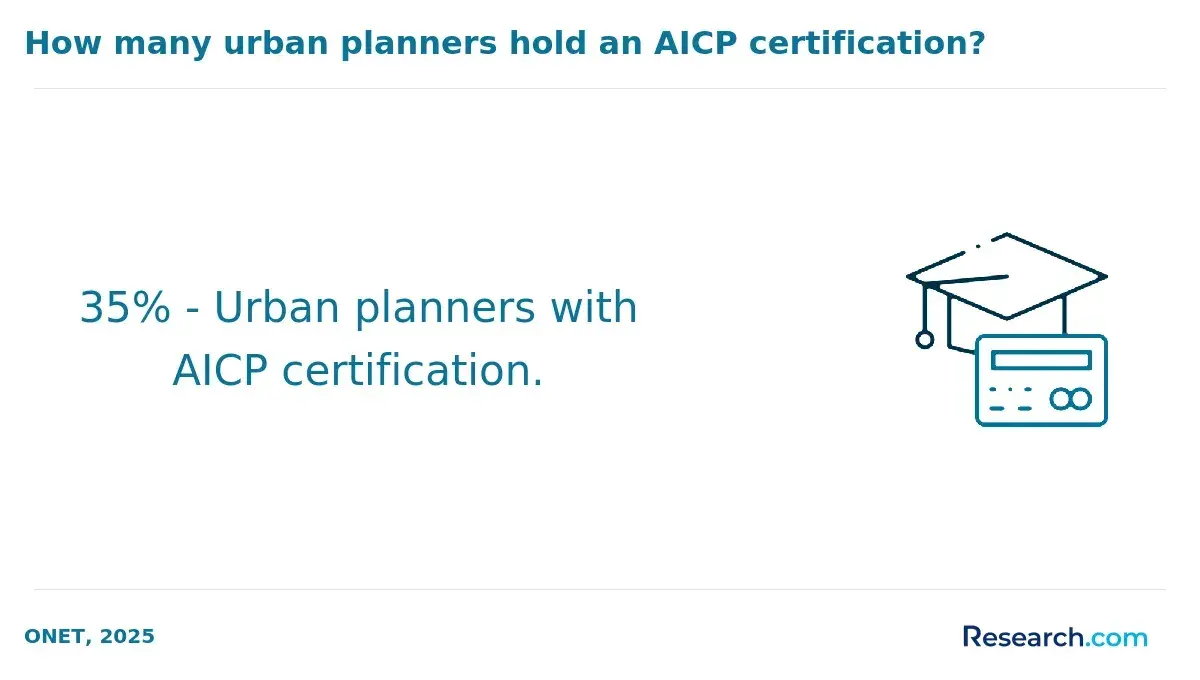
The American Institute of Certified Planners certification process generally involves registration, an examination, documentation of professional planning experience, and ongoing certification maintenance through education credits every two years. Before pursuing any credential, compare eligibility rules, exam costs, renewal requirements, and whether employers in your target role actually value the designation.
Do you need AICP certification to get hired?
No. AICP certification is not required for every planning job in New Hampshire. However, it can strengthen your resume after you gain experience, especially if you want advancement, consulting credibility, or leadership opportunities.
How long does it take to become an urban planner in New Hampshire?
The timeline depends on your starting point and career goal. A student who enters planning through a bachelor’s degree and internship may qualify for entry-level positions sooner than someone pursuing a graduate degree and certification first. For many aspiring planners, the full preparation period takes about six to eight years when undergraduate study, graduate education, work experience, and certification preparation are combined.
| Stage | Typical time | What to focus on |
| Bachelor’s degree | About four years | Choose planning-related coursework, build writing and data skills, and learn GIS. |
| Internship or field experience | Three months to one year | Work with a planning office, regional commission, transportation agency, nonprofit, or consulting firm. |
| Master’s degree | One to two additional years | Develop advanced expertise in urban planning, regional planning, policy, transportation, housing, or environmental planning. |
| Early professional experience | Varies by role | Build a portfolio of plans, maps, public engagement materials, reports, and project summaries. |
| Certification preparation | Several months | Prepare for AICP or specialized credentials if they align with your career goals. |
Career changers may not need to start over. If you already have experience in public administration, civil engineering, environmental work, community organizing, real estate, GIS, law, finance, or data analysis, you may be able to reposition your background toward planning with targeted coursework, a certificate, a master’s degree, or project experience.
How much do urban planners in New Hampshire earn?
Urban planner salaries in New Hampshire vary by employer, location, specialization, education, and experience. Public-sector roles may offer stability and public service impact, while consulting or specialized technical roles may offer different compensation structures.
ZipRecruiter reports an average income of $75,033 in 2025 for urban planners in New Hampshire. The U.S. Bureau of Labor Statistics reports an annual mean wage of $83,720 in 2024 for urban and regional planners in New Hampshire. The top 10% of urban and regional planners in the state can earn about $93,000 to $108,000 per year.
| Salary source or category | Reported figure | How to interpret it |
| ZipRecruiter, 2025 | $75,033 average income | Useful as a job-market estimate, but postings and self-reported data can vary. |
| U.S. Bureau of Labor Statistics, 2024 | $83,720 annual mean wage | A federal labor data point for urban and regional planners in New Hampshire. |
| Top 10% in New Hampshire | About $93,000 to $108,000 per year | Typically associated with more experience, specialized expertise, or higher responsibility roles. |
Planning can also connect to related environmental and public-sector careers. Students drawn to climate adaptation, conservation, or environmental policy may want to compare planning jobs with broader sustainability career paths.
The chart below contains salary data for urban planners in top-paying industries.
What careers are available to urban planners in New Hampshire?
Urban planners in New Hampshire work across government, regional agencies, consulting firms, nonprofits, housing organizations, transportation agencies, and academic institutions. The right setting depends on whether you want public service, technical consulting, research, policy, or community-based work.
| Career setting | Examples of work | Good fit for |
| Local or state government | Comprehensive plans, zoning updates, transportation policy, land use review, public hearings, and infrastructure coordination. | People who want to support public decision-making and work closely with elected boards, residents, and municipal staff. |
| Transportation agencies | Roadway planning, transit access, pedestrian safety, environmental review, traffic analysis, and long-range mobility planning. | Planners interested in infrastructure, data, engineering coordination, and regional mobility. |
| Consulting firms | Zoning analysis, environmental impact assessments, public engagement, master plans, feasibility studies, and development support. | Professionals who want project variety, client-facing work, and a faster consulting environment. |
| Nonprofit and housing organizations | Affordable housing strategy, community revitalization, grant-supported projects, and neighborhood engagement. | People motivated by housing access, equity, and community development. |
| Academic and research institutions | Planning research, data analysis, teaching support, community partnerships, and applied policy studies. | Planners interested in research, education, and evidence-based policy. |
Examples of relevant employers or organizations may include the New Hampshire Department of Transportation, city planning departments in municipalities such as Manchester and Nashua, New Hampshire Housing, regional planning commissions, consulting firms, and universities such as the University of New Hampshire.
What are the typical responsibilities of urban planners in New Hampshire?
Urban planners turn community goals into workable policies, plans, maps, and implementation strategies. In New Hampshire, that often means balancing growth with local character, environmental protection, infrastructure limits, housing demand, and municipal regulations.
- Research population trends, housing needs, transportation patterns, environmental conditions, and land use changes.
- Analyze GIS data, demographic information, development proposals, and community feedback.
- Prepare master plans, zoning recommendations, land use reports, housing studies, and transportation plans.
- Support planning boards, zoning boards, conservation commissions, public agencies, or regional planning groups.
- Coordinate with residents, developers, engineers, architects, environmental specialists, attorneys, and elected officials.
- Review development proposals for consistency with local ordinances, environmental rules, and community plans.
- Design and facilitate public engagement processes, including meetings, surveys, workshops, and stakeholder interviews.
- Help communities address affordable housing, downtown revitalization, flood risk, infrastructure investment, and environmental sustainability.
What skills matter most for New Hampshire planners?
| Skill | Why employers value it |
| GIS and spatial analysis | Planners need to map parcels, infrastructure, environmental features, demographics, and development patterns. |
| Writing and public communication | Plans, staff reports, grant narratives, and public meeting materials must be clear and defensible. |
| Local government knowledge | Municipal planning requires an understanding of boards, hearings, ordinances, and public process. |
| Community engagement | Effective planners can listen, translate technical issues, and build trust across competing interests. |
| Data interpretation | Housing, transportation, environmental, and economic decisions require evidence, not assumptions. |
| Project management | Planning work often involves deadlines, budgets, consultants, public meetings, and multiple stakeholders. |
Can business knowledge enhance urban planning careers in New Hampshire?
Business knowledge can help urban planners move from technical analysis into project leadership. Many planning initiatives require budgeting, grant management, cost-benefit analysis, stakeholder negotiation, procurement, and public-private coordination. A planner who understands finance and organizational strategy may be better prepared to manage redevelopment projects, infrastructure investments, housing initiatives, or consulting contracts.
This does not mean every planner needs a business degree. It means planners should understand how projects are funded, how costs are evaluated, how development incentives work, and how to communicate with investors, municipal leaders, nonprofits, and community members. Professionals considering a stronger business foundation can compare options through the best business schools in New Hampshire.
What emerging technological trends are shaping urban planning in New Hampshire?
Technology is changing how planners collect evidence, model future conditions, and involve the public. GIS remains one of the most important tools, but planning teams are also using online engagement platforms, digital dashboards, scenario modeling, remote sensing, and data visualization to support decisions.
- GIS and mapping tools: Used for parcel analysis, environmental constraints, transportation networks, housing patterns, and infrastructure planning.
- Scenario modeling: Helps communities compare the possible effects of different land use, housing, or transportation choices.
- Digital public engagement: Online surveys, interactive maps, and virtual meetings can broaden participation, especially for residents who cannot attend in-person sessions.
- Smart infrastructure data: Sensors and connected systems can inform traffic, utilities, energy use, and resilience planning where communities have the capacity to adopt them.
- Public health integration: Planners increasingly consider walkability, food access, environmental exposure, and community wellbeing. Students exploring health-related community careers can compare this angle with guidance on how to become a nutritionist in New Hampshire.
Could an MBA enhance my urban planning career in New Hampshire?
An MBA can be useful for urban planners who want to manage large projects, lead consulting teams, work in real estate development, oversee budgets, or move into executive public-sector roles. It is less necessary for planners focused primarily on technical analysis, GIS, community engagement, or entry-level municipal planning.
| An MBA may help if you want to... | An MBA may not be necessary if you... |
| Lead redevelopment, infrastructure, or housing finance projects. | Are trying to qualify for your first planning assistant role. |
| Move into consulting management or organizational leadership. | Need technical planning skills such as GIS, zoning, or environmental review first. |
| Work closely with developers, investors, or public-private partnerships. | Would benefit more from a planning master’s degree or targeted certification. |
| Improve budgeting, finance, negotiation, and management skills. | Do not have a clear reason to take on the time and academic demands of graduate business study. |
Before enrolling, compare the curriculum with your actual career target. If you are unsure about the workload, admissions expectations, and academic challenge, reviewing whether an MBA is hard can help you decide whether the degree fits your long-term plan.
Can interdisciplinary studies enhance my urban planning career in New Hampshire?
Interdisciplinary study can make you a stronger planner because planning problems rarely fit into one field. Housing affordability involves economics, law, design, transportation, and social policy. Environmental resilience involves hydrology, public finance, infrastructure, emergency management, and community trust.
Useful adjacent fields include environmental science, civil engineering, public administration, data analytics, architecture, public health, sociology, finance, and law. Even less obvious areas can contribute. For example, students studying evidence collection, risk assessment, and environmental evaluation may find that a forensic science degree in New Hampshire builds analytical habits that can support planning research and environmental review.
What continuing professional development options can accelerate my urban planning career in New Hampshire?
Urban planning changes as laws, funding programs, climate risks, data tools, and public expectations change. Continuing professional development helps planners stay current and move into more specialized or senior roles.
- Attend workshops on zoning, housing, transportation planning, GIS, public engagement, hazard mitigation, and environmental review.
- Join state or regional planning events to learn how New Hampshire communities are approaching growth and land use.
- Build technical skills in GIS, data visualization, grant writing, project management, and public meeting facilitation.
- Consider specialized credentials that match your work, such as AICP, CFM, LEED AP, or CEP.
- Use targeted management or finance training if your role involves budgets, contracts, or project leadership. Shorter credentials, including online business certifications, may be more practical than a full degree for some professionals.
What transferable skills from other careers can enhance urban planning in New Hampshire?
Career changers can bring valuable experience into planning. Teachers may understand community education and facilitation. Engineers may contribute technical infrastructure knowledge. Social service professionals may understand resident needs and equity concerns. Healthcare workers may bring public health insight. Legal and administrative professionals may be comfortable with regulations and documentation.
| Previous background | Transferable planning value |
| Public administration | Budgeting, policy implementation, board support, and public accountability. |
| Engineering or construction | Infrastructure, site constraints, permitting, design coordination, and technical review. |
| Education or community work | Public engagement, communication, training, and meeting facilitation. |
| Healthcare or social services | Understanding of community wellbeing, accessibility, service gaps, and vulnerable populations. |
| Legal or compliance work | Regulatory interpretation, documentation, hearings, and procedural accuracy. |
| Data or technology | GIS, dashboards, analysis, mapping, and digital engagement tools. |
Regulated professions can be especially good preparation for planning because they require documentation, ethics, and compliance. For example, the structure involved in speech pathologist requirements in New Hampshire illustrates the type of rule-based professional practice that can translate well to zoning, land use, and public-sector planning environments.
Are there available scholarships for urban planners in New Hampshire?
Students preparing for urban planning careers can reduce education costs by looking for scholarships in planning, sustainability, architecture, engineering, public policy, environmental science, geography, and community development. Because planning is interdisciplinary, students should search beyond scholarships that use the exact phrase “urban planning.”
| Scholarship or funding source | Who it supports | Amount or detail provided |
| Plan NH Scholarship and Fellowship Program | Students in fields connected to planning and the built environment | In 2024, the total amount awarded was $23,000. |
| Granite Edvance Scholarship | New Hampshire residents attending various colleges who demonstrate financial need and maintain a minimum GPA of 2.0 | Provides $2,500 to $5,000 for undergraduate students. |
| H.L. Turner Group Scholarship | Seniors in architecture or engineering programs | Awards $1,000 each to one architecture student and one engineering student. |
| New Hampshire Charitable Foundation Scholarships | New Hampshire residents pursuing higher education across many fields, including areas related to planning | Award amounts vary. |
To judge affordability, look beyond tuition. Compare fees, transportation, housing, software costs, internship requirements, transfer credit policies, and whether the program offers career placement support. Students focused on long-term value can also review U.S. colleges with strong value outcomes as part of a broader cost-and-return comparison.
Using 2026 data from Zippia, this is the current racial landscape of urban planners.
How can urban planners address environmental and community wellbeing challenges in New Hampshire?
Environmental planning and community wellbeing are closely connected in New Hampshire. Decisions about housing, transportation, green space, stormwater, conservation, and downtown redevelopment can affect public health, household costs, climate resilience, and access to opportunity.
Planners can support healthier communities by protecting water resources, encouraging walkable development, improving access to public spaces, supporting affordable housing strategies, and using data to identify where infrastructure or services are missing. They can also learn from social service fields that specialize in community needs assessment. For example, reviewing social worker education requirements in New Hampshire can help planners understand how adjacent professions approach client needs, resource gaps, and vulnerable populations.
How can urban planners leverage financial expertise to optimize project outcomes in New Hampshire?
Planning ideas do not become reality without funding. Urban planners who understand budgets, grants, capital planning, and cost-benefit analysis are better prepared to move projects from concept to implementation.
- Use financial forecasting to compare project alternatives before recommending a plan.
- Coordinate with municipal finance staff to align planning goals with capital improvement schedules.
- Build grant narratives that connect community need, measurable outcomes, and implementation capacity.
- Work with housing agencies, developers, lenders, and nonprofits when projects require layered financing.
- Evaluate long-term maintenance costs, not just construction costs.
Planners who want stronger accounting and financial analysis skills may find useful comparisons through the best accounting schools in New Hampshire.
How do legal frameworks impact urban planning in New Hampshire?
Legal frameworks shape nearly every planning decision. Local zoning, subdivision regulations, environmental rules, state statutes, public notice requirements, and board procedures can determine whether a project moves forward, needs revision, or faces legal challenge.
Urban planners do not need to be attorneys, but they do need legal literacy. They must know how to read ordinances, prepare defensible staff reports, document public processes, and explain rules clearly to applicants and residents. Professionals who want to strengthen this part of their skill set can explore resources on how to become a paralegal in New Hampshire to better understand legal research, documentation, and procedural support.
How can urban planners promote environmental justice in New Hampshire?
Environmental justice in planning means identifying whether certain communities face disproportionate burdens or unequal access to benefits. In practice, this can involve analyzing access to parks, safe transportation, clean water, affordable housing, public services, and protection from environmental risk.
Planners can promote environmental justice by collecting community-level data, engaging residents early, making public meetings more accessible, and ensuring that plans do not shift environmental harms onto residents with fewer resources. Social work, public health, and community development perspectives can strengthen this work. Students comparing pathways can review social worker degree requirements in New Hampshire to understand how community-focused professions prepare students to address social and environmental challenges.
What urban planning internships or practical experiences can I pursue in New Hampshire?
Practical experience is one of the best ways to confirm whether planning is the right career. Internships expose students to public meetings, zoning cases, GIS mapping, community outreach, report writing, fieldwork, and the pace of local government or consulting projects.
- New Hampshire Department of Transportation: Students interested in transportation planning may look for opportunities involving traffic studies, environmental review, infrastructure planning, and public outreach.
- New Hampshire Community Development Finance Authority: Community development experience may involve housing, revitalization, economic development, and grant-supported projects.
- Local planning offices: City, town, and regional offices may need support with zoning, master plans, land use reviews, mapping, and public engagement.
- Regional planning commissions: These organizations can expose interns to housing needs assessments, transportation studies, hazard mitigation, regional plans, and municipal support.
- Consulting firms and nonprofits: Private and nonprofit settings may offer experience with environmental review, development proposals, community engagement, and policy research.
How to make an internship more valuable
- Ask to attend public meetings so you understand how planning decisions are made.
- Save writing samples, maps, presentation materials, and project summaries for a professional portfolio.
- Learn the local zoning language used by the municipality or region where you work.
- Request feedback on your reports and public-facing materials.
- Build relationships with planners, engineers, housing staff, conservation professionals, and municipal leaders.
What professional organizations in New Hampshire should I join to advance my career as an urban planner?
Professional organizations can help you find mentors, training, job leads, legal updates, and a clearer understanding of how planning works in New Hampshire. They are especially useful for students and early-career planners who need exposure to real projects and professional networks.
| Organization | Why it may be useful | Best for |
| New Hampshire Planners Association | Provides planning-related resources, training, networking opportunities, and information about land use and legislative issues. | Students, municipal planners, regional planners, consultants, and professionals working with local land use rules. |
| Plan New Hampshire | Brings together planners, architects, designers, and community development professionals through workshops, events, and collaborative learning. | People interested in design, community planning, downtown revitalization, and interdisciplinary collaboration. |
| New Hampshire Association of Regional Planning Commissions | Represents the state’s nine regional planning commissions and supports regional planning initiatives. | Planners working with or through a member regional planning commission rather than individuals seeking direct membership. |
When choosing organizations, look for those that match your goals. A student may prioritize networking and internships. A municipal planner may need legal updates and training. A consultant may look for cross-disciplinary contacts and project partnerships.
What urban planners in New Hampshire have to say about their careers
- : "“Planning work in New Hampshire often requires balancing conservation, housing, transportation, and local identity. The most rewarding projects are the ones where residents can see their priorities reflected in a plan that is actually realistic to implement.”"
- : "“Small-town planning can be challenging because every decision feels personal, but that is also what makes the work meaningful. Public engagement matters because people care deeply about the future of their communities.”"
- : "“The field is becoming more data-driven, but the human side has not gone away. Maps and models are useful, but planners still need to listen well, explain trade-offs clearly, and build trust.”"
Can urban planning expertise facilitate transitions into complementary career fields in New Hampshire?
Urban planning can lead to related careers because planners develop skills in research, policy, public communication, data analysis, project management, regulatory review, and stakeholder coordination. These skills can transfer into community development, public administration, sustainability, real estate, transportation policy, environmental consulting, emergency management, nonprofit leadership, and even finance or operations roles.
For example, planners who enjoy budgeting, development feasibility, and financial controls may compare their skills with accounting-related pathways. A guide on how to become an accountant in New Hampshire can help career changers understand where planning-related analytical and compliance skills overlap with financial careers.
Common mistakes to avoid when preparing for an urban planning career
| Mistake | Better approach |
| Choosing a program only because the title sounds relevant. | Review coursework, internship access, GIS training, faculty expertise, and career outcomes. |
| Ignoring local zoning and municipal government. | Study how New Hampshire towns and cities actually make land use decisions. |
| Assuming a graduate degree guarantees a higher salary. | Compare cost, debt, target roles, employer expectations, and practical experience before enrolling. |
| Waiting too long to learn GIS. | Start building mapping and spatial analysis skills early because they appear across many planning roles. |
| Overlooking public communication. | Practice writing staff reports, presenting trade-offs, and explaining technical topics to nontechnical audiences. |
| Relying only on rankings or reputation. | Ask whether the program offers planning internships, regional employer connections, and applied projects. |
| Assuming all online options fit every career goal. | Check whether an online program provides the technical coursework, advising, and field experience you need. |
Questions to ask before choosing an urban planning pathway
- Do I want to work in local government, consulting, transportation, housing, sustainability, or community development?
- Will a bachelor’s degree be enough for my target role, or do employers prefer a master’s degree?
- Does the program include GIS, statistics, planning law, environmental policy, and public engagement?
- Can I complete an internship with a planning office, regional commission, transportation agency, or consulting firm?
- How much debt would I take on, and what salary range is realistic for my preferred role?
- Would AICP, CFM, LEED AP, or CEP certification help in my specialization?
- Am I comfortable with public meetings, competing stakeholder interests, and slow implementation timelines?
- Do I want a career centered on policy and community process, or would a more technical field be a better fit?
Related Articles for Nearby States
- 2027 How to Become an Urban Planner in Vermont
- 2027 How to Become an Urban Planner in Massachusetts
- 2027 How to Become an Urban Planner in Maine
- 2027 How to Become an Urban Planner in New York
- 2027 How to Become an Urban Planner in Connecticut
- 2027 How to Become an Urban Planner in Rhode Island
- 2027 How to Become an Urban Planner in New Jersey
- 2027 How to Become an Urban Planner in Pennsylvania
- 2027 How to Become an Urban Planner in Delaware
- 2027 How to Become an Urban Planner in Maryland
References:
- ONET Online. (2025, December 15). 19-3051.00 - Urban and regional planners. https://www.onetonline.org/link/summary/19-3051.00
- U.S. Bureau of Labor Statistics (2024). Occupational Employment and Wage Statistics Query System. Data Retrieved from: https://data.bls.gov/oes
- Zippia (2026). Urban Planner demographics and statistics in the US. https://www.zippia.com/urban-planner-jobs/demographics
- ZipRecruiter (2025). Urban Planner Salary in New Hampshire. https://www.ziprecruiter.com/Salaries/Urban-Planner-Salary--in-New-Hampshire
Other Things to Know About Becoming an Urban Planner in New Hampshire
In 2027, aspiring urban planners in New Hampshire typically need a bachelor's degree in urban planning or a related field. A master's degree in urban or regional planning can enhance job prospects. Accredited programs offer comprehensive education in planning principles, geographic information systems, and public policy.
Urban planners are increasingly in demand in New Hampshire, driven by the state's growth and development needs. According to O*NET OnLine, the employment of urban and regional planners is projected to grow by 7% from 2024 to 2034. This translates to approximately 20 new job openings annually, reflecting a combination of new positions and replacements for retirees. Additionally, the New Hampshire Office of Planning and Development emphasizes the importance of sustainable development, further enhancing the need for skilled urban planners to address community challenges and promote effective land use.
In 2027, urban planners in New Hampshire earn an average salary ranging between $60,000 and $80,000 annually, depending on experience and location. Metropolitan areas may offer higher wages due to increased demand and complexity of projects.