
2027 How to Become an Urban Planner in Pennsylvania

Co-Founder and Chief Data Scientist
Becoming an urban planner in Pennsylvania is a practical career path for people who want to shape how communities grow, redevelop, move, preserve land, manage infrastructure, and respond to housing and environmental pressures. Pennsylvania is especially relevant for planning careers because Statista identifies it as the fifth most populous state in the United States, more than three-quarters of residents live in urban areas, and much of the state’s land remains rural. That mix creates planning challenges in dense cities, older suburbs, small towns, agricultural regions, and post-industrial communities.
This guide explains how to become an urban planner in Pennsylvania, including degree options, useful specializations, certification choices, salary expectations, job roles, internships, scholarships, and professional organizations. It is designed for high school students, college students, career changers, and early-career professionals who want a clear path into planning without assuming that every job requires the same credential or career timeline.
Quick Answer: How do you become an urban planner in Pennsylvania?
To become an urban planner in Pennsylvania, you typically need a bachelor’s degree in urban planning, regional planning, geography, environmental planning, public policy, architecture, engineering, business, or a related field. Many employers prefer or require a master’s degree in urban or regional planning, especially for policy, transportation, housing, environmental, or senior planning roles. Pennsylvania does not require a state license for urban planners, but national certification through the American Institute of Certified Planners (AICP) can strengthen your professional credibility after you gain qualifying experience.
- Typical education timeline: about six to eight years when combining undergraduate study, graduate school, internships, and certification preparation.
- Pennsylvania annual mean wage for urban and regional planners: $75,250, according to the U.S. Bureau of Labor Statistics.
- Projected job growth: 4% through 2033.
- Common employers: municipal governments, regional planning agencies, consulting firms, transportation agencies, environmental organizations, housing agencies, and community development nonprofits.
Key Things to Know About Becoming an Urban Planner in Pennsylvania
- Pennsylvania’s planning labor market is steady, with a projected growth rate of 4% through 2033, reflecting ongoing needs in infrastructure, land use, housing, sustainability, and regional development.
- Urban and regional planners in Pennsylvania earn an annual mean wage of $75,250, though pay varies by metro area, specialization, employer type, and experience level.
- Urban planning can be a strong fit if you want work that combines policy, design, data analysis, environmental responsibility, public engagement, and long-term community impact.
- The University of Pennsylvania and Penn State University are recognized as leading institutions for urban planning programs in Pennsylvania, while other schools may offer relevant undergraduate or related pathways.
- Education requirements for urban planners in Pennsylvania
- Urban planning specializations available in Pennsylvania
- Licensing and certification requirements
- How long it takes to become an urban planner
- Urban planner salaries in Pennsylvania
- Career options for urban planners
- Typical responsibilities and daily work
- Business and management skills for planners
- Public health and nutrition connections
- Technology trends in urban planning
- Interdisciplinary expertise and planning outcomes
- Advanced business degrees and planning leadership
- Cross-disciplinary skills for planning success
- Continuing education for Pennsylvania planners
- Social services collaboration in planning
- Financial expertise for planning projects
- Legal and regulatory issues in planning
- Community engagement strategies
- Scholarships for urban planning students
- Internships and practical experience
- Professional organizations for Pennsylvania planners
- Key insights before choosing this career path
What are the education requirements for urban planners in Pennsylvania?
Most Pennsylvania planning careers begin with a bachelor’s degree, but the best educational route depends on the type of planning work you want to do. Entry-level planning assistant roles may be available to candidates with strong undergraduate preparation, while many planner, policy analyst, transportation, environmental, housing, and management roles favor candidates with a master’s degree in urban planning or a closely related field.
| Education option | Best for | What to study | Decision guidance |
| Bachelor’s degree in planning or a related field | Students seeking entry-level planning support roles or a foundation for graduate study | Urban planning, regional planning, geography, environmental planning, public policy, architecture, engineering, business, or social sciences | A good starting point if you want to test the field through internships before committing to graduate school. |
| Master’s degree in urban or regional planning | Candidates targeting professional planner roles, policy work, consulting, transportation planning, or advancement | Land use, planning law, GIS, urban design, housing, sustainability, transportation, economic development, and community engagement | Often the stronger option if you want long-term mobility or competitive public-sector and consulting roles. |
| Graduate certificate or specialization | Career changers or professionals in adjacent fields | GIS, sustainability, transportation, housing, public administration, environmental policy, or community development | Useful if you already have a related degree and want targeted planning skills without completing another full degree immediately. |
At the undergraduate level, Pennsylvania students may consider programs such as the Bachelor of Science in Regional Planning at Indiana University of Pennsylvania. Students who need flexibility can also compare the best online bachelor's in sustainability programs, especially if their goal is to build environmental, policy, and systems-thinking skills before pursuing planning-specific graduate study.
Relevant majors include urban planning, regional planning, environmental planning, geography, public policy, architecture, engineering, business, sociology, and other social sciences. The strongest applicants usually combine coursework in planning theory with applied skills such as GIS, research methods, demographic analysis, land use regulation, public participation, transportation systems, and environmental sustainability.
Graduate education is not mandatory for every planning-related job, but it can materially improve your competitiveness. A master’s program gives students deeper exposure to planning law, studio-based planning projects, data analysis, community engagement, and specialized topics such as housing affordability, climate adaptation, transportation equity, brownfield redevelopment, and regional economic development.
What should you look for in a planning program?
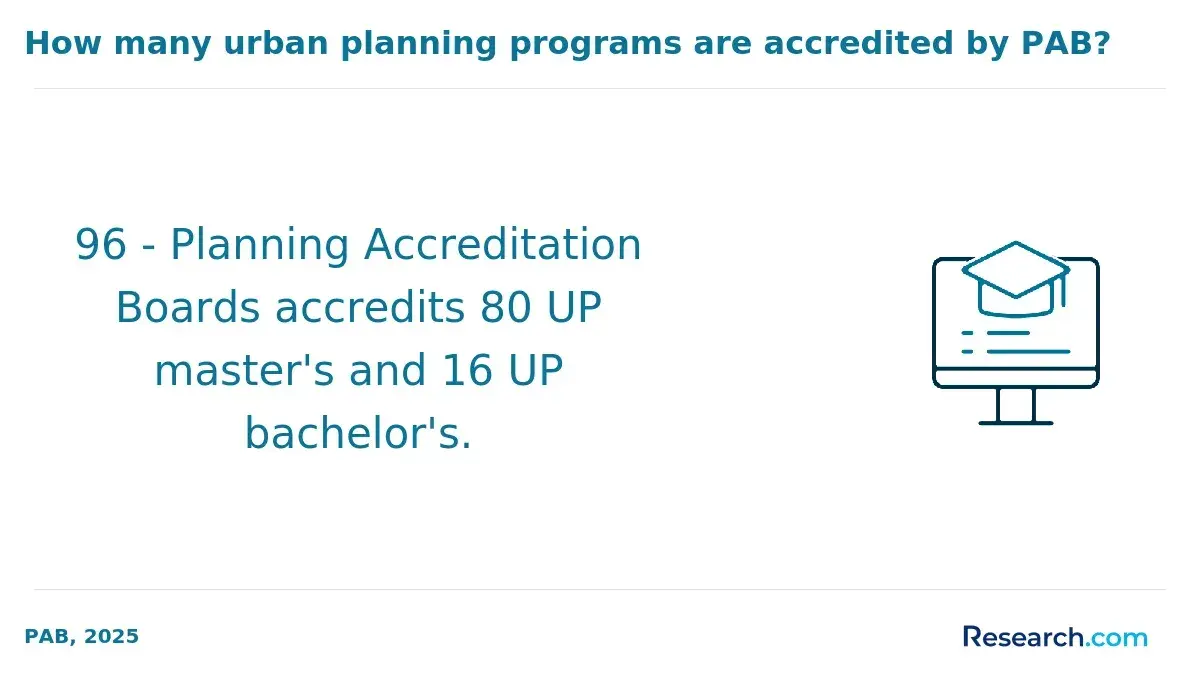
- Planning Accreditation Board recognition: If you are considering a planning degree, check whether the program is accredited by the Planning Accreditation Board, particularly if you want a traditional professional planning pathway.
- GIS and data training: Employers increasingly expect planners to interpret spatial data, maps, land use patterns, infrastructure needs, and demographic trends.
- Studio or capstone work: Applied projects help you build a portfolio that demonstrates real planning judgment, not just classroom knowledge.
- Internship access: Programs with relationships across municipal agencies, consulting firms, regional commissions, and nonprofits can make it easier to gain experience.
- Local planning exposure: Pennsylvania planning work often involves older infrastructure, historic preservation, regional fragmentation, rural-urban land use conflicts, and redevelopment of legacy industrial areas.
What urban planning specializations are available in Pennsylvania?
Urban planning is not a single job track. In Pennsylvania, planners may focus on growth management in metropolitan areas, redevelopment in older communities, farmland preservation, transit access, stormwater planning, housing policy, or neighborhood revitalization. Choosing a specialization early can help you select internships, electives, software skills, and professional contacts more strategically.
| Specialization | What it involves | Where it fits in Pennsylvania | Good fit if you enjoy |
| Sustainable development planning | Balancing growth, environmental protection, land use efficiency, and long-term resource management | Green infrastructure, climate resilience, redevelopment, energy-conscious development, and open-space planning | Environmental policy, systems thinking, sustainability analysis, and public problem-solving |
| Historic preservation planning | Protecting and adapting historic structures, districts, and cultural landscapes while allowing communities to evolve | Philadelphia, Pittsburgh, older boroughs, industrial heritage areas, and historic town centers | Architecture, history, public policy, design review, and community identity |
| Transportation planning | Analyzing mobility, traffic patterns, transit access, pedestrian safety, road networks, and multimodal systems | Regional corridors, public transit planning, freight movement, congestion management, and complete streets | Data, infrastructure, GIS, public transit, engineering coordination, and regional planning |
| Community development | Working with residents, nonprofits, agencies, and local governments to improve neighborhoods and expand opportunity | Housing affordability, main street revitalization, economic development, neighborhood planning, and social equity initiatives | Public engagement, facilitation, housing policy, grant programs, and local implementation |
Students interested in environmental or sustainability-focused planning can also explore broader sustainable development careers to understand how planning connects with energy, resilience, conservation, public policy, and corporate sustainability work.
How should you choose a specialization?
- Choose transportation planning if you like quantitative analysis, infrastructure systems, public transit, and mobility policy.
- Choose community development if you want people-centered work involving housing, neighborhood revitalization, public meetings, and equity-focused planning.
- Choose sustainable development if you want to work on climate resilience, green infrastructure, conservation, and responsible growth.
- Choose historic preservation if you care about architectural heritage, adaptive reuse, design guidelines, and balancing development with cultural continuity.
Are there licensing requirements for urban planners in Pennsylvania?
Pennsylvania does not have a state license or registration requirement specifically for urban planners. This means you can work in planning without obtaining a Pennsylvania-issued planning license, assuming you meet the education and experience requirements set by the employer.
However, many planners pursue national certification through the American Institute of Certified Planners (AICP). AICP certification is not the same as a state license, but it can signal professional competence, ethics, planning experience, and commitment to continuing education. Candidates generally need to register with AICP, meet education and experience requirements, pass the AICP exam, and participate in certification maintenance after earning the credential.
| Credential | Purpose | When it may help |
| AICP certification | Recognizes professional planning experience and knowledge through a national certification process | Useful for career advancement, credibility, consulting roles, and competitive public-sector positions |
| Historic preservation certification | Supports work involving historic resources, preservation policy, and heritage-sensitive redevelopment | Helpful in older cities, historic districts, and preservation-focused planning roles |
| Certified Environmental Planner (CEP) | Emphasizes environmental planning, ecological impacts, and environmental management | Relevant for sustainability, environmental review, conservation, and resilience planning |
| Leadership in Energy and Environmental Design (LEED) Accredited Professional | Focuses on green building, sustainable design, and environmentally responsible development practices | Valuable when working with developers, architects, green infrastructure projects, or sustainability initiatives |
| Certified Transportation Planner (CTP) | Supports specialized transportation planning knowledge | Best for planners focused on mobility, transit, roadway systems, and regional transportation planning |
The main takeaway is simple: Pennsylvania does not require a planning license, but certification can matter. If you want to move into senior planner, project manager, consultant, transportation specialist, or planning director roles, AICP or a specialty credential may help distinguish you from candidates with similar degrees.
How long does it take to become an urban planner in Pennsylvania?
Becoming a professional urban planner in Pennsylvania typically takes six to eight years when you include undergraduate study, graduate education, internships, early work experience, and certification preparation. The timeline can be shorter for some entry-level planning support roles and longer for specialized or senior positions.
| Stage | Typical time | What happens during this stage | How to use the time well |
| Bachelor’s degree | About four years | You build a foundation in planning, policy, geography, design, environmental studies, social science, business, or another related field. | Take GIS, statistics, writing-intensive, policy, public speaking, and research courses; pursue a planning-related internship early. |
| Master’s degree | Usually one to two additional years | You develop advanced planning knowledge through studios, applied research, law and policy coursework, and specialization tracks. | Use capstone projects and studio work to create a portfolio that shows real planning analysis and recommendations. |
| Internships or applied experience | Often three months to a year | You gain exposure to public meetings, zoning review, GIS mapping, community engagement, transportation analysis, or development review. | Seek supervisors who will let you contribute to public-facing documents, maps, presentations, or research memos. |
| Certification preparation | A few additional months after meeting education and experience requirements | You prepare for the AICP exam or another credential and complete the required documentation process. | Track your planning responsibilities carefully so you can document qualifying experience later. |
One advantage of urban planning is that the field accepts several academic starting points. A student might begin with geography, sociology, public administration, environmental science, architecture, engineering, history, or management before moving into a planning-focused master’s degree or graduate certificate. If you are comparing flexible undergraduate options, reviewing the least difficult online college degrees can help you understand which majors may be more manageable while still supporting a later planning pathway.
Faster vs. stronger path: which should you choose?
- Choose a faster path if you want an entry-level planning technician, GIS assistant, community development assistant, or zoning support role and are willing to build experience before graduate school.
- Choose a stronger professional path if your goal is to become a planner, project manager, transportation planner, environmental planner, consultant, or planning director; a graduate degree can be more useful for those roles.
- Choose a career-change path if you already work in engineering, public administration, architecture, environmental work, law, social services, or finance and can add planning-focused coursework, GIS training, and applied project experience.
How much do urban planners in Pennsylvania earn?
The U.S. Bureau of Labor Statistics reports that urban and regional planners in Pennsylvania earn an annual mean wage of $75,250. Nationally, the annual mean wage for urban and regional planners is $83,720. Salaries can differ by region, employer, seniority, technical skill set, and specialization.
Urban planners in large metropolitan areas such as Philadelphia and Pittsburgh may see different compensation patterns than planners in smaller cities or rural regions. BLS data shows the following annual mean wages for urban and regional planners across Pennsylvania metropolitan and nonmetropolitan areas:
| Pennsylvania area | Annual mean wage |
| Allentown-Bethlehem-Easton | $77,940 |
| Harrisburg-Carlisle | $81,510 |
| Lancaster | $76,440 |
| Philadelphia-Camden-Wilmington | $78,920 |
| Pittsburgh | $78,500 |
| Reading | $73,640 |
| Scranton-Wilkes-Bare-Hazleton | $65,590 |
| Western Pennsylvania nonmetroplitan area | $54,600 |
Higher earnings are more likely for planners with advanced degrees, AICP certification, strong GIS and data skills, project management experience, supervisory responsibilities, or expertise in high-demand areas such as transportation, environmental review, housing policy, or large-scale development. BLS salary figures indicate that the top 10% of earners among urban planners in Pennsylvania can earn between $91,000 up to $124,000 per year.
Before choosing a school or degree, compare total cost against likely career outcomes. For a broader education ROI perspective, students may review the top US colleges with best ROI, but rankings should not replace program-specific checks such as accreditation, internship access, assistantships, and graduate placement outcomes.
The chart below provides additional salary context for urban planners.
What careers are available to urban planners in Pennsylvania?
Urban planning graduates in Pennsylvania can work in local government, regional planning organizations, state agencies, consulting firms, engineering and design companies, environmental organizations, housing agencies, universities, and nonprofits. The right role depends on whether you prefer policy, analysis, design, public engagement, infrastructure, environmental review, or implementation.
| Career path | Typical employers | Common work |
| City planner | Municipal planning departments in cities and boroughs such as Philadelphia and Pittsburgh | Zoning review, comprehensive planning, land use policy, development approvals, public meetings, and neighborhood planning |
| Regional planner | Regional agencies such as the Delaware Valley Regional Planning Commission | Transportation, land use, regional growth, environmental coordination, and cross-jurisdictional planning |
| Urban design consultant | Private planning, architecture, engineering, and design firms | Streetscape planning, site analysis, public space design, redevelopment concepts, and design guidelines |
| Environmental planner | Consulting firms, environmental organizations, public agencies, and companies such as Pennoni Associates | Environmental impact analysis, sustainability planning, compliance support, resilience planning, and resource protection |
| Transportation planner | Transit agencies, metropolitan planning organizations, engineering firms, and local governments | Transit access, traffic analysis, mobility planning, pedestrian and bicycle planning, and infrastructure coordination |
| Community development planner | Nonprofits, housing agencies, local governments, and organizations such as the Pennsylvania Housing Finance Agency | Affordable housing, neighborhood revitalization, grant programs, resident engagement, and economic development |
Entry-level roles to look for
- Planning assistant
- Assistant planner
- GIS technician or GIS analyst
- Community development associate
- Zoning technician
- Transportation planning assistant
- Environmental planning assistant
- Research analyst for a planning agency or consulting firm
What are the typical responsibilities of urban planners in Pennsylvania?
An urban planner’s daily work changes by employer and specialization. A municipal planner may spend substantial time on zoning, development applications, public meetings, and comprehensive plans. A transportation planner may focus on mobility data, transit access, and roadway improvements. A community development planner may work more directly with residents, nonprofits, housing programs, and grant-funded projects.
| Responsibility | Why it matters | Skills involved |
| Research land use, demographics, infrastructure, and environmental conditions | Planning decisions need evidence, not assumptions. | Data analysis, GIS, policy research, writing, and interpretation of local conditions |
| Coordinate with officials, developers, agencies, and residents | Planning work requires agreement across groups with different priorities. | Communication, negotiation, facilitation, and stakeholder management |
| Review development proposals and zoning compliance | Projects must align with local ordinances, adopted plans, and community goals. | Zoning knowledge, legal interpretation, site review, and technical writing |
| Use Geographic Information Systems | Maps and spatial analysis help planners identify patterns, risks, and opportunities. | GIS software, data visualization, spatial analysis, and presentation design |
| Lead public engagement | Residents often understand local needs, trade-offs, and concerns better than outside decision-makers. | Meeting design, public speaking, survey methods, conflict management, and inclusive outreach |
| Prepare long-range plans | Communities need coordinated strategies for housing, transportation, infrastructure, land use, and services. | Strategic planning, policy writing, scenario analysis, and implementation planning |
| Present recommendations to commissions and councils | Plans often require approval, funding, or policy action. | Briefing skills, visual communication, defensible analysis, and public accountability |
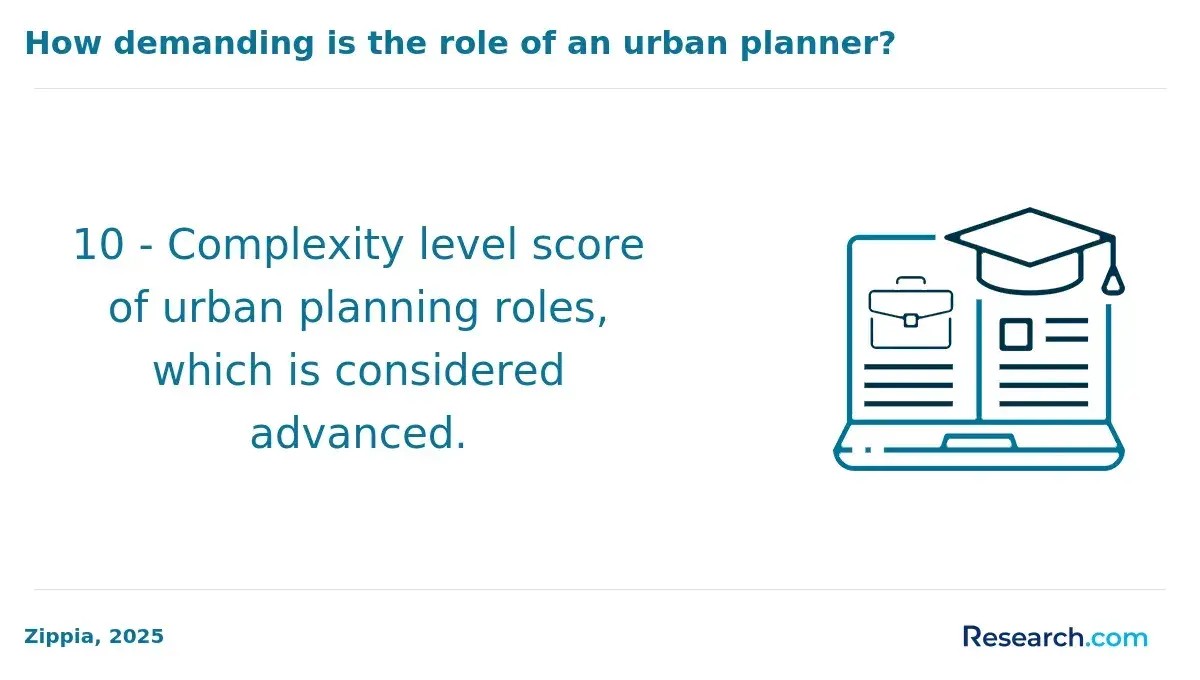
Planning is inherently interdisciplinary. Professionals enter the field from public administration, engineering, law, geography, design, environmental science, business, social services, and other backgrounds. Students interested in an environmental pivot may compare the cheapest environmental science programs online if they want a cost-conscious route into sustainability-related planning work.
Using 2024 data from Zippia, the chart below presents the top skills for urban planners.
What complementary skills can strengthen an urban planning career in Pennsylvania?
The strongest planners are not only good at land use and zoning. They also understand budgets, law, public health, communication, data, environmental constraints, social needs, and political feasibility. The sections below explain when related skills are genuinely useful and when they may be unnecessary.
Business, finance, and management skills
Urban planning projects depend on budgets, funding cycles, grant applications, capital improvement plans, and negotiations between public agencies and private developers. If you want to manage projects, lead a department, work in consulting, or coordinate public-private partnerships, business training can be valuable. Students comparing formal business options can review the best business schools in Pennsylvania, while professionals seeking graduate-level finance training may consider whether one of the cheapest online masters in finance fits their career goals.
An advanced business degree may also help planners who want leadership roles, but it is not automatically necessary for every planning job. A planner considering management, consulting, development finance, or executive-level work can compare fast-track MBA programs against planning-focused graduate degrees, public administration programs, and employer-supported certificates.
Public health, nutrition, and social services knowledge
Planning decisions influence access to food, parks, sidewalks, transportation, housing, clinics, schools, and safe public spaces. Public health knowledge can help planners address food deserts, walkability, environmental burdens, and neighborhood-level health disparities. Readers interested in this connection can examine how to become a nutritionist in Pennsylvania as one example of how community health expertise differs from, but can complement, planning work.
Social services knowledge is also useful in housing, homelessness response, aging services, disability access, and neighborhood revitalization. Planners who collaborate with case managers, housing advocates, and community organizations can benefit from understanding social worker education requirements in Pennsylvania and social worker degree requirements in Pennsylvania.
Legal, regulatory, and compliance skills
Urban planners routinely work with zoning ordinances, land development codes, subdivision regulations, environmental requirements, public hearing procedures, and comprehensive plans. They do not need to become attorneys, but they do need to read regulations carefully and explain them clearly. If you are interested in legal support skills, reviewing how to become a paralegal in Pennsylvania can help you understand how legal research and documentation skills may support planning work.
Accounting, budgeting, and project cost skills
Financial literacy helps planners evaluate project feasibility, compare alternatives, understand public funding limits, and communicate trade-offs to elected officials and residents. This is especially important in infrastructure, housing, transportation, and redevelopment work. Students who want a deeper finance or accounting foundation can compare the best accounting schools in Pennsylvania or learn about how to become an accountant in Pennsylvania before deciding whether a full accounting path is necessary.
Communication and accessibility expertise
Community engagement is more effective when residents can understand the planning process, participate comfortably, and see how their feedback is used. Planners working with schools, disability advocates, healthcare providers, or community organizations may benefit from stronger knowledge of communication barriers and accessibility needs. For example, understanding speech pathologist requirements in Pennsylvania can provide useful context for inclusive communication, although it is not a standard requirement for urban planning careers.
Investigative and analytical methods from other fields
Some planning projects involve site history, environmental conditions, public safety concerns, infrastructure failures, or redevelopment of complex properties. While forensic science is not a typical planning credential, structured investigation skills can support evidence-based analysis in certain projects. Readers curious about that field can review the pathway to a forensic science degree in Pennsylvania as a separate career option rather than a required planning step.
How is technology reshaping urban planning in Pennsylvania?
Technology is changing what employers expect from planners. GIS remains one of the most important technical tools, but planners are also using data dashboards, public engagement platforms, scenario modeling, remote sensing, transportation data, visualization tools, and smart infrastructure information to make better decisions.
| Technology trend | How planners use it | Career implication |
| GIS and spatial analysis | Mapping zoning, parcels, flood risk, transit access, population patterns, and infrastructure gaps | GIS skills can improve entry-level competitiveness and support advancement into analyst or specialist roles. |
| Data dashboards and public information tools | Tracking housing, transportation, land use, permits, and project progress | Planners need to explain data clearly to nontechnical audiences. |
| Scenario modeling | Comparing future development patterns, transportation investments, or environmental impacts | Employers may value planners who can evaluate trade-offs before decisions are finalized. |
| Online engagement platforms | Collecting resident input through surveys, mapping tools, virtual meetings, and comment portals | Digital engagement can expand participation, but planners must still address equity and access gaps. |
| AI-assisted analysis | Supporting document review, summarization, pattern recognition, and early-stage research | Planners still need professional judgment, legal awareness, and community context; AI should not replace public accountability. |
Common mistakes to avoid when preparing for an urban planning career
| Mistake | Why it can hurt you | Better approach |
| Choosing a program without checking accreditation or planning relevance | A degree may be interesting but not aligned with professional planning roles. | Check Planning Accreditation Board status, curriculum, internship access, and graduate outcomes. |
| Looking only at tuition | The cheapest option may lack internships, GIS training, or local employer connections. | Compare total cost, assistantships, transfer policies, time to completion, and job placement support. |
| Assuming all planning jobs require the same degree | Transportation, housing, environmental, GIS, and zoning roles may value different skills. | Read actual job postings in Pennsylvania and identify repeated requirements. |
| Ignoring GIS and data skills | Many planning roles require mapping, spatial analysis, or evidence-based recommendations. | Build GIS experience through coursework, certificates, internships, and portfolio projects. |
| Waiting too long to get field experience | Planning is applied work, and employers often want evidence that you can work with real communities and regulations. | Pursue internships, studio projects, volunteer planning commission exposure, or community development work early. |
| Relying only on rankings | A highly ranked school may not be the best match for your specialization, location, budget, or schedule. | Use rankings as one input, then evaluate curriculum, faculty, local partnerships, and cost. |
| Assuming salary outcomes are guaranteed | Pay depends on employer, region, experience, specialization, and leadership responsibilities. | Use BLS data as a baseline and compare Pennsylvania job postings for current employer expectations. |
Are there available scholarships for urban planners in Pennsylvania?
Students preparing for urban planning careers in Pennsylvania can look for scholarships through planning organizations, foundations, universities, and local civic groups. Scholarship criteria often include academic performance, financial need, Pennsylvania residency or enrollment, planning commitment, and participation in an accredited planning program.
| Scholarship or award | Provider | Who it supports | Key details to check |
| Francis Pitkin Scholarship | Pennsylvania Chapter of the American Planning Association | Residents or students enrolled in accredited institutions in Pennsylvania who are entering junior or senior years or graduate programs | Applicants must maintain a minimum GPA of 3.0 and demonstrate financial need. |
| Richard P. Byler Charitable Fund | The Philadelphia Foundation | Students pursuing planning or related fields | Funding amounts can vary, and support may apply to academic and professional development. |
| Leslie and Greta Spaulding Education Fund | Pennsylvania Chapter of the American Planning Association | Students in planning programs | The award emphasizes academic achievement and community engagement. |
| Richard G. Bickel Planning Education Award | Planning education award connected to Pennsylvania planning study | Students enrolled in Planning Accreditation Board-accredited programs in Pennsylvania | The award recognizes academic strength and commitment to a planning career. |
How to reduce the cost of becoming an urban planner
- Ask each program about assistantships, tuition remission, paid research roles, and public service fellowships.
- Compare in-state tuition, online options, and part-time formats if you plan to work while studying.
- Use internships strategically; paid internships can reduce debt while improving job prospects.
- Check whether your employer offers tuition support if you already work in government, engineering, environmental consulting, or community development.
- Apply early for scholarships because planning awards may have narrow eligibility windows.
What urban planning internships or practical experiences can I pursue in Pennsylvania?
Internships are one of the most important steps in becoming an urban planner because they show employers that you can apply classroom knowledge to real communities, regulations, public meetings, maps, and planning documents. In Pennsylvania, students can find practical experience through state agencies, regional commissions, local planning departments, consulting firms, engineering firms, housing agencies, and nonprofits.
| Internship setting | Example organization | Possible work | Why it helps |
| State government | Pennsylvania Department of Community and Economic Development | Policy research, community outreach, economic development analysis, and state-level planning initiatives | Provides exposure to statewide programs and the connection between planning, funding, and policy. |
| Regional planning agency | Delaware Valley Regional Planning Commission | Transportation planning, land use analysis, communications, data analysis, public engagement, and planning documents | Builds understanding of cross-jurisdictional planning in the Greater Philadelphia region. |
| Private consulting or engineering firm | Urban Engineers in Philadelphia | Project management support, urban design, infrastructure planning, analysis, and client-facing planning work | Shows how planning recommendations move through contracts, deadlines, budgets, and implementation constraints. |
| Local government or planning commission | Municipal planning departments and county planning offices | Zoning review, meeting preparation, mapping, comprehensive planning, subdivision review, and resident communication | Gives practical experience with the everyday regulatory work many planners do early in their careers. |
How to make an internship count
- Ask to contribute to work products you can later discuss in interviews, such as maps, memos, public engagement summaries, or plan sections.
- Keep a record of software used, meetings attended, regulations reviewed, and planning tasks completed.
- Request feedback on your writing, maps, presentations, and public communication.
- Build relationships with supervisors, planning commissioners, consultants, and agency staff.
- Use the internship to test whether you prefer public-sector planning, consulting, policy analysis, design, transportation, or community development.
What professional organizations in Pennsylvania should I join to advance my career as an urban planner?
Professional organizations can help students and early-career planners find mentors, understand local planning issues, hear about jobs, attend workshops, and learn from practitioners outside the classroom. Membership is especially useful in a relationship-driven field where internships, public meetings, conferences, and committee work can lead to job leads and project partnerships.
| Organization | Established | How it can help |
| American Planning Association (APA) – Pennsylvania Chapter | 1978 | Provides planning advocacy, education, conferences, workshops, networking, and professional development for planners in Pennsylvania. |
| Urban Affairs Coalition (UAC) | 1968 | Builds partnerships among nonprofits, businesses, and government organizations addressing urban issues and community challenges. |
| Governor’s Center for Local Government Services | State-run organization within the Pennsylvania Department of Community and Economic Development | Offers technical assistance, guidance, resources, and funding support for local planning and community development efforts. |
Questions to ask before joining a professional organization
- Does the organization offer student memberships, reduced fees, or scholarship access?
- Are there local events near Philadelphia, Pittsburgh, Harrisburg, Lancaster, or your region?
- Can members access job boards, mentorship programs, or AICP preparation resources?
- Does the organization include professionals in your target specialization, such as transportation, housing, sustainability, or community development?
- Will participation help you meet practitioners who hire interns or entry-level planners?
Is becoming an urban planner in Pennsylvania worth it?
Urban planning in Pennsylvania can be worth it if you want a career that combines public service, policy, design, data, community engagement, and long-term problem-solving. It is especially appealing for people interested in housing affordability, transportation access, infrastructure modernization, environmental sustainability, historic preservation, and redevelopment of older communities.
However, it is not the right fit for everyone. Planning work can involve slow approval processes, political disagreement, public criticism, budget limits, and trade-offs where no option satisfies every stakeholder. If you prefer fast decisions, highly independent work, or purely technical tasks without public engagement, another field may be a better match.
| This path may be a good fit if you... | Consider another path if you... |
| Want to work on real community problems involving housing, land use, transportation, and the environment | Do not want to attend public meetings or navigate competing stakeholder interests |
| Enjoy research, maps, policy, writing, and public communication | Prefer work with clear right-or-wrong answers and little political context |
| Are willing to build technical skills such as GIS and data analysis | Want to avoid software, mapping, demographic analysis, or regulatory documents |
| Can balance community needs, legal constraints, budgets, and long-term planning goals | Find slow implementation timelines frustrating |
| Value public service and visible local impact | Want salary outcomes that are guaranteed regardless of region, employer, or experience |
Key Insights
- Pennsylvania does not require a state planning license, but AICP certification and specialty credentials can improve credibility and advancement potential.
- A bachelor’s degree can open some entry-level doors, but a master’s degree in urban or regional planning is often the stronger route for professional planner roles.
- The typical path takes six to eight years when undergraduate study, graduate education, internships, and certification preparation are included.
- Urban and regional planners in Pennsylvania earn an annual mean wage of $75,250, with metro-area wages ranging from $54,600 in the Western Pennsylvania nonmetroplitan area to $81,510 in Harrisburg-Carlisle.
- Specialization matters. Transportation, sustainability, community development, historic preservation, environmental planning, and GIS-heavy roles require different coursework and internship choices.
- Internships are essential because planning is applied work. Employers want evidence that you can interpret regulations, analyze data, create maps, write clearly, and engage the public.
- Do not choose a degree based only on school reputation or tuition. Check accreditation, curriculum, field placements, GIS training, faculty expertise, assistantships, and local employer connections.
- The best planners combine technical skill with public judgment. Pennsylvania communities need professionals who can work across housing, infrastructure, climate, transportation, preservation, finance, and community engagement challenges.
Related Articles for Nearby States
- 2027 How to Become an Urban Planner in New Jersey
- 2027 How to Become an Urban Planner in Delaware
- 2027 How to Become an Urban Planner in Maryland
- 2027 How to Become an Urban Planner in New York
- 2027 How to Become an Urban Planner in West Virginia
- 2027 How to Become an Urban Planner in Ohio
- 2027 How to Become an Urban Planner in Virginia
- 2027 How to Become an Urban Planner in Connecticut
- 2027 How to Become an Urban Planner in Rhode Island
- 2027 How to Become an Urban Planner in Massachusetts
References:
- Korhonen, V. (August 2024). Population in the states of the U.S. 2024. Statista. https://www.statista.com/statistics/183497/population-in-the-federal-states-of-the-us
- O*NET OnLine (n.d.). Urban and Regional Planners, 19-3051.00. Retrieved from https://www.onetonline.org/link/summary/19-3051.00 https://www.bls.gov/oes/2023/may/oes_pa.htm
- U.S. Bureau of Labor Statistics (August 2025). Urban and Regional Planners. https://www.bls.gov/ooh/Life-Physical-and-Social-Science/Urban-and-regional-planners.htm
- Zippia (January 2025). Urban Planner skills for your resume and career. https://www.zippia.com/urban-planner-jobs/skills
- Zippia (December 2025). Urban Planner Salary. https://www.zippia.com/salaries/urban-planner
Other Things to Know About Becoming an Urban Planner in Pennsylvania
To become an urban planner in Pennsylvania in 2027, one typically needs a bachelor's degree in urban planning or a related field. A master's degree in urban or regional planning increases job prospects. Accreditation from the Planning Accreditation Board is highly recommended.
In 2027, accredited urban planning programs in Pennsylvania are offered by the University of Pennsylvania, Temple University, and Pennsylvania State University. Each institution provides diverse specialization options and strong connections with local agencies to enhance practical learning experiences.


