2027 How to Become an Urban Planner in Hawaii

Co-Founder and Chief Data Scientist
Becoming an urban planner in Hawaii means preparing for a career where land, housing, transportation, climate risk, culture, and economic development are closely connected. The state has strong household income compared with the US overall, but it also faces planning pressures that are difficult to separate from geography: limited developable land, infrastructure constraints, coastal exposure, high housing costs, and the need to protect Native Hawaiian cultural and environmental resources. In 2025, Hawaii had a median household income of $103,611, compared with the national median household income of $87,750. At the same time, Hawaii ranked 50th among US states for economic performance, making thoughtful community planning especially important.
This guide explains how to become an urban planner in Hawaii, including the education you may need, whether licensure is required, how long the path can take, what planners earn, where jobs are found, and how to choose a specialization. It is written for students, career changers, and early-career professionals who want a realistic view of the field before investing time and money in a planning degree or certification.
Quick Answer: How do you become an urban planner in Hawaii?
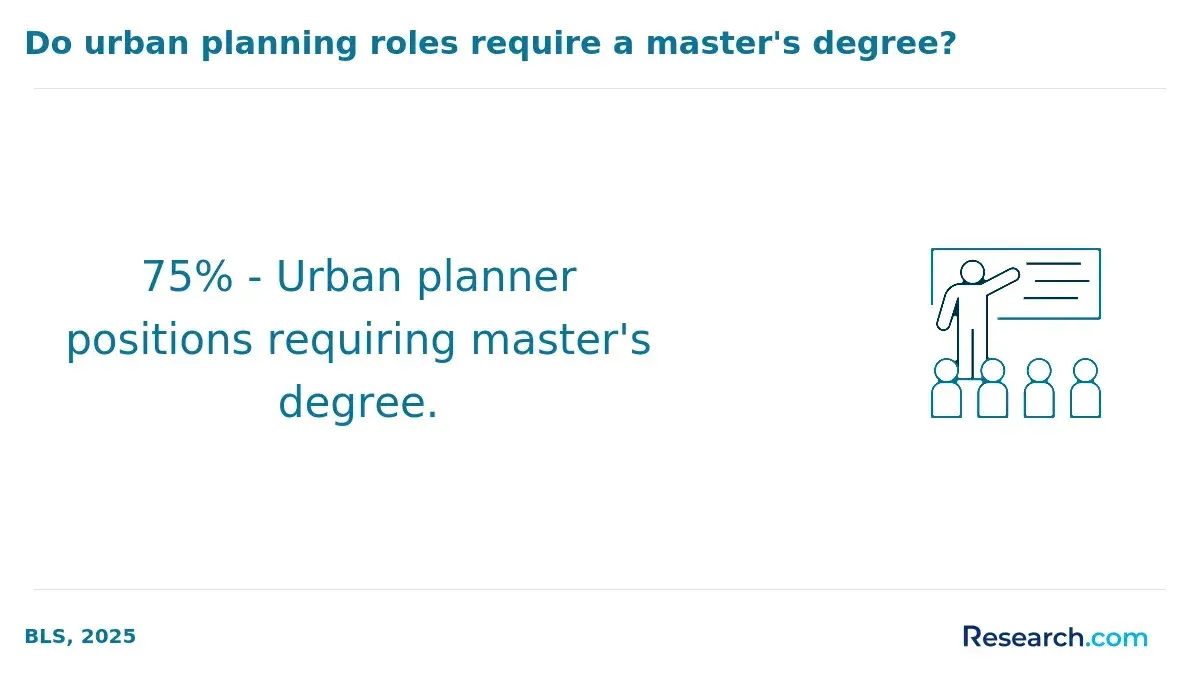
Most urban planners in Hawaii start with a bachelor’s degree in planning, environmental studies, geography, architecture, public policy, sustainability, or a related field. Many mid-level and advanced planning roles prefer or require a master’s degree, especially a Master of Urban and Regional Planning. Hawaii does not have a separate state license for urban planners, but the American Institute of Certified Planners credential can strengthen a planner’s credibility after they gain qualifying experience. A typical path takes about 6 to 8 years when it includes undergraduate study, graduate education, internships, and certification preparation.
Key Things to Know About Becoming an Urban Planner in Hawaii
- Employment for urban and regional planners in the US was projected to increase by 4% through 2033.
- Urban and regional planners across the US had a median annual wage of $85,020 in 2025, equal to $40.88 per hour. In Hawaii, urban and regional planners had a median hourly wage of $42.23 during the same period.
- Planning work in Hawaii is shaped by island-specific priorities, including coastal resilience, environmental sustainability, disaster preparedness, affordable housing, transportation access, and cultural preservation.
- The University of Hawaii at Manoa and Hawaii Pacific University are the two local academic institutions noted for degree programs in urban planning, sustainability, and related fields. Both institutions are accredited by the Western Association of Schools and Colleges (WASC).
- What are the education requirements for urban planners in Hawaii?
- What urban planning specializations are available in Hawaii?
- Are there licensing requirements for urban planners in Hawaii?
- How long does it take to become an urban planner in Hawaii?
- How much do urban planners in Hawaii earn?
- What careers are available to urban planners in Hawaii?
- What are the typical responsibilities of urban planners in Hawaii?
- What are the future trends in urban planning for Hawaii?
- How do local regulations and zoning laws impact urban planning projects in Hawaii?
- Should urban planners in Hawaii invest in business education to complement their planning skills?
- What complementary scientific disciplines can enhance urban planning in Hawaii?
- What are the investment costs for urban planning education and certification in Hawaii?
- How do certification processes for diverse careers compare in Hawaii?
- What challenges do urban planners in Hawaii face and how can they overcome them?
- How can urban planning and social work converge to address community challenges in Hawaii?
- How can urban planners enhance financial management for successful projects in Hawaii?
- How can legal expertise complement an urban planning career in Hawaii?
- How can understanding social work amplify urban planning strategies in Hawaii?
- Are there available scholarships for urban planners in Hawaii?
- What urban planning internships or practical experiences can I pursue in Hawaii?
- What professional organizations in Hawaii should I join to advance my career as an urban planner?
What are the education requirements for urban planners in Hawaii?
Urban planning does not have one single required major in Hawaii, but employers usually expect formal training in planning, public policy, environmental analysis, design, GIS, economics, transportation, or community development. Because Hawaii’s planning issues involve land scarcity, coastal hazards, conservation, cultural sites, housing demand, and public infrastructure, students should choose coursework that builds both technical and community engagement skills.
- Bachelor’s degree: A bachelor’s degree is commonly the minimum credential for entry-level planning assistant, planning technician, environmental planning, GIS, or community development roles. Hawaii does not offer a broad selection of accredited undergraduate urban planning programs, so students often major in adjacent fields such as environmental science, geography, architecture, environmental design, public administration, or sustainability.
- Relevant major: Strong preparation can come from geography, environmental science, architecture, public policy, civil infrastructure, data analysis, economics, anthropology, or design. The best choice depends on the type of planning work you want to do.
- Core coursework: Useful classes include land use planning, urban design, zoning, transportation systems, housing policy, environmental policy, GIS, statistics, climate adaptation, community engagement, and planning law.
- Graduate education: A Master of Urban and Regional Planning can improve access to policy, supervisory, technical, and specialized planning roles. The University of Hawaii at Manoa offers a graduate pathway that is especially relevant for students who want to work in island, Asia-Pacific, environmental, or community-focused planning contexts.
- Practical experience: Internships, studio projects, fieldwork, and applied research are not optional extras; they are often what turns coursework into employable skills. Students interested in planning, conservation, sustainability, or resource management can also explore related environmental career paths.
| Education path | Best for | What to focus on | Possible limitation |
| Bachelor’s degree in a related field | Students seeking entry-level planning support roles | GIS, research methods, land use, environmental policy, writing, public participation | May not be enough for advanced planner or policy leadership roles |
| Master of Urban and Regional Planning | Students targeting professional planner positions or advancement | Planning theory, studios, law, housing, transportation, resilience, applied research | Requires added time and tuition investment |
| Certificate or short professional training | Working professionals adding a focused skill | GIS, climate adaptation, grant writing, floodplain management, public engagement | Usually supplements, rather than replaces, a degree |
| Interdisciplinary route | Career changers from business, law, science, social work, architecture, or public service | Transferable skills plus planning-specific tools and regulations | May require extra planning coursework to compete for specialized roles |
Questions to ask before choosing a planning program
- Is the institution regionally accredited?
- Does the curriculum include GIS, planning law, zoning, community engagement, and environmental review?
- Are there studio courses or applied projects connected to Hawaii communities?
- Can students complete internships with county, state, nonprofit, or consulting organizations?
- Does the program support AICP preparation or professional networking?
- Are online courses accepted if you want to work in Hawaii after graduation?
What urban planning specializations are available in Hawaii?
Urban planning in Hawaii is not limited to drawing land use maps or reviewing building proposals. The state’s geography and community needs create demand for planners who can connect policy, environmental science, engineering, housing, transportation, cultural knowledge, and public participation. Choosing a specialization early can help you select the right courses, internships, and certifications.
| Specialization | What planners do | Why it matters in Hawaii | Helpful skills |
| Environmental planning | Evaluate development impacts, support conservation strategies, review environmental policies, and help align projects with sustainability goals | Hawaii’s ecosystems, coastlines, watersheds, and natural resources are central to community well-being and economic activity | Environmental review, GIS, climate risk analysis, conservation policy, technical writing |
| Transportation planning | Study travel patterns, transit needs, traffic safety, pedestrian access, and infrastructure improvements | Island geography, congestion, commuting patterns, and limited road capacity make mobility planning a major public issue | Data analysis, public transit planning, traffic modeling, equity analysis, stakeholder coordination |
| Community development | Work with residents, agencies, and nonprofits to improve housing, public spaces, services, and neighborhood planning | Planning decisions often affect affordability, cultural continuity, public access, and quality of life | Facilitation, grant writing, housing policy, demographic research, conflict resolution |
| Disaster and emergency planning | Prepare mitigation, recovery, and resilience strategies for hazards | Hawaii must plan for hurricanes, flooding, volcanic activity, coastal exposure, and infrastructure disruption | Hazard mitigation, emergency management, risk mapping, interagency coordination, resilience planning |
Which specialization should you choose?
- Choose environmental planning if you are drawn to conservation, coastal issues, climate adaptation, permitting, or environmental review.
- Choose transportation planning if you enjoy data, infrastructure systems, mobility equity, transit, and long-term capital planning.
- Choose community development if you want to work directly with residents, housing organizations, neighborhood boards, and public agencies.
- Choose disaster and emergency planning if you want to focus on resilience, hazard mitigation, recovery planning, and public safety.
Are there licensing requirements for urban planners in Hawaii?
Hawaii does not have a separate state-specific license or registration requirement for urban planners. That makes the entry path less restrictive than fields such as law, health care, accounting, or engineering. However, “no state license” does not mean “no standards.” Employers still evaluate education, planning experience, writing ability, technical skills, public engagement experience, and familiarity with local regulations.
The most recognized professional credential is certification through the American Institute of Certified Planners. AICP certification generally requires registration with the organization, qualifying education and professional experience, passing the AICP examination, and completing certification maintenance to stay current. It is not mandatory for every planning job, but it can help demonstrate professional commitment and may support advancement into senior or policy-focused roles.
| Credential | Required in Hawaii? | Best for | How it can help |
| AICP certification | No | Professional planners seeking credibility and advancement | Signals planning knowledge, ethics, and experience |
| LEED Accredited Professional | No | Planners working on sustainable development, buildings, and site planning | Shows familiarity with green building and sustainability frameworks |
| Certified Floodplain Manager | No | Planners working in hazard mitigation, flood risk, coastal planning, or emergency management | Supports work involving flood regulations and risk reduction |
| Certified Environmental Planner | No | Planners focused on environmental review and conservation-oriented planning | Highlights environmental planning knowledge and applied expertise |
If you need a flexible academic starting point, compare curriculum, accreditation, tuition, and fieldwork options in affordable online urban planning and development degree programs. Online study can work well for some students, but make sure the program gives you enough applied experience for Hawaii-based roles.
How long does it take to become an urban planner in Hawaii?
The timeline depends on whether you stop after a bachelor’s degree, pursue a master’s degree, and seek AICP certification. A practical estimate is 6 to 8 years for someone who completes undergraduate study, adds graduate preparation, gains internship experience, and prepares for professional certification.
| Stage | Typical time | What happens during this stage | Decision point |
| Bachelor’s degree | About 4 years | Build a foundation in planning-related disciplines such as environmental studies, geography, design, public policy, or sustainability | Decide whether to seek entry-level work or continue to graduate study |
| Internship or field experience | Three months to a year | Work on research, mapping, outreach, permitting, environmental review, or planning support | Use the experience to identify a specialization |
| Master’s degree | About 2 years | Complete advanced planning coursework, studios, policy analysis, and applied projects | Consider whether the cost and time align with your target roles |
| AICP preparation | Several additional months | Study for the exam and document professional experience | Decide when certification will be most useful for your career stage |
A faster path may be possible for someone with strong related experience, transferable graduate credits, or an employer that hires bachelor’s-level planning staff. A longer path may be necessary for students who attend part time, change fields, or pursue highly specialized work in environmental planning, resilience, or public policy.
How much do urban planners in Hawaii earn?
Urban planner earnings in Hawaii depend on employer type, island or county, specialization, seniority, education, technical skills, and whether the role is in government, consulting, nonprofit work, research, or development. Salary data should always be checked against the specific job title and location because “urban planner” may cover positions ranging from planning technician to senior policy planner.
Urban and regional planners across the US had a median annual wage of $84,200 in 2025, equal to approximately $40.50 per hour. Urban and regional planners in Hawaii had a median hourly wage of $41.20 during the same period.
Another cited wage snapshot for the field reports that urban and regional planners across the US had a median annual wage of $85,020 in 2025, equal to $40.88 per hour, while Hawaii urban and regional planners had a median hourly wage of $42.23. Because wage sources and reporting methods can differ, use these figures as a starting point and verify current listings before making a financial decision.
| Factor | How it may affect pay | What to do before accepting an offer |
| Education | A master’s degree can improve access to advanced planning roles | Compare the salary difference against graduate tuition and living costs |
| Experience | Senior planners, project managers, and specialists often earn more than entry-level staff | Ask how promotions, step increases, or classification levels work |
| Specialization | Environmental planning, transportation, GIS, disaster planning, and policy analysis may offer stronger opportunities in some agencies or firms | Review job postings to see which skills are repeatedly requested |
| Location and employer | Compensation can vary by county, agency, consulting firm, or nonprofit organization | Compare salary with housing, transportation, and relocation costs |
| Credentials | AICP or specialty credentials may support advancement, but they do not guarantee a raise | Ask whether certification is rewarded in the employer’s pay structure |
If you are comparing long-term career options connected to climate, energy, conservation, or planning, Research.com’s guide to sustainability career growth can help you evaluate adjacent roles.
What careers are available to urban planners in Hawaii?
Urban planners in Hawaii work across public agencies, consulting firms, nonprofits, universities, and development-related organizations. The best setting depends on whether you prefer public policy, technical analysis, design review, environmental work, community engagement, or project management.
| Career setting | Common work | Who this path fits |
| State and county government | Zoning review, land use policy, permitting, long-range plans, public hearings, environmental coordination | People who want stable public-sector work and direct involvement in local decision-making |
| Private consulting | Environmental assessments, planning studies, master plans, community outreach, development support, GIS analysis | People who enjoy project variety, client work, deadlines, and multidisciplinary teams |
| Nonprofit organizations | Community development, housing advocacy, environmental justice, resilience initiatives, grant-funded programs | People motivated by equity, community impact, and mission-driven work |
| Academic and research institutions | Policy research, data analysis, teaching support, community-based studies, applied planning projects | People interested in research, education, and evidence-based planning |
| Real estate and land development | Site feasibility, entitlement strategy, community benefits, regulatory coordination, development planning | People comfortable balancing market, regulatory, and community considerations |
Planning also intersects with infrastructure and construction. Students interested in hands-on infrastructure support may want to understand skilled trade jobs that pay well, especially when planning projects depend on implementation by construction, transportation, utilities, and building professionals.
What are the typical responsibilities of urban planners in Hawaii?
Urban planners in Hawaii translate community goals, laws, environmental constraints, and development needs into practical plans and recommendations. Their work often combines desk research, mapping, public meetings, technical review, writing, and coordination with agencies, residents, engineers, architects, developers, and elected officials.
- Research land use, population, housing, transportation, and environmental patterns across islands and communities.
- Prepare long-range plans, neighborhood plans, development policies, zoning recommendations, and resilience strategies.
- Review development proposals for consistency with zoning, environmental requirements, community plans, and public infrastructure capacity.
- Use GIS and spatial data to map hazards, infrastructure, parcels, transportation networks, land uses, and demographic patterns.
- Facilitate public meetings, workshops, surveys, and stakeholder conversations so residents can shape planning decisions.
- Coordinate with county agencies, state departments, community organizations, consultants, and elected officials.
- Write staff reports, policy memos, environmental documents, planning studies, and public-facing summaries.
- Track laws, ordinances, zoning codes, coastal policies, and environmental rules that affect land development and conservation.
-
: "
One Hawaii planner described community engagement as both the hardest and most meaningful part of the work: “On a coastal revitalization project, residents cared deeply about protecting cultural history and the shoreline. The plan improved the area, but it only worked because the community shaped it from the beginning.”
"
Skills employers often look for
- Technical skills: GIS, data analysis, mapping, policy research, environmental review, and plan writing.
- Communication skills: clear public speaking, plain-language writing, meeting facilitation, and conflict management.
- Regulatory knowledge: zoning, permitting, land use review, environmental regulations, and public process requirements.
- Cultural competence: respect for Native Hawaiian history, local community priorities, and place-based decision-making.
- Project management: timelines, budgets, consultant coordination, documentation, and stakeholder follow-up.
What are the future trends in urban planning for Hawaii?
Hawaii’s planning future is likely to be shaped by resilience, housing, infrastructure modernization, climate adaptation, and better use of data. Planners are increasingly expected to understand GIS, scenario planning, data analytics, community vulnerability, and environmental risk. These tools can help agencies and communities evaluate sea-level exposure, infrastructure needs, land use trade-offs, and long-term development patterns.
Technology will not replace the judgment of planners, especially in Hawaii, where community trust, cultural knowledge, and public process matter. AI-assisted research, digital mapping, and analytics may speed up document review or modeling, but planners will still need to verify data, explain trade-offs, and lead conversations with residents and decision-makers.
Business knowledge can also become more valuable as planners manage grants, public-private partnerships, infrastructure funding, and redevelopment proposals. Students who want stronger management training can compare options at the best business schools in Hawaii, especially if they see themselves moving into project leadership or economic development roles.
How do local regulations and zoning laws impact urban planning projects in Hawaii?
Local regulations and zoning laws determine what can be built, where it can be built, how proposals are reviewed, and which public agencies or community bodies must be involved. In Hawaii, planners must also consider environmental review, shoreline concerns, infrastructure capacity, cultural resources, public access, and county-specific procedures. A technically sound proposal can still be delayed if it does not account for local process, community priorities, or environmental constraints.
| Regulatory issue | Why it matters | Planning response |
| Zoning and land use districts | They define allowed uses, density, setbacks, and development standards | Review code requirements early and identify needed approvals before design is finalized |
| Environmental protection | Projects may affect habitats, water, coastlines, cultural sites, or hazard-prone areas | Coordinate environmental review with technical experts and agencies |
| Public participation | Community input can influence approvals, conditions, design changes, and long-term support | Engage residents early, use clear materials, and document feedback |
| County procedures | Planning rules and processes can differ across jurisdictions | Check the specific county process rather than relying on general assumptions |
| Infrastructure capacity | Roads, water, wastewater, drainage, and utilities can limit development feasibility | Include infrastructure analysis in early feasibility work |
Urban planning also affects public health and community wellness. Professionals interested in built environments, food access, and community health can learn how adjacent health careers approach community needs through this guide on how to become a nutritionist in Hawaii.
Should urban planners in Hawaii invest in business education to complement their planning skills?
Business education is not required to become an urban planner, but it can be useful for planners who want to manage large projects, evaluate financial feasibility, lead consulting teams, work in redevelopment, or negotiate public-private partnerships. Planning decisions often involve budgets, grants, risk, procurement, real estate economics, and long implementation timelines.
| Business skill | Planning use case | When it is worth learning |
| Budgeting | Estimating project costs, grant needs, and implementation phases | If you manage projects or public programs |
| Finance and feasibility | Understanding whether housing, infrastructure, or redevelopment proposals can be implemented | If you work with developers, agencies, or capital projects |
| Negotiation | Balancing community benefits, development conditions, and agency requirements | If your role involves approvals, partnerships, or stakeholder conflict |
| Leadership | Supervising staff, consultants, budgets, and public-facing work | If you want to move into senior planning or management |
For professionals who already have planning experience and want a shorter management credential, 1 year MBA programs may be worth comparing. The decision should depend on cost, opportunity cost, employer expectations, and whether business training directly supports your target role.
What complementary scientific disciplines can enhance urban planning in Hawaii?
Scientific training can strengthen a planner’s ability to evaluate risk, interpret evidence, and communicate technical findings. In Hawaii, this can matter in environmental review, infrastructure assessment, hazard mitigation, coastal planning, and site analysis. Planners do not need to become scientists, but they should be able to work effectively with environmental consultants, engineers, geologists, emergency managers, and public health professionals.
- Environmental science supports conservation planning, watershed analysis, climate adaptation, and ecological impact review.
- Geography and GIS help planners analyze land use, hazard zones, mobility patterns, and demographic change.
- Public health connects housing, transportation, food access, parks, and environmental conditions to community well-being.
- Forensic or investigative science can build habits of evidence review, documentation, and site-specific analysis. Students considering that kind of technical path can review this guide to a forensic science degree in Hawaii.
What Are the Investment Costs for Urban Planning Education and Certification in Hawaii?
The cost of preparing for an urban planning career may include tuition, fees, books, software, transportation, housing, internship-related expenses, certification exam costs, conference registration, professional membership dues, and continuing education. The right investment depends on your starting point and target role. A bachelor’s degree may be enough for some entry-level jobs, while a master’s degree can be more useful for advancement, specialization, or competitive public-sector roles.
| Cost category | What to check | How to reduce risk |
| Tuition and fees | In-state, out-of-state, online, and graduate tuition differences | Compare total program cost, not only per-credit tuition |
| Living and transportation costs | Housing, commuting, parking, relocation, and island-specific expenses | Build a realistic budget before enrolling |
| Software and materials | GIS software access, design tools, books, fieldwork materials | Ask whether software is included through the school |
| Internship costs | Paid versus unpaid placements, travel, schedule flexibility | Prioritize internships that build strong portfolio work |
| Certification and membership | AICP exam, continuing education, professional dues, workshops | Ask employers whether they reimburse certification or conference expenses |
| Opportunity cost | Income you may lose while studying full time | Compare full-time, part-time, online, and employer-supported options |
If you are comparing planning with business graduate education, reviewing online MBA fees can help you understand how different graduate investments may affect your budget and return on investment.
How Do Certification Processes for Diverse Careers Compare in Hawaii?
Urban planning in Hawaii is comparatively flexible because there is no separate state planner license. AICP certification is professional and nationally recognized, but it is not the same as a state license. Other careers have stricter legal requirements because they involve clinical care, legal services, financial reporting, or regulated public practice.
| Career area | Typical credential structure | Key difference from urban planning |
| Urban planning | No separate Hawaii planner license; AICP certification may be voluntary and career-enhancing | Employer expectations often matter more than state licensure |
| Speech-language pathology | State-specific licensure and advanced education are central to practice | Legal permission to practice is a core requirement |
| Accounting | Credentials may be tied to regulated financial services and professional standards | Licensure can affect the services a professional may provide |
| Paralegal and legal support | Requirements vary by role, employer, and legal environment | Work is closely tied to legal procedure and attorney supervision |
For comparison, review the speech pathologist requirements in Hawaii. Seeing how another regulated profession works can help you understand why planning relies more heavily on education, experience, portfolio quality, public-sector knowledge, and professional reputation.
What challenges do urban planners in Hawaii face and how can they overcome them?
Planning in Hawaii requires careful trade-offs. The same project may involve housing needs, environmental concerns, infrastructure limits, cultural preservation, neighborhood opposition, economic development goals, and disaster risk. Successful planners do not avoid conflict; they structure it into a transparent public process and use evidence to clarify options.
| Challenge | Why it is difficult | Better approach |
| Limited land and high housing demand | Development pressure can conflict with conservation, infrastructure, and neighborhood concerns | Use data, community input, and realistic zoning tools to evaluate trade-offs |
| Climate and hazard exposure | Coastal, flooding, volcanic, and storm risks affect long-term land use decisions | Integrate hazard mapping and resilience planning early |
| Community trust | Residents may have good reasons to distrust plans that feel imposed | Engage early, explain constraints plainly, and show how feedback changes decisions |
| Regulatory complexity | Approvals may involve multiple agencies, codes, and public processes | Create a permitting roadmap before major design decisions are locked in |
| Funding limits | Plans often fail when implementation money is unclear | Connect plans to grants, capital budgets, partnerships, and phased implementation |
Planners who manage budgets, grants, and implementation plans may benefit from financial training. A related pathway is understanding how to become an accountant in Hawaii, particularly for professionals interested in public finance, budgeting, or project controls.
How can urban planning and social work converge to address community challenges in Hawaii?
Urban planning shapes the physical environment, while social work addresses individual, family, and community well-being. In Hawaii, the two fields can overlap in housing stability, homelessness response, disaster recovery, public facilities, elder-friendly communities, youth services, accessibility, and neighborhood revitalization. A plan that improves sidewalks, transit, parks, or housing can fail if it ignores social service needs; likewise, social programs may struggle if the built environment creates barriers.
- Housing planners and social workers can coordinate around homelessness prevention, supportive housing, and tenant stability.
- Disaster recovery plans can include both rebuilding priorities and long-term community support.
- Neighborhood plans can integrate access to clinics, schools, food resources, parks, and public transportation.
- Community engagement can be strengthened by using trauma-informed and culturally responsive approaches.
Professionals interested in this intersection can review the social worker education requirements in Hawaii to better understand how social service training complements planning practice.
How Can Urban Planners Enhance Financial Management for Successful Projects in Hawaii?
Financial management is one of the most practical skills a planner can develop. Plans require funding, and funding requires credible cost estimates, phasing, grant strategy, risk assessment, and accountability. In Hawaii, where construction, infrastructure, and land costs can make implementation difficult, planners who understand budgets are better equipped to turn adopted plans into completed projects.
- Create phased implementation plans instead of relying on one large unfunded concept.
- Use cost-benefit analysis when comparing alternatives, especially for transportation, housing, or resilience projects.
- Coordinate early with finance, procurement, engineering, and legal staff.
- Track grant deadlines, matching fund requirements, reporting rules, and allowable expenses.
- Communicate financial trade-offs in plain language for elected officials and the public.
Students who want stronger budgeting and financial analysis skills can compare programs at the best accounting schools in Hawaii, especially if they plan to work in public administration, infrastructure finance, or project management.
How Can Legal Expertise Complement an Urban Planning Career in Hawaii?
Urban planning is closely tied to law because planners interpret zoning, prepare findings, review entitlements, support public hearings, and help agencies make legally defensible decisions. A planner does not need to become an attorney, but a strong understanding of land use law, administrative process, public records, environmental rules, contracts, and ethics can reduce delays and improve project quality.
| Legal knowledge area | Planning value |
| Zoning and land use codes | Helps planners evaluate what is allowed and what approvals are needed |
| Administrative procedure | Supports fair public hearings, documentation, and decision-making |
| Environmental review | Helps identify required analysis and agency coordination |
| Contracts and procurement | Supports consultant selection, scopes of work, and project delivery |
| Public records and ethics | Protects transparency and public trust |
If you are interested in legal support roles or want to understand legal workflow more deeply, review this guide on how to become a paralegal in Hawaii.
How Can Understanding Social Work Amplify Urban Planning Strategies in Hawaii?
Social work knowledge can help planners design processes and projects that better account for vulnerable populations, household instability, cultural context, disability access, aging, displacement risk, and disaster recovery stress. This matters because planning decisions often affect people who have the least ability to attend long public meetings, interpret technical documents, or absorb housing and transportation disruptions.
- Use outreach methods that reach renters, elders, families, people with disabilities, and low-income residents.
- Include social service providers in housing, transit, park, and recovery planning conversations.
- Evaluate whether projects may displace residents or reduce access to essential services.
- Pair physical improvements with programs that support long-term community stability.
For a deeper view of the education behind this adjacent field, see social worker degree requirements in Hawaii.
Are there available scholarships for urban planners in Hawaii?
Scholarships can reduce the cost of planning-related education, especially for students pursuing landscape architecture, environmental design, urban design, or urban and regional planning at Hawaii institutions. Availability, eligibility, deadlines, and award amounts can change, so students should confirm details directly with the school, foundation, or professional association before applying.
- PBR Hawaii Scholarship: Offered by PBR Hawaii & Associates, this scholarship supports students connected to the University of Hawaii at Manoa's School of Architecture, especially those focused on landscape architecture, environmental design, or urban design. Funds may help cover education-related costs such as tuition and fees.
- Hawaii Chapter ASLA/David T. Woolsey Scholarship: Administered by the Landscape Architecture Foundation, this award provides $3,000 to undergraduate and graduate students in accredited landscape architecture programs. Eligibility includes students whose permanent residence is in Hawaii or who attend a university within the Hawaii Chapter ASLA boundary.
- APA Hawaii Chapter Student Scholarship: This scholarship supports students in the Department of Urban and Regional Planning at the University of Hawaii. It recognizes academic achievement and planning-related engagement, with awards usually given to two students each year through support from Hawaii planning professionals and firms.
How to improve your scholarship chances
- Apply early and track deadlines in a spreadsheet.
- Use your personal statement to connect your goals to Hawaii-specific planning needs.
- Include studio work, GIS maps, research papers, community projects, or volunteer experience in your application when allowed.
- Ask faculty, supervisors, or community leaders for recommendation letters well before the deadline.
- Apply to multiple funding sources instead of relying on one award.
What urban planning internships or practical experiences can I pursue in Hawaii?
Internships are one of the best ways to test whether urban planning fits you. They also help you build a portfolio, learn local procedures, practice public communication, and meet professionals who may later recommend you for jobs. Look for placements that involve real planning tasks, not only administrative support.
- PBR Hawaii & Associates, Inc.: This multidisciplinary planning and landscape architecture firm may offer opportunities related to land use planning, environmental assessment, research, writing, and community outreach.
- G70: Students may find planning and environmental services experience through work connected to land use applications, master planning, research, and collaborative project teams.
- Hawaii State Department of Land and Natural Resources: Internships or related experience with this agency can expose students to land management, conservation, environmental policy, regulations, and public outreach.
- County planning departments: County roles can provide experience with zoning, permitting, plan review, public meetings, and local government procedures.
- Nonprofit and community organizations: These placements may focus on housing, resilience, cultural preservation, environmental justice, food systems, or neighborhood planning.
| Internship feature | Why it matters | What to ask |
| Applied project work | Builds portfolio evidence for future employers | Will I produce maps, reports, outreach materials, or research? |
| Mentorship | Helps you understand planning judgment and career options | Who will supervise my work and provide feedback? |
| Public engagement exposure | Develops a core planning skill | Can interns attend meetings, workshops, or hearings? |
| Technical tools | Improves employability | Will I use GIS, data tools, permitting systems, or planning software? |
| Local relevance | Helps you learn Hawaii-specific regulations and community issues | What Hawaii communities, agencies, or projects will I work with? |
When comparing colleges and programs, think about outcomes as well as cost. Research.com’s guide to high return on investment colleges can help you think more carefully about cost, career preparation, and long-term value.
What professional organizations in Hawaii should I join to advance my career as an urban planner?
Professional organizations can help planning students and early-career planners find mentors, learn local issues, attend workshops, hear about job openings, and stay connected to the field. Membership is most valuable when you do more than add it to a resume: attend events, volunteer, ask questions, and follow up with people you meet.
- American Planning Association - Hawaii Chapter: APA-HI connects planners, supports effective planning practice, offers professional events, and recognizes contributions to the field through awards and chapter activities.
- Urban Land Institute - Hawaii: ULI Hawaii focuses on land use, development, real estate, and sustainable community growth. It can be especially useful for planners interested in development, housing, infrastructure, and public-private collaboration.
- Department of Urban and Regional Planning at the University of Hawaii at Mānoa: The department can be a valuable hub for research, internships, guest lectures, alumni connections, and community-based planning work.
-
: "
A Hawaii planner described professional organizations as a turning point: “The events helped me meet mentors, understand local expectations, and practice communicating with people from different backgrounds. Those connections later led to job opportunities.”
"
Common mistakes to avoid when becoming an urban planner in Hawaii
- Choosing a program without checking accreditation: Confirm institutional accreditation and evaluate whether the curriculum fits planning careers.
- Looking only at tuition: Include living costs, software, transportation, fieldwork, lost income, and certification expenses.
- Assuming an online degree automatically prepares you for Hawaii work: Make sure the program includes applied projects, GIS, planning law, and internship options relevant to your goals.
- Ignoring local regulations: Hawaii planning work requires knowledge of county procedures, zoning, environmental review, and public engagement.
- Waiting too long to build a portfolio: Save maps, reports, presentations, research summaries, and outreach materials from classes and internships.
- Relying only on rankings: Rankings can be useful, but program fit, faculty expertise, internship access, cost, and career outcomes matter more.
- Assuming salary outcomes are guaranteed: Pay depends on role, employer, location, experience, specialization, and budget conditions.
What Urban Planners in Hawaii Have to Say About Their Careers
- "My work lets me connect environmental protection with community resilience. The most meaningful projects are the ones where residents can see that planning decisions are protecting both the land and the people who depend on it." - Richard
- "Working with different communities has taught me that good public spaces are not just design projects. They carry memory, culture, family routines, and local identity. Seeing people use places they helped shape is what keeps me committed to this field." - Olivia
- "Planning in Hawaii requires constant balance. Development, conservation, infrastructure, and culture all matter. The challenge is real, but so is the opportunity to create solutions that respect the islands and support future generations." - Liam
Key Insights
- Urban planners in Hawaii need more than technical training. The strongest candidates understand land use, environmental risk, community engagement, cultural context, GIS, policy, and local government process.
- Hawaii does not require a separate state planner license, but AICP certification and specialty credentials can help with credibility and advancement.
- A realistic pathway often takes 6 to 8 years if it includes a bachelor’s degree, graduate education, internships, and certification preparation.
- Specialization matters. Environmental planning, transportation planning, community development, and disaster planning are especially relevant to Hawaii’s geography and policy needs.
- Before enrolling in a degree program, compare accreditation, total cost, applied experience, internship access, faculty expertise, and whether the curriculum matches Hawaii-based planning careers.
- Internships and portfolios are essential. Employers want evidence that you can write, map, analyze regulations, communicate with the public, and contribute to real planning work.
- Salary data should be treated as a planning tool, not a guarantee. Verify current job postings, classification levels, benefits, and cost of living before making education or relocation decisions.
Related Articles for Nearby States
- 2027 How to Become an Urban Planner in Alaska
- 2027 How to Become an Urban Planner in California
- 2027 How to Become an Urban Planner in Oregon
- 2027 How to Become an Urban Planner in Washington
- 2027 How to Become an Urban Planner in Nevada
- 2027 How to Become an Urban Planner in Arizona
- 2027 How to Become an Urban Planner in Idaho
- 2027 How to Become an Urban Planner in Utah
- 2027 How to Become an Urban Planner in Montana
- 2027 How to Become an Urban Planner in Wyoming
References:
- American Legislative Exchange Council. (2025). Hawaii. Rich States, Poor States. https://www.richstatespoorstates.org/states/HI
- Bureau of Labor Statistics. (2025). Urban and Regional Planners. U.S. Department of Labor. https://www.bls.gov/ooh/life-physical-and-social-science/urban-and-regional-planners.htm
- City and County of Honolulu. (2026). Department of Planning and Permitting home page. https://www.honolulu.gov/dpp/
- City and County of Honolulu. (2025). Po‘okela Fellows Internship Program, Planning Division. https://www.honolulu.gov/dpp/home/jobs/Department of Planning and Permitting
- GovernmentJobs.com. (2025). Planner IV, General City/Urban Planning job listing, Honolulu. https://www.governmentjobs.com/careers/honolulu/jobs/3743053/planner-iv-general-city-urban-planning-sr-22-7-vacancies
- Honolulu planner job listing archive
- Honolulu.gov. (2026). Department of Planning and Permitting main site. https://www.honolulu.gov/dpp/
- Masters Portal. (n.d.). Urban and Regional Planning. https://www.mastersportal.com/studies/103909/urban-and-regional-planning.html
- O*NET OnLine. (2025). Urban and regional planners, SOC 19‑3051.00. https://www.onetonline.org/link/summary/19-3051.00Urban and regional planning graduate informationUrban planning degree information for HawaiiState professional planner licensure boardsHawaii urban planning degree guide
- Salary.com. (2025, February 24). Urban Planner Salary in Honolulu, Hawaii. https://www.salary.com/research/salary/benchmark/urban-planner-salary/honolulu-hi
- Urban Planning Degree. (n.d.). How to Become an Urban Planner in Hawaii. https://urbanplanningdegree.com/hawaiiHonolulu urban planner salary benchmarkBLS occupational employment statistics for HawaiiSalary.com Honolulu planner dataUrbanPlanningDegree.com Hawaii guideBLS Occupational Outlook Handbook for urban and regional plannersU.S. Census Bureau American Community SurveyBLS urban and regional planners profileHawaii urban planning career overview
Other Things to Know About Becoming an Urban Planner in Hawaii
To be an urban planner in Hawaii in 2027, you need strong analytical and communication skills, proficiency in geographic information systems (GIS), and an understanding of local zoning laws and environmental factors. A background in sustainable development is also beneficial.
Urban planners are increasingly in demand in Hawaii, driven by the state's unique challenges such as population growth, environmental sustainability, and housing shortages. This demand reflects the need for innovative planning solutions to address Hawaii's distinct geographical and cultural landscape.
Yes, in 2027, urban planners in Hawaii typically need a bachelor's degree in urban planning, geography, or a related field. Some positions may require a master's degree for advancement. Accredited programs that offer relevant coursework are essential for meeting educational requirements.