2027 How to Become an Urban Planner in Delaware

Co-Founder and Chief Data Scientist
Becoming an urban planner in Delaware means preparing to work at the intersection of land use, transportation, housing, environmental protection, public policy, and community engagement. Delaware’s mix of coastal areas, historic towns, suburban growth corridors, and urban centers creates planning challenges that require both technical skill and public-service judgment.
This guide is for students, career changers, and early-career professionals who want to understand how to enter the urban planning field in Delaware. You will learn what degree path to consider, whether licensure is required, how long the process usually takes, what planners earn, which specializations fit Delaware’s needs, and how to build experience through internships, certifications, and professional organizations.
Quick Answer: How do you become an urban planner in Delaware?
To become an urban planner in Delaware, you typically need a bachelor’s degree in urban planning or a related field, practical experience through internships or planning-related work, and often a master’s degree for stronger career prospects. Delaware does not require a state license for urban planners, but many professionals pursue American Institute of Certified Planners certification after gaining eligible experience. The full path commonly takes six to seven years when undergraduate study, graduate education, internships, and certification preparation are included.
Key Things to Know About Becoming an Urban Planner in Delaware
- Delaware’s job outlook for urban planners is stable, with a projected growth rate of 4% through 2032.
- Urban planners in Delaware earn an average annual wage of approximately $75,584, while entry-level urban planners earn around $69,651 per year.
- The career can be a strong fit for people who want to influence community development, transportation access, environmental resilience, housing decisions, and local policy.
- The University of Delaware is an important in-state option for students interested in urban analytics, public policy, and planning-related graduate study.
- Education requirements for urban planners in Delaware
- Urban planning specializations in Delaware
- Licensing and certification requirements
- How long the career path takes
- Urban planner salary in Delaware
- Career options for Delaware urban planners
- Common responsibilities of urban planners
- How business and planning education can work together
- State and local policies that affect planning work
- Emerging trends shaping the planning profession
- Continuing education options for Delaware planners
- How a business degree may support planning careers
- Why interdisciplinary collaboration matters in community planning
- Complementary career pathways that can strengthen planning prospects
- Using social work principles in urban planning
- How Delaware urban planners approach project funding
- Scholarships for aspiring urban planners
- Internships and practical experience options
- Professional organizations for urban planners in Delaware
What are the education requirements for urban planners in Delaware?
Most urban planning roles in Delaware require postsecondary education, and many employers prefer candidates who have graduate-level training or strong applied experience. The right academic path depends on whether you want to work in local government, transportation, environmental policy, community development, GIS analysis, consulting, or regional planning.
- Bachelor’s degree: A bachelor’s degree in urban planning or a closely connected field is the usual starting point. Students often build their foundation through programs in urban planning, public policy, geography, environmental studies, sustainability, political science, economics, or public administration. The University of Delaware and West Chester University are examples of institutions that offer planning-relevant coursework.
- Related majors: If your school does not offer a dedicated urban planning major, choose a field that teaches land use, public decision-making, community engagement, data analysis, environmental policy, or infrastructure systems. These skills transfer well into planning departments and consulting firms.
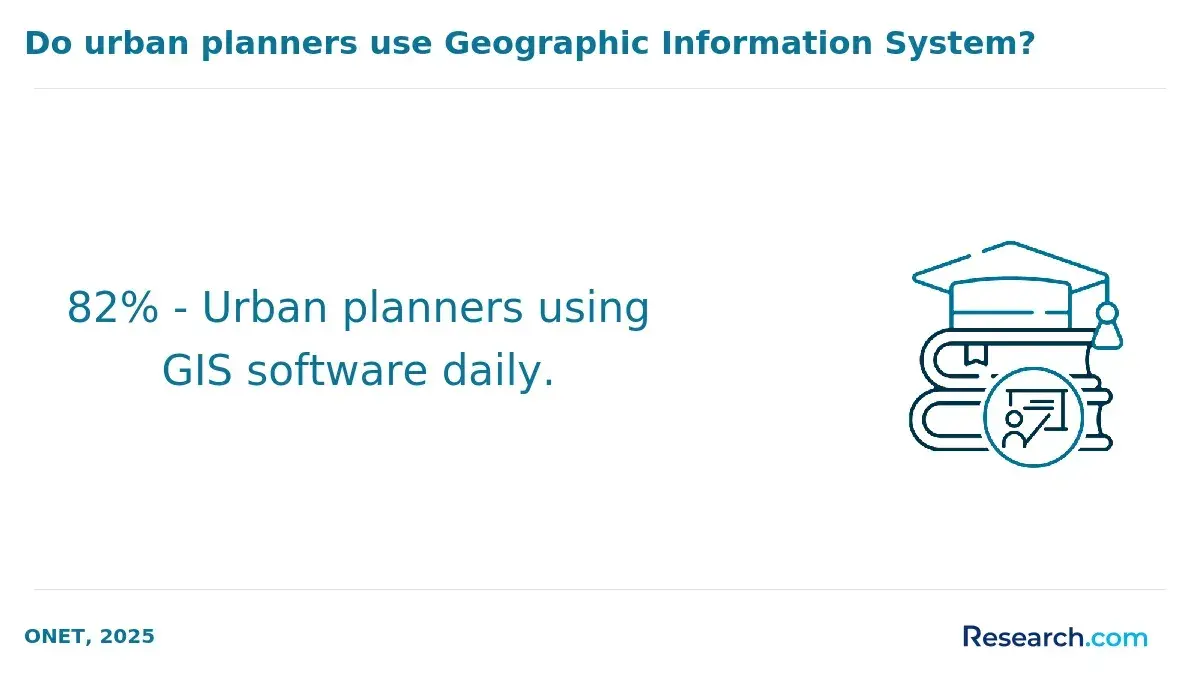
- Core coursework: Useful classes include land use planning, zoning, urban design, environmental policy, transportation planning, housing policy, statistics, research methods, public finance, and geographic information systems. GIS is especially valuable because many planning jobs require map-based analysis and spatial data interpretation.
- Graduate education: A master’s degree is not always legally required, but it can improve competitiveness for policy, management, regional planning, and specialized technical roles. Students considering graduate study should review whether the program’s curriculum, faculty expertise, internships, and alumni outcomes match their career goals.
| Education option | Best for | What to look for |
| Bachelor’s degree in urban planning or a related field | Students seeking entry-level planning, GIS, research, or community development roles | Courses in land use, public policy, GIS, data analysis, environmental planning, and community engagement |
| Master’s degree in planning, public policy, or urban analytics | Candidates aiming for stronger advancement options, specialized work, or policy-focused roles | Applied projects, internships, research opportunities, and connections with local or regional agencies |
| Certificate or continuing education | Working professionals who need targeted skills without completing another full degree | Training in GIS, transportation, sustainability, floodplain management, public finance, or zoning |
| Related professional background | Career changers from engineering, public administration, environmental science, real estate, finance, or social services | Evidence of transferable skills, planning-related projects, and familiarity with public-sector processes |
Students who want a planning career with an environmental focus may also compare affordable environmental science pathways, including the cheapest environmental science bachelor’s degree programs, as long as they also build planning-specific skills such as GIS, zoning, public engagement, and policy analysis.
What urban planning specializations are available in Delaware?
Urban planning is not one job. In Delaware, planners may work on transportation networks, neighborhood revitalization, coastal resilience, land use policy, economic development, environmental review, or public engagement. Choosing a specialization early can help you select the right courses, internships, certifications, and employers.
- Transportation planning: Transportation planners study how people and goods move through communities. In Delaware, this may involve traffic studies, transit access, pedestrian and bicycle planning, corridor planning, safety improvements, and coordination with local and state agencies.
- Environmental planning: Environmental planners evaluate how development affects land, water, ecosystems, coastal areas, and public health. They may review environmental regulations, support sustainability goals, analyze site constraints, and recommend lower-impact development strategies.
- Community development: Community development planners focus on neighborhood improvement, housing access, public services, economic opportunity, and resident participation. This specialization is a strong fit for people who enjoy public meetings, stakeholder coordination, and long-term neighborhood revitalization work.
- Land use and zoning: These planners help municipalities guide where housing, commercial activity, industry, public facilities, and open space should be located. They often review development applications, interpret zoning codes, and support comprehensive plan updates.
- GIS and urban analytics: Planners with strong data skills use maps, demographic information, land records, infrastructure data, and scenario modeling to support better decisions. This path can be useful for candidates interested in the University of Delaware’s Urban Analytics and Policy: M.A., B.A./M.A., 4+1 pathway.
| Specialization | Typical work | Good fit if you enjoy |
| Transportation planning | Traffic analysis, transit planning, mobility studies, infrastructure recommendations | Data, infrastructure, public systems, and long-range mobility decisions |
| Environmental planning | Environmental review, sustainability planning, conservation coordination, impact analysis | Natural resources, climate resilience, regulation, and science-informed policy |
| Community development | Neighborhood plans, public engagement, housing initiatives, local revitalization | Working directly with residents, nonprofits, and local leaders |
| Land use and zoning | Development review, zoning interpretation, comprehensive planning, code updates | Policy details, legal frameworks, site planning, and municipal processes |
| GIS and urban analytics | Mapping, spatial analysis, demographic research, scenario modeling | Technology, data visualization, and evidence-based planning |
Are there licensing requirements for urban planners in Delaware?
Delaware does not have a state-specific licensure or registration requirement for urban planners. That means you do not need a Delaware-issued planning license to enter the profession. However, credentials still matter because employers often look for evidence of professional competence, technical skill, and planning experience.
The most recognized planning credential is certification through the American Institute of Certified Planners. Candidates pursuing this route must register with the AICP, meet professional planning experience requirements, complete the certification maintenance process, and pass the AICP examination.
Specialty certifications can also help planners demonstrate expertise in technical areas that are relevant to Delaware communities. Examples include:
- Certified Floodplain Manager: Useful for planners working with flood risk, coastal development, stormwater, hazard mitigation, and local resilience planning.
- Certified Environmental Professional: Relevant for professionals whose work involves environmental compliance, sustainability, ecological review, and responsible land use.
- Certified Transportation Planner: Designed for planners focused on transportation systems, infrastructure planning, mobility, and traffic-related policy decisions.
| Credential | When it helps | Important caution |
| AICP certification | When applying for competitive planning roles, leadership positions, or consulting work | It requires eligible professional experience and exam preparation; it is not the same as a state license |
| Certified Floodplain Manager | When working on floodplain policy, coastal resilience, stormwater, or hazard mitigation | Best paired with planning, engineering, environmental, or emergency management knowledge |
| Certified Environmental Professional | When your work involves sustainability, environmental review, or ecological impact analysis | Requirements and value can vary by employer and project type |
| Certified Transportation Planner | When specializing in transportation networks, transit planning, traffic studies, or mobility policy | Most valuable when combined with transportation project experience |
How long does it take to become an urban planner in Delaware?
The typical pathway to becoming an urban planner in Delaware takes six to seven years, depending on whether you complete graduate school, how quickly you gain practical experience, and whether you pursue professional certification.
- Bachelor’s degree: The first academic step usually takes about four years. During this period, students should prioritize planning-related coursework, GIS, research methods, writing, public policy, and internships.
- Master’s degree: Many aspiring planners continue into graduate study, which commonly adds another two years. A master’s program can help students specialize in transportation, sustainable development, urban analytics, housing, or public policy.
- Internships and applied experience: Internships may last from three months to a year. These experiences help students understand public meetings, zoning review, agency workflows, data analysis, and real project constraints.
- Certification preparation: AICP certification is optional, but preparing for the exam and documenting experience can take several months once a candidate is eligible.
| Stage | Typical time involved | What to accomplish |
| Undergraduate study | About four years | Build a foundation in planning, policy, GIS, environmental issues, and communication |
| Graduate study | Additional two years | Develop advanced planning knowledge and complete applied projects or internships |
| Internships | Three months to a year | Gain hands-on experience with agencies, municipalities, nonprofits, or consulting firms |
| AICP preparation | Several months | Prepare for the exam and organize professional experience documentation |
How much do urban planners in Delaware earn?
Urban planner pay in Delaware depends on education, experience, employer type, specialization, technical skills, and location within the state. The average annual salary for urban planners in Delaware is approximately $75,584. Entry-level urban planners can expect to earn around $69,651 per year.
Salary potential may improve with graduate education, GIS expertise, project management experience, public-sector knowledge, and specialization in areas such as urban data science, transportation, energy, or environmental planning. Planners who want to work closer to conservation, sustainability, or environmental policy can also review related jobs in environmental conservation.
| Factor | How it can affect earnings |
| Experience level | Entry-level roles usually pay less than positions requiring project management, policy leadership, or supervisory responsibility. |
| Education | A master’s degree may improve competitiveness for specialized or senior planning roles. |
| Technical skills | GIS, data analysis, transportation modeling, environmental review, and public finance skills can strengthen a candidate’s value. |
| Employer type | Municipal agencies, state departments, regional organizations, nonprofits, and private consulting firms may use different compensation structures. |
| Specialization | Fields such as urban data science or energy and environmental planning may offer stronger salary prospects when specialized expertise is required. |
What careers are available to urban planners in Delaware?
Urban planning training can lead to several public, nonprofit, and private-sector roles in Delaware. The best option depends on whether you prefer policy work, technical analysis, public engagement, environmental review, infrastructure planning, or neighborhood development.
- City planner: City planners help local governments update comprehensive plans, review development proposals, evaluate zoning issues, and coordinate public input. They often work closely with elected officials, planning boards, residents, and developers.
- Transportation planner: Transportation planners analyze mobility needs, traffic patterns, safety concerns, transit options, and infrastructure investments. In Delaware, organizations such as the Delaware Department of Transportation may need planners who understand both statewide systems and local community impacts.
- Community development planner: These professionals support neighborhood revitalization, housing initiatives, economic development, public services, and community engagement. They may work for municipalities, nonprofits, redevelopment agencies, or regional organizations.
- Environmental planner: Environmental planners help balance growth with natural resource protection. Their work can involve environmental review, conservation planning, sustainability strategies, and coordination with regulatory agencies.
- Planning analyst or GIS analyst: Analysts use data, maps, and research to help decision-makers understand development patterns, demographic shifts, transportation needs, and land use scenarios.
Delaware municipalities, the Delaware Department of Transportation, environmental agencies, regional planning groups, consulting firms, and community-focused nonprofits can all be potential employers. If you are comparing planning with hands-on technical careers, Research.com also offers information on high-paying trade professions.
What are the typical responsibilities of urban planners in Delaware?
The daily work of an urban planner can vary significantly by employer. A municipal planner may spend much of the week reviewing development applications and preparing staff reports, while a transportation planner may focus on traffic studies and public outreach. A community development planner may work more closely with residents, nonprofit partners, and funding programs.
Common responsibilities include:
- Reviewing land use patterns, zoning rules, development proposals, and comprehensive plans.
- Organizing or supporting public meetings so residents can respond to proposed projects and policy changes.
- Preparing plans that address housing, transportation, environmental protection, economic development, and public facilities.
- Coordinating with local, state, and regional agencies to ensure projects follow applicable rules and planning procedures.
- Analyzing demographic, economic, environmental, and spatial data to identify community needs and long-term trends.
- Supporting revitalization initiatives in neighborhoods that need reinvestment, infrastructure upgrades, or stronger services.
- Writing reports, staff recommendations, presentations, and briefing materials for planning boards, city councils, agencies, or community partners.
- Using Geographic Information Systems to map land use, infrastructure, population patterns, environmental constraints, and development scenarios.
| Responsibility | Skill it requires | Why it matters |
| Development review | Knowledge of zoning, land use, and local approval procedures | Helps communities evaluate whether proposed projects align with public goals and regulations |
| Public engagement | Communication, facilitation, listening, and conflict management | Ensures planning decisions reflect resident concerns and community priorities |
| GIS and data analysis | Mapping, statistics, research methods, and spatial reasoning | Supports evidence-based recommendations rather than guesswork |
| Policy writing | Clear writing, legal awareness, and practical judgment | Turns community goals into usable plans, ordinances, and implementation strategies |
| Interagency coordination | Project management, collaboration, and regulatory awareness | Keeps complex projects moving across multiple offices and jurisdictions |
Can interdisciplinary education bridge urban planning and business in Delaware?
Yes. Urban planning projects often require more than design and policy knowledge. Planners may need to evaluate budgets, understand market feasibility, manage contracts, coordinate public-private partnerships, and explain the financial trade-offs behind development decisions.
Business training can be especially useful for planners who want to work in redevelopment, economic development, real estate coordination, infrastructure finance, or consulting. Students who want to combine planning with management or finance may compare programs through the best business schools in Delaware.
What state and local policies shape urban planning in Delaware?
Urban planners in Delaware work within a layered policy environment. Local governments create zoning ordinances, subdivision rules, comprehensive plans, permitting procedures, and design standards. State-level requirements and agency guidance can affect transportation planning, coastal management, environmental review, infrastructure investment, and redevelopment.
Because planning decisions can influence property rights, public budgets, environmental conditions, and neighborhood change, professionals must stay current on local codes and state requirements. If you are exploring public-service careers in Delaware more broadly, you may also compare planning with other regulated or policy-adjacent fields, such as how to become a nutritionist in Delaware.
What emerging trends are impacting urban planning in Delaware?
Several trends are changing what Delaware employers may expect from urban planners. GIS and data visualization are now core tools rather than optional extras. Public engagement is increasingly digital as agencies use online surveys, interactive maps, virtual meetings, and project dashboards to reach more residents. Coastal and environmental resilience also remains important for communities evaluating growth, infrastructure, flooding, and long-term land use decisions.
Artificial intelligence and automation may speed up tasks such as document review, map preparation, scenario modeling, and data summarization, but they do not replace the planner’s role in public judgment, community trust, legal interpretation, and ethical decision-making. Planners who want stronger leadership and finance skills alongside technical planning knowledge may consider flexible graduate business options, including the easiest MBA program.
What continuing education options can elevate my urban planning career in Delaware?
Continuing education can help urban planners keep pace with changing regulations, technology, community needs, and environmental risks. Useful professional development areas include GIS, public engagement, housing policy, transportation planning, stormwater and floodplain management, sustainability, data analytics, project management, and public finance.
Short courses, workshops, certificates, conferences, and employer-sponsored training can be more practical than another full degree for professionals who already have planning experience. Some professionals also strengthen their analytical abilities through adjacent fields. For example, a forensic science degree in Delaware can build careful evidence review and site-analysis habits, although it is not a standard requirement for urban planning roles.
Can a business degree enhance your urban planning career in Delaware?
A business degree can support an urban planning career when the role involves budgeting, feasibility analysis, economic development, public-private partnerships, redevelopment strategy, or project leadership. It is most useful when paired with planning knowledge, not used as a substitute for it.
Professionals who understand finance, management, and economic forecasting can better explain why a project is realistic, how it might be funded, and what trade-offs decision-makers should consider. If this combination fits your goals, explore top business degrees and compare coursework in finance, analytics, public management, and strategy.
How can interdisciplinary collaboration improve community planning in Delaware?
Strong planning rarely happens in isolation. Urban planners often coordinate with engineers, public health professionals, social workers, educators, transportation officials, environmental scientists, housing advocates, real estate professionals, and residents. These collaborations help planners understand how land use decisions affect access to services, mobility, health, safety, affordability, and community identity.
Communication is one of the most important parts of this work. Planners who can explain technical information clearly are better positioned to earn trust in public meetings and reduce confusion around complex projects. Professionals interested in communication-focused public service may find useful comparisons in guides such as speech pathologist requirements in Delaware.
Can complementary career pathways boost my urban planning prospects in Delaware?
Yes, especially if the complementary pathway builds skills that planning employers value. Finance, accounting, project management, environmental science, GIS, public administration, data analytics, real estate, engineering support, and community services can all strengthen a planning resume when connected clearly to planning work.
The key is to avoid collecting unrelated credentials without a strategy. A finance or accounting background, for example, can be valuable for capital improvement planning, grant budgeting, redevelopment finance, and project feasibility. If you want to strengthen fiscal skills before or during a planning career, you can review how to become an accountant in Delaware.
How can integrating social work principles enhance urban planning in Delaware?
Urban planning decisions affect people’s daily lives, including where they live, how they travel, what services they can reach, and whether they feel included in public decision-making. Social work principles can help planners approach public engagement with empathy, cultural awareness, trauma-informed communication, and attention to vulnerable populations.
This does not mean urban planners need to become social workers. It means that planning can be stronger when professionals understand how housing instability, disability access, income inequality, aging, public health, and family needs intersect with land use and infrastructure. For readers interested in that people-centered perspective, Research.com also explains social worker education requirements in Delaware.
How do urban planners in Delaware secure project funding?
Urban planners are often involved in the early work that makes project funding possible. They help define the problem, document community need, gather data, estimate benefits, coordinate partners, align projects with adopted plans, and prepare materials that support grant applications or public budget requests.
Funding may involve local capital budgets, state programs, federal grants, public-private partnerships, nonprofit support, or redevelopment tools. Planners who understand financial language can communicate more effectively with elected officials, finance departments, developers, and community partners. For professionals who want deeper accounting and budgeting knowledge, the best accounting schools in Delaware may be worth comparing.
Is becoming an urban planner in Delaware worth it?
Urban planning in Delaware can be worth it if you want mission-driven work that combines public policy, data, community engagement, environmental stewardship, and long-term development decisions. It may not be the best fit if you want a career with quick decisions, minimal public feedback, or little interaction with government processes.
| Choose this path if... | Consider another path if... |
| You want your work to affect neighborhoods, transportation, land use, and public services. | You prefer work with limited public scrutiny or few stakeholder conflicts. |
| You enjoy combining research, maps, policy, writing, and community meetings. | You dislike detailed regulations, long timelines, or formal approval processes. |
| You are comfortable balancing competing interests from residents, agencies, developers, and elected officials. | You want a role where decisions are mostly technical and not shaped by public debate. |
| You want a career connected to sustainability, resilience, housing, mobility, or community development. | You are primarily motivated by guaranteed salary growth or fast promotion timelines. |
Common mistakes to avoid when preparing for a planning career
| Mistake | Why it can hurt you | Better approach |
| Choosing a program without checking planning relevance | A general degree may not teach the zoning, GIS, policy, or public engagement skills employers expect. | Review coursework, internships, faculty expertise, applied projects, and planning-related outcomes. |
| Ignoring GIS and data skills | Many planning roles require map-based analysis and evidence-based recommendations. | Take GIS, statistics, research methods, and data visualization courses whenever possible. |
| Assuming certification is the same as licensure | Delaware does not require state licensure for urban planners, but professional certification can still matter. | Understand the difference between AICP certification, specialty credentials, and state licensing. |
| Waiting too long to get practical experience | Planning employers often want evidence that you understand real public-sector or project workflows. | Pursue internships, assistantships, volunteer planning board exposure, community projects, or GIS work early. |
| Choosing based only on tuition | A low-cost program may still be a poor choice if it lacks relevant coursework, internships, or local employer connections. | Compare total cost, financial aid, transfer policies, curriculum fit, schedule flexibility, and career support. |
| Relying only on rankings | Rankings cannot tell you whether a program fits your specialization, geography, budget, or career plan. | Use rankings as one input, then verify program details directly with the school. |
Questions to ask before choosing an urban planning program
- Does the curriculum include land use planning, zoning, GIS, public policy, environmental planning, and community engagement?
- Are internships, capstone projects, studio courses, or applied research opportunities built into the program?
- Do faculty members or alumni have connections with Delaware municipalities, regional agencies, transportation organizations, or environmental offices?
- Can the program support your intended specialization, such as transportation, environmental planning, community development, or urban analytics?
- What career services are available for planning students?
- How much will the full program cost after tuition, fees, books, travel, and lost work time are considered?
- Will transfer credits, assistantships, scholarships, or employer tuition support reduce the total cost?
- If the program is online, how will you gain local planning experience and professional contacts?
Are there available scholarships for urban planners in Delaware?
Students preparing for planning-related careers in Delaware should look for scholarships tied to residency, public service, academic merit, financial need, graduate study, and policy-related fields. Urban planning students may also qualify for broader awards in public administration, environmental studies, geography, sustainability, or public policy.
- Charles L. Hebner Memorial Scholarship: Administered by the Delaware Higher Education Office, this scholarship is available to high school seniors and current college students. It typically provides around $1,250 to multiple recipients.
- University Graduate Scholars Awards: Offered through the University of Delaware’s Biden School, this opportunity supports full-time doctoral students with a funding package that covers tuition and includes a stipend for assistantship work.
- DHEO Scholarships: The Delaware Higher Education Office manages scholarship programs for residents who meet financial need and academic requirements. Awards may be used for tuition and mandatory fees.
- Biden School Fellowships: These fellowships are designed to support students from underrepresented groups through tuition assistance and resources for research and professional development.
If you are still comparing fields, planning-related students sometimes explore technical or infrastructure-adjacent programs, including the best easy engineering degrees online, but you should choose a path that matches your actual career goals rather than selecting a program only because it appears convenient.
What urban planning internships or practical experiences can I pursue in Delaware?
Internships are one of the most important ways to move from classroom learning into professional planning work. They help you build a portfolio, learn local procedures, develop references, and test whether you prefer transportation, environmental planning, land use, community development, or policy analysis.
- Delaware Department of Natural Resources and Environmental Control: DNREC internships can expose students to environmental planning, resource management, policy analysis, data review, and project coordination connected to Delaware’s natural resources.
- Delaware Department of Transportation: DelDOT internships may involve transportation planning, traffic studies, public outreach, infrastructure programs, and the relationship between mobility and growth.
- Delaware Valley Regional Planning Commission: DVRPC internships can involve regional land use, transportation planning, research, mapping, and public engagement across multiple jurisdictions.
- Municipal planning departments: City and town planning offices can provide practical exposure to zoning, permits, development review, public meetings, and comprehensive planning.
- Nonprofits and community development organizations: These experiences can be valuable for students interested in housing, neighborhood revitalization, public engagement, and equitable development.
If you decide that urban planning is not the right fit and want a much shorter training path in another field, you can compare alternatives such as a medical assistant degree in 6 weeks.
What professional organizations in Delaware should I join to advance my career as an urban planner?
Professional organizations help aspiring and working planners find mentors, learn about job openings, keep up with policy changes, attend training, and build credibility. Students should consider joining before graduation because networking often leads to internships and early-career opportunities.
- American Planning Association Delaware Chapter: Established in 1978, this chapter supports planning practice, professional education, advocacy, and networking for planners in Delaware.
- Delaware Population Consortium: This group supports population projections for the state, giving planners data that can inform housing, transportation, land use, and infrastructure decisions.
- Mid-Atlantic Planning Collaboration: MAPC provides regional learning opportunities, including events and webinars related to resilience, sustainability, and planning practice.
- Delaware Chapter of the Urban Land Institute: ULI connects planners with real estate, land use, and development professionals and offers programming related to responsible urban development.
What urban planners in Delaware say about their careers
The following comments are anecdotal and should not be treated as guaranteed career outcomes, but they reflect common themes in planning work: community impact, collaboration, environmental responsibility, and social equity.
- "Planning work in Delaware gives me a direct way to improve the places people use every day. I value the chance to help create sustainable public spaces and support communities that want a more connected future." - Brad
- "Delaware’s mix of urban, suburban, rural, and coastal settings keeps the work interesting. Each project requires a different balance of growth, preservation, transportation, and public input." - Ava
- "My planning career has given me the opportunity to work on neighborhood revitalization while keeping equity and inclusion at the center of the conversation." - Jeremy
Related Articles for Nearby States
- 2027 How to Become an Urban Planner in Maryland
- 2027 How to Become an Urban Planner in New Jersey
- 2027 How to Become an Urban Planner in Pennsylvania
- 2027 How to Become an Urban Planner in Virginia
- 2027 How to Become an Urban Planner in West Virginia
- 2027 How to Become an Urban Planner in New York
- 2027 How to Become an Urban Planner in Connecticut
- 2027 How to Become an Urban Planner in Rhode Island
- 2027 How to Become an Urban Planner in North Carolina
- 2027 How to Become an Urban Planner in Ohio
References:
- American Planning Association. Accredited planning programs. https://planning.org/education/accredited/
- Bureau of Labor Statistics. Urban and regional planners: Occupational Outlook Handbook. https://www.bls.gov/ooh/life-physical-and-social-science/urban-and-regional-planners.htm
- University of Delaware. Urban Analytics and Policy: M.A., B.A./M.A., 4+1. https://www.udel.edu/academics/colleges/grad/prospective-students/programs/urban-affairs-public-policy/
- University of Delaware Biden School. Regional Development and Planning internships. https://www.bidenschool.udel.edu/masters-programs/real-world-experience/internships
- City of Wilmington Department of Planning. https://www.wilmingtonde.gov/government/city-departments/planning
- ZipRecruiter. Entry Level Urban Planner salary information. https://www.ziprecruiter.com/Salaries/What-Is-the-Average-Entry-Level-Urban-Planner-Salary-by-State
- O*NET OnLine. Summary for 19-3051.00 Urban and regional planners. https://www.onetonline.org/link/summary/19-3051.00
- O*NET OnLine. Local trends for urban and regional planners in Delaware. https://www.onetonline.org/link/localtrends/19-3051.00?st=DE
- Projections Central. State employment projections for Delaware. https://www.projectionscentral.org/home
- Salary.com. Urban planning salary in Delaware. https://www.salary.com/research/salary/hiring/urban-planning-salary/de
- Zippia. Urban planner demographics and statistics in the United States. https://www.zippia.com/urban-planner-jobs/demographics/
Key Insights
- Delaware does not require a state license for urban planners, but AICP certification and relevant specialty credentials can strengthen your professional standing.
- The usual preparation route includes a bachelor’s degree, often a master’s degree, practical experience, and optional certification; the full pathway commonly takes six to seven years.
- Urban planners in Delaware earn an average annual wage of approximately $75,584, with entry-level roles around $69,651 per year.
- The most useful specializations for Delaware include transportation planning, environmental planning, community development, land use and zoning, and GIS-based urban analytics.
- Internships with agencies such as DNREC, DelDOT, DVRPC, local municipalities, or community development organizations can be just as important as classroom learning.
- Before choosing a program, compare curriculum, applied experience, GIS training, cost, financial aid, and connections to Delaware planning employers rather than relying only on rankings or tuition.
Other Things to Know About Becoming an Urban Planner in Delaware
In 2027, aspiring urban planners in Delaware should obtain a bachelor's degree in urban planning or a related field, followed by a master's degree in urban planning for better job prospects. Familiarity with local zoning laws and obtaining certification from the American Institute of Certified Planners (AICP) can enhance career opportunities.
To become an urban planner in Delaware in 2027, a bachelor's degree in urban planning or a related field is typically required. Advanced positions may require a master's degree or certification through the American Institute of Certified Planners (AICP).