2027 How to Become an Urban Planner in Alabama

Co-Founder and Chief Data Scientist
Becoming an urban planner in Alabama is a practical career choice for people who want to improve how communities grow, move, rebuild, and protect their resources. The state faces persistent planning challenges, including a poverty rate of 15.2% in 2024 according to the American Community Survey, aging infrastructure, uneven access to transportation, and development pressures in both urban and rural areas. These issues create a need for professionals who can connect land use, housing, transportation, environmental protection, economic development, and public participation.
This guide explains how to become an urban planner in Alabama, what education and experience you may need, which specializations are relevant in the state, whether certification is required, how long the process usually takes, what salary figures are available, and how to choose internships, scholarships, and professional organizations that can strengthen your career path.
Quick Answer: How do you become an urban planner in Alabama?
To become an urban planner in Alabama, most candidates earn a bachelor’s degree in urban planning or a related field, gain internship or field experience, and often complete a master’s degree to qualify for more competitive planning roles. Alabama does not require a state license for urban planners, but many professionals pursue American Institute of Certified Planners (AICP) certification after gaining professional experience. A typical path takes about 6 to 7 years when it includes both undergraduate and graduate education.
Key Things to Know About Becoming an Urban Planner in Alabama
- Employment for urban and regional planners in the US is expected to increase by 4% through 2033.
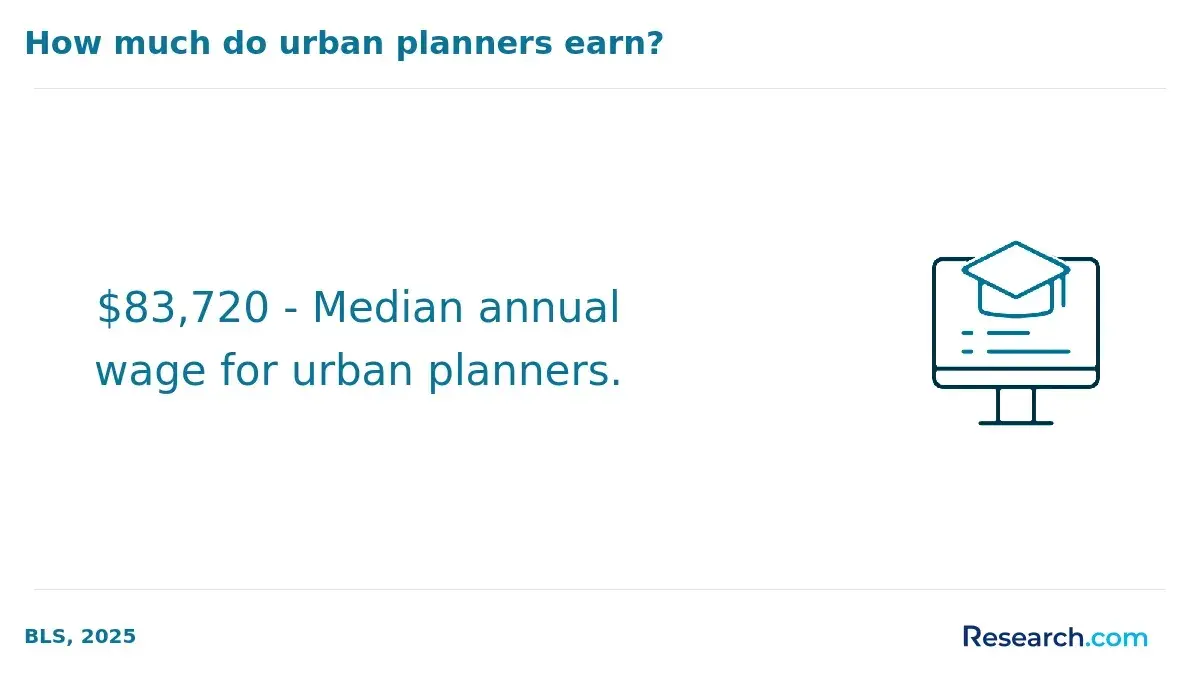
- Urban and regional planners across the US had a median annual wage of $85,940 in 2025, equal to $41.32 per hour. In Alabama, urban and regional planners had a median hourly wage of $30.36 in the same period.
- Urban planning work in Alabama can involve community redevelopment, infrastructure improvement, environmental sustainability, transportation access, rural planning, and economic revitalization.
- The University of Alabama at Birmingham offers an online Sustainable Smart Cities master's program with coursework in sustainability theory, green infrastructure, and natural resources management.
- Education requirements for urban planners in Alabama
- Urban planning specializations available in Alabama
- Licensing and certification requirements for Alabama planners
- Timeline for becoming an urban planner in Alabama
- Urban planner salary in Alabama
- Career options for urban planners in Alabama
- Common responsibilities of Alabama urban planners
- Business skills that support urban planning careers
- Interdisciplinary expertise in Alabama planning work
- Scholarships for future urban planners in Alabama
- Scientific expertise that can improve planning decisions
- Technology trends reshaping urban planning in Alabama
- Urban planning, health, and accessibility in Alabama communities
- Financial skills for planning and redevelopment projects
- Urban planning and social work collaboration
- Public-private partnerships in Alabama planning
- Legal and regulatory issues for Alabama urban planners
- Measuring the social impact of planning projects
- Internships and practical experience in Alabama
- Professional organizations for Alabama urban planners
- Non-traditional career paths for urban planners in Alabama
What are the education requirements for urban planners in Alabama?
Urban planning is not usually a field you enter through one narrow degree route. Alabama employers may consider candidates with backgrounds in planning, geography, environmental science, public administration, architecture, economics, sociology, political science, transportation, or related areas. However, planning-specific education becomes more important as roles become more technical, policy-oriented, or senior-level.
- Bachelor’s degree: A bachelor’s degree is the common starting point for entry-level planning assistant, community development, GIS, research, or public agency support roles. Common majors include urban studies, geography, environmental science, public administration, and urban planning. Alabama A&M University is one example of an institution that offers a Bachelor of Science (BS) in Urban Planning program.
- Planning-related coursework: Students should look for classes in land use, zoning, environmental policy, urban design, transportation planning, community engagement, GIS, statistics, public finance, housing policy, and planning law. These subjects help students understand how technical analysis, public policy, and local decision-making fit together.
- Graduate education: A master’s degree is not always required for every planning-related job, but it is often preferred for professional planner roles, especially in government agencies, consulting firms, and regional planning organizations. Alabama A&M University offers a master's program in urban and regional planning, and the University of Alabama at Birmingham offers an online Sustainable Smart Cities master's program.
- Field experience: Internships, studio projects, community research, transportation studies, GIS mapping, public meeting support, and capstone projects can make a major difference. Employers want evidence that candidates can move beyond classroom theory and work with real communities, regulations, data, and budgets.
When comparing schools, students should look beyond the program title. Review the curriculum, faculty expertise, planning studio opportunities, internship support, GIS training, alumni outcomes, and whether the program aligns with the type of planning work you want to do.
| Education option | Best for | What to check before enrolling |
| Bachelor’s degree in urban planning | Students who want a direct undergraduate route into planning-related work | Availability of GIS, zoning, land use, transportation, and community planning courses |
| Bachelor’s degree in a related field | Students interested in environmental, policy, geography, public administration, or design-focused planning roles | Whether the program offers planning electives, internships, research projects, or GIS training |
| Master’s degree in urban or regional planning | Candidates seeking stronger qualifications for professional planner, policy, consulting, or leadership roles | Studio work, internship placement, faculty specialization, career services, and planning-focused curriculum |
| Online sustainability or smart cities program | Working adults or students focused on sustainability, infrastructure, and data-informed city systems | Program flexibility, applied projects, technology training, and fit with Alabama planning needs |
What urban planning specializations are available in Alabama?
Alabama’s planning needs vary widely by region. Birmingham, Montgomery, Mobile, Huntsville, coastal communities, small towns, and rural counties may all require different planning strategies. Choosing a specialization can help students build a more focused resume and pursue roles that match their interests.
- Transportation planning: Transportation planners work on mobility, traffic patterns, transit access, roadway improvements, pedestrian safety, and regional connectivity. In Birmingham, for example, planning discussions may include rapid-transit public transportation networks and better access between neighborhoods, employment centers, and services.
- Environmental planning: Environmental planners help communities balance growth with conservation, flood risk, coastal resilience, water quality, and natural resource protection. Alabama’s ecosystems make this specialization especially relevant in coastal, river, and rural areas. Initiatives such as the Coastal Alabama Restoration Tool reflect the type of work that connects development decisions with habitat protection.
- Community development: Community development planners focus on neighborhood revitalization, housing, public spaces, blight reduction, resident engagement, and equitable investment. In cities such as Mobile, this work may involve collaboration with local residents, nonprofits, business owners, and public agencies.
- Economic development planning: Economic development planners help communities attract employers, reuse land, support local businesses, and align infrastructure with long-term growth. This specialization is relevant in areas such as Huntsville and Mobile, where communities may be balancing industrial growth, workforce needs, housing pressure, and infrastructure investment.
| Specialization | Typical projects | Useful skills |
| Transportation planning | Transit routes, traffic studies, pedestrian access, roadway planning | GIS, traffic analysis, public engagement, transportation policy |
| Environmental planning | Coastal protection, land conservation, stormwater planning, environmental review | Environmental policy, risk assessment, sustainability, natural resources management |
| Community development | Neighborhood revitalization, housing initiatives, public space improvements | Community outreach, grant writing, housing policy, demographic analysis |
| Economic development planning | Business district planning, site reuse, infrastructure strategy, workforce-linked development | Market analysis, public finance, stakeholder coordination, policy writing |
Are there licensing requirements for urban planners in Alabama?
Alabama does not have a state licensure or registration requirement specifically for urban planners. That means a person does not need a state planning license to work as an urban planner in Alabama. However, credentials can still matter because many employers value evidence of professional knowledge, ethics, experience, and continuing education.
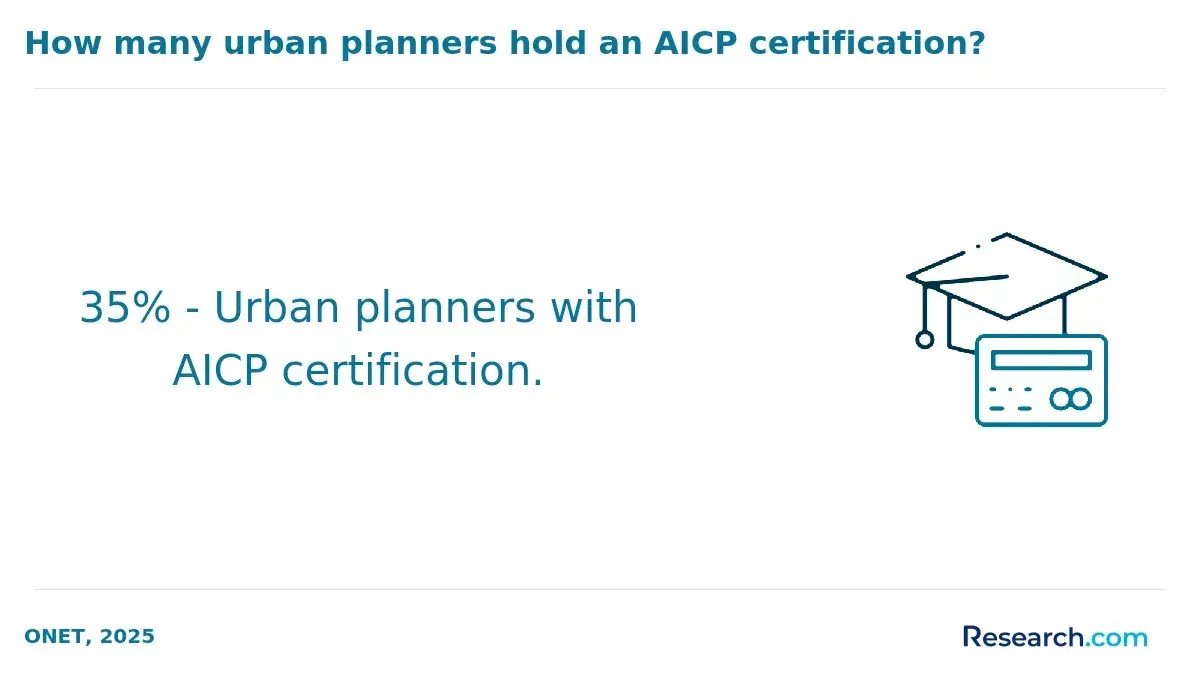
The most recognized professional credential in the field is certification through the American Institute of Certified Planners (AICP). Candidates pursuing AICP certification generally complete steps that include:
- Registering with the AICP.
- Meeting certification maintenance expectations.
- Passing the AICP examination.
- Documenting qualifying professional planning experience.
AICP certification is not a legal requirement in Alabama, but it can improve credibility, especially for planners seeking advancement, consulting roles, or public-sector leadership positions.
Urban planners may also strengthen their qualifications with specialty credentials that match their career goals:
- Certified Economic Development (CEcD): This credential can be useful for planners working on business attraction, redevelopment, workforce-aligned investment, and community revitalization.
- Leadership in Energy and Environmental Design (LEED) Accredited Professional (AP) With Specialty: A LEED AP With Specialty credential signals knowledge of sustainable building practices and green design, which can support planners involved in environmentally responsible development.
- Professional Transportation Planner (PTP): The PTP credential is relevant for professionals focused on transportation systems, mobility planning, and transportation project management.
Students interested in environmentally focused planning may also compare related programs such as the most affordable online environmental science degrees to see whether a science-based path fits their long-term planning interests.
How long does it take to become an urban planner in Alabama?
The full path to becoming an urban planner in Alabama often takes 6 to 7 years when it includes both a bachelor’s degree and a master’s degree. A bachelor’s degree usually takes about 4 years, and a master’s degree generally adds another 2 years. Some students enter planning-related roles after the bachelor’s degree, while others use graduate school to specialize, build a portfolio, and qualify for more competitive positions.
Internships are also important. Practical experiences may last from 3 months to a year and can help students learn how planning departments, transportation agencies, consulting firms, and community organizations operate. These experiences also help students build references and understand which type of planning work they prefer.
AICP certification can come later. Candidates usually need to build 2 years of professional experience before becoming eligible to take the certification exam. Because certification depends on work experience, it is better viewed as an early-career advancement step rather than an entry requirement.
| Stage | Typical length | What you should accomplish |
| Bachelor’s degree | About 4 years | Build a foundation in planning, geography, policy, environment, GIS, or public administration |
| Internship or fieldwork | 3 months to a year | Gain practical experience, develop references, and learn how planning decisions are made |
| Master’s degree | Generally 2 years | Specialize, complete studio or capstone work, and prepare for professional planning roles |
| Professional experience for AICP eligibility | Usually 2 years | Work in qualifying planning roles before pursuing the certification exam |
How much do urban planners in Alabama earn?
Urban planner salaries in Alabama depend on education, experience, employer type, specialization, location, and whether the role is in local government, state government, consulting, nonprofit work, transportation, environmental planning, or economic development. The figures cited for 2025 show that urban and regional planners across the US had an average annual salary of $65,300, equal to $31.40 per hour. Urban planners in Alabama had an average annual salary of $67,370 during the same period.
Specialization can influence pay. For example, environmental planning, transportation planning, and sustainability-focused roles may offer different salary ranges depending on employer needs and project funding. The growing focus on sustainability can create opportunities for planners who understand environmental review, green infrastructure, resilience planning, and resource management.
For readers comparing planning-adjacent career options, Research.com’s guide to sustainability jobs in demand can help explain how sustainability skills apply across fields.
What careers are available to urban planners in Alabama?
Urban planning training can lead to several roles in Alabama. Some positions focus on government approvals and community plans, while others involve transportation systems, redevelopment, environmental protection, data analysis, or design. The best fit depends on whether you prefer policy, technical analysis, public engagement, design, or project coordination.
- City planner: City planners often work for municipal governments and help guide land use, zoning, development review, infrastructure priorities, and long-range community plans. Cities such as Birmingham and Montgomery may employ planners to address growth, neighborhood change, transportation access, and public services.
- Transportation planner: Transportation planners analyze mobility needs, roadway networks, transit options, traffic impacts, and access to jobs and services. The Alabama Department of Transportation is one important employer connected to this area of work.
- Environmental planner: Environmental planners help ensure that development decisions consider natural resources, environmental regulations, sustainability goals, and long-term resilience. These professionals may work for public agencies, consulting firms, or organizations involved in land and resource protection.
- Urban designer: Urban designers focus on the physical form of streets, public spaces, districts, and redevelopment areas. Students who want to combine sustainability and design may find value in reviewing top sustainability degree programs online.
- Community development officer: Community development officers work with residents, local organizations, public officials, and funders to support neighborhood improvement, housing, economic opportunity, and public engagement.
| Career path | Common employers | Best fit for candidates who enjoy |
| City planner | Municipal planning departments, county agencies | Zoning, public meetings, land use policy, development review |
| Transportation planner | Transportation agencies, regional planning bodies, consulting firms | Mobility analysis, transit, traffic data, infrastructure planning |
| Environmental planner | Public agencies, environmental consultants, nonprofits | Sustainability, conservation, environmental review, resilience |
| Urban designer | Design firms, planning consultants, redevelopment agencies | Public space design, neighborhood form, visual communication |
| Community development officer | Local governments, nonprofits, housing organizations | Resident engagement, equity, grants, neighborhood revitalization |
What are the typical responsibilities of urban planners in Alabama?
Urban planners in Alabama work at the intersection of data, public policy, land use, infrastructure, and community priorities. Their daily responsibilities vary by employer, but most roles require a mix of research, communication, technical analysis, and public decision support.
Common responsibilities include:
- Researching demographic, economic, housing, environmental, and land use trends.
- Preparing comprehensive plans, corridor plans, transportation plans, zoning recommendations, and redevelopment strategies.
- Working with elected officials, developers, engineers, residents, business owners, and public agencies to clarify project goals.
- Reviewing site plans and development proposals for consistency with local rules and long-term planning objectives.
- Using Geographic Information Systems (GIS) to map land use, infrastructure, environmental constraints, population patterns, and transportation access.
- Writing staff reports, technical memos, policy recommendations, and presentations for planning commissions, boards, and city councils.
- Organizing public meetings, surveys, workshops, and outreach activities to gather input from residents and stakeholders.
- Tracking federal, state, and local rules related to zoning, environmental review, housing, transportation, and land development.
- Analyzing traffic patterns, parking needs, transit access, pedestrian safety, and regional mobility issues.
- Supporting projects related to affordable housing, public space improvement, neighborhood stabilization, and inclusive community engagement.
| Skill area | Why it matters in planning work |
| GIS and spatial analysis | Helps planners visualize land use, infrastructure, population, risk, and access patterns |
| Public communication | Supports community meetings, stakeholder coordination, and clear explanations of complex policies |
| Policy writing | Turns research and public input into ordinances, plans, guidelines, and recommendations |
| Data interpretation | Allows planners to support decisions with evidence rather than assumptions |
| Project coordination | Keeps planning studies, public processes, consultant work, and implementation tasks organized |
How can a business education enhance an urban planning career in Alabama?
Business knowledge can make an urban planner more effective, especially on projects that require budgeting, redevelopment finance, stakeholder negotiation, grant management, or public-private coordination. Planners who understand project feasibility can better evaluate whether a proposed development is not only desirable but also financially realistic. Students who want to add management, finance, or strategy coursework can review the best business schools in Alabama as one way to compare local options.
How can interdisciplinary expertise enhance urban planning outcomes in Alabama?
Planning decisions affect health, food access, housing stability, transportation, land conservation, economic opportunity, and environmental exposure. That is why urban planners often benefit from working with professionals outside the planning field. For example, understanding how to become a nutritionist in Alabama may help planners think more carefully about food systems, grocery access, urban agriculture, and community wellness when designing neighborhood improvement strategies.
Are there available scholarships for urban planners in Alabama?
Students preparing for urban planning careers in Alabama should investigate scholarships from universities, state-related programs, local foundations, and professional organizations. Because planning overlaps with agriculture, environmental science, public policy, geography, transportation, and community development, students may qualify for funding connected to several academic areas.
- 1890 Agricultural Scholarship – Alabama A&M University: This scholarship is available to incoming freshmen or transfer students pursuing degrees connected to agriculture-related fields, including urban and regional planning, environmental science, and food science. Recipients may receive full or partial scholarships that cover tuition, student housing, and course materials.
- Central Alabama Community Foundation Scholarships: This foundation offers multiple scholarship programs for local students. A single application can allow students to be considered for several scholarship opportunities, with amounts varying by program and many options serving graduating seniors.
- University of Alabama Scholarships: The University of Alabama offers automatic merit and competitive scholarships for incoming students. Award amounts depend on the student’s qualifications and the specific scholarship.
Students interested in land use, conservation, and natural resource planning may also compare related programs such as the best affordable forestry degrees, especially if they want a career connected to environmental stewardship and rural planning.
How can complementary scientific expertise enhance urban planning in Alabama?
Scientific training can strengthen planning decisions when projects involve environmental hazards, infrastructure safety, contamination concerns, disaster recovery, or risk assessment. Planners do not need to become scientists to use scientific thinking, but they should know how to interpret technical reports and collaborate with specialists. A background related to a forensic science degree in Alabama can be relevant when planning work requires careful evidence review, compliance awareness, or investigation of site conditions.
How are emerging technologies transforming urban planning in Alabama?
Technology is changing how planners collect information, model alternatives, communicate with residents, and evaluate infrastructure decisions. GIS mapping, real-time data tools, online engagement platforms, scenario modeling, and sensor-based information can help planners identify patterns that are difficult to see through traditional reports alone.
For Alabama planners, these tools may be used to study traffic conditions, flood risk, land use change, service access, infrastructure needs, and redevelopment opportunities. Technology alone does not solve planning problems, but it can make decisions more transparent when paired with public input and sound policy judgment. Planners interested in the management side of data-informed projects may also find strategic lessons from the top business schools in Texas.
How can urban planning enhance community health and accessibility in Alabama?
Urban planning can shape health outcomes by influencing sidewalks, parks, transit access, housing quality, traffic safety, stormwater systems, public facilities, and proximity to services. In Alabama communities, planning for accessibility may include safer pedestrian routes, inclusive public spaces, better connections to healthcare and schools, and land use decisions that reduce barriers for residents with disabilities.
Collaboration with health and accessibility professionals can improve project design. For example, lessons from speech pathologist requirements in Alabama can remind planners that communication access, inclusive facilities, and service proximity matter when designing public spaces and community infrastructure.
How can financial expertise complement urban planning practices in Alabama?
Many planning ideas fail because the financing is unclear. Planners who understand budgeting, cost-benefit analysis, capital improvement planning, grant requirements, and long-term maintenance costs can help communities choose projects that are realistic and sustainable. Readers who want to build stronger financial skills can review guidance on how to become an accountant in Alabama and apply similar budgeting and accountability principles to planning work.
How can urban planning and social work collaborate to improve community resilience in Alabama?
Planning and social work overlap when communities face housing instability, poverty, disaster recovery, transportation barriers, neighborhood disinvestment, and limited access to services. Planners bring land use, infrastructure, and policy tools, while social workers bring direct knowledge of community needs, outreach methods, and support systems.
Urban planners can use this collaboration to design projects that address both physical conditions and social vulnerability. Students comparing human-service pathways can review social worker education requirements in Alabama to understand how social work training complements community planning.
How can public-private partnerships strengthen urban planning initiatives in Alabama?
Public-private partnerships can help Alabama communities finance, design, and implement projects that may be difficult for public agencies to complete alone. These partnerships can support redevelopment, infrastructure upgrades, mixed-use projects, transportation improvements, and community facilities. They also require careful agreements, transparent risk sharing, public accountability, and strong financial oversight.
Urban planners involved in these projects need to understand budgets, contracts, public goals, private incentives, and community impacts. Resources connected to the best accounting schools in Alabama may be useful for students who want a stronger foundation in financial reporting, auditing, and fiscal management.
What legal and regulatory challenges do urban planners face in Alabama?
Urban planners must work within zoning ordinances, subdivision regulations, comprehensive plans, environmental rules, public meeting requirements, development review procedures, and land use policies. Legal issues can arise when projects affect property rights, environmental resources, transportation access, historic areas, housing, or public infrastructure.
Planners do not replace attorneys, but they must understand enough about the legal framework to prepare sound recommendations and communicate clearly with decision-makers. Readers interested in legal support roles can explore how to become a paralegal in Alabama for a closer look at legal research and regulatory support skills.
How can urban planners measure and enhance the social impact of their projects in Alabama?
Planning projects should be evaluated by more than construction completion. A redevelopment project, transit improvement, public space plan, or housing initiative should also be assessed by how it changes access, affordability, safety, economic opportunity, environmental exposure, and resident satisfaction.
Urban planners can measure social impact by combining quantitative indicators with community feedback. Useful measures may include accessibility improvements, economic uplift, resident satisfaction, housing stability, public space use, travel time changes, and service access. Planners working closely with social service partners may benefit from understanding social worker degree requirements in Alabama to better align planning strategies with community well-being.
What urban planning internships or practical experiences can I pursue in Alabama?
Internships are one of the best ways to test whether urban planning is the right career path. They also help students build a portfolio, learn professional language, practice technical skills, and understand how public decisions are made. In Alabama, students may find opportunities in transportation, regional planning, consulting, local government, environmental planning, and community development.
- Alabama Department of Transportation (ALDOT): ALDOT may offer internships connected to transportation planning, including the Transportation Workforce Development (TWD) Program. Interns may assist with traffic data, public outreach, transportation analysis, and project support.
- Regional Planning Commission for Greater Birmingham: This organization can provide exposure to regional planning, land use work, community engagement, policy development, and environmental assessment in the Birmingham metropolitan area.
- AECOM: As a global firm with a presence in Alabama, AECOM may offer internships related to planning, urban design, sustainability, redevelopment, and infrastructure projects.
Students should prioritize internships that produce tangible work samples, such as maps, reports, meeting summaries, policy memos, site analysis, or public engagement materials. Those considering a different accelerated career route in healthcare can compare the best accelerated medical assistant programs, but urban planning typically requires a longer academic and professional preparation timeline.
| Internship setting | What you may learn | Portfolio value |
| State transportation agency | Traffic analysis, mobility planning, infrastructure coordination | Maps, traffic summaries, public outreach notes, transportation research |
| Regional planning commission | Land use planning, regional policy, community engagement | Planning memos, demographic analysis, meeting materials, GIS work |
| Consulting firm | Client projects, redevelopment studies, sustainability planning, urban design | Design concepts, project research, presentation materials, technical reports |
| Local government planning department | Zoning, development review, public meetings, comprehensive planning | Staff reports, ordinance research, site review notes, public meeting summaries |
What professional organizations in Alabama should I join to advance my career as an urban planner?
Professional organizations can help new planners find mentors, learn about job openings, attend conferences, understand policy changes, and build relationships with people already working in the field. Membership is especially useful for students and early-career planners who need exposure beyond the classroom.
- Alabama Chapter of the American Planning Association (ALAPA): ALAPA supports the planning profession in Alabama through networking, conferences, workshops, and professional development. Students can use the organization to meet practicing planners and learn about local planning issues.
- East Alabama Regional Planning and Development Commission (EARPDC): Founded in 1971, EARPDC works on community and economic development initiatives. It can be a valuable organization to follow for planners interested in regional planning, funding resources, and local implementation work.
- Regional Planning Commission of Greater Birmingham (RPCGB): RPCGB supports planning services across six counties and 84 communities in central Alabama. It is relevant for planners interested in economic development, local government collaboration, and metropolitan planning.
Before joining any organization, ask whether it offers student rates, mentorship, job boards, certification support, conference scholarships, or committees where new planners can participate.
- : "An Alabama urban planner described the value of professional involvement this way: “Joining ALAPA changed the direction of my early career. My first conference helped me meet experienced planners, find mentors, and understand how planning decisions actually happen in Alabama communities. The relationships I built there later led to collaborative projects and stronger confidence in my work.”"
What urban planners in Alabama say about their careers
- “Urban planning in Alabama gives me the chance to shape places that are more sustainable, inclusive, and useful for residents. The work is collaborative, and the region’s culture and history make every project feel connected to something larger than a site plan.” - Kevin
- “My favorite part of planning in Alabama is balancing new development with historic character. Revitalization work can be difficult, but community support and visible neighborhood improvements make the process worth it.” - Keith
- “This career has shown me how important public participation and environmental responsibility are. Working on green spaces and transit-related projects has helped me see how planning can improve daily life while supporting long-term sustainability.” - Gillian
What non-traditional career paths can urban planners explore in Alabama?
Urban planning skills can transfer into careers beyond city planning departments. Planners who understand land use, infrastructure, community needs, data analysis, and stakeholder coordination may work in real estate development, sustainability consulting, resilience planning, healthcare facility planning, nonprofit community investment, smart city technology, corporate site planning, or infrastructure project management.
Some planners also combine planning knowledge with business or healthcare strategy. For example, professionals interested in facility planning, community health infrastructure, or strategic growth may find related opportunities in healthcare MBA jobs, where planning, finance, and organizational strategy intersect.
How to choose the right urban planning path in Alabama
The best route depends on your career goal, finances, location, and preferred type of work. A student who wants to work in transportation should choose different electives and internships than someone focused on coastal resilience or community development. Use the questions below before committing to a program or specialization.
- Does the program include GIS, planning law, land use, transportation, environmental planning, and public engagement?
- Are there internships or studio projects with Alabama agencies, cities, counties, or consulting firms?
- Does the degree prepare you for the specialization you want, such as transportation, sustainability, or community development?
- Can you build a portfolio with maps, reports, policy briefs, and public engagement materials?
- Will the program format work with your schedule, especially if you are considering an online master’s degree?
- What scholarships, assistantships, transfer credits, or employer tuition benefits can reduce your cost?
- Do alumni work in planning roles in Alabama or nearby states?
Common mistakes to avoid
| Mistake | Why it can hurt your career | Better approach |
| Choosing a degree based only on the title | Some programs may not offer enough technical planning coursework or practical experience | Review courses, faculty, internships, GIS training, and capstone requirements |
| Ignoring internships until graduation | Planning employers often value applied experience and work samples | Seek internships, studio projects, volunteer planning work, or research assistant roles early |
| Assuming certification is required immediately | Alabama does not require state licensure, and AICP typically comes after professional experience | Focus first on education, experience, portfolio development, and entry-level roles |
| Overlooking GIS and data skills | Many planning jobs require mapping, spatial analysis, and evidence-based recommendations | Take GIS, statistics, data visualization, and research methods courses when available |
| Looking only at tuition | Total cost can include fees, commuting, housing, technology, lost work time, and materials | Compare total cost, scholarships, assistantships, online flexibility, and potential career outcomes |
| Relying only on rankings | A highly ranked program may not match your specialization, geography, or schedule | Choose based on fit, curriculum, field experience, faculty, affordability, and career support |
Related Articles for Nearby States
- 2027 How to Become an Urban Planner in Mississippi
- 2027 How to Become an Urban Planner in Tennessee
- 2027 How to Become an Urban Planner in Georgia
- 2027 How to Become an Urban Planner in Florida
- 2027 How to Become an Urban Planner in Louisiana
- 2027 How to Become an Urban Planner in Arkansas
- 2027 How to Become an Urban Planner in Kentucky
- 2027 How to Become an Urban Planner in South Carolina
- 2027 How to Become an Urban Planner in North Carolina
- 2027 How to Become an Urban Planner in Missouri
References:
- Alabama A&M University. (n.d.). Master of Urban and Regional Planning. https://www.aamu.edu/academics/graduate-studies/master-urban-regional-planning.html
- American Planning Association Alabama Chapter. (n.d.). Planner | Birmingham, AL. https://alabamaplanning.org/uncategorized/planner-birmingham-al
- Auburn University. (n.d.). Master of Community Planning. Department of Political Science. https://cla.auburn.edu/polisci/master-of-community-planning
- Build Stream. (n.d.). Urban Planner. https://www.buildstream.co/job-descriptions/urban-planner
- Glassdoor. (n.d.). Urban Planner Job Description. https://www.glassdoor.com/employers/Job-Descriptions/Urban-Planner
- Study Urban Planning. (n.d.). Alabama A&M University, Department of Community and Regional Planning, College of Agricultural Life & Natural Sciences. https://studyurbanplanning.com/school-profile/?path=alabama-a-m-university
- University of Alabama. (n.d.). Environment and Society. Department of Geography. https://geography.ua.edu/research/environment-and-society
- US Bureau of Labor Statistics. (2024, August 29). Urban and Regional Planners. Occupational Outlook Handbook. https://www.bls.gov/ooh/life-physical-and-social-science/urban-and-regional-planners.htm
Key Insights
- Alabama does not require a state license for urban planners, but AICP certification can strengthen credibility after you gain qualifying professional experience.
- The most common preparation route is a bachelor’s degree, planning-related internship experience, and often a master’s degree for more competitive professional roles.
- A typical education path takes about 6 to 7 years, not including the additional professional experience usually needed before pursuing AICP certification.
- Important Alabama planning specializations include transportation planning, environmental planning, community development, and economic development planning.
- Students should prioritize programs with GIS training, applied projects, public engagement practice, planning law, land use, and internship connections.
- Salary outcomes vary by role, location, employer, specialization, and experience; the cited 2025 figures show Alabama urban planners had an average annual salary of $67,370.
- The strongest candidates graduate with more than a degree: they build a portfolio, gain field experience, understand local regulations, and develop communication skills for working with communities and decision-makers.
Other Things to Know About Becoming an Urban Planner in Alabama
In 2027, aspiring urban planners in Alabama typically need a bachelor's degree in urban planning or a related field like geography or public policy. Many opt for a master's degree as well, to enhance job prospects and focus on specialized areas.
In 2027, urban planners in Alabama can expect moderately stable job prospects due to ongoing urban and regional development. The demand varies by region, with larger cities offering more opportunities due to new housing developments and infrastructure projects.
Pursuing a career in urban planning in Alabama can be a rewarding endeavor for those passionate about shaping communities and enhancing quality of life. The state offers unique opportunities for urban planners to engage in diverse projects that reflect its rich cultural heritage and varying landscapes.
- Community Impact: Urban planners in Alabama play a crucial role in revitalizing cities, such as Birmingham and Mobile, focusing on sustainable development and community engagement. Their work directly influences housing, transportation, and public spaces, fostering vibrant neighborhoods.
- Collaborative Environment: Alabama's urban planning community is known for its collaborative spirit, with professionals often working alongside local governments, non-profits, and community organizations. This network can enhance career growth and provide valuable mentorship opportunities.
Educational Resources: Academic institutions, such as the University of Alabama at Birmingham, offer programs that equip aspiring planners with the necessary skills and knowledge, ensuring they are well-prepared to tackle local challenges.
In summary, pursuing urban planning in Alabama not only allows individuals to contribute to meaningful change but also provides a supportive environment for professional development.