2027 How to Become an Urban Planner in Vermont

Co-Founder and Chief Data Scientist
Becoming an urban planner in Vermont means working at the intersection of land use, housing, transportation, climate resilience, economic development, and community identity. The state’s appeal—small towns, natural landscapes, historic downtowns, and strong local participation—also creates hard planning questions: where new housing should go, how communities can reduce flood risk, how to preserve farmland and forests, and how to support growth without losing local character.
This guide is for students, career changers, and early-career professionals who want to understand the education, credentials, skills, salary expectations, and job pathways for urban planners in Vermont. It explains what degree paths make sense, how long the process usually takes, what specializations fit Vermont’s planning needs, and how to build practical experience before applying for planning roles.
Quick Answer: How do you become an urban planner in Vermont?
Most urban planners in Vermont begin with a bachelor’s degree in urban studies, geography, environmental science, public policy, sustainability, or a related field. Many employers prefer or require a master’s degree in urban planning or a closely connected discipline, especially for policy, design, transportation, housing, or environmental planning roles. Vermont does not have a separate state license for urban planners, but the American Institute of Certified Planners (AICP) credential can strengthen your credibility after you gain qualifying experience.
The full pathway commonly takes six to seven years when it includes a four-year bachelor’s degree, a two-year master’s degree, internships, and optional certification preparation. Urban planners in Vermont can expect an average annual salary of around $74,000, though reported salary figures vary by source, role, employer, and experience level.
Key Things to Know About Becoming an Urban Planner in Vermont
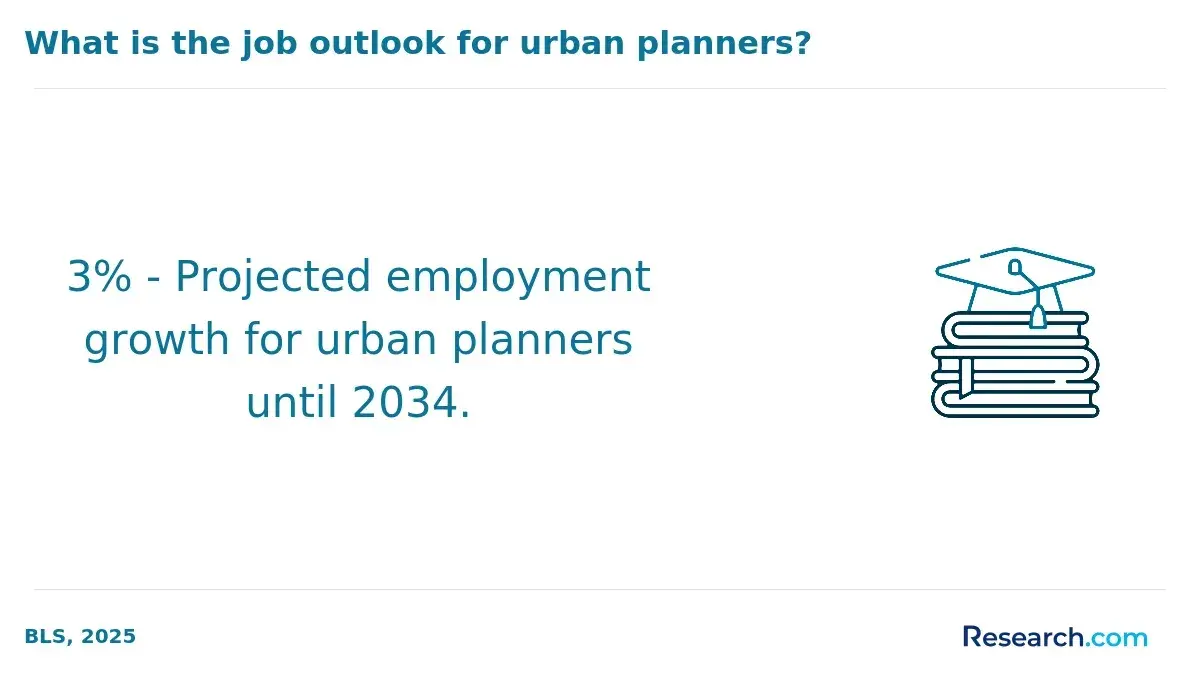
- O*NET OnLine projects a national growth rate of 3% from 2024 to 2034 for urban and regional planners, suggesting continued need for planning professionals, including those working in Vermont communities.
- Urban planners in Vermont earn an average annual wage of approximately $74,000, with salary potential influenced by specialization, employer type, and seniority.
- Planning work in Vermont often emphasizes sustainable development, climate resilience, affordable housing, rural mobility, environmental protection, and community participation.
- The University of Vermont (UVM) and Vermont State University (VTSU) are two leading institutions connected to urban planning preparation in the state, particularly through programs in sustainability, environmental studies, design, policy, geography, and community-focused fields.
- Education requirements for urban planners in Vermont
- Urban planning specializations available in Vermont
- Licensing and certification requirements in Vermont
- Timeline to become an urban planner in Vermont
- Urban planner salary in Vermont
- Urban planning career options in Vermont
- Typical responsibilities of Vermont urban planners
- How business education supports planning careers
- Technology trends shaping planning work
- Scholarships and financial aid options
- Why multidisciplinary knowledge matters
- Balancing sustainability and economic growth
- Continuing education and supplementary credentials
- Essential skills for planning success
- Collaboration with social service professionals
- Financial expertise in planning projects
- Zoning and legal regulations in Vermont planning
- Socioeconomic and community health challenges
- Internships and practical experience in Vermont
- Professional organizations for Vermont planners
- Career growth for experienced planners
What are the education requirements for urban planners in Vermont?
Urban planning is not usually an entry-level profession built on one narrow major. Vermont planners need a broad academic base because their work often combines housing policy, land conservation, public engagement, zoning, transportation access, climate risk, and economic development. A strong degree plan should build both technical ability and community problem-solving skills.
- Bachelor’s degree: A bachelor’s degree is generally the starting point for entry-level planning assistant, community development, policy, GIS, or environmental planning roles. Common majors include geography, urban studies, environmental science, sustainability, public policy, architecture, landscape architecture, economics, and political science. Students interested in remote study can compare online sustainability management programs if their goal is to build a sustainability-focused foundation.
- Master’s degree: Many planning employers prefer candidates with a graduate degree in urban planning, regional planning, public policy, environmental planning, or a related field. A master’s degree is especially helpful for roles that involve complex land-use policy, public facilitation, long-range planning, transportation modeling, housing strategy, or project leadership.
- Core coursework: Useful classes include land-use planning, zoning, environmental policy, planning law, urban design, housing policy, transportation planning, public finance, community development, statistics, data visualization, and Geographic Information Systems (GIS).
- Applied experience: Internships, studio projects, field research, community engagement assignments, and GIS portfolio work can matter as much as coursework. Vermont employers often value applicants who understand small-town governance, regional planning commissions, public meeting processes, and environmental review.
| Education path | Best for | What to prioritize |
| Bachelor’s degree in geography, sustainability, environmental science, public policy, or urban studies | Students seeking entry-level planning support, GIS, community outreach, or policy assistant roles | GIS, statistics, writing, local government, environmental policy, and internships |
| Master’s degree in urban planning or a closely related field | Candidates targeting planner, transportation planner, environmental planner, or long-range planning positions | Studio projects, planning law, land use, public engagement, housing, and capstone work |
| Career-change pathway from business, engineering, architecture, forestry, or social sciences | Professionals who already have relevant technical or policy experience | Transferable skills, graduate certificates, planning portfolio, and local planning board exposure |
A practical way to evaluate your readiness is to ask whether your education gives you three things: the ability to analyze data, the ability to explain trade-offs to the public, and the ability to apply planning rules to real development decisions.
What urban planning specializations are available in Vermont?
Vermont’s planning needs are shaped by its mix of rural communities, small cities, agricultural land, historic centers, environmental assets, and climate-related risks. Choosing a specialization can help you stand out, but the best planners usually understand how their focus connects to housing, infrastructure, public finance, and community values.
- Transportation planning: Transportation planners study how people move between homes, jobs, schools, services, and recreation. In Vermont, this may include rural mobility, pedestrian safety, public transit access, bicycle infrastructure, downtown circulation, and links between transportation and economic development.
- Community development: This specialization focuses on neighborhood revitalization, public spaces, affordable housing, local business districts, and resident engagement. It is especially relevant in towns working to attract residents, support aging populations, or adapt older infrastructure for current needs.
- Environmental planning: Environmental planners evaluate how development affects water quality, habitats, forests, floodplains, farmland, and conservation priorities. Students drawn to this area may want to compare affordable online environmental studies degrees as part of their academic planning.
- Disaster and emergency planning: Planners in this area help communities reduce exposure to hazards, prepare for floods and extreme weather, and align land-use decisions with resilience goals. In Vermont, this work can be closely tied to infrastructure investment and floodplain management.
- Housing and land-use planning: This path is increasingly important for communities trying to expand housing options while respecting infrastructure limits, environmental constraints, and local character.
- Historic preservation and urban design: Vermont’s historic villages and downtowns create demand for planners who understand adaptive reuse, streetscape improvements, design guidelines, and community identity.
Do not assume there is only one acceptable major for future planners. Relevant preparation can come from several academic directions, including public administration, environmental studies, design, economics, engineering, and business. If you are still choosing a major and want a flexible starting point, reviewing the best easy online bachelor’s degrees can help you compare programs, but you should still check whether the curriculum includes research, writing, policy, and analytical coursework.
The chart below provides additional context on common academic majors among urban planners.
Are there licensing requirements for urban planners in Vermont?
Vermont does not have a separate state-specific license or registration requirement for urban planners. In practice, employers focus on your education, work experience, technical skills, local government knowledge, and professional credibility.
The most widely recognized professional credential is certification through the American Institute of Certified Planners (AICP). To earn AICP certification, candidates must register with the organization, pass a comprehensive exam, complete a certification maintenance program requiring 32 credits every two years, and document at least two years of relevant professional experience.
AICP is optional in Vermont, but it can be valuable if you want to move into senior planner, planning director, consulting, regional planning, or policy leadership roles. It signals that you understand professional standards and planning practice beyond one local jurisdiction.
| Credential | Who should consider it | Why it can help in Vermont |
| American Institute of Certified Planners (AICP) | Planners seeking advancement, leadership, consulting, or broader professional recognition | Demonstrates planning knowledge, ethics, and commitment to ongoing professional development |
| Certified Floodplain Manager (CFM) | Planners working with flood risk, hazard mitigation, land conservation, or resilient infrastructure | Useful in communities where floodplain decisions affect housing, roads, public safety, and development approvals |
| Leadership in Energy and Environmental Design (LEED) Accreditation | Planners involved in sustainable buildings, redevelopment, site planning, or green infrastructure | Supports projects where energy efficiency, environmental performance, and sustainable design are priorities |
| Professional Transportation Planner (PTP) | Transportation planners and mobility specialists | Strengthens credibility for roles involving transit systems, roadway planning, pedestrian safety, and regional mobility |
How long does it take to become an urban planner in Vermont?
The typical pathway takes six to seven years if you complete both undergraduate and graduate education before moving into full-time professional planning work. Some people enter support roles after a bachelor’s degree and complete graduate study later, while others transition from adjacent fields such as environmental consulting, architecture, public administration, or transportation.
- Bachelor’s degree: Most students spend four years completing an undergraduate degree. Programs in environmental studies, geography, sustainability, policy, or design can provide a strong base.
- Master’s degree: A graduate program in urban planning or a related discipline often takes two years and can prepare students for more specialized or higher-responsibility roles.
- Internships: Practical experience may last from three months to a year, depending on the opportunity. Longer internships can be especially useful when they include public meetings, zoning research, GIS mapping, grant writing, or plan drafting.
- Certification preparation: AICP certification is optional, but candidates often spend several months preparing after they meet the education and experience requirements.
| Stage | Typical time involved | Career value |
| Undergraduate study | Four years | Builds the academic foundation for entry-level planning, policy, GIS, or environmental work |
| Graduate planning study | Two years | Develops advanced planning, design, legal, policy, and community engagement skills |
| Internship or fieldwork | Three months to a year | Creates portfolio examples and local planning experience |
| AICP preparation | Several months after meeting prerequisites | Can support advancement into senior or specialized planning roles |
How much do urban planners in Vermont earn?
Urban planner pay in Vermont depends on experience, degree level, specialization, employer type, and location. Entry-level planning assistants generally earn less than experienced planners, consultants, planning directors, transportation specialists, or professionals working in higher-paying industries.
Urban planners can expect to earn an average annual salary of around $74,000. ZipRecruiter reports that Vermont is one of the top-paying states for urban planners, listing an average of $79,780 in the Green Mountain State compared with a national average salary of $65,316. ZipRecruiter also shows a higher average annual salary of $74,632 for planners in Vermont. Because salary sources use different datasets and collection methods, treat these numbers as reference points rather than guarantees.
Employer type can make a noticeable difference. Government and nonprofit roles may offer mission-driven work, stability, and public-sector benefits, while private consulting firms and specialized technical roles may provide different compensation structures. According to recent salary data from the U.S. Bureau of Labor Statistics (BLS), the top-paying industries for urban and regional planners are legal services ($133,530), federal, state, and local government ($111,580), and management of companies and enterprises ($108,790).
| Salary factor | How it affects earnings |
| Experience level | Senior planners, project managers, and planning directors generally earn more than entry-level staff. |
| Specialization | Transportation, environmental compliance, resilience, housing finance, and consulting roles may carry different pay ranges. |
| Employer | Municipal agencies, regional commissions, nonprofits, state agencies, and private firms often have different salary structures. |
| Credentials | AICP, CFM, LEED, or PTP credentials can support advancement, especially when paired with strong project experience. |
| Location and project complexity | Roles tied to larger jurisdictions, complex development issues, or specialized infrastructure projects may pay differently. |
The chart below uses new data from Zippia and presents the highest-paying states for urban planners.
What careers are available to urban planners in Vermont?
Urban planning careers in Vermont are available in municipal government, regional planning commissions, state agencies, consulting firms, housing organizations, environmental nonprofits, transportation agencies, and community development groups. The right role depends on whether you prefer public policy, technical analysis, public facilitation, design, environmental review, or project implementation.
- Town planner: Town planners work with local officials, boards, residents, and developers to guide land-use decisions, update plans and ordinances, review applications, and support community goals.
- Transportation planner: Transportation planners focus on mobility, safety, transit access, walking and biking infrastructure, and regional connectivity. Agencies such as the Vermont Agency of Transportation (VTrans) may need professionals with these skills.
- Environmental planner: Environmental planners assess the relationship between development and natural systems. They may evaluate land use, conservation priorities, environmental impacts, and regulatory requirements.
- Urban designer: Urban designers focus on the form and function of streets, public spaces, downtowns, redevelopment areas, and community gathering places.
- Housing development planner: Housing planners work with public agencies, housing authorities, and nonprofits to expand housing options, evaluate sites, coordinate funding, and align projects with community needs.
- Regional planner: Regional planners often work across multiple municipalities on transportation, energy, housing, emergency management, economic development, and land-use coordination.
Vermont planning teams also benefit from professionals with backgrounds in natural resources, architecture, sustainability, civil engineering, public finance, and community advocacy. Students interested in land management and conservation-related planning may want to compare affordable forestry degree programs as one possible academic route.
What are the typical responsibilities of urban planners in Vermont?
Urban planners in Vermont help communities make informed decisions about growth, infrastructure, housing, land conservation, mobility, and public investment. The work can be technical, political, and highly collaborative. A planner may spend one day analyzing GIS data and the next facilitating a public meeting where residents disagree about a proposed project.
- Research population patterns, housing needs, land-use trends, transportation access, environmental constraints, and economic conditions.
- Prepare comprehensive plans, zoning updates, corridor studies, downtown revitalization plans, housing strategies, or resilience plans.
- Review development proposals for consistency with local ordinances, state rules, environmental standards, and community goals.
- Use GIS and data analysis tools to map land use, hazards, infrastructure, parcels, demographics, and service areas.
- Coordinate with selectboards, planning commissions, regional planning commissions, state agencies, nonprofits, developers, and residents.
- Design and facilitate public engagement through meetings, surveys, workshops, charrettes, and stakeholder interviews.
- Translate complex rules and trade-offs into clear recommendations that decision-makers and residents can understand.
- Track Vermont zoning, land-use, housing, environmental, transportation, and hazard mitigation requirements that affect project feasibility.
| Planning task | Why it matters | Skills involved |
| Development review | Helps communities evaluate whether a proposal fits local rules and long-term goals | Zoning knowledge, writing, public process, site analysis |
| Comprehensive planning | Creates a long-range vision for land use, housing, transportation, conservation, and services | Research, facilitation, policy analysis, GIS |
| Public engagement | Ensures residents, businesses, and community groups can participate in decisions | Communication, conflict management, meeting design |
| Environmental and resilience planning | Reduces risk and supports better decisions in sensitive or hazard-prone areas | Environmental policy, floodplain knowledge, data interpretation |
How can business education enhance urban planning careers in Vermont?
Planning decisions often depend on whether a project is financially realistic, fundable, and manageable over time. Business education can help planners understand budgets, cost-benefit analysis, public-private partnerships, grants, project management, and market feasibility. These skills are useful when communities need affordable housing, downtown investment, infrastructure upgrades, or redevelopment projects that require coordination between public agencies and private partners.
Professionals who want stronger management or finance skills can review the best business schools in Vermont to understand local options for business training that may complement a planning career.
How are emerging technologies shaping urban planning in Vermont?
Technology is changing how planners evaluate land, communicate with the public, and compare development scenarios. GIS remains one of the most important tools, but planners are also using dashboards, remote sensing, online engagement platforms, scenario modeling, data visualization, and real-time infrastructure or environmental data when available.
AI can assist with document review, public comment sorting, mapping support, code analysis, and draft communication, but planners still need human judgment. Local context matters. A tool may summarize comments or model a trend, but planners must interpret results in light of Vermont’s laws, budgets, landscapes, historic patterns, and community priorities.
Urban planning also connects to public health and community well-being. For readers exploring adjacent Vermont careers, Research.com’s guide on how to become a nutritionist in Vermont shows how health-related professions can intersect with local food access, community wellness, and built-environment decisions.
Are there available scholarships for urban planners in Vermont?
Students preparing for planning careers should search broadly for scholarships, grants, assistantships, employer tuition support, and lower-cost degree formats. Funding is not always labeled “urban planning,” so look for awards connected to public service, municipal government, sustainability, social sciences, environmental studies, housing, geography, and community development.
- VLCT Municipal Service Scholarship: Offered by the Vermont League of Cities and Towns, this scholarship supports municipal employees and their dependents who are committed to service in Vermont city, town, or village government. It provides an annual award of $2,000 to eligible candidates.
- Vermont DAR Good Citizenship Scholarship: This scholarship is intended for high school seniors pursuing undergraduate study in the social sciences, including urban studies. The selected applicant must show academic excellence and financial need and receives a $1,000 scholarship.
- Vermont Student Assistance Corporation (VSAC) Scholarships: VSAC manages more than 150 scholarship options for Vermont residents. Awards may apply to fields connected to planning and are typically based on factors such as financial need and academic merit.
Students should also compare total program cost, not just tuition. Fees, housing, commuting, technology, books, internship location, and time away from work can change the real price of a degree. If flexibility and cost are priorities, review online urban planning degrees with low tuition and confirm whether the curriculum aligns with your career goals.
How Does a Multidisciplinary Approach Enhance Urban Planning in Vermont?
Vermont planners rarely solve problems from a single discipline. A housing decision may involve zoning, stormwater, transportation access, public finance, public health, historic preservation, and community trust. A multidisciplinary background helps planners ask better questions and work effectively with engineers, social workers, attorneys, environmental scientists, economists, architects, and emergency managers.
Some planning problems also require investigative thinking. For example, infrastructure failures, environmental hazards, and site constraints may require careful evidence gathering and technical interpretation. Readers interested in that type of analytical work can explore how a forensic science degree in Vermont builds skills in investigation, documentation, and evidence-based analysis.
How Can Urban Planners Balance Sustainability with Economic Growth in Vermont?
Good planning does not treat sustainability and economic development as separate goals. In Vermont, the strongest projects often protect natural resources while making communities more livable, affordable, and economically resilient. That balance requires planners to compare trade-offs honestly: where infrastructure already exists, which sites create environmental risk, how housing affects workforce stability, and whether a project’s long-term costs are realistic.
Planners can strengthen this work by learning financial modeling, market analysis, grant strategy, and project management. Programs such as the best online business degree programs may be useful for professionals who want stronger business fundamentals while staying in planning or public-sector work.
Is Supplementary Certification and Continuing Education Essential for Urban Planners in Vermont?
Continuing education is not just a résumé booster for planners. Zoning rules, climate adaptation practices, housing policy, public engagement methods, GIS tools, and environmental standards continue to evolve. Planners who keep learning are better prepared to advise communities and adapt to new expectations.
Supplementary credentials are most useful when they connect directly to your work. A floodplain credential can help with hazard mitigation. A transportation credential can support mobility projects. A sustainability credential can strengthen redevelopment and building-related work. Comparing credential systems in other regulated professions, such as speech pathologist requirements in Vermont, can also help readers understand how professional standards, continuing education, and career advancement differ across fields.
What are the essential skills for urban planning success in Vermont?
Successful planners combine technical competence with patience, judgment, and communication. Vermont’s local planning environment often involves close public participation, small-town governance, limited budgets, and complex environmental considerations. Technical skill matters, but so does the ability to listen and translate competing priorities into workable plans.
- GIS and spatial analysis: Planners need to map parcels, infrastructure, hazards, land use, transportation routes, and demographic patterns.
- Policy and legal interpretation: Zoning, subdivision rules, environmental regulations, and local plans shape what can happen on the ground.
- Writing and presentation: Planners must explain complex findings in staff reports, grant applications, public presentations, and plan documents.
- Community engagement: Public meetings require facilitation, conflict management, listening, and the ability to bring quieter voices into the process.
- Project management: Plans often involve timelines, consultants, budgets, funding deadlines, boards, agencies, and public review.
- Financial literacy: Understanding costs, funding sources, budgets, and feasibility helps planners recommend realistic solutions. Readers who want to build this skill set can review guidance on how to become an accountant in Vermont.
- Equity and public service orientation: Planning decisions affect housing access, transportation options, health, safety, and economic opportunity.
How Do Urban Planners Collaborate with Social Service Professionals in Vermont?
Urban planners and social service professionals often work on overlapping problems, especially housing insecurity, homelessness, aging-in-place, transportation access, neighborhood safety, and community health. Planners focus on land use, infrastructure, and policy frameworks, while social service professionals bring direct knowledge of residents’ needs and barriers.
This collaboration can improve affordable housing plans, shelter siting, public facility planning, neighborhood revitalization, and outreach strategies. Planners who understand social worker education requirements in Vermont can better appreciate the expertise social workers bring to multidisciplinary planning teams.
How Can Financial Expertise Elevate Urban Planning Projects in Vermont?
Many promising planning ideas fail because funding, operating costs, or long-term maintenance were not fully considered. Financial expertise helps planners evaluate feasibility, compare alternatives, identify funding mechanisms, manage risk, and explain fiscal impacts to decision-makers and the public.
Financial knowledge is particularly useful in housing development, infrastructure planning, downtown revitalization, grant-funded projects, and public-private partnerships. Professionals who want a deeper understanding of budgeting and financial reporting can compare the best accounting schools in Vermont as one way to build complementary expertise.
How Do Zoning and Legal Regulations Influence Urban Planning in Vermont?
Zoning and land-use rules determine what can be built, where it can be built, how land can be subdivided, what review process applies, and how community plans are implemented. In Vermont, planners must understand local bylaws, regional planning considerations, environmental requirements, public notice procedures, and the legal limits of local decision-making.
Because planning decisions can be contested, clear documentation and procedural accuracy matter. Planners often work with municipal attorneys, zoning administrators, boards, and consultants to ensure decisions are legally defensible. Readers interested in the legal side of planning may find it useful to explore how to become a paralegal in Vermont.
What Socioeconomic and Community Health Challenges Do Urban Planners Face in Vermont?
Urban planners in Vermont face challenges tied to housing affordability, homelessness, aging populations, rural transportation gaps, infrastructure limitations, climate hazards, and uneven access to services. These issues are not only physical planning concerns; they affect health, safety, opportunity, and quality of life.
Effective planning requires close work with housing providers, public health agencies, schools, social service organizations, employers, and residents. Understanding social worker degree requirements in Vermont can help planners recognize how social service training supports community-centered development strategies.
What urban planning internships or practical experiences can I pursue in Vermont?
Internships are one of the best ways to test whether planning work fits your strengths. They can also help you build a portfolio, learn local procedures, meet professionals, and understand how plans move from ideas to implementation. Look for experiences that include writing, mapping, public engagement, board meetings, research, and policy analysis.
- Vermont Department of Environmental Conservation: Internships may involve environmental planning, conservation, land use, water quality, or sustainability-related projects. This experience is useful for students interested in environmental review or resilience planning.
- Vermont Housing & Conservation Board (VHCB): VHCB’s work connects affordable housing and conservation, making it relevant for students interested in housing development, land preservation, community partnerships, and public investment.
- Nonprofit organizations: Groups focused on environmental conservation, affordable housing, historic preservation, and community development may offer internships or project-based experience. Organizations such as the Vermont Natural Resources Council (VNRC) can expose students to policy advocacy and land-use issues.
- Municipal planning offices: Town and city offices can provide direct exposure to zoning, development review, public meetings, plan updates, and local government operations.
- Regional planning commissions: These organizations can be especially valuable because they work across municipal boundaries on transportation, energy, emergency management, housing, and land-use coordination.
| Experience type | What you can learn | Best fit for |
| Municipal planning internship | Zoning, public meetings, development review, local plans | Students interested in town planner roles |
| Environmental agency internship | Conservation, water quality, environmental policy, resilience | Students focused on environmental planning |
| Housing or community development internship | Affordable housing, outreach, project funding, nonprofit partnerships | Students interested in housing and equity |
| GIS or data-focused project | Mapping, spatial analysis, visualization, data interpretation | Students seeking technical planning roles |
What professional organizations in Vermont should I join to advance my career as an urban planner?
Professional organizations can help you learn the language of the field, meet hiring managers, find mentors, understand local issues, and stay current on planning practice. Membership is especially useful in a state where regional networks and local relationships often shape planning opportunities.
- Vermont Planners Association (VPA): VPA supports professional and citizen planners through education, discussion, outreach, and professional development. It can be especially helpful for learning about current Vermont planning challenges and meeting practitioners.
- Vermont Natural Resources Council (VNRC): VNRC is not exclusively a planning organization, but its work in land use, environmental policy, conservation, and sustainable development makes it relevant for planners focused on Vermont’s natural and built environments.
- Urban Land Institute (ULI): ULI is a global organization focused on responsible land use and sustainable development. It can be useful for planners interested in urban design, redevelopment, real estate, and private-sector land-use projects.
To get the most value from a professional organization, do more than pay dues. Attend workshops, ask for informational interviews, volunteer for committees, present student work, and follow policy discussions. These actions can turn membership into real career momentum.
What Urban Planners in Vermont Say About Their Careers
- "Planning in Vermont has given me a way to connect environmental stewardship with practical community needs. The work can be demanding, but it is meaningful when a project protects a landscape and improves daily life for residents." - Jocelyn
- "The most rewarding part of this career is working directly with communities as they define what they want their future to look like. Vermont’s local engagement culture makes the process challenging, thoughtful, and deeply collaborative." - Leo
- "Urban planning here requires respect for history, rural character, and innovation at the same time. Listening to residents and turning their concerns into realistic plans is what makes the work worthwhile." - Helen
How Can Experienced Urban Planners Accelerate Their Career Growth in Vermont?
Experienced planners can advance by moving from technical execution into leadership, strategy, supervision, and high-impact project work. Career growth often comes from managing larger plans, leading public processes, securing grants, mentoring junior staff, presenting to decision-makers, and developing expertise in high-demand areas such as housing, transportation, resilience, or environmental planning.
Senior planners should also track compensation trends and negotiate based on responsibilities, credentials, and measurable achievements. Broader labor market resources, including guidance on business management salary, can help professionals think more strategically about leadership roles, compensation discussions, and management pathways.
Common mistakes to avoid when preparing for an urban planning career in Vermont
- Choosing a program based only on title: A degree name matters less than the curriculum, faculty expertise, internship access, GIS training, and planning-related projects.
- Ignoring accreditation and employer expectations: If you plan to pursue graduate planning education, check whether the program is respected by planning employers and whether it supports your long-term certification goals.
- Underestimating public engagement: Planning is not only mapping and policy writing. You must be comfortable explaining trade-offs, hearing disagreement, and building trust.
- Skipping GIS and data skills: Even community-focused planners benefit from mapping, demographic analysis, and data visualization.
- Assuming salary outcomes are guaranteed: Reported averages vary by source and do not account for every employer, location, or experience level.
- Overlooking local government experience: Serving on a planning board, attending public meetings, or interning with a town office can provide practical insight that coursework alone cannot.
- Focusing only on tuition: Total cost includes fees, commuting, housing, books, technology, and lost work time.
How to choose the right urban planning pathway in Vermont
- Clarify your planning interest: Decide whether you are most drawn to housing, transportation, environmental planning, community development, design, resilience, or public policy.
- Compare degree options carefully: Review coursework, internship support, GIS requirements, studio projects, faculty backgrounds, and alumni outcomes.
- Build a portfolio early: Save maps, reports, public engagement materials, policy memos, design concepts, and research projects that show your skills.
- Seek Vermont-based experience: Intern with local governments, regional planning commissions, state agencies, nonprofits, or consulting firms.
- Learn the public process: Attend planning commission, zoning board, or selectboard meetings to understand how local decisions are made.
- Plan for credentials strategically: Consider AICP, CFM, LEED, or PTP only when they match your career direction.
- Evaluate return on investment: Compare program cost, expected job market, salary references, financial aid, and whether a graduate degree is needed for your target role.
Questions to ask before committing to an urban planning degree or career path
- Does the program include GIS, planning law, land-use policy, community engagement, and applied studio work?
- Can students complete internships with Vermont municipalities, regional planning commissions, state agencies, or nonprofits?
- Do graduates work in planning roles, or do many need additional education before entering the field?
- Is a master’s degree necessary for the jobs I want, or can I begin with a bachelor’s degree and gain experience first?
- How much will the degree cost after scholarships, grants, assistantships, and living expenses?
- Will the program help me build a portfolio that employers can evaluate?
- Which specialization best matches Vermont’s planning needs and my strengths?
- What credentials could improve my advancement prospects after I gain work experience?
Key Insights
- Vermont urban planners help communities manage growth, housing needs, environmental protection, transportation access, and climate resilience while preserving local identity.
- A bachelor’s degree can open entry-level doors, but many planner roles favor candidates with a master’s degree in urban planning or a related field.
- Vermont does not require a separate state planning license; AICP certification is optional but valuable for professional advancement.
- The typical preparation timeline is six to seven years when it includes undergraduate study, graduate education, internships, and optional certification preparation.
- Urban planners in Vermont can expect an average annual salary of around $74,000, though sources report different figures and actual pay depends on role, experience, specialization, and employer.
- Strong candidates develop GIS, policy analysis, public engagement, writing, zoning, project management, and financial literacy skills.
- The best career preparation includes practical Vermont experience through internships, regional planning projects, municipal meetings, and portfolio-building assignments.
- Before choosing a degree, compare curriculum, total cost, internship access, graduate outcomes, and how well the program supports your intended specialization.
Related Articles for Nearby States
- 2027 How to Become an Urban Planner in New Hampshire
- 2027 How to Become an Urban Planner in Massachusetts
- 2027 How to Become an Urban Planner in New York
- 2027 How to Become an Urban Planner in Connecticut
- 2027 How to Become an Urban Planner in Rhode Island
- 2027 How to Become an Urban Planner in Maine
- 2027 How to Become an Urban Planner in New Jersey
- 2027 How to Become an Urban Planner in Pennsylvania
- 2027 How to Become an Urban Planner in Delaware
- 2027 How to Become an Urban Planner in Maryland
References:
- Data USA (n.d.). Urban & regional planners. https://datausa.io/profile/soc/urban-regional-planners
- O*NET OnLine (n.d.). Urban and Regional Planners, 19-3051.00. Retrieved from https://www.onetonline.org/link/summary/19-3051.00
- U.S. Bureau of Labor Statistics (August 2025). Urban and Regional Planners. https://www.bls.gov/ooh/Life-Physical-and-Social-Science/Urban-and-regional-planners.htm
- Zippia (2025). Urban Planner Salary. https://www.zippia.com/salaries/urban-planner
- ZipRecruiter (2025). What Is the Average Urban Planner Salary by State. Retrieved from https://www.ziprecruiter.com/Salaries/What-Is-the-Average-Urban-Planner-Salary-by-State
Other Things to Know About Becoming an Urban Planner in Vermont
To become an urban planner in Vermont in 2027, one typically needs a master's degree in urban or regional planning. Some positions may accept a bachelor's degree in planning or a related field, but a master's degree is often preferred for advanced positions.
In Vermont, urban planners are not required to have a specific license to practice. However, a master's degree in urban planning or a related field is typically expected. Professional certification, such as the American Institute of Certified Planners (AICP) credential, can enhance career prospects and credibility.
Pursuing a career in urban planning in Vermont can be a rewarding endeavor for those passionate about sustainable development and community engagement. The state is known for its commitment to preserving natural landscapes while fostering vibrant communities, making it an ideal setting for urban planners.
- Vermont's unique blend of rural charm and small-town living offers planners the opportunity to work on diverse projects, from revitalizing downtown areas to enhancing public transportation systems.
- The state's emphasis on smart growth principles encourages planners to create environmentally sustainable solutions that respect local culture and heritage.
- Vermont's active community involvement in planning processes allows urban planners to engage directly with residents, fostering a sense of collaboration and shared vision.
- The Vermont Agency of Natural Resources and various regional planning commissions provide resources and support for planners, enhancing professional development opportunities.
Overall, a career in urban planning in Vermont not only contributes to the state's quality of life but also allows professionals to make a meaningful impact on their communities.