2027 How to Become a Nutritionist in Vermont

Co-Founder and Chief Data Scientist
Becoming a nutritionist in Vermont starts with one important distinction: “nutritionist” and “licensed dietitian” are not always the same legal or professional pathway. Vermont does not require a state license for people who use the nutritionist title, but dietitians who want to practice under state-recognized dietitian credentials must meet education, supervised practice, examination, and application requirements through the Vermont Office of Professional Regulation (OPR).
This matters because the path you choose affects what services you can offer, where you can work, whether employers will consider you for clinical roles, and how much time and money you should expect to invest. Vermont’s need for nutrition expertise is also tied to real community health concerns. In 2025, reports showed that 37% of Vermont adults facing food insecurity rate their health as fair or poor, making food access, prevention, chronic disease support, and community nutrition especially relevant across the state.
This guide explains how to become a nutritionist in Vermont in practical terms: what degree you may need, when licensure applies, how long training takes, what certification options exist, what costs to plan for, and how to choose a path that fits your career goals.
Quick Answer: How do you become a nutritionist in Vermont?
In Vermont, you can generally work as a nutritionist without a state license, but your education, certification, and job options will depend on the type of work you want to do. If you want to become a licensed dietitian, you must complete a bachelor’s degree in nutrition or a related field, finish an accredited supervised practice program, pass the Commission on Dietetic Registration (CDR) exam, and submit the required documentation and fee to the Vermont Office of Professional Regulation. Nutritionists who do not pursue dietitian licensure may still strengthen their credibility through credentials such as the Certified Nutrition Specialist (CNS), which requires a master’s degree in nutrition or a related field and passage of the CNS exam.
Key Things You Should Know About Becoming a Nutritionist in Vermont
- Vermont does not require a license for people working as nutritionists, but dietitians must be licensed through the Vermont Office of Professional Regulation (OPR).
- The licensed dietitian route requires a bachelor’s degree in nutrition or a related field, an accredited supervised practice program, and a passing score on the Commission on Dietetic Registration (CDR) exam.
- Certification can help nutritionists compete for stronger roles. One option is the Certified Nutrition Specialist (CNS), which requires a master’s degree in nutrition or a related field and passing the CNS exam.
- Most professional credentials require continuing education, so nutritionists should expect to complete renewal education on a recurring schedule set by their certifying organization.
- Dietitian licensure in Vermont requires applicants to submit proof of education, supervised practice, exam completion, and the required fee to the Vermont OPR.
- Education requirements for nutritionists in Vermont
- Licensing rules for nutritionists and dietitians
- How long the Vermont nutritionist pathway takes
- Certification options: RDN, CNS, and other credentials
- Practical experience and supervised training
- Expected costs of becoming a nutritionist
- Salary and job outlook in Vermont
- Using interdisciplinary collaboration in nutrition practice
- Career advancement options
- Online certifications for career growth
- Specialization options for Vermont nutritionists
- Scientific expertise and nutrition careers
- Building a sustainable nutrition business
- Research skills and expanded career opportunities
- Clinical skill-building through nurse practitioner training
- Collaboration with pharmacists
- Trends changing nutrition practice
- Registered dietitian requirements in Vermont
- Major challenges nutritionists face in Vermont
- Legal responsibilities and practice boundaries
- How nursing standards influence nutrition work
- Collaboration with substance abuse counselors
What are the educational requirements to become a nutritionist in Vermont?
The right education depends on the type of nutrition work you plan to do. A person offering general wellness coaching may follow a different path than someone seeking clinical dietetics, hospital employment, or advanced nutrition counseling. For most serious nutrition careers, however, employers and credentialing bodies expect college-level preparation in nutrition, dietetics, food science, public health, or a closely related field.
| Education Path | Best For | Important Considerations |
| Associate degree | Students exploring food, wellness, or support roles before committing to a longer program | May help with entry-level or assistant roles, but it is usually not enough for dietitian licensure or advanced certification. |
| Bachelor’s degree | Students pursuing entry-level nutrition roles or preparing for the licensed dietitian pathway | A bachelor’s degree in nutrition, dietetics, or a related field is the standard starting point for many professional nutrition careers. |
| Master’s degree | Students seeking advanced clinical, integrative, research, public health, or leadership roles | A master’s degree can support higher-level credentials such as the CNS and may improve competitiveness for specialized roles. |
| Doctoral degree | Students interested in research, academia, or advanced scientific work | This is a long pathway and is usually unnecessary for general nutrition practice. |
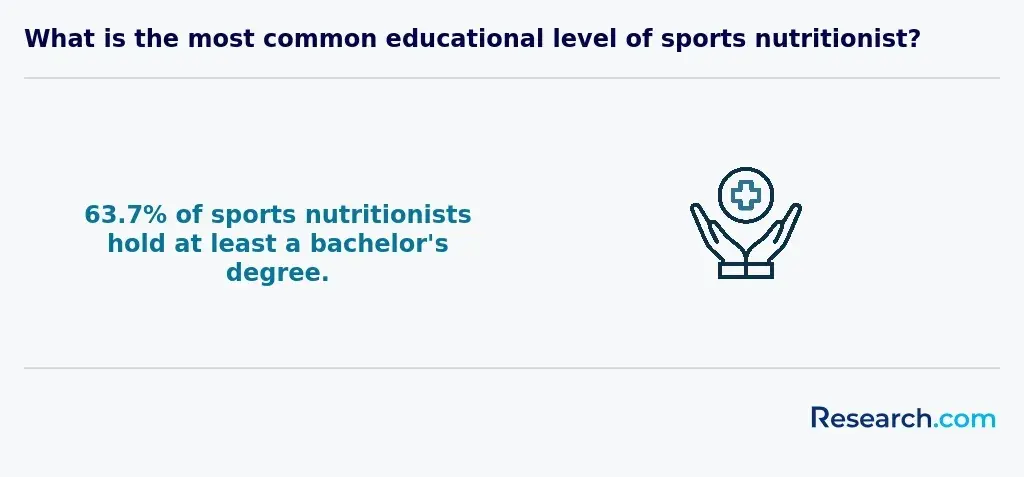
- Bachelor’s degree: A degree in nutrition, dietetics, food science, or a related discipline gives students a foundation in human nutrition, metabolism, food systems, counseling, and dietary planning. This is also the minimum academic starting point for the licensed dietitian route described in this guide.
- Graduate education: A master’s degree is not always required for every nutrition job, but it can matter for advanced credentials, specialized practice, leadership roles, and stronger employer recognition. Programs such as those offered through the University of Vermont may help students build deeper expertise in nutrition and food sciences.
- Accreditation: Students who want to become licensed dietitians should verify that their academic and supervised practice pathway meets recognized professional standards. Choosing an unapproved program can delay eligibility for exams, credentials, or licensure.
- Online and campus options: Vermont students may choose traditional, hybrid, or online study depending on their goals. For students drawn to wellness-oriented practice, Northern Vermont University’s Bachelor of Science in Holistic Health may be relevant. Students comparing wellness careers can also review Research.com’s guide to careers in holistic nutrition.
Is there a licensing requirement to become a nutritionist in Vermont?
Vermont does not require a state license simply to work as a nutritionist. That makes the field more accessible, but it also means consumers and employers may look closely at your education, training, certification, and scope of practice before trusting your services.
The key licensing distinction is dietetics. If your goal is to practice as a licensed dietitian, you must follow Vermont’s dietitian licensure process through the Vermont Office of Professional Regulation. That route is more structured and is often expected for clinical, healthcare, and medical nutrition therapy roles.
| Path | State License Required in Vermont? | Typical Career Use |
| Nutritionist | No specific Vermont nutritionist license is required | Wellness education, community nutrition, coaching, food access programs, private consulting within legal and ethical limits |
| Licensed dietitian | Yes, dietitians must meet Vermont OPR requirements | Clinical nutrition, hospitals, medical nutrition therapy, healthcare teams, regulated dietetics roles |
| Certified Nutrition Specialist | Not a Vermont license, but a professional credential | Advanced nutrition counseling, integrative nutrition, functional nutrition, private practice, specialized consulting |
Even when licensure is not required, professional credibility still matters. Joining organizations such as the Vermont Academy of Nutrition and Dietetics can help practitioners stay connected to continuing education, job opportunities, and local professional networks. Vermont’s local food movement also creates opportunities for nutritionists to collaborate with farmers, food producers, schools, food shelves, healthcare teams, and community organizations.
Nutritionists should be careful not to misrepresent credentials, diagnose medical conditions outside their authority, or imply that they hold a dietitian license if they do not. Clear communication protects clients and helps professionals build trust.
How long does it take to become a nutritionist in Vermont?
The timeline can range from a short education pathway for wellness-focused roles to many years for advanced clinical, research, or academic careers. Students should plan backward from the job they want rather than choosing the fastest degree available.
| Step | Typical Timeframe | What It Prepares You For |
| Associate degree | About two years | Introductory nutrition and food science knowledge; possible support roles |
| Bachelor’s degree | Four years | Entry-level nutrition roles and preparation for dietitian or graduate pathways |
| Master’s degree | Two additional years after a bachelor’s degree | Advanced practice, specialization, leadership, and some certification pathways |
| Doctoral degree | Four to six years | Research, teaching, academic leadership, and advanced scientific roles |
| Supervised practice | At least 1,000 hours | Hands-on professional preparation for dietitian or advanced certification pathways |
| Exam preparation | Several weeks to a few months | Readiness for credentialing or licensure exams |
A student pursuing a bachelor’s degree followed by supervised practice and exam preparation should expect a multi-year commitment. Students interested in nutrition within nursing or patient care may also want to compare this pathway with Research.com’s guide on how to become a nutrition nurse.
What are the certification options for nutritionists in Vermont?
The two most important credential pathways to understand are the Registered Dietitian Nutritionist (RDN) route and the Certified Nutrition Specialist (CNS) route. They serve different professional goals, and neither should be chosen simply because it sounds more recognizable.
| Credential | Core Requirements Mentioned | Best Fit |
| Registered Dietitian Nutritionist (RDN) | Bachelor’s degree, accredited supervised practice program, and national exam | Students who want clinical dietetics, hospital roles, medical nutrition therapy, or Vermont dietitian licensure |
| Certified Nutrition Specialist (CNS) | Master’s degree in nutrition or a related field, 1,000 hours of supervised practice, and CNS exam | Professionals interested in advanced, integrative, functional, or specialized nutrition counseling |
The RDN pathway is the most direct option for students who want to practice as licensed dietitians. It is structured, nationally recognized, and commonly connected to clinical and healthcare employment.
The CNS pathway may appeal to nutrition professionals who want graduate-level preparation and a credential that supports advanced nutrition practice. It can be especially useful for practitioners focused on holistic, integrative, or functional nutrition models, provided they stay within Vermont’s legal scope of practice.
When comparing credentials, ask three questions: Does this credential qualify me for the jobs I want? Does it meet Vermont requirements if I plan to pursue licensure? Will employers, insurers, or clients recognize it in my intended setting?
The chart below illustrates the highest paying industries for nutritionists and dieticians.
What practical experience is required to become a nutritionist in Vermont?
Practical experience is where nutrition knowledge becomes professional skill. It teaches students how to work with real clients, adjust recommendations to limited budgets or food access, document appropriately, and collaborate with other professionals.
- Supervised practice: Candidates on the dietitian or CNS route should plan for at least 1,000 hours of supervised practice. These hours may be built into approved programs or completed through structured supervised experience, depending on the credential pathway.
- Community settings: Health fairs, food access programs, school wellness initiatives, and community education projects help future nutritionists understand Vermont’s local needs and rural service challenges.
- Clinical exposure: Hospitals, clinics, long-term care settings, and outpatient programs give students experience with patient assessment, care planning, documentation, and interdisciplinary communication.
- Local food systems: Vermont’s farms, food co-ops, and food systems programs can help nutritionists connect dietary advice to affordability, access, sustainability, and culturally realistic food choices.
- Research experience: University or community research projects can build skills in data interpretation, public health evaluation, and evidence-based program design.
Students should document hours, supervisors, settings, and competencies carefully. Poor records can create problems later when applying for credentials, employment, or licensure.
How much does it cost to become a nutritionist in Vermont?
The cost depends on degree level, residency status, school choice, program format, living expenses, books, exam fees, and whether supervised practice is included in tuition. The total expenses can range significantly based on the chosen educational path, typically between $10,000 and $30,000 per year at various institutions.
| Cost Category | What to Budget For | Why It Matters |
| Tuition | Degree credits, course fees, graduate tuition, and program charges | This is usually the largest direct cost and varies by residency and institution. |
| Living expenses | Housing, food, transportation, and personal expenses | These costs can equal or exceed tuition for students who relocate or study full time. |
| Supervised practice | Program fees, travel, background checks, immunizations, or unpaid training time | Practical training can add indirect costs, especially if placements are not paid. |
| Exams and licensure | Credentialing exams, Vermont application fees, and renewal expenses | These are required for some professional pathways after graduation. |
| Continuing education | Courses, conferences, professional memberships, and renewal requirements | Credentialed professionals should expect ongoing education costs. |
- Tuition fees: At the University of Vermont, in-state students can expect to pay around $20,340 for a Master of Science in Dietetics, while out-of-state students face costs nearing $36,000. This tuition is based on approximately 30 credits, with rates of $678 per credit for in-state and $1,200 for out-of-state students. Students comparing cost and flexibility can also review affordable online nutrition master's degrees.
- Living expenses: Students should also plan for about $9,159 per semester for housing and food, plus around $1,603 for personal expenses. These costs can change the affordability of a program more than tuition alone suggests.
- Exam and licensing fees: Graduates pursuing dietitian licensure or professional certification should include examination, application, renewal, and continuing education costs in their budget.
Ways to reduce the cost of becoming a nutritionist
- Compare in-state, out-of-state, online, and hybrid tuition before applying.
- Ask whether supervised practice is included in the program or billed separately.
- Use transfer credits carefully, but confirm they apply to required nutrition or dietetics coursework.
- Look for employer tuition support, graduate assistantships, scholarships, and part-time study options.
- Calculate total cost, not just advertised tuition.
What is the job outlook and salary for nutritionists in Vermont?
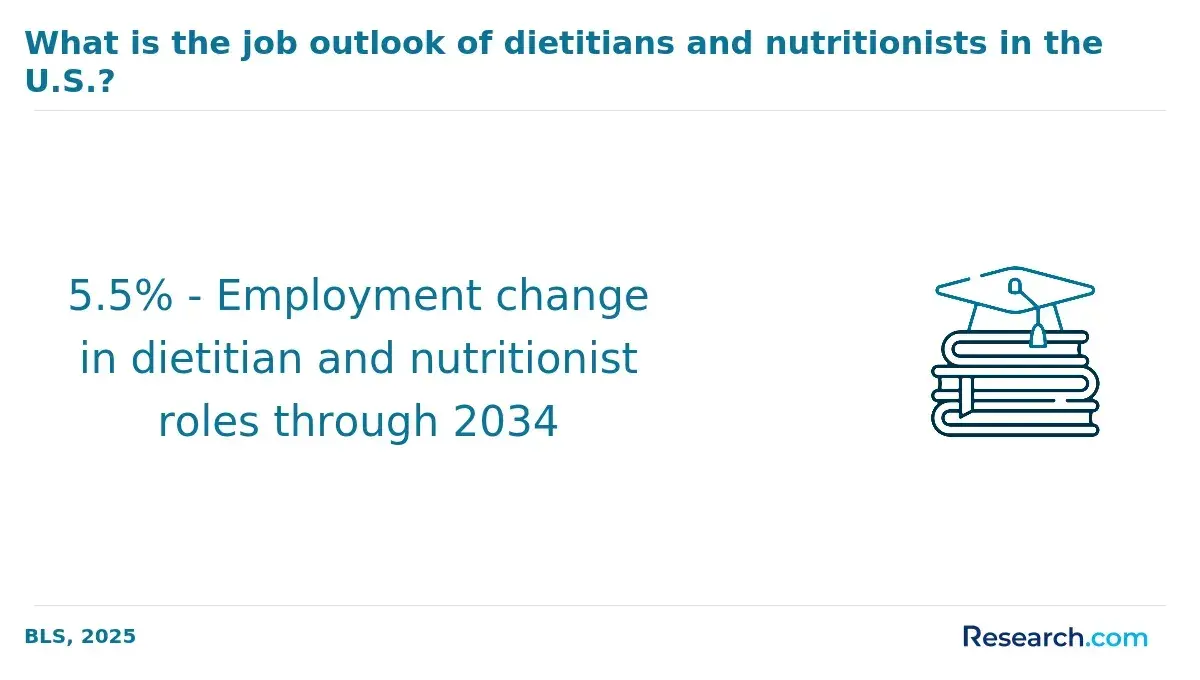
According to the U.S. Bureau of Labor Statistics, the job outlook for nutritionists and dietitians is projected to grow by 6% from 2024 to 2034. In Vermont, demand is influenced by healthcare needs, chronic disease prevention, food access challenges, school and community wellness programs, and the state’s aging population.
Nutritionists in Vermont can expect to earn a mean annual wage of approximately $75,600, with income varying by credential, employer, experience, specialization, and whether the role is clinical, community-based, academic, corporate, or private practice.
| Employment Setting | Common Responsibilities | Who It Fits Best |
| Hospitals and clinics | Patient nutrition assessment, diet planning, care team collaboration, chronic condition support | Licensed dietitians and clinically trained nutrition professionals |
| Schools and community programs | Nutrition education, meal program support, family outreach, public health initiatives | Nutritionists interested in prevention, education, and food access |
| Private practice | Client counseling, wellness plans, group programs, business operations | Self-directed practitioners with strong ethics, referral networks, and business skills |
| Corporate wellness | Employee health programs, workshops, coaching, wellness strategy | Nutritionists comfortable with group education and prevention-focused work |
| Food systems and nonprofit work | Local food access, nutrition policy support, program evaluation, community partnerships | Professionals interested in Vermont’s food system and public health needs |
- Public awareness: More people recognize the role of nutrition in preventing and managing chronic health conditions, which supports demand for qualified professionals.
- Multiple job settings: Vermont nutritionists may find work in hospitals, schools, private practices, community organizations, long-term care, and wellness programs.
- Aging population: Older adults often need nutrition support related to chronic disease, medication use, mobility, appetite, and long-term care needs.
- Community investment: Local nutrition education and food access programs can create opportunities for professionals who understand both nutrition science and Vermont’s rural communities.
How can interdisciplinary collaboration enhance nutrition practices in Vermont?
Nutrition care is stronger when it is connected to the rest of a client’s health picture. In Vermont, nutritionists may work with nurses, physicians, pharmacists, mental health professionals, social workers, educators, and community health staff to support better outcomes. Collaboration is especially useful when clients are managing chronic illness, food insecurity, medication concerns, recovery, pregnancy, aging, or complex family needs.
For example, understanding how nurses are trained can help nutritionists communicate more effectively in healthcare settings. Students comparing allied health roles can review Research.com’s guide on how to become a nurse in Vermont. The goal is not for nutritionists to replace other professionals, but to coordinate nutrition guidance with medical care, behavioral support, and community resources.
What are the career advancement opportunities for nutritionists in Vermont?
Career growth usually comes from adding one or more of the following: stronger credentials, a specialization, clinical experience, leadership skills, business skills, or interdisciplinary expertise. Vermont’s mix of rural communities, healthcare systems, local food networks, and wellness programs creates several advancement routes.
- Healthcare roles: Nutritionists and dietitians may work in hospitals, outpatient settings, nursing homes, and community health organizations. Employers such as Compass Group USA and Springfield Hospital may seek qualified nutrition professionals for nutrition and wellness-related work.
- Professional networking: Organizations such as the Vermont Academy of Nutrition and Dietetics can help practitioners find continuing education, job leads, mentors, and professional connections.
- Specialized practice: Nutritionists can build expertise in clinical nutrition, public health, food service management, sports nutrition, pediatric nutrition, or chronic disease support. Students seeking degree pathways can compare options such as an affordable online nutrition degree.
- Health coaching: Preventive health coaching can be a useful direction for nutrition professionals who want to help clients with behavior change, meal planning, and chronic condition self-management.
- Corporate wellness: Some businesses invest in workplace nutrition and wellness programs, creating opportunities for professionals who can design practical, measurable initiatives.
How to choose the right advancement path
| If Your Goal Is... | Consider This Path | Watch Out For |
| Clinical healthcare work | Licensed dietitian pathway | Do not assume a general nutrition certificate qualifies you for regulated clinical duties. |
| Private practice | Graduate education, CNS or other credible certification, business training | Marketing skills do not replace legal compliance or evidence-based practice. |
| Community nutrition | Public health experience, nonprofit partnerships, food systems training | Programs must be realistic for local food access and budget limits. |
| Sports or performance nutrition | Specialized coursework, athlete experience, evidence-based counseling skills | Be careful with supplement claims and scope of practice. |
How can advanced online certifications enhance my career as a nutritionist in Vermont?
Online certifications can help nutritionists build focused expertise without relocating, especially in areas such as functional nutrition, metabolic wellness, sports nutrition, coaching, or integrative health. They are most valuable when they come from credible providers, require meaningful assessment, and align with your intended clients or employers.
Before enrolling, check whether a certification is recognized by employers, whether it has prerequisites, whether it requires continuing education, and whether it fits Vermont’s legal practice boundaries. Research.com’s guide to nutrition courses online can help you compare options more carefully.
What specialization options are available for nutritionists in Vermont?
Specialization can help a nutritionist stand out, but it should be chosen based on community need, training quality, and long-term career goals. In Vermont, common options include pediatric nutrition, sports nutrition, clinical nutrition, and community nutrition.
| Specialization | Typical Work | Best Fit |
| Pediatric nutrition | Child and family nutrition education, school wellness, healthy eating programs | Professionals who enjoy working with children, parents, schools, and prevention programs |
| Sports nutrition | Performance fueling, recovery guidance, hydration education, athlete workshops | Nutritionists interested in athletics, outdoor recreation, and evidence-based performance support |
| Clinical nutrition | Dietary planning for patients with chronic illness or complex care needs | Professionals pursuing dietitian licensure or healthcare-based practice |
| Community nutrition | Food access work, public health programs, nutrition education, local food partnerships | Nutritionists committed to rural health, underserved communities, and Vermont food systems |
A sports nutritionist, for instance, might partner with local high schools to provide nutrition workshops for student-athletes. A community nutritionist might work with food shelves to create simple recipes based on available ingredients. A clinical nutrition professional might support patients in a hospital or outpatient program.
Students seeking formal preparation can explore nutrition and food sciences pathways at the University of Vermont, including coursework that supports multiple nutrition career directions.
How can interdisciplinary scientific expertise elevate a nutritionist’s career in Vermont?
Nutrition is closely connected to biology, chemistry, metabolism, food safety, genetics, and public health. Nutritionists who add deeper scientific training may be better prepared for research, product development, clinical collaboration, program evaluation, or advanced graduate study.
For professionals interested in science-intensive careers, fields such as molecular biology, biotechnology, and biochemistry can strengthen analytical and research skills. Students comparing broader science career options can review Research.com’s overview of the highest paying biology jobs.
How can nutritionists build a sustainable business model in Vermont?
Private practice can be rewarding, but it requires more than nutrition knowledge. A sustainable nutrition business needs a clear service model, defined client population, ethical marketing, reliable documentation, referral relationships, and careful financial planning.
- Define your niche: Decide whether you will focus on families, athletes, chronic disease prevention, corporate wellness, food access, integrative nutrition, or another area.
- Know your legal boundaries: Be clear about what you can and cannot provide without dietitian licensure or another regulated credential.
- Build referral networks: Relationships with physicians, therapists, pharmacists, fitness professionals, food programs, and community organizations can support steady client flow.
- Use reliable systems: Scheduling, records, billing, intake forms, and privacy practices should be organized before you scale.
- Track outcomes: Measure client progress in appropriate ways, such as behavior change, meal planning consistency, referral follow-through, or education completion.
Nutritionists who operate a practice may also benefit from understanding healthcare administration and reimbursement workflows. For related back-office skills, see Research.com’s guide on how to become a medical biller and coder in Vermont.
How can interdisciplinary scientific research expand career opportunities for nutritionists in Vermont?
Research skills can help nutritionists evaluate programs, interpret data, improve food safety practices, and design interventions that are more than guesswork. This is especially useful in public health, university, nonprofit, food systems, and healthcare settings.
Cross-disciplinary training can also introduce methods from other scientific fields, including evidence handling, laboratory thinking, and quality control. Students interested in analytical science careers can explore Research.com’s guide to forensic scientist education requirements in Vermont to understand how scientific reasoning and documentation skills transfer across fields.
How can nutritionists enhance their clinical expertise with nurse practitioner training in Vermont?
Nutritionists who work near clinical care can benefit from understanding how advanced practice clinicians assess patients, document care, manage chronic conditions, and coordinate treatment. This does not mean a nutritionist becomes a nurse practitioner without completing the required nursing pathway, but it does mean nutrition professionals can communicate more effectively with clinical teams when they understand patient-care frameworks.
For readers considering a broader clinical career, Research.com explains how to become a nurse practitioner in Vermont. Comparing the pathways can help you decide whether you want to remain in nutrition, move into advanced nursing, or build a collaborative role between the two.
How can nutritionists collaborate with pharmacists in Vermont?
Nutrition and medication use often overlap. Clients may ask about supplements, food interactions, appetite changes, side effects, chronic disease management, or nutrient concerns related to prescriptions. Pharmacists can help nutritionists understand medication-related issues while nutritionists can support practical dietary strategies.
Effective collaboration may include referral agreements, shared education sessions, careful communication about nutrient–drug interactions, and respect for each profession’s scope. Nutritionists who want to understand pharmacy training and practice boundaries can review Research.com’s guide to pharmacist licensure requirements in Vermont.
What emerging trends are shaping nutrition practice in Vermont?
Several trends are changing how nutrition professionals work in Vermont. Telehealth and remote coaching have made nutrition support more accessible for some rural clients. Food insecurity has increased the importance of practical, budget-aware counseling. Healthcare teams increasingly expect nutrition guidance to be evidence-based, well documented, and coordinated with broader care.
Technology is also changing expectations. Nutritionists may use digital intake forms, meal-tracking tools, remote consultations, data dashboards, or client education platforms. These tools can help, but they do not replace clinical judgment, privacy safeguards, or culturally realistic recommendations.
Some nutrition professionals also pursue advanced clinical education to better understand patient assessment and care coordination. Readers comparing related pathways can review the best accredited NP programs in Vermont.
What are the requirements to become a registered dietitian in Vermont?
To become a registered dietitian in Vermont, candidates must complete a formal dietetics pathway, including an accredited nutrition or dietetics program, supervised practice, a national examination, and continuing education. Vermont dietitian licensure also requires submitting the appropriate documentation to the state.
This is the recommended path for students who want clinical nutrition roles, hospital employment, medical nutrition therapy, or regulated dietetics practice. For a step-by-step explanation, see Research.com’s guide to the requirements to become a registered dietitian in Vermont.
What are the biggest challenges faced by nutritionists in Vermont?
Nutritionists in Vermont may find meaningful work, but the field has real challenges. Rural access, cost of education, unclear credential differences, limited local resources, and complex client needs can all affect day-to-day practice.
- Limited food access: Some rural communities have fewer nearby sources of fresh, affordable food. Nutrition advice must be realistic for what clients can actually obtain.
- Food insecurity: Nutritionists may need to design recommendations around food shelf items, transportation barriers, seasonal availability, and household budgets.
- Diverse dietary needs: Vermont clients may have different cultural preferences, health conditions, family structures, and food traditions. Good counseling respects these differences.
- Credential confusion: Clients may not understand the difference between a nutritionist, dietitian, health coach, and certified specialist. Professionals should explain their qualifications clearly.
- Regulatory boundaries: Because Vermont does not license nutritionists as a separate category, professionals must be careful not to imply authority they do not have.
Common mistakes to avoid
| Mistake | Why It Creates Problems | Better Approach |
| Choosing a program without checking accreditation | You may not qualify for supervised practice, exams, licensure, or employer-required credentials. | Confirm program alignment with your intended credential before enrolling. |
| Focusing only on tuition | Housing, food, travel, supervised practice, exams, and lost work time can change total cost. | Build a full budget before committing. |
| Assuming any online nutrition certificate is enough | Some certificates have limited employer recognition and may not support clinical roles. | Compare prerequisites, assessments, recognition, and scope of practice. |
| Confusing nutritionist and dietitian roles | This can lead to legal, ethical, or employment issues. | Use accurate titles and explain your credentials honestly. |
| Making unsupported health claims | Clients may be harmed, and professional credibility can suffer. | Use evidence-based guidance and refer clients when medical care is needed. |
What are the legal regulations and responsibilities for nutritionists in Vermont?
Vermont does not require a specific state license for people using the nutritionist title, but that does not mean nutritionists can practice without limits. Professionals must avoid misleading clients, stay within their education and credentials, and refer clients to licensed healthcare providers when needs go beyond their scope.
Only those who meet dietitian licensure requirements should present themselves as licensed dietitians in Vermont. Nutritionists who are not dietitians should be especially careful with medical nutrition therapy, disease treatment claims, supplement claims, diagnosis, and any language that could suggest a regulated clinical role.
Local rules may also affect certain services, business operations, or health-related activities. Nutritionists should check applicable state and local requirements before launching a practice, especially if they provide services in schools, healthcare facilities, community programs, or private offices.
Some professionals pair nutrition knowledge with fitness, wellness, or exercise science education. If you are comparing related degrees, Research.com’s resource on online exercise science degree cost may help with planning.
What impact do nursing standards have on nutrition practices in Vermont?
Nursing standards can help nutrition professionals understand documentation, safety, care coordination, patient education, and interdisciplinary communication. Nutritionists working in or near healthcare settings benefit from knowing how nurses approach risk, continuity of care, and patient-centered planning.
Nutritionists do not need to become nurses to apply better documentation and collaboration habits. However, learning about healthcare standards can improve communication with clinical teams. Research.com’s guide to board of nursing program requirements in Vermont can help nutrition professionals understand the standards used in nursing education and licensure.
How can nutritionists work collaboratively with substance abuse counselors in Vermont?
Nutrition can play a supportive role in recovery and behavioral health care, especially when clients are rebuilding routines, managing appetite changes, addressing deficiencies, or learning practical self-care habits. Collaboration with substance abuse counselors can help create more complete support plans that address both behavior and physical wellness.
Nutritionists should respect counseling scope and avoid replacing behavioral health treatment. Instead, they can provide food education, meal structure, hydration guidance, and referral support as part of a broader recovery plan. Readers interested in behavioral health careers can explore Research.com’s guide on how to become a substance abuse counselor in Vermont.
Here's What Graduates Have to Say About Becoming a Nutritionist in Vermont
"Working toward a nutrition career in Vermont helped me understand how important rural access really is. The work feels personal because clients value relationships, trust, and practical guidance they can use in everyday life." – Adler
"Vermont’s connection to farms, sustainability, and local food made this career feel like the right fit for me. I’ve been able to connect nutrition education with community programs and local producers in a way that feels useful and grounded." – Chloe
"Starting out in Vermont gave me a chance to grow quickly because nutrition is connected to so many community needs. The work is challenging, but having supportive colleagues and clients makes the career feel worthwhile." – Senna
Related Articles for Nearby States
- 2027 How to Become a Nutritionist in New Hampshire
- 2027 How to Become a Nutritionist in Massachusetts
- 2027 How to Become a Nutritionist in New York
- 2027 How to Become a Nutritionist in Connecticut
- 2027 How to Become a Nutritionist in Rhode Island
- 2027 How to Become a Nutritionist in Maine
- 2027 How to Become a Nutritionist in New Jersey
- 2027 How to Become a Nutritionist in Pennsylvania
- 2027 How to Become a Nutritionist in Delaware
- 2027 How to Become a Nutritionist in Maryland
References:
- Become a Nutritionist. (n.d.). Becoming a Registered Dietitian in Vermont. Become a Nutritionist.
- Bureau of Labor Statistics (BLS). (2024). Vermont. Occupational Employment and Wage Statistics. BLS.
- Bureau of Labor Statistics (BLS). (2025). Dietitians and Nutritionists. Occupational Outlook Handbook. BLS.
- Commission on Dietetic Registration (CDR). (2024). Registered Dietitian (RD) and Registered Dietitian Nutritionist (RDN). Registry Statistics. CDR.
- National Association of Nutrition Professionals (NANP). (n.d.). Vermont. State Laws. NANP.
- NutritionistDegreeOnline. (n.d.). How to Become a Nutritionist and Registered Dietitian in Vermont. NutritionistDegreeOnline.
- NutriotionED. (n.d.). Becoming a Nutritionist in Vermont. NutritionED.
- University of Vermont (UVM). (n.d.). Dietetics Multiple Pathways to Career Success. UVM.
- Vermont Academy of Nutrition and Dietetics. (n.d.). Job Opportunities. Vermont Academy of Nutrition and Dietetics.
- Vermont General Assembly. (n.d.). The Vermont Statutes Online. Vermont General Assembly.
- Vermont Health Careers. (n.d.). Dietitian and Nutritionist. Vermont Health Careers.
Key Insights
- Vermont does not license nutritionists as a separate category, but dietitians must meet Vermont OPR licensure requirements.
- The safest career planning approach is to choose your target role first, then match your degree, supervised practice, certification, and licensure steps to that role.
- A bachelor’s degree is the common starting point for professional nutrition careers, while a master’s degree can support advanced credentials such as the CNS.
- Students pursuing dietitian or CNS pathways should plan for at least 1,000 hours of supervised practice and additional exam preparation time.
- Costs can include tuition, living expenses, supervised practice, exams, applications, and continuing education; comparing total cost is more useful than comparing tuition alone.
- Vermont nutritionists can work in healthcare, schools, community programs, private practice, corporate wellness, and food systems, but clinical roles generally require stronger credentials.
- Food insecurity, rural access, aging-related needs, telehealth, and interdisciplinary care are major forces shaping nutrition practice in Vermont.
- The biggest mistake is assuming every nutrition credential leads to the same career. Verify accreditation, employer expectations, legal scope, and licensure requirements before enrolling in any program.
Other Things You Should Know About Becoming a Nutritionist in Vermont
In Vermont, as of 2027, a license is not required to become a general nutritionist. However, if you wish to be a registered dietitian nutritionist (RDN), you'll need to meet the requirements set by the Commission on Dietetic Registration, including passing the national examination.
In 2027, to become a nutritionist in Vermont, you typically need a relevant bachelor's degree, such as in nutrition or dietetics. Although not mandatory, obtaining a certification from a recognized body can enhance career prospects and credibility.
When choosing a nutrition degree program in Vermont, consider the type of degree that aligns with your career goals. The University of Vermont offers a Bachelor of Science in Nutrition and Food Sciences, which provides a solid foundation in nutrition principles and research. For those seeking advanced education, the university also offers a Master of Science in Nutrition and Food Sciences, focusing on specialized areas like public health nutrition.
Additionally, look for programs accredited by the Accreditation Council for Education in Nutrition and Dietetics (ACEND), as this ensures quality education and eligibility for the RDN credential. Research faculty expertise, internship opportunities, and program flexibility to find the best fit for your needs. Vermont's programs emphasize hands-on learning, preparing graduates for diverse careers in nutrition.