2027 How to Become a Nutritionist in West Virginia

Co-Founder and Chief Data Scientist
Becoming a nutritionist in West Virginia starts with one important distinction: the state does not license every person who gives nutrition guidance, but it does regulate dietitians. That difference affects what education you need, what services you can provide, what titles you can use, and which jobs you can realistically qualify for in hospitals, public health agencies, schools, wellness programs, and private practice.
This guide is for high school students, college students, career changers, and early-career health professionals who want a clear path into nutrition work in West Virginia. You will learn the education options, licensure rules, certification choices, practical experience requirements, estimated costs, salary outlook, and career paths available in the state. The goal is to help you choose the right route before you spend time and money on a program that may not match your career goals.
In 2024, West Virginia is projected to have around 480 job openings for nutritionists, which reflects the need for qualified professionals who can support prevention, chronic disease management, food access, and community wellness. The best path depends on whether you want to become a licensed dietitian, a non-licensed nutrition professional, a specialist in a niche area, or a nutrition-focused professional working alongside healthcare teams.
Quick Answer: How Do You Become a Nutritionist in West Virginia?
In West Virginia, you can provide general nutrition education without a state nutritionist license, but you must meet state requirements if you want to practice as a licensed dietitian. The dietitian pathway usually requires a bachelor's degree in dietetics or a related field, an accredited supervised practice program, and a passing score on the Commission on Dietetic Registration exam. Non-licensed nutritionists often strengthen their qualifications through nutrition degrees, supervised experience, and voluntary certifications such as credentials from the National Association of Nutrition Professionals or the Certified Nutrition Specialist pathway.
| Goal | Typical Requirement | Best Fit |
| Provide general wellness or nutrition education | Nutrition coursework, degree, or voluntary certification; no West Virginia nutritionist license required | Health coaches, wellness educators, community nutrition workers, and private wellness professionals |
| Work as a licensed dietitian | Bachelor's degree, accredited supervised practice, CDR exam, and West Virginia dietitian licensure | Clinical, hospital, long-term care, and medical nutrition therapy roles |
| Build advanced clinical credibility | Graduate education and advanced certification such as CNS | Professionals interested in complex nutrition cases, integrative health, or specialized consulting |
| Advance into leadership, teaching, or research | Master's degree or higher, experience, and specialized credentials | Program directors, public health leaders, researchers, and academic professionals |
Key Things You Should Know About Becoming a Nutritionist in West Virginia
- West Virginia does not require every nutritionist to hold a state license, but anyone practicing as a dietitian must be licensed by the West Virginia Board of Dietetic Licensure.
- The licensed dietitian route requires a bachelor's degree in dietetics or a related field, completion of an accredited supervised practice program, and a passing score on the Commission on Dietetic Registration exam.
- Voluntary credentials from groups such as the National Association of Nutrition Professionals or the Certified Nutrition Specialist pathway can improve professional credibility, especially for non-licensed nutrition practitioners.
- Many professional organizations require 30 hours of continuing education every five years, so ongoing learning should be part of your long-term plan.
- Dietitian licensure applications generally require proof of education, supervised practice, exam completion, and payment of the required fee to the West Virginia Board of Dietetic Licensure.
- Education requirements for nutritionists in West Virginia
- Licensing rules for nutritionists and dietitians
- Timeline to become a nutrition professional
- Certification options in West Virginia
- Practical experience and supervised training
- Estimated cost of becoming a nutritionist
- Job outlook and salary in West Virginia
- Working with other healthcare professionals
- Career advancement opportunities
- Specialization options for nutritionists
- Ethical issues in nutrition practice
- Common challenges in West Virginia nutrition work
- Administrative roles related to nutrition
- Forensic and investigative nutrition applications
- Collaboration with nurse practitioners
- Nutritionist rules compared with pharmacist licensure
- Advanced clinical certifications
- Registered dietitian vs. nutritionist
- Interdisciplinary career options
- Benefits of an advanced nutrition degree
- Continuing education and industry trends
- Legal responsibilities for nutritionists in West Virginia
What are the educational requirements to become a nutritionist in West Virginia?
Your education requirements depend on the type of nutrition work you want to do. If your goal is general wellness education, community nutrition, or coaching, West Virginia does not require a specific nutritionist license. However, if you want to become a licensed dietitian or work in medical nutrition therapy, you need a more structured academic and supervised practice pathway.
The U.S. Bureau of Labor Statistics projects employment for dietitians and nutritionists to grow by 7% from 2023 to 2033. For students in West Virginia, that makes educational planning important: employers in clinical, public health, and institutional settings often prefer candidates whose training is grounded in nutrition science, assessment, counseling, food systems, and evidence-based practice.
- Bachelor's degree: A bachelor's degree in nutrition, dietetics, human nutrition, food science, or a closely related field is the common starting point. For example, West Virginia University offers a Bachelor of Science in Human Nutrition and Foods that introduces students to nutrition science, food systems, health promotion, and diet-related disease prevention.
- Core coursework: Strong programs usually include biochemistry, physiology, food science, community nutrition, lifecycle nutrition, counseling, research methods, and medical nutrition therapy. These courses help students connect food, metabolism, behavior, and health outcomes.
- Dietetics emphasis: Students who want to become registered dietitian nutritionists should choose the dietetics-focused track when available. At some institutions, students declare this emphasis during the sophomore year, which helps align coursework with supervised practice and credentialing requirements.
- Graduate study: A master's degree in nutrition, public health, dietetics, or a related field is not required for every nutrition job, but it can improve competitiveness for advanced clinical roles, leadership positions, research work, and specialized consulting. Institutions such as Marshall University offer graduate-level options for students seeking deeper preparation.
Students who want a broader view of wellness-centered practice may also benefit from learning what is holistic nutrition, especially if they plan to work in prevention, lifestyle counseling, or integrative health settings.
| Education Option | What It Prepares You For | When It Makes Sense |
| Associate degree in human nutrition or food-related studies | Entry-level support roles, transfer into a bachelor's program, food service or wellness support | You want a lower-cost starting point or plan to continue into a bachelor's degree |
| Bachelor's degree in nutrition, dietetics, or related field | Many nutrition education roles and the foundation for dietitian credentialing | You want the widest entry-level career flexibility |
| Master's degree in nutrition, dietetics, or public health | Advanced clinical work, leadership, research, teaching, and specialized practice | You want stronger credentials or plan to pursue advanced certification |
| Short certificate program | Niche skills such as school nutrition, coaching, or wellness programming | You already have a degree or want targeted training, but not a full degree |
The chart below illustrates the total enrolled students in Dietetics Education by program type.
Is there a licensing requirement to become a nutritionist in West Virginia?
West Virginia does not have a separate state license for every person who calls themselves a nutritionist. The key legal issue is whether you are practicing as a dietitian or using a protected dietetics title. Dietitians in the state must meet the requirements of the West Virginia Board of Dietetic Licensure.
This distinction matters because nutrition advice exists on a spectrum. General education about healthy eating, meal planning concepts, and wellness habits is different from diagnosing nutrition problems, prescribing medical nutrition therapy, or managing diet plans for disease treatment. Clinical and medical roles usually require dietitian credentials and licensure.
Because telehealth and virtual nutrition coaching are now common, West Virginia nutrition professionals should also understand where their clients are located and which state laws may apply. A practitioner serving clients across state lines may need to consider the rules of multiple jurisdictions, especially when providing individualized or medical nutrition guidance.
| Type of Practice | West Virginia License Needed? | Important Limitation |
| General nutrition education | No separate nutritionist license required | Do not misrepresent credentials or provide medical nutrition therapy outside your qualifications |
| Wellness coaching | No separate nutritionist license required | Scope should stay within education, behavior support, and general wellness guidance |
| Dietitian practice | Yes, dietitian licensure is required | Must meet education, supervised practice, exam, and application requirements |
| Medical nutrition therapy | Typically tied to licensed dietitian practice | Requires appropriate clinical training and compliance with state regulations |
Licensing laws can change, and health professions are increasingly affected by public health needs, telehealth, and consumer protection concerns. Before enrolling in a program or opening a practice, verify current requirements directly with the West Virginia Board of Dietetic Licensure and review whether your intended services fall under dietetics regulation.
How long does it take to become a nutritionist in West Virginia?
The timeline can range from a few months to several years. The fastest route is a short certificate for a narrow wellness or food-service role. The longest route is the licensed dietitian pathway, which includes degree completion, supervised practice, national examination, and state licensure.
| Path | Typical Time | What You Can Do With It |
| Certificate program | A few months | Add focused skills in areas such as school nutrition, coaching, or wellness education |
| Associate degree | About two years | Prepare for entry-level work or transfer into a bachelor's program |
| Bachelor's degree | About four years total | Qualify for many nutrition-related roles and prepare for dietetics training if coursework aligns |
| Master's degree | Usually two additional years after a bachelor's degree | Pursue advanced practice, leadership, research, or specialized clinical nutrition roles |
| Licensed dietitian pathway | Several years, depending on degree and supervised practice timing | Work in regulated dietetics roles, including many clinical healthcare settings |
If you are comparing nutrition with related clinical roles, it may help to review how long to become a nutrition nurse, since nursing-based nutrition work follows a different education and licensure structure.
What are the certification options for nutritionists in West Virginia?
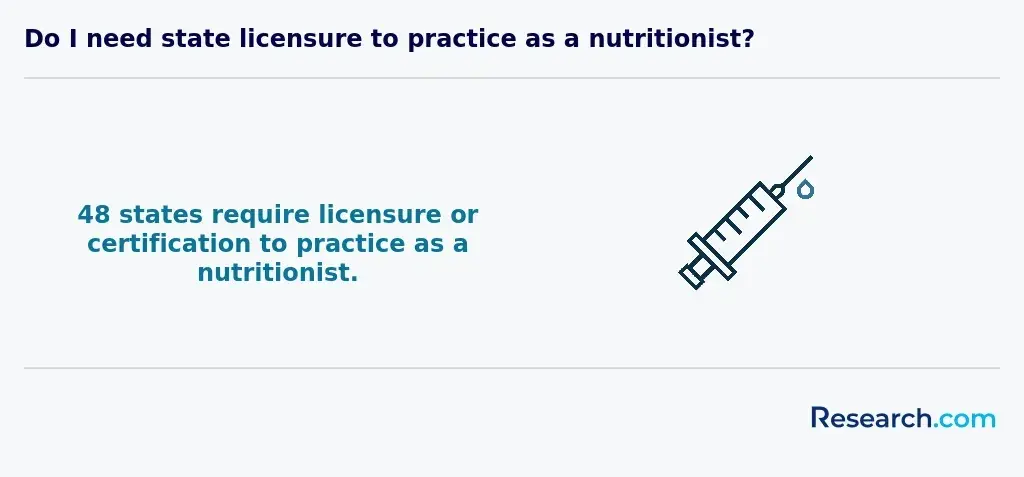
Certification is not the same as state licensure. A license gives legal authority to practice a regulated profession. A certification is usually a voluntary credential that shows you met the standards of a professional organization. In West Virginia, certifications can be useful for credibility, employment, and specialization, especially if you are not pursuing dietitian licensure.
| Credential or Path | Common Requirements | Best For |
| Registered Dietitian Nutritionist | Bachelor's degree in nutrition or a related field, accredited supervised practice, and national examination | Clinical care, hospitals, long-term care, medical nutrition therapy, and many healthcare jobs |
| Certified Nutrition Specialist | Master's degree and defined experience in the field | Advanced clinical nutrition, integrative nutrition, and specialized consulting |
| National Association of Nutrition Professionals-related credentials | Varies by credential and educational background | Holistic nutrition, wellness education, and private-practice credibility |
| School Nutrition Specialist or nutrition coaching credentials | Varies by sponsoring organization | School food programs, community education, coaching, and targeted wellness roles |
The Registered Dietitian Nutritionist path is the strongest choice if you want to work in hospitals, clinics, or other settings where nutrition therapy is part of patient care. The Certified Nutrition Specialist pathway may appeal to professionals interested in advanced clinical nutrition and integrative practice. Coaching and holistic nutrition credentials may support wellness-focused careers, but they do not replace dietitian licensure where state law requires it.
One West Virginia nutrition professional described the decision this way: "I chose the RDN pathway because I wanted to work directly with patients in healthcare settings. The process was demanding, but it gave me the clinical preparation and professional credibility I needed."
What practical experience is required to become a nutritionist in West Virginia?
Practical experience is essential because nutrition work is not only about knowing science. Professionals must communicate clearly, adapt recommendations to budgets and local food access, work with healthcare teams, understand cultural food habits, and document services responsibly.
- Supervised practice for dietitians: The licensed dietitian pathway requires an accredited supervised practice experience. This is where students apply classroom training to patient care, food service systems, counseling, community programs, and clinical documentation.
- Community-based experience: Health fairs, food access programs, school wellness initiatives, and local nutrition education events help students understand the real barriers many West Virginia residents face, particularly in rural communities.
- Clinical exposure: Hospitals, clinics, long-term care facilities, and outpatient programs can help future nutrition professionals learn how nutrition supports management of conditions such as obesity, diabetes, cardiovascular disease, and other chronic health concerns.
- Research and public health projects: Institutions such as West Virginia University may provide opportunities to study local dietary patterns, food insecurity, chronic disease prevention, and public health interventions.
- Food systems and agriculture experience: Farm-to-table programs, farmers markets, and local food initiatives can help nutritionists understand the link between food access, sustainability, and practical dietary guidance.
Students should look for programs that include structured fieldwork, internship support, community partnerships, and faculty advising. If a program promises career preparation but offers little hands-on practice, ask how graduates build the experience employers expect.
How much does it cost to become a nutritionist in West Virginia?
The cost depends on the credential you pursue, the type of school you attend, whether you qualify for in-state tuition, and whether you study online or on campus. Tuition is only part of the total price. You should also plan for books, transportation, exam fees, application fees, background checks, internship-related costs, and continuing education.
| Expense | Estimated Cost Mentioned | How to Evaluate It |
| University bachelor's degree | $10,000 to $30,000 per year, depending on residency status | Compare in-state tuition, scholarships, transfer credits, and whether the program aligns with dietitian requirements |
| Community college option | Around $4,000 to $8,000 annually | Useful for lowering the cost of early coursework before transferring |
| Certification exam fees | $200 to $500, depending on credential | Confirm whether the credential is valued by employers in your target setting |
| Certification preparation courses | $300 to $1,000 | Only pay for prep if it improves your chance of passing or fills a real knowledge gap |
| Books, materials, and internship-related expenses | Varies by school and placement | Ask programs for a full cost sheet before enrolling |
Students interested in distance learning can compare accredited options through Research.com's guide to online nutrition degree accredited programs. When reviewing online programs, confirm whether the curriculum supports your intended credential and whether any supervised practice requirements can be completed in West Virginia.
What is the job outlook and salary for nutritionists in West Virginia?
According to the U.S. Bureau of Labor Statistics, employment for dietitians and nutritionists is projected to grow by 7% from 2023 to 2033. In West Virginia, demand is shaped by chronic disease prevention, an aging population, rural health needs, food insecurity, and public health programs that rely on nutrition education and counseling.
- Aging population: Older adults often need nutrition support related to chronic disease, medication interactions, appetite changes, and long-term care planning.
- Public health initiatives: State and local health programs may need nutrition professionals for prevention, education, and community outreach.
- Rural health needs: Nutritionists can support areas where access to healthcare and fresh food is limited, especially through community partnerships and telehealth.
- Telehealth growth: Virtual nutrition services can help reach clients outside major population centers, but practitioners must still follow applicable legal and ethical standards.
Nutritionists in West Virginia earn an annual mean wage of $70,530. Actual pay can vary by credential, employer, years of experience, location, specialization, and whether the role is clinical, public health, school-based, corporate, or private practice. Salary outcomes are not guaranteed, so students should compare program cost with realistic job options in their target region.
The chart below lists the largest employers for nutritionists, as published by the BLS in 2024.
How can nutritionists effectively collaborate with other healthcare professionals in West Virginia?
Nutrition work is most effective when it connects with the rest of a patient's care plan. In West Virginia, nutritionists and dietitians may collaborate with physicians, nurses, nurse practitioners, pharmacists, behavioral health professionals, social workers, and community health teams to address diet-related risks and improve follow-through.
Effective collaboration usually includes shared goals, clear referral pathways, consistent documentation, and respect for each professional's scope of practice. A nutritionist working with a primary care team, for example, may reinforce dietary strategies for blood sugar management, while the prescribing clinician manages medication and diagnosis. Professionals who want to better understand nursing roles in the state can review how to become a nurse in West Virginia.
What are the career advancement opportunities for nutritionists in West Virginia?
Career growth in nutrition depends on credentials, experience, specialization, and the ability to work across health, education, and community systems. In West Virginia, advancement may come through clinical responsibility, program leadership, public health work, corporate wellness, research, academia, or private practice.
- Healthcare roles: Hospitals, clinics, and long-term care organizations may employ nutrition professionals to support patient care, chronic disease programs, and discharge planning. Employers such as WVU Medicine and local health departments may seek candidates with strong credentials and practical experience.
- Specialized credentials: Certifications such as School Nutrition Specialist or Certified Nutrition Coach can help professionals move into focused roles, especially in schools, wellness programs, or community settings.
- Graduate education: An online master's in nutrition can support movement into leadership, research, policy, advanced practice, or administrative roles.
- Public health programs: Nutritionists can work on initiatives related to obesity prevention, food insecurity, maternal and child health, senior nutrition, and community education.
- Corporate wellness: Employers that invest in workforce health may hire nutrition professionals to design education programs, wellness challenges, and preventive health initiatives.
- Research and teaching: Universities and health organizations may offer opportunities to study nutrition trends, evaluate interventions, and train future professionals.
What specialization options are available for nutritionists in West Virginia?
Specialization helps nutrition professionals stand out and serve specific populations. The right specialty should match your interests, training level, legal scope of practice, and local demand.
| Specialization | Typical Work | Good Fit For |
| Clinical nutrition | Nutrition assessment, disease-focused meal planning, and patient education in healthcare settings | Students pursuing dietitian credentials or advanced clinical training |
| Community nutrition | Public health education, food access programs, and outreach through local organizations | Professionals interested in prevention, rural health, and food insecurity |
| Sports nutrition | Nutrition support for athletes, active adults, and fitness-focused populations | Nutritionists interested in performance, recovery, and exercise-related fueling |
| Pediatric nutrition | Nutrition education for children, families, schools, and pediatric care settings | Professionals focused on childhood obesity prevention and early healthy eating habits |
| School nutrition | Meal program support, nutrition standards, and student wellness initiatives | Nutrition professionals who want to work in education and child health |
Clinical nutrition is especially relevant in settings where patients need support for diabetes, heart disease, obesity, and other chronic conditions. Community nutrition is also important in West Virginia because food access, transportation, income, and rural geography can shape what healthy eating looks like in practice.
A local example often cited in nutrition practice is a clinical nutritionist in Charleston who helped implement a diabetes management program and reported a 30% improvement in patient outcomes over two years. While individual program results vary, the example shows how specialized nutrition work can contribute to measurable health improvements when paired with structured care and follow-up.
What ethical challenges do nutritionists face in West Virginia?
Nutrition professionals must protect clients from misleading claims, conflicts of interest, and advice that goes beyond the practitioner's training. Ethical practice is especially important in private coaching, supplement recommendations, weight-loss programs, social media content, and telehealth consultations.
- Conflicts of interest: If a nutritionist earns money from supplements, products, meal plans, or affiliate recommendations, that relationship should be disclosed clearly.
- Scope of practice: Practitioners should avoid diagnosing disease, replacing medical care, or providing medical nutrition therapy unless properly qualified and licensed.
- Client confidentiality: Nutrition records, health histories, and telehealth communications should be handled with privacy and professionalism.
- Informed consent: Clients should understand what services are being provided, the practitioner's credentials, fees, limitations, and when referral to a licensed healthcare provider is appropriate.
Nutritionists can strengthen their ethical standards by comparing expectations across healthcare fields, including resources such as board of nursing program requirements in West Virginia.
What are the biggest challenges faced by nutritionists in West Virginia?
Nutrition professionals in West Virginia often work with clients whose food choices are constrained by income, transportation, geography, health literacy, family responsibilities, and access to medical care. Effective practice requires realistic strategies, not generic meal plans.
- Socioeconomic barriers: According to the U.S. Census Bureau, approximately 17% of West Virginians live below the poverty line. Nutrition advice must account for affordability, time, transportation, and local availability.
- Food deserts: Rural communities may have limited access to grocery stores, fresh produce, and affordable whole foods. Nutritionists may need to help clients use shelf-stable foods, local markets, community resources, or benefit programs effectively.
- Public awareness: Clients may receive conflicting nutrition information from social media, advertisements, family habits, and fad diets. Professionals need strong communication skills to explain evidence-based guidance without judgment.
- Chronic disease burden: Nutritionists often support clients dealing with obesity, diabetes, cardiovascular disease, and related conditions, which may require coordination with licensed healthcare providers.
- Program access: Government and community initiatives can help. The West Virginia Farmers Market Nutrition Program, for example, provides vouchers to low-income families so they can buy fresh produce at local markets.
One West Virginia nutritionist described working with a family that often chose fast food because it was convenient, predictable, and affordable. Education alone was not enough. The practical challenge was helping the family identify realistic grocery options, simple meals, and local resources that fit their budget and schedule.
| Common Mistake | Why It Causes Problems | Better Approach |
| Choosing a program without checking accreditation or credential alignment | The degree may not support dietitian eligibility or advanced certification | Confirm program outcomes, supervised practice options, and credential requirements before enrolling |
| Focusing only on tuition | Books, fees, commuting, internships, and exam costs can raise the total price | Ask for a full cost estimate and compare net cost after aid and transfer credit |
| Assuming all online programs meet West Virginia practice goals | Some programs may not support supervised practice, licensure, or local placement needs | Ask whether West Virginia students can complete required fieldwork locally |
| Using nutritionist and dietitian as interchangeable titles | Dietitian practice is regulated, and title misuse can create legal risk | Understand state rules and use only titles you are qualified to use |
| Expecting salary outcomes to be guaranteed | Pay varies by credential, employer, location, and specialization | Compare local job postings and talk with graduates before committing to a program |
Can nutritionists expand into allied administrative roles in West Virginia?
Yes. Nutrition professionals who enjoy systems, documentation, billing, compliance, or operations may expand into administrative roles that support healthcare and wellness organizations. This can be useful for professionals who want career flexibility beyond direct counseling or who want to move into program management.
Related areas include health administration, medical coding, food service management, quality improvement, and community program coordination. Nutritionists interested in the documentation and reimbursement side of healthcare can review Research.com's guide on how to become a medical biller and coder in West Virginia.
Can nutritionists contribute to forensic investigations in West Virginia?
Nutrition expertise can sometimes support forensic or investigative work, although this is not a common entry-level nutrition career path. Nutrition professionals may contribute knowledge related to foodborne illness, contaminant exposure, supplement use, nutritional deficiencies, eating patterns, or metabolic issues when those topics are relevant to an investigation.
Nutritionists interested in this interdisciplinary direction may need additional science training, laboratory experience, toxicology knowledge, or collaboration with forensic specialists. To understand the education behind investigative science roles, review Research.com's guide to forensic scientist education requirements in West Virginia.
How can nutritionists collaborate with nurse practitioners to enhance patient care in West Virginia?
Nutritionists and nurse practitioners can work together in primary care, chronic disease management, preventive health, weight management, prenatal care, pediatric wellness, and rural health outreach. Nurse practitioners can assess, diagnose, prescribe, and manage clinical treatment within their scope, while nutrition professionals can provide targeted dietary education and follow-up support.
Strong collaboration depends on clear referrals, shared documentation, and defined responsibilities. A patient with diabetes, for instance, may need medication management from a nurse practitioner and practical nutrition counseling from a dietitian or qualified nutrition professional. Readers interested in advanced nursing practice can explore how to become a nurse practitioner in West Virginia.
How do nutritionist regulations differ from pharmacist licensure requirements in West Virginia?
Nutritionist regulation in West Virginia is more flexible than pharmacist licensure. A person may provide general nutrition education without a separate nutritionist license, but dietitian practice is regulated. Pharmacists, by contrast, follow a formal licensure pathway with defined education, examinations, and state oversight.
This comparison is useful because it shows why scope of practice matters. Nutritionists should not present themselves as licensed healthcare providers unless they hold the appropriate license. Pharmacists have a clearly regulated medication-focused role, while nutritionists must be especially careful to define services, titles, and limitations. For more detail on the pharmacy pathway, review pharmacist licensure requirements in West Virginia.
How can nutritionists expand their clinical expertise through advanced certifications in West Virginia?
Nutritionists who want stronger clinical skills can pursue advanced nutrition credentials, graduate coursework, supervised practice, and interdisciplinary learning. This is especially useful for professionals working with chronic disease, older adults, metabolic health, maternal and child health, or integrative care.
Advanced training does not automatically expand legal scope of practice, so professionals should confirm what services they are allowed to provide in West Virginia. However, learning from adjacent clinical fields can improve communication with healthcare teams. Nutrition professionals interested in advanced patient-care models may review the best accredited NP programs in West Virginia to understand how advanced clinical education is structured.
What distinguishes registered dietitians from nutritionists in West Virginia?
The main difference is regulation and standardized training. Registered dietitians complete a defined academic pathway, accredited supervised practice, and a national examination. In West Virginia, dietitians must also meet state licensure requirements to practice under the regulated title.
Nutritionist is a broader term. Some nutritionists have strong academic training and respected certifications, while others may have limited formal preparation. Because the title is less regulated, clients and employers often look closely at education, certification, experience, and whether the person is qualified to provide the specific service being offered.
If your goal is clinical nutrition, medical nutrition therapy, hospital employment, or regulated dietetics practice, the registered dietitian route is usually the safer and more versatile choice. For a detailed pathway, see the requirements to become a registered dietitian in West Virginia.
What interdisciplinary career opportunities can nutritionists explore in West Virginia?
Nutrition connects naturally with public health, behavioral health, fitness, healthcare administration, education, agriculture, substance abuse prevention, and community development. In West Virginia, interdisciplinary roles may be especially valuable because health issues often overlap with income, transportation, rural access, mental health, and substance use challenges.
Nutrition professionals may work in community wellness coalitions, school programs, behavioral health settings, employee wellness, food access initiatives, or integrative care teams. Those interested in nutrition's connection to addiction recovery and behavioral health can read Research.com's guide on how to become a substance abuse counselor in West Virginia.
What are the benefits of pursuing an advanced degree in nutrition in West Virginia?
An advanced degree can improve your ability to interpret research, lead programs, work with complex cases, teach, qualify for advanced credentials, and compete for higher-responsibility roles. It may be especially helpful if you want to move beyond entry-level education or coaching into clinical leadership, public health planning, academia, research, or specialized consulting.
Before enrolling, compare the degree's cost with your intended career outcome. Ask whether the program supports supervised practice, licensure goals, research opportunities, local fieldwork, and career placement. If you need flexibility, explore options such as the best online masters degrees in nutrition, but confirm that the format fits your credential and career requirements.
How can nutritionists keep up with evolving industry trends and continue their professional development in West Virginia?
Nutrition practice changes as research, technology, public health priorities, employer expectations, and regulations evolve. Professionals should plan for continuing education from the beginning of their careers rather than treating it as an afterthought.
- Complete continuing education: Many organizations require 30 hours of continuing education every five years. Choose courses that directly support your practice area.
- Follow evidence-based sources: Rely on professional associations, peer-reviewed research, government health data, and credentialing organizations rather than social media trends.
- Build telehealth skills: Virtual counseling requires privacy awareness, clear documentation, strong communication, and knowledge of applicable practice rules.
- Network locally: Join public health events, healthcare coalitions, school wellness programs, and professional groups to learn where nutrition services are needed.
- Track career options: Research.com's nutrition careers list can help professionals compare roles, settings, and salary considerations.
What are the legal regulations and responsibilities for nutritionists in West Virginia?
In West Virginia, nutritionists may provide general nutrition information without a specific nutritionist license, but dietitians are regulated. Anyone using dietitian titles or providing services that fall within regulated dietetics practice must comply with the West Virginia Board of Licensed Dietitians and applicable state law.
Legal responsibility goes beyond title use. Nutrition professionals should provide accurate information, avoid deceptive advertising, disclose credentials honestly, protect client privacy, refer clients to licensed healthcare providers when needed, and avoid making claims they cannot support. Local ordinances, business rules, insurance requirements, and telehealth considerations may also affect practice.
Nutritionists who want to combine diet, movement, and wellness may also explore related paths such as exercise science career paths, but they should still keep services within their education, training, and legal authority.
Questions to Ask Before Choosing a Nutrition Program in West Virginia
- Does this program prepare me for general nutrition work, dietitian licensure, graduate study, or a specific certification?
- Is the program accredited or otherwise recognized by the credentialing body I plan to use?
- Will I be able to complete supervised practice or fieldwork in West Virginia?
- What is the total cost, including tuition, fees, books, exams, transportation, and internship expenses?
- How many credits can I transfer if I start at a community college?
- What jobs have recent graduates obtained, and were those jobs in West Virginia?
- Does the program offer advising for licensure, certification, and career placement?
- Will an online format meet my hands-on training and credentialing needs?
Here's What Graduates Have to Say About Becoming a Nutritionist in West Virginia
-
: "
"Working as a nutritionist in West Virginia has given me the chance to support families facing food insecurity while teaching practical ways to build healthier routines. Seeing progress in my own community is what keeps me committed to this work." – Jenna
"
-
: "
"I wanted a career that combined science with direct service. West Virginia has real nutrition needs, and that creates meaningful opportunities for people who are willing to learn, listen, and work with local communities." – Jace
"
-
: "
"Becoming a nutritionist helped me reconnect with my home state in a new way. I have worked with local organizations to improve food choices and health outcomes in underserved areas, and that has been the most rewarding part of my career." – Leigh
"
Related Articles for Nearby States
- 2027 How to Become a Nutritionist in Virginia
- 2027 How to Become a Nutritionist in Ohio
- 2027 How to Become a Nutritionist in Kentucky
- 2027 How to Become a Nutritionist in Pennsylvania
- 2027 How to Become a Nutritionist in Maryland
- 2027 How to Become a Nutritionist in North Carolina
- 2027 How to Become a Nutritionist in Tennessee
- 2027 How to Become a Nutritionist in Indiana
- 2027 How to Become a Nutritionist in South Carolina
- 2027 How to Become a Nutritionist in Georgia
Key Insights
- West Virginia does not require a separate license for all nutritionists, but dietitians must meet state licensure requirements.
- The safest path for clinical nutrition, hospital roles, and medical nutrition therapy is the registered dietitian route: degree, supervised practice, CDR exam, and state licensure.
- Non-licensed nutritionists can still build credible careers in wellness, education, community programs, and coaching, but they must stay within scope and avoid misleading claims.
- Program choice should be based on your career goal, not just convenience or tuition. Accreditation, supervised practice access, credential alignment, and graduate outcomes matter.
- Costs vary widely, with university tuition ranging from $10,000 to $30,000 per year and community college options around $4,000 to $8,000 annually.
- Nutritionists in West Virginia earn an annual mean wage of $70,530, but pay depends on role, credentials, setting, specialization, and location.
- Strong nutrition professionals in West Virginia need practical skills for rural health, food access barriers, chronic disease prevention, telehealth, and interprofessional collaboration.
References:
- Become a Nutritionist. (n.d.). Becoming a Licensed or Non-Licensed Nutritionist in West Virginia. Become a Nutritionist.
- Accreditation Council for Education in Nutrition and Dietetics. (2024). Program Enrollment Trends 2000-2024. ACEND Data. https://www.eatrightpro.org/-/media/files/eatrightpro/acend/about-acend/acend-data/program-enrollment-trends.pdf
- Commission on Dietetic Registration. (2026, January 26). Registry Statistics. Retrieved January 2026, from https://www.cdrnet.org/registry-statistics
- Bureau of Labor Statistics (BLS). (2024a). West Virginia. Occupational Employment and Wage Statistics. BLS.
- Bureau of Labor Statistics (BLS). (2024b). Dietitians and Nutritionists. Occupational Outlook Handbook. BLS.
- Data USA. (2022). Dietitians & Nutritionists. Data USA.
- eatrightPRO Academy of Nutrition and Dietetics. (2023). West Virginia Statutes. Licensure Map and Statutes by State. eatrightPRO.
- National Association of Nutrition Professionals (NANP). (n.d.). West Virginia. State Laws. NANP.
- NutritionistDegreeOnline. (n.d.). How to Become a Nutritionist and Registered Dietitian in West Virginia. NutritionistDegreeOnline.
- NutriotionED. (n.d.). Steps to Become a Registered Dietitian in West Virginia. NutritionED.
- West Virginia Code. (n.d.). §30-35-1. License to practice. Article 35. Board of Dietitians. West Virginia Code.
- West Virginia University (WVU). (2024). Human Nutrition and Food, A.S. STEM. WVU.
- West Virginia University (WVU). (n.d.) Example Career: Dietitians and Nutritionists. Dietitians and Nutritionists Career. WVU.
- West Virginia University (WVU) Medicine. (n.d.). Registered Dietitian Nutritionist Requirements. WVU.
Other Things You Should Know About Becoming a Nutritionist in West Virginia
In 2027, aspiring nutritionists in West Virginia can choose from traditional on-campus programs or online offerings. Accredited programs should cover key areas like nutrition science and dietetics. Ensure that the chosen program meets state educational requirements for licensing.
As of 2027, individuals wishing to work as nutritionists in West Virginia are not required to obtain a specific state license. However, obtaining credentials such as Registered Dietitian Nutritionist (RDN) or Certified Nutrition Specialist (CNS) can enhance professional credibility and job prospects.
In West Virginia, you need to be aware of the distinction between dietitians and nutritionists. As of 2027, becoming a licensed dietitian requires earning a bachelor's degree in nutrition or a related field, completing supervised practice, and passing a national examination. However, nutritionists may not require a license, but pursuing certification can enhance credibility and job opportunities.