2027 How to Become a Nurse in West Virginia

Co-Founder and Chief Data Scientist
Becoming a nurse in West Virginia means making several connected decisions: which nursing role to pursue, which program meets state requirements, how to prepare for licensure, and where the strongest job opportunities may be. The process is manageable, but delays often happen when applicants choose a program without checking approval or accreditation, submit incomplete licensing materials, or misunderstand how West Virginia handles compact licensure and advanced practice roles.
This guide is written for future LPNs, RNs, APRNs, career changers, and current nurses who want to advance in West Virginia. It explains the education options, licensing steps, legal practice requirements, job outlook, salary context, online and bridge program choices, and practical ways to avoid costly mistakes before enrolling in a nursing program.
Quick answer: How do you become a nurse in West Virginia?
To become a nurse in West Virginia, you must complete a state-approved nursing education program, apply for licensure through the appropriate nursing board, pass the required NCLEX exam, complete fingerprinting and a criminal background check, and keep your license current through renewal requirements. RNs generally complete an ADN or BSN program and take the NCLEX-RN, while LPNs complete a practical nursing program and take the NCLEX-PN. APRNs need an active RN license, graduate-level nursing education, national certification, and state authorization for advanced practice.
Key things to know before choosing this path
- West Virginia is facing a major nursing workforce gap, with projections showing a need for over 7,000 additional registered nurses by 2030. The shortage is linked to an aging population and a retiring workforce, which may create opportunities for new graduates.
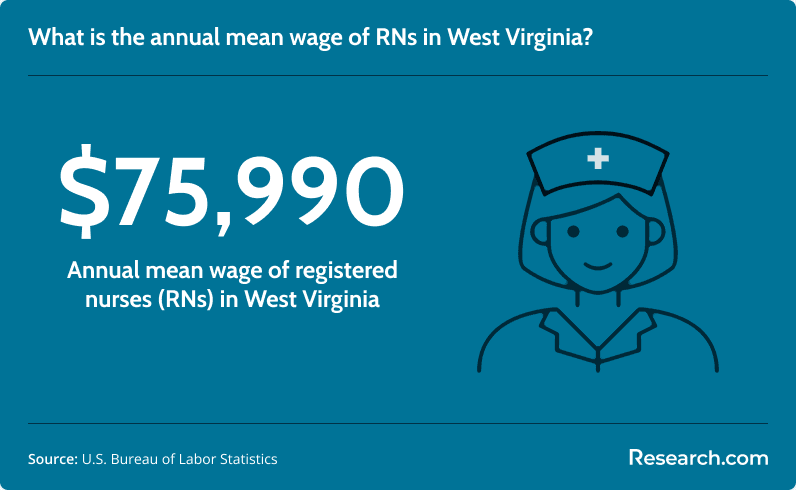
- The average salary for registered nurses in West Virginia is approximately $75,000 per year. Actual pay can differ by experience, specialty, employer, shift, and location, with urban markets often paying more than rural areas.
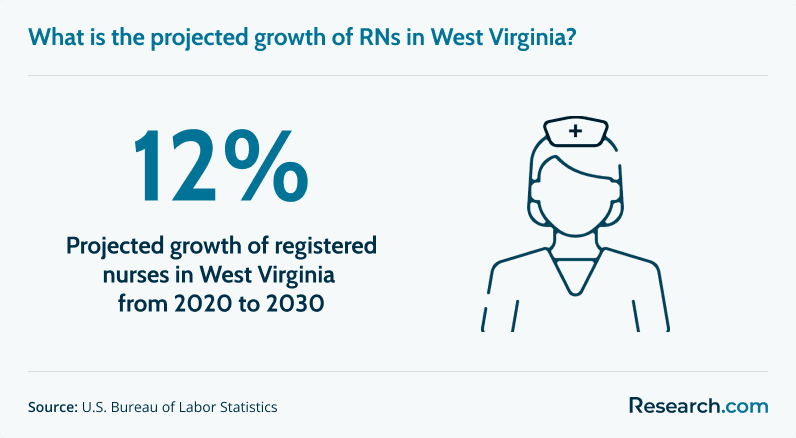
- The employment outlook remains favorable. The Bureau of Labor Statistics projects a growth rate of 12% for registered nursing positions through 2030, with demand especially visible in rural and underserved communities.
- Students can enter nursing through several academic routes, including Associate Degree in Nursing (ADN) and Bachelor of Science in Nursing (BSN) programs. Online and hybrid formats are becoming more common, but students still need approved clinical experiences.
- Telehealth, advanced practice nursing, and remote care coordination are changing how nurses work in West Virginia. Nurses who build technology, communication, and specialty-care skills may have more career flexibility.
- Steps to become a nurse in West Virginia
- Education requirements for West Virginia nurses
- Nursing roles allowed to practice in West Virginia
- West Virginia nursing license requirements
- Types of nursing licenses in West Virginia
- Compact nursing practice in West Virginia
- Practicing nursing without a license in West Virginia
- Current state of nursing in West Virginia
- Alternative healthcare paths related to nursing
- Finding affordable advanced nursing programs
- Nursing job outlook in West Virginia
- Online LPN-to-RN advancement options
- Administrative healthcare skills for nurses
- Steps to become an LVN in West Virginia
- Ways to pay for nursing school
- Types of nursing programs in West Virginia
- How to compare West Virginia nursing schools
- Nurse midwife careers in West Virginia
- Best nurse practitioner programs in West Virginia
- Using continuing education for career growth
- How to meet licensure requirements efficiently
What are the steps to becoming a nurse in West Virginia?
West Virginia’s nursing workforce is under pressure, with a vacancy rate of 19.3% and turnover rate of 15.7% as of 2023. For students, that means opportunity exists, but it also means employers and licensing boards need graduates who are properly trained, eligible, and ready to practice safely.
- Choose the nursing role you want first: Decide whether you are aiming for LPN, RN, or an advanced practice role. This decision determines the type of program, exam, license, timeline, and long-term career options available to you.
- Complete an approved nursing program: West Virginia offers ten approved Bachelor of Science in Nursing (BSN) programs and twelve Associate Degree in Nursing (ADN) programs. A BSN usually includes broader preparation in leadership, population health, research, and care coordination, while an ADN can be a faster route into registered nursing. Current LPNs and students with prior college experience may also consider bridge options such as LPN to ADN or LPN to BSN programs.
- Apply for licensure: After graduation, submit your licensing application to the correct board. The West Virginia nursing licensure application process asks for education documentation and also includes questions about character and legal history.
- Pass the correct NCLEX exam: RN candidates take the NCLEX-RN, while LPN candidates take the NCLEX-PN. This exam is designed to measure whether a graduate has the knowledge and judgment needed for safe entry-level practice.
- Complete background requirements: West Virginia requires fingerprinting and a criminal background check. Applicants should start this step early because missing or delayed background materials can slow licensure.
- Renew and maintain your license: Licensure is not a one-time task. Nurses must keep their credentials active and meet renewal requirements, which may include continuing education tied to current standards of care.
| Decision point | Why it matters | Better approach |
| ADN or BSN | The degree affects program length, cost, and employer preferences. | Choose ADN for quicker entry when appropriate; choose BSN if you want broader preparation or future leadership and graduate study options. |
| Campus, hybrid, or online coursework | Nursing education still requires hands-on clinical training. | Confirm how clinical placements are arranged before enrolling. |
| Licensure timing | Incomplete applications can delay employment. | Prepare transcripts, exam registration, fingerprinting, and background materials early. |
| Specialty interest | Some specialties require experience, certification, or graduate education. | Use entry-level roles to build clinical judgment before committing to an advanced specialty. |
If you are comparing nursing specialties, salary expectations should be treated as context rather than a guarantee. For example, Research.com’s guide to neonatal nurse salary by state can help you understand how pay can differ by location and role.
What are the educational requirements for becoming a nurse in West Virginia?
The education required depends on the license and scope of practice you want. The key is to choose a program that is properly approved, prepares you for the correct NCLEX exam, and supports the type of clinical experience needed for your intended role.
| Program or degree | Typical purpose | Best fit |
| Associate Degree in Nursing (ADN) | A two-year pathway commonly offered through community colleges that prepares graduates for RN licensure eligibility. | Students who want a direct and relatively fast route to registered nursing. |
| Bachelor of Science in Nursing (BSN) | A four-year degree with broader coursework in leadership, research, public health, and nursing practice. | Students who want stronger long-term mobility, graduate school preparation, or access to employers that prefer a BSN. |
| Master of Science in Nursing (MSN) | Graduate education that typically requires an additional two years beyond the BSN and can lead to advanced clinical, education, or leadership roles. | RNs seeking nurse practitioner, educator, or other specialized roles. |
| Doctor of Nursing Practice (DNP) or Doctor of Nursing Science (DSN) | Advanced study focused on high-level clinical practice, leadership, research, or systems improvement, often requiring three to four years after the MSN. | Nurses pursuing top-level practice, executive, academic, or research-focused responsibilities. |
An ADN can be a practical starting point for students who need to enter the workforce sooner. A BSN may provide stronger preparation for leadership responsibilities and future graduate education. An MSN, DNP, or DSN becomes relevant when a nurse wants to move into advanced practice, teaching, administration, or specialized clinical roles.
Working nurses who need flexibility may compare graduate options carefully. Research.com’s overview of the shortest online MSN programs can help nurses evaluate accelerated formats while keeping in mind that clinical and state requirements still apply.
Students who are comparing potential nursing roles may also want salary context beyond West Virginia. Research.com’s resource on travel nurse salary details by state explains how compensation can vary by assignment type and location.
What types of nurses can legally practice in West Virginia?
West Virginia recognizes several nursing roles, each with its own education, exam, licensure, and scope-of-practice rules. Understanding the differences can prevent students from enrolling in the wrong program or assuming that one license authorizes all forms of nursing practice.
- Licensed Practical Nurses (LPNs): LPNs provide basic nursing care under the supervision of RNs, physicians, or other authorized providers. To qualify, candidates complete a state-approved practical nursing program and pass the NCLEX-PN. LPNs are commonly employed in long-term care, residential care, hospitals, and home healthcare.
- Registered Nurses (RNs): RNs assess patients, coordinate care, administer medications, educate patients and families, and collaborate with healthcare teams. Candidates typically complete an ADN, a BSN, or another approved RN pathway. Career changers may also research an online nursing degree for non nurses when comparing approved routes into the profession.
- Advanced Practice Registered Nurses (APRNs): APRNs include Nurse Practitioners (NPs), Clinical Nurse Specialists (CNSs), Nurse Anesthetists (CRNAs), and Certified Nurse Midwives (CNMs). These roles require graduate-level nursing education, national certification in the specialty, and West Virginia authorization for advanced practice.
| Role | Main function | Common next step |
| LPN | Provides practical nursing care within a supervised scope. | Bridge to RN through an approved LPN-to-RN pathway. |
| RN | Delivers and coordinates patient care across clinical settings. | Earn a BSN, specialize, or pursue graduate nursing education. |
| APRN | Provides advanced specialty care, often with greater autonomy. | Maintain certification, meet state requirements, and consider leadership or doctoral preparation. |
What are the licensing requirements for nurses in West Virginia?
Nursing licensure in West Virginia is handled through the appropriate state board. RN candidates work with the West Virginia Board of Examiners for Registered Professional Nurses (WVBON), while LPN candidates work with the West Virginia Board of Licensed Practical Nurses (WVBPLN). The requirements are intended to confirm education, exam readiness, legal eligibility, and public safety.
- Approved nursing education: RN applicants generally complete an ADN or BSN program. LPN applicants complete a practical nursing program. During the 2022-23 academic year, 77% of nursing programs in West Virginia were nationally accredited.
- Licensure application: Graduates must submit the required application, proof of education, and any board-requested documentation. Applying to the wrong board or submitting incomplete materials can delay approval.
- NCLEX examination: RN candidates take the NCLEX-RN, and LPN candidates take the NCLEX-PN. Passing the exam is required before full licensure.
- Fingerprinting and background check: West Virginia requires fingerprint-based screening and a criminal background check as part of the licensing process.
- Fees: The application fee for RN licensure is approximately $100, and LPN applicants should expect comparable costs. Fingerprinting and background checks may involve additional charges.
Common licensing mistakes to avoid
- Assuming every nursing program qualifies you for licensure: Always verify state approval and accreditation status before enrolling.
- Waiting too long to gather documents: Transcripts, background checks, and exam registration can take time.
- Ignoring legal history questions: Answer licensing questions carefully and honestly. Incomplete disclosure can create problems.
- Confusing RN, LPN, and APRN requirements: Each license has different education and practice rules.
- Assuming online coursework removes clinical requirements: Nursing programs still require supervised clinical learning, even when some coursework is online.
What types of nursing licenses are available in West Virginia?
West Virginia offers licensing options that match different levels of nursing responsibility. The right license depends on whether you plan to provide practical nursing care, registered nursing care, or advanced specialty services.
| License or authority | Who it is for | What to check before applying |
| Registered Nurse (RN) License | Graduates prepared to deliver registered nursing care in hospitals, clinics, long-term care, community health, and other settings. | Confirm that your nursing program is approved and that you are eligible for the NCLEX-RN. |
| Advanced Practice Registered Nurse (APRN) License | RNs pursuing roles such as NP, CNS, CRNA, or CNM after completing graduate education. | Verify graduate program accreditation, specialty certification requirements, and West Virginia APRN authorization rules. |
| Limited Prescriptive Authority | Qualified nurses who meet state requirements to prescribe certain medications within authorized limits. | Confirm required training, documentation, and restrictions before relying on prescriptive authority in practice. |
Advanced practice roles can lead to different earnings and responsibilities than entry-level nursing roles. Nurses considering doctoral preparation can review Research.com’s guide to state-by-state DNP salaries for broader compensation context.
Can a Compact nurse practice in West Virginia?
Yes. West Virginia participates in the Nursing Licensure Compact (NLC), which means an RN with a valid multistate license from another compact state may practice in West Virginia without obtaining a separate West Virginia RN license. This helps nurses respond to workforce needs across state lines and can be especially useful when hospitals, clinics, or rural employers need staffing flexibility.
The compact does not remove every requirement. Nurses must still follow West Virginia’s nursing practice laws while working in the state. Employers may also require verification of licensure, background documentation, onboarding, and role-specific competencies.
APRNs are handled differently. Advanced Practice Registered Nurses are not covered in the same way by the compact agreement and must obtain the appropriate West Virginia authorization for advanced practice. Career changers who are considering graduate-entry pathways can compare options such as direct entry MSN programs for non-nurses, but they should verify that the program supports the licensure path they intend to follow.
Can you practice as a nurse without a license in West Virginia?
No. You may not legally practice as a nurse in West Virginia without the proper license. This applies to both LPNs and RNs. Licensure is not just an administrative formality; it is the state’s mechanism for confirming that a nurse has completed required education, passed the appropriate exam, and met public-protection standards.
The requirement matters because licensed nurses care for people in settings where judgment, safety, medication knowledge, documentation, and communication can directly affect patient outcomes. The largest employers of LPNs are nursing and residential care facilities (35%), hospitals (15%), and home healthcare services (13%), which underscores the importance of properly credentialed practical nurses in direct-care environments.
Technology may change how nurses train and deliver care, including expanded use of simulations, telehealth, and digital documentation. It does not eliminate the need for licensure. Students should view licensing as a required professional milestone, not a step that can be skipped while waiting for paperwork.
-
: "
“I was ready to start working as soon as I finished school, but I learned quickly that I could not practice until the license was officially in place. The application process felt stressful, especially with the documents and background steps, but receiving the license confirmed that I had met the standard patients deserve. Now, I see licensure as part of the trust patients place in nurses.”
"
What is the state of nursing in West Virginia?
Nursing in West Virginia is shaped by workforce shortages, rural access needs, salary competition, education capacity, and changing care models. The state needs nurses in traditional settings such as hospitals and long-term care, but demand is also tied to home health, community health, telehealth, and preventive care.
The demand for RNs in West Virginia is expected to keep rising. According to the U.S. Bureau of Labor Statistics, employment of registered nurses is expected to increase by 6% nationally through 2032.
Retention remains a challenge. West Virginia has historically struggled with retaining nurses, with contributing issues that include lower salaries compared with neighboring states and higher living costs in some locations. At the same time, West Virginia’s overall cost of living is generally lower than the national average, which can affect how far a nursing salary goes.
For future nurses, the practical takeaway is clear: do not evaluate the career only by statewide averages. Compare local employers, specialty demand, shift expectations, tuition costs, commute distance, and advancement options. A lower-cost program that leads to licensure and strong clinical experience may offer better value than a more expensive option with weak placement support.
Are there alternative healthcare career paths for nurses in West Virginia?
Nursing can stand on its own as a career, but some nurses strengthen their long-term options by learning related healthcare systems. Pharmacy, medication safety, billing, coding, quality improvement, and care coordination can all improve how nurses understand the full patient-care process.
For nurses interested in medication management and interprofessional collaboration, learning how to become a pharmacist in West Virginia can provide insight into a separate but closely connected healthcare profession. This is not a substitute for nursing licensure, but it can help nurses understand how pharmacists, prescribers, and clinical teams work together.
How can I find affordable advanced nursing programs in West Virginia?
Affordability should include more than tuition. When comparing advanced nursing programs, look at total program cost, fees, clinical placement support, accreditation, schedule flexibility, travel requirements, and whether the program prepares you for the certification and licensure path you need.
Working nurses who want to become family nurse practitioners may compare online and hybrid options. Research.com’s guide to the cheapest online FNP programs can be a useful starting point, but students should still confirm state authorization, clinical requirements, and specialty fit before enrolling.
What is the job outlook for nursing in West Virginia?
The job outlook for nurses in West Virginia is positive, especially for candidates who are licensed, flexible, and willing to serve rural or underserved areas. According to the U.S. Bureau of Labor Statistics, employment for registered nurses (RNs) in West Virginia is projected to grow by approximately 6% from 2020 to 2030, which is similar to the national average.
Compensation varies by role. The average annual salary for registered nurses in West Virginia is around $75,000, compared with a national average of approximately $86,000. Certain metropolitan areas in the state may offer higher wages, while rural areas may offer different advantages such as community impact, broader responsibilities, or employer incentives.
Advanced roles generally pay more. Nurse anesthetists and nurse practitioners are among the highest-paid nursing professionals, with salaries exceeding $100,000 annually. Licensed practical nurses (LPNs) earn less on average, with wages around $56,000 per year.
| Nursing role | Salary context stated | Career note |
| Registered Nurse | Average annual salary is around $75,000 in West Virginia. | Demand is supported by hospitals, rural healthcare needs, long-term care, and community-based services. |
| Licensed Practical Nurse | Average wages are around $56,000 per year. | LPN roles can be a practical entry point and may lead to RN bridge programs. |
| Nurse Practitioner or Nurse Anesthetist | Salaries can exceed $100,000 annually. | These roles require advanced education, certification, and state authorization. |
Telehealth, digital records, care coordination, and community-based healthcare are likely to keep influencing nursing work. Nurses who adapt to technology while maintaining strong bedside judgment may be better positioned for future roles.
Are online LPN to RN programs a viable path for career advancement in West Virginia?
Online LPN-to-RN programs can be a useful option for licensed practical nurses who want to become registered nurses while continuing to work. The main advantage is flexibility, but students should be cautious: nursing programs still need approved clinical experiences, and not every online format will meet West Virginia requirements.
Before enrolling, confirm program approval, NCLEX-RN eligibility, clinical placement arrangements, transfer credit policies, and whether the schedule is realistic with your work hours. Research.com’s guide to online LPN to RN programs can help LPNs compare accelerated pathways and understand what to verify before applying.
Can nurses benefit from complementary administrative healthcare roles?
Yes. Administrative skills can help nurses move into leadership, case management, compliance, documentation improvement, revenue cycle coordination, or clinic operations. These roles can be especially useful for nurses who want to reduce direct bedside hours while still using healthcare knowledge.
Billing and coding knowledge may also help nurses understand documentation, reimbursement, and compliance. Nurses exploring this direction can review Research.com’s guide on how to become a medical biller and coder in West Virginia.
What are the essential steps to become an LVN in West Virginia?
Students interested in practical nursing should first verify the terminology and licensing pathway used in West Virginia, since practical nursing is commonly associated with LPN licensure. The basic route is to complete a state-approved practical nursing program, finish required clinical training, apply to the appropriate board, pass the NCLEX-PN, and complete background requirements.
For a focused walkthrough of this practical nursing route, see Research.com’s guide on how to become an LVN in West Virginia.
How can I finance my nursing education in West Virginia?
Paying for nursing school requires a full-cost comparison. Tuition is important, but students should also budget for fees, books, uniforms, supplies, testing, background checks, transportation to clinical sites, and lost income if they reduce work hours.
- Start with federal aid: Complete the required financial aid forms and compare grants, loans, and work-study eligibility.
- Ask schools about nursing-specific awards: Some institutions offer scholarships or targeted aid for healthcare students.
- Check employer support: Hospitals, long-term care facilities, and healthcare systems may offer tuition reimbursement or education benefits.
- Compare online and hybrid programs carefully: Flexible formats can reduce commuting but may still require in-person clinical placements.
- Look at total value: A program with strong clinical support and licensure preparation may be worth more than a cheaper program with weak student outcomes.
Students who need flexible formats can explore the best online nursing programs in West Virginia, while confirming that each program meets state and clinical requirements.
What kind of nursing programs are available in West Virginia?
West Virginia offers multiple nursing education pathways for students at different stages. Options include practical nursing programs, ADN programs, BSN programs, accelerated nursing options, bridge pathways, and graduate nursing programs for advanced practice or leadership roles.
Students seeking practical nursing preparation can compare online LPN programs in West Virginia, but should verify approval, clinical requirements, and NCLEX-PN preparation before enrolling. Students who already have healthcare experience may want a bridge option, while those aiming for advanced practice will eventually need graduate education.
Which criteria should guide the selection of the best nursing schools in West Virginia?
The best nursing school is not always the most recognizable name. It is the program that fits your licensure goal, budget, schedule, clinical needs, and career plan. Rankings can help with research, but they should not replace direct verification.
| Selection factor | Why it matters | Question to ask |
| Approval and accreditation | Licensure eligibility and employer confidence depend on program quality and recognition. | Is the program approved for the license I want, and is it nationally accredited? |
| Clinical placement support | Nursing students need supervised patient-care experience. | Does the school arrange placements, or must students find their own? |
| NCLEX preparation | Graduation alone is not enough; you must pass the exam. | How does the curriculum prepare students for the NCLEX? |
| Cost and aid | Total expenses can affect whether the degree is financially realistic. | What is the full cost, including fees, supplies, testing, and clinical travel? |
| Format and schedule | Working students may need evening, weekend, hybrid, or part-time options. | Can I complete coursework and clinical hours around my work and family responsibilities? |
| Student support | Advising, tutoring, simulation labs, and career services can influence completion. | What support is available if I struggle academically or clinically? |
For a broader comparison, review Research.com’s resource on the best nursing schools in West Virginia.
What are the career opportunities for nurse midwives in West Virginia?
Nurse midwives provide advanced reproductive, prenatal, birth, postpartum, and preventive care. In areas with limited obstetric access, this role can be especially important. The pathway requires RN preparation, graduate-level education in nurse-midwifery, national certification, and West Virginia authorization for advanced practice.
This career can suit nurses who want long-term patient relationships, maternal health expertise, and a collaborative practice model. It may not be the best fit for nurses who do not want advanced clinical responsibility, unpredictable schedules, or the demands associated with birth-related care. For a detailed pathway, see Research.com’s guide on how to become a nurse midwife in West Virginia.
What are the best nurse practitioner programs in West Virginia?
The best nurse practitioner program for you depends on your intended specialty, clinical placement needs, schedule, cost, and certification goals. In West Virginia, NP programs that emphasize primary care, family practice, rural health, and underserved communities may align well with state healthcare needs.
When comparing programs, look closely at accreditation, faculty experience, specialty tracks, board certification preparation, clinical site support, and flexibility for working nurses. A program may be convenient, but it must also prepare you for the specific NP role you plan to enter.
Research.com’s list of the best NP programs in West Virginia can help you identify options and compare programs against your career goals.
What nurses say about working in West Virginia
- “Nursing in West Virginia has given me a strong sense of purpose. Patients often know their care teams, and that community connection makes the work meaningful. I am also encouraged by the growth of telehealth because it helps us reach people who live far from major healthcare centers.” Lily
- “I entered nursing here because new graduates can find meaningful support. Mentorship from experienced hospital nurses helped me build confidence during the transition from school to practice. With nursing jobs in the state expected to increase by 10% over the next decade, I see room to keep growing.” Howard
- “Moving from RN practice into a Nurse Practitioner role changed how I see healthcare in West Virginia. Collaboration matters here, especially in communities where access is limited. As technology and rural care models improve, I believe nurses will continue to play a central role.” Mara
How can nurses leverage continuing education to advance their careers in West Virginia?
Continuing education can help West Virginia nurses maintain licensure, deepen clinical skills, move into specialty practice, or prepare for leadership. The best choices depend on your current role and your next career step.
- For LPNs: Consider RN bridge programs if you want broader scope and stronger advancement potential.
- For RNs: Specialty certifications, BSN completion, charge nurse preparation, or graduate study may improve mobility.
- For aspiring APRNs: Choose graduate coursework that matches state requirements and national certification expectations. Research.com’s guide to nurse practitioner education requirements in West Virginia can help clarify this pathway.
- For nurses moving away from bedside roles: Consider education in informatics, quality improvement, case management, administration, or healthcare operations.
Employer tuition reimbursement, mentorship, university partnerships, webinars, and professional association training can all support career growth. The strongest continuing education plan is one that connects directly to a license, certification, promotion, or specialty goal.
How can nurses efficiently meet the requirements for nursing licensure in West Virginia?
The fastest way to avoid licensing delays is to treat the process like a checklist. Confirm eligibility before graduation, request transcripts promptly, complete fingerprinting and background requirements early, register for the correct NCLEX, and monitor board communication until your license is issued.
| Action | Why it helps |
| Verify program approval before enrollment | Prevents graduating from a program that may not support your intended license. |
| Use the correct licensing board | RN and LPN applicants follow different board processes. |
| Prepare legal and background information honestly | Reduces the risk of delays caused by missing or inconsistent disclosures. |
| Track every required document | Helps you identify missing transcripts, fees, exam registration, or background items. |
| Review current state guidance | Licensure requirements can change, so rely on official instructions before submitting. |
For a more detailed roadmap, review Research.com’s guide to the requirements for nursing licensure in West Virginia.
Key insights
- West Virginia offers several routes into nursing, but the right path depends on whether you want to become an LPN, RN, or APRN.
- Licensure is mandatory. You cannot legally practice nursing in West Virginia without the proper license.
- Program approval, accreditation, NCLEX preparation, and clinical placement support should matter more than convenience or name recognition alone.
- An ADN can provide a faster route to RN practice, while a BSN may offer stronger long-term flexibility and graduate-school preparation.
- Compact licensure helps eligible RNs practice across participating states, but APRNs still need West Virginia-specific authorization for advanced roles.
- Salary varies by role and location. Registered nurses average around $75,000 per year in West Virginia, while advanced roles such as nurse practitioner and nurse anesthetist can exceed $100,000 annually.
- Telehealth, rural healthcare needs, community-based care, and advanced practice roles are shaping the future of nursing in the state.
- The best nursing program is the one that meets licensure requirements, fits your budget, provides strong clinical experience, and supports your career goal.
Related Articles for Nearby States
- 2027 How to Become a Nurse in Virginia
- 2027 How to Become a Nurse in Ohio
- 2027 How to Become a Nurse in Kentucky
- 2027 How to Become a Nurse in Pennsylvania
- 2027 How to Become a Nurse in Maryland
- 2027 How to Become a Nurse in North Carolina
- 2027 How to Become a Nurse in Tennessee
- 2027 How to Become a Nurse in Indiana
- 2027 How to Become a Nurse in South Carolina
- 2027 How to Become a Nurse in Georgia
References:
- nursing-school-degrees.com (2021). Becoming an RN in West Virginia.
- U.S. Bureau of Labor Statistics. (2023). Licensed practical and licensed vocational nurses.
- wvrnboard.wv.gov (n.d.). The WV RN Board performs primary source verification.
Other Things You Need to Know About Nursing in West Virginia
To become a registered nurse in West Virginia in 2027, you must complete an accredited nursing program, either a diploma, associate, or bachelor's degree. After graduation, you need to pass the NCLEX-RN exam and apply for licensure through the West Virginia Board of Registered Nurses, completing necessary background checks.
To start a nursing career in West Virginia in 2027, first obtain a high school diploma or GED. Then, enroll in an accredited nursing program to earn an Associate Degree in Nursing (ADN) or Bachelor of Science in Nursing (BSN). Following this, pass the NCLEX-RN exam and apply for licensure with the West Virginia Board of Nursing.
Becoming a nurse in West Virginia requires not only a solid educational foundation but also effective preparation for licensure and professional development. Here are some useful tips and resources to help you succeed in your nursing career in the state.
- NCLEX Preparation Courses: To become a licensed nurse, you must pass the National Council Licensure Examination (NCLEX). Numerous online and in-person NCLEX preparation courses are available, specifically tailored for West Virginia nursing students. Institutions like Kaplan and Hurst Review offer comprehensive programs that cover essential nursing concepts and test-taking strategies.
- Time Management: Balancing coursework, clinical rotations, and personal commitments can be challenging. Effective time management strategies, such as creating a study schedule and prioritizing tasks, are essential. Tools like digital planners or apps can help you stay organized and focused.
- Professional Organizations: Joining professional organizations, such as the West Virginia Nurses Association (WVNA), can provide networking opportunities, continuing education resources, and access to job listings. Membership often includes discounts on conferences and workshops, which can enhance your professional development.
By leveraging these resources and strategies, aspiring nurses in West Virginia can better prepare for their careers, ensuring they are equipped with the knowledge and skills necessary to succeed in the nursing profession.