2027 Cheapest Accredited Online Legal Services Degree Programs: Tuition, Fees, and Financial Aid

Co-Founder and Chief Data Scientist
Finding an affordable online legal services degree means looking beyond the lowest tuition ad. Students need to compare accreditation, mandatory fees, transfer policies, FAFSA eligibility, and likely net price. The BLS reported a May 2024 median pay of $61,010 for paralegals and legal assistants, but entry costs vary widely by school.
This guide is for students comparing online paralegal, legal studies, and legal support programs who want to identify genuinely low-cost accredited options and avoid hidden expenses.
Key Things You Should Know
- The cheapest accredited online legal services degrees are usually associate-level paralegal or legal assistant programs at public community colleges, where published tuition can be under $150 per credit for local or in-state students before fees.
- Among bachelor's options, public universities with resident or special online tuition often beat private schools on advertised cost, but the better comparison is total program cost after mandatory fees, books, transfer credits, grants, and scholarships.
- FAFSA eligibility depends on the school and program, not just online delivery, a low-tuition program that does not qualify for federal aid may cost more out of pocket than a higher-tuition accredited program with strong grant access.
What Are the Cheapest Accredited Online Legal Services Degree Programs?
The cheapest accredited online legal services degree programs tend to fall into two groups: lower-division associate degrees in paralegal studies or legal assisting, and bachelor's degrees in legal studies, law and policy, or legal support services. Associate programs are usually the least expensive route for students who want entry-level legal support training, while bachelor's programs may fit students targeting broader legal, compliance, government, or law-school-preparation pathways.
The table below compares affordable online options by published tuition model, degree level, accreditation type, and cost caveats. Tuition changes frequently, so students should confirm the current academic-year tuition and all required fees directly with each school before enrolling.
| School | Online legal services degree option | Accreditation to verify | Published tuition signal | Best value fit | Cost caveat |
| Central Texas College | Associate of Applied Science in Paralegal/Legal Assistant | Institutional accreditation through SACSCOC | Public community-college tuition; lowest for in-district and Texas residents | Students seeking a low-cost associate degree for legal assistant or paralegal support roles. | Nonresident tuition, online fees, books, and course materials can raise the total cost. |
| Rio Salado College | Associate-level paralegal studies pathway | Institutional accreditation through HLC | Public community-college tuition with separate resident and nonresident pricing | Students who want flexible online coursework and a lower-cost associate pathway. | Students should confirm whether all required legal specialty courses are available online in their enrollment term. |
| Dallas College | Associate-level paralegal/legal studies coursework | Institutional accreditation through SACSCOC; verify program recognition or approval where relevant | Very low in-district public college tuition | Texas-area students who can use local tuition rates. | Online availability, residency rules, and course sequencing should be checked before relying on the advertised rate. |
| University of Maine at Augusta | Bachelor's in Legal Studies | Institutional accreditation through NECHE | Public university pricing with resident and distance-rate considerations | Students who want a bachelor's legal studies degree from a public institution. | Out-of-state pricing and fees may change the affordability ranking. |
| SUNY Canton | Bachelor's in Legal Studies | Institutional accreditation through MSCHE | Public university tuition; online out-of-state rates may be lower than traditional nonresident rates | Students comparing bachelor's programs with structured legal studies coursework. | Mandatory comprehensive, technology, or online fees should be added to tuition. |
| University of Maryland Global Campus | Bachelor's in Legal Studies | Institutional accreditation through MSCHE | Resident, nonresident, and military-affiliated tuition categories | Maryland residents, military-affiliated students, and transfer students seeking a bachelor's path. | The out-of-state rate may be materially higher than the resident rate. |
| American Public University | Bachelor's in Legal Studies | Institutional accreditation through HLC | Flat online undergraduate tuition with military-affiliated pricing considerations | Adult learners who want predictable online pricing and broad transfer-credit evaluation. | Students should compare fees, books, and transfer acceptance against public options. |
| Bellevue University | Bachelor's in Legal Studies | Institutional accreditation through HLC | Private nonprofit online tuition with adult-learner focus | Students who value cohort-style adult education and transfer pathways. | May cost more than public resident options before scholarships or employer aid. |
The main pattern is clear: the lowest advertised tuition is usually found at public community colleges, especially when the student qualifies for in-district or in-state pricing. However, a bachelor's program with strong transfer-credit acceptance can sometimes produce a lower total cost than starting over in a cheaper per-credit program.
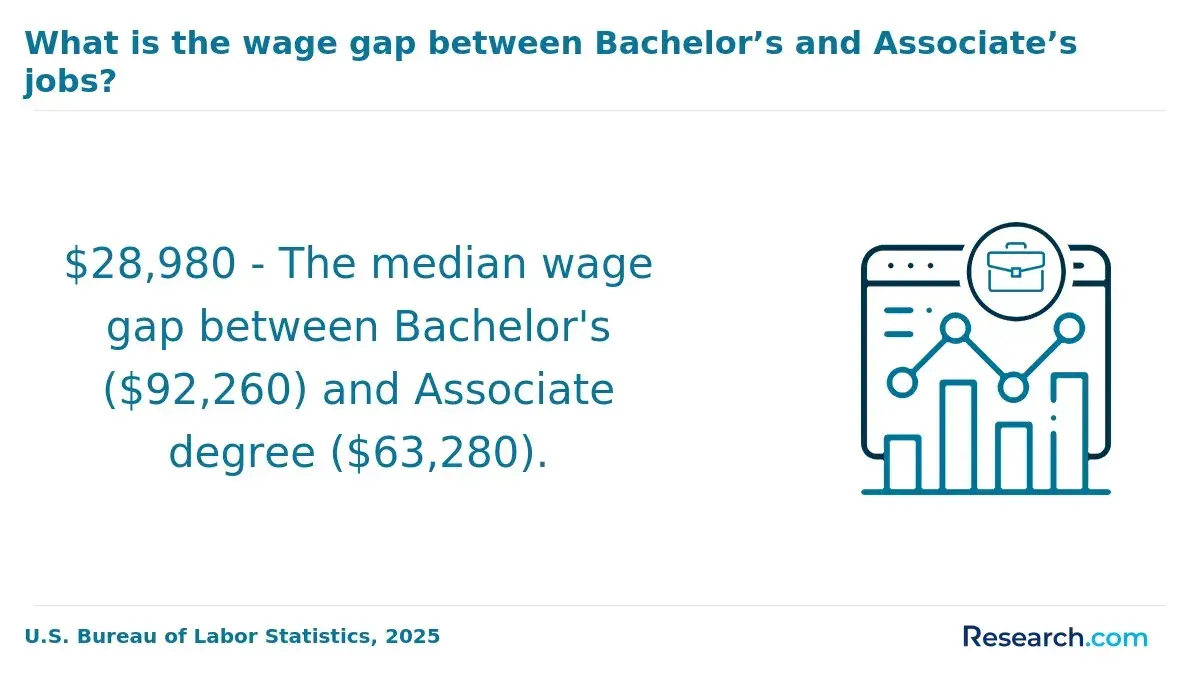
Students should also match degree level to career goal. An associate degree may be enough for many legal assistant or paralegal support roles, while a bachelor's degree may be more useful for compliance, public administration, law-related corporate roles, or future graduate study.
How Were the Cheapest Online Legal Services Degree Programs Ranked?
The ranking logic starts with affordability but does not stop at tuition. A program can advertise a low per-credit rate and still be expensive if it adds mandatory online fees, accepts few transfer credits, or requires courses that are not available every term.
For a practical comparison, students should evaluate programs in this order:
- Confirm institutional accreditation from a recognized accreditor and check whether the specific program is active for online students.
- Record the published per-credit tuition for the correct residency category, including in-district, in-state, out-of-state, military, or special online rates.
- Add mandatory fees such as technology, distance learning, student services, graduation, testing, transcript, and course-specific fees.
- Estimate total credits required after transfer evaluation, not just the credits listed in the catalog.
- Compare FAFSA eligibility, institutional grants, scholarships, employer tuition assistance, and military education benefits.
- Review program quality indicators such as course availability, legal specialty coverage, faculty experience, internship options, student support, and completion outcomes.
This method favors programs that combine low published tuition, recognized accreditation, transparent fees, broad transfer-credit acceptance, and access to federal or institutional aid. It also helps avoid a common mistake: assuming the lowest tuition rate equals the lowest net price.
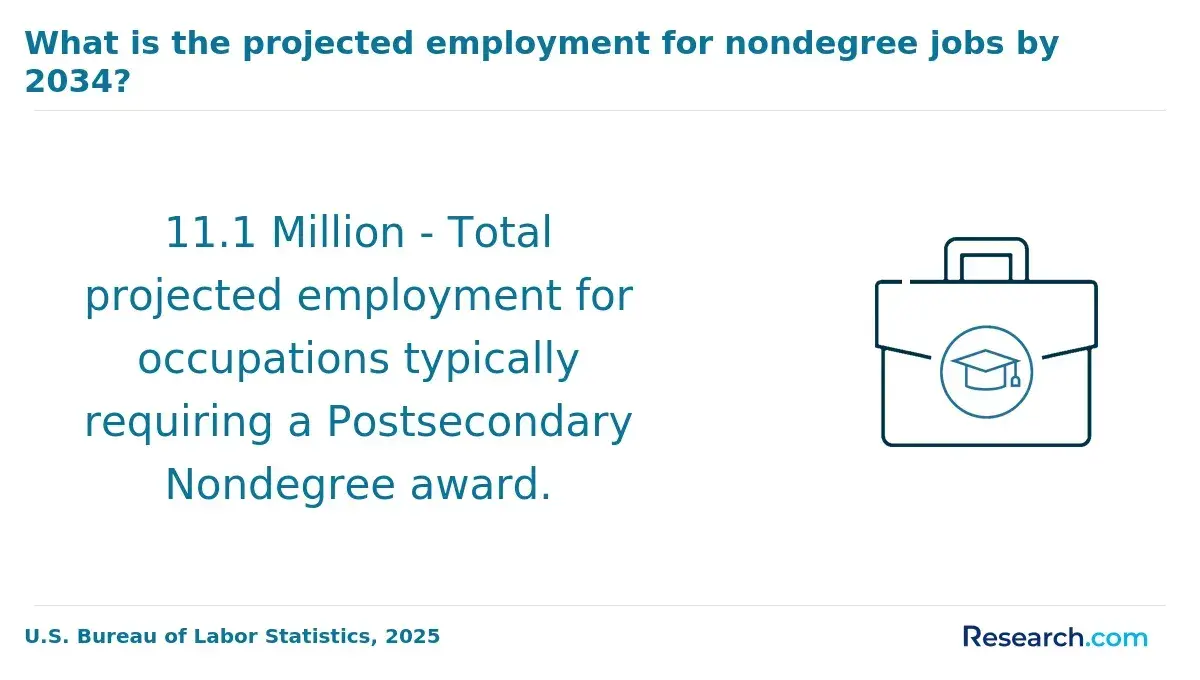
A strong ranking for this topic should separate associate and bachelor's degrees because the credential length changes the math. A 60-credit associate degree at $130 per credit before fees is not directly comparable to a 120-credit bachelor's degree at $330 per credit unless the student's career goal requires the higher credential.
How Can You Verify the Accreditation of an Online Legal Services Degree Program?
Accreditation is the first affordability filter because it affects credit transfer, employer recognition, graduate-school options, and federal financial aid access. For online legal services degrees, students should distinguish institutional accreditation from optional program recognition.
Use this checklist before applying or paying a deposit:
- Search the school in the U.S. Department of Education's Database of Accredited Postsecondary Institutions and Programs.
- Confirm that the accreditor listed is recognized for the institution and that the school's status is current, not expired, on probation, or limited.
- Check the program page and catalog to verify that the legal studies, paralegal, legal assistant, or legal support degree is offered online and is currently accepting students.
- Ask whether the program has American Bar Association approval if ABA approval matters to your target employers, local legal market, or transfer goals.
- Confirm that online students in your state are authorized to enroll under state authorization rules.
- Ask the financial aid office whether the specific program is eligible for Title IV federal aid, because institutional accreditation alone does not automatically mean every program qualifies.
ABA approval is not the same as institutional accreditation. Many legitimate legal studies and paralegal programs are institutionally accredited but not ABA-approved, especially fully online programs. That does not automatically make them poor choices, but students should know how employers in their local market view the credential.
A red flag is any school that makes accreditation hard to verify, uses vague phrases such as "internationally accredited" without naming a recognized accreditor, or pressures students to enroll before providing written cost and accreditation information.
How Much Does an Accredited Online Legal Services Degree Really Cost?
The real cost of an online legal services degree is the total amount required to complete the credential, not just tuition. Students should separate four terms: tuition is the instructional charge, mandatory fees are required charges added by the school, total program cost is tuition plus fees and learning expenses, and net price is what remains after grants and scholarships.
The table below shows how costs can change depending on degree type and tuition structure. These are planning categories, not promises; every student should replace the examples with the school's current published rates and their transfer-credit estimate.
| Cost item | Associate legal services degree | Bachelor's legal services degree | Why it matters |
| Typical credit length | About 60 to 65 credits | About 120 credits | The total number of credits is the biggest driver of tuition cost. |
| Lowest-cost tuition pattern | Public community-college resident or district rate | Public university resident, special online, or military-affiliated rate | Residency can determine whether a program is truly cheap. |
| Mandatory fees | Often technology, online, student services, course, testing, and graduation fees | Often technology, online, student services, course, portfolio, and graduation fees | Fees can erase the advantage of a lower tuition rate. |
| Books and materials | Legal research platforms, e-textbooks, access codes, and writing tools may apply | Upper-division legal research and writing materials may increase costs | Open educational resources and included e-books can reduce out-of-pocket expense. |
| Net price factors | Pell Grants, state grants, community-college scholarships, employer aid | Pell Grants, institutional grants, transfer scholarships, employer aid, military benefits | Net price is the better affordability measure than sticker tuition. |
The federal Pell Grant maximum for the 2025-26 award year is $7,395. For a low-cost associate program, that amount may cover a substantial share of annual tuition and fees for eligible students; for a higher-priced bachelor's program, it may still help but may not eliminate the need for savings, employer benefits, payment plans, or loans.
Students should calculate cost in three versions: advertised tuition, tuition plus mandatory fees, and estimated net price after gift aid. If the school cannot provide a clear cost worksheet, that is a reason to slow down before enrolling.
Which Tuition Models Make Online Legal Services Degree Programs More Affordable?
Tuition models can change the affordability ranking even when two programs have similar per-credit rates. The cheapest model depends on the student's residency, transfer credits, work schedule, and ability to take multiple courses at once.
These are the tuition structures most likely to affect online legal services students:
- Per-credit tuition: This is the most common model and is easiest to compare, but students must multiply the rate by the number of credits still needed after transfer evaluation.
- Flat-rate term tuition: Students pay one rate for a credit range, which can lower cost for full-time students who complete more credits each term.
- Special online tuition: Some public universities charge online students a separate rate that may be lower than standard out-of-state tuition.
- Residency-based tuition: Community colleges and public universities may offer the lowest rates only to in-district or in-state students.
- Military or employer-affiliated tuition: Some schools offer reduced rates for military students, veterans, federal employees, corporate partners, or public-sector workers.
- Competency-based or subscription tuition: Students pay by term and progress by demonstrating mastery, which may lower cost for experienced adult learners who can move quickly.
Similar tuition-model trade-offs appear in other online fields, including an AI degree, where flat-rate or accelerated formats can be cheaper only if the student completes enough credits during each paid term.
The common mistake is choosing a school based only on per-credit tuition. A $300-per-credit program that accepts 75 transfer credits may be cheaper than a $200-per-credit program that accepts only 30 credits.
What Fees and Hidden Costs Should Online Legal Services Degree Students Expect?
Online legal services students often budget for tuition and then get surprised by required fees. These costs are not always hidden in the sense of being secret, but they may be buried in fee schedules, course notes, or separate student-account pages.
Before comparing programs, ask each school for a written list of required costs in the same format. Pay particular attention to these items:
- Technology or online learning fees charged per credit, course, or term.
- Student services, registration, transcript, graduation, and payment-plan fees.
- Proctoring fees for online exams or identity verification.
- Legal research database access, e-textbooks, casebook materials, or publisher access codes.
- Course-specific software for legal writing, document management, citation, or e-discovery exercises.
- Internship, practicum, background-check, or placement-related costs when required.
- Residency, orientation, or campus-visit costs if the program is not fully online.
- Late fees, dropped-course penalties, and tuition refund limitations.
Legal services students should be especially careful with "online program fee" language. A low tuition rate plus a required per-credit distance-learning fee may produce a higher total cost than a program with a higher but all-inclusive tuition rate.
A practical way to compare schools is to ask for the total cost of one sample full-time term and one sample part-time term. This reveals whether the school's fees are charged by credit, by course, or by semester.
How Does FAFSA and Federal Financial Aid Work for Online Legal Services Degree Programs?
Online students can qualify for federal financial aid if they attend an eligible school, enroll in an eligible program, meet federal student-aid rules, and maintain satisfactory academic progress. Online delivery by itself does not disqualify a student from FAFSA-based aid.
The FAFSA process usually works in this sequence:
- Create a StudentAid.gov account and complete the FAFSA for the correct award year.
- List each school being considered so the financial aid office can receive the application data.
- Review the school's financial aid offer, separating grants and scholarships from loans and work-study.
- Confirm whether aid is based on full-time, three-quarter-time, half-time, or less-than-half-time enrollment.
- Ask whether the legal services program is Title IV eligible and whether any certificate, concentration, or nondegree option is excluded.
- Compare net price after grants and scholarships before deciding whether to borrow.
The FAFSA Simplification changes have made aid calculations more dependent on the Student Aid Index and school cost of attendance. For students, the practical takeaway is simple: do not rely on tuition alone; compare each school's actual aid offer and net price.
This same net-price discipline applies outside legal services as well. For example, students comparing psychology degree online cost also need to distinguish tuition, fees, grants, and loans before choosing the cheapest-looking school.
Federal loans can help cover costs, but they must be repaid with interest. Grants and scholarships should be prioritized first because they reduce the bill without creating loan debt.
Which Scholarships, Grants, and Tuition Benefits Can Help Pay for an Online Legal Services Degree?
Financial aid for legal services students can come from federal, state, institutional, employer, military, and private sources. The best funding package usually combines several smaller sources rather than relying on one award.
Students should search for aid in the following order because the first options usually have the lowest repayment risk:
- Federal grants: Pell Grants and other need-based aid should be reviewed before loans.
- State grants: Many states offer need-based or workforce grants for residents attending eligible institutions.
- Institutional scholarships: Schools may offer transfer, adult-learner, first-generation, academic merit, or department-based awards.
- Community-college foundation scholarships: These can be especially useful for associate paralegal students.
- Professional association scholarships: Local paralegal associations, legal support groups, bar foundations, and civic organizations may sponsor awards.
- Employer tuition assistance: Law firms, courts, government agencies, insurers, banks, and compliance departments may reimburse job-related coursework.
- Military and veteran benefits: Eligible students should compare tuition assistance, GI Bill benefits, Yellow Ribbon participation, and military tuition rates.
Scholarships and grants differ from loans because they usually do not need to be repaid if the student meets the award rules. However, students should confirm whether an award is renewable, whether it requires full-time enrollment, and whether online students are eligible.
Employer tuition assistance is increasingly important for working adults across professional programs, including legal studies, compliance, business, and finance degrees. The key question is whether the employer pays upfront, reimburses after grades are posted, or requires the employee to stay for a period after receiving benefits.
Can Transfer Credits, Prior Learning, and Competency-Based Study Lower the Cost of an Online Legal Services Degree?
Transfer credit is often the biggest cost-saving tool for online legal services students. It reduces both tuition and time in school, but the savings depend on how many credits the new institution accepts and how many credits must be completed in residence.
Ask admissions and the registrar these questions before enrolling:
- How many total transfer credits can be applied to the degree?
- How many legal specialty credits must be completed at the school?
- Is there a minimum grade required for transfer courses?
- Do older credits expire, especially technology, business law, or legal research courses?
- Does the school accept CLEP, DSST, AP, IB, military training, workplace training, or portfolio-based prior learning?
- What is the residency requirement for graduation?
- Will the school provide an official degree audit before the student commits?
Prior learning assessment can be useful for adult learners with relevant experience in courts, law offices, government agencies, compliance, real estate, banking, or military legal support. Still, students should compare the assessment fee with the tuition savings; paying for a portfolio review is only worthwhile if it replaces enough credits.
Accelerated and transfer-heavy planning is not unique to legal services. Students comparing a fast track social work degree online face a similar issue: speed saves money only when the program accepts prior credits or allows a realistic course load without increasing withdrawal risk.
A common red flag is a school that promises large transfer savings before reviewing transcripts. The safer approach is to request a written transfer evaluation and compare the remaining credits, not the maximum credits the school says it may accept.
How Should Students Compare the Net Price, Quality, and Return on Investment of Online Legal Services Degree Programs?
The best-value online legal services degree is not always the cheapest one. It is the program that offers a reasonable net price, recognized accreditation, suitable coursework, adequate student support, and a credential aligned with the student's goal.
Use this comparison framework after narrowing your list to accredited programs:
- Calculate net price: Subtract grants and scholarships from tuition, mandatory fees, and required materials, but keep loans separate because they must be repaid.
- Compare remaining credits: Use the official transfer audit to determine how many credits you must still complete.
- Check completion practicality: Review course rotation, part-time options, internship requirements, and whether legal specialty courses are offered often enough.
- Evaluate career alignment: Match the curriculum to paralegal, legal assistant, compliance, public-sector, contract, court, or law-school-preparation goals.
- Review support services: Look for legal research support, writing help, career advising, internship assistance, online tutoring, and access to faculty.
- Consider local employer expectations: Some markets may prefer ABA-approved paralegal programs, bachelor's degrees, or prior legal office experience.
- Limit borrowing: Compare expected debt with realistic salary ranges and avoid borrowing based on best-case assumptions.
The BLS May 2024 median pay of $61,010 for paralegals and legal assistants provides useful salary context, but it should not be treated as a personal outcome guarantee. Pay varies by region, employer, experience, degree level, specialty area, and whether the role is in a law firm, corporate legal department, government agency, or nonprofit organization.
Students should also watch how technology is changing legal support work. AI-assisted research, e-discovery tools, document automation, and legal project management are making technical fluency more valuable, so a slightly higher-cost program with stronger legal technology training may offer better practical value than the lowest-price option.
Net-price comparison is also central in other fields with discipline-specific accreditation expectations, such as a masters in library science. In any field, the smartest choice is the affordable accredited program that fits the credential requirements of the student's intended career path.
Other Things You Should Know About Legal Services
No. An online legal services, legal studies, or paralegal degree prepares students for legal support, compliance, administrative, or pre-law-related roles. It does not qualify a graduate to practice law or sit for a bar exam unless the student separately completes a qualifying law degree and meets state bar requirements.
Most states do not license paralegals in the same way they license attorneys, but requirements and employer expectations vary. Some employers prefer a paralegal degree, ABA-approved coursework, professional certification, or prior legal office experience.
Sometimes. Some programs allow remote legal support projects, local placements, or workplace-based internships, while others require students to find an approved site. Students should confirm internship rules before enrolling, especially if they live far from the school.
Common pathways include paralegal, legal assistant, legal secretary, court clerk support, compliance assistant, contracts assistant, records specialist, claims support, and government legal support roles. Job titles and requirements vary by employer and location.
References
- Basics of Law School Financial Aid | Spivey Consulting https://www.spiveyconsulting.com/blog-post/the-basics-of-law-school-financial-aid
- Accredited Programs https://onlinemasteroflegalstudies.com/mls-degrees/accredited/
- Best Online Master of Studies in Law Programs for 2025 https://www.princetonreview.com/law-school-rankings/best-online-master-studies-in-law-programs
- Legal Practice Course (LPC) providers https://www.sra.org.uk/become-solicitor/legal-practice-course-route/lpc/lpc-course-providers/
- Law School Scholarship Databank https://www.accesslex.org/databank
- Is Online Legal Education Recognized in the United States? https://lakewood.edu/online-legal-education-recognition/
- Financial Aid For Online Colleges https://www.affordablecollegesonline.org/financial-aid/financial-aid-for-online-colleges/
- Career Paths https://www.utoledo.edu/law/career-services/careerpaths.html
- Online Accredited Legal Training | Study Law With Us https://www.collegalpractice.com/for-students
- Average Cost of Law School [2025]: Tuition + Expenses https://educationdata.org/average-cost-of-law-school