2027 How to Become an Art Teacher in West Virginia: Requirements & Certification

Co-Founder and Chief Data Scientist
Becoming an art teacher in West Virginia is a licensing decision as much as a career decision. You need the right degree, a state-approved teacher preparation pathway, Praxis exams, classroom experience, a portfolio that proves both artistic and teaching ability, and a plan for staying licensed after you are hired. This guide is for future art educators, career changers, education majors, and working artists who want to understand what it actually takes to teach visual arts in West Virginia schools.
Below, you will learn the required steps, how to compare degree and certification options, what to expect from student teaching, how salary and job conditions may vary by district, and how to avoid common mistakes that can delay certification or limit job options.
Quick answer: How do you become an art teacher in West Virginia?
To become an art teacher in West Virginia, you typically complete a bachelor’s degree in art education or a closely related approved teacher preparation program, pass the required Praxis exams, complete supervised student teaching, pass fingerprinting and background checks, and apply for teacher certification through the West Virginia Department of Education. A strong teaching portfolio, practical classroom experience, and familiarity with West Virginia arts standards can improve your readiness for job applications.
What to know before choosing this career path
- Teacher demand can vary by location. The article reports that West Virginia has a shortage of art teachers, especially in rural areas. That can create openings for qualified candidates, but applicants should still check current district postings rather than assuming every region has the same need.
- Pay depends heavily on district, experience, and credentials. The average salary cited for art teachers in West Virginia is approximately $50,000 per year, with reported variation by location, education level, and years of service.
- Licensure is not automatic after earning a degree. Candidates must meet testing, background check, student teaching, and application requirements before they can teach in most public school settings.
- West Virginia’s lower cost of living can affect career value. The article notes that housing costs are about 20% lower than the national average, which may help a teaching salary stretch further in some communities.
- Digital art skills are becoming more useful. Technology, online learning tools, digital portfolios, and media-based art projects are increasingly relevant for art teachers who want to serve modern classrooms.
- Steps to become an art teacher in West Virginia
- Education requirements and degree options
- Certification, exams, and licensing process
- Student teaching, internships, and experience
- West Virginia arts standards and curriculum expectations
- Job market, salary expectations, and hiring conditions
- Professional development and license renewal
- Classroom management and teaching strategies
- Other teaching opportunities in West Virginia
- Career advancement and art education specializations
- Resources for new art teachers
- Library partnerships and art education
- Networking and community engagement
- Online education programs for career development
- Alternative careers for art teachers
- Funding and grants for classroom innovation and alternative career planning
- Work-life balance and long-term sustainability
- Supporting students with special needs
- Interdisciplinary arts collaboration
- Policy and funding for art education
- Assessing and developing student creativity with related planning links: policy, collaboration, special needs, balance, career alternatives, networking, resources, community engagement, additional resources, next steps
Step-by-step path to becoming an art teacher in West Virginia
The standard route combines college preparation, exam completion, supervised practice, and state certification. The process is manageable when you treat it as a checklist rather than a single overwhelming requirement.
| Step | What you need to do | Why it matters |
| 1. Choose an approved education pathway | Earn a bachelor’s degree in art education or complete an approved teacher preparation program through an accredited institution. | West Virginia schools generally expect candidates to have both visual arts training and teacher preparation. |
| 2. Build content knowledge | Study studio art, art history, design, educational methods, assessment, and classroom management. | Art teachers must teach technique, creativity, visual culture, critique, and age-appropriate learning activities. |
| 3. Complete student teaching | Work in a school under the supervision of a certified teacher, usually for a full semester. | Student teaching demonstrates that you can manage a real classroom and translate lesson plans into instruction. |
| 4. Pass required Praxis exams | Complete required assessments such as Praxis Core, Art: Content Knowledge, and Principles of Learning and Teaching where applicable. | Praxis scores help verify foundational skills, subject knowledge, and pedagogical readiness. |
| 5. Apply for certification | Submit transcripts, test results, application materials, and required background check documentation to the appropriate state process. | You cannot assume degree completion alone authorizes you to teach in public schools. |
| 6. Prepare for hiring | Create a portfolio, resume, sample lesson plans, and interview talking points. | Art teacher hiring often depends on evidence of both artistic skill and instructional judgment. |
- Degree planning: Programs at West Virginia University, Marshall University, and West Liberty University are noted in the original article as examples of institutions offering preparation relevant to art education.
- Testing: Candidates should verify current Praxis requirements before registering because required exams can differ by grade band and certification area.
- Temporary certification: The article notes that candidates who have not completed state exams may be eligible for a Temporary One-Year Teaching Certificate if they meet other requirements.
- Job applications: A strong resume should connect your degree, student teaching, studio experience, digital art skills, classroom management approach, and community engagement.
- Out-of-state planning: If you may teach elsewhere later, compare reciprocity and testing rules early. For example, the South Carolina teacher credentialing process can help you see how another state structures certification.
- Renewal: The article states that the Initial Professional Teaching Certificate is valid for three years and can later be upgraded to a five-year certificate. It also notes that a Permanent Teaching Certificate requires renewing the five-year certificate twice or demonstrating five years of teaching experience with a relevant master’s degree.
Education requirements for West Virginia art teachers
The most direct educational route is a bachelor’s degree in art education from an accredited institution with an approved teacher preparation component. A studio art degree alone may not satisfy teacher certification requirements unless it is paired with an approved pathway into teaching.
Degree and training options
| Option | Best for | Important limitation |
| Bachelor’s in art education | Students who know they want to teach visual arts in K-12 settings. | You still need testing, student teaching, and state certification. |
| Bachelor of Fine Arts with teacher preparation | Students who want deeper studio training while preparing for teaching. | Not every BFA automatically includes certification coursework. |
| Post-baccalaureate teacher preparation | Career changers or artists who already hold a bachelor’s degree. | Admission requirements and certification eligibility should be confirmed before enrolling. |
| Master’s degree | Licensed teachers seeking advancement, specialization, or long-term salary growth. | A master’s degree does not replace initial licensure requirements if you are not already certified. |
| PhD or advanced graduate study | Educators interested in research, higher education, leadership, or policy roles. | This path is usually unnecessary for entry-level K-12 art teaching. |
- Core art education coursework: Expect study in drawing, painting, sculpture, design, art history, visual culture, critique, curriculum design, assessment, and inclusive teaching practices.
- Pedagogy requirements: Teacher preparation programs typically include instructional planning, classroom management, educational psychology, literacy strategies, and supervised clinical experience.
- Subject competency: Praxis testing is part of the process for demonstrating that you have the required art knowledge and teaching readiness.
- Accreditation check: Before enrolling, ask whether the program is approved for West Virginia teacher certification in visual arts. This is one of the most important questions you can ask.
If you are comparing broader education pathways, Research.com’s guide to teaching careers can help you understand how art education fits among other school-based roles. If you are exploring early childhood settings, salary and pathway details in early childhood education salary potential may also help you compare long-term options.
Certification and licensing process for art teachers in West Virginia
Certification is the formal process that allows a prepared candidate to teach in West Virginia public schools. The exact requirements should always be confirmed with the West Virginia Department of Education because testing rules, forms, and renewal requirements can change.
Typical certification checklist
- Complete an approved teacher preparation program. Your program should include the coursework and clinical experience required for art education certification.
- Pass the required Praxis exams. The original article identifies Praxis Core, Art: Content Knowledge, and Principles of Learning and Teaching as relevant exams.
- Submit official transcripts. Transcripts verify degree completion, coursework, and program eligibility.
- Complete fingerprinting and background checks. The article states that candidates must complete criminal background checks through the West Virginia State Police and the FBI.
- Apply through the WVDE process. Submit the required application documents, scores, and supporting materials.
- Maintain certification after approval. The article notes that continuing education can include workshops, coursework, and professional development activities.
Questions to ask before applying for licensure
- Does my degree program lead directly to West Virginia art teacher certification?
- Which Praxis exams are required for my grade level and certification area?
- What score thresholds apply to each test?
- What documents must my college submit on my behalf?
- When should I complete fingerprinting so it does not delay my application?
- How long will my first certificate be valid, and what do I need for renewal?
Online and hybrid teacher preparation options may offer more flexibility, especially for students who cannot relocate. However, candidates should confirm that any online coursework, student teaching arrangement, and clinical placement meet West Virginia certification requirements before enrolling.
Student teaching, internships, and practical experience
Teaching experience is not a formality. It is where future art teachers learn how to manage supplies, guide critiques, adapt projects for different learners, assess creative work fairly, and keep students engaged in a room where movement, materials, and open-ended work are part of the learning process.
The original article notes that West Virginia requires student teaching as part of the certification process and that the placement typically involves a full semester in a classroom under a certified art teacher.
Where aspiring art teachers can gain experience
| Experience option | What you may learn | How it helps your application |
| Student teaching | Lesson pacing, classroom management, assessment, parent communication, and school routines. | Provides the strongest evidence that you can teach in a real school setting. |
| University internships | Curriculum planning, observation, and supervised teaching practice. | Connects your college preparation to local school expectations. |
| Community art programs | Informal instruction, youth engagement, and project leadership. | Shows initiative and commitment to arts education beyond degree requirements. |
| Art centers and workshops | Material demonstrations, small-group facilitation, and public-facing instruction. | Builds confidence explaining techniques to varied audiences. |
| Summer camps | Fast-paced lesson delivery, behavior management, and creative activity design. | Adds practical teaching experience before full-time employment. |
How to get more from student teaching
- Ask your mentor teacher for specific feedback after lessons, not just general impressions.
- Keep a reflection journal that documents what worked, what confused students, and what you would change.
- Save lesson plans, rubrics, student examples when permitted, and photos of classroom displays for your portfolio.
- Practice explaining how you adapt art instruction for students with different abilities and backgrounds.
- Observe teachers outside the art room to learn schoolwide classroom management norms.
West Virginia art standards and curriculum expectations
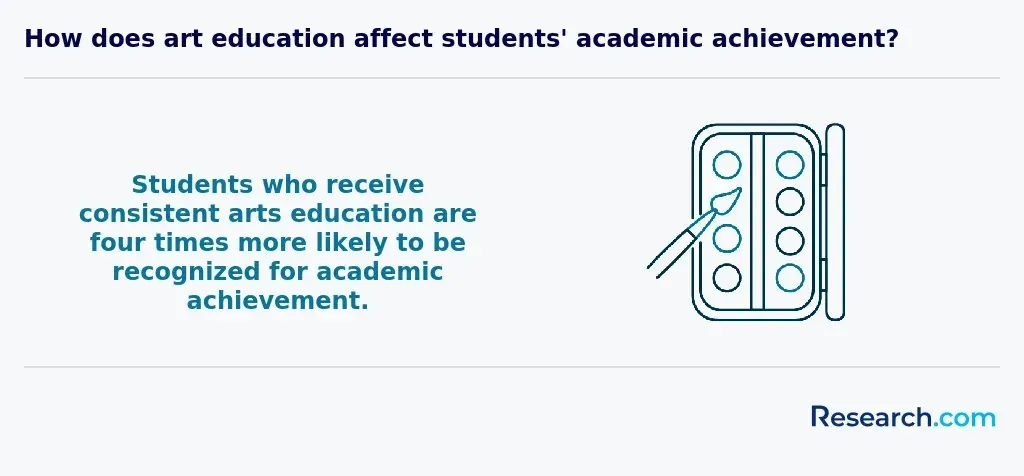
Art teachers in West Virginia are expected to do more than provide creative activities. They must teach visual literacy, technical skills, cultural context, artistic decision-making, critique, and reflection in ways that align with state expectations.
The original article identifies the West Virginia College- and Career-Readiness Standards for the Arts as the framework guiding visual arts instruction. These standards emphasize artistic creation, interpretation, analysis, and connections across disciplines.
What art teachers are expected to teach
- Technical skill development: Students need structured opportunities to work with drawing, painting, sculpture, design, and other visual media.
- Visual literacy: Learners should be able to interpret images, symbols, media, and design choices in a visually saturated world.
- Historical and cultural understanding: Art instruction should connect student work to artists, movements, communities, and cultural traditions.
- Reflection and critique: Students should learn to discuss their own work and the work of others using respectful, evidence-based language.
- Interdisciplinary learning: Art can connect to civic literacy, history, science, technology, literature, and local community issues.
- Assessment of process and product: Effective evaluation considers planning, effort, experimentation, technique, concept, and revision.
A sequential curriculum matters because students need repeated practice and increasing challenge. A strong program does not treat art as isolated projects; it builds skills and creative thinking over time.
Job market and salary expectations for art teachers in West Virginia
The original article describes the West Virginia art teacher job market as a mix of opportunity and constraint. It cites an average salary of approximately $50,000 per year, with reported salaries around $55,000 in urban areas such as Charleston or Morgantown and closer to $45,000 in more rural regions. Actual pay depends on district salary schedules, years of experience, degree level, contract terms, and additional duties.
The article also reports that West Virginia experienced a 15% increase in demand for art teachers from 2022 to 2023 and that 78% of West Virginia school districts were seeking to expand their arts curriculum. Candidates should treat these figures as context and still verify current openings through district job boards, WVDE resources, and direct school contacts.
Factors that can affect your earning potential
| Factor | How it may affect pay or job options |
| District location | Urban, suburban, and rural districts may have different salary schedules and staffing needs. |
| Years of experience | Teacher pay often increases with experience according to district salary structures. |
| Graduate education | A master’s degree may support advancement or movement on salary scales where district policy allows. |
| Additional responsibilities | Some districts may provide stipends for extracurricular art clubs, exhibitions, or community events. |
| Program funding | Budget limits can affect materials, class offerings, and job stability in some schools. |
| Digital art expertise | Skills in digital media, design software, online instruction, and portfolio platforms may strengthen applications. |
Benefits may include health insurance, retirement plans, and paid leave, but candidates should review each district’s current contract and benefits information. Do not rely on statewide averages alone when making financial decisions.
A West Virginia teacher quoted in the original article described graduating from a local program at West Virginia University and finding that, although salary expectations required adjustment, community support played a major role in staying motivated. That experience reflects a common trade-off in education careers: compensation matters, but school culture, mentoring, autonomy, and student impact also affect career satisfaction.
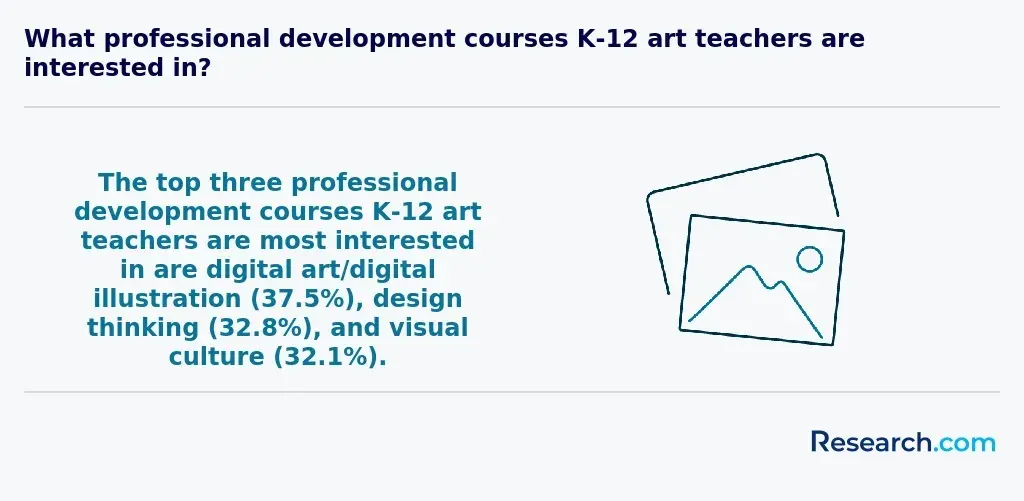
Professional development and continuing education for art teachers
Continuing education helps art teachers maintain certification, stay current with curriculum standards, and keep lessons relevant as materials, technology, and student needs change. It also helps teachers avoid professional isolation, which can be especially important in small or rural schools where there may be only one art educator in the building.
- WVDE professional learning: The West Virginia Department of Education offers training opportunities, including a Teacher Academy described in the original article as combining in-person work with online coursework.
- WV Learns: Online learning options can give teachers more flexibility when they need professional development around a full teaching schedule.
- Professional organizations: The West Virginia Art Education Association can help educators find training, conferences, networking, and mentorship.
- Specialized art education providers: Organizations such as The Art of Education University offer professional learning focused on art classrooms.
- Technology-focused training: Digital art, media literacy, online critique tools, virtual exhibitions, and augmented or virtual reality can expand how students create and respond to art.
Teachers interested in leadership, policy, or system-level roles can also explore broader careers in education policy to understand how classroom experience may lead to work beyond daily instruction.
Classroom management and teaching methods for art teachers
Art classrooms require a management approach that supports creativity without allowing the room to become chaotic. Students need freedom to experiment, but they also need routines for materials, cleanup, safety, movement, and critique.
Practical classroom strategies
- Teach routines explicitly. Demonstrate how students collect supplies, use tools safely, clean workspaces, store projects, and transition between activities.
- Use clear project criteria. Open-ended art assignments work best when students understand the objective, required techniques, timeline, and assessment rubric.
- Connect projects to place. Local history, community issues, Appalachian culture, school events, and public art can make assignments more meaningful.
- Balance demonstration and exploration. Students need technical modeling, but they also need time to test ideas and solve visual problems independently.
- Differentiate materials and expectations. Offer multiple ways to participate so students with different skill levels, disabilities, or language needs can engage successfully.
- Use critique as instruction. Teach students how to give feedback based on evidence, intention, technique, and revision rather than personal taste alone.
- Include digital tools where appropriate. Digital drawing, photography, design, animation, and online portfolios can prepare students for modern creative pathways.
- Create authentic audiences. Exhibitions, hallway displays, school websites, community showcases, and performances can increase motivation.
Teachers who enjoy mentoring older students or connecting visual arts to college and career preparation may also want to examine higher education professional careers as a long-term option.
Other teaching opportunities for aspiring art educators in West Virginia
If you are still deciding whether art education is the right fit, compare it with other teaching pathways in the state. Research.com’s guide on how to become a teacher in West Virginia explains the broader teacher certification process and can help you understand how visual arts fits into the larger education workforce.
This comparison is useful for students who are considering dual certification, general education, private school roles, substitute teaching, or future leadership positions.
Career advancement and specialization options
Art teaching can lead to more than one classroom role. Over time, educators may specialize, move into leadership, support curriculum design, or work with arts organizations and community programs.
| Advancement path | When it makes sense | Preparation that may help |
| Digital media or design specialization | You want to teach animation, digital art, photography, design, or media production. | Software training, portfolio development, and technology-based lesson design. |
| Art history or museum education | You enjoy connecting students to artists, movements, collections, and cultural interpretation. | Graduate coursework, museum partnerships, and experience designing interpretive materials. |
| Therapeutic or community-based art practice | You want to use art to support expression, wellness, or community engagement. | Additional training and careful attention to the distinction between art education and licensed therapy. |
| Department chair or curriculum coordinator | You want to influence curriculum, assessment, budgeting, or teacher collaboration. | Strong classroom results, leadership experience, and possibly graduate study. |
| Special education or gifted education endorsement | You want deeper skills for serving diverse learners or advanced art students. | Additional certification coursework and collaboration with specialists. |
The original article describes a West Virginia University graduate who began as a high school art teacher in Morgantown, focused on digital art, led workshops, and later became a curriculum coordinator. That path shows how specialization can create leadership opportunities when classroom expertise is paired with initiative.
Resources and support for new West Virginia art teachers
New art teachers need more than lesson ideas. They need mentors, materials, standards guidance, classroom management advice, professional development, and a network of educators who understand the unique demands of the art room.
- West Virginia Department of Education: WVDE resources can help teachers understand standards, professional learning, certification requirements, and instructional expectations.
- West Virginia Art Education Association: The West Virginia Art Education Association (WVAEA) provides a professional network for art educators, including opportunities for mentorship, collaboration, and training.
- Universities: West Virginia University and Marshall University are noted in the original article as institutions that may host workshops or seminars connected to art education practice.
- Online resource communities: Art teachers can use social media groups and online forums to exchange project ideas, classroom solutions, and professional advice.
- West Virginia Arts Commission: The article identifies the commission as a source of grants and support for art projects in schools.
How library partnerships can strengthen art education in West Virginia
School and public librarians can help art teachers expand projects through research instruction, archives, digital collections, local history, media literacy, and public exhibitions. A visual arts unit becomes stronger when students learn to investigate sources, interpret images, and connect creative work to community stories.
Potential collaborations include student-curated displays, oral history art projects, digital archives, zines, book arts, research-based murals, and exhibitions based on local culture. Art educators who want to understand how library professionals manage resources and teach information literacy can review Research.com’s guide on how to become a librarian in West Virginia.
Why networking and community engagement matter
Networking is especially valuable for art teachers because many schools have small arts departments. A professional network can provide lesson ideas, grant leads, exhibition opportunities, Praxis advice, job openings, and emotional support during the first years of teaching.
Community engagement also helps students see art as public, relevant, and connected to real life. Teachers can partner with galleries, libraries, local artists, nonprofits, civic groups, and families to create student showcases, murals, workshops, and interdisciplinary events.
These relationships may lead to donated materials, community recognition, mentorship, and stronger support for keeping arts programs visible. Educators still comparing grade-level pathways can also review how to become an elementary school teacher in West Virginia for broader career planning.
Long-term career sustainability and work-life balance
Art teachers often manage large numbers of students, multiple grade levels, supply inventories, displays, cleanup routines, extracurricular events, and curriculum expectations. Without boundaries, the work can expand far beyond contract hours.
Ways to protect long-term sustainability
- Set realistic project timelines that include setup, cleanup, critique, and grading time.
- Create reusable rubrics, supply checklists, demonstration slides, and safety routines.
- Limit the number of major exhibitions or extracurricular commitments you take on at once.
- Use peer networks to share lesson structures and avoid planning everything from scratch.
- Advocate for adequate planning time, storage, materials, and class-size support.
- Track your professional goals so you can decide whether to specialize, pursue leadership, or change teaching contexts.
Some educators also explore other subject areas to expand employment options or reduce career strain. For example, comparing pathways such as how to be a middle school math teacher in West Virginia can help teachers understand how certification choices affect mobility.
Supporting students with special needs in the art classroom
Art can be highly accessible, but accessibility does not happen automatically. Teachers need to plan for motor needs, sensory sensitivities, communication differences, behavioral supports, and varied levels of independence.
- Collaborate with special education teachers before major projects begin.
- Offer adaptive tools, alternative materials, modified timelines, and visual step-by-step directions.
- Provide choices that preserve creative agency while reducing unnecessary barriers.
- Use assistive technology when it helps students plan, create, communicate, or present work.
- Design assessment rubrics that value process, growth, problem-solving, and expression.
Art teachers who want deeper preparation in inclusive instruction may benefit from understanding the pathway to special education teacher certification in West Virginia.
Using interdisciplinary arts collaboration to deepen creativity
Art education becomes more powerful when it connects with music, history, literature, science, technology, theater, and community studies. Interdisciplinary work helps students see creativity as a way of thinking rather than a separate school subject.
For example, art and music teachers can develop projects that combine visual composition, rhythm, performance, poster design, album art, set design, or cultural study. Educators interested in this type of collaboration can explore how to become a music teacher in West Virginia to better understand another arts teaching pathway.
How policy and funding shape art education in West Virginia
State and federal policy decisions influence staffing, supplies, technology access, professional development, class offerings, and program stability. Art teachers do not need to become policy experts, but they do need to understand how budgets affect their classrooms.
Teachers can strengthen advocacy by documenting student work, aligning projects to standards, inviting community members to exhibitions, sharing outcomes with administrators, and applying for grants. Educators who want another example of how content-area teaching connects with policy and curriculum can review how to become a history teacher in West Virginia.
How to assess and nurture student creativity
Assessing art is not the same as grading whether a project looks “good.” Strong assessment examines the creative process, use of techniques, risk-taking, revision, reflection, and connection between idea and execution.
Better ways to evaluate creative growth
- Use rubrics with clear criteria. Include concept development, craftsmanship, effort, experimentation, reflection, and use of required techniques.
- Require artist statements. Students should explain choices, challenges, sources of inspiration, and revisions.
- Use portfolio assessment. A body of work shows growth better than one isolated project.
- Build in peer critique. Structured critique teaches students to observe, explain, and revise.
- Reward problem-solving. Creativity often appears in how students respond to limits, mistakes, and new materials.
Teachers working with younger students can adapt assessment language from early childhood and elementary practices. Research.com’s guide on how to become a kindergarten teacher in West Virginia may offer useful comparisons for developmental expectations.
What graduates say about teaching art in West Virginia
- Teaching visual art in West Virginia has changed how I understand community. Students use art to tell stories about their families, towns, and identities, and local organizations often step in to support creative projects. Emily
- I value the way art can connect with other subjects. When students use visual work to analyze history, science, or literature, they become stronger thinkers as well as stronger artists. Jordan
- The professional community has been one of the best parts of the job. Other art educators share ideas, materials, and encouragement, which makes the first years feel much less isolating. Samantha
How dual certification can expand opportunities
Dual certification can make an art teacher more flexible, especially in smaller districts where schools may need educators who can teach more than one subject. Adding a complementary area can also support interdisciplinary projects, scheduling flexibility, and future leadership roles.
For example, pairing visual arts with English can support graphic novels, visual rhetoric, book arts, illustration, media analysis, and project-based writing. Educators considering that route can review how to become an english teacher in West Virginia.
How online education programs can support art teacher growth
Online coursework can help art teachers add skills without leaving their current role. The best options are those that clearly connect to classroom practice, licensure renewal, digital pedagogy, assessment, inclusive teaching, or leadership goals.
Research.com’s overview of quality online education programs can help teachers compare flexible education options for professional development and career advancement.
Alternative career pathways for art teachers
Art teachers develop skills that transfer beyond the K-12 classroom: curriculum design, public speaking, critique facilitation, youth development, project planning, visual communication, and community programming.
| Alternative path | Why art teachers may fit |
| Museum or gallery education | Teachers can design tours, workshops, school programs, and interpretive materials. |
| Curriculum development | Experienced educators can create lesson resources, assessments, and arts-integrated units. |
| Community arts programming | Art teachers understand how to engage youth, families, and local organizations. |
| Educational administration | Teachers with leadership experience may move into department, school, or district roles. |
| Freelance instruction or consulting | Artists with teaching experience can lead workshops, develop content, or advise programs. |
| Digital content creation | Teachers can build tutorials, curriculum products, online courses, or creative learning materials. |
For a wider view of creative occupations, explore Research.com’s guide to career pathways related to arts.
Funding and grant opportunities for art classroom innovation
Art teachers often need outside support for materials, technology, exhibitions, guest artists, field trips, and community projects. Funding can come from school budgets, parent organizations, local businesses, arts councils, state programs, nonprofit grants, and community partnerships.
Practical grant tips
- Align the proposal with curriculum standards and student learning outcomes.
- Explain exactly what materials or tools are needed and how students will use them.
- Include a realistic timeline, budget, and plan for documenting results.
- Show community benefit, such as exhibitions, public displays, or family engagement.
- Ask experienced teachers or administrators to review the proposal before submission.
- Track reporting requirements so future funding opportunities are not jeopardized.
Teachers comparing school settings and funding flexibility may also find it useful to review how to become a private school teacher in West Virginia.
Common mistakes to avoid
| Mistake | Why it creates problems | Better approach |
| Choosing a program without checking certification alignment | A degree may not automatically qualify you for West Virginia licensure. | Confirm that the program leads to the specific art teaching credential you want. |
| Waiting too long to plan for Praxis exams | Testing delays can postpone student teaching, graduation, or certification. | Ask your advisor for a testing timeline early in your program. |
| Building only an artist portfolio | Hiring committees also want proof that you can teach. | Include lesson plans, assessment samples, student teaching reflections, and classroom photos where permitted. |
| Ignoring rural hiring realities | Openings, resources, class sizes, and community expectations may differ by district. | Research individual districts and speak with local educators before applying. |
| Assuming online programs meet state requirements | Not every online education program satisfies certification rules. | Verify accreditation, clinical placement rules, and WVDE eligibility before enrolling. |
| Focusing only on salary | Benefits, cost of living, workload, commute, mentoring, and school culture also affect career value. | Compare the full employment package and working conditions. |
| Underestimating classroom management | Art rooms involve tools, movement, supplies, and open-ended work. | Practice routines for setup, cleanup, safety, critique, and transitions. |
Key Insights
- The most direct path to becoming an art teacher in West Virginia is an approved art education degree or teacher preparation program, followed by Praxis exams, student teaching, background checks, and state certification.
- A studio art background is valuable, but public school teaching usually requires formal teacher preparation and licensure.
- The article cites an average art teacher salary of approximately $50,000 annually, with possible variation around $55,000 in urban areas and $45,000 in more rural regions.
- The original article reports a 15% increase in demand for art teachers from 2022 to 2023 and says 78% of West Virginia school districts were seeking to expand arts curriculum; candidates should verify current openings through district and state sources.
- Student teaching, community arts work, workshops, and summer programs can strengthen your portfolio and help you enter interviews with real examples.
- Digital art, inclusive instruction, grant writing, and interdisciplinary collaboration can make new teachers more competitive and more effective.
- Before choosing a program, confirm accreditation, certification alignment, Praxis requirements, student teaching placement options, and renewal expectations.
- Long-term success depends on more than certification. Strong classroom routines, professional networks, community partnerships, and sustainable workload habits are essential for staying in the field.
Key Findings
- The West Virginia Department of Education reported a 15% increase in the demand for art teachers from 2022 to 2023, reflecting increased attention to the role of arts education in creativity and critical thinking.
- As of 2023, the average salary for an art teacher in West Virginia is approximately $50,000 annually, with possible growth as districts give more attention to arts programs.
- Recent surveys show that 78% of West Virginia school districts are actively seeking to expand their arts curriculum, which may create opportunities for candidates in rural and underserved areas.
- The state has introduced initiatives connected to technology in art education, including digital art and design courses, which may increase demand for teachers comfortable with both traditional and digital media.
- A 2023 study cited in the original article reported that students who participate in arts education score, on average, 10% higher on standardized tests than their peers.
Related Articles for Nearby States
- 2027 How to Become an Art Teacher in Virginia: Requirements & Certification
- 2027 How to Become an Art Teacher in Ohio: Requirements & Certification
- 2027 How to Become an Art Teacher in Kentucky: Requirements & Certification
- 2027 How to Become an Art Teacher in Pennsylvania: Requirements & Certification
- 2027 How to Become an Art Teacher in Maryland: Requirements & Certification
- 2027 How to Become an Art Teacher in North Carolina: Requirements & Certification
- 2027 How to Become an Art Teacher in Tennessee: Requirements & Certification
- 2027 How to Become an Art Teacher in Indiana: Requirements & Certification
- 2027 How to Become an Art Teacher in South Carolina: Requirements & Certification
- 2027 How to Become an Art Teacher in Georgia: Requirements & Certification
References:
- artteachershelpal.blogspot.com (2020). Managing the Art Classroom.
- marshall.edu (n.d.). College of Arts and Media – School of Art & Design.
- West Virginia University (n.d.). Art Education.
- West Virginia Department of Education (2022). Teacher Professional Learning.
- 240tutoring.com (n.d.). Certification exam preparation and classroom management strategies.
Other Things You Should Know About Becoming an Art Teacher in West Virginia
West Virginia’s alternative route is overseen by the West Virginia Department of Education and allows candidates with a bachelor’s degree to begin teaching while completing educator preparation. Candidates must still meet content, pedagogy, and testing requirements, then apply for certification through the state licensure office once program conditions are finished.
To become an art teacher in West Virginia in 2027, candidates must typically hold a bachelor's degree in Art Education or a related field from an accredited institution. This includes completing a state-approved teacher preparation program and obtaining the necessary teaching licensure.