
2027 How to Become a Special Education Teacher in Kentucky: Requirements & Certification

Co-Founder and Chief Data Scientist
Becoming a special education teacher in Kentucky is a licensing decision, a training decision, and a career-fit decision. The role is essential because students with disabilities need legally required services, individualized instruction, behavioral and academic support, and strong advocacy inside schools. Kentucky also has rural districts where access to specialized educators can be limited, making qualified special education teachers especially important.
This guide explains how to become a special education teacher in Kentucky, including the degree path, certification steps, expected timeline, salary, demand, professional development, legal responsibilities, funding options, career advancement, and burnout prevention. It is designed for first-time college students, career changers, licensed teachers adding special education credentials, and out-of-state educators considering Kentucky licensure.
Quick Answer: How do you become a special education teacher in Kentucky?
To become a special education teacher in Kentucky, you generally need to complete a bachelor’s or master’s degree in special education or a closely related approved teacher preparation program, finish supervised student teaching, pass required Praxis assessments, complete a background check and fingerprinting, and apply for Kentucky teacher certification. Licensed teachers must renew their credential every five years and typically complete professional development to stay current with instructional, legal, and behavioral support requirements.
Key Things You Should Know About Becoming a Special Education Teacher in Kentucky
- In 2020, Kentucky had 260 special education teachers.
- By 2030, this number of Kentucky special education teachers is expected to increase to 280.
- Approximately 20 special education teaching positions are projected to open each year in Kentucky through 2030.
- The average annual salary for special education teachers in Kentucky is $62,640.
- Tuition for a special education degree in Kentucky averages $11,107 per year at public four-year colleges, while private institutions typically cost about $27,553 annually.
- Kentucky’s need for special education teachers is tied to student service demand, with 17% of students depending on these services.
- Education requirements for special education teachers in Kentucky
- How long the Kentucky special education teacher pathway takes
- Kentucky licensing and certification requirements
- Job demand for special education teachers in Kentucky
- Special education teacher salary in Kentucky
- Professional development options for Kentucky special educators
- Advanced roles for experienced special education teachers
- Common challenges in Kentucky special education classrooms
- Technology trends in Kentucky special education
- Additional credentials that can strengthen your career
- Affordable teaching credential options in Kentucky
- How to get special education certification in Kentucky
- Kentucky special education laws and teacher responsibilities
- Scholarships and grants for aspiring special education teachers
- Family and community collaboration in special education
- Mentorship and professional support for career growth
- BCBA certification and behavior intervention skills
- Career transitions for Kentucky special education teachers
- Alternative careers for special education teachers
- Dual certification in special education and substance abuse counseling
- School psychology as a next step for special education professionals
- Burnout prevention and work-life balance for special education teachersKey insights
What are the educational requirements to be a special education teacher in Kentucky?
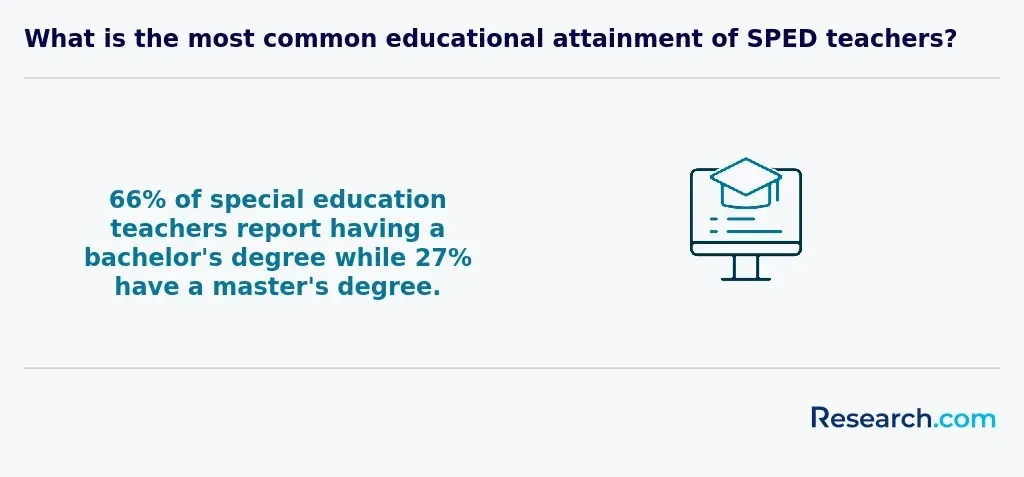
Kentucky special education teachers need formal teacher preparation, supervised classroom experience, and academic training focused on students with disabilities. The most direct route is an approved bachelor’s degree program in special education. Some candidates enter through a master’s program, especially if they already hold a bachelor’s degree or a teaching license in another field.
Programs at institutions such as the University of Kentucky and Western Kentucky University can prepare candidates for Kentucky certification, but applicants should confirm that any program they choose is approved for the specific special education endorsement, grade band, and licensure goal they need.
| Requirement | What it means for Kentucky candidates | Why it matters |
| Bachelor’s or master’s degree | You need a degree in special education or a closely related approved teacher preparation field. | Kentucky certification depends on completing the correct academic and educator preparation pathway. |
| Approved teacher preparation | Your program should include coursework in assessment, IEP development, disability categories, inclusive instruction, classroom management, and legal responsibilities. | Not every education degree automatically qualifies you for special education certification. |
| Student teaching or supervised fieldwork | Candidates complete classroom-based practice under qualified supervision, usually in special education settings. | Fieldwork helps you learn how to adapt lessons, collect data, manage behavior supports, and collaborate with families and teams. |
| GPA expectations | Many programs expect candidates to maintain a cumulative GPA of around 2.75 or higher. | Admission, progression, and student teaching eligibility may depend on meeting program standards. |
| Dual preparation options | Some students choose programs that combine general education and special education preparation. | Dual preparation can make you more flexible for inclusive classrooms and broader school staffing needs. |
If you are comparing degrees in education, focus less on the degree title alone and more on whether the program leads to the Kentucky certification area you want. A general education degree, a child development degree, or a psychology degree may be useful, but it may not satisfy licensure requirements unless it is tied to an approved teacher preparation route.
For licensed teachers who want to move into special education, additional endorsement coursework or a graduate credential may be more efficient than starting over with another bachelor’s degree. Before enrolling, ask the institution to explain exactly what credential you will be eligible to pursue after completion.
How long does it take to become a special education teacher in Kentucky?
The typical timeline to become a special education teacher in Kentucky is about five to seven years when starting from the beginning of college. The total length depends on whether you pursue a bachelor’s degree only, add a teacher preparation program after a different major, complete a master’s degree, or need extra time for testing and certification paperwork.
| Stage | Typical time | What happens during this step |
| Bachelor’s degree | Around four years | You complete general education, education foundations, special education coursework, and early field experiences. |
| Teacher preparation and student teaching | Often about one year, depending on the program structure | You complete supervised classroom practice and demonstrate readiness to teach students with disabilities. |
| Certification exams | A few months of preparation may be needed | You study for and pass the required Praxis assessments for Kentucky licensure. |
| Application, background check, and credential review | Varies by candidate | You submit required documentation and complete state certification steps. |
| Optional master’s degree | An additional one to two years | You deepen your expertise and may prepare for leadership, specialist, or advanced instructional roles. |
Career changers may move faster if they already have transferable credits or a bachelor’s degree, but they still need approved educator preparation and field experience. Licensed teachers adding special education may have the shortest route, depending on prior coursework, endorsement rules, and program requirements.
A practical way to estimate your personal timeline is to ask each program three questions: Which credits will transfer? When can I begin fieldwork or student teaching? What tests and certification steps must I complete before I can be hired?
What are the licensing requirements for special education teachers in Kentucky?
Kentucky requires special education teachers in public schools to hold an appropriate teaching license. The license verifies that you completed the required education, field experience, exams, and background screening for the role you will perform.
- Praxis assessments: Kentucky uses Praxis exams to evaluate teacher knowledge and readiness. Special education candidates should verify the exact tests required for their certification area before registering.
- Background check and fingerprinting: Candidates must complete safety screening before working with students. This is a standard step for educators and school employees.
- Credential verification: Your transcripts, degree, program completion, and educator preparation documentation must show that you meet Kentucky requirements.
- License renewal: Kentucky teaching credentials are not permanent without renewal. Initial licenses must be renewed every five years, typically with professional development or other state-approved requirements.
- Out-of-state reciprocity: Teachers licensed in another state may be able to use reciprocity to pursue Kentucky licensure, but they should still expect a credential review and possible additional state requirements.
Do not assume that an online degree, out-of-state license, private school teaching experience, or general education certification will automatically qualify you for a Kentucky special education teaching position. Always confirm requirements with the certifying authority or the university certification office before paying tuition or testing fees.
This NCES chart shows special education students by ethnicity in the United States.
What is the demand for special education teachers in Kentucky?
Kentucky’s projected demand for special education teachers is modest but positive. Employment is expected to grow by 8% from 2020 to 2030, increasing from 260 special education teachers in 2020 to 280 by 2030. Approximately 20 job openings are projected each year through 2030, including both growth and replacement needs.
Student service needs also support continued demand. In the 2022-23 school year, 15% of public school students in Kentucky required specialized services. Rural districts may face added staffing pressure because specialized services can be harder to provide when schools have smaller teams, fewer nearby providers, and longer travel distances for support professionals.
| Demand factor | What it means for job seekers |
| Projected employment growth of 8% from 2020 to 2030 | Demand is expected to rise, but openings may still be competitive in preferred districts. |
| About 20 projected annual openings through 2030 | Candidates should monitor district postings early and be flexible about location. |
| Rural service needs | Teachers willing to work outside major metro areas may find meaningful opportunities. |
| IEP and compliance requirements | Schools need teachers who can provide instruction and documentation aligned with legal obligations. |
Special education can be a strong fit if you want a classroom role that combines instruction, advocacy, documentation, collaboration, and problem-solving. It may be less suitable if you want a job with minimal paperwork, limited family communication, or a predictable day-to-day routine.
How much do special education teachers in Kentucky earn?
The average annual salary for special education teachers in Kentucky is $62,640. Actual pay can vary by district, years of experience, education level, local salary schedule, additional duties, and whether the role is in a public school, private school, agency, or specialized program.
| Experience level | Salary information provided | How to interpret it |
| Entry-level, 0-2 years | $48,750 or less | New teachers may start below the statewide average, especially before adding experience or advanced credentials. |
| Average across Kentucky | $62,640 | This is a useful midpoint, not a guarantee for every district or role. |
| Veteran, 10+ years | Can go up to $83,490 or more | Higher pay is more likely with experience, advanced education, and placement on a district salary schedule. |
Urban districts such as Louisville may offer different compensation than rural districts because district budgets, staffing needs, cost of living, and salary schedules vary. Special education teachers may also qualify for stipends, extended-year assignments, leadership duties, or hard-to-staff incentives depending on employer policy, but candidates should verify those details directly with the district.
When evaluating pay, look beyond the base salary. Ask about planning time, caseload expectations, paraprofessional support, health benefits, retirement contributions, tuition reimbursement, mentoring, and whether extra compensation is available for extended school year services or additional responsibilities.
This Salary.com chart highlights estimated salaries of SPED teachers in 2024.
What professional development opportunities are available for special education teachers in Kentucky?
Professional development is not optional in a field that changes through legal guidance, instructional research, assessment practices, assistive technology, and behavioral intervention methods. Kentucky special education teachers should use professional learning to improve classroom practice and maintain licensure readiness.
- CEC 2025 Convention & Expo: This national event in Baltimore, Maryland, is an example of a large conference where special educators can learn about research-based practices, policy updates, assistive technology, and instructional strategies.
- Kentucky Department of Education workshops: State-sponsored training can help teachers understand Kentucky expectations, evidence-based instruction, IEP implementation, compliance, and support for students with exceptionalities.
- CEC’s Learning Library: Online webinars and courses can be useful for teachers who need flexible professional development while balancing classroom responsibilities.
- District-based training: Local districts may provide required sessions on IEP systems, behavior plans, documentation, co-teaching, trauma-informed practices, or inclusive instruction.
- Cross-endorsement learning: Teachers who want broader instructional flexibility may explore related pathways, including how to become an English teacher in Kentucky or how to become an elementary school teacher in Kentucky.
Choose professional development that solves an actual classroom problem. For example, if your biggest challenge is disruptive behavior, prioritize functional behavior assessment and positive behavior supports. If your students need communication support, focus on assistive technology, collaboration with speech-language professionals, and accessible instructional materials.
Are there advanced roles for experienced special education teachers in Kentucky?
Experienced special education teachers in Kentucky can advance without leaving the field. Some remain in the classroom in more specialized assignments, while others move into administration, behavior analysis, consulting, coordination, teacher training, or policy work.
| Advanced role | Best fit for | Typical focus |
| Specialized special education teacher | Teachers who want deeper classroom expertise | Working with students with more intensive academic, behavioral, communication, or functional needs. |
| Director of Special Education | Educators interested in district leadership | Oversight of special education programs, compliance, staffing, services, and district procedures. |
| Board Certified Behavior Analyst (BCBA) | Teachers interested in behavior intervention | Assessment and design of behavior support plans using behavior analytic principles. |
| Education Coordinator | Teachers who like program development | Planning, implementing, and improving special education initiatives in schools or nonprofits. |
| Higher education instructor or trainer | Teachers who want to prepare future educators | Teaching, supervising, or mentoring education candidates. Some educators explore broader career paths in higher education. |
The right advancement path depends on what you want to do more of. If you want to work directly with students, specialize. If you want to improve systems, consider leadership or coordination. If behavior intervention is your strongest interest, BCBA training may be worth exploring. If you enjoy research, mentoring, and educator preparation, higher education may be a long-term option.
What are the biggest challenges faced by special education teachers in Kentucky?
Special education teaching can be deeply meaningful, but candidates should understand the workload before entering the profession. The role often requires instruction, legal documentation, data tracking, family communication, collaboration with specialists, classroom management, and advocacy—sometimes all in the same day.
- Heavy caseloads: Teachers may support students with very different IEP goals, disability-related needs, service minutes, and documentation requirements.
- Limited resources: Some classrooms may lack enough materials, planning support, paraprofessional coverage, or specialized tools.
- Emotional strain: Supporting students and families through complex educational and developmental needs can lead to compassion fatigue.
- Insufficient administrative support: Teachers may struggle when requests for training, staffing, or behavior support are delayed or denied.
- Preparation gaps: New teachers may find that real classrooms are more complex than coursework, especially when managing IEP compliance and challenging behaviors.
- Retention pressure: Kentucky teachers now earn $9,704 less annually than they did 15 years ago, adjusted for inflation, contributing to stress in an already demanding field.
| Common mistake | Better approach |
| Choosing a program only because it is convenient or inexpensive | Confirm that it leads to the correct Kentucky certification and includes strong field experience. |
| Assuming passion alone is enough | Build skills in data collection, IEP writing, behavior support, collaboration, and legal compliance. |
| Ignoring caseload questions during interviews | Ask about student numbers, disability categories, planning time, paraprofessional support, and mentoring. |
| Waiting until burnout becomes severe | Create boundaries early, use peer support, document workload concerns, and seek help from mentors or administrators. |
| Relying only on rankings or reputation | Compare licensure outcomes, student teaching placements, faculty support, cost, and certification alignment. |
The best preparation is not only academic. Candidates should learn how to ask for support, collaborate with general education teachers, communicate clearly with families, and use documentation systems efficiently.
How is technology integration enhancing special education in Kentucky?
Technology is changing how Kentucky special education teachers individualize instruction and monitor progress. Assistive technology, adaptive learning platforms, digital curriculum tools, speech and communication supports, and data systems can help teachers make lessons more accessible and track IEP goals more consistently.
Technology should support—not replace—teacher judgment. Before adopting a tool, teachers should ask whether it aligns with the student’s IEP, whether the student can use it independently or with reasonable support, whether families need training, and how progress data will be reviewed. District training is also important because technology used incorrectly can create access gaps or increase teacher workload.
Can additional academic credentials enhance my special education career in Kentucky?
Additional academic credentials can help special education teachers broaden their expertise, qualify for related roles, or strengthen classroom practice. The best credential depends on your goal. A teacher who wants to improve resource access and instructional materials might benefit from a degree in library science, while another teacher may prefer behavior analysis, counseling, school psychology, administration, or curriculum leadership.
Before enrolling in another degree, compare cost, time, licensure value, employer recognition, and whether the credential leads to a specific role. Extra education is most useful when it has a clear career purpose.
Are there affordable teaching credential options available in Kentucky?
Cost matters because teacher preparation can require tuition, exam fees, transportation for fieldwork, and unpaid or reduced-income student teaching time. Tuition for a special education degree in Kentucky averages $11,107 per year at public four-year colleges, while private institutions typically cost about $27,553 annually.
Aspiring teachers should compare teaching credential programs in Kentucky by total program cost, not just advertised tuition. Include fees, required materials, testing, background checks, commuting, technology, and the number of credits required after transfer evaluation.
| Cost question to ask | Why it matters |
| How many credits will I actually need to complete? | Transfer policies can significantly change total cost and completion time. |
| Does the program lead to Kentucky special education certification? | A low-cost program is not a bargain if it does not meet licensure requirements. |
| Are student teaching placements local? | Travel and schedule constraints can add hidden costs. |
| Are scholarships, grants, or loan forgiveness options available? | Funding can reduce out-of-pocket expense, especially for high-need teaching fields. |
| Can I study part time while working? | Part-time enrollment may reduce short-term financial pressure but extend the timeline. |
How can I obtain special education certification in Kentucky?
The certification process begins with choosing an approved preparation route. Candidates complete special education coursework, supervised field experience, required assessments such as Praxis exams, and state documentation steps. A detailed overview of general certification expectations is available in this guide to how to get special education certification.
- Choose a Kentucky-approved special education teacher preparation program.
- Confirm the grade level and endorsement area connected to the program.
- Complete required coursework and field experiences.
- Finish student teaching or supervised clinical practice.
- Pass the required Praxis assessments.
- Complete fingerprinting and background check requirements.
- Submit transcripts, program verification, test scores, and other required certification materials.
- Track renewal deadlines and professional development obligations after licensure.
If you are already licensed in another teaching field, ask whether you need a full degree, endorsement-only coursework, testing, or a graduate-level certification route. The fastest path is not the same for every candidate.
How do Kentucky’s special education laws impact teachers?
Special education teachers in Kentucky work within federal and state legal frameworks. These laws affect how teachers identify student needs, implement services, document progress, participate in IEP meetings, address discipline, and protect student rights.
- Individuals with Disabilities Education Act: IDEA requires eligible students with disabilities to receive a free appropriate public education. For teachers, this means instruction and services must align with the student’s IEP.
- Kentucky Administrative Regulations: Kentucky regulations provide state-level rules for special education programs, procedures, services, and implementation expectations.
- IEP responsibilities: Teachers must understand accommodations, modifications, progress monitoring, service minutes, measurable goals, and legally required documentation.
- Discipline protections: House Bill 538 emphasizes protections for students with disabilities during disciplinary actions, including careful procedures around suspensions and expulsions.
- Technical assistance: The Kentucky Department of Education provides support to help educators understand and apply special education requirements.
Legal knowledge is not just an administrative concern. It directly affects daily teaching. A well-trained special education teacher knows how to align lessons with IEP goals, document services accurately, communicate with families, and advocate for appropriate support when a student’s needs change.
Are there scholarships and grants available for special education teachers in Kentucky?
Financial aid can make the special education pathway more realistic, especially for students preparing for high-need teaching roles. Kentucky candidates should review state, federal, institutional, and district-based aid before committing to loans.
- Kentucky Teacher Scholarship: This KHEAA scholarship supports students pursuing education degrees, including special education. It can provide up to $2,500 per year, and recipients must commit to teaching in Kentucky for at least two years after graduation.
- Special Education Teacher Incentive Program: Offered by the Kentucky Department of Education, this program supports educators who teach in high-need areas, including special education. Assistance may include grants and loan forgiveness options depending on program terms.
- Federal TEACH Grant: This federal program offers up to $4,000 per year for students who agree to teach in a high-need field, such as special education, for at least four years.
Read the service obligation carefully before accepting any grant tied to teaching commitments. Some grants can convert to loans if service requirements are not met. Students interested in the wider field can also review special education therapist jobs to understand related roles and long-term options.
How can collaboration with families and communities enhance special education outcomes in Kentucky?
Strong special education services depend on collaboration. Teachers need families, caregivers, related service providers, administrators, paraprofessionals, community agencies, and general education teachers to work from a shared plan. This is especially important when students need consistent communication, behavioral support, transition planning, or services that extend beyond the classroom.
Family collaboration works best when teachers communicate early, explain IEP goals in plain language, invite caregiver input, and avoid contacting families only when problems occur. Community partnerships can also strengthen early intervention and transition services. Educators who work with younger children may benefit from understanding preschool teacher requirements in Kentucky because early support can shape later special education outcomes.
Can mentorship and continuous professional support elevate my special education career in Kentucky?
Mentorship can make a major difference for new and experienced special education teachers. A good mentor can help with IEP documentation, parent meetings, behavior plans, lesson adaptation, co-teaching, legal compliance, and workload management. Professional learning communities can also reduce isolation by giving teachers a place to solve problems with colleagues who understand the role.
When comparing employers, ask whether new special education teachers receive a mentor, reduced caseload support, scheduled collaboration time, and training on district IEP systems. Support systems matter because special education teachers often leave not because they dislike students, but because the workload becomes unsustainable without help.
Can obtaining a BCBA certification enhance my special education strategies in Kentucky?
BCBA certification can strengthen a special education teacher’s ability to understand behavior, design evidence-based interventions, collect data, and collaborate on behavior support plans. It may be especially valuable for educators working with students who have intensive behavioral needs or for teachers who want to move into behavior-focused roles.
This path requires careful planning because BCBA preparation is a specialized credential route. Teachers who want to pursue it should review how to become a BCBA in Kentucky and compare requirements, supervised experience expectations, time commitment, and career value before enrolling.
What career transitions are available for special education teachers in Kentucky?
Special education teachers build transferable skills in assessment, individualized planning, legal documentation, behavior support, family communication, collaboration, and advocacy. Those skills can lead to roles inside and outside K-12 classrooms.
| Transition path | Why it may fit a special education teacher |
| Educational consultant | Uses expertise in IEPs, compliance, inclusion, and instructional support to advise schools or families. |
| Instructional coordinator | Applies curriculum and intervention knowledge to improve programs for diverse learners. |
| Private school teacher | May offer a different school environment and student population. Teachers can review how to become a private school teacher in Kentucky for related guidance. |
| Higher education or teacher preparation | Allows experienced educators to train future teachers or supervise field experiences. |
| Education policy or advocacy | Focuses on improving systems, funding, access, and outcomes for students with disabilities. |
Before leaving the classroom, clarify whether you want less paperwork, higher pay, more leadership, fewer direct student responsibilities, or a different kind of impact. The best transition depends on the problem you are trying to solve.
What alternative careers are available to special education teachers in Kentucky?
Special education teachers who want a related career can move toward roles that still serve children, families, or people with disabilities. Speech-language pathology is one option for educators interested in communication development; this guide explains how to become a speech language pathologist in Kentucky. Other possible directions include counseling, educational consulting, disability advocacy, case management, curriculum support, nonprofit program coordination, and training roles.
Some alternative careers require a new license or graduate degree. Before changing paths, compare the cost of retraining, supervised practice requirements, salary expectations, job availability, and whether your teaching experience will count toward admission or employment.
Can dual certification in special education and substance abuse counseling broaden my impact in Kentucky?
Dual preparation in special education and substance abuse counseling may appeal to educators who want to support students and families facing behavioral, emotional, or substance-related challenges. Counseling skills can help teachers understand risk factors, referral processes, family systems, and trauma-informed support.
This path is not necessary for every special education teacher, and counseling roles may require separate education, supervised experience, and licensure. If you are considering this direction, review how to become a substance abuse counselor in Kentucky and confirm how the credential would fit your intended role.
Can pursuing school psychology enhance my impact as a special education professional in Kentucky?
School psychology can be a strong next step for special education professionals who want to move from classroom instruction into assessment, consultation, mental health support, intervention planning, and multidisciplinary collaboration. This role can expand your influence by helping identify student needs and supporting schoolwide systems.
The transition requires specialized training and credentialing. Teachers interested in this route should review school psychologist requirements Kentucky and compare the time, cost, supervised practice, and job responsibilities with their current teaching path.
How can I manage burnout and enhance work-life balance as a special education teacher in Kentucky?
Burnout prevention should be part of your career plan from the start. Special education teachers often carry emotional labor, compliance deadlines, service coordination, and high-stakes communication. Waiting until stress becomes unmanageable makes recovery harder.
- Set documentation routines: Use consistent systems for progress notes, service logs, parent communication, and IEP deadlines.
- Protect planning time: Treat planning as essential work, not leftover time.
- Ask direct questions about caseloads: During interviews, ask how many students you will serve, what needs they have, and what support staff are assigned.
- Use mentors and peer teams: Do not try to solve every behavior, legal, or instructional challenge alone.
- Maintain professional boundaries: Families need communication, but teachers also need sustainable response times and clear expectations.
- Seek wellness and counseling support when needed: Educators interested in broader student support systems can also review school counselor requirements in Kentucky.
A sustainable special education career depends on both skill and support. The strongest teachers are not the ones who absorb every problem alone; they are the ones who build systems, collaborate well, and know when to escalate concerns.
Questions to ask before choosing a Kentucky special education teacher program
- Is this program approved for Kentucky special education teacher certification?
- Which grade levels and disability categories does the program prepare me to teach?
- What Praxis exams will I need, and when should I take them?
- How many hours of field experience and student teaching are required?
- Where are student teaching placements located?
- What is the total cost after tuition, fees, testing, travel, and materials?
- Are scholarships, grants, or TEACH Grant options available?
- Can I complete the program online, on campus, or in a hybrid format?
- Will online coursework meet Kentucky licensure requirements?
- What support is available for certification applications and job placement?
What Special Education Teachers in Kentucky Say About Their Careers
-
: "
"Teaching special education in Kentucky has given me a career with daily purpose. The progress is not always immediate, but when a student reaches a goal that once felt out of reach, the work feels deeply worthwhile." - Samantha
"
-
: "
"The job can be demanding, but it has shown me how much students can accomplish when they receive the right support, patience, and advocacy. The relationships with families and colleagues matter as much as the lesson plans." - Geraldine
"
-
: "
"Special education has changed the way I define success. Some breakthroughs are academic, some are behavioral, and some are about confidence. Each one matters." - Emily
"
Related Articles for Nearby States
- 2027 How to Become a Special Education Teacher in Indiana: Requirements & Certification
- 2027 How to Become a Special Education Teacher in Ohio: Requirements & Certification
- 2027 How to Become a Special Education Teacher in Tennessee: Requirements & Certification
- 2027 How to Become a Special Education Teacher in West Virginia: Requirements & Certification
- 2027 How to Become a Special Education Teacher in Virginia: Requirements & Certification
- 2027 How to Become a Special Education Teacher in Illinois: Requirements & Certification
- 2027 How to Become a Special Education Teacher in Missouri: Requirements & Certification
- 2027 How to Become a Special Education Teacher in North Carolina: Requirements & Certification
- 2027 How to Become a Special Education Teacher in Georgia: Requirements & Certification
- 2027 How to Become a Special Education Teacher in Mississippi: Requirements & Certification
Key Insights
- Becoming a special education teacher in Kentucky usually requires an approved degree or teacher preparation program, supervised field experience, Praxis exams, background screening, and state certification.
- The full pathway often takes five to seven years from the start of undergraduate study, though licensed teachers and career changers may have different timelines.
- Kentucky’s special education teacher employment is projected to grow by 8% from 2020 to 2030, with approximately 20 openings expected each year through 2030.
- The average annual salary is $62,640, but actual pay depends on district, experience, education level, and local salary schedules.
- Program choice matters. Confirm Kentucky licensure alignment before enrolling, especially if the program is online, out of state, or not clearly tied to special education certification.
- Special education teachers need more than instructional skill. IEP compliance, family communication, behavior support, data tracking, collaboration, and self-management are central to the job.
- Advanced paths include special education leadership, BCBA certification, instructional coordination, school psychology, counseling-related roles, consulting, and higher education.
- Burnout risk is real, so candidates should evaluate employer support, caseload expectations, mentoring, planning time, and classroom resources before accepting a position.
References:
- KyPolicy (2022). Average Kentucky Teacher Pay Fell More Than 5% This Year, When Adjusted for Inflation. Retrieved from https://kypolicy.org/kentucky-teacher-pay-fell-more-than-5-percent-this-year/
- NCES (n.d.). Average undergraduate tuition, fees, room, and board charges for full-time students in degree-granting postsecondary institutions, by control and level of institution and state: Academic years 2020-21 and 2021-22. Retrieved from https://nces.ed.gov/programs/digest/d22/tables/dt22_330.20.asp
- NCES (2023). Children 3 to 21 years old served under Individuals with Disabilities Education Act (IDEA), Part B, by type of disability: Selected school years, 1976-77 through 2021-22. Retrieved from https://nces.ed.gov/programs/digest/d22/tables/dt22_204.30.asp
- NCES (2024). Students With Disabilities. Retrieved from https://nces.ed.gov/programs/coe/indicator/cgg/students-with-disabilities
- O*NET OnLine (n.d.). 25-2059.00 - Special Education Teachers, All Other. Retrieved from https://www.onetonline.org/link/localwages/25-2059.00?st=KY
- Salary.com (n.d). Special Education Teacher. Retrieved from https://www.salary.com/tools/salary-calculator/special-education-teacher
Other Things You Should Know About Becoming a Special Education Teacher in Kentucky
The Kentucky Education Professional Standards Board (EPSB) issues special education teaching certificates. It sets certification rules, approves educator preparation programs, and processes applications for initial and advanced licenses for teachers in Kentucky, including special education endorsements and renewals.
In Kentucky, renewing a special education teaching certificate in 2027 requires completing at least 10 hours of professional development, submitting a renewal application to the Kentucky Education Professional Standards Board, and paying any applicable fees. Renewal must be completed before the certificate's expiration date.
To be certified as a special education teacher in Kentucky, candidates must pass the Praxis Special Education: Core Knowledge and Applications exam. This assessment evaluates understanding in areas crucial to teaching students with diverse needs and is a requisite for certification in 2027.


