
2027 How to Become a Middle School Math Teacher in Delaware: Requirements & Certification

Co-Founder and Chief Data Scientist
If you want to teach middle school math in Delaware, the main decision is not simply whether you enjoy math or working with adolescents. You also need to understand Delaware’s licensure system, the required exams, the student teaching expectations, and how your degree path affects hiring, salary, and long-term mobility. This guide explains the route to becoming a Delaware middle school math teacher, including education requirements, certification steps, classroom preparation, job-market considerations, renewal expectations, and practical mistakes to avoid before you commit time and money to a program.
Quick answer: how do you become a middle school math teacher in Delaware?
To become a middle school math teacher in Delaware, you generally need a bachelor’s degree, completion of a state-approved educator preparation program, supervised student teaching, passing scores on required Praxis exams, a Delaware educator license, and a Standard Certificate in Middle Level Mathematics. Candidates must also complete fingerprinting and background checks through the state process. Alternative certification routes may be available for qualified career changers who already hold a bachelor’s degree.
Key things to know before choosing this career path
- Delaware has reported a significant need for middle school math teachers, including an anticipated need for approximately 200 additional math teachers by 2025. That makes math one of the more strategic teaching fields for candidates who want to enter a high-need subject area.
- The average salary for middle school math teachers in Delaware is around $60,000 annually, but pay varies by district, experience, education level, and location. Candidates should compare salary offers with housing, transportation, and other living costs, especially in areas such as Wilmington and Newark.
- The employment outlook is described as promising, with job growth expected to rise by 5% over the next decade. Demand is connected to student enrollment trends and continued attention to STEM education.
- Cost of living can differ sharply by county. New Castle County, for example, may require a different financial plan than a more rural area of the state.
- Delaware’s investment in math instruction, teacher learning, and professional development can benefit new educators, but candidates should still verify licensure rules, certification requirements, and district expectations directly with official state and school sources.
- What are the steps to becoming a middle school math teacher in Delaware?
- What education do you need to teach middle school math in Delaware?
- How does Delaware certification and licensing work for middle school math teachers?
- How much classroom experience do Delaware middle school math teachers need?
- What math standards and curriculum expectations apply in Delaware?
- What is the job market and salary outlook for Delaware middle school math teachers?
- What professional development options are available after licensure?
- What classroom management and teaching strategies work in middle school math?
- How does Delaware’s teacher certification process compare with other states?
- What other Delaware teaching levels could educators consider?
- How can middle school math teachers advance or specialize?
- How can interdisciplinary teaching strengthen math instruction?
- How can technology improve middle school math learning?
- How do Delaware teachers manage renewal and continuing education?
- How can math teachers work effectively with parents and communities?
- What legal and ethical duties apply to Delaware teachers?
- What support is available for new Delaware middle school math teachers?
What are the steps to becoming a middle school math teacher in Delaware?
The Delaware pathway is structured, but candidates can enter it from different starting points. Traditional undergraduates often complete a teacher preparation program as part of their bachelor’s degree, while career changers may look for alternative routes after earning a degree in another field.
| Step | What it means | Why it matters |
| Earn a bachelor’s degree | Complete an undergraduate degree in mathematics, education, mathematics education, or a closely related area. | A bachelor’s degree is the foundation for teacher licensure and confirms college-level preparation. |
| Complete a state-approved educator preparation program | Enroll in a program that combines education coursework, teaching methods, and supervised practice. | Delaware expects new teachers to demonstrate both subject knowledge and classroom readiness. |
| Meet testing requirements | Prepare for and pass required assessments, including Praxis Core Academic Skills for Educators and the relevant Praxis Subject Assessment for middle school mathematics. | Testing verifies academic skills and content knowledge before certification. |
| Complete student teaching | Teach under supervision in a real classroom, typically through a semester-based placement. | Student teaching gives candidates practice with lesson planning, assessment, classroom management, and student support. |
| Apply through Delaware’s system | Create an application in the Delaware Educator Data System and submit required documentation. | The state uses this process to evaluate eligibility for licenses and certificates. |
| Complete background checks | Submit fingerprinting and criminal background check materials as required. | Background screening is part of the student safety and employment process. |
| Keep learning after licensure | Participate in continuing education, workshops, coursework, or district-approved professional learning. | Professional development supports renewal and helps teachers respond to changing standards and student needs. |
Some candidates may choose flexible undergraduate options, including accelerated online bachelor’s degree programs, but the key question is whether the program supports Delaware teacher preparation and licensure. Before enrolling, ask the school whether its program is state-approved for Delaware middle level mathematics certification.
Teaching pay also varies widely by role and education level. In general, post-secondary teaching positions are paid high salaries, while substitute teachers and teaching assistants have lower median pay despite positive projected job growth, as shown below.

What education do you need to teach middle school math in Delaware?
Delaware middle school math teachers need two kinds of preparation: strong mathematics knowledge and training in how middle-grade students learn. A degree alone is not always enough; candidates also need a route that satisfies educator preparation and certification rules.
- Bachelor’s degree: Candidates typically need at least a bachelor’s degree in mathematics, mathematics education, education, or a related field. The safest option is a degree plan that explicitly includes a Delaware-approved educator preparation sequence.
- Math coursework: Future teachers should expect coursework that may include algebra, calculus, statistics, and other advanced math topics. This content base helps teachers explain concepts clearly and respond when students misunderstand procedures or reasoning.
- Education coursework: Pedagogical training usually covers educational psychology, lesson design, assessment, classroom management, and strategies for students with different learning needs.
- Middle-level teaching methods: Middle school is not simply “younger high school.” Teachers need preparation in adolescent development, motivation, differentiated instruction, and the transition from arithmetic to more abstract mathematical thinking.
- Supervised fieldwork: State-approved preparation programs generally include clinical practice and student teaching. These experiences help candidates move from theory to daily classroom decision-making.
- Accreditation and approval: Candidates should verify that their institution and program meet Delaware Department of Education expectations. Accreditation information from sources such as the Council for Higher Education Accreditation page on NCATE can help candidates understand how teacher education accreditation works.
| Education path | Best for | Important caution |
| Bachelor’s in mathematics education | Students who know early that they want to teach middle school math. | Confirm that the program leads to the correct Delaware license and certificate. |
| Bachelor’s in mathematics plus teacher preparation | Students who want deeper math content and a teaching pathway. | Math content alone may not satisfy educator preparation requirements. |
| Bachelor’s in another field plus alternative certification | Career changers who already have a degree. | Alternative routes still require state approval, testing, background checks, and supervised preparation. |
| Master’s in teaching or education | Graduates who need a licensure pathway or teachers seeking advancement. | Not every graduate education program is designed for initial certification. |
Candidates comparing education careers may also review other professional pathways, even outside teaching, to understand opportunity costs and career fit. For example, Research.com’s guide to interior design career growth can be useful for readers comparing creative, technical, and education-focused careers before committing to teacher preparation.
How does Delaware certification and licensing work for middle school math teachers?
Delaware separates the educator license from the subject certificate. In practical terms, the license authorizes you to work as an educator, while the Standard Certificate identifies the area you are qualified to teach. For middle school math, candidates need the appropriate Delaware educator license and a Standard Certificate in Middle Level Mathematics.
- Educator license: New teachers or teachers with less than four years of experience generally apply for an Initial License. Educators with more than four years of experience may qualify for a Continuing License, and educators with National Board certification may be eligible for an Advanced License.
- Standard Certificate: The Standard Certificate in Middle Level Mathematics documents that the educator meets Delaware’s subject-specific requirements for teaching math at the middle school level.
- DEEDS application: Candidates use the Delaware Educator Data System to create an account and apply for the correct license and certificate.
- Required documents: Applicants may need official transcripts, student teaching verification, Praxis scores, and other materials required by the Delaware Department of Education.
- Application fee: Delaware requires a one-time application fee of $100, which can be reimbursed after employment is secured in a Delaware school.
- Background screening: Fingerprinting and background checks are required before working with students.
- Official submission: Documents generally must be sent directly from issuing institutions to the Department of Education electronically or by mail so the state can verify authenticity.
| Credential | Purpose | Who needs it? |
| Initial License | Entry-level Delaware educator license for new teachers or those with limited teaching experience. | Most first-time Delaware teachers. |
| Continuing License | License category for educators with more than four years of experience. | Experienced teachers who meet Delaware requirements. |
| Advanced License | License option connected to National Board certification. | Educators who have achieved National Board certification and meet state criteria. |
| Standard Certificate in Middle Level Mathematics | Subject-area credential showing eligibility to teach middle school math. | Teachers assigned to middle level mathematics. |
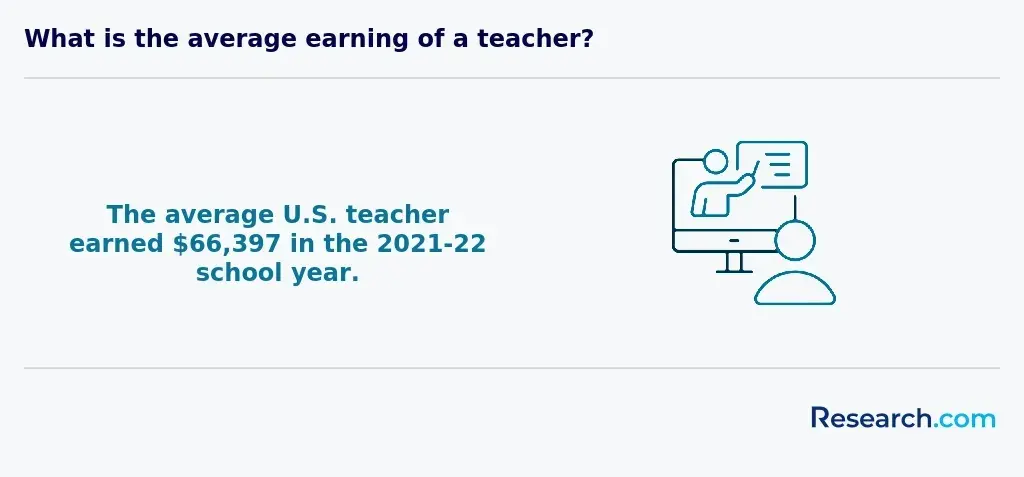
Teacher earnings vary across roles and settings. The average earnings of teachers were $66,397 in the 2021-22 academic year, as shown below, and this is increasing annually.
The most important practical step is to check the Delaware Department of Education requirements before you choose a program, register for exams, or apply for jobs. Certification rules can be detailed, and applying for the wrong certificate can delay employment.
How much classroom experience do Delaware middle school math teachers need?
Classroom experience is not a formality. It is where future teachers learn how to explain a concept three different ways, manage transitions, use assessment data, and support students who may be anxious about math. Delaware candidates should expect student teaching or an equivalent supervised clinical experience as part of certification preparation.
- Student teaching: Candidates commonly complete a full-semester placement. The experience places future teachers in an actual classroom under the guidance of an experienced educator.
- Minimum practicum expectations: Delaware candidates must complete a minimum of 12 weeks of student teaching, along with mathematics and education coursework.
- University placements: Institutions such as the University of Delaware and Delaware State University may include internship or placement opportunities in local schools as part of teacher preparation.
- Alternative experience: Tutoring, volunteering in academic programs, substitute teaching where permitted, or working as a paraprofessional can strengthen classroom readiness, although these experiences do not automatically replace state-required student teaching.
- Feedback habits: Strong candidates ask mentor teachers for specific feedback, review student work, reflect on lessons, and revise instruction based on evidence rather than relying on instinct alone.
| Experience type | What you learn | How it helps with hiring |
| Student teaching | Full-cycle teaching, lesson planning, classroom management, assessment, and parent communication. | Provides direct evidence that you can manage a classroom and teach math content. |
| Tutoring | One-on-one diagnosis of misconceptions and individualized explanation. | Shows commitment to student learning and math support. |
| Paraprofessional work | Classroom routines, student behavior, special education support, and school operations. | Builds familiarity with school environments before full-time teaching. |
| Volunteer programs | Youth engagement, academic mentoring, and community-based education. | Can strengthen applications, especially for career changers. |
Candidates should not wait until student teaching to discover whether they enjoy working with middle school students. If possible, observe or volunteer in a middle school setting before enrolling in a licensure program.
What math standards and curriculum expectations apply in Delaware?
Delaware math teachers are responsible for aligning instruction with state expectations, but the state does not prescribe one universal daily curriculum for every classroom. The Delaware Department of Education establishes academic standards and shared learning expectations, while districts and charter schools make local decisions about curriculum materials, pacing, and instructional resources.
- Standards-based instruction: Teachers must design lessons that address Delaware’s grade-level math expectations and prepare students for required assessments.
- Local curriculum choices: Districts and charter schools may use different materials, which means teachers should be ready to adapt while still teaching toward the same state standards.
- Conceptual and procedural balance: Effective middle school math instruction requires students to understand why procedures work, not just memorize steps.
- Real-world problem solving: Delaware’s approach emphasizes applying math to meaningful problems, including data, patterns, proportional reasoning, and other middle-grade topics.
- Professional resources: State and regional organizations, including math-focused professional learning groups, can help teachers interpret standards and improve instructional practice.
Teachers planning long-term growth may consider graduate study, especially if they want to strengthen instructional leadership or move into specialized roles. An online master’s in teaching can be useful for educators who need flexible graduate options, but candidates should confirm whether a specific program supports Delaware certification, salary advancement, or district requirements.
Higher degrees can be associated with higher teacher wages. During the 2020-2021 academic year, the average annual wages of public elementary and secondary school teachers in the United States were $52,500 for those with a bachelor's degree, $67,000 for those with a master's degree, $70,500 for those with an education specialist degree, and $71,300 for those with a doctorate degree, according to the National Center for Education Statistics, 2023, as shown below.
The practical takeaway is simple: choose programs and professional development that help you teach Delaware standards effectively, not just programs that add credits to a transcript.
What is the job market and salary outlook for Delaware middle school math teachers?
Middle school math can be a strong teaching field because math is often treated as a high-need subject. Still, salary and job availability depend on district budgets, location, experience, education level, and the number of openings in a given hiring cycle.
The salary for Middle School Math Teachers in Wilmington, DE, as of August 27, 2024, ranges from $45,204 to $103,307. Salary.com reports the following percentile breakdown:
| Percentile | Reported salary | How to interpret it |
| 10th percentile | $45,204 | Lower end of the reported range, often reflecting less experience or lower-paying assignments. |
| 25th percentile | $57,267 | Below the median but within the middle 50% range. |
| 50th percentile | $70,517 | Median reported salary for this role and location. |
| 75th percentile | $87,681 | Upper portion of the middle 50% range. |
| 90th percentile | $103,307 | Higher end of the reported range. |
The middle 50% of Middle School Math Teachers earn between $57,267 and $87,681, as shown in the chart below.
When evaluating salary, avoid looking only at the statewide or city median. Compare the district salary schedule, step placement, graduate-credit rules, health benefits, commute costs, class load, planning time, and mentoring support. A higher salary may not always be the better offer if the role includes a longer commute, limited support, or higher housing costs.
| Factor | Question to ask before accepting a job |
| Salary schedule | Where will my years of experience and degree level place me? |
| Benefits | What are the health, retirement, leave, and tuition-support benefits? |
| Teaching load | How many classes, preparations, and students will I teach? |
| Mentoring | Will I have a formal mentor or new-teacher induction support? |
| Curriculum resources | Are instructional materials provided, or will I build most lessons independently? |
| Professional development | Does the district support math-specific training and certification renewal? |
What professional development options are available after licensure?
Professional development matters in Delaware because math standards, assessment practices, student needs, and instructional technologies continue to evolve. For new teachers, the best professional learning is practical: it helps them plan lessons, analyze student work, manage classrooms, and teach difficult concepts more clearly.
- Delaware Mathematics Coalition programs: The Delaware Mathematics Coalition offers professional learning opportunities such as the EMTL Program, TRU-Math Project, and Math Camp. These programs focus on math content, pedagogy, teacher leadership, and collaborative learning.
- Continuing education credits: Delaware educators typically need continuing education to maintain licensure. Teachers should track activities carefully and confirm which experiences count toward renewal.
- Workshops and seminars: Programs such as the Leadership Coaching Lab and Keen Eye Workshops can help teachers examine classroom practice, receive feedback, and refine instruction.
- Professional organizations: Groups such as the Delaware Mathematics Coalition and the Delaware Council of Teachers of Mathematics can help educators find resources, mentors, and professional communities.
- Graduate coursework: Additional coursework may support salary movement, specialization, or leadership goals, but teachers should confirm district and state recognition before enrolling.
Educators looking for lower-cost academic options can compare affordable online education degrees, but they should prioritize accreditation, state approval, and relevance to their teaching assignment over price alone.
What classroom management and teaching strategies work in middle school math?
Middle school math teachers need more than content knowledge. They need systems that help students feel safe taking intellectual risks, especially because many students reach middle school already believing they are “bad at math.” Good classroom management and good math instruction reinforce each other.
- Set routines early: Students should know how to enter the room, start warm-ups, ask for help, use materials, work in groups, and transition between activities.
- Teach behavior expectations explicitly: Do not assume students understand what productive collaboration or respectful math discussion looks like. Model it, practice it, and revisit it.
- Use real problems: Community data, budgeting examples, sports statistics, maps, measurement, and science connections can make abstract concepts easier to understand.
- Balance direct instruction and discovery: Some topics require clear modeling. Others benefit from exploration, discussion, and pattern recognition. Effective teachers know when to use each approach.
- Differentiate without lowering expectations: Students may need different supports, including visual models, manipulatives, sentence frames, small-group instruction, or enrichment tasks.
- Check understanding frequently: Exit tickets, quick whiteboard responses, short quizzes, and student explanations help teachers adjust before misconceptions become permanent.
- Use technology with purpose: Digital tools should clarify math, give feedback, or support practice. They should not replace teacher explanation or mathematical discussion.
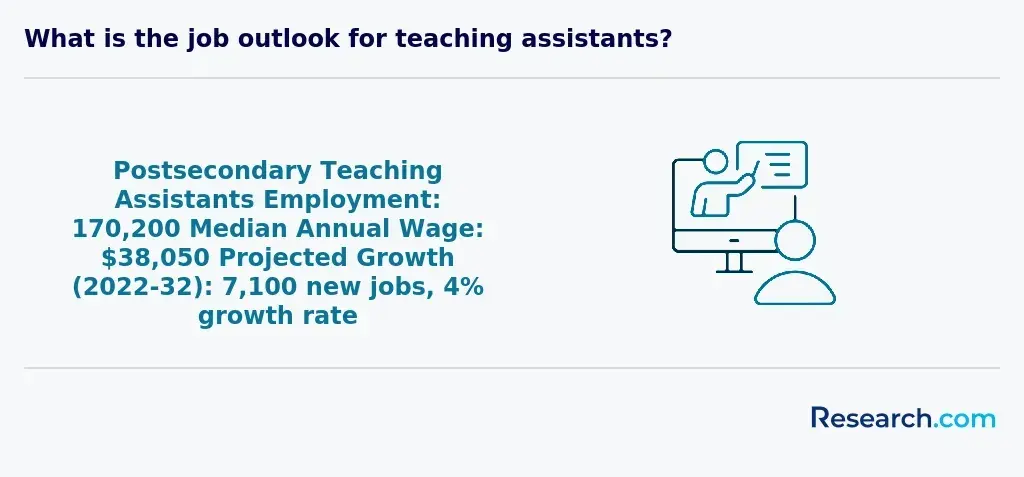
Teaching assistants can also support classroom learning, particularly in settings where students need additional academic or behavioral help. This occupation currently has 170,000 positions and is projected to grow by 4% annually from 2022 to 2032, creating 7,100 new jobs in the decade, as shown in the graphic below.
| Common classroom problem | Better teacher response |
| Students shut down when problems are difficult. | Normalize mistakes, use partial-credit thinking, and ask students to explain what they tried first. |
| Group work becomes off-task. | Assign roles, set time limits, use visible products, and teach collaboration routines directly. |
| Students memorize procedures without understanding. | Ask “why does this work?” and use visuals, number lines, models, and multiple representations. |
| Advanced students finish too quickly. | Prepare extension problems that deepen reasoning rather than simply assigning more of the same work. |
| Students have wide skill gaps. | Use diagnostic checks, small groups, targeted review, and flexible practice rather than whole-class reteaching only. |
How does Delaware’s teacher certification process compare with other states?
Delaware’s process is similar to many states in that it requires a bachelor’s degree, approved teacher preparation, testing, background screening, and subject-area certification. The details, however, are state-specific. A teacher who qualifies in one state should not assume automatic eligibility in Delaware without checking reciprocity and documentation rules.
Compared with some states, Delaware’s structure is clear because it distinguishes between the educator license and the Standard Certificate. This can help applicants understand whether they are missing a general licensure requirement, a subject-specific requirement, or both.
Teachers considering relocation should compare states carefully. For example, Research.com’s guide to elementary school teacher requirements in Maine can help readers see how education level, testing, and licensure pathways differ outside Delaware.
| Issue to compare | Why it matters when moving states |
| Praxis requirements | States may require different tests or passing scores. |
| Grade-band certification | A credential for one grade range may not match another state’s middle-level structure. |
| Alternative certification | Career-changer routes vary by state and may not transfer cleanly. |
| Renewal rules | Continuing education expectations can differ significantly. |
| Background checks | New state employment often requires new screening even for experienced teachers. |
What other Delaware teaching levels could educators consider?
Middle school math is not the only teaching option in Delaware. Some candidates discover that they prefer younger children, high school content depth, special education, or instructional support roles. Before choosing a licensure program, candidates should observe multiple grade levels and compare certification requirements.
Readers who are drawn to early childhood education can review Research.com’s guide on how to become a preschool teacher in Delaware. The preparation, classroom routines, developmental expectations, and career environment differ significantly from middle school math teaching.
| Teaching level | May fit you if... | May not fit you if... |
| Preschool | You enjoy early childhood development, play-based learning, and foundational skills. | You prefer advanced academic content and departmentalized teaching. |
| Elementary | You want to teach multiple subjects and build broad foundational skills. | You want to specialize primarily in mathematics. |
| Middle school math | You like adolescent learners, pre-algebraic reasoning, and helping students rebuild confidence in math. | You dislike rapid developmental changes, classroom energy, or behavior-management demands. |
| High school math | You prefer deeper subject specialization and more advanced math topics. | You prefer the exploratory and transitional nature of middle grades. |
How can middle school math teachers advance or specialize?
A Delaware middle school math teacher can remain in the classroom and still build a more specialized, influential career. Advancement does not always mean becoming a principal. Many teachers grow into roles that let them mentor colleagues, design curriculum, support student interventions, or lead STEM initiatives.
- Department leadership: Experienced teachers may become math department chairs or grade-level leaders, helping coordinate curriculum, assessment, and instructional planning.
- Instructional coaching: Math coaches support other teachers through lesson modeling, data analysis, and professional learning.
- STEM specialization: Teachers interested in applied math can build expertise in STEM projects, robotics, data analysis, or interdisciplinary problem-solving.
- Special education or gifted education: Additional endorsements can help teachers support students with exceptional needs or advanced learning profiles.
- English Language Learner support: ELL-focused training can be valuable in classrooms where students are learning academic math language alongside English.
- Educational leadership: Teachers who want administrative roles may pursue graduate study in educational leadership, which is commonly connected to assistant principal or principal pathways.
- Curriculum and policy work: Experienced educators may contribute to district curriculum committees, state initiatives, or professional organizations focused on improving math education.
Teachers considering research, district leadership, or higher-level policy work may eventually compare doctoral options, including the most affordable online doctorate programs. A doctorate is not required to teach middle school math, so the decision should be tied to a clear career goal rather than pursued only for prestige.
-
: "
One Delaware teacher described the shift from classroom teacher to mentor this way: “I thought my career would stay inside my own classroom, but leading workshops and supporting new teachers helped me see a wider impact.” The lesson for new educators is that strong classroom practice can become the foundation for leadership later.
"
How can interdisciplinary teaching strengthen math instruction?
Students often understand math more deeply when they see it operating outside a worksheet. Interdisciplinary teaching connects math to science, technology, social studies, art, financial literacy, and information organization. The goal is not to dilute math instruction, but to make reasoning more visible and useful.
- Science connections: Students can use measurement, graphing, ratios, and data interpretation in experiments.
- Social studies connections: Maps, population data, timelines, and economic trends can support proportional reasoning and statistics.
- Career connections: Budgeting, construction, health data, sports analytics, and coding can show students why math matters.
- Information literacy: Students can learn to evaluate data sources, organize information, and interpret patterns responsibly.
Educators interested in information organization and research skills can explore how a library science degree online connects to data literacy, academic research, and student inquiry.
How can technology improve middle school math learning?
Technology can make math more interactive, but it should serve a specific instructional purpose. Strong teachers use digital tools to visualize concepts, provide adaptive practice, collect formative assessment data, and support collaboration. Weak technology integration simply moves worksheets onto screens.
| Technology use | Strong implementation | Weak implementation |
| Adaptive practice | Targets student skill gaps and gives teachers useful data. | Becomes isolated screen time without follow-up instruction. |
| Digital whiteboards | Allows students to show work, compare strategies, and receive quick feedback. | Used only as a projection tool. |
| Online assessments | Helps teachers identify misconceptions before a unit test. | Measures performance without changing instruction. |
| Simulations | Makes abstract ideas such as slope, area, probability, or transformations visible. | Distracts from the actual learning target. |
Teachers can also learn from technology use in other subject areas. For example, strategies discussed in Research.com’s guide to becoming a high school history teacher in Delaware may help educators think about digital sources, student discussion, and evidence-based reasoning across disciplines.
How do Delaware teachers manage renewal and continuing education?
Licensure is not a one-time task. Delaware teachers must monitor renewal timelines, maintain records, and complete professional development that aligns with state and district expectations. Waiting until the renewal deadline can create avoidable stress, especially if documentation is incomplete.
- Track requirements early: Keep a record of workshops, courses, conferences, mentoring, leadership activities, and district-approved professional learning.
- Confirm what counts: Not every activity automatically satisfies renewal requirements. Teachers should verify with the Delaware Department of Education or their district.
- Choose relevant learning: Math teachers benefit most from training tied to standards, assessment, intervention, technology, special populations, and classroom practice.
- Plan for career goals: Renewal activities can also support advancement into coaching, leadership, or specialized endorsements.
For a broader explanation of the state credentialing framework, review Research.com’s guide to teaching certificate requirements in Delaware.
How can math teachers work effectively with parents and communities?
Middle school math success often depends on communication beyond the classroom. Parents and guardians may want to help but may not understand current math methods, online gradebooks, or how to support productive struggle without simply giving answers.
- Explain expectations early: Share grading practices, homework routines, reassessment policies, and how families can monitor progress.
- Communicate before problems escalate: A short message after early signs of difficulty is more useful than a long message after a failing grade.
- Use plain language: Avoid jargon when explaining standards, interventions, or assessment results.
- Offer math support strategies: Give families examples of questions they can ask, such as “How did you know?” or “Can you show another way?”
- Build community relevance: Invite local examples into math tasks, including budgeting, transportation, sports, business, public data, or environmental issues.
Teachers who want to develop stronger leadership, research, or community engagement skills may consider advanced study, including a PhD in higher education online. This path is most relevant for educators with goals beyond middle school classroom teaching, such as research, college teaching, administration, or education policy.
What legal and ethical duties apply to Delaware teachers?
Delaware middle school math teachers are responsible for more than instruction. They must follow legal, ethical, and professional standards that protect students and support fair access to learning.
- Valid licensure: Teachers must hold the appropriate Delaware license and subject certificate for their assignment.
- Background checks: Fingerprinting and criminal background checks are part of the educator approval and employment process.
- Student privacy: Teachers must protect student information and comply with privacy expectations, including those connected to the Family Educational Rights and Privacy Act, commonly known as FERPA.
- Mandatory reporting: Delaware teachers must report suspected child abuse or neglect through the required channels.
- Equitable instruction: Ethical teaching requires fair treatment, high expectations, and appropriate support for students with different backgrounds, abilities, and learning needs.
- Inclusive education: Teachers must follow requirements related to accommodations, individualized supports, and access for students with disabilities.
- Professional boundaries: Communication with students and families should be appropriate, documented when necessary, and aligned with district policy.
New teachers should ask their district for training on mandated reporting, student records, special education procedures, technology use, and professional conduct before the school year begins.
What support is available for new Delaware middle school math teachers?
New teachers should not try to navigate the first year alone. Delaware schools, districts, universities, and professional organizations can provide mentoring, curriculum help, professional learning, and peer support.
- Mentorship programs: Delaware offers structured support that can pair new teachers with experienced educators. Mentoring can improve lesson planning, classroom management, and confidence during the first year.
- Professional organizations: Groups such as the Delaware Council of Teachers of Mathematics can connect teachers with workshops, instructional resources, and colleagues who understand math-specific challenges.
- State resources: The Delaware Department of Education provides standards, assessment information, and guidance that teachers can use when planning instruction.
- District collaboration: Professional learning communities, common planning time, peer observations, and grade-level teams can help teachers solve practical classroom problems.
- Online teacher communities: Digital platforms can provide lesson ideas and classroom materials, but teachers should evaluate quality carefully and align resources with Delaware standards.
| Common mistake | Why it creates problems | Better approach |
| Choosing a program without checking Delaware approval. | You may graduate without meeting state licensure requirements. | Ask the program directly whether it leads to Delaware middle level mathematics certification. |
| Focusing only on tuition. | A cheaper program may cost more later if credits do not transfer or licensure is delayed. | Compare total cost, accreditation, clinical placements, exam support, and certification outcomes. |
| Assuming online programs always meet licensure rules. | Some online degrees are not designed for Delaware teacher certification. | Confirm state authorization, field placement support, and educator preparation approval. |
| Waiting too long to take Praxis exams. | Delayed scores can postpone student teaching, certification, or hiring. | Build testing into your academic plan early. |
| Ignoring classroom fit. | Enjoying math does not automatically mean enjoying middle school teaching. | Observe, tutor, volunteer, or work with adolescents before committing. |
| Assuming salary outcomes are guaranteed. | Pay depends on district schedules, experience, education level, and local contracts. | Review salary schedules and ask how your credentials affect placement. |
What do graduates say about becoming a middle school math teacher in Delaware?
- “Teaching middle school math in Delaware has been meaningful because I have access to colleagues and professional learning that help me keep improving. The best part is watching students move from frustration to confidence when a concept finally makes sense.” - Paula
- “I was worried about the transition into teaching, but mentoring and workshops helped me build practical classroom skills. I learned quickly that strong preparation matters just as much as knowing math.” - Jill
- “Middle school math can be challenging, but Delaware’s school communities gave me room to build relationships with students and address math anxiety directly. That relationship-building has been central to my effectiveness.” - Ernesto
Key Insights
- Becoming a Delaware middle school math teacher generally requires a bachelor’s degree, a state-approved educator preparation program, student teaching, required Praxis exams, a Delaware educator license, and a Standard Certificate in Middle Level Mathematics.
- The Delaware Department of Education reports that as of 2023, there is a significant demand for middle school math teachers, with a projected shortage of approximately 200 positions statewide.
- Candidates should verify program approval before enrolling. A degree in math or education is not enough if the program does not satisfy Delaware’s licensure and certification expectations.
- To obtain a Delaware teaching license, candidates must complete a state-approved educator preparation program, which typically includes at least 12 credit hours focused on mathematics pedagogy.
- Candidates must pass the Praxis II Mathematics Content Knowledge exam, with a passing score of 160 or higher.
- The average salary for a middle school math teacher in Delaware is around $60,000 annually, but cost of living, district placement, benefits, and commute should be part of the financial decision.
- The average earnings of teachers were $66,397 in the 2021-22 academic year, and this is increasing annually.
- The salary for Middle School Math Teachers in Wilmington, DE, ranges from $45,204 to $103,307. The middle 50% earn between $57,267 and $87,681, and the median salary is $70,517.
- In AY 2020-2021, average annual wages for public elementary and secondary school teachers in the United States were $52,500 for those with a bachelor's degree, $67,000 for those with a master's degree, $70,500 for those with an education specialist degree, and $71,300 for those with a doctorate degree.
- Delaware offers alternative routes to certification, such as the Delaware Teacher Corps, for individuals with a bachelor's degree in a non-education field who want to transition into teaching.
- Student teaching is essential. Delaware candidates must complete a minimum of 12 weeks of student teaching, and this experience often determines how ready they are for classroom management, lesson design, and student support.
- Post-secondary teaching positions are paid high salaries, while substitute teachers and teaching assistants have lower median pay despite positive projected job growth.
- The best candidates compare programs by accreditation, Delaware approval, field placement quality, Praxis support, total cost, and career fit rather than relying only on rankings or tuition.
Related Articles for Nearby States
- 2027 How to Become a Middle School Math Teacher in Maryland: Requirements & Certification
- 2027 How to Become a Middle School Math Teacher in New Jersey: Requirements & Certification
- 2027 How to Become a Middle School Math Teacher in Virginia: Requirements & Certification
- 2027 How to Become a Middle School Math Teacher in West Virginia: Requirements & Certification
- 2027 How to Become a Middle School Math Teacher in New York: Requirements & Certification
- 2027 How to Become a Middle School Math Teacher in Connecticut: Requirements & Certification
- 2027 How to Become a Middle School Math Teacher in Rhode Island: Requirements & Certification
- 2027 How to Become a Middle School Math Teacher in North Carolina: Requirements & Certification
- 2027 How to Become a Middle School Math Teacher in Ohio: Requirements & Certification
- 2027 How to Become a Middle School Math Teacher in Kentucky: Requirements & Certification
References:
- Bureau of Labor Statistics. (2023). Middle school teachers. Bureau of Labor Statistics middle school teacher profile.
- Bureau of Labor Statistics. (2023). Occupational employment and wages, May 2023: Middle school teachers, except special and career/technical. Bureau of Labor Statistics occupational wage data.
- Data USA. (2023). Education. Data USA education profile.
- Data USA. (2023). Mathematics teacher education. Data USA mathematics teacher education profile.
- Delaware Department of Education. (2024). Mathematics standards and assessments. Delaware mathematics standards and assessments.
- Delaware Math Coalition. (2024). Delaware Math Coalition. Delaware Math Coalition.
- Math Teacher Edu. (2024). Delaware math teacher education. Delaware math teacher education overview.
- Salary.com. (2024). Middle school math teacher salary in Wilmington, DE. Salary.com Wilmington middle school math teacher salary data.
- U.S. Department of Education, National Center for Education Statistics. (2023). Condition of education 2023. National Center for Education Statistics Condition of Education report.
Other Things You Should Know About Becoming a Middle School Math Teacher in Delaware
To become a middle school math teacher in Delaware, you must obtain a teaching certification from the Delaware Department of Education. This typically involves completing a bachelor’s degree in education or a related field, along with a state-approved teacher preparation program. Additionally, you must pass the Praxis exams relevant to middle school mathematics.
Once you meet these requirements, you can apply for your initial certification, which may lead to further endorsements or advanced certifications as you gain experience.
To become a certified middle school math teacher in Delaware in 2027, you need to complete a bachelor's degree in education or mathematics, pass the Praxis exams required by the state, and apply for certification through the Delaware Department of Education. Continued education and background checks are also mandatory.


