
2027 Fast and Accelerated Online Degree Programs for Busy People

Co-Founder and Chief Data Scientist
A fast online degree can make sense when you need a credential but cannot pause your job, relocate, or spend four years attending classes on campus. Many adults are in that position: a 2023 survey found that 52% of U.S. adults say they do not have enough time to pursue higher education, even though they see its value.
Accelerated online degree programs are built to shorten the path. They use condensed terms, year-round enrollment, transfer credits, prior-learning options, or intensive course schedules to help students finish sooner than they would in a traditional calendar. The trade-off is important: faster does not always mean easier, cheaper, or better for every student.
This guide explains how fast and accelerated online degree programs work, which fields are common, what they cost, how employers view online credentials, and how busy adults can compare programs without overlooking accreditation, workload, financial aid, and career fit.
Quick Answer: Are Accelerated Online Degrees Worth It?
Accelerated online degrees can be worthwhile for students who already know their career goal, can handle a compressed workload, and choose an accredited program that fits their schedule and budget. Some programs can be completed in as little as 12 to 18 months, but completion time depends on the degree level, transfer credits, enrollment pace, and program structure.
They are usually best for working adults, career changers, military learners, parents, and students returning to school with previous credits. They may not be the right fit for students who need a slower academic pace, extensive in-person training, or a program tied to state licensure requirements that must be verified carefully.
Key things busy adults should know about accelerated online degree programs
- Fast online degree timelines vary by institution, degree level, credit transfer policy, and program format. Some programs can be finished in as little as 12 to 18 months.
- Students can pursue accelerated associate, bachelor’s, master’s, doctorate, and certificate options, depending on the field and school.
- A third of school administrators expect health-related online programs to see the strongest growth over the next 5 years.
- 42% of students choose online learning because they are balancing work, family, or similar responsibilities.
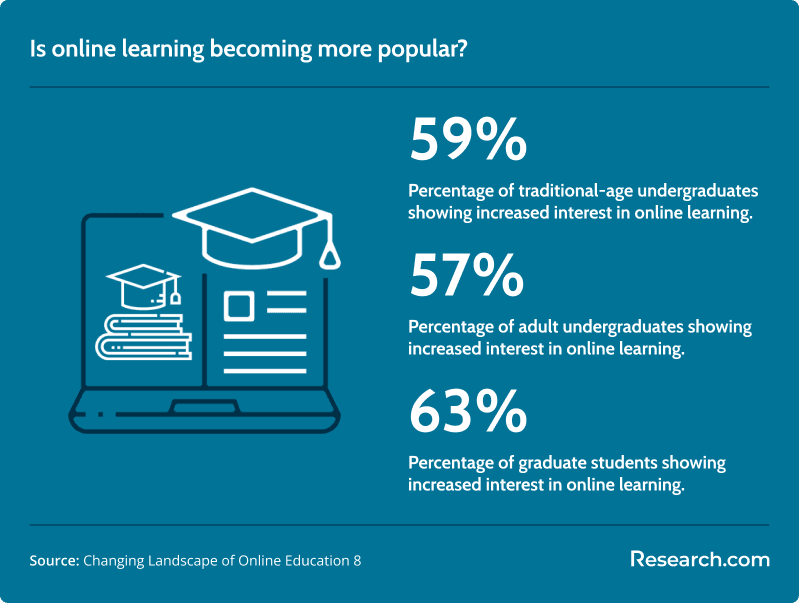
- Graduate students show the highest interest in online degrees, at 63%.
Affordable Quick Online Degree Programs With High Acceptance Rates
The fastest online degree is not always the best degree. Before choosing a program, compare career requirements, accreditation, licensure rules, tuition, transfer policies, and the type of support offered to online learners. The fields below are common choices for students seeking accelerated or flexible online pathways.
1. Nursing
Online nursing pathways can help students move toward nursing careers through flexible coursework, though clinical and licensure requirements must be checked carefully. Coursework commonly covers patient care, healthcare ethics, medical language, and evidence-based practice. Nursing is a strong option for students who want a healthcare career, but applicants should confirm whether the program meets the requirements for the state where they plan to practice.
2. Computer Science
Online computer science programs prepare students for technology roles by covering programming, software development, systems thinking, databases, and problem-solving. This field can be a good fit for learners who enjoy analytical work and want skills that apply across industries. Students should compare whether programs include projects, portfolio work, internships, or career services, because practical evidence of skill often matters in technical hiring.
3. Healthcare Administration
Healthcare administration degrees are designed for students who want to work on the business, operations, and leadership side of healthcare. Online programs often include healthcare policy, finance, compliance, organizational behavior, and healthcare delivery systems. This route may suit students who want to advance in hospitals, clinics, insurance organizations, public health agencies, or long-term care settings without pursuing a direct clinical role.
4. Management
Online management programs focus on leadership, decision-making, team performance, strategy, operations, and project coordination. They can be useful for adults who already have work experience and need a degree to qualify for supervisory or administrative roles. When comparing programs, look for courses that connect directly to workplace situations rather than only broad management theory.
5. Management Information Systems
Management information systems programs combine business knowledge with technology strategy. Students learn how information systems, data, software tools, and digital workflows support organizational decisions. MIS can be a practical choice for people who want to work between technical teams and business leaders, especially in roles involving analytics, systems implementation, process improvement, or technology management.
6. Economics
Online economics degrees teach students how markets, policy, incentives, data, and financial systems interact. Typical coursework includes microeconomics, macroeconomics, statistics, econometrics, and applied analysis. Graduates may use the degree in finance, consulting, policy, research, business, or government roles, though some higher-level economics positions may require graduate education.
7. Business Administration
Business administration is one of the most flexible online degree options because it covers several core business functions, including marketing, finance, operations, entrepreneurship, accounting, and management. It can work well for students who want a broad credential rather than a narrow specialization. Students should choose concentrations or electives that align with their target job, such as healthcare management, analytics, human resources, or finance.
8. Social Work
Online social work programs prepare students to support individuals, families, and communities through service, advocacy, assessment, and intervention. Coursework often includes human behavior, social justice, case management, policy, and practice methods. Because social work licensure rules vary by state and credential level, students should verify field placement and licensing requirements before enrolling.
9. Accounting
Online accounting programs teach financial reporting, auditing, taxation, managerial accounting, and business law. This path is often attractive to students who want structured career options in public accounting, corporate finance, government, or nonprofit organizations. Students interested in CPA eligibility should check their state’s education and credit-hour requirements before choosing a program.
10. Special Education
Online special education programs train educators to support students with varied learning needs. Courses commonly cover inclusive instruction, behavior support, assistive technology, assessment, and individualized education planning. Because teaching credentials are regulated by state agencies, prospective students should confirm that the program aligns with certification or licensure requirements in their state.
- Fast and accelerated online degree programs for 2027
- What are the main benefits of accelerated online degrees?
- What types of online degrees are available in accelerated formats?
- Are accelerated online programs built for working adults?
- How quickly can students finish fast online degree programs?
- How do accelerated online programs compare with campus programs?
- Do employers respect online degrees?
- What career gains can come from an accelerated online degree?
- How much do accelerated online degree programs cost?
- How should students evaluate return on investment?
- Can short certificate programs lead into a full degree?
- What financial aid options are available?
- How do you choose the right accelerated online degree?
- What challenges should students expect?
- How can accelerated degrees affect long-term success?
- What alternatives exist for busy learners?
- How can students verify program quality?
- How can students handle the pace of accelerated study?
- How do programs include real-world learning?
- What trends are shaping accelerated online degrees?
- Why do support systems matter?
- How can accelerated online degrees affect employment after graduation?
Fast and Accelerated Online Degree Programs for Busy People for 2027
How do we rank schools?
Because degree decisions involve time, money, and career consequences, Research.com relies on established education data sources such as the National Center for Education Statistics, the IPEDS database, Peterson's database, and the College Scorecard. These sources help compare institutional data, program information, costs, and outcomes. Readers can learn more in our methodology section.
1. Ivy Tech Community College - Associate of General Studies
Ivy Tech Community College offers an Associate of General Studies program for students who want a flexible associate degree that can support transfer, promotion, or entry into the workforce. The program lets students shape coursework around their goals while building broad skills in communication, information literacy, critical thinking, and problem-solving.
- Program length: 4 semesters (or as few as 11 months)
- Required Credits to Graduate: 60
- Cost per Credit: $170.07 (in-state); $332.71 (out-of-state)
- Accreditation: Higher Learning Commission (HLC)
2. Herzing University - Associate of Science in Healthcare Administration
Herzing University provides a 60-credit Associate of Science in Healthcare Administration for students preparing for administrative roles in healthcare settings. The program covers health policy, conflict resolution, the U.S. healthcare system, and public and private healthcare delivery. Daytime and evening options, along with virtual advising, tutoring, and technical support, are designed to help non-traditional learners stay on track.
- Program length: 18 months
- Required Credits to Graduate: 60
- Cost per Credit: $515
- Accreditation: Higher Learning Commission (HLC)
3. Florida State College at Jacksonville - Associate in Arts
Florida State College at Jacksonville offers an Associate in Arts degree intended for students planning to transfer to Florida public colleges or universities. The program emphasizes foundational coursework, critical thinking, practical application, and problem-solving skills that can support later study in a bachelor’s program.
- Program length: 18 months
- Required Credits to Graduate: 60
- Cost per Credit: $104.88 (in-state); $218.55 (out-of-state)
- Accreditation: Southern Association of Colleges and Schools Commission on Colleges (SACSCOC)
4. Indiana Wesleyan University - BS in Psychology of Human Relations
Indiana Wesleyan University offers a Bachelor of Science in Psychology of Human Relations for students interested in applying psychology to workplaces, relationships, ministry, service roles, and organizational settings. Coursework explores personality, motivation, behavior, change, and the reasons people act as they do.
- Program length: 15 months
- Required Credits to Graduate: 46
- Cost per Credit: $395
- Accreditation: Higher Learning Commission (HLC)
5. Northeastern University - Accelerated Bachelor of Science in Nursing
Northeastern University offers an accelerated BSN for students from non-nursing academic backgrounds who want to enter nursing more quickly. Applicants may qualify with at least 62 non-nursing college credits or a bachelor’s degree in another field. The program can be completed in as few as 16 months and is structured to prepare students for the NCLEX-RN exam and nursing licensure.
- Program length: 16 months
- Required Credits to Graduate: 67
- Cost per Credit: $1,263
- Accreditation: New England Commission of Higher Education, Inc. (NECHE); Commission on Collegiate Nursing Education (CCNE)
6. California Baptist University - BS in Accounting
California Baptist University offers an online Bachelor of Science in Accounting that covers tax accounting, auditing, finance, economics, business law, international business, and marketing. Graduates may use the program as preparation for accounting careers and may pursue exams such as the Certified Public Accountant (CPA) and/or Certified Management Accountant (CMA), depending on their goals and eligibility.
- Program length: 24 months
- Required Credits to Graduate: 72
- Cost per Credit: $520
- Accreditation: Western Association of Schools and Colleges Senior College and University Commission (WSCUC)
7. University of North Texas - MS in Advanced Data Analytics
The University of North Texas offers a 30-hour accelerated MS in Advanced Data Analytics. The curriculum includes big data analytics, statistical learning, visualization, and business case studies. Students can choose available specializations or work with advisors to create a plan aligned with their professional objectives.
- Program length: less than 2 years
- Required Credits to Graduate: 30
- Cost per Credit: $1,412.95 (in-state); $1,607.23 (out-of-state)
- Accreditation: Southern Association of Colleges and Schools Commission on Colleges (SACSCOC)
8. University of Miami - MS in Finance
The University of Miami offers an online MS in Finance for students seeking advanced preparation in finance while maintaining a busy schedule. Students work with UM business faculty and study topics such as portfolio development, financial modeling, data analytics, and current finance practices.
- Program length: about 2 years
- Required Credits to Graduate: 32
- Cost per Credit: $2,421 ($77,472 total)
- Accreditation: Southern Association of Colleges and Schools Commission on Colleges (SACSCOC)
9. University of Houston-Clear Lake - Master of Business Administration (MBA)
The University of Houston-Clear Lake offers an online MBA focused on data-informed decision-making, business strategy, leadership, and organizational problem-solving. Students may choose from several online concentrations, including Consulting, Business Operations, Finance, Marketing, Human Resources, Public, or Non-profit Administration.
- Program length: 14 months
- Specializations:
- Environmental Management
- Finance
- Human Resource Management
- Leadership
- Management of Technology
- Sustainability
- Required Credits to Graduate: 48
- Cost per Credit: $762.10 (in-state); $1,296.10 (out-of-state)
- Accreditation: Association to Advance Collegiate Schools of Business (AACSB)
10. University of Arizona - Master of Business Administration (MBA)
The University of Arizona offers the Eller Online MBA with six start dates per year. Students can finish in as little as 14 months or take up to two and a half years. The curriculum includes finance, accounting, marketing, economics, operations, management, information systems, leadership, and business communication. Students may also participate in an optional Global Business Experience trip.
- Program length: 14-24 months
- Specializations:
- Entrepreneurship
- Finance
- Healthcare Informatics
- Healthcare Management
- Management and Organizations
- Privacy and Security
- Marketing
- Required Credits to Graduate: 45
- Cost per Credit: $1,250
- Accreditation: Association to Advance Collegiate Schools of Business (AACSB)
How to Read This List Before You Choose
| Decision factor | Why it matters | What to check |
| Program speed | A shorter timeline can reduce time away from career goals, but it can increase weekly workload. | Term length, weekly study expectations, start dates, and whether breaks are built in. |
| Accreditation | Accreditation affects credit transfer, employer recognition, graduate study, and financial aid eligibility. | Institutional accreditation and any program-specific accreditation required in your field. |
| Total cost | Cost per credit does not show the full price of attendance. | Fees, books, technology costs, travel for clinicals or residencies, and total tuition. |
| Career alignment | A fast degree is only useful if it leads toward the role you actually want. | Curriculum, internships, projects, licensure preparation, employer connections, and alumni outcomes. |
| Flexibility | Busy adults often need predictable scheduling. | Asynchronous courses, part-time options, evening classes, and assignment deadlines. |
Here's What Graduates Have to Say About Their Fast and Accelerated Online Degree Programs
-
: "
As a working professional, an accelerated online degree in management information systems matched my schedule better than a campus program. The online classroom was interactive, and faculty support made the workload easier to manage. After finishing the degree, I earned a promotion and moved forward in my career. - Jerod
"
-
: "
Choosing an online MBA helped me keep working while building stronger business skills. Studying from home made the process more practical, and the curriculum gave me tools I now use to lead teams and make decisions with more confidence. - Alex
"
-
: "
I was worried that school, family, and full-time work would be impossible to balance. The online accounting program gave me the flexibility to keep progressing professionally while staying present at home. The virtual classroom also helped me feel connected to instructors and classmates. - Kris
"
What are the biggest advantages of getting a fast and accelerated online degree program?
The biggest advantage of an accelerated online degree is time. Students may finish faster than they would in a traditional program, which can help them qualify for new roles, promotions, graduate study, or licensure preparation sooner.
Flexibility is the other major benefit. Online delivery removes the need to commute or relocate, and many programs offer asynchronous classes so students can complete coursework around employment, caregiving, military service, or other obligations. For some learners, this makes online study one of the best degrees for stay-at home moms and other caregivers who need schedule control.
The chart below reflects why flexibility matters: 42% of students choose online education because of work and family commitments.
Accelerated online degree advantages and trade-offs
| Potential advantage | Why it helps | Possible drawback |
| Faster completion | Students can reach career or academic goals sooner. | Courses may require more weekly study time. |
| Flexible location | Learners can study without moving or commuting. | Some programs still require in-person clinicals, labs, exams, or residencies. |
| Career continuity | Students can often keep working while enrolled. | Balancing work and school can raise stress levels. |
| Transfer-credit options | Previous college credits may shorten the timeline. | Transfer rules vary widely by school. |
| Access to more programs | Students are not limited to nearby campuses. | Out-of-state licensure rules may complicate career plans. |
What types of online degrees can I get through a fast and accelerated program?
Accelerated online options exist at multiple levels, from associate degrees and bachelor’s programs to master’s degrees, doctorate programs, and short certificates. Common areas include business administration, nursing, psychology, computer science, education, healthcare administration, public health, information technology, social work, and accounting.
Students interested in healthcare may compare health science associate programs, nursing pathways, or the cheapest BSN to FNP online programs. Social work students may want to review the fastest online MSW programs if they already know that graduate social work is their goal.
Graduate options are also common. Students can find accelerated master’s programs in education, healthcare administration, IT, business, nursing, and public health. The cheapest online MSN programs remain popular among nurses seeking graduate education, and DNP online programs are also widely sought by advanced nursing students.
Shorter credentials can serve a different purpose. Some students use certificates to test a field, build a specific skill, or qualify for entry-level work before committing to a full degree. Examples include medical assistant degree online 6 weeks options and a 4 week online course for medical coding and billing. School administrators surveyed also expected online programs in health, computer science, and business to grow in the next 5 years.
Common accelerated online credential types
| Credential | Best for | Important caution |
| Certificate | Skill-building, career testing, or entry-level preparation. | May not replace a degree for roles that require one. |
| Associate degree | Transfer preparation or faster entry into some technical, healthcare, or business roles. | Transferability depends on agreements and accreditation. |
| Bachelor’s degree | Students seeking broader career eligibility or degree-completion options. | Acceleration often depends on prior credits. |
| Master’s degree | Professionals seeking advancement, specialization, or career change. | Workload can be intense, especially while employed full time. |
| Doctorate | Advanced professional, leadership, academic, or clinical goals. | Research, practicum, dissertation, or project requirements can extend timelines. |
Are there any fast and accelerated online degree programs designed specifically for working adults?
Yes. Many accelerated online programs are intentionally built for adults who are employed, caregiving, changing careers, or returning to school after time away. Common features include asynchronous classes, multiple start dates, evening options, part-time enrollment, short terms, and online access to advising and tutoring.
Many cheap online MSN programs are structured this way because nurses often need to keep working while completing graduate coursework. Adult-friendly programs may also include applied assignments that let students connect coursework to their current jobs.
Some schools award credit for prior learning, military training, professional certifications, or previous college coursework. That matters because the question is no longer simply can you get a bachelor's degree online? The better question is whether the program is accredited, affordable, realistic, and aligned with your career goal.
Students should ask whether courses are truly asynchronous, how many hours per week each course typically requires, and whether required internships, labs, practica, or exams can be completed near where they live.
How long does it take to complete fast and accelerated online degree programs?
Completion time depends on degree level, transfer credits, enrollment status, term length, and whether the school offers credit for prior learning. Some accelerated undergraduate programs can be completed in one to two years, compared with the traditional four-year timeline.
Graduate programs, including cheapest MPH programs online options, may take 12 to 24 months. Some programs move even faster through intensive terms, year-round scheduling, or credit for professional experience.
Doctorate timelines vary more because advanced programs may include research, capstone, dissertation, practicum, or residency requirements. Some students researching faster doctoral options also compare the most affordable online PhD organizational leadership offerings.
A fast completion promise should be reviewed carefully. Ask how many credits are required, how many credits transfer, whether you can take courses year-round, and what happens if you need to pause for work or family reasons.
How do fast accelerated online degree programs compare to an on-campus program?
Accelerated online programs and campus programs can lead to similar academic credentials, but the student experience is different. Online programs usually offer more location flexibility and may allow students to continue working. Campus programs may provide more face-to-face interaction, easier access to physical labs, and more spontaneous networking.
Accelerated online formats can also compress the schedule. That can help students finish sooner, but it may leave less time for reflection, study groups, or deep engagement with complex subjects. In fields with clinical, lab, practicum, or student-teaching requirements, online students may still need in-person placements.
Employers often focus on the institution, accreditation, skills, work experience, and relevance of the degree rather than whether the coursework was online or in person. Still, students should choose reputable accredited programs and be ready to explain the projects, skills, and outcomes they completed.
Online accelerated vs. on-campus programs
| Factor | Accelerated online program | Traditional campus program |
| Schedule | Often more flexible, with asynchronous or condensed courses. | Usually tied to set class meeting times. |
| Location | Can often be completed from home, except for required in-person components. | Requires regular campus attendance. |
| Pace | Faster and more intensive. | Often spread across longer terms. |
| Networking | Depends on virtual events, discussion boards, group work, and career services. | May offer more informal in-person networking. |
| Best fit | Working adults, parents, military learners, and students with prior credits. | Students who prefer face-to-face structure or need campus facilities. |
Do employers value degrees obtained through online programs?
Employers increasingly recognize online degrees from accredited and reputable institutions. Online education has become common, and many established colleges and universities now offer online programs with the same institutional oversight as their campus offerings.
A Champlain College Online survey reported that 84% of adults believe employers are more open to applicants with online degrees than they were in previous years. The same survey found that almost 40% of adults believed online degree programs can best serve adult students aged 23 and older.
Employer perception still depends on details. Accreditation, school reputation, field relevance, internships, projects, certifications, and work experience all affect how a degree is viewed. For regulated careers, licensure eligibility may matter more than delivery format.
What are the potential career advancements after completing an accelerated online degree program?
An accelerated online degree may help students qualify for roles that require a higher credential, move into management, change fields, or prepare for graduate study. The degree itself does not guarantee a raise or promotion, but it can remove credential barriers and strengthen a candidate’s profile when paired with relevant skills and experience.
- Broader job eligibility: Some roles require a specific degree level. Completing an accelerated program may help students apply sooner.
- Promotion potential: Employees who combine professional experience with a new credential may become stronger candidates for supervisory or specialized roles.
- Career change options: Fields such as healthcare administration, IT, business, data analytics, education, and accounting often have structured online pathways for career changers.
- Specialized skill development: Accelerated programs may include career-focused coursework, concentrations, certifications, projects, or capstones.
- Professional networking: Online classmates, faculty, alumni groups, and virtual career events can help students build contacts beyond their local area.
The best results usually come when students choose a program based on a specific target role rather than enrolling because it is simply fast.
What is the average cost of fast and accelerated online degree programs?
Based on the programs reviewed, the average cost per credit is approximately $880 for in-state students and approximately $980 for out-of-state students. That equals an average total tuition of approximately $40,030 for in-state students and $44,840 for out-of-state students.
Costs vary widely. In-state cost per credit ranges from $100 to $2,420, while out-of-state cost per credit ranges from $220 to $2,420. Total tuition ranges from $6,290 to $84,620 for in-state students and $13,110 to $84,620 for out-of-state students.
Students should not compare tuition alone. Fees, textbooks, software, equipment, travel, clinical placement costs, exam fees, and lost work hours can change the real cost of attendance.
Cost questions to ask before enrolling
| Question | Why it matters |
| Is the tuition charged per credit, per term, or as a flat program rate? | Pricing structure affects the total cost if you accelerate or slow down. |
| Are online students charged extra technology or distance-learning fees? | Fees can make a low tuition rate less affordable than it appears. |
| How many transfer credits will the school accept? | More accepted credits can reduce both time and tuition. |
| Are clinical, practicum, residency, or exam costs included? | Some required expenses are separate from tuition. |
| Can financial aid be used for accelerated terms? | Enrollment intensity and academic calendars can affect aid timing. |
Is the investment in an accelerated online degree program justified?
The investment is most defensible when the program is accredited, priced realistically, aligned with a clear career goal, and likely to reduce the time needed to reach that goal. A shorter time-to-degree may reduce opportunity costs because students can move toward new roles or further education sooner.
However, faster is not automatically a better return. Students should compare total cost, employer demand, licensure requirements, transfer credit, student outcomes, and the credential level needed for their target role. For example, students seeking a shorter undergraduate path may compare the fastest associates degree online options, but they should still confirm whether an associate degree is enough for their intended career.
Are short certificate programs an effective stepping stone to a full degree?
Short certificates can be useful when students need a focused skill quickly, want to explore a new field, or need an entry-level credential before committing to a degree. They may also stack into a larger academic pathway if the school awards credit for certificate coursework.
The main limitation is that certificates are narrower than degrees. Some employers value them for technical or job-specific skills, while other positions require an associate, bachelor’s, or graduate degree. Students comparing short certificate programs that pay well should ask whether the certificate transfers into a degree, qualifies for financial aid, and is recognized by employers in the field.
What are the financial aid options for students enrolling in fast and accelerated online degree programs?
Students in accredited online programs may qualify for several forms of financial assistance. Eligibility depends on the school, program, enrollment status, federal aid rules, and the student’s individual circumstances.
- Federal Financial Aid. Students enrolled in eligible accredited programs may be able to use federal aid, including the Pell Grant, Direct Subsidized Loans, and Federal Work-Study.
- Scholarships. Schools, foundations, employers, and professional associations may offer scholarships for online learners, adult students, transfer students, or students in specific majors.
- Employer Tuition Assistance. Some employers reimburse tuition or pay part of the cost for job-related education. Students should ask about annual limits, grade requirements, repayment rules, and approved programs.
- Military Benefits. Active-duty service members, veterans, and eligible family members may qualify for military tuition assistance, GI Bill benefits, or other education benefits through the Department of Veterans Affairs.
- Private Loans. Private student loans may help cover gaps, but they should be compared carefully because terms, interest rates, and borrower protections differ from federal loans.
- Payment Plans. Many schools allow students to divide tuition into installments, which can help with cash flow but does not reduce the total price.
How do you choose the best fast and accelerated online degree program for busy people?
The best accelerated online degree is the one that fits your career goal, schedule, learning style, budget, and credential requirements. A program that is perfect for one working adult may be a poor choice for another.
- Confirm accreditation. Look for institutional accreditation from a recognized accreditor. For fields such as nursing, business, education, counseling, and social work, also check whether program-specific accreditation is needed.
- Verify licensure alignment. If your career requires a license or certification, ask whether the program meets requirements in your state.
- Compare total cost. Review tuition, fees, textbooks, software, supplies, travel, and exam expenses.
- Check transfer-credit rules. Ask for a formal transfer evaluation before enrolling if you have previous college credits.
- Review the curriculum. Make sure courses match your target field. For supply chain roles, for example, relevant coursework may include logistics, procurement, operations management, and supply chain strategy.
- Evaluate flexibility. Ask whether classes are asynchronous or synchronous, whether part-time study is allowed, and how quickly assignments are due.
- Look at support services. Strong programs offer advising, tutoring, library access, technical support, disability services, and career counseling.
- Ask about outcomes. Request information on graduation rates, job placement, licensure pass rates, alumni roles, and employer partnerships when available.
Questions to ask admissions before you apply
| Question | What a strong answer should clarify |
| Is the program fully online? | Any required campus visits, clinicals, labs, residencies, or proctored exams. |
| How many hours per week should I expect to study? | A realistic workload estimate for full-time and part-time enrollment. |
| Will my credits transfer? | A written transfer-credit evaluation, not a general estimate. |
| Does this program meet state licensure requirements? | Clear guidance for the state where you plan to work. |
| What happens if I need to stop out? | Leave policies, readmission rules, course sequencing, and financial aid impact. |
| What career support do online students receive? | Resume help, interview support, networking, internships, and job-search resources. |
What challenges should I anticipate in accelerated online degree programs?
Accelerated online programs can be demanding because they compress coursework into shorter terms. Students often need strong self-discipline, consistent study habits, and the ability to manage multiple deadlines at once.
Common challenges include heavier weekly workloads, fewer natural networking moments, limited time for deep discussion, and a higher risk of burnout. Students who are working full time or caring for family members should be especially realistic about the pace.
Before enrolling, review accreditation, faculty qualifications, student outcomes, and support services. If you plan to continue into graduate education, compare how the credential may support later admission to the highest paying master's programs or other advanced pathways.
Common mistakes and better alternatives
| Common mistake | Why it is risky | Better approach |
| Choosing the fastest program without checking accreditation. | Credits may not transfer, and employers or licensing boards may not recognize the credential. | Verify institutional and programmatic accreditation first. |
| Looking only at cost per credit. | Total program cost may include fees and required expenses. | Compare full cost of attendance. |
| Assuming online means self-paced. | Many online courses still have weekly deadlines. | Ask about course format, deadlines, and attendance rules. |
| Ignoring state licensure rules. | Some online programs may not qualify graduates for licensure in every state. | Confirm eligibility with the school and state licensing board. |
| Overloading credits while working full time. | Burnout can lead to withdrawals, lower grades, or delayed completion. | Start with a manageable course load and increase only if sustainable. |
How do accelerated online degrees impact long-term career and academic success?
Accelerated online degrees can support long-term success when they build durable skills, meet recognized academic standards, and connect clearly to career goals. Many programs emphasize applied projects, leadership, communication, critical thinking, and practical problem-solving.
They can also create pathways to advanced study if credits and credentials are accepted by future institutions. Students planning to continue their education should check transfer rules, graduate admission requirements, and whether a later degree is required for their target role. For students considering advanced research or leadership credentials, cheap online PhD programs may be part of a longer academic plan.
Are there alternatives to accelerated degrees for busy people?
Accelerated degrees are useful, but they are not the only option. Some students need an even shorter credential, more flexibility, or a lower-risk way to test a field before committing to a full degree.
- Certification Programs: Certifications can build specialized skills in areas such as IT, healthcare, and project management. Credentials such as Google IT Support or PMP (Project Management Professional) may be completed in a shorter timeframe than a degree and can support targeted career moves.
- Micro-degrees or Nanodegrees: These programs focus on a defined skill area, such as data science, digital marketing, analytics, or programming. They may appeal to students who want job-relevant skills without enrolling in a full academic program.
- Associate Degrees: Associate degrees can provide a faster academic pathway than a bachelor’s program and may support transfer or entry-level employment. Some students compare the best associate degree in 6 months online options when speed is a top priority.
- Professional Bootcamps: Bootcamps are common in coding, UX design, data analytics, and similar fields. They are intensive and skills-focused, and some include career support or employer connections.
- Self-paced Online Courses: Platforms such as Coursera, edX, or LinkedIn Learning can help learners build individual skills on a flexible schedule without committing to a degree program.
How can I verify the credibility and quality assurance of accelerated online degree programs?
Program credibility should be checked before you apply, not after enrollment. Start with accreditation. Confirm that the institution is accredited by a recognized accrediting body, then check whether your field requires specialized program accreditation.
Next, review faculty qualifications, curriculum, student support, graduation information, transfer policies, and any licensure or certification outcomes. Independent rankings and third-party evaluations can help, but they should not replace direct verification. Students may also compare complementary credentials, including certifications that pay well without a degree, if a shorter or stackable option fits their career plan better.
How can I manage the intensity of fast and accelerated online degree programs?
Accelerated programs are designed to move quickly, so students should prepare before classes begin. The same amount of learning may be compressed into shorter terms, which means deadlines arrive faster and missed work can be harder to recover from.
Time management is essential. Set weekly study blocks, protect them like work meetings, and plan ahead for exams, papers, group projects, and major assignments. If possible, reduce nonessential commitments during the most demanding terms.
Use the program’s online tools actively. Recorded lectures, discussion boards, library databases, tutoring, advising, peer groups, and digital calendars can make the workload more manageable. Online flexibility helps only if students stay organized and meet deadlines consistently.
Choose a program that matches your actual life, not your ideal schedule. Some learners need part-time pacing, evening options, asynchronous coursework, or longer completion windows. Programs from online accredited colleges can offer quality and flexibility, but students still need to confirm the workload and requirements.
Practical steps for succeeding in an accelerated online program
- Ask for a sample course schedule before enrolling.
- Complete a transfer-credit review early.
- Calculate weekly study hours for each term.
- Tell family, roommates, or supervisors when your heaviest study periods will occur.
- Use advising before problems become urgent.
- Build in recovery time between intensive terms when possible.
- Keep copies of syllabi and major projects for future transfer, licensure, or employer documentation.
How do accelerated online degree programs integrate practical, real-world learning experiences?
Strong accelerated online programs connect coursework to workplace practice through projects, case studies, simulations, virtual labs, capstones, internships, practicums, or employer-informed assignments. These experiences help students show what they can do, not just what courses they completed.
Practical learning is especially important in competitive fields because employers often want evidence of job-ready skills. Students comparing accelerated graduate options, including one year masters programs, should ask whether the curriculum includes portfolio work, industry tools, applied projects, and career coaching.
What are the emerging trends in fast and accelerated online degree programs?
Accelerated online education is becoming more flexible and modular. Institutions are using adaptive platforms, real-time learning analytics, competency-based models, stackable credentials, and industry partnerships to make online programs more responsive to working adults and labor-market needs.
Students may also see more programs that combine degree coursework with certificates, short-term credentials, simulations, virtual collaboration, and applied projects. These trends can help students personalize their pathway, but they also require careful comparison. When researching the quickest degrees to get online, students should verify that speed does not come at the expense of accreditation, academic depth, or career relevance.
How do support systems contribute to success in accelerated online degree programs?
Support systems can make the difference between finishing an accelerated program and falling behind. The faster the pace, the more important it is to have academic, technical, personal, and career support available.
Family and friends can help by protecting study time, sharing household responsibilities, and encouraging students during heavy workload periods. Institutional support also matters. Advising, tutoring, writing help, library access, technical support, and disability services can prevent small problems from becoming major obstacles.
Mentors and coaches can help students connect coursework with career planning, networking, and job-search strategy. Peer interaction also matters, even online. Study groups, discussion forums, and group projects can provide accountability and help students work through difficult material.
When comparing the best accelerated degree programs online, ask what support is available to online students, when it is available, and whether it is included in tuition.
How do accelerated online degree programs impact post-graduation employment outcomes?
Accelerated online programs may help graduates reach the job market faster, but employment outcomes depend on the program, field, student experience, labor-market conditions, and how well the credential matches employer needs. A fast degree should still provide marketable skills, career services, and evidence of applied learning.
Students should look for programs that publish outcomes such as job placement information, employer partnerships, alumni career paths, licensure pass rates, or career-services access. Resume support, interview preparation, networking opportunities, and capstone projects can help connect academic work to employment. Students seeking a fast entry point may also compare options such as the easiest associates degree to get, especially if an associate degree fits their first career step.
Key Insights
- Accelerated online degrees are best for students who need flexibility, can handle a compressed workload, and have a clear career or academic goal.
- Some programs can be completed in as little as 12 to 18 months, but timelines depend heavily on transfer credits, enrollment pace, degree level, and program requirements.
- Accreditation is non-negotiable. It affects financial aid, credit transfer, employer recognition, graduate study, and licensure pathways.
- Cost comparisons should include total tuition, fees, books, software, travel, clinical or residency expenses, and the impact of reducing work hours.
- Online degrees from reputable accredited institutions are increasingly accepted by employers, but students still need relevant skills, experience, projects, and career alignment.
- Fast programs are not always the right choice. Certificates, associate degrees, bootcamps, microcredentials, and self-paced courses may be better for some busy adults.
- The smartest choice is not the fastest program. It is the program that fits your schedule, budget, state requirements, learning style, and target career.
References:
- Best Colleges. (2023) 2023 online education trends report: An annual survey of students and school administrators. Best Colleges.
- Champlain College Online. (2023, November 9). Data reveals new insights on online higher education post-pandemic. Champlain College Online.
- College Board. (2023) Trends in college pricing and student aid 2023. College Board.
- Eduventures, & Quality Matters. (2023). CHLOE 8: Student demand moves higher ed toward a multi-modal future. Eduventures and Quality Matters.
- Diaz-Infante, N. (2022, July 20). Demand for online education is growing. Are providers ready? McKinsey & Company.
- National Center for Education Statistics. (2023). Fast facts: Distance learning (80). Retrieved April 23, 2024, from NCES.
- Statista. (2024). Online University education - US. Retrieved April 23, 2024, from Statista.
Other Things You Should Know About Fast and Accelerated Online Degree Programs
In 2027, fast online degrees maintain academic rigor through accredited programs that adhere to stringent evaluation criteria. Institutions use advanced digital platforms, employing experienced instructors and comprehensive coursework to ensure quality. Continuous assessments and peer reviews further support educational standards.
Fast online degree programs in 2027 often use a mix of assessments, including online quizzes, timed exams, project-based evaluations, and peer-reviewed assignments. These varied assessment methods ensure comprehensive evaluation of student understanding and skills in a compressed timeframe.
Yes. Many accredited accelerated online programs accept up to 90 transfer credits toward a 120-credit bachelor’s degree, which can cut completion time by one to two years. Schools usually require official transcripts and a minimum grade of C or better for transfer courses.





