
2027 Fastest Online MSW Programs

Co-Founder and Chief Data Scientist
Choosing a fast online Master of Social Work program is not just about finding the shortest path to a graduate degree. For many applicants, the real decision is whether an accelerated MSW can fit around work, family responsibilities, field placement hours, licensure goals, and the financial cost of graduate school. That decision matters because the MSW is often the degree required for advanced social work practice, especially for clinical, healthcare, school, leadership, and policy-focused roles.
This guide is designed for working adults, BSW graduates considering advanced standing options, career changers exploring social work, and current human services professionals who want a faster route to graduate-level practice. You will learn how accelerated online MSW programs work, what they cost, how long they take, what accreditation to verify, which specializations are common, and how to compare programs without relying only on rankings or advertised completion speed.
Quick Answer: What Is the Fastest Way to Earn an Online MSW?
The fastest online MSW programs are usually advanced standing programs for students who already hold a Bachelor of Social Work from a Council on Social Work Education-accredited program. These programs often take 12 to 18 months for full-time students, although timelines vary by credit load, field education requirements, transfer policies, and whether the student enrolls full time or part time.
Students without a BSW can still enter many online MSW programs, but they typically complete a longer foundational curriculum before moving into advanced practice courses. For those students, a “fast” program may still take longer than an advanced standing pathway.
What are the benefits of getting an online MSW degree?
- More advanced career options: An MSW can prepare graduates for roles in clinical social work, healthcare, schools, child and family services, community advocacy, nonprofit leadership, policy, and case management.
- Higher earning potential compared with a bachelor’s-only path: MSW graduates can earn around $13,000 higher per year than professionals with only a bachelor’s degree, though pay varies by state, license, setting, specialization, and experience.
- Flexible access for working adults: Online coursework can make graduate study more manageable for students who cannot relocate or attend traditional campus classes, but field placement hours still require careful scheduling.
What can I expect from the fastest online MSW degree programs?
Fast online MSW programs compress graduate social work education into a shorter schedule while still requiring serious academic work, supervised field education, and preparation for ethical practice. Students should expect courses in social work theory, assessment, intervention, policy, research, human behavior, diversity, ethics, and practice with individuals, families, groups, organizations, or communities.
The accelerated format does not usually mean the program is easier. In many cases, students take heavier course loads, move through shorter academic terms, or study year-round. Advanced standing students may bypass some foundational courses because their BSW has already covered core competencies, but they still complete advanced practice coursework and field education.
Online delivery commonly includes recorded lectures, live class sessions, discussion boards, digital assignments, virtual advising, and online library access. However, the practicum or internship portion is completed in approved agencies, clinics, schools, hospitals, government offices, or community organizations. Before enrolling, students should confirm how the school helps arrange field placements in their state or region.
| What to review | Why it matters in a fast online MSW |
| Advanced standing eligibility | Students with a CSWE-accredited BSW may qualify for a shorter timeline than students from other majors. |
| Field placement support | Online coursework may be remote, but practicum hours must be completed through approved agencies. |
| Accreditation | CSWE accreditation is especially important for licensure, employer recognition, and doctoral study options. |
| Course pace | Shorter programs can require heavier weekly reading, writing, supervision, and fieldwork commitments. |
| Licensure alignment | Clinical licensure rules differ by state, so students must verify whether the program supports their intended licensing pathway. |
Where can I work with an online MSW degree?
An online MSW from an accredited program can lead to many of the same employment settings as a campus-based MSW. Graduates may work in hospitals, mental health clinics, schools, child welfare agencies, substance use treatment centers, correctional settings, veteran services, nonprofit organizations, government agencies, community programs, advocacy groups, and private practice settings where state law permits.
The right setting depends on your concentration, field placement experience, state license, and career goals. A student focused on clinical practice may prioritize therapy, diagnosis, and treatment settings. A student focused on macro practice may pursue policy, administration, program evaluation, community organizing, or nonprofit leadership. School social work, healthcare social work, and military social work may have additional hiring preferences or credential expectations depending on the employer and state.
How much can I make with a degree from the fastest online MSW programs?
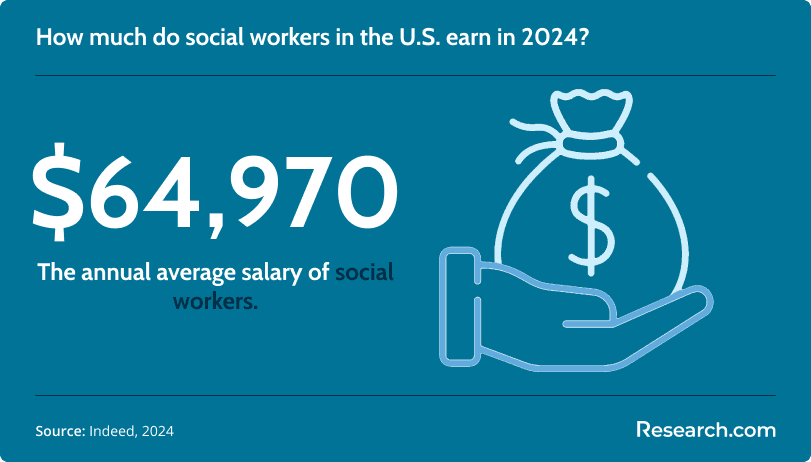
In 2024, social workers in the United States are earning an annual average salary of $64,970. Compensation can differ significantly based on location, employer, license level, years of experience, population served, and specialization. Among the highest-paying cities listed for social workers, Washington, DC reports an average salary of $101,228, followed by Fresno, CA at $82,382. Other listed averages include Detroit, MI at $66,532, Flint, MI at $65,308, and New York, NY at $64,559.
Salary should be part of the decision, but it should not be the only factor. Social work pay can be stronger in certain clinical, healthcare, government, administrative, and specialized roles, while some community-based or nonprofit roles may pay less. Students comparing MSW programs should examine total debt, licensure requirements, expected field placement hours, and the salary range in the state where they plan to work.
- 2027 fastest online MSW programs
- How long do the fastest online MSW programs take?
- Online MSW vs. campus MSW: how do they compare?
- What does a fast online MSW cost?
- What financial aid options are available?
- What are the admission requirements?
- What courses are included in an online MSW?
- Which MSW specializations are available?
- How should you choose a fast online MSW program?
- What jobs can you pursue after an online MSW?
- Which accreditation standards matter?
- What is the job market for MSW graduates?
- How do location, licensure, and pay connect?
- What are the challenges of an online MSW?
- Should you pursue a doctorate after the MSW?
- How can networking and mentorship help?
- How can interdisciplinary study expand options?
- How do you navigate licensure after graduation?
- How can students balance an accelerated MSW with work and life?
- How can you get more value from a fast online MSW?
- How can an online MSW support advancement and leadership?
- What certifications or dual degrees can strengthen an MSW?
- Can career changers enter social work without a BSW?
2027 Best Fastest Online MSW Programs
How do we rank schools?
This list of fast online Master of Social Work programs was developed using Research.com’s methodology, with attention to program structure, available data, accreditation, online delivery, and accelerated or advanced standing options. Sources used in the analysis include the IPEDS database from the National Center for Education Statistics, Peterson's database, including distance learning data, and the College Scorecard.
As with accelerated online MSW programs 2023 lists, many of the fastest pathways below are designed for applicants who already have a BSW from a CSWE-accredited program. Students without that background should review each school’s standard MSW option, because the completion timeline may be longer.
| Program | Length | Credits | Cost | Accreditation |
| Columbia University – Advanced Standing MSW | ~1 year | 33 | $1,589 per credit | CSWE |
| University of Southern California – Advanced Standing MSW | 12 months | 24 | $2,137 per credit | CSWE |
| Boston University – Advanced Standing MSW | 6 semesters | 43 | $1,206 Charles River Campus; $768 off-campus students; $956 part-time online | CSWE |
| Fordham University – Advanced Standing MSW | 12 to 16 months | 31 | $1,045 per credit | CSWE |
| Case Western Reserve University | 20 months | 39 | $1,650 per credit | CSWE |
| Indiana University – Advanced Standing MSW | 1 year | ~39 | $624 in-state; $741 out-of-state | CSWE |
| University of Houston – Advanced Standing MSW | ~1 year | 48 | $474.76 in-state; $994.76 out-of-state | Council on Social Work Education (CSWE) |
| University of Missouri – Advanced Standing MSW | ~1.5 years | 39 | $34,500 tuition cost | CSWE |
| SUNY University at Buffalo – Advanced Standing MSW | 1.5 years, part-time only | 35 | $706.25 in-state; $815.25 out-of-state | CSWE |
| University of Central Florida | ~1.5 to 2 years, 4 semesters | 32 | $448.29 per credit | Council on Social Work Education (CSWE) |
Program notes and specialization options
- Columbia University: Offers advanced pathways including Advanced Clinical Practice; Integrated Practice and Programming; Policy Practice; and Leadership, Management, and Entrepreneurship for Social Justice.
- University of Southern California: Includes Adult Mental Health and Wellness; Children, Youth, and Families; Social Change and Innovation; Military Populations and Settings; Military Populations and Settings; and Individualized Specialization.
- Boston University: Provides focus areas such as Aging; Behavioral Health; Children, Youth, and Families; and Trauma, Violence, and Justice.
- Fordham University: Lists Individuals and Families; Organizations and Community; Evaluation; and Policy Practice and Advocacy.
- Case Western Reserve University: Offers areas including Aging; Child, Youth, and Families; Community Practice for Social Change; Health; Mental Health; School Social Work; Substance Use Disorders and Recovery; and an Individualized Specialization.
- Indiana University: Lists Children, Youth, and Families; Community and Organizational Leadership; Health; Mental Health and Addictions; School Social Work; and Special Practice Areas in Social Work.
- University of Houston: Includes Clinical Practice: Health, Behavioral Health, Political Social Work Specialization; and Individualized Specialization.
- University of Missouri: Offers Clinical Social Work and Policy, Planning, and Administration in Human Services.
- SUNY University at Buffalo: Does not list a specialization in this summary but includes dual degree options for MBA/MSW; MPH/MSW; and JD/MSW.
- University of Central Florida: Lists no specified specialization in this summary.
Key Findings
- Many of the fastest online MSW programs are advanced standing options built for students with a CSWE-accredited BSW.
- Fast online MSW programs commonly take 12 to 18 months for full-time students, although some options are structured across longer or part-time timelines.
- The average cost of the fastest online MSW degree programs ranges from $20,000 to $35,000, but the programs reviewed here show wide variation by school, residency status, credit count, and tuition model.
- Specializations may include clinical social work, child and family welfare, healthcare social work, school social work, mental health and substance use, policy, and macro practice.
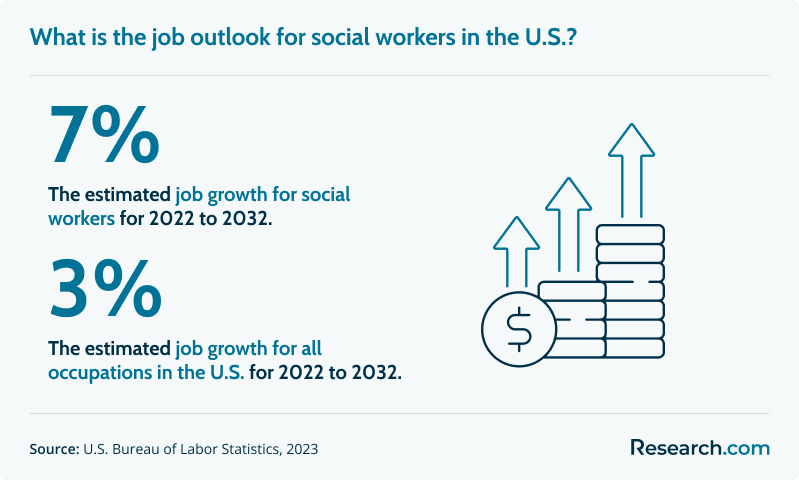
- The job outlook for social workers in the US is favorable, with projected job growth of 7% from 2022 to 2032 compared with 3% for all occupations. Healthcare social work and mental health and substance abuse social work are expected to grow at 10% and 11%, respectively.
- Location can strongly influence pay. Washington, DC and Fresno, CA report salaries exceeding $80,000 annually for social workers in the salary data cited in this guide.
How long does it take to complete the fastest online MSW degree programs?
The shortest online MSW timelines usually belong to advanced standing tracks. These are designed for students who already completed a CSWE-accredited BSW and therefore do not need the full foundation-year curriculum. In this guide, the fastest options range from about 12 months to 18 months, while some programs extend to 20 months, 6 semesters, or part-time structures.
Completion time depends on credit requirements, field education hours, term length, course sequencing, whether summer enrollment is required, and whether the student can study full time. A student exploring adjacent social science fields may also compare the MSW with a degree in sociology, but the MSW is the more direct credential for professional social work practice and clinical licensure pathways.
| Student profile | Likely MSW pathway | Decision point |
| CSWE-accredited BSW graduate | Advanced standing MSW | Best fit for the fastest completion options if GPA and field experience requirements are met. |
| Graduate from psychology, sociology, education, or human services | Traditional or foundation-year MSW | May be admitted, but usually needs more coursework than advanced standing students. |
| Full-time working adult | Part-time online MSW or longer accelerated format | May need a slower pace to manage field placement and employment. |
| Career changer with limited social service experience | Standard MSW with strong field advising | Should prioritize support, placements, and foundational preparation over speed alone. |
How do the fastest online MSW degree programs compare to an on-campus program?
Online and campus MSW programs can cover comparable learning outcomes when they are properly accredited, but the student experience differs. Online programs are usually better for students who need location flexibility, cannot relocate, or must fit classes around work. Campus programs may offer more face-to-face interaction, easier access to faculty offices, local agency connections, and in-person student communities.
The most important difference is not simply online versus campus. It is whether the program is accredited, whether field placements are available where you live, whether the specialization matches your career target, and whether the schedule is realistic. Students can succeed in either format when the program is reputable and the structure fits their circumstances.
| Factor | Fast online MSW | Campus MSW |
| Schedule flexibility | Often stronger, especially with asynchronous coursework | Usually tied to class meeting times and campus location |
| Peer interaction | Virtual discussions, group projects, online events | More frequent in-person interaction |
| Field education | Completed locally when approved placements are available | Often connected to local campus agency networks |
| Best for | Working adults, remote students, students unable to relocate | Students who value campus access and face-to-face learning |
| Main risk | Underestimating online workload and practicum logistics | Higher relocation, commuting, or scheduling constraints |
What is the average cost of the fastest online MSW degree program?
Online MSW tuition varies widely. Online programs can range from approximately $20,000 to $80,000 for the full degree. Among the online MSW programs included in this article, the average cost-per-credit for both in-state and out-of-state students is $1,379.33, with per-credit costs ranging from $448.29 to $2,137.
The average tuition for the entire program is $41,597, with fees ranging from $14,345.28 to $64,350. Traditional in-person MSW programs may cost from $30,000 to $100,000 or more, depending on the institution, location, specialization, residency requirements, and program structure.
When comparing costs, look beyond the advertised tuition rate. Add technology fees, university fees, books, travel to field sites, required residencies, exam preparation, background checks, licensure fees, and lost wages if you reduce work hours. ROI also depends on the role you pursue after graduation. For example, specialized mental health roles may be financially competitive in some markets, and students researching that area may compare outcomes with a psychiatric social worker salary.
In 2024, the annual average social work degree salary in the US is $64,970.
What are the financial aid options for students enrolling in the fastest online MSW degree programs?
Students in online MSW programs may be able to use several forms of financial aid, depending on eligibility and school participation. The starting point is usually the Free Application for Federal Student Aid (FAFSA), which schools use to determine eligibility for federal aid such as loans, grants where applicable, and work-study opportunities.
Some universities also offer graduate social work scholarships, tuition discounts, assistantships, fellowships, or school-specific awards. For example, students can review examples of institutional scholarships to understand the types of support that may be available at social work schools.
Other funding sources may include employer tuition assistance, military or veteran benefits, AmeriCorps education awards, state workforce programs, private scholarships, and professional association awards. Before committing to a program, ask for a full cost estimate and a realistic aid package rather than relying only on best-case scholarship language.
What are the prerequisites for enrolling in fastest online MSW degree programs?
Admission requirements vary by school and by whether the applicant is applying to an advanced standing or standard MSW pathway. Advanced standing options typically require a BSW from a CSWE-accredited program. Standard online MSW programs may accept students with undergraduate degrees in psychology, sociology, human services, education, public health, criminal justice, or other fields, but those students usually complete foundational social work coursework.
Some programs no longer require the GRE, and there are online MSW programs no GRE requirements available. However, applicants should not assume that “no GRE” means easy admission. Schools may still evaluate GPA, recommendation letters, personal statements, human service experience, writing ability, and fit with the profession.
Common admission requirements
- A bachelor’s degree in social work or a related field from an accredited college or university
- GPA requirements that commonly range from 2.5 to 3.0 on a 4.0 scale
- A CSWE-accredited BSW for many advanced standing tracks
- GRE scores for some programs, although many online MSW programs have removed this requirement
- Relevant work, volunteer, internship, or service experience that demonstrates commitment to social work
- Letters of recommendation, a statement of purpose, and official transcripts
Students asking what degree do you need to be a social worker should understand the distinction between entry-level and advanced practice. A BSW may qualify graduates for some social work and human service roles, but an MSW is often needed for clinical practice, supervision, leadership, and certain state licensure tracks.
What courses are typically in the fastest online MSW degree programs?
Fast online MSW programs cover both foundational and advanced social work competencies, although advanced standing students may skip or shorten some foundation requirements. Course names differ by institution, but the major content areas are similar across accredited programs.
- Social Work Practice: Students learn assessment, engagement, intervention, case planning, documentation, and practice methods for individuals, families, groups, organizations, or communities.
- Social Policy and Advocacy: Courses examine how welfare policies, public systems, law, funding, and institutional structures affect clients and communities.
- Human Behavior and the Social Environment: Students study development, family systems, identity, culture, trauma, inequality, and environmental influences across the lifespan.
- Research Methods in Social Work: Coursework introduces evidence-based practice, program evaluation, data interpretation, ethics in research, and the use of findings to improve services.
- Field Education or Internship: Students complete supervised practice in approved settings and connect classroom theory with direct service, clinical work, advocacy, policy, or administration.
Accelerated students should pay close attention to course sequencing. In a shorter program, missing one prerequisite or delaying a field placement can push graduation into a later term.
What types of specializations are available in the fastest online MSW degree programs?
Specializations help students align the MSW with a specific population, setting, or practice method. The right choice should be based on your intended license, field placement opportunities, local job market, and long-term career goals.
- Clinical Social Work: Focuses on assessment, intervention, therapy, treatment planning, and mental health practice. Students considering clinical licensure may also research LCSW salary data by location and setting.
- Child and Family Welfare: Prepares students for work involving child protection, foster care, adoption, family preservation, and services for children and caregivers.
- Mental Health and Substance Abuse: Centers on behavioral health assessment, counseling, crisis support, recovery resources, and coordinated care.
- Healthcare Social Work: Trains students to support patients and families in hospitals, clinics, hospice, rehabilitation, and other healthcare environments.
- Community and Macro Practice: Emphasizes social change, policy advocacy, community development, organizational leadership, and program design.
- School Social Work: Prepares students to support students’ social-emotional development, attendance, family engagement, crisis response, and school-based services. Students interested in child development may also compare related options such as masters in child development online programs.
Specialization can also affect earnings and competitiveness. The highest-paying cities in the US for social workers listed in this guide are Washington, D.C. at $101,228 and Fresno, CA at $82,382.
How do you choose the fastest online MSW degree program?
The best fast online MSW is the one that is accredited, affordable enough to be sustainable, aligned with your state’s licensure rules, realistic for your schedule, and strong in your target practice area. Speed should be a factor, not the only deciding factor.
- Confirm CSWE accreditation: This is one of the most important checks for licensure and professional credibility.
- Compare total cost, not only tuition: Include fees, books, field placement expenses, residencies, technology costs, and possible income reduction.
- Review specialization fit: Choose a program with coursework and placements that match clinical, school, healthcare, child welfare, policy, or macro practice goals.
- Ask how field placements work: Find out whether the school secures placements, whether you must find your own, and whether placements are available in your location.
- Check state licensure alignment: Do not assume an online program automatically meets your state’s requirements for clinical social work licensure.
- Evaluate schedule intensity: Accelerated courses can be difficult if you are working full time or managing family responsibilities.
- Look at faculty and student support: Advising, writing help, career counseling, tech support, and faculty access matter more in fast programs.
- Compare affordability options: Some of the cheapest MSW programs online may still provide strong accredited training if field placement and licensure alignment are solid.
- Review alumni outcomes carefully: Ask about graduation rates, licensure exam support, employer relationships, and job placement assistance.
- Watch for location restrictions: Some online programs cannot place or enroll students in every state.
Common mistakes when choosing a fast online MSW
| Mistake | Better approach |
| Choosing the shortest program without checking accreditation | Verify CSWE accreditation before comparing speed or price. |
| Looking only at cost per credit | Calculate total program cost, including credits required and fees. |
| Assuming online means fully flexible | Confirm live class times, practicum schedules, and weekly workload. |
| Ignoring field placement logistics | Ask how placements are approved, supervised, and arranged in your area. |
| Assuming one degree works for every state license | Check your state board’s requirements before enrolling. |
| Picking a specialization without market research | Compare local job postings, license rules, and practicum opportunities. |
What career paths are available for graduates of the fastest online MSW degree programs?
Graduates of accredited online MSW programs can pursue many social work roles, but exact qualifications depend on state rules, license status, supervised experience, and employer requirements. Common paths include:
- School Social Worker: Supports students, families, and school teams with attendance, mental health, crisis intervention, bullying, social-emotional needs, and community referrals.
- Child Welfare Specialist: Works with children and families around abuse, neglect, foster care, adoption, reunification, safety planning, and supportive services.
- Substance Abuse Counselor: Provides assessment, counseling, referrals, treatment support, and recovery resources for people affected by substance use disorders.
- Clinical Social Worker: Offers therapy, counseling, assessment, treatment planning, and mental health services in clinics, hospitals, agencies, or private practice where permitted.
- Policy Analyst or Researcher: Uses data, evaluation, advocacy, and macro social work skills to improve programs, inform policy, and address systemic issues.
The broader employment outlook is positive. Social workers are projected to see 7% job growth from 2022 to 2032, compared with 3% for all occupations in the US.
Which accreditation standards should I look for in an online MSW program?
The most important program-level accreditation for an MSW is accreditation from the Council on Social Work Education. CSWE accreditation signals that the program has been reviewed for curriculum quality, faculty standards, field education, assessment, and preparation for professional practice. For students who want a fast degree, accreditation is especially important because an accelerated format should not bypass professional training expectations.
Students comparing accelerated graduate options may also review fastest masters degrees, but social work applicants should treat CSWE accreditation and state licensure alignment as nonnegotiable decision points.
What is the job market for graduates from the fastest online MSW degree programs?
The job market for MSW graduates remains supported by demand in healthcare, behavioral health, schools, child and family services, aging services, public agencies, and community organizations. The cited occupational outlook projects 7% growth for social workers, which is faster than the 3% average for all occupations during the same period.
Growth also differs by specialty. Child, family, and school social workers are projected to see 5% growth. Healthcare social workers are projected at 10%, while mental health and substance abuse social workers are projected at 11%. Social workers in other specialized roles are projected at 7% growth.
Students should still research their local market. A strong national outlook does not guarantee a specific salary, job offer, or preferred schedule in every city or state.
How does geographic location impact licensure and compensation in social work?
Location affects both licensing rules and pay. Each state sets its own requirements for social work titles, supervised hours, clinical practice, exams, renewal, and continuing education. A program that works well for one student’s state may not automatically satisfy requirements in another state.
Pay also varies by region, employer, cost of living, and demand. Urban areas may offer higher nominal salaries, while rural areas may have different shortages, agency needs, or loan repayment opportunities. Students planning where to practice can compare state-level information through this guide to the average social worker salary.
What are the challenges of pursuing an online MSW degree?
An online MSW can make graduate study more accessible, but it is not a low-effort option. Accelerated programs can be especially demanding because students must manage coursework, field placement, readings, writing assignments, supervision, and personal obligations within a compressed timeline.
The most common challenge is time management. Field education may require daytime availability, which can conflict with full-time employment. Students should ask early whether evening, weekend, or workplace-based placements are possible, and they should not assume that every local agency can serve as an approved practicum site.
Another challenge is reduced face-to-face interaction. Online students may need to be more intentional about contacting faculty, joining student groups, attending virtual events, and building professional relationships. Technology can also create barriers if students have unreliable internet access, limited privacy, or limited experience with learning platforms.
Students interested in the most compressed routes can compare 1 year MSW programs online, but they should weigh the intensity of the schedule against their work hours, health, caregiving responsibilities, and field placement requirements.
Should I pursue a Doctorate in Social Work after my online MSW degree?
A doctorate may be useful if your long-term goals include senior leadership, advanced clinical expertise, teaching, applied research, policy influence, or program design. It is usually not necessary for most entry-level or mid-level MSW roles, and students should avoid pursuing a doctorate simply because it seems like the next academic step.
Before applying, compare cost, time, career return, and whether a DSW or PhD aligns better with your goals. Students focused on affordability can review options such as the most affordable CSWE accredited DSW programs online.
How can networking and mentorship opportunities enhance my online MSW experience?
Networking matters in social work because many career opportunities emerge through field placements, supervisors, alumni, community agencies, professional associations, and faculty referrals. Online students should be deliberate about building these connections because they may not happen naturally in hallways or campus events.
Look for programs that offer virtual career fairs, alumni panels, faculty mentorship, student organizations, field seminars, and employer connections. Students comparing advanced standing options may want to review the best MSW advanced standing programs and ask how each school supports professional networking during a shortened timeline.
How can integrating interdisciplinary studies broaden my career prospects?
Social work often overlaps with public health, psychology, education, criminal justice, nonprofit management, healthcare, policy, and human services. Interdisciplinary study can make graduates more versatile, especially in roles that require collaboration across systems or service populations.
For example, students interested in community programs may benefit from public health knowledge. Students focused on children may benefit from education or child development coursework. Students considering broader service roles can also review What job can you get with a human services degree?
How can I navigate licensure and certification requirements after earning my online MSW degree?
Licensure should be planned before enrollment, not after graduation. Start by identifying the state where you want to practice, then review the state social work board’s requirements for degree accreditation, exams, supervised post-graduate hours, clinical practice, title protection, and continuing education.
After earning the MSW, graduates usually need to submit transcripts, apply to the state board, complete required exams, document supervised hours if pursuing clinical licensure, and meet renewal requirements. Candidates considering counseling-adjacent roles should also review state counseling licensure requirements to understand how counseling and social work credentials differ by state.
What strategies can students use to balance an accelerated MSW program with work and personal commitments?
Accelerated MSW students need a realistic plan before classes begin. The most successful students treat the program like a major professional commitment, not an add-on activity.
- Map your weekly schedule: Block time for readings, writing, live sessions, group work, field placement, supervision, commuting, and recovery.
- Talk with your employer early: Ask whether flexible hours, reduced hours, remote work, or adjusted shifts are possible during practicum-heavy terms.
- Prepare your support system: Explain your schedule to family and friends so they understand when you will be unavailable.
- Choose field placements strategically: Prioritize sites that match your goals and offer feasible hours, supervision, and travel distance.
- Use school services quickly: Contact advisors, writing centers, library staff, tech support, and field coordinators before small problems become major delays.
- Build peer accountability: Study groups, group chats, and cohort check-ins can reduce isolation and improve follow-through.
- Protect basic health routines: Sleep, meals, movement, and mental health support are not optional in a high-intensity program.
How to maximize your learning experience in the fastest online MSW programs?
To get strong value from an accelerated online MSW, focus on learning, field performance, and professional positioning at the same time. A lower-cost option can be attractive, and students can compare online MSW programs affordable, but quality, accreditation, and licensure fit should remain central.
- Create a repeatable study routine: Use weekly planning blocks, deadline tracking, and task lists to stay ahead of compressed coursework.
- Participate actively: Online discussions, faculty office hours, and group projects can deepen learning and create professional contacts.
- Use technology intentionally: Organize notes, save readings, manage citations, and use calendar reminders for assignments and practicum hours.
- Set field placement goals: Ask supervisors for feedback on assessment, documentation, intervention, ethical decision-making, and professional communication.
- Build a professional portfolio: Save de-identified writing samples, policy briefs, program evaluations, training certificates, and field accomplishments where appropriate.
- Track licensure steps: Keep records of field hours, supervision, coursework, and state-specific requirements.
- Network before graduation: Attend virtual events, connect with alumni, and maintain relationships with field supervisors and faculty.
How can an online MSW degree accelerate career advancement and leadership?
An online MSW can support advancement when students use the degree strategically. Graduates may move toward clinical practice, program management, supervision, policy work, healthcare coordination, school-based services, or nonprofit leadership depending on specialization, license status, and experience.
Leadership preparation is strongest when the program includes coursework in ethics, organizational practice, policy, evaluation, supervision, and evidence-based decision-making. Students who want niche expertise may also consider complementary credentials such as a master's in addiction counseling, especially if they plan to work in behavioral health or substance use services.
What additional certifications or dual degrees can enhance my online MSW degree?
Additional credentials can help when they match a clear career goal. Useful options may include certificates in trauma-informed care, substance use counseling, gerontology, school social work, nonprofit management, public health, child welfare, or mental health practice. Dual degrees such as MSW/MPH, MSW/MBA, MSW/JD, or MSW/education pathways may also be valuable for students targeting leadership, policy, public health, legal advocacy, or administration.
Do not add credentials simply to collect them. Compare cost, time, licensing impact, and employer demand. Students exploring role options can review MSW career paths before deciding which certification or dual degree is worth pursuing.
Can you transition into social work from a non-social work background?
Yes. Many MSW students come from fields such as education, healthcare, psychology, sociology, criminal justice, business, ministry, public health, and human services. Students without a BSW usually enter a standard MSW pathway rather than an advanced standing track, which means the program may take longer but can provide the foundation needed for professional practice.
Career changers should look for strong advising, bridge or foundation courses, supportive field placement services, and clear explanations of licensure preparation. Applicants who want accessible admissions options may compare the easiest MSW programs to get into, while still checking accreditation and outcomes.
Why career changers can succeed in social work
- Transferable skills: Communication, leadership, documentation, crisis response, cultural awareness, project management, and problem-solving can transfer well into social work.
- Broader professional perspective: Experience in another sector can help students understand clients, systems, and institutions from multiple angles.
- Purpose-driven career shift: Social work can appeal to professionals seeking more direct community impact, advocacy, or helping-focused work.
Questions to ask before enrolling in a fast online MSW
- Is the program accredited by CSWE?
- Am I eligible for advanced standing, or will I need the full foundation curriculum?
- Does the program meet educational requirements for the state where I plan to seek licensure?
- Who arranges field placements, and are placements available near me?
- What is the total program cost, including fees and practicum-related expenses?
- Can I realistically complete coursework and field hours while working?
- Which specialization best matches my target role and local job market?
- What academic, career, technical, and mental health supports are available to online students?
Current Trends Affecting Online MSW Students
Several changes are shaping how students should evaluate online MSW programs. Employers increasingly expect graduates to be comfortable with telehealth platforms, electronic documentation, interdisciplinary care teams, data-informed practice, and technology-supported case management. AI tools may also influence administrative work, documentation, research support, and service coordination, but social work remains deeply dependent on ethical judgment, human relationships, cultural humility, and professional accountability.
Licensure remains state-specific, which is especially important for online students who may study in one state and complete fieldwork or seek licensure in another. Students should also expect continued demand in healthcare, behavioral health, school services, child and family work, aging services, and substance use treatment, while recognizing that salaries and job availability differ by region.
Key Insights
- The fastest online MSW programs are usually advanced standing tracks for students with a CSWE-accredited BSW.
- A short timeline does not reduce the importance of field education, accreditation, state licensure rules, or academic rigor.
- Program costs vary widely, so students should compare total price, not just cost per credit.
- In 2024, the annual average salary for social workers in the US is $64,970, but earnings vary by city, license, role, employer, and specialization.
- Social work jobs are projected to grow 7% from 2022 to 2032, with stronger projected growth in healthcare social work and mental health and substance abuse social work.
- Before enrolling, verify CSWE accreditation, field placement support in your area, licensure alignment in your state, and whether the accelerated pace fits your real weekly schedule.
- Career changers can enter social work without a BSW, but they should expect a longer pathway than advanced standing students.
References:
- Indeed. (2024). Social worker salary in United States. Retrieved January 28, 2024, from Indeed.
- National Association of Social Workers. (2024). Social work salaries. Retrieved January 28, 2024, from NASW.
- U.S. Bureau of Labor Statistics. (2023). Social workers. Retrieved January 28, 2024, from BLS.
Other Things You Should Know About the Fastest Online MSW Degree Programs
A fast online MSW program should hold Council on Social Work Education, or CSWE, accreditation. CSWE accreditation is the standard requirement for U.S. social work licensure eligibility in most states and is the key quality check employers and licensing boards use.
The fastest online MSW programs in 2027 typically require between 30 to 45 credit hours. These accelerated programs are designed for students who already hold a Bachelor of Social Work and streamline the path to completion while meeting all educational standards.
Admission requirements for 2027’s fastest online MSW programs typically include a bachelor's degree, a minimum GPA of 3.0, transcripts, letters of recommendation, a resume, and a statement of purpose. Some programs might also require relevant work experience or prerequisite coursework in social sciences.


![2027 Best Advanced Standing Online MSW Programs [CSWE Accredited] thumbnail](https://research.com/resized/uploads/Online_Advanced_Standing_MSW_301dbd5368.jpg?format=thumbnail)





