2027 Licensed Practical Nurse (LPN) vs. Medical Assistant: Explaining The Difference

Co-Founder and Chief Data Scientist
Choosing between Licensed Practical Nurse (LPN) and Medical Assistant (MA) is not just a question of which healthcare job is easier to start. It is a decision about how much clinical responsibility you want, how quickly you want to enter the workforce, what kind of schedule you can tolerate, and whether you plan to move into nursing, healthcare administration, or another advanced healthcare role later.
Both careers place you close to patients, but they are built for different kinds of work. LPNs provide more direct nursing care and must be licensed. Medical assistants split their time between clinical support and front-office responsibilities, usually in outpatient settings. This guide explains the practical differences in duties, education, licensing, cost, salary, job growth, advancement options, and workplace realities so you can choose the path that fits your goals.
Quick Answer: LPN vs. Medical Assistant
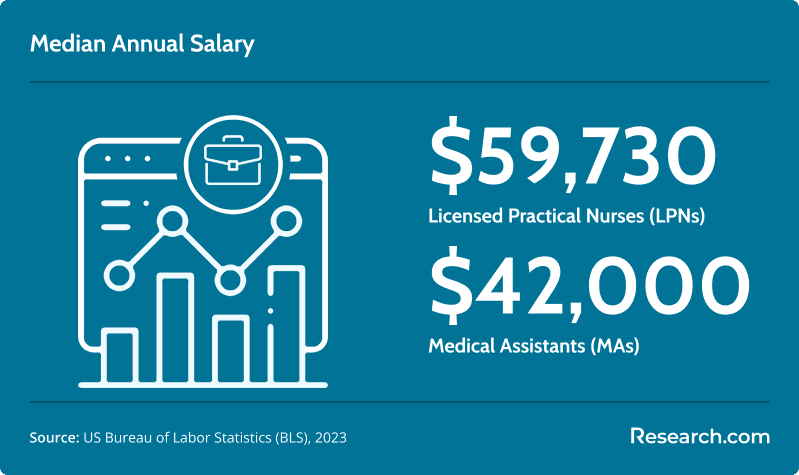
An LPN is usually the better choice if you want a nursing-focused role with medication administration, bedside care, and a clearer path toward becoming an RN. A medical assistant is often the better fit if you want faster entry into healthcare, more predictable clinic hours, and a mix of patient care and administrative work. LPN programs typically cost between $10,000 and $15,000 and take 12–18 months, while MA programs range from $5,000 to $15,000 and may take 9 months to 2 years. LPNs earn a median salary of $59,730, compared with around $42,000 for MAs.
Key Things You Should Know About Licensed Practical Nurse vs. Medical Assistant
- LPNs have a wider clinical scope than MAs. LPNs focus on nursing care, including medication administration, vital sign monitoring, wound care, and support with daily living activities. MAs usually combine basic clinical tasks with scheduling, charting, billing support, and exam-room preparation.
- The work settings are different. LPNs commonly work in hospitals, nursing homes, long-term care facilities, and home healthcare. MAs are more often employed in physician offices, outpatient clinics, and ambulatory care settings.
- Training length and cost vary by path. LPN programs generally take 12–18 months and cost between $10,000 and $15,000. MA programs can take 9 months to 2 years and cost $5,000–$15,000. Completion rates are around 70% for LPN programs and 80% for MA programs.
- LPN licensure is mandatory. LPNs must complete a state-approved practical nursing program and pass the NCLEX-PN. The NCLEX-PN pass rate was about 80.3% as of 2023. MAs may not always need certification, but earning a credential can improve employability.
- Medical assistant jobs are projected to grow faster. MA employment is projected to increase by 15% from 2023 to 2033, while LPN employment is projected to grow by 5%. However, LPNs generally earn more and may have a more direct nursing advancement pathway.
- What are the key differences between LPNs and medical assistants?
- How to become an LPN or a medical assistant for 2027
- Do LPNs and MAs need credentials?
- How do LPN and medical assistant duties compare?
- What legal and ethical responsibilities do LPNs and medical assistants have?
- What are the biggest challenges of working as an LPN or medical assistant?
- How can further education support nursing career growth?
- Is an accelerated RN to BSN program a useful next step?
- Can non-nursing professionals pursue an MSN?
- Can you transition from a medical assistant to an LPN?
- Can LPNs or medical assistants pursue a direct path to NP roles?
- Can advanced online education improve career mobility?
- Are online RN BSN programs without clinicals worth considering?
- Which career is growing faster, LPNs or medical assistants?
- LPN vs. Medical Assistant: Which career is right for you?
- Could psychiatric mental health training be a future career move?
- What advancement options exist beyond LPN and medical assistant roles?
What are the key differences between LPNs and medical assistants?
The biggest difference is scope of practice. LPNs are licensed nursing professionals who deliver direct patient care under the supervision of registered nurses, physicians, or other approved providers. Medical assistants support physicians and care teams by handling a combination of clinical and administrative tasks, often in outpatient environments.
In practice, this means an LPN may administer medications, monitor patient conditions, help with wound care, and assist patients with daily needs. A medical assistant may room patients, take histories, record vital signs, prepare examination rooms, coordinate appointments, update records, and assist with minor procedures when allowed by state rules and employer policy.
| Category | Licensed Practical Nurse | Medical Assistant |
| Main focus | Direct nursing care | Clinical support and administrative support |
| Typical settings | Hospitals, nursing homes, long-term care, home healthcare | Physician offices, outpatient clinics, ambulatory care centers |
| Credential required | State licensure required | Certification may be optional, depending on state and employer |
| Education timeline | 12–18 months | 9 months to 2 years |
| Typical cost range | $10,000 to $15,000 | $5,000 to $15,000 |
| Median salary | $59,730 | Around $42,000 |
| Best fit for | Students who want a nursing pathway and hands-on patient care | Students who want clinic-based work and a mix of patient and office duties |
A medical assistant cannot simply move into an LPN job without additional education and licensure. The two roles overlap in basic patient interaction, but they are not interchangeable. If long-term earnings and nursing advancement matter to you, it may also help to review BSN salary expectations because many LPNs eventually compare practical nursing with RN and BSN pathways.

How to become an LPN or a medical assistant for 2027
Both careers require formal preparation, but the LPN route is more regulated because it leads to nursing licensure. The MA route can be more flexible, especially for students who want a shorter program, hybrid coursework, or an outpatient-care career.
Steps to become an LPN
- Confirm your state requirements. LPNs must graduate from a state-approved practical nursing program. Requirements vary, so check your state board of nursing before enrolling.
- Choose an approved program. LPN programs usually take 12–18 months and include classroom instruction, lab work, and supervised clinical training.
- Budget for tuition and related costs. LPN programs typically cost $10,000–$15,000. Also account for uniforms, background checks, immunizations, exam fees, books, transportation, and possible lost work hours during clinical rotations.
- Complete clinical training. LPN students receive more extensive direct patient care preparation than most MA students.
- Pass the NCLEX-PN. After graduation, candidates must pass the licensure exam to practice as an LPN.
- Apply for state licensure. Passing the exam is only part of the process; you must also meet state licensing requirements.
Steps to become a medical assistant
- Decide whether you want a certificate, diploma, or associate degree. MA certificates and diplomas may take 9-12 months, while associate degree programs may take 2 years.
- Compare program format. Some MA programs offer online coursework, but clinical skills must be practiced in person.
- Estimate total cost. MA programs commonly cost $5,000–$15,000. If you are comparing virtual options, online medical assistant program costs may vary widely by provider, typically from $500 to $3,000 for certification-focused options.
- Complete required externship or hands-on training. Employers often value real clinical exposure, especially for entry-level applicants.
- Consider certification. Certification is not always legally required, but it may strengthen your resume and help you compete for better positions.
Training comparison
| Factor | LPN path | MA path |
| Program length | 12–18 months | 9 months to 2 years |
| Average tuition range | $10,000–$15,000 | $5,000–$15,000 |
| Completion rate | About 70% | About 80% |
| Clinical intensity | Higher, with nursing-focused patient care | Moderate, with both clinical and administrative preparation |
| Online availability | Rarely fully online because of clinical requirements | More hybrid options, though hands-on training remains in person |
| Number of programs | More than 1,200 accredited LPN schools | About 900 MA programs |
Because LPN programs are longer and more clinically intensive, student loan debt may be higher for LPN students. However, the higher median salary may offset the added cost for students who complete the program, pass the licensing exam, and secure employment.
Do LPNs and MAs need credentials?
LPNs must be licensed. Medical assistants may be able to work without certification, but many employers prefer or require a recognized MA credential. This distinction matters because licensure gives LPNs a defined legal scope of nursing practice, while MA authority is often shaped by state law, employer policy, and physician delegation.
| Credential issue | LPN | Medical Assistant |
| Required to work? | Yes, state licensure is required | Often optional, but may be required by some states or employers |
| Main exam | NCLEX-PN | Varies by certifying organization |
| Exam pass rate noted | About 80.3% as of 2023 | Varies by exam and organization |
| Exam cost noted | Around $200 for the NCLEX-PN | Usually $125 to $250 for MA certification exams |
| Renewal | Often every two years, with continuing education in many states | Depends on the certifying organization |
Students should not assume that a program automatically qualifies them for licensure or certification. Before enrolling, ask whether the program is state-approved, whether graduates are eligible for the relevant exam, and whether the curriculum meets local employer expectations.
If you are already thinking beyond practical nursing, you may also want to ask, what is the fastest RN certification program? Some accelerated RN pathways allow LPNs to become registered nurses in as little as 12 months, but eligibility depends on the program and state requirements.
How do LPN and medical assistant duties compare?
LPNs and medical assistants both support patient care, but their daily work can feel very different. LPNs spend more of their time delivering nursing care. MAs often move between exam rooms, the front desk, patient records, and physician support duties.
Patient care responsibilities
- LPNs: Check vital signs, administer medications, provide wound care, monitor patient status, assist with activities of daily living, and report changes to RNs or physicians.
- MAs: Record patient histories, measure vital signs, prepare rooms, assist with minor procedures, update charts, and support patient flow. New applicants can review how to get a medical assistant job with no experience for practical entry-level strategies.
Medication administration
- LPNs: May administer oral, topical, injectable, and other medications allowed by state law. In some states, LPNs may start IV lines after additional certification.
- MAs: May administer injections or medications only when permitted by state law and under appropriate supervision.
Administrative responsibilities
- LPNs: Document nursing care, update patient records, communicate with care teams, and support care planning within their licensed scope.
- MAs: Schedule appointments, manage patient intake, support billing workflows, handle phone calls, prepare forms, and help maintain electronic health records.
Supervision and authority
- LPNs usually work under RNs, physicians, or other licensed providers, depending on the state and setting.
- MAs usually work under physicians or clinic providers and perform delegated tasks rather than independent nursing functions.
The difference is not that one role matters more than the other. The difference is how responsibility is assigned. LPNs carry licensed nursing responsibilities, while MAs help clinics function efficiently by combining patient-facing support with administrative coordination.
What legal and ethical responsibilities do LPNs and medical assistants have?
LPNs and medical assistants must stay within their legal scope of practice, protect patient privacy, document accurately, and follow employer protocols. The legal risk differs because LPNs hold an independent nursing license, while MAs generally perform delegated tasks under a supervising provider.
Liability and malpractice
Liability refers to legal responsibility when a patient is harmed because of negligence, unsafe care, or a violation of professional standards. LPNs may face direct professional consequences because they are licensed. MAs may also be involved in malpractice claims, but supervision can affect how responsibility is assigned.
- LPNs: May be individually accountable for errors, unsafe medication practices, documentation failures, or actions outside their licensed scope.
- MAs: Must follow delegated instructions and state rules. A supervising physician may share responsibility when an MA performs assigned tasks improperly.
Ethical responsibilities
- Protect patient information and follow HIPAA rules.
- Ask for help when a task is outside your training or legal authority.
- Document honestly and promptly.
- Respect informed consent before procedures.
- Report safety concerns through the correct workplace channels.
Both LPNs and MAs must comply with the Health Insurance Portability and Accountability Act (HIPAA). Consequences for privacy violations can range from verbal warnings to termination, depending on the circumstances and severity.
The safest approach is simple: know your state rules, follow your employer’s policies, do not perform tasks you are not authorized to perform, and ask for clarification before acting when a situation is unclear.
What are the biggest challenges of working as an LPN or medical assistant?
Both careers can be rewarding, but neither should be chosen without understanding the strain involved. Healthcare support roles require emotional control, physical stamina, accuracy, and patience under pressure.
High workload and competing priorities
LPNs may manage several patients, respond to changes in condition, administer medications, complete documentation, and communicate with nurses and physicians. MAs may room patients, answer phones, update records, prepare paperwork, coordinate appointments, and support providers during busy clinic schedules.
Physical demands
LPNs may lift, reposition, transfer, or assist patients, which can increase the risk of fatigue and musculoskeletal injury. MAs may stand for long periods, move between rooms, handle supplies, and work around infectious materials or hazardous substances.
Burnout and schedule pressure
LPN schedules may include nights, weekends, holidays, and long shifts, especially in hospitals, nursing homes, and long-term care. MAs often have more predictable daytime schedules, but busy outpatient clinics can still create stress through high patient volume and administrative pressure.
Students comparing nursing roles should understand the difference between LPNs and RNs, since supervision, responsibility, workload, and advancement expectations can vary significantly.
Workplace safety concerns
Healthcare workers may experience verbal abuse, threats, or physical aggression from patients or visitors. Risk can be higher in emergency rooms, psychiatric settings, nursing homes, and understaffed environments. Training, staffing, reporting systems, and employer safety policies matter.
| Challenge | More common concern for LPNs | More common concern for MAs |
| Irregular schedule | Higher risk in facilities with 24/7 care | Usually lower in outpatient clinics |
| Administrative overload | Documentation-heavy but clinically focused | Often significant due to scheduling, records, and front-office tasks |
| Physical strain | Higher when lifting or assisting patients | Moderate, depending on clinic flow and duties |
| Emotional stress | Can be high in long-term care and acute settings | Can be high in busy clinics and patient-facing offices |
How can further education support nursing career growth?
Further education can turn entry-level healthcare experience into a pathway toward broader clinical responsibility, leadership, or specialization. For LPNs, the most common next steps often include RN bridge programs, associate degree nursing programs, and eventually BSN options. For MAs, additional education may open doors to nursing, healthcare administration, public health, or specialized clinical support roles.
If your long-term goal is advanced nursing practice, it is worth researching prerequisites early. Some professionals eventually explore accelerated online nurse practitioner programs, but these routes usually require prior nursing credentials and careful attention to accreditation, clinical placement, and state authorization.
Is an accelerated RN to BSN program a useful next step?
An accelerated RN to BSN program may make sense after becoming an RN, especially if you want broader job options, leadership preparation, or a stronger foundation for graduate nursing study. These programs are not usually the first step for someone who is only deciding between LPN and MA, but they can be part of a long-term nursing plan.
Students who expect to move from LPN to RN and then to BSN can compare fast-track RN to BSN programs to understand how later degree completion may fit around work and family responsibilities.
Can non-nursing professionals pursue an MSN?
Some people with a non-nursing bachelor’s degree pursue graduate-level nursing through direct-entry pathways. These programs are designed to add foundational nursing education before advanced coursework, but they are demanding and may not be appropriate for students who want a short, low-cost entry point into healthcare.
If you already hold a bachelor’s degree outside nursing and want to change careers, compare admissions requirements, clinical placement support, state authorization, and licensure outcomes carefully. One possible research starting point is online direct-entry MSN programs.
Can you transition from a medical assistant to an LPN?
Yes. A medical assistant can become an LPN by completing an accredited or state-approved practical nursing program and passing the NCLEX-PN. Prior MA experience may make the transition easier because you may already understand basic patient interaction, vital signs, charting, infection control, and clinic workflow.
Some schools offer bridge programs or credit-transfer options for healthcare workers. These may allow eligible MAs to apply previous coursework or experience toward LPN training, and some programs can take less than a year to complete. Policies vary by institution, so confirm transfer rules before enrolling.
The typical process includes choosing a state-approved practical nursing program, completing required coursework and clinical hours, applying for exam eligibility, passing the National Council Licensure Examination for Practical Nurses, and securing state licensure.
The transition can be financially meaningful. According to the Bureau of Labor Statistics, as of May 2023, medical assistants earn a median salary of $42,000, while LPNs earn a median salary of $59,730. Students considering broader healthcare leadership or population health careers may also want to review what an MPH degree is as a separate long-term option.
Can LPNs or medical assistants pursue a direct path to NP roles?
LPNs and medical assistants generally cannot move directly into nurse practitioner practice without first completing the required nursing education and licensure steps. Nurse practitioner roles require advanced graduate nursing preparation, clinical training, and state-level authorization. The exact pathway depends on your current education, state rules, and whether you already hold an RN license.
Some students with non-nursing backgrounds research direct-entry NP programs for non-nurses. These programs may provide an alternative route for eligible applicants, but they are not shortcuts around licensure, accreditation, or supervised clinical requirements.
Can advanced online education improve career mobility?
Online education can help healthcare workers continue studying while employed, but program quality and clinical requirements matter. A flexible format is useful only if the program is properly accredited, accepted in your state, and aligned with your career goal.
For healthcare professionals interested in women’s health, an affordable online women’s health NP program may be worth researching after completing the necessary nursing prerequisites. Before applying, confirm clinical placement expectations, state authorization, and certification eligibility.
Are online RN BSN programs without clinicals worth considering?
Online RN to BSN programs with limited or no traditional clinical components may be useful for licensed RNs who already have clinical experience and want degree completion. They are not the same as pre-licensure nursing programs and generally do not replace the clinical training needed to become an RN in the first place.
If your plan is to move from LPN or MA into registered nursing, first identify the required RN pathway. Later, once you are eligible, you can compare online RN to BSN programs without clinicals to determine whether they support your schedule and career goals.
Which career is growing faster, LPNs or medical assistants?
Medical assistant employment is projected to grow faster than LPN employment. The U.S. Bureau of Labor Statistics projects 15% growth for medical assistants from 2023 to 2033, compared with 5% growth for LPNs.
MA demand is tied to outpatient care, preventive services, and physician office growth. LPN demand remains important in long-term care, nursing homes, home healthcare, and other settings serving aging patients, but the projected growth rate is lower.
Technology is also changing both jobs. Administrative tools, electronic health records, automated scheduling, and AI-supported documentation may reduce some repetitive clerical work. One cited analysis notes that AI could handle up to 30% of nurses’ paperwork. This does not remove the need for human care, but it may change which tasks employers value most.
| Career | Projected growth | Main demand drivers | Technology exposure |
| Medical Assistant | 15% from 2023 to 2033 | Outpatient care, preventive services, physician offices | Higher exposure to automation in scheduling, records, and administrative workflows |
| LPN | 5% from 2023 to 2033 | Long-term care, nursing homes, home healthcare, aging population needs | Less replaceable because of direct hands-on patient care |
For those aiming well beyond entry-level nursing, nurse practitioner program options can help illustrate how advanced education may eventually increase responsibility, autonomy, and earning potential.
LPN vs. Medical Assistant: Which career is right for you?
The right choice depends on what you want your healthcare career to look like in the next few years. Choose the LPN route if you want licensed nursing work, more direct patient care, and a stronger bridge toward RN roles. Choose the MA route if you want to enter healthcare through outpatient work, prefer a blend of clinical and administrative tasks, and value more predictable clinic hours.
| Choose LPN if... | Choose Medical Assistant if... |
| You want nursing responsibilities and licensure | You want a quicker route into clinics or physician offices |
| You are comfortable with bedside care and hands-on patient support | You like variety between patient care and office work |
| You may want to become an RN later | You may want to move into healthcare administration or specialty clinic support |
| You can handle possible nights, weekends, or facility-based shifts | You prefer more regular outpatient schedules |
| You are willing to complete a more regulated training and licensing process | You want a flexible training path where certification may improve options |
If you are an MA who later wants nursing responsibilities, a medical assistant to LPN bridge program may reduce repetition by recognizing some prior coursework or experience. Always verify whether the program is state-approved and whether graduates are eligible for the NCLEX-PN.
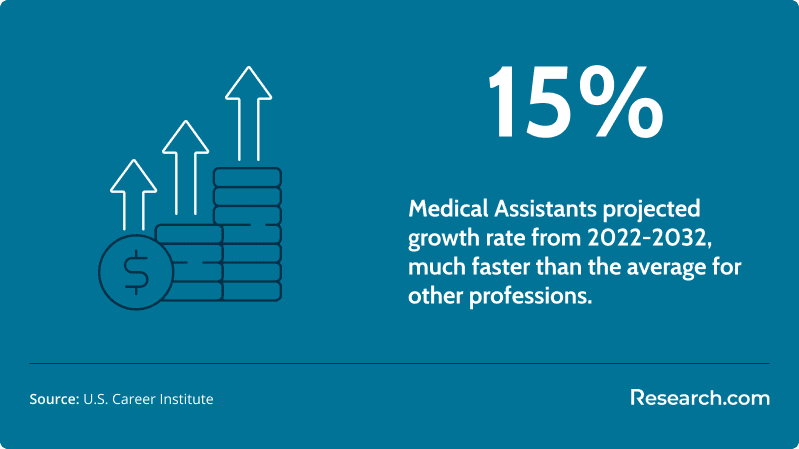
As of 2025, MA jobs are projected to grow by 14% from 2022 to 2032, compared to 5% for LPNs. Growth is only one factor, though. Salary, schedule, scope of practice, physical demands, and advancement should carry just as much weight in your decision.
Questions to ask before choosing a program
- Is the LPN program state-approved for licensure eligibility?
- Is the MA program accredited or recognized by local employers?
- What percentage of students complete the program?
- What are the total costs beyond tuition?
- Does the program include hands-on clinical training or an externship?
- Will credits transfer if I continue into nursing later?
- Does the program publish exam pass rates or job placement information?
- Are classes and clinical hours compatible with my work schedule?
- Will the credential meet requirements in the state where I want to work?
Common mistakes to avoid
| Mistake | Why it can hurt you | Better approach |
| Choosing based only on program length | A shorter program may not match your long-term career goal | Compare scope of practice, advancement, schedule, and pay |
| Ignoring accreditation or state approval | You may not qualify for licensure or certification | Verify requirements before paying tuition |
| Looking only at tuition | Fees, books, exams, transportation, and lost work time can change total cost | Ask for a full cost breakdown |
| Assuming online means fully remote | Healthcare programs usually require in-person clinical training | Confirm lab, externship, and clinical requirements |
| Assuming salary outcomes are guaranteed | Pay depends on location, employer, experience, shift, and credentials | Use salary data as a benchmark, not a promise |
| Relying only on job growth projections | High growth does not automatically mean the best fit | Weigh growth against duties, stress, schedule, and advancement |
Here’s what graduates have to say about choosing between LPN and medical assistant careers
-
: "
I knew I wanted patient care, but I did not understand how different the two roles were until I compared daily duties. LPNs spend more time on nursing tasks like medications and patient monitoring, while MAs often balance rooming patients with office responsibilities. Since I want hands-on clinical care, the LPN path makes more sense for me. — Ingrid
"
-
: "
My biggest concern was schedule stability. Medical assistants are often in outpatient clinics with regular hours, while many LPN jobs are in facilities that need evening, weekend, or overnight coverage. That difference made the MA route more appealing for my current lifestyle. — Callum
"
-
: "
I compared both salary and long-term mobility. Medical assistant jobs appear to be growing quickly, but LPNs typically earn more and have a clearer route toward RN programs. Seeing both sides helped me make a more realistic plan. — Anika
"
Could psychiatric mental health training be a future career move?
Psychiatric mental health is a possible specialization for healthcare professionals who later complete the required nursing education and graduate-level preparation. It is not an immediate next step for most new LPNs or MAs, but it can be part of a long-term plan for those interested in mental health care.
If you eventually become eligible for advanced practice nursing study, compare clinical placement expectations, accreditation, certification alignment, and state authorization. One research option is a list of affordable online psychiatric mental health nurse practitioner programs.
What advancement options exist beyond LPN and medical assistant roles?
LPNs often advance by moving into RN programs, supervisory practical nursing roles, specialty certifications, or eventually BSN and graduate nursing pathways. Medical assistants may move into lead MA positions, clinic coordination, healthcare administration, specialty office roles, or nursing programs after completing additional prerequisites.
For students who want a much longer clinical ladder, advanced bridge options such as RN to MSN NP programs may become relevant after earning the required nursing credentials. These programs are not a substitute for foundational licensure, but they can help experienced nurses move toward higher-level practice.
Key Insights
- LPN is the stronger choice for direct nursing care. If you want medication administration, bedside care, and a route toward RN practice, the LPN path is usually more aligned with that goal.
- Medical assistant is often better for clinic-based work. If you prefer outpatient settings, front-office variety, and more predictable hours, MA may fit your lifestyle better.
- LPNs earn more, but MAs are projected to grow faster. LPNs have a median salary of $59,730, while MAs earn around $42,000. MA employment is projected to grow 15% from 2023 to 2033, compared with 5% for LPNs.
- Licensure is the biggest structural difference. LPNs must pass the NCLEX-PN and maintain state licensure. MA certification may be optional, but it can improve job prospects.
- Do not choose based on speed alone. Program approval, clinical training, transfer credits, total cost, schedule, and long-term advancement matter more than simply finishing quickly.
- Bridge planning can save time later. If you think you may become an RN, ask schools now whether credits transfer and whether the program supports future nursing pathways.
References:
- Medical Assistant vs. Licensed Practical Nurse (MA vs LPN). https://www.stepful.com/post/medical-assistant-vs-licensed-practical-nurse
- U.S. Bureau of Labor Statistics. Medical Assistants: Occupational Outlook Handbook. https://www.bls.gov/ooh/healthcare/medical-assistants.htm
- U.S. Bureau of Labor Statistics. Licensed Practical and Licensed Vocational Nurses. https://www.bls.gov/ooh/healthcare/licensed-practical-and-licensed-vocational-nurses.htm
- Licensed Practical Nurse (LPN) Guide | Salary & Programs 2025. Nurse.org. https://nurse.org/resources/licensed-practical-nurse-lpn-lvn/
- U.S. Career Institute. Online Medical Assistant Certificate Program. https://www.uscareerinstitute.edu/online-medical-assistant-school
- Miller-Motte College. What is the difference between a medical assistant and an LPN? https://www.miller-motte.edu/medical-assistants-vs-lpns/
- NurseJournal.org. States with the highest NCLEX pass rates. https://nursejournal.org/resources/nclex/states-with-highest-nclex-pass-rates/
- American Association of Medical Assistants. State scope of practice laws. https://www.aama-ntl.org/publications/state-scope-of-practice-laws
- Maryland Medical Malpractice Attorney Blog. Medical assistant malpractice settlements. https://www.marylandmedicalmalpracticeattorneyblog.com/medical-assistant-malpractice/
- LLR Defense Lawyer. Healthcare law essentials every nurse should know. https://llrdefense.com/healthcare-law-essentials-what-every-nurse-should-know/
- Texas Health School. Medical Assistant vs LPN – What Is the Difference? https://ths.edu/medical-assistant-vs-lpn-what-is-the-difference/
- NurseJournal.org. AI can handle 30% of nurses' administrative tasks. https://nursejournal.org/articles/the-future-of-nursing-ai-admin-tasks/
- The Guardian. Dissatisfaction among gen Z staff is ‘ticking timebomb’ for NHS. https://www.theguardian.com/society/2025/feb/20/dissatisfaction-among-gen-z-staff-is-ticking-timebomb-for-nhs-nurses
- Zippia. Licensed Practical Nurse salary by state. https://www.zippia.com/advice/licensed-practical-nurse-salary-by-state/
- U.S. Bureau of Labor Statistics. Occupational Employment and Wages, May 2023: 31-9092 Medical Assistants. https://www.bls.gov/oes/currenT/oes319092.htm
- The Irish Sun. Over 38,000 people from outside EU issued Irish work permits in 2024. https://www.thesun.ie/news/14437077/irish-work-permits-record-surging-demands-european-union-economy
Other Things You Should Know About Licensed Practical Nurse vs. Medical Assistant
An LPN license is more often required for hospital nursing roles because it is a state license issued after completing an approved practical nursing program and passing the NCLEX-PN. Medical assistant certificates are commonly enough for outpatient and physician office jobs, but hospitals usually prefer clinical assistants with formal certification.
In 2027, LPNs can administer medications, start IVs, and provide wound care, which are typically beyond a medical assistant's scope. LPNs often work under the supervision of RNs or physicians, performing more complex procedures in clinical settings that require direct patient care.