2027 How to Become a Nutritionist in Wisconsin

Co-Founder and Chief Data Scientist
Choosing a nutrition career in Wisconsin means sorting through two related but different paths: working as a nutritionist or qualifying for dietitian practice. The distinction matters because education, credentialing, legal scope, employer expectations, and long-term earning potential can vary. Wisconsin has 2,380 Registered Dietitians (RDs) and Registered Dietitian Nutritionists (RDNs), ranking 18th in the nation, which points to an established workforce and continuing need for qualified nutrition professionals.
This guide explains how to become a nutritionist in Wisconsin, when dietitian licensure or certification becomes important, how long the process can take, what programs and credentials to compare, what costs to expect, and how to decide whether this career path fits your goals.
Quick answer: How do you become a nutritionist in Wisconsin?
Wisconsin does not require every person using the general title “nutritionist” to hold a state license. However, professionals who want to practice as dietitians, use protected dietitian titles, provide higher-level clinical nutrition services, or qualify for many healthcare jobs generally need to follow a formal dietetics pathway through accredited education, supervised practice, national examination, and application to the Wisconsin Department of Safety and Professional Services (DSPS).
For most students, the safest route is to complete an ACEND-accredited nutrition or dietetics program, gain supervised practice experience, and decide whether the Registered Dietitian Nutritionist (RDN) or Certified Nutrition Specialist (CNS) credential best supports their career goals.
Key Things You Should Know About Becoming a Nutritionist in Wisconsin
- Nutritionist and dietitian are not the same legal category. Wisconsin does not broadly license all nutritionists, but professionals who practice as dietitians must meet DSPS requirements.
- Clinical dietitian roles require formal preparation. Candidates typically complete nutrition or dietetics education, supervised practice, and the Commission on Dietetic Registration (CDR) exam.
- Credentials can affect employability. Common options include the Registered Dietitian Nutritionist (RDN) credential and the Certified Nutrition Specialist (CNS) credential.
- Continuing education is part of long-term practice. Requirements differ by credentialing body; RDNs must complete 75 hours of continuing education every five years.
- Before enrolling, check accreditation and outcomes. The program you choose should align with your intended credential, state requirements, internship expectations, and target job setting.
- What education do you need to become a nutritionist in Wisconsin?
- Does Wisconsin require nutritionists to be licensed?
- How long does it take to become a nutritionist in Wisconsin?
- Which nutrition certifications are available in Wisconsin?
- What practical experience should Wisconsin nutritionists get?
- How much does it cost to become a nutritionist in Wisconsin?
- What salary and job outlook can nutritionists expect in Wisconsin?
- How can nutrition professionals move into nursing roles in Wisconsin?
- How can Wisconsin nutritionists work with other healthcare professionals?
- What advancement options are available for nutritionists in Wisconsin?
- How are nutritionist and nursing credentialing processes different in Wisconsin?
- How can you build a nutrition practice in Wisconsin?
- What professional development options are useful for Wisconsin nutritionists?
- How can interdisciplinary collaboration improve nutrition work in Wisconsin?
- What nutrition specializations can you pursue in Wisconsin?
- Why should nutritionists understand pharmacist licensure in Wisconsin?
- What trends are changing nutrition careers in Wisconsin?
- How do you transition from nutritionist to registered dietitian in Wisconsin?
- What challenges do Wisconsin nutritionists face?
- What legal responsibilities apply to nutritionists in Wisconsin?
- How can advanced degrees strengthen a Wisconsin nutrition career?
- Can nurse practitioner credentials support a nutrition career?
- Key insights for becoming a nutritionist in Wisconsin
What education do you need to become a nutritionist in Wisconsin?
The right education depends on the type of nutrition work you want to do. If your goal is wellness coaching, community education, or general nutrition guidance, a nutrition-related degree or certificate can help you build credibility. If your goal is clinical dietetics, hospital employment, medical nutrition therapy, or RDN eligibility, you need a more structured academic and supervised practice pathway.
| Education option | Best for | What to check before enrolling |
| Bachelor’s degree in nutrition, dietetics, or a related field | Students preparing for entry-level nutrition roles or future dietetics training | Whether the curriculum aligns with ACEND standards and future credential requirements |
| ACEND-accredited dietetics program | Students who want the strongest preparation for RDN or dietitian roles | Accreditation status, supervised practice placement support, exam preparation, and graduate pathway options |
| Master’s degree in nutrition, dietetics, or public health nutrition | Professionals seeking advanced clinical, research, leadership, or public health roles | Admission requirements, internship integration, research opportunities, and cost |
| Diploma or certificate program | Learners seeking flexible training for wellness education or non-clinical nutrition work | Whether the credential is recognized by employers and whether it qualifies you for your intended scope of practice |
- Common degree foundation: A bachelor’s degree in nutrition, dietetics, nutritional science, or a closely related field remains a common starting point for Wisconsin students.
- Wisconsin program examples: The University of Wisconsin-Madison offers a Bachelor of Science in Nutritional Sciences. The University of Wisconsin-Stevens Point offers a bachelor’s degree in Dietetics. The University of Wisconsin-Milwaukee offers a Master of Public Health (MPH) in Nutrition and Dietetics.
- Accreditation matters: Students pursuing dietitian credentials should prioritize programs accredited by the Accreditation Council for Education in Nutrition and Dietetics (ACEND), because accreditation affects eligibility for supervised practice and professional credentialing.
- Flexible alternatives: Nontraditional options, such as the Certified Nutritional Wellness Counselor Diploma from New Eden School of Natural Health and Herbal Studies, may fit learners seeking online or wellness-oriented training, but they should not be assumed to replace an accredited dietetics pathway.
If you are comparing degree options and want to understand how education may connect to future earnings, review Research.com’s guide to nutrition science degree salary.
Does Wisconsin require nutritionists to be licensed?
Wisconsin does not impose one universal license on everyone who offers general nutrition guidance. The more important legal distinction is whether you are presenting yourself as a dietitian, using a protected dietitian title, or providing services that fall within regulated dietetic practice. In those cases, DSPS requirements become central.
For career planning, treat licensure and credentialing as more than a technicality. Employers in hospitals, clinics, long-term care, public health agencies, and insurance-related roles often prefer or require applicants who have completed recognized dietetics training and earned the RDN credential.
| Path | State status | Career implication |
| General nutritionist | The broad title is not licensed in the same way as dietitian practice | May work in wellness, education, coaching, fitness, or community settings, depending on qualifications and employer expectations |
| Dietitian or dietitian-related title | Subject to Wisconsin DSPS rules and title protections | Often required for clinical, healthcare, and medical nutrition roles |
| RDN | National credential commonly tied to dietitian practice | Can improve access to hospital, clinic, school, public health, and advanced nutrition jobs |
| CNS | Advanced certification option for qualified candidates | May support work in advanced nutrition counseling, functional nutrition, research, or specialized practice settings |
Wisconsin nutrition professionals should also understand scope of practice. Avoid implying that you are licensed, certified, or qualified to provide dietetic services unless your credentials support that claim. Joining professional organizations such as the Wisconsin Academy of Nutrition and Dietetics can help you monitor regulatory updates, continuing education options, and ethical practice expectations.
Specialized training in sports nutrition, pediatric nutrition, public health, or chronic disease support can also help, especially as demand for dietitian and nutritionist jobs in Wisconsin is projected to increase by 11% by 2030.
How long does it take to become a nutritionist in Wisconsin?
The timeline can be short if you are pursuing basic wellness education, but it becomes much longer if your goal is clinical dietetics or RDN-level practice. Before choosing a program, decide whether you want a general nutrition role or a credentialed healthcare career.
| Pathway | Typical time commitment stated for this route | What it may qualify you to pursue |
| Diploma program | 6 months to 1 year | General nutrition education, wellness coaching support, or non-clinical roles |
| Bachelor’s degree | About 4 years | Entry-level nutrition roles and preparation for advanced dietetics training |
| Master’s degree | An additional 2 years after a bachelor’s degree | Advanced nutrition, public health, clinical, research, or leadership pathways |
| Supervised practice | Around 1,000 hours, often 6 months to a year | Preparation for professional credentialing and clinical practice expectations |
| Post-graduate certificate | 6 months to 1 year | Focused expertise in areas such as clinical, holistic, or specialized nutrition |
| Exam preparation | Several weeks to a few months | Readiness for credentialing exams such as the RDN or CNS exam |
Overall, becoming a nutrition professional in Wisconsin may take anywhere from 6 months to over 6 years. The shorter route may work for non-clinical wellness roles. The longer route is usually more appropriate for students targeting healthcare employers, credentialed dietitian practice, or advanced nutrition positions. To compare flexible academic options, review Research.com’s list of top online nutrition degree programs.
Which nutrition certifications are available in Wisconsin?
Certification is not just a résumé item. It signals the level of training you completed, the type of work you are prepared to do, and whether employers can place you in regulated or clinical roles. The two credentials students most often compare are RDN and CNS.
| Credential | Core requirements described for this path | Best fit |
| Registered Dietitian Nutritionist (RDN) | Bachelor’s degree in nutrition or a related field, supervised practice program, and national RDN exam | Students seeking hospital, clinical, long-term care, school nutrition, public health, or medical nutrition roles |
| Certified Nutrition Specialist (CNS) | Master’s degree in nutrition or a related field, 1,000 hours of supervised practice, and CNS exam | Professionals interested in advanced nutrition counseling, functional nutrition, research, or specialized consulting |
Choose the RDN route if your target employers are hospitals, clinics, long-term care facilities, school systems, or organizations that require dietitian credentials. Consider the CNS route if your goals center on advanced nutrition science, individualized nutrition counseling, or specialized nontraditional practice settings. In either case, confirm that your degree, supervised practice, and exam plan match the credentialing body’s current requirements before committing tuition dollars.
-
: "
Decision tip: If you want clinical employment, start by searching actual Wisconsin job postings. If most openings require RDN eligibility or dietitian credentials, choose an accredited dietetics pathway rather than a general wellness certificate.
"
What practical experience should Wisconsin nutritionists get?
Practical experience helps you turn nutrition theory into client-ready judgment. It also helps employers see that you can communicate with patients, document accurately, follow safety standards, and adapt recommendations to real-life barriers such as cost, culture, transportation, and chronic illness.
- Clinical settings: Hospitals, clinics, and long-term care sites expose students to patient assessment, nutrition screening, charting, and care-team communication under qualified supervision.
- Community nutrition: Programs such as the Wisconsin Nutrition Education Program (WNEP) can help aspiring nutrition professionals understand public health outreach, food access issues, and education for diverse populations.
- Food service management: Schools, hospitals, and institutional kitchens provide experience with menu planning, food safety, regulatory requirements, procurement, and dietary accommodations.
- Research projects: Universities such as the University of Wisconsin-Madison can offer exposure to nutrition research, evidence evaluation, and partnerships with public or private organizations.
- Client communication: Motivational interviewing, culturally responsive counseling, and realistic goal-setting are essential for practice, especially when working with clients managing chronic conditions or limited food budgets.
How much does it cost to become a nutritionist in Wisconsin?
The cost depends on whether you choose a short certificate, public university degree, private institution, online program, or graduate-level dietetics pathway. Tuition is only one part of the budget. Students should also include fees, books, transportation, exam costs, and living expenses.
| Cost category | Amount or range stated | Why it matters |
| Public university tuition | University of Wisconsin-Madison can cost around $10,000 annually for in-state students | Often the lower-cost option for Wisconsin residents compared with out-of-state or private tuition |
| Out-of-state tuition | Out-of-state students may face fees exceeding $38,000 | Residency status can significantly change total program cost |
| Private institution tuition | Often starting at $30,000 per year | May offer different formats or resources but requires careful ROI analysis |
| Application fees | $50 to $100 | Multiple applications can add up quickly |
| Certification examination fees | Typically around $300 | Should be included in your final credentialing budget |
| Textbooks and supplies | $1,000 to $2,000 each year | Course materials, lab needs, and software can raise annual costs |
| Living expenses | Varies by location and lifestyle | Housing, food, health insurance, and transportation may exceed tuition for some students |
To reduce costs, compare in-state tuition, transfer credit policies, online course availability, scholarship options, internship placement costs, and whether graduate coursework can be bundled with supervised practice. If you are considering graduate study, an accredited online master’s in nutrition may offer scheduling flexibility, especially for working adults.
Questions to ask before paying a deposit
- Is the program ACEND-accredited or otherwise aligned with my target credential?
- Does the program help students secure supervised practice placements?
- What percentage of students complete the program and pass the relevant exam?
- Will my credits transfer if I change schools?
- Are online courses accepted for the credential or license I want?
- What costs are not included in advertised tuition?
What salary and job outlook can nutritionists expect in Wisconsin?
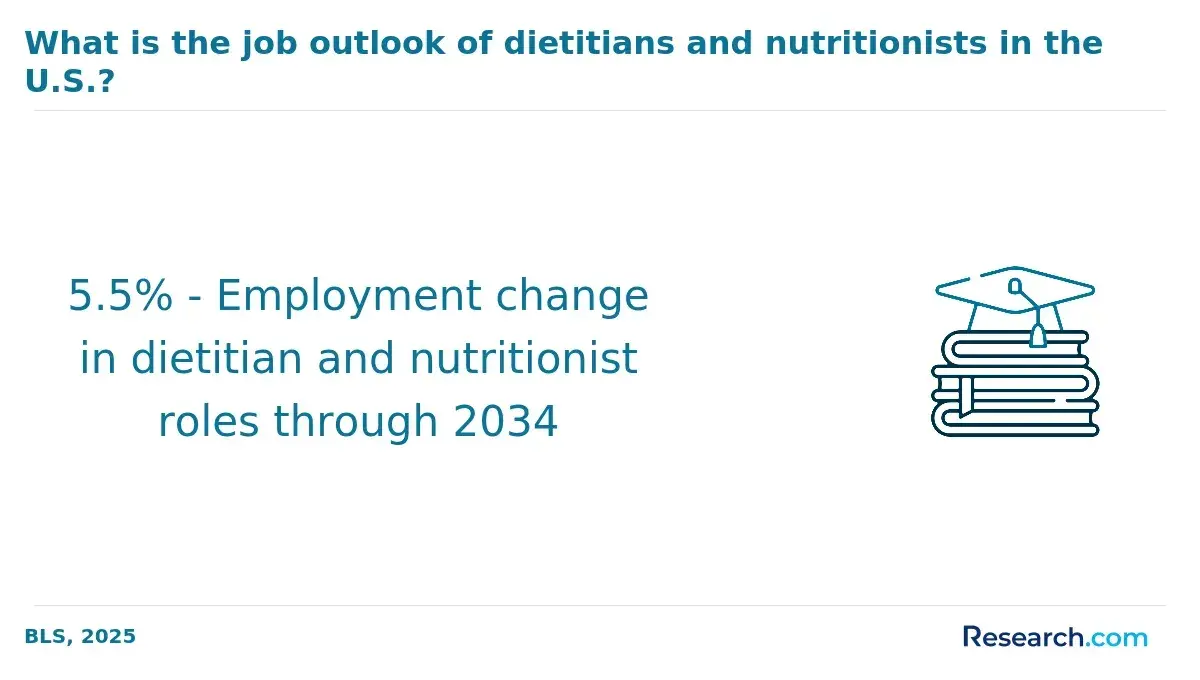
Wisconsin’s outlook for nutrition professionals is positive, but job prospects vary by credential, location, employer, and specialization. Dietitian and nutritionist employment in the state is projected to grow 6.5% from 2022 to 2032, faster than the average for all occupations. The average salary is around $60,000 annually, while another stated average for nutritionists in the state is approximately $61,870.
Demand is supported by several factors: an aging population, greater attention to chronic disease management, school and community wellness initiatives, and healthcare systems that increasingly incorporate nutrition into preventive care.
| Job market factor | What it means for Wisconsin nutritionists |
| Aging population | More clients may need nutrition support for diabetes, heart disease, digestive conditions, malnutrition risk, and medication-related dietary concerns |
| Preventive healthcare | Employers may value nutrition professionals who can help reduce risk factors before conditions worsen |
| Public health and schools | Community programs and educational institutions need professionals who can translate nutrition science into practical guidance |
| Credential-based hiring | RDN-qualified candidates may have access to more clinical and institutional roles than applicants with only general nutrition training |
Students should not treat salary averages as guarantees. Pay depends on experience, credential, employer type, geographic area, and whether the role is clinical, administrative, educational, corporate, or self-employed.
How can nutrition professionals move into nursing roles in Wisconsin?
Nutrition professionals who want broader clinical authority may consider nursing. Their background in counseling, prevention, food-related behavior change, and chronic disease support can be useful, but nursing requires a separate education, clinical training, and licensure process. Anyone considering this shift should compare prerequisite coursework, program length, clinical hours, licensing exams, and career goals before applying. Research.com’s guide on how to become a nurse in Wisconsin explains that route in more detail.
How can Wisconsin nutritionists work with other healthcare professionals?
Nutrition practice is strongest when it is integrated into a broader care plan. In Wisconsin, nutritionists and dietitians may collaborate with physicians, nurses, behavioral health providers, pharmacists, physical therapists, school health teams, and community organizations. Collaboration is especially important when food choices intersect with diabetes, eating disorders, substance use recovery, gastrointestinal conditions, pregnancy, athletic performance, or medication management.
For example, nutrition counseling may support behavioral health treatment when clients are recovering from substance use or rebuilding routines around meals, sleep, and physical health. Professionals interested in this adjacent field can review Research.com’s guide on how to become a substance abuse counselor in Wisconsin.
What advancement options are available for nutritionists in Wisconsin?
Career advancement usually comes from one or more of three moves: earning a stronger credential, specializing, or taking on leadership responsibilities. Wisconsin nutrition professionals can move into clinical practice, public health, education, corporate wellness, food science, research, management, or entrepreneurship depending on training and experience.
| Advancement path | When it makes sense | Preparation to prioritize |
| Registered Dietitian Nutritionist (RDN) | You want clinical, hospital, long-term care, or medical nutrition roles | Accredited dietetics education, supervised practice, exam preparation, and DSPS compliance |
| Corporate Wellness Director | You want to design employee health programs and manage wellness initiatives | Program planning, outcomes tracking, communication, and business skills |
| Health Coach | You prefer one-on-one behavior change support in wellness or community settings | Coaching methods, motivational interviewing, ethics, and referral boundaries |
| Nutrition Educator | You want to teach nutrition in schools, nonprofits, public health, or community programs | Curriculum design, cultural competence, public speaking, and evaluation |
| Food Scientist | You are interested in product development, food quality, safety, or industry work | Food science coursework, lab experience, regulatory knowledge, and research skills |
Major Wisconsin healthcare employers include Aurora Healthcare and UW Health System. Because many advanced roles favor formal education and recognized credentials, students comparing undergraduate options may want to explore top nutrition degrees online.
How are nutritionist and nursing credentialing processes different in Wisconsin?
Nutrition and nursing both support patient health, but the credentialing systems are different. Nutritionists may enter some roles through nutrition degrees and voluntary certifications, while dietitian practice has specific credential and title rules. Nursing, by contrast, is built around state licensure, approved nursing education, clinical training, and formal licensing exams. If you are comparing both fields, review the board of nursing program requirements in Wisconsin before assuming that nutrition coursework will shorten the nursing route.
How can you build a nutrition practice in Wisconsin?
A private or community-based nutrition practice requires more than subject knowledge. You need a clear service model, ethical boundaries, referral relationships, documentation procedures, pricing, marketing, and a plan for when clients need medical or mental health referrals.
- Define your scope. Be clear about whether you provide general wellness education, sports nutrition guidance, coaching, or credentialed dietetics services.
- Confirm legal title rules. Do not market yourself as a dietitian unless you meet Wisconsin’s requirements for that designation.
- Build referral partnerships. Connect with physicians, therapists, gyms, schools, community clinics, and wellness programs.
- Create evidence-based packages. Offer clear services such as nutrition assessments, meal planning education, grocery guidance, group workshops, or corporate wellness sessions.
- Track outcomes responsibly. Use client goals, follow-up notes, and referral criteria instead of promising guaranteed results.
- Keep learning. Continuing education helps you avoid outdated advice and strengthens client trust.
For a broader national career overview, see Research.com’s guide on becoming a nutritionist.
What professional development options are useful for Wisconsin nutritionists?
Professional development helps nutritionists stay current with nutrition science, counseling methods, public health policy, food safety, telehealth practices, and documentation standards. Useful options include webinars, workshops, conferences, supervised mentoring, specialty certificates, journal clubs, and association-based continuing education.
Some nutrition professionals also build complementary administrative skills. For example, learning how to become a medical biller and coder in Wisconsin can help those working in clinics better understand documentation, claims, and healthcare operations.
How can interdisciplinary collaboration improve nutrition work in Wisconsin?
Nutrition work often overlaps with food safety, public health, behavioral science, healthcare delivery, and research. Collaborating across disciplines can improve assessment quality, strengthen program design, and help nutrition professionals address complex problems such as food contamination, dietary misinformation, chronic disease, and community food access.
Nutritionists interested in research and analytical methods may find useful parallels in forensic science, including evidence handling, quality assurance, and investigative thinking. Research.com’s guide to forensic scientist education requirements in Wisconsin offers a look at another evidence-driven field.
What nutrition specializations can you pursue in Wisconsin?
Specialization can help Wisconsin nutritionists stand out, qualify for targeted roles, and serve specific populations more effectively. The best choice depends on your preferred work setting and the clients you want to help.
| Specialization | Typical focus | Good fit for |
| Clinical Nutrition | Nutrition care for patients with medical conditions in healthcare settings | Students pursuing RDN-aligned or hospital-based careers |
| Sports Nutrition | Fueling, hydration, body composition, recovery, and performance support | Professionals who want to work with athletes, teams, fitness centers, or active adults |
| Pediatric Nutrition | Nutrition needs of infants, children, and adolescents | Those interested in family health, schools, pediatric clinics, or childhood obesity prevention |
| Community Nutrition | Public health education, food access, nutrition outreach, and prevention programs | Professionals drawn to nonprofits, public agencies, schools, and community-based work |
Wisconsin institutions and community organizations create opportunities across these areas. The University of Wisconsin-Madison’s athletic programs, for example, show how sports nutrition can support competitive performance. The University of Wisconsin-Stout offers a Bachelor of Science in Dietetics with coursework that can prepare students for varied nutrition career paths.
Why should nutritionists understand pharmacist licensure in Wisconsin?
Nutrition advice often intersects with medication use, supplements, chronic disease, and patient safety. Understanding the professional boundaries of pharmacists can help nutritionists know when to refer clients, how to coordinate care, and how to avoid giving medication-related advice outside their expertise. Reviewing pharmacist licensure requirements in Wisconsin can help nutrition professionals better understand collaborative care in clinics, hospitals, and community health settings.
What trends are changing nutrition careers in Wisconsin?
Nutrition careers are becoming more technology-enabled, more interdisciplinary, and more focused on prevention. Wisconsin nutritionists should be ready for changing client expectations and employer requirements.
- Telehealth and virtual counseling: Clients increasingly expect flexible access to nutrition support, especially in rural or busy households.
- Data-informed nutrition: Apps, wearables, food logs, and health metrics are becoming part of client conversations, but professionals must interpret them carefully.
- Precision nutrition: Interest in nutrigenomics and individualized recommendations is growing, although responsible practice requires evidence-based limits.
- Team-based care: Nutrition professionals are collaborating more closely with nurses, physicians, pharmacists, therapists, and community health workers.
- Credential scrutiny: Employers and clients are paying closer attention to training, certification, accreditation, and legal scope.
Nutrition professionals who want to broaden clinical responsibility may compare related advanced healthcare routes, including how to become a nurse practitioner in Wisconsin.
How do you transition from nutritionist to registered dietitian in Wisconsin?
If you started in general nutrition or wellness coaching and now want to become a registered dietitian, begin by comparing your existing education with RDN pathway requirements. Some coursework may count; some may not. The transition usually requires careful academic planning, supervised practice, exam preparation, and DSPS application steps.
- Review your transcripts against ACEND-aligned dietetics coursework.
- Identify missing prerequisite or graduate-level courses.
- Apply to an accredited program that supports your RDN goal.
- Complete required supervised practice hours.
- Prepare for and pass the national examination.
- Submit documentation to the appropriate Wisconsin credentialing authority.
- Maintain continuing education after credentialing.
For a dedicated roadmap, review Research.com’s guide to the requirements to become a registered dietitian in Wisconsin.
What challenges do Wisconsin nutritionists face?
Wisconsin nutrition professionals face practical, legal, and social challenges. The biggest issues include understanding credential boundaries, serving clients with limited food access, adapting advice for diverse communities, and proving value in a competitive wellness market.
Regulatory complexity
The difference between “nutritionist,” “dietitian,” RDN, CNS, certification, and DSPS-recognized practice can confuse students and clients. Misrepresenting your title or offering services outside your qualifications can create legal and ethical risk.
Food insecurity
Food insecurity remains a major barrier to healthy eating. Approximately 10% of households in Wisconsin experience limited access to nutritious food. Nutritionists may teach balanced eating, but recommendations must match what clients can realistically buy, store, cook, and afford.
Cultural and dietary diversity
Wisconsin clients may have different cultural food traditions, religious practices, medical needs, family habits, and budget constraints. Effective nutrition work requires listening first, then adapting evidence-based guidance to the client’s life.
Common mistakes to avoid
| Mistake | Why it can hurt your career | Better approach |
| Choosing a program without checking accreditation | You may not qualify for the credential or supervised practice route you intended | Verify ACEND status and credential alignment before enrolling |
| Focusing only on tuition | Fees, supplies, travel, unpaid practice hours, and living costs can change total affordability | Build a full cost estimate before comparing programs |
| Assuming all online programs lead to licensure or dietitian eligibility | Some programs are useful for wellness education but not for clinical dietetics | Ask the school directly which credentials its graduates are eligible to pursue |
| Using protected titles without proper credentials | This may violate Wisconsin title rules and damage professional credibility | Market your qualifications accurately and stay within scope |
| Promising guaranteed health or weight outcomes | Nutrition results depend on many medical, behavioral, social, and economic factors | Use evidence-based goals and document realistic progress measures |
What legal responsibilities apply to nutritionists in Wisconsin?
Wisconsin protects dietitian-related titles and regulates who may claim to provide dietetic services. Individuals who are not properly certified or credentialed should avoid using titles that imply they are dietitians or that they hold state-recognized authority they do not have.
The general term “nutritionist” is broader, but that does not remove responsibility. Nutrition professionals should communicate qualifications clearly, avoid diagnosing conditions unless licensed to do so, refer clients to medical providers when appropriate, use evidence-based information, maintain confidentiality, and document services accurately.
Legal responsibility also affects marketing. Website copy, social media posts, intake forms, and client contracts should not suggest that you provide medical nutrition therapy, dietetic services, or licensed healthcare treatment unless your credentials authorize that work.
Professionals interested in adjacent wellness fields may also compare affordable graduate options such as the cheapest accredited master’s in exercise science.
How can advanced degrees strengthen a Wisconsin nutrition career?
Graduate education can help nutritionists deepen scientific expertise, qualify for advanced credentials, move into leadership, teach, conduct research, or work in policy and public health. A master’s program may be especially useful for professionals who want stronger preparation in evidence-based practice, program evaluation, clinical nutrition, preventive care, or population health.
Before enrolling, compare accreditation, supervised practice integration, faculty expertise, research opportunities, online flexibility, and cost. Many experienced practitioners consider targeted graduate study such as a master's for dietitians when they want to strengthen professional standing or move into advanced roles.
Can nurse practitioner credentials support a nutrition career?
Nurse practitioner preparation can complement nutrition expertise for professionals who want advanced clinical responsibility. This is not a shortcut; it is a separate healthcare pathway with its own admission, clinical, licensure, and certification requirements. However, combining nutrition knowledge with advanced nursing practice may be valuable in primary care, chronic disease management, preventive health, women’s health, pediatrics, or community clinics.
If you are considering this combined direction, compare curriculum, licensure requirements, clinical placements, and long-term scope of practice through resources such as Research.com’s guide to the best accredited NP programs in Wisconsin.
What Wisconsin nutritionists say about the career
-
: "
Working in Madison has allowed me to connect nutrition counseling with sustainability and local food access. The community’s interest in farm-fresh food makes client education feel practical and meaningful. — Jenna
"
-
: "
Milwaukee’s diversity keeps the work interesting. Every client brings different food traditions, health goals, and barriers, so the job requires flexibility and strong communication. — Gregory
"
-
: "
In Green Bay, I’ve found purpose in family education and community partnerships. The most rewarding part is seeing people build healthier habits that fit their real lives. — Sophia
"
Key insights for becoming a nutritionist in Wisconsin
- Start with your target role. A wellness nutritionist, clinical dietitian, sports nutrition specialist, and public health educator may need different training.
- Do not ignore the dietitian distinction. Wisconsin does not license every nutritionist, but dietitian titles and dietetic services are regulated.
- Accreditation is a major decision point. If you want RDN eligibility or clinical employment, ACEND alignment should be one of your first filters.
- The timeline varies widely. Depending on your path, preparation may take 6 months to over 6 years.
- Budget beyond tuition. Include application fees, exam fees, books, supplies, transportation, health insurance, and living costs.
- Credentials can improve mobility. RDN and CNS pathways can open different doors, so choose based on the work you actually want to do.
- Practical experience matters. Clinical rotations, community programs, food service, and research can make you more employable than coursework alone.
- Be careful with scope of practice. Market your services accurately, refer when needed, and avoid claims your credential does not support.
Related Articles for Nearby States
- 2027 How to Become a Nutritionist in Minnesota
- 2027 How to Become a Nutritionist in Iowa
- 2027 How to Become a Nutritionist in Illinois
- 2027 How to Become a Nutritionist in Michigan
- 2027 How to Become a Nutritionist in Indiana
- 2027 How to Become a Nutritionist in Missouri
- 2027 How to Become a Nutritionist in Ohio
- 2027 How to Become a Nutritionist in South Dakota
- 2027 How to Become a Nutritionist in Nebraska
- 2027 How to Become a Nutritionist in Kentucky
References:
- U.S. Bureau of Labor Statistics. (2025, August 28). Occupational projections and worker characteristics. Retrieved January 2026, from https://www.bls.gov/emp/tables/occupational-projections-and-characteristics.htm
- Wisconsin Department of Workforce Development. (2024). 2022-2032 Wisconsin Long-term Occupational Projections. https://jobcenterofwisconsin.com/wisconomy/pub/occproj
- uwm.edu (05 May 2023). Process to become a registered dietitian nutritionist (RDN).
- becomeanutritionist.org (06 Feb 2023). Becoming a Registered Dietitian in Wisconsin.
- uwgb.edu (n.d.). Nutrition & Dietetics Careers.
- nutritionistdegreeonline.org (16 Jan 2017). Requirements to Become a Dietitian in Wisconsin.
- nutritioned.org (27 Oct 2020). Steps to Become a Registered Dietitian in Wisconsin.
- guide.wisc.edu (n.d.). Nutritional Sciences, BS.
- dsps.wi.gov (01 Jun 2012). Department of Safety and Professional Services.
- nutrisci.wisc.edu (n.d.). Program Costs, Financial Aid, & Scholarships.
- eatrightwisc.org (n.d.). Consumer Protection & Licensure.
- college.mayo.edu (n.d.). Dietitian.
Other Things You Should Know about Becoming a Nutritionist in Wisconsin
In 2027, aspiring nutritionists in Wisconsin must earn a bachelor's degree in nutrition or a related field. The degree should be from a program accredited by the Accreditation Council for Education in Nutrition and Dietetics (ACEND) to ensure eligibility for licensure.
As of 2027, Wisconsin does not require a license to work as a general nutritionist. However, those seeking the title of 'licensed dietitian' must meet specific educational and experience requirements, including completing an accredited program and passing a national examination.