
2027 How to Become a Substance Abuse Counselor in Wisconsin

Co-Founder and Chief Data Scientist
If you want to become a substance abuse counselor in Wisconsin, the main challenge is not deciding whether the work matters—it clearly does. The harder part is understanding which credential you need, how much education and supervised experience are required, what the job pays, and whether this career path fits your long-term goals. This guide explains the Wisconsin substance abuse counseling pathway in practical terms so you can compare training options, avoid licensing mistakes, plan for costs, and prepare for work with clients affected by addiction and co-occurring mental health needs. Wisconsin programs such as those at the University of Wisconsin-Madison and the University of Wisconsin-Milwaukee can help students build the counseling, ethics, assessment, and treatment-planning skills needed for this field. With over 20% of Wisconsin residents experiencing substance use issues, qualified counselors can play an important role in treatment access and recovery support.
Quick answer: How do you become a substance abuse counselor in Wisconsin?
To become a substance abuse counselor in Wisconsin, you generally complete approved substance use disorder counseling education, apply for the Substance Abuse Counselor-In-Training credential, gain supervised counseling experience, pass the required examination, and submit your licensing application to the Wisconsin Department of Safety and Professional Services. Many candidates strengthen their prospects with an associate, bachelor’s, or graduate degree in counseling, psychology, social work, behavioral science, or a related field.
Key Things You Should Know About Becoming a Substance Abuse Counselor in Wisconsin
- Wisconsin is experiencing a shortage of substance abuse counselors, with the state projected to need over 1,000 additional professionals by 2030. The need is tied to substance use disorders, behavioral health access gaps, and greater recognition of addiction treatment as part of healthcare.
- The average salary for substance abuse counselors in Wisconsin is approximately $51,000 per year, with entry-level positions starting around $38,000. Experienced counselors can earn upwards of $70,000, especially in larger employment markets such as Milwaukee and Madison.
- The employment outlook for substance abuse counselors in Wisconsin is promising, with a projected growth rate of 22% from 2020 to 2030. This indicates stronger demand than many occupations, although openings can still vary by region, employer, credential level, and clinical experience.
- The cost of living in Wisconsin is relatively moderate, with a cost of living index around 90 compared to the national average of 100. This can make lower starting salaries more manageable for new counselors than they might be in higher-cost states.
- To become a substance abuse counselor in Wisconsin, you typically need a bachelor’s degree in a related field, followed by certification from the Wisconsin Department of Safety and Professional Services. The cost of obtaining this certification can range from $200 to $500, depending on the credential, application requirements, and training route.
- How to become a substance abuse counselor in Wisconsin
- Minimum education requirements in Wisconsin
- What substance abuse counselors do
- Certification and licensing process
- Legal and ethical responsibilities
- Salary expectations in Wisconsin
- Wisconsin job market outlook
- Using an online social work degree to support this career
- Career paths and advancement options
- Costs and financial aid options
- Forensic science training and addiction counseling
- Behavior analyst certification and counseling practice
- Marriage and family therapy as an added specialty
- Telehealth and substance abuse counseling in Wisconsin
- Criminal psychology insights for counseling clients
- Cross-disciplinary expertise in addiction practice
- Additional certifications to consider
- Continuing education and professional development
- Challenges to expect in this profession
- Burnout prevention and work-life balance
How can you become a substance abuse counselor in Wisconsin?
The Wisconsin pathway usually combines approved education, supervised practice, examination, and state credentialing. The right sequence matters because an incomplete application, the wrong coursework, or poorly documented supervision can delay your license.
| Step | What to do | Why it matters |
| 1. Choose a relevant education path | Complete coursework in counseling, substance use disorders, ethics, assessment, treatment planning, and case management. A master's in counseling or social work can be useful, and the University of Wisconsin-Milwaukee offers programs aligned with state expectations. The University of Wisconsin-Madison also offers a non-credit Substance Use Disorders Counselor Certificate covering the 360 hours of specialized education required for certification. | Your education determines whether you meet state requirements and whether employers see you as ready for clinical work. |
| 2. Apply for the SAC-IT credential | After meeting initial education requirements, apply for the Substance Abuse Counselor-In-Training license. | The SAC-IT allows you to begin building the supervised experience needed for full credentialing. |
| 3. Complete supervised experience | For the Substance Abuse Counselor license, complete 3,000 hours of supervised experience, including at least 1,000 hours of direct counseling. At least 500 hours should be in one-on-one settings, and 200 hours of counseling must occur within the year before your application. | Supervision is where you learn to apply treatment planning, client engagement, relapse prevention, documentation, and ethical decision-making in real cases. |
| 4. Pass required exams | Prepare for and pass the National Certified Addiction Counselor I exam. Wisconsin also requires an open-book exam covering state statutes and administrative codes. | These exams confirm that you understand addiction counseling principles and Wisconsin-specific rules. |
| 5. Submit your state application | Send the completed application, documentation, and required fees to the Wisconsin Department of Safety and Professional Services. | Licensure is not automatic after training; the state must verify your education, supervision, and exam completion. |
| 6. Begin your job search strategically | Create a resume that clearly lists your credential status, direct counseling experience, supervised hours, populations served, and relevant training. If you are comparing broader counseling routes, review counseling career options. | Employers often screen quickly for credential level, setting experience, and ability to work with co-occurring disorders. |
Demand is one reason many students are considering this field now. One projection cited for Wisconsin indicates 18% growth in demand for substance abuse counselors over the next decade, but job availability still depends on location, employer funding, credential level, and clinical fit.
What is the minimum educational requirement to become a substance abuse counselor in Wisconsin?
The minimum education requirement is a high school diploma, GED, or HSED. In practice, many candidates pursue additional education because employers often prefer applicants with an associate, bachelor’s, or master’s degree in behavioral science, counseling, psychology, social work, or a closely related area.
- Minimum starting point: A high school diploma, GED, or HSED can meet the baseline requirement, but it may limit job options compared with candidates who have college-level behavioral health training.
- Common degree routes: Many aspiring counselors complete at least an associate's degree, while others choose a bachelor’s or master’s degree to improve competitiveness and prepare for advanced clinical responsibilities.
- Required specialized education: Candidates should plan for a minimum of 360 hours of specialized substance use disorder counseling education. Degree programs, certificates, and approved training providers may help satisfy this requirement.
- Core subjects to look for: Strong programs include ethics, counseling methods, client assessment, case management, treatment planning, documentation, cultural responsiveness, and co-occurring disorders.
- Typical time commitment: A bachelor's degree generally takes about four years, while graduate study commonly adds two to three years.
- Cost range: Annual degree program costs can range from $10,000 to $30,000 depending on institution, residency status, format, and program type. Certificate programs may range from $5,000 to $15,000.
- Supervised work planning: Some sources reference at least 4,000 hours of supervised work experience, while Wisconsin credential materials often emphasize specific credential-based requirements. Before enrolling or applying, confirm the current requirement directly with DSPS or your approved program.
- Accreditation matters: Choose an accredited institution or approved training option. Accreditation affects credit transfer, employer recognition, graduate school options, and financial aid eligibility.
- Wisconsin example: The University of Wisconsin-Milwaukee offers training aligned with substance abuse counselor certification expectations in the state.
A practical way to choose an education path is to work backward from your target role. If you want an entry-level addiction counseling position, a certificate plus supervised experience may be enough to begin. If you want broader mental health counseling authority, leadership roles, private practice possibilities, or easier career mobility, a bachelor’s or graduate degree may be the better investment.
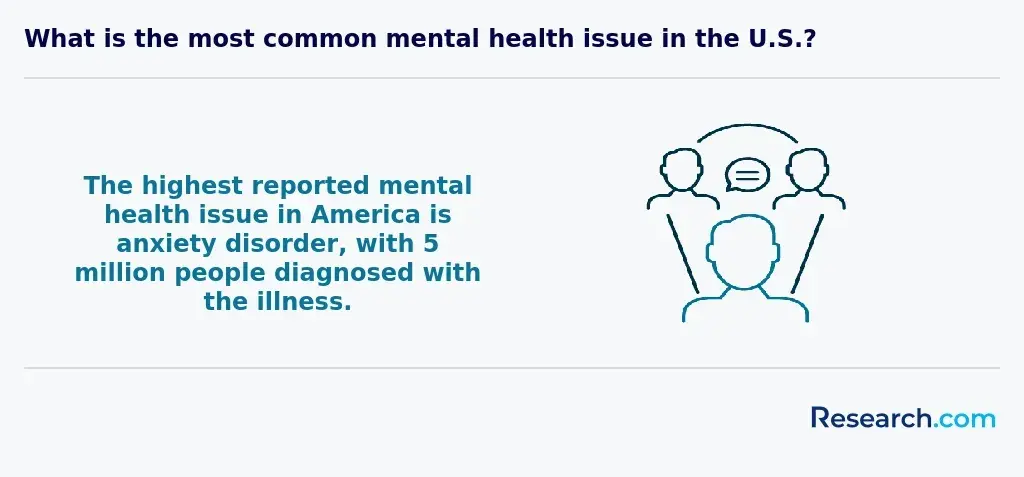
Just what is the most common mental health issue in the U.S.? The highest reported mental health issue in the USA is anxiety disorder, with 5 million people having been diagnosed with this illness, as shown below.
What does a substance abuse counselor do?
Substance abuse counselors help people understand, reduce, and recover from harmful substance use. The work is clinical, relational, administrative, and often collaborative. Counselors may work in outpatient clinics, residential treatment centers, hospitals, correctional programs, community agencies, schools, or integrated behavioral health settings.
Typical responsibilities
- Evaluate substance use patterns, treatment history, mental health concerns, risk factors, and recovery supports through interviews and screening tools.
- Create individualized treatment plans that match the client’s goals, readiness for change, diagnosis, safety needs, and available resources.
- Lead individual counseling sessions focused on motivation, coping skills, relapse prevention, accountability, and recovery planning.
- Facilitate group counseling sessions where clients build insight, peer support, communication skills, and recovery routines.
- Educate clients and families about addiction, withdrawal, recovery, medication-assisted treatment when relevant, boundaries, and relapse warning signs.
- Track progress, document services, update treatment plans, and coordinate referrals when clients need medical care, housing support, legal assistance, or mental health treatment.
- Work with physicians, social workers, case managers, probation officers, peer specialists, and other providers when client care requires a team approach.
Skills that matter most
- Clear communication: Clients need direct, respectful, nonjudgmental conversations about difficult topics.
- Empathy with boundaries: Compassion is essential, but counselors must also maintain ethical limits and avoid rescuing behavior.
- Assessment judgment: Strong counselors notice risk, co-occurring conditions, trauma history, relapse triggers, and safety concerns.
- Problem-solving: Treatment plans must account for transportation, housing, employment, family conflict, legal obligations, and health needs.
- Organization: Documentation, supervision notes, client follow-up, and compliance deadlines are part of the job.
- Knowledge of addiction and recovery: Effective practice requires understanding substance use disorders, evidence-based interventions, relapse patterns, and recovery systems.
-
: "
After graduating from the University of Wisconsin-Milwaukee, I realized that addiction counseling is not only about treatment plans. It is about building trust with people who may have been disappointed by systems before. The most meaningful part of the work is seeing clients reconnect with hope, family, and community.
"
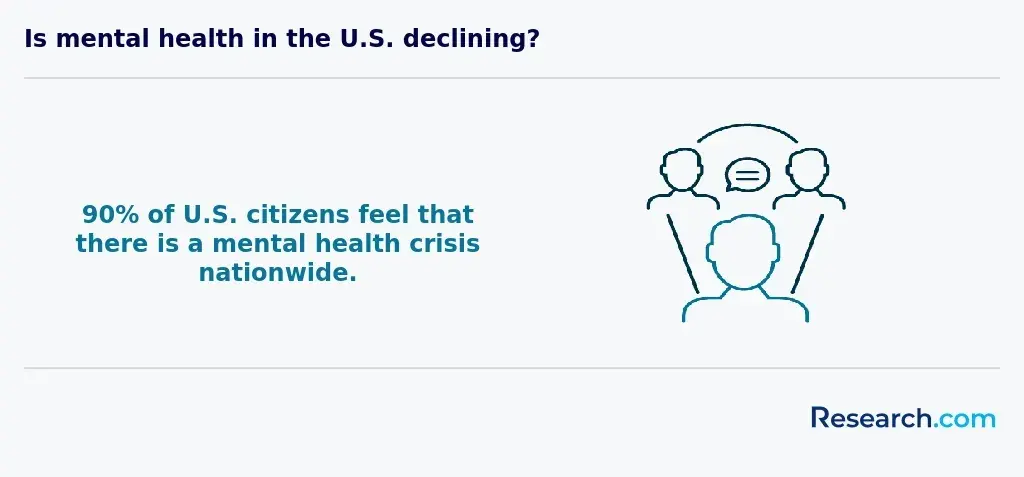
Is mental health in the U.S. declining? Apparently so, as 90% of Americans feel that there is a nationwide mental health crisis, as shown below.
What is the certification and licensing process for a substance abuse counselor in Wisconsin?
Wisconsin’s credentialing process is administered by the Wisconsin Department of Safety and Professional Services. The process begins with the Substance Abuse Counselor in Training credential and can progress to the Substance Abuse Counselor or Clinical Substance Abuse Counselor credential depending on your education, experience, and career goals.
| Credential step | Main requirement | Decision point for applicants |
| Substance Abuse Counselor in Training | Complete a 100-hour educational program recognized by DSPS and submit the SAC-IT application materials. | This is typically the entry credential for candidates who need to accumulate supervised experience. |
| Substance Abuse Counselor | Complete the required specialized education, supervised experience, and exam requirements. | This credential supports direct addiction counseling work under the applicable scope of practice. |
| Clinical Substance Abuse Counselor | Complete advanced requirements for the clinical credential, including additional specialized preparation and supervised practice requirements. | This may be the better target if you want more advanced clinical responsibility or leadership opportunities. |
- Initial application: The SAC-IT application includes Form #2743, applicable fees, letters from any state boards where the applicant holds a license, and Forms #2770 and #3079 for employment verification and education completion.
- Specialized education: Candidates pursuing SAC or C-SAC credentials need 360 hours of substance use disorder education beyond the initial SAC-IT pathway.
- Supervised practice: Candidates must complete 3,000 hours of supervised substance abuse counseling experience. Supervision must include two hours for every 40 hours worked, with at least one in-person meeting each month.
- Examinations: Candidates take the National Certified Addiction Counselor I exam and the Wisconsin open-book exam on state statutes and administrative codes.
- Background review: Background checks and fingerprinting are usually part of the process and should be included in your budget and timeline.
- Renewal: The Clinical Substance Abuse Counselor credential renews every odd-numbered year on February 28.
- Common delay: Missing forms, unclear supervision documentation, incomplete education records, or unpaid fees can slow approval.
If you are comparing state counseling pathways, you can also review the process to become a licensed counselor in Pennsylvania. Requirements differ by state, so do not assume that a credential transfers automatically.
One Wisconsin projection cites 18% growth over the next decade, but the practical takeaway is simple: complete the credentialing process carefully and early, because employers usually need counselors who can document their status and scope of practice clearly.
What legal and ethical considerations must a substance abuse counselor consider in Wisconsin?
Substance abuse counseling involves sensitive health information, high-risk client situations, and relationships where boundaries must be protected. In Wisconsin, counselors need to understand state regulations, confidentiality rules, professional ethics, and their own scope of practice before working independently.
- Licensure and scope of practice: Counselors must hold the appropriate Wisconsin credential and practice within the limits of that credential. The Wisconsin Department of Safety and Professional Services oversees the licensing process, including supervised experience and examination requirements.
- Confidentiality: Client records must be protected under applicable Wisconsin law, including Wisconsin Statutes Chapter 51 for mental health treatment, and under federal privacy rules where applicable.
- HIPAA compliance: Counselors must understand when information can be shared, how consent works, and how to protect client records in paper, electronic, and telehealth settings.
- Duty to protect: Confidentiality has limits when there is a risk of harm to the client or others, abuse reporting obligations, court orders, or other legally defined exceptions.
- Dual relationships: Counselors should avoid situations where personal, financial, social, or professional relationships interfere with clinical judgment.
- Documentation ethics: Records should be accurate, timely, clinically relevant, and free from stigmatizing language.
- Competence: Counselors should seek supervision, training, or referral when client needs exceed their preparation, especially with severe mental illness, trauma, withdrawal risk, or complex legal involvement.
Students who want a broader mental health license may also compare the Wisconsin LPC certification process with the substance abuse counselor pathway. The two routes may overlap in skills, but they are not the same credential.
How much can you earn as a substance abuse counselor in Wisconsin?
Substance abuse counselor pay in Wisconsin varies by credential, employer, region, degree level, and years of experience. The average salary is approximately $50,000 per year, with a median salary around $48,000. Nationally, the average is around $47,000 and the median is around $45,000.
| Career or location factor | Salary figure cited | What it means for planning |
| Average Wisconsin substance abuse counselor salary | Approximately $50,000 per year | A useful planning number, but not a guarantee for a specific job offer. |
| Median Wisconsin salary | Around $48,000 | Half of workers may earn above or below this figure depending on role and experience. |
| Entry-level roles | Around $35,000 to $38,000 | New counselors should budget carefully while building supervised hours and experience. |
| Experienced counselors | Upwards of $70,000 | Higher pay is more likely with advanced credentials, leadership duties, specialized skills, or urban employment markets. |
| Clinical Director | Exceeding $70,000 | Leadership roles typically require strong clinical experience and management ability. |
| Substance Abuse Program Manager | Around $65,000 | Program management blends counseling knowledge with operations, compliance, and staff supervision. |
| Licensed Professional Counselor | Upwards of $60,000 | Additional credentials can broaden scope and improve advancement options. |
| Milwaukee | Averaging $55,000 | Larger cities may offer more openings but also more competition. |
| Madison | Around $52,000 | State capital employment may include public, nonprofit, university, and healthcare settings. |
| Green Bay | Near $50,000 | Regional markets can offer stable opportunities with different cost-of-living trade-offs. |
For counselors considering broader licensure and earning potential, the licensed counselor career path in Wisconsin may be worth comparing with substance abuse counseling alone. Salary outcomes are never guaranteed, but additional credentials, supervision experience, and specialization can affect your options.
What is the job market like for a substance abuse counselor in Wisconsin?
The Wisconsin job market for substance abuse counselors is generally favorable because addiction treatment, mental health support, and behavioral healthcare access remain major needs. According to the Wisconsin Department of Workforce Development, employment for substance abuse counselors is projected to grow by 14% over the next decade, which is higher than the national average cited in the original source context.
- Where jobs are commonly found: Outpatient treatment centers, residential programs, hospitals, community mental health agencies, correctional settings, nonprofits, county programs, and integrated healthcare clinics.
- Compensation range: Average pay is approximately $50,000 per year, with entry-level roles around $35,000 and more experienced professionals earning upwards of $70,000.
- Competition: Milwaukee and Madison may have more openings, but they can also attract more applicants. Advanced degrees, strong supervision records, and specialized training can help.
- Advancement: Employers may support additional training, supervisory credentials, or leadership development. Some counselors later pursue broader licensure through Wisconsin LPC training programs.
- Cost-of-living factor: Wisconsin’s relatively moderate cost of living can help new counselors manage early-career pay while building experience.
-
: "
I chose addiction counseling after studying at the University of Wisconsin-Milwaukee because the need in my community was obvious. The work is competitive in busy areas, but qualified counselors who can document their supervised hours, handle complex cases, and collaborate with other providers have real opportunities.
"
How can pursuing a social work degree online enhance my substance abuse counseling career in Wisconsin?
An online social work program can be a strong complement to substance abuse counseling when it builds skills in case management, community resources, ethics, human behavior, policy, crisis response, and family systems. An accredited online social work degree may be especially useful for counselors who want to work with clients facing housing instability, child welfare involvement, disability services, trauma, poverty, or court-related needs.
This route makes the most sense if you want a broader human services foundation, need flexible study while working, or plan to pursue graduate education later. It may be less efficient if your only goal is to complete the fastest substance abuse counselor credential and you do not need a degree for your target role.
What career and advancement opportunities are available for a substance abuse counselor in Wisconsin?
Career growth in substance abuse counseling usually follows a progression from supervised entry-level work to independent counseling responsibilities, then to clinical supervision, program management, or related mental health roles. The Bureau of Labor Statistics projects an 18% increase in counseling positions over the next decade, with demand influenced by opioid-related treatment needs and a stronger emphasis on rehabilitation rather than incarceration for some substance-related offenses.
| Career stage | Possible roles | Typical focus |
| Entry level | Substance Abuse Counselor in Training, Addiction Counselor, Behavioral Health Specialist | Building supervised hours, learning documentation, supporting treatment teams, and working under credential limits. |
| Mid-level | Substance Abuse Counselor, Clinical Substance Abuse Counselor, Program Coordinator | Providing direct services, coordinating care, developing treatment plans, and supporting program operations. |
| Senior level | Director of Substance Abuse Programs, Clinical Supervisor, Executive Director of treatment centers | Managing staff, budgets, compliance, clinical quality, policy, partnerships, and strategic planning. |
| Related paths | Mental Health Counselor, School Counselor, Chemical Dependency Counselor | Using addiction counseling experience in broader behavioral health, education, or specialized treatment settings. |
Entry-level roles may require targeted training such as 100 hours of relevant education, while senior leadership roles typically expect advanced credentials, significant experience, and strong administrative ability. A median annual salary of nearly $43,000 and potential earnings reaching up to $70,000 for top earners make this field a realistic option for candidates who value both service and career stability.
What are the costs and financial aid options for becoming a substance abuse counselor in Wisconsin?
The cost of becoming a substance abuse counselor depends on whether you choose a short certificate, associate degree, bachelor’s degree, graduate degree, or continuing education pathway. Tuition is only one part of the budget. You should also consider application fees, books, technology, background checks, fingerprinting, transportation to practicum or work sites, exam preparation, and lost income if you reduce work hours to study.
| Cost factor | Amount or range cited | How to evaluate it |
| Degree program tuition | $10,000 to $30,000 annually | Compare total program cost, not just per-credit tuition. |
| Certificate program cost | $5,000 to $15,000 | Confirm that the certificate satisfies Wisconsin education requirements before enrolling. |
| Certification-related cost | $200 to $500 | Budget for fees connected to application, credentialing, and related requirements. |
| Financial aid options | Scholarships, grants, and loan programs | Ask each school whether aid applies to your specific certificate or degree format. |
| Lower-cost program search | Varies by institution | Compare accredited options such as the most affordable online counseling degrees. |
Before committing, ask whether the program is accredited, whether credits transfer, whether the curriculum meets Wisconsin substance use disorder education requirements, and whether online coursework is accepted for the credential you plan to pursue.
How can forensic science training enhance my substance abuse counseling practice in Wisconsin?
Forensic science training can help counselors who work with clients involved in courts, probation, corrections, impaired driving programs, or legal documentation. It may strengthen attention to evidence, timelines, records, and objective reporting. This does not replace counseling training, but it can improve your ability to understand legal contexts and communicate with justice-system partners. If you are interested in that interdisciplinary route, review how to become a forensic scientist in Wisconsin.
How can pursuing a behavior analyst certification enhance my counseling practice in Wisconsin?
Behavior analysis can add structured tools for understanding patterns, triggers, reinforcement, skill-building, and measurable behavior change. For substance abuse counselors, this can be useful when designing interventions, tracking client progress, and adjusting plans based on observable outcomes. It is most relevant for counselors who want stronger behavioral assessment skills or who work with clients needing structured support. Learn more about how to become a behavior analyst in Wisconsin.
Can Expanding into Marriage and Family Therapy Enhance My Practice?
Marriage and family therapy training can be valuable because substance use often affects partners, children, parenting roles, communication, finances, and household stability. Counselors who add family systems knowledge may be better prepared to support recovery in the client’s real-life environment. This path is best for professionals who want to work with couples and families, not only individual clients. Review how to become an MFT in Wisconsin before assuming that substance abuse counseling credentials cover family therapy practice.
How can telehealth integration enhance my substance abuse counseling practice in Wisconsin?
Telehealth can expand access for clients who live far from treatment centers, have transportation barriers, need flexible scheduling, or require continuity during recovery. It also adds responsibilities. Counselors must use secure platforms, protect confidentiality, document appropriately, and understand rules for remote practice. If you are trying to enter the field efficiently while evaluating modern service delivery models, see the quickest way to become a counselor in Wisconsin.
Should I integrate criminal psychology insights into my counseling strategies in Wisconsin?
Criminal psychology concepts may help substance abuse counselors understand behavior patterns, risk factors, decision-making, rehabilitation needs, and the pressures facing clients involved with the justice system. This knowledge is most useful when paired with ethical counseling practice, trauma-informed care, and collaboration with legal professionals. For a deeper look at this related field, review how to become a criminal psychologist in Wisconsin.
Can integrating cross-disciplinary expertise enhance my substance abuse counseling practice in Wisconsin?
Cross-disciplinary training can make counselors more effective when clients’ needs do not fit neatly into one category. For example, youth and family cases may involve school functioning, developmental concerns, trauma, substance use, and mental health symptoms at the same time. Understanding related fields such as school psychology can improve referrals, collaboration, and intervention planning. See the Wisconsin school psychologist certification requirements if you are considering work with students or school-linked services.
What additional certifications can boost my counseling practice in Wisconsin?
Additional credentials can help you serve specific client groups or move into specialized roles. Useful areas may include trauma-informed care, crisis intervention, integrated behavioral health, family systems, co-occurring disorders, prevention, and supervision. The best certification is not the longest list of letters after your name; it is the one that fits your client population, employer requirements, and career plan. Counselors interested in relationship-focused work can review marriage counselor education requirements in Wisconsin.
What professional development and continuing education opportunities are available for substance abuse counselors in Wisconsin?
Continuing education is not just a renewal requirement. It is how counselors stay current with ethics, treatment models, telehealth rules, trauma care, medications used in addiction treatment, cultural responsiveness, and changes in Wisconsin regulations.
- Substance abuse counselors in Wisconsin must complete 30 hours of continuing education every two years to maintain certification.
- The Wisconsin Department of Safety and Professional Services provides information on approved continuing education providers.
- Organizations such as the Wisconsin Association of Alcohol and Other Drug Abuse and the Wisconsin Council on Mental Health may offer workshops, seminars, and professional learning events.
- NAADAC provides webinars and online courses that can help counselors complete training on a flexible schedule.
- Wisconsin community colleges and universities may offer specialized substance abuse counseling workshops with hands-on learning and networking opportunities.
- The Substance Abuse and Mental Health Services Administration offers free resources, online materials, and training content that counselors can use to strengthen practice.
- Professional organizations such as the Wisconsin Society of Addiction Medicine can provide conferences, specialized training, and networking opportunities.
- Mentorship can help newer counselors handle difficult cases, ethical questions, documentation standards, and career planning.
- Subscribing to professional journals, newsletters, and regulatory updates can help counselors stay aware of research and legislative changes.
What challenges should you consider as a substance abuse counselor in Wisconsin?
Substance abuse counseling can be meaningful, but it is not easy work. Clients may arrive under pressure from family, courts, employers, or medical systems. Recovery is rarely linear. Counselors need realistic expectations and strong support systems before entering the field.
| Challenge | Why it matters | Better way to prepare |
| Client resistance | Some clients are not ready to identify substance use as a problem. Approximately 25% of adults with mental health disorders also face substance abuse challenges. | Build motivational interviewing skills and learn how to work with ambivalence without escalating shame. |
| Relapse risk | National statistics indicate that 40-60% of individuals may relapse after treatment. | Create relapse prevention plans, coordinate continuing care, and frame setbacks as clinical information rather than personal failure. |
| Emotional strain | Counselors regularly hear trauma histories, crisis situations, family conflict, and recovery setbacks. | Use supervision, peer consultation, manageable caseload practices, and personal boundaries. |
| Co-occurring disorders | Clients may have anxiety, depression, trauma, psychosis, personality disorders, or medical complications alongside substance use. | Pursue continuing education in dual diagnosis and know when referral or team-based care is necessary. |
| Resource limitations | Housing shortages, transportation barriers, insurance limits, waitlists, and fragmented services can restrict treatment options. | Maintain an updated referral list and build relationships with local agencies. |
Common mistakes to avoid
- Choosing a program without checking approval: Do not assume every counseling certificate satisfies Wisconsin substance abuse counselor education requirements.
- Looking only at tuition: Compare total cost, financial aid eligibility, credential outcomes, supervision access, and transfer credit policy.
- Assuming online automatically works: Confirm whether online coursework is accepted for the credential and whether any in-person requirements apply.
- Waiting to track supervision: Keep detailed records from the beginning, including hours, setting, supervisor information, and direct counseling activities.
- Ignoring burnout risk: Addiction counseling requires emotional stamina. Plan for supervision, rest, peer support, and realistic caseload boundaries.
- Expecting salary guarantees: Pay depends on location, employer, credential level, experience, and funding source.
How can I manage burnout and maintain work-life balance as a substance abuse counselor in Wisconsin?
Burnout prevention should start before you feel depleted. Substance abuse counselors often support clients through relapse, trauma, family conflict, legal pressure, homelessness, grief, and crisis. Without boundaries and supervision, the work can become emotionally unsustainable.
- Use supervision intentionally: Bring difficult cases, countertransference, ethical concerns, and workload concerns to supervision instead of handling them alone.
- Set clear availability limits: Clients need consistent care, but counselors also need protected off-hours and crisis protocols that do not depend on one person.
- Build peer support: Consultation with other counselors can reduce isolation and improve decision-making.
- Document promptly: Falling behind on notes increases stress and can create compliance problems.
- Practice recovery-informed self-care: Sleep, movement, healthy routines, counseling when needed, and time away from crisis work are professional necessities, not luxuries.
- Consider career flexibility: If direct addiction counseling becomes too narrow or emotionally heavy, related mental health routes may provide broader options. Review how to become a mental health counselor in Wisconsin if you want to compare pathways.
What do substance abuse counselors say about their careers in Wisconsin?
Being a substance abuse counselor in Wisconsin has shown me how much recovery can change families, not just individuals. When clients rebuild trust, find stability, and reconnect with the people who matter to them, the work feels deeply worthwhile. Britney
What keeps me engaged is that no two days are the same. Wisconsin communities are diverse, and every client brings a different history, challenge, and strength. I learn constantly, and it is rewarding to see progress that once seemed impossible. Jonas
The professional support available in Wisconsin has helped me continue growing. Training, collaboration, and relationships with other healthcare providers make it easier to deliver coordinated care and stay committed to the work. Evelyn
Related Articles for Nearby States
- 2027 How to Become a Substance Abuse Counselor in Minnesota
- 2027 How to Become a Substance Abuse Counselor in Iowa
- 2027 How to Become a Substance Abuse Counselor in Illinois
- 2027 How to Become a Substance Abuse Counselor in Michigan
- 2027 How to Become a Substance Abuse Counselor in Indiana
- 2027 How to Become a Substance Abuse Counselor in Missouri
- 2027 How to Become a Substance Abuse Counselor in Ohio
- 2027 How to Become a Substance Abuse Counselor in South Dakota
- 2027 How to Become a Substance Abuse Counselor in Nebraska
- 2027 How to Become a Substance Abuse Counselor in Kentucky
References:
- Addiction Counselor. (2018, June 20). Wisconsin education requirements & certification for substance abuse counselors. Addiction Counselor.
- Careers of Substance. (n.d.). Counselor/clinician. Careers of Substance.
- Department of Safety and Professional Services (DSPS). (2012, June 1). Clinical substance abuse counselor. Department of Safety and Professional Services.
- Flex Wisconsin. (2015, November 24). Substance use disorders counselor certificate. Flex Wisconsin.
- NAADAC. (2021, January 1). Code of ethics. NAADAC.
- University of Wisconsin-Milwaukee (UWM). (2023, January 30). Substance abuse counselor certification. University of Wisconsin-Milwaukee.
- University of Wisconsin-Whitewater (UWW). (n.d.). SAC-IT/SAC/CSAC certification details. University of Wisconsin-Whitewater.
- Wisconsin Legislature. (2011, November 20). Chapter RL 161 was renumbered chapter SPS 161 under s. 13.92 (4)(b)1., Stats., Register November 2011 No. 671. Wisconsin Legislature.
Key Insights
- Wisconsin’s substance abuse counselor pathway requires more than a desire to help; you need approved education, documented supervision, exams, and the correct DSPS credential.
- The SAC-IT credential is the usual starting point for building supervised experience, while SAC and Clinical Substance Abuse Counselor credentials support more advanced practice options.
- Education choices should be based on your target role. A certificate may help you enter the field faster, while a degree can improve mobility, advancement, and preparation for broader counseling work.
- Salary varies meaningfully by credential, experience, employer, and location. Wisconsin averages around $50,000 per year, but entry-level and leadership pay can differ widely.
- Before enrolling, verify accreditation, Wisconsin credential alignment, total cost, financial aid eligibility, and whether online coursework will count.
- The work is emotionally demanding. Long-term success depends on supervision, ethical boundaries, strong documentation habits, continuing education, and burnout prevention.
Other Things You Should Know About Becoming a Substance Abuse Counselor in Wisconsin
In Wisconsin, becoming a substance abuse counselor typically requires a bachelor's degree in a related field and additional hours of supervised training, taking about 3 to 4 years. Post-degree, acquiring a substance abuse counselor-in-training credential allows candidates to accumulate the necessary supervised practice hours for full licensure.
To become a substance abuse counselor in Wisconsin in 2027, complete an accredited program in counseling or a related field. Obtain supervised experience, pass the National Counselor Examination, and apply for a Substance Abuse Counselor license through the Wisconsin Department of Safety and Professional Services.
To become a substance abuse counselor in Wisconsin, you must obtain a license. Practicing without a license can lead to significant legal ramifications, including fines and potential criminal charges. The state mandates that counselors adhere to specific educational and experiential requirements to ensure they provide competent care.
In Wisconsin, licensed substance abuse counselors must meet the following criteria:
- Education: A minimum of a bachelor’s degree in a relevant field.
- Experience: Completion of supervised clinical hours.
- Examination: Passing a state-recognized certification exam.
While there are limited circumstances where individuals may provide support without a license—such as volunteering in non-clinical settings or offering peer support—these roles do not involve direct counseling. For example, a peer support specialist may share their recovery journey but cannot diagnose or treat clients.
To navigate this process effectively, aspiring counselors should familiarize themselves with the Wisconsin Department of Safety and Professional Services guidelines and pursue accredited programs that align with state requirements.
To become licensed as a substance abuse counselor in Wisconsin in 2027, you must complete a relevant degree program, accumulate supervised work experience, and pass an exam. Licensure ensures adherence to state-specific regulations and standards for practice.


