2027 Wisconsin MFT Licensing, Certifications, Careers and Requirements

Co-Founder and Chief Data Scientist
Becoming a marriage and family therapist in Wisconsin is not just a degree choice; it is a regulated professional path with specific education, supervised practice, examination, renewal, legal, and business requirements. For students, career changers, and counseling professionals comparing therapy licenses, the main question is usually practical: what do you need to do, how long will it take, what will it cost, and is the path worth the commitment?
This guide explains how Wisconsin MFT licensing works, what degree and supervised experience you need, how renewal works, where MFTs are employed, how teletherapy and specialization are changing the field, and what questions to ask before choosing a program or career path. It is designed to help you plan the next step without confusing licensure rules, degree requirements, and career options.
Quick Answer: How Do You Become an MFT in Wisconsin?
To become a licensed marriage and family therapist in Wisconsin, you generally need a master's or doctoral degree in marriage and family therapy or a closely related field, 3,000 hours of supervised clinical experience, and a passing score on the national MFT exam. Wisconsin MFT licenses are overseen by the Wisconsin Department of Safety and Professional Services (DSPS), and licensed professionals must renew their credentials every two years with continuing education.
| Requirement | Wisconsin MFT Path | Why It Matters |
| Graduate education | Master's or doctoral degree in marriage and family therapy or a closely related field | Establishes eligibility for supervised practice and eventual licensure |
| Clinical training | 3,000 hours of supervised clinical experience, including at least 1,000 hours of direct client contact | Builds real-world therapy competence under qualified supervision |
| Exam | National MFT exam administered through the Association of Marital and Family Therapy Regulatory Boards | Tests core knowledge needed for safe and ethical practice |
| Renewal | Renewal every two years with 30 hours of continuing education, including 3 hours in ethics and boundaries | Keeps practitioners current with ethical, legal, and clinical expectations |
Key Things You Should Know About Wisconsin MFT Licensing
- Wisconsin has identified a need for approximately 1,000 additional mental health providers, including marriage and family therapists, according to the Wisconsin Department of Health Services.
- The average salary for MFTs in Wisconsin is around $68,730 per year. Entry-level roles may begin at approximately $45,000, while experienced therapists can earn upwards of $70,000 depending on location, specialization, and employer type.
- Wisconsin’s projected growth rate for MFT employment is 22% from 2021 to 2031, which indicates strong demand compared with many other occupations.
- MFTs in Wisconsin work in private practices, hospitals, schools, community mental health organizations, and telehealth settings, with remote care especially relevant in rural communities.
- Nationally, employment for marriage and family therapists is expected to grow by 16% from 2023 to 2033, with approximately 12,300 new positions expected across the country.
- What is an MFT license in Wisconsin?
- What education do you need for Wisconsin MFT licensure?
- What are the licensing steps for becoming an MFT in Wisconsin?
- How does Wisconsin MFT license renewal work?
- How long does it take to become an MFT in Wisconsin?
- How much does Wisconsin MFT licensure cost?
- What other therapy licenses are available in Wisconsin?
- What legal and insurance issues should Wisconsin MFTs understand?
- What financial aid options can help MFT students in Wisconsin?
- Should MFTs add dual certification?
- What career paths are available to Wisconsin MFTs?
- Can criminal psychology help an MFT career?
- Can additional certifications expand MFT career options?
- How can MFTs and social workers work together?
- What is the job outlook for MFTs in Wisconsin?
- What are the rewards and challenges of MFT work?
- How can MFTs improve practice management?
- What can MFTs earn in Wisconsin?
- How is teletherapy changing MFT practice?
- Where can Wisconsin MFTs find mentorship and support?
- How can MFTs collaborate with school mental health professionals?
What is an MFT license in Wisconsin?
A Wisconsin marriage and family therapist license is the credential that permits qualified professionals to provide therapy centered on relationships, family systems, couples, and individual mental health concerns within relational contexts. It signals that the therapist has met state standards for graduate education, supervised clinical practice, examination, and professional conduct.
MFTs are trained to look beyond the individual alone. They consider how family roles, communication patterns, conflict, trauma, life transitions, parenting stress, and relationship dynamics affect mental health. This makes the license especially relevant for professionals who want to work with couples, families, children, adolescents, and adults whose concerns are connected to relationships and systems.
What Wisconsin MFTs typically do
- Assess clients’ symptoms, relational patterns, family history, and treatment needs.
- Create treatment plans that address emotional, behavioral, and relationship concerns.
- Provide therapy for couples, families, individuals, children, and adolescents.
- Help clients work through conflict, grief, trauma, anxiety, depression, communication problems, and major life changes.
- Coordinate care with physicians, social workers, school staff, counselors, case managers, and other mental health professionals when appropriate.
- Maintain records, obtain informed consent, protect confidentiality, and follow Wisconsin legal and ethical standards.
The MFT license is best suited for people who want a clinical role with a strong focus on relationships and family systems. If your primary interest is school counseling, general mental health counseling, substance use treatment, social work, or psychological assessment, another credential may be a better match.
What education do you need for Wisconsin MFT licensure?
Wisconsin MFT candidates must complete a master’s or doctoral degree in marriage and family therapy or a closely related field. The strongest option is usually a program designed specifically around MFT competencies because it is more likely to align with licensure expectations, clinical supervision needs, and the national exam.
Programs accredited by the Commission on Accreditation for Marriage and Family Therapy Education (COAMFTE) or recognized by the American Association for Marriage and Family Therapy (AAMFT) can offer a clearer path because their curricula are built around professional MFT standards. However, students should never assume that a degree automatically meets Wisconsin licensure rules. Before enrolling, confirm the program’s licensure alignment directly with the school and with Wisconsin DSPS guidance.
Wisconsin students may encounter graduate options such as the University of Wisconsin-Madison Master’s in Marriage and Family Therapy, Marquette University’s Master of Arts in Marriage and Family Therapy, and Edgewood College’s Master of Science in Marriage and Family Therapy. These examples show the type of graduate-level preparation commonly associated with MFT training: clinical work, systemic theory, ethics, research, human development, assessment, and supervised practice.
How to evaluate an MFT graduate program
| Question to Ask | Why It Matters | What to Look For |
| Does the program prepare students for Wisconsin MFT licensure? | Licensure rules vary by state, and not every counseling-related degree fits the MFT pathway. | Written confirmation from the program and clear licensure disclosures |
| Is the program COAMFTE-accredited or otherwise aligned with AAMFT expectations? | Accreditation and professional alignment can reduce uncertainty when applying for licensure. | Transparent accreditation status and curriculum mapping |
| How are clinical placements arranged? | Supervised experience is central to becoming license-ready. | School-supported placement assistance, approved supervisors, and direct client contact opportunities |
| Can online students complete in-state requirements? | Online programs may not automatically satisfy Wisconsin rules or placement needs. | State authorization details and Wisconsin-specific licensure guidance |
| What is the total cost beyond tuition? | Fees, textbooks, residency requirements, travel, and supervision can change affordability. | A full cost estimate, not only per-credit tuition |
Students should also connect with professional organizations such as the Wisconsin Association for Marriage and Family Therapy and AAMFT. These groups can provide licensure updates, continuing education opportunities, advocacy information, and networking contacts. Licensure portability is a frequent concern among MFTs because therapists who move across state lines may face additional administrative or educational review.
What are the licensing steps for becoming an MFT in Wisconsin?
The Wisconsin Department of Safety and Professional Services manages the MFT licensing process. While individual circumstances can vary, most candidates follow a sequence that starts with graduate education and ends with full licensure after supervised practice and examination.
- Complete an appropriate graduate degree. Applicants need a master’s or doctoral degree in marriage and family therapy or a closely related field from an accredited institution. Coursework commonly includes human development, family systems, ethics, diagnosis, research, and clinical practice.
- Apply for the correct post-graduate pathway. After graduation, candidates typically need authorization to complete supervised practice before applying for full licensure.
- Complete supervised clinical experience. Wisconsin requires 3,000 hours of supervised clinical experience, including at least 1,000 hours of direct client contact. This training should occur under qualified supervision and must be documented carefully.
- Pass the national MFT exam. Candidates must pass the Examination in Marital and Family Therapy administered by the Association of Marital and Family Therapy Regulatory Boards.
- Submit the licensure application to DSPS. The application generally includes education documentation, proof of supervised experience, exam results, required fees, and background information.
- Maintain ethical and legal compliance. Licensure is not only a one-time credential. MFTs must continue meeting professional standards after approval.
The most common delay is incomplete documentation. Keep copies of syllabi, transcripts, supervision logs, direct client contact records, supervisor credentials, and exam confirmations. If you plan to move, practice across state lines, or offer telehealth, verify requirements before accepting clients.
How does Wisconsin MFT license renewal work?
Wisconsin MFT licenses must be renewed on the state’s required cycle. The process is administered by DSPS and is designed to confirm that licensed professionals remain active, ethical, and current in their field.
| Renewal Item | Wisconsin Requirement | Practical Tip |
| Renewal cycle | Every two years | Set reminders well before the deadline so continuing education is not rushed. |
| Continuing education | 30 hours per renewal period | Choose CE that strengthens your clinical specialty and documents attendance clearly. |
| Ethics and boundaries | At least 3 hours | Do not leave this requirement until the end of the cycle. |
| Renewal fee | $60 | Confirm current DSPS instructions before submitting payment. |
| Background check | Required if not completed in the past two years | Respond quickly to any DSPS requests for additional information. |
Licensees are also expected to affirm compliance with the professional rules governing marriage and family therapy in Wisconsin. Approximately 90% of MFTs in Wisconsin successfully renew their licenses on time, which suggests that the process is manageable when therapists track their CE and renewal deadlines throughout the cycle.
A practical approach is to complete continuing education gradually, keep a digital folder for certificates, and prioritize training that supports your practice area, such as trauma, couples therapy, telehealth ethics, child and adolescent treatment, or cultural responsiveness.
How long does it take to become an MFT in Wisconsin?
The full path to Wisconsin MFT licensure commonly takes several years because it combines graduate school, supervised clinical practice, examination, and application review. A master’s or doctoral program typically takes two to three years, depending on the program format and whether the student attends full time or part time.
After graduation, candidates must complete the required supervised experience. Wisconsin requires 3,000 hours of supervised clinical experience, and this phase must be planned carefully because the pace depends on employment setting, caseload, supervisor availability, documentation, and whether the candidate is working full time.
Application processing can also add time. DSPS review periods may vary, especially if an application is missing transcripts, supervision forms, exam scores, or background information. The best way to avoid delays is to confirm requirements before graduation and keep supervision documentation current rather than reconstructing it later.
| Stage | Typical Time Consideration | Decision Point |
| Graduate school | Usually two to three years | Choose a program that fits your schedule and Wisconsin licensure goals. |
| Supervised practice | Depends on how quickly 3,000 hours are completed | Look for roles with qualified supervision and enough direct client contact. |
| Exam and application | Can take several weeks to a few months depending on review and documentation | Prepare for the exam early and submit complete records. |
If you are comparing healthcare careers more broadly, salary and training expectations can differ significantly by field. For example, Research.com also covers aesthetic nurse earnings by state for readers evaluating other healthcare paths.
How much does Wisconsin MFT licensure cost?
The cost of becoming an MFT in Wisconsin includes more than the state license application. Students should budget for graduate tuition, fees, textbooks, technology, commuting or residency requirements, liability insurance, supervision-related expenses, exam preparation, the national exam, application fees, renewal fees, and continuing education.
| Cost Category | Amount or Range Stated | What to Plan For |
| Initial application | $75 to $150 | Fees may vary by license type, such as training license or full licensure by exam. |
| National examination | Around $300 | Budget for the exam itself and possible preparation materials. |
| License renewal | Generally around $60 | Renewal occurs every two years and may include CE-related expenses. |
| Supervision | Varies widely | Some employers provide supervision; others may require outside paid supervision. |
| Continuing education | Varies by provider and format | Online CE, conferences, workshops, and specialty training can affect total cost. |
To control costs, compare total program price rather than tuition alone, ask whether clinical placement support is included, confirm whether supervision is built into employment, and look for scholarships or employer reimbursement. Students interested in counseling licensure outside Wisconsin may also want to compare requirements with guides such as how to become an LPC in Kansas.
Two financial issues often surprise future MFTs: the cost of graduate education and the complexity of practicing in multiple states. If mobility matters to you, ask each program how it supports students who may later apply for licensure elsewhere.
What other therapy licenses are available in Wisconsin?
MFT licensure is not the only route into therapy work. Wisconsin also has pathways for professionals who want to become licensed professional counselors, social workers, substance abuse counselors, school counselors, school psychologists, and other mental health providers. The best choice depends on the population you want to serve, the setting where you want to work, and whether you prefer relational therapy, individual counseling, case management, addiction treatment, school-based support, or assessment.
| Path | Best Fit | When It May Be Better Than MFT |
| Marriage and family therapy | Couples, families, relational issues, systemic treatment | You want therapy work centered on relationships and family systems. |
| Licensed professional counseling | Individual and group counseling across a wide range of concerns | You want broader counseling roles not specifically organized around family systems. |
| Social work | Clinical care, case management, advocacy, community resources | You want to combine therapy with systems navigation and social service support. |
| Substance abuse counseling | Addiction treatment and co-occurring concerns | You want specialized work with substance use and recovery services. |
| School mental health roles | Students, families, educators, school systems | You want to work primarily in K-12 educational environments. |
If you are deciding between MFT and counseling, review Wisconsin’s LPC pathway through Research.com’s guide on how to become a therapist in Wisconsin.
What legal and insurance issues should Wisconsin MFTs understand?
Legal and insurance responsibilities begin before the first client session. Wisconsin MFTs must understand confidentiality, informed consent, mandated reporting, recordkeeping, documentation standards, telehealth rules, client abandonment, scope of practice, and ethical boundaries. These issues are especially important for therapists working with couples and families because multiple people may be involved in treatment, records, consent, and confidentiality decisions.
Malpractice insurance is also important. Coverage should match the therapist’s setting, services, populations served, and whether teletherapy is offered. Private practitioners should review policy limits, coverage for licensing board complaints, cyber liability considerations, and whether contractors or employees need separate coverage.
For a broader step-by-step overview of the professional route, see Research.com’s guide on how to become a marriage and family therapist in Wisconsin.
What financial aid options can help MFT students in Wisconsin?
MFT graduate students should explore federal student aid, institutional scholarships, assistantships, grants, employer tuition assistance, professional association awards, and mental health workforce programs. Because graduate counseling and therapy programs can be expensive, affordability should be evaluated before enrollment, not after acceptance.
Ask each school whether aid is available specifically for mental health students, whether part-time students qualify, whether assistantships include tuition support, and whether practicum or internship schedules could reduce your ability to work. Students weighing therapy against social work can also review Research.com’s discussion of whether a social work degree is worth it.
Should MFTs add dual certification?
Dual certification can be useful when it supports a clear clinical goal. For example, an MFT who frequently works with families affected by addiction may benefit from understanding the path to becoming a substance abuse counselor in Wisconsin. This can strengthen competence with co-occurring family conflict, relapse patterns, recovery planning, and referral coordination.
However, more credentials are not automatically better. Additional certification takes time, money, supervision, and ongoing renewal. It makes the most sense when it helps you serve your target population, qualify for specific roles, or expand services in a way that fits your scope of practice.
What career paths are available to Wisconsin MFTs?
Wisconsin MFTs can work in several settings, and the right path depends on your preferred population, tolerance for administrative work, income goals, supervision needs, and interest in collaboration. Some therapists prefer the autonomy of private practice, while others value the structure and team environment of community agencies, hospitals, or schools.
| Career Setting | Typical Work | Best For |
| Private practice | Couples therapy, family therapy, individual sessions, intake, billing, marketing | MFTs who want autonomy and are comfortable with business responsibilities |
| Community mental health | Therapy for underserved families, crisis-related care, trauma, substance use concerns, referrals | Therapists who want mission-driven work and interprofessional teams |
| Hospitals and healthcare systems | Integrated behavioral health, family support, care coordination, discharge planning | MFTs interested in medical settings and collaborative treatment |
| Schools and education-linked services | Student and family support, consultation, behavior concerns, parent engagement | Therapists who want to support children, adolescents, and school communities |
| Research and academia | Teaching, supervision, program development, research on family therapy outcomes | MFTs interested in scholarship, training, or doctoral-level advancement |
| Telehealth practice | Remote therapy, flexible scheduling, digital documentation, online client engagement | MFTs serving rural clients or seeking location flexibility |
Related counseling career paths can vary by state. Readers comparing neighboring options may find Research.com’s guide to South Dakota LPC careers useful.

Can criminal psychology help an MFT career?
Criminal psychology can be valuable for MFTs who want to work near the intersection of family systems, trauma, risk, justice involvement, domestic conflict, and community intervention. It may be especially relevant in roles involving forensic consultation, court-connected services, correctional settings, victim services, or high-conflict family situations.
This path is not necessary for most MFTs. It is most useful when your career goals include forensic work, risk assessment collaboration, or clients whose mental health concerns are connected to legal systems. For readers exploring this specialization, Research.com explains pathways related to criminal psychology colleges in Wisconsin.
Can additional certifications expand MFT career options?
Additional certifications can strengthen an MFT’s practice when they address a real client need. Behavioral analysis, addiction counseling, trauma treatment, play therapy, and other targeted credentials may help therapists serve more specialized populations. The key is fit: the certification should complement your license rather than distract from your core clinical role.
For example, MFTs who work with children, developmental concerns, or behavior intervention teams may want to understand the BCBA certification requirements in Wisconsin. Even when an MFT does not pursue BCBA certification, knowing how behavioral specialists are trained can improve referral decisions and team collaboration.
How can MFTs and social workers work together?
MFTs and social workers often serve the same clients but bring different strengths. MFTs typically focus on relational patterns, communication, family systems, and therapeutic change. Social workers may add expertise in case management, community resources, benefits navigation, advocacy, and systems-level barriers affecting the client’s life.
Collaboration works best when professionals clarify roles early, obtain proper consent for information sharing, document referrals, and communicate around shared treatment goals. MFTs who understand social worker education requirements in Wisconsin can collaborate more effectively with social work colleagues in hospitals, schools, community agencies, and private practice referral networks.
What is the job outlook for MFTs in Wisconsin?
The job outlook for MFTs in Wisconsin is reported at 22% until 2031. Demand is tied to broader recognition of mental health needs, increased acceptance of therapy, family stress, trauma-informed care, and service gaps in rural and underserved areas. Nationally, marriage and family therapist employment is expected to increase by 16% from 2023 to 2033, with approximately 12,300 new positions expected.
Wisconsin MFTs commonly find roles in:
- Mental health clinics
- Private practices
- Hospitals
- Community health organizations
- Schools and education-related services
- Telehealth practices
Demand does not mean every graduate will find the same opportunity or salary. Location, clinical specialization, supervision status, insurance paneling, language skills, telehealth competence, and experience can all affect job prospects. Students should research employers in their target region before choosing a program or practicum site.
Those interested in broader counseling preparation may also compare MFT training with master’s in counseling courses, especially if they are unsure whether they want a family-systems license or a more general counseling path.
What are the rewards and challenges of MFT work?
Marriage and family therapy can be deeply meaningful, but it is not emotionally easy work. MFTs often sit with conflict, grief, trauma, betrayal, parenting stress, anxiety, depression, and long-standing family pain. Therapists who do not build supervision, consultation, boundaries, and rest into their work are at higher risk of burnout.
| Challenge | Why It Happens | Better Strategy |
| Emotional fatigue | Therapists regularly support clients in distress. | Use supervision, peer consultation, manageable caseloads, and personal boundaries. |
| Administrative overload | Documentation, billing, insurance, scheduling, and compliance take time. | Use efficient systems and set aside protected administrative blocks. |
| Rural access gaps | Some areas have fewer mental health providers and higher unmet need. | Consider telehealth, community partnerships, and clear referral networks. |
| Licensure complexity | Education, supervised hours, exams, renewals, and CE must be documented. | Track requirements from the start and verify DSPS rules regularly. |
The rewards can be substantial. MFTs may help couples rebuild trust, support families through crisis, help parents and children communicate more effectively, and guide clients toward healthier patterns. Many therapists also value the growing recognition of mental health care in Wisconsin and the professional community available through organizations such as WAMFT.
If you are comparing related counseling roles, Research.com’s guide to mental health counselor credentials in Wisconsin can help you distinguish MFT licensure from other mental health pathways.
How can MFTs improve practice management?
Clinical skill alone is not enough for a sustainable practice. MFTs in private practice or leadership roles need reliable systems for scheduling, intake forms, informed consent, documentation, billing, insurance claims, secure telehealth, outcome tracking, referrals, and client communication.
Effective practice management starts with clarity. Define your ideal client population, services, fees, insurance strategy, cancellation policy, emergency procedures, and referral boundaries. Then choose tools that support those decisions rather than adopting technology without a workflow plan.
- Use secure scheduling and documentation tools that fit mental health privacy expectations.
- Create a repeatable intake process for individuals, couples, and families.
- Track referral sources so you know which professional relationships are working.
- Build relationships with physicians, schools, social workers, attorneys, and community agencies when appropriate.
- Review financial performance regularly, including unpaid claims, cancellation rates, and CE costs.
MFTs who frequently coordinate with schools may also benefit from understanding school counselor requirements in Wisconsin, since school-based professionals are often part of a client’s support system.
What can MFTs earn in Wisconsin?
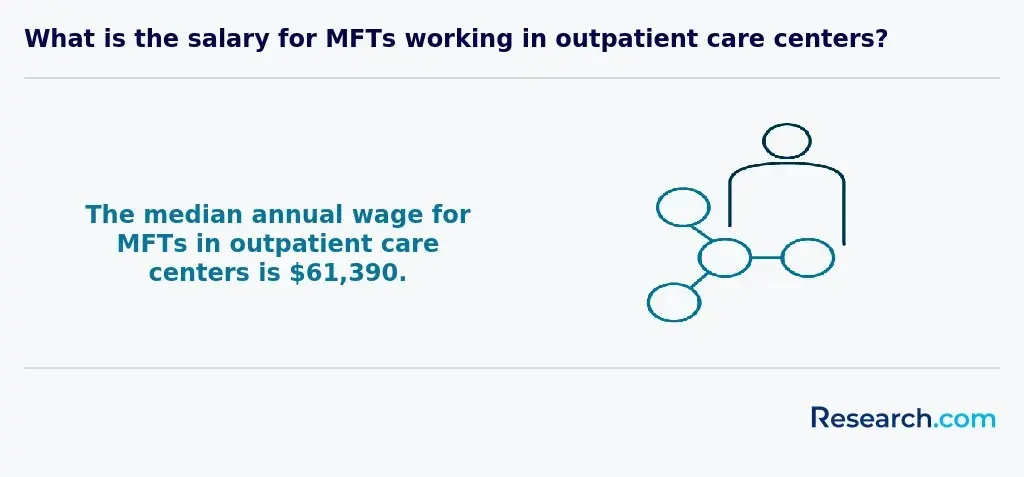
MFT salary in Wisconsin depends on experience, location, employer type, specialty, caseload, credential status, and whether the therapist is employed or self-employed. The average salary for MFTs in Wisconsin is around $68,730 per year, with entry-level positions starting at approximately $45,000 and experienced therapists earning upwards of $70,000 depending on specialization and location.
Urban areas such as Milwaukee and Madison may offer more employment options because of larger healthcare systems, universities, clinics, and diverse client populations. However, rural areas may have significant unmet need, and teletherapy can change how location affects access to clients.
Some MFTs in specialized sectors, including home healthcare services, can earn up to $122,120 annually. That figure should not be treated as a guaranteed outcome; it reflects how practice setting and specialization can influence earnings.
| Salary Factor | How It Can Affect Earnings | What to Consider |
| Experience | New clinicians usually earn less than experienced therapists. | Supervision status and post-licensure experience matter. |
| Location | Milwaukee and Madison may offer more employer variety. | Compare cost of living, commute, client demand, and competition. |
| Practice setting | Private practice, hospitals, agencies, schools, and home healthcare may pay differently. | Consider benefits, supervision, administrative support, and workload. |
| Specialization | Focused expertise can improve fit for certain roles or client populations. | Choose training that aligns with actual demand, not just interest. |
| Telehealth | Remote practice can expand reach and scheduling flexibility. | Verify legal, insurance, and privacy requirements before offering services. |
Students trying to manage the education cost side of the equation can review Research.com’s list of budget online counseling programs.
How is teletherapy changing MFT practice?
Teletherapy has become an important part of MFT practice in Wisconsin because it can reduce travel barriers, expand access in rural areas, and allow more flexible scheduling for clients and clinicians. It can be especially helpful for families balancing work, school, transportation, and childcare.
Remote therapy also creates new responsibilities. MFTs must use secure platforms, confirm client location, plan for emergencies, understand informed consent for telehealth, maintain privacy, and verify whether insurance reimbursement rules apply. Therapists should also consider whether teletherapy is clinically appropriate for each client situation, especially when there is safety risk, severe conflict, or limited privacy at home.
Prospective students interested in flexible preparation can compare affordable online MFT programs, but they should confirm that any online option supports Wisconsin licensure requirements and supervised clinical placement needs.
Where can Wisconsin MFTs find mentorship and support?
Mentorship can make the difference between simply meeting licensure requirements and building a sustainable career. Wisconsin MFTs can look for support through professional associations, clinical supervisors, peer consultation groups, alumni networks, employer training programs, and interdisciplinary teams.
Good mentorship should provide more than encouragement. It should help with case conceptualization, ethics, documentation, career planning, burnout prevention, exam preparation, specialization decisions, and private practice questions. New professionals should seek mentors who understand Wisconsin licensure expectations and the realities of the settings where they hope to work.
If speed and pathway planning are your main concerns, Research.com’s guide to the fastest way to become a counselor in Wisconsin can help you compare counseling routes.
How can MFTs collaborate with school mental health professionals?
MFTs can play a valuable role in student well-being when they coordinate appropriately with school counselors, school psychologists, teachers, administrators, and families. This collaboration can help identify concerns earlier, align support across home and school, and reduce fragmented care.
Effective collaboration requires consent, clear communication, role boundaries, and respect for school policies. MFTs should avoid assuming that school professionals can share information without authorization, and they should document referrals and consultations carefully.
- Use signed releases before exchanging client information with school staff.
- Clarify whether the MFT is treating the student, the family, or both.
- Coordinate goals when school stress, behavior, attendance, or family conflict overlap.
- Refer to school-based supports when academic accommodations or educational assessments may be needed.
- Respect the distinct roles of school counselors, school psychologists, teachers, and administrators.
Understanding Wisconsin school psychologist certification requirements can help MFTs collaborate more effectively with school-based mental health professionals.
Common Mistakes to Avoid When Pursuing Wisconsin MFT Licensure
| Mistake | Why It Can Hurt You | Better Decision |
| Choosing a graduate program without checking Wisconsin licensure alignment | You may graduate with coursework or clinical training gaps. | Ask for written licensure disclosures and verify DSPS expectations. |
| Comparing schools only by tuition | Fees, travel, supervision, and delayed graduation can change total cost. | Compare full cost of attendance and clinical placement support. |
| Assuming every online program works for Wisconsin | State authorization and licensure preparation may vary. | Confirm Wisconsin-specific eligibility before enrolling. |
| Waiting to track supervised hours | Missing records can delay licensure. | Maintain supervision logs and direct client contact documentation from the start. |
| Ignoring renewal requirements until the deadline | CE gaps can create stress or late renewal problems. | Complete continuing education throughout the renewal period. |
| Adding certifications without a strategy | Extra credentials can consume time and money without improving your career. | Pursue specialization only when it supports your target clients or job goals. |
Questions to Ask Before You Commit to the MFT Path
- Do I specifically want to work with couples, families, and relational systems, or would counseling, social work, or school mental health be a better fit?
- Does my intended graduate program clearly prepare students for Wisconsin MFT licensure?
- How will I complete and document 3,000 hours of supervised clinical experience?
- Will my practicum and post-graduate roles provide enough direct client contact?
- Can I afford graduate school, exam fees, supervision costs, liability insurance, renewal fees, and continuing education?
- Do I want to work in private practice, a school, a hospital, a clinic, community mental health, or teletherapy?
- What population do I want to serve, and what specialization would genuinely improve my competence?
- How will I protect myself from burnout while working with high-conflict or distressed families?
- If I may move later, what should I know about licensure portability?
Related Articles for Nearby States
- 2027 Minnesota MFT Licensing, Certifications, Careers and Requirements
- 2027 Iowa MFT Licensing, Certifications, Careers and Requirements
- 2027 Illinois MFT Licensing, Certifications, Careers and Requirements
- 2027 Michigan MFT Licensing, Certifications, Careers and Requirements
- 2027 Indiana MFT Licensing, Certifications, Careers and Requirements
- 2027 Missouri MFT Licensing, Certifications, Careers and Requirements
- 2027 Ohio MFT Licensing, Certifications, Careers and Requirements
- 2027 South Dakota MFT Licensing, Certifications, Careers, and Requirements
- 2027 Nebraska MFT Licensing, Certifications, Careers and Requirements
- 2027 Kentucky MFT Licensing, Certifications, Careers and Requirements
References:
- American Association for Marriage and Family Therapy. (n.d.). Wisconsin State Resources. American Association for Marriage and Family Therapy.
- bls.gov. (03 Apr 2024). Occupational Employment and Wages,. May 2023. bls.gov.
- dsps.wi.gov (n.d.). Department of Safety and Professional Services. dsps.wi.gov.
- O*NET OnLine. (n.d.). License: Marriage & Family Therapist. O*NET OnLine.
Key Insights
- Wisconsin MFT licensure requires graduate education, 3,000 hours of supervised clinical experience, and the national MFT exam; the process should be planned before choosing a program.
- The best MFT program is not always the cheapest or fastest. It should align with Wisconsin licensure rules, provide strong clinical placement support, and fit your long-term practice goals.
- Renewal is an ongoing professional responsibility. Wisconsin MFTs must complete 30 hours of continuing education every two years, including 3 hours in ethics and boundaries.
- Career opportunities exist in private practice, community agencies, hospitals, schools, and telehealth, but earnings and job options depend on location, experience, setting, and specialization.
- Teletherapy, interdisciplinary collaboration, and targeted certifications can expand opportunities, but each should be used strategically and within legal, ethical, and insurance requirements.
- The MFT path is most appropriate for people who want clinical work focused on couples, families, and relational systems. If your interests are broader counseling, social services, addiction treatment, or school-based roles, compare Wisconsin’s other mental health licensure pathways before committing.
Other Things You Should Know About Wisconsin MFT Licensing
In 2027, prospective MFTs in Wisconsin must complete a master’s degree in marriage and family therapy, pass the national MFT exam, and fulfill 3,000 hours of supervised clinical practice. Applicants must also submit an application to the Wisconsin Marriage and Family Therapy, Professional Counseling, and Social Work Examining Board.
In Wisconsin, opening a private MFT practice in 2027 requires obtaining a valid MFT license, securing office space, and adhering to state business regulations. Additionally, practitioners should consider obtaining liability insurance and developing a marketing strategy to attract clients. It’s essential to comply with all state guidelines related to ethical practices and client confidentiality.
For MFTs in Wisconsin, continuing education is essential for maintaining licensure and enhancing professional skills. Here are key topics to focus on:
- Trauma-Informed Care: Understanding the impact of trauma on individuals and families is crucial for effective therapy.
- Cultural Competency: Training in cultural awareness helps MFTs address diverse client backgrounds, which is vital in Wisconsin's multicultural landscape.
- Ethics and Legal Issues: Staying updated on ethical guidelines and legal requirements ensures compliance with Wisconsin's licensing standards.
- Couples and Family Dynamics: Advanced courses in family systems theory can deepen therapeutic approaches.
- Substance Use Disorders: Knowledge of addiction and recovery processes is increasingly important in family therapy settings.
- Teletherapy Practices: With the rise of remote therapy, skills in virtual counseling are essential.
Pursuing continuing education not only fulfills Wisconsin's requirement of 30 hours every two years but also enhances the quality of care MFTs provide, ultimately benefiting clients and communities.